Hi, and welcome to another edition of Dodgers Dugout. My name is Houston Mitchell. If you told me five years ago that right now we would ‘ be discussing whether the Dodgers could win their third consecutive World Series, I would have laughed. How fortunate we are.
Get our Dodgers Dugout newsletter for insights, news and much more.
By continuing, you agree to our Terms of Service, which include arbitration and a class action waiver. You agree that we and our third-party vendors may collect and use your information, including through cookies, pixels and similar technologies, for the purposes set forth in our Privacy Policy such as personalizing your experience and ads.
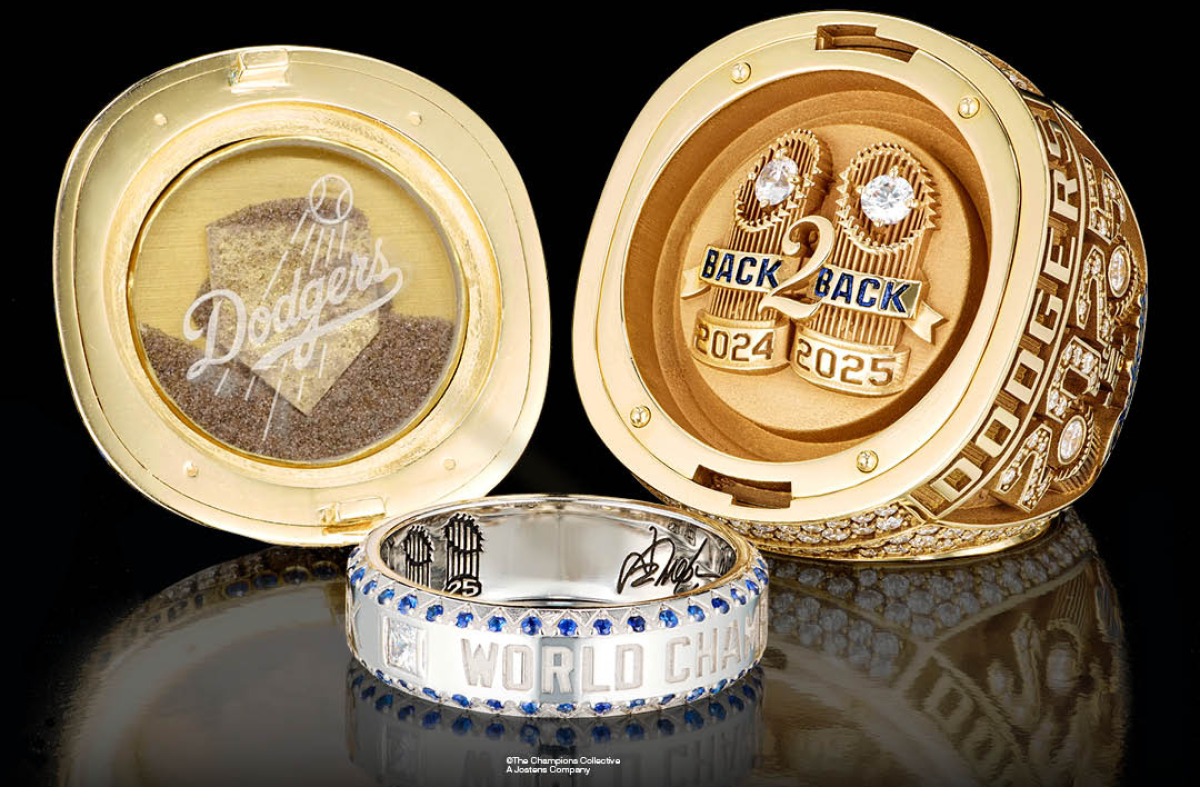
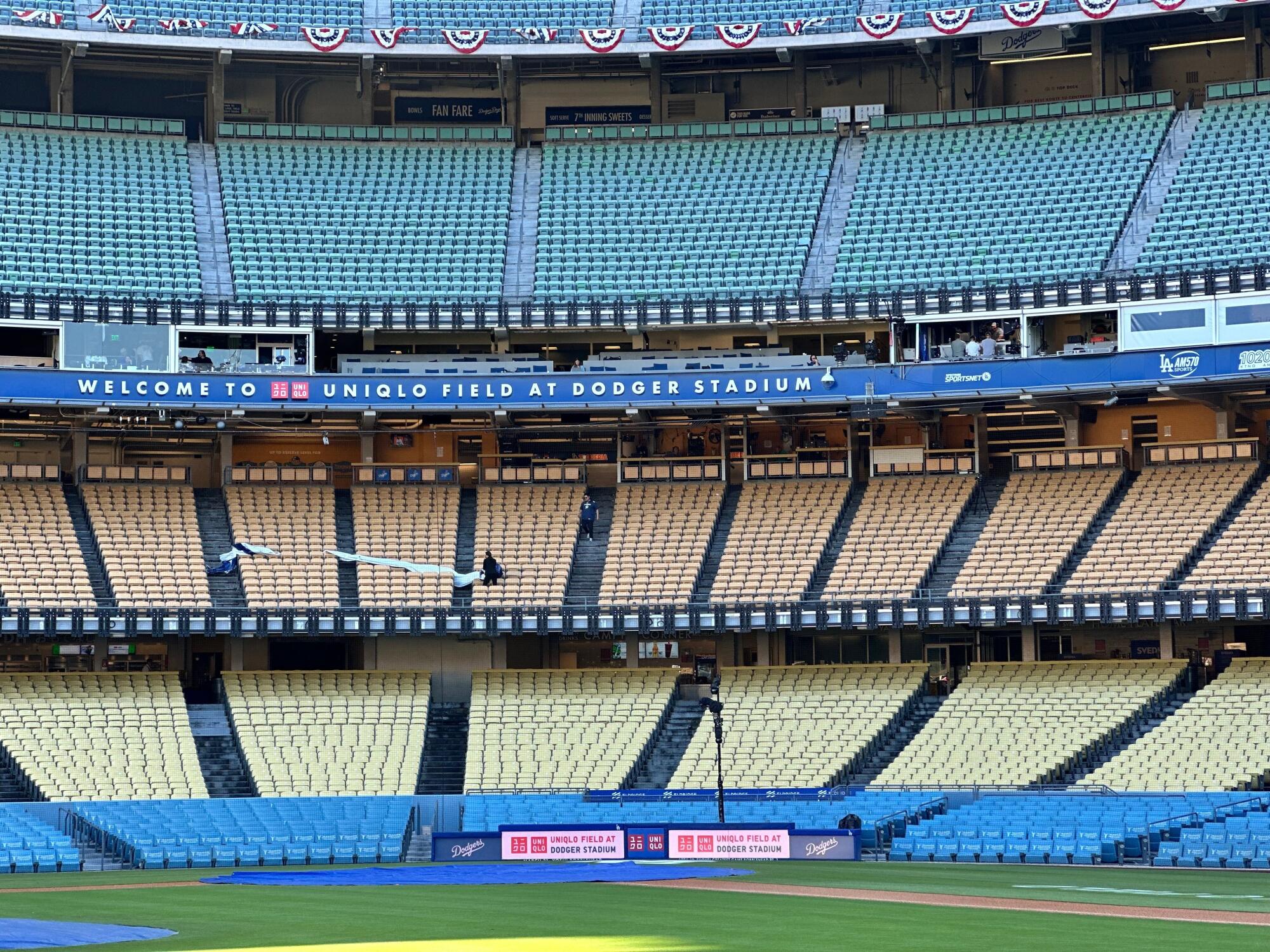
Opening day is Thursday, with the flag ceremony that day and the ring ceremony Friday. So, let’s take a look at the opening day roster, barring an injury or implosion by someone.
Catchers
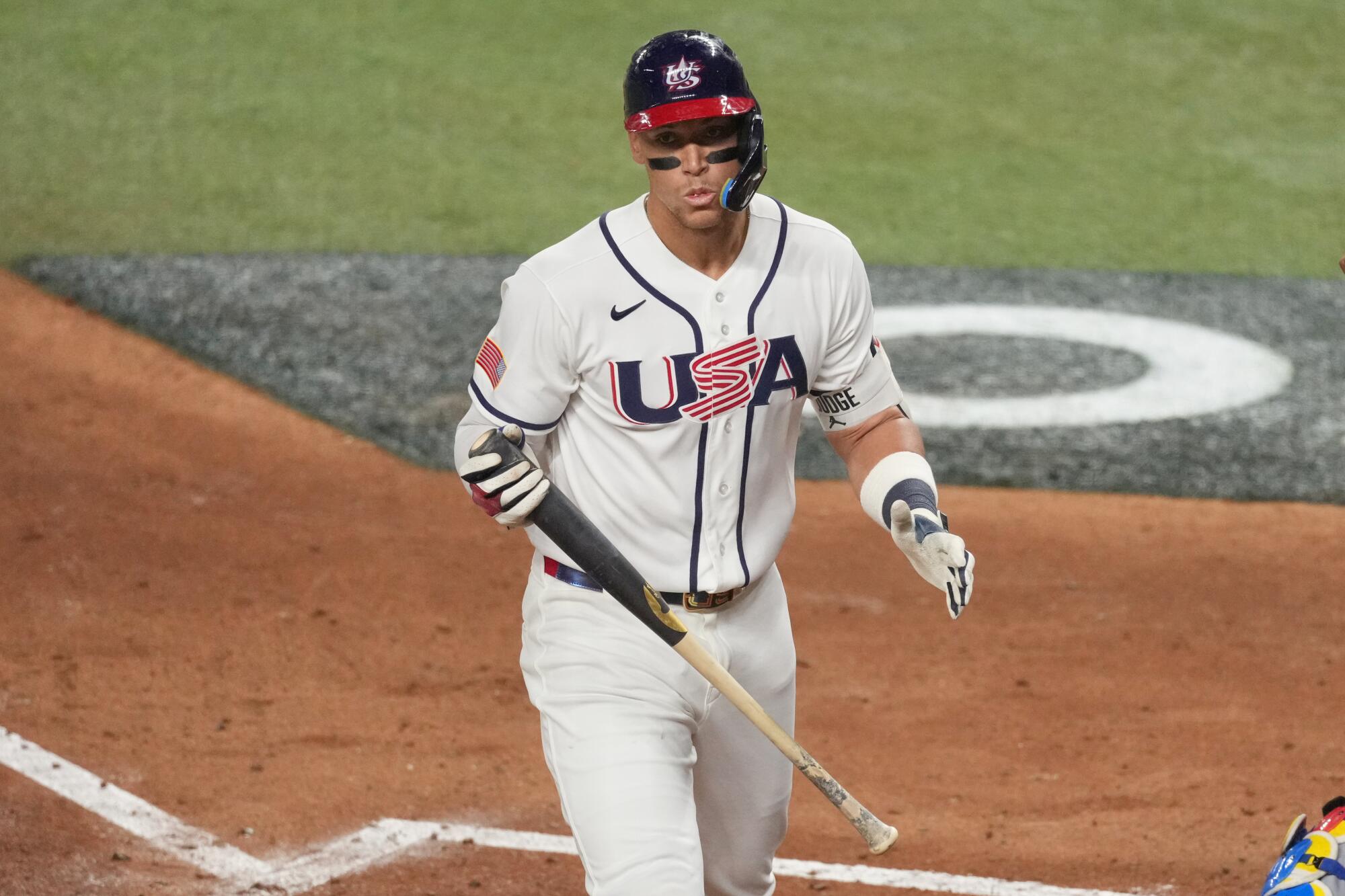
Will Smith — Some Mariners fans took umbrage that I said Smith was the best catcher in the game with Cal Raleigh second. Consistency lifts Smith to No. 1. If Raleigh has another season like last season, he could move up. And did you notice who started the key games for the U.S. in the WBC? Smith, not Raleigh.
Dalton Rushing — An important season for Rushing, who failed to impress last season. Far too early to throw in the towel on him. Can he become a consistent hitter while playing twice a week? Would Ben Rortvedt have made the team instead of Rushing?
Infielders
Mookie Betts — Remember, last season he was very sick around opening day and lost 20 pounds in two weeks. And he’s not exactly a physical giant to begin with. He then had to come back and learn a new position on the fly. It’s possible he never reaches the MVP heights of the past, but it’s also possible he hits much better than last season.
Santiago Espinal — Hitting .372 this spring and played steady defense, more than earning his way onto the team. Hasn’t had a good season on offense since 2021, but is a career .291 hitter against left-handers, so expect to see him against lefties.
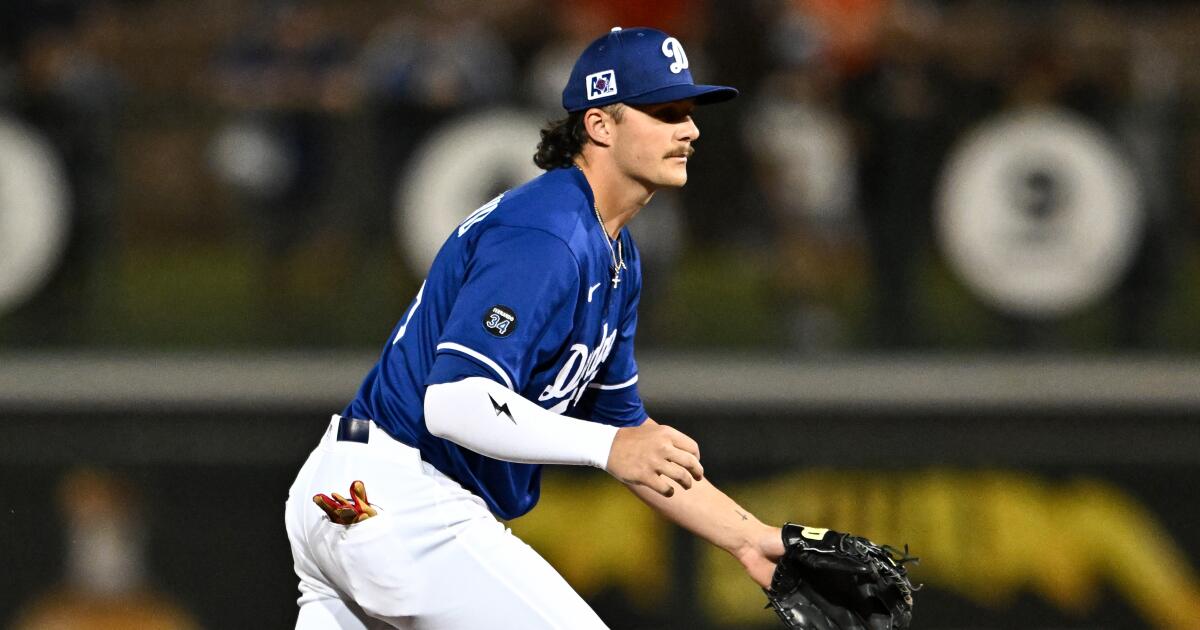
Alex Freeland — He won the utility job over Hyeseong Kim despite having a terrible spring in which he went five for 45, though with 13 walks. There must be something about Kim the Dodgers do not like, though they say they sent him down so he can get consistent daily at-bats. Freeland will get a big opportunity here. Can he deliver?
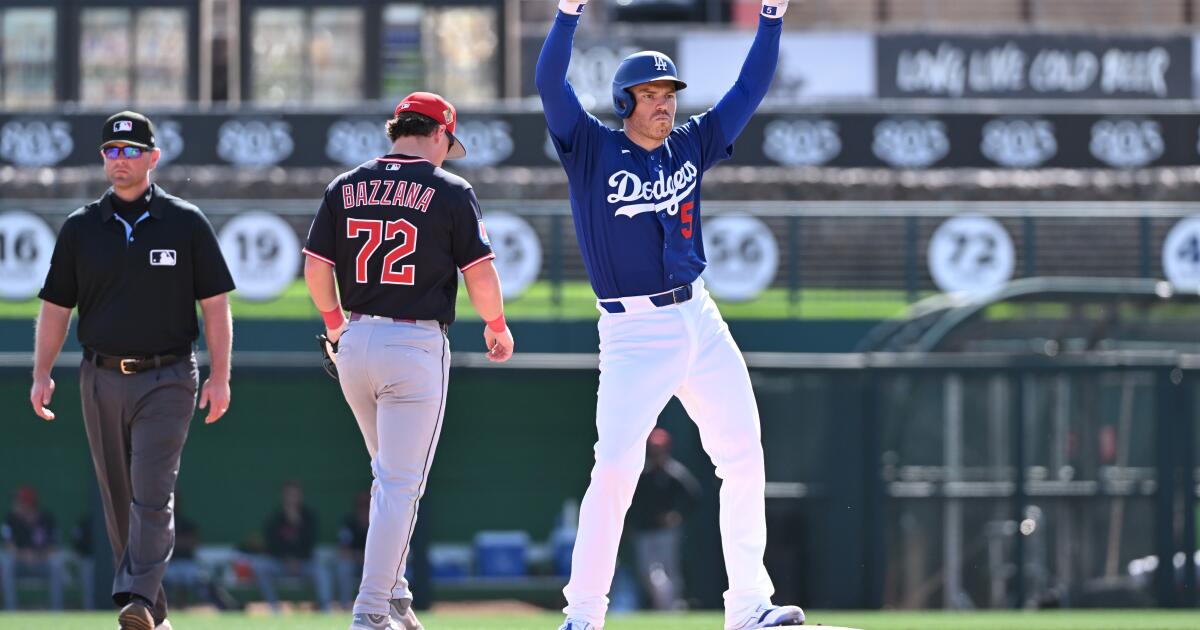
Freddie Freeman — Here’s betting he becomes a .300 hitter again this season and that his mobility improves at first now that his ankle has had more time to heal.
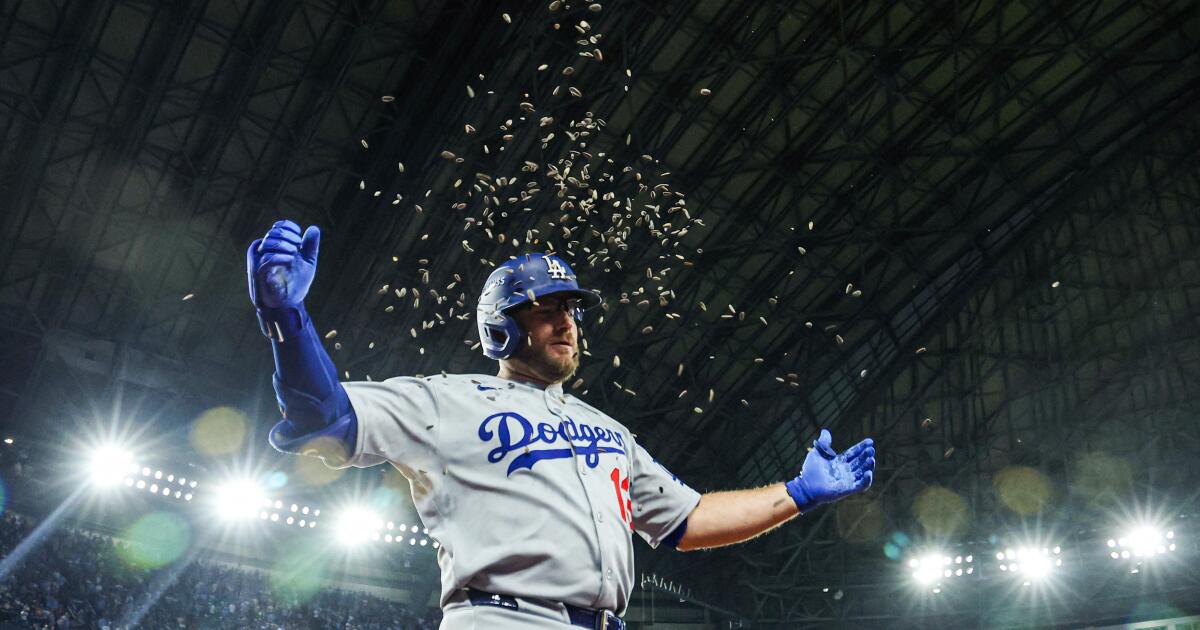
Max Muncy — Everyone knows what Muncy will provide each season between stints on the IL, and there’s no reason to believe he won’t provide it again.
Miguel Rojas — Shohei Ohtani asked him not to retire. He will be the defensive glue for the infield, will get some key hits, and will help everyone on the infield become better defensively.
Outfielders
Alex Call — Exactly what you want in a fourth outfielder: Good defense with the ability to get on base and spell someone in the lineup without a huge dropoff in quality.
Teoscar Hernández — Says he never felt quite right after his injury early last season. Judging by his spring numbers (.468 with five homers), I’d say he was correct.
Andy Pages — Dave Roberts says Pages is his “pick to click” this season. Considering he hit 27 homers last season, you have to wonder what his numbers will be if he does click.
Kyle Tucker — Will the pressure of a big contract cause him to start slow as it has so many others?
Two-way player
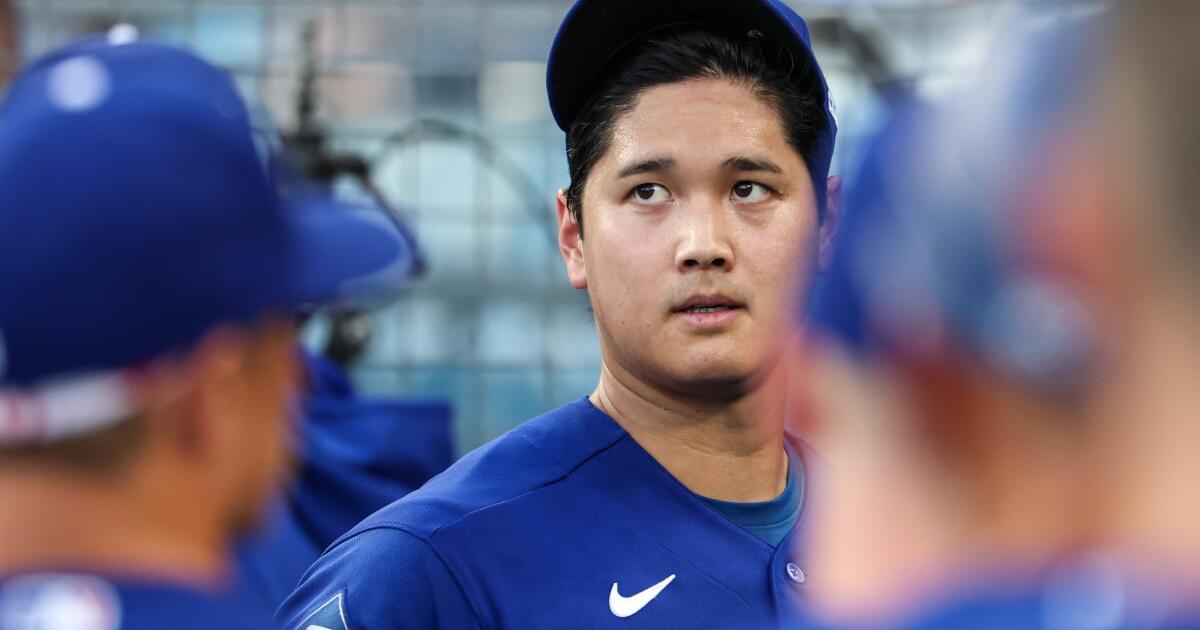
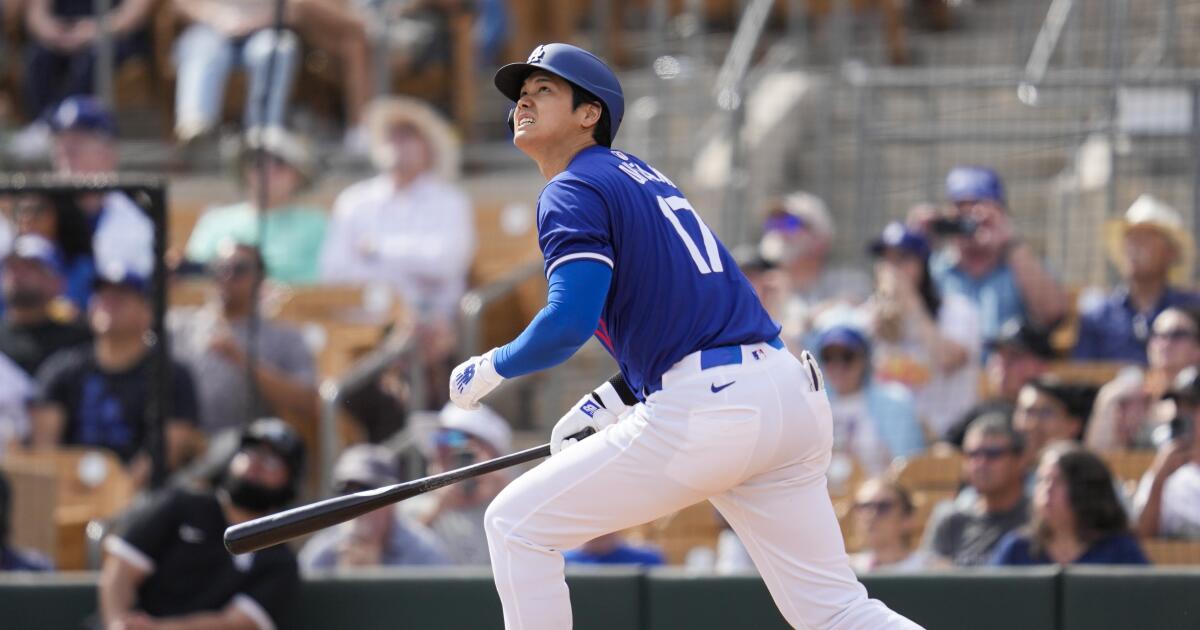
Shohei Ohtani — Just think, Ohtani could hit 40 homers this season and be accused of having a disappointing season.
Tommy Edman will be back at some point, and Kiké Hernández will be back around the midpoint of the season, perhaps sooner.
Rotation
Yoshinobu Yamamoto — There are certain guys who should never be booed later in their playing career after what they have done in the past for the team. Fernando. Orel Hershiser. With his 2025 postseason, Yamamoto has claimed a spot on that list.
Tyler Glasnow — Fans still like to call him Glass-now. Pitched only 90 1/3 innings last season. Has pitched in 100 or more innings in only three of his 10 major league seasons. It would be a miracle if he makes 25 starts this season, but when he does pitch, he’s usually very good and the Dodgers will protect his arm as much as they can to make sure he can pitch in the postseason.
Shohei Ohtani — Will Ohtani win the MVP and Cy Young Award? The only time he came close was in 2022 with the Angels, when he was second in MVP voting and fourth in Cy Young voting. Last season he made 14 starts and pitched 47 innings. My prediction is he receives votes for both, but doesn’t win both as some pitcher will put up better or similar numbers in more innings.
Roki Sasaki — One of the big mysteries of the season. Can Sasaki harness his ability? His emotions seem to overwhelm his ability at times. But he’s only 24. When I was 24, I had just started working at The Times and my emotions overwhelmed my ability at times. It’s easy to forget these are men, not machines. However, after a disastrous start Monday against the Angels, giving up four runs in the first inning, you have to wonder if he will indeed start the season in the majors.
Emmet Sheehan — Went 6-3 with a 2.82 ERA last season before he was moved to the bullpen for the postseason and pitched terribly (8.59 ERA). When Blake Snell is ready to come back, hopefully in May, either Sasaki or Sheehan will either move to the bullpen or get sent down. They are in effect using April to battle for a permanent spot in the rotation.
Bullpen
Ben Casparius — He can be a starter, a short guy, a long man, an opener. He’s a jack-of-all-trades, or, a Ben of all trades. Has walked nine in 7.2 spring innings, so that’s something that can’t continue.
Edwin Díaz — The closer job is his. Mets fans say Dodgers fans should get used to Díaz walking a tightrope when he pitches. We’ll have to wait and see, but as of right now, this is a terrific signing.
Jack Dreyer — Had a solid rookie season and pitched four scoreless innings in the postseason.
Edgardo Henriquez — An electric arm that hasn’t always translated to electric results. He bounced back and forth between the minors and the Dodgers last season and could again this season.
Will Klein — Sometimes one outing transforms a player from being an average player to being a good-to-great one. Was Game 3 the pivot point for Klein, who has a career 5.16 ERA? He has been great this spring. And apparently Klein jerseys have become a top seller, so there will be a lot of people pulling for him.
Tanner Scott — He is in the second year of a four-year, $72-million deal, and he was terrible in Year 1 of the deal. The comment for Treinen below applies to Scott as well. Will the Dodgers use Scott and Treinen as their first non-closer option in high leverage roles at the start of the season?
Blake Treinen — Will the Treinen of 2024 return, or will it be the Treinen of 2025? And if it is the Treinen of 2025, how much leash will the Dodgers give him before giving up? Those will be two key things to watch early in the season.
Alex Vesia — After what he and his wife went through, is anyone rooting against this guy? He will wear his emotions on his sleeve as always and will neutralize left-handers.
Justin Wrobleski — Can give them some length out of the bullpen, plus can step into the rotation if Sasaki or Sheehan prove too unreliable before Snell returns.
Some teams say the Dodgers have an unfair advantage, because Ohtani being a two-way player means the Dodgers can carry nine relievers while most teams can carry only eight. Funny how those teams never complained about this when Ohtani was with the Angels.
At some point, Snell, Brusdar Graterol, Evan Phillips and Brock Stewart will be back.
Also keep in mind that last season the Dodgers used 40 pitchers, so there will be a lot of churn among that part of the roster. They will start April with these 14 pitchers, but it’s unlikely the same 14 reach the end of April, or maybe even mid-April.
They used 25 position players last season, but it seems like the opening 13 will stay together for a little bit, at least until the first injury.
How many games will the Dodgers win?
It’s that time of year where I ask you how many games the Dodgers will win, and this year I will also ask if the Dodgers will win the World Series again?
So, how many games will the Dodgers win this season?
They will finish under .500 (this will tell me how many Padres/Giants fans subscribe to the newsletter)
They will win 81-90 games
They will win 91-95 games
They will win 96-100 games
They will win 101-110 games
They will win 111-116 games
They will set the record with more than 116 wins
Click here to vote in this survey and the World Series survey. Results will be announced Thursday.
The experts say
Most experts point to the fact the the Dodgers are favorites to win it all among oddsmakers. If you look around at the various oddsmakers, the Dodgers are given about a 28% chance to win the World Series, far ahead of any other team (Seattle usually is second).
But, look at it another way. You could also say there is a 72% chance the Dodgers won’t win the World Series. We have been spoiled the last two seasons. Really, compared to most teams, we have been spoiled ever since Guggenheim bought the team. Winning a World Series is really difficult, even if you have the best team during the season.
I’ll give my predictions on Thursday. In the meantime, Bill Plaschke gave his prediction, which you can read here.
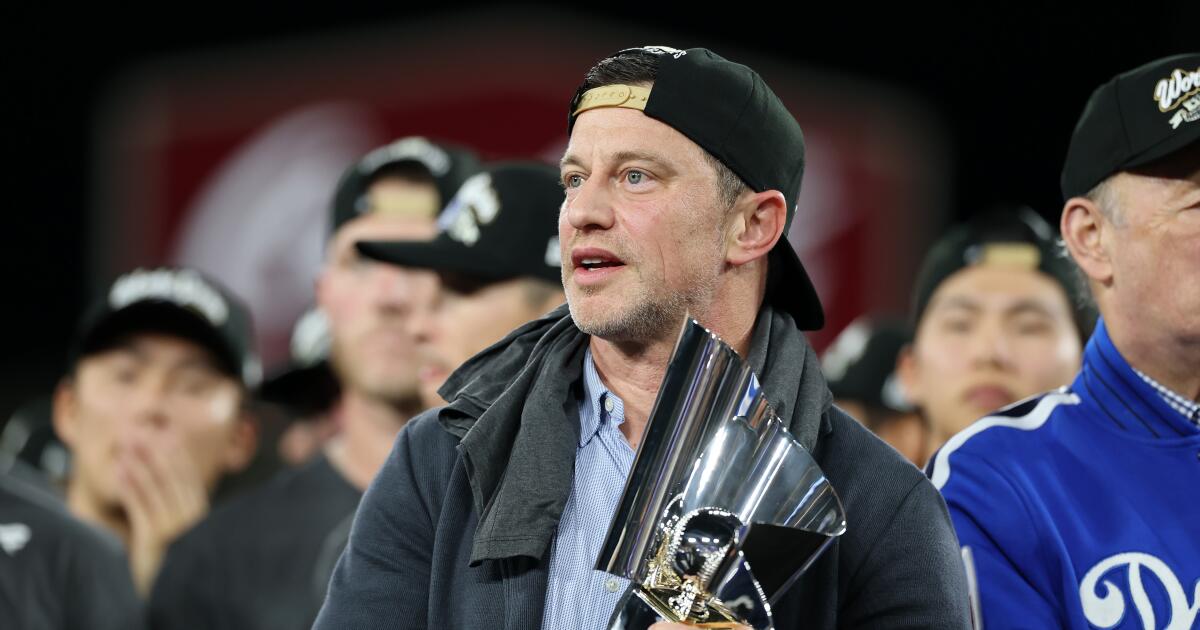
Andrew Friedman speaks….
President of baseball operations Andrew Friedman sat down with our new Dodgers reporter, Maddie Lee (we’ll meet her officially soon) and answered some questions. You can read the whole thing here. A couple of highlights:
Q: It’s such a cliche to say you can never have too much pitching, but with this group, are you close?
Friedman: I’ve learned my lesson to never say that we have enough pitching. But I do feel like we are breaking camp with the most talented one through 20 arms — which gets at, obviously, who we’ll break with, and then depth behind it — that we’ve ever had.
Q: The Dodgers are very much caught in the middle of CBA posturing with the current agreement expiring this year. You hear a lot of players saying the Dodgers are doing it the right way and other teams could be doing something similar. On the other hand, the league appears to be floating a salary cap, and plenty of fans are accusing the Dodgers of “ruining baseball.” What’s it been like to see those conflicting narratives?
Friedman: Obviously see it, come across it, hear it quite a bit. But we’re just not that focused on it. We’re a really healthy organization, and the partnership we have with our fans is our guiding light. And we’re doing everything we can to put a team out there that our fans really connect with, and that they feel that partnership with all that they pour into us, and don’t really think about it in any other terms.
And so obviously, there’s a lot of narratives that get extrapolated from that. But our sole focus is on ourselves and the partnership we have with our fans and the rest of it to us, it’s kind of just noise.
The Q&A, which covers several topics, can be found here.
In case you missed it
Swanson: The Dodgers are chasing a three-peat. They can take some cues from the 2002 Lakers
Why the Dodgers are preaching patience as Roki Sasaki continues development
NL West preview: The Dodgers should be heavy favorites, but the Padres could surprise
Ohtani. Yamamoto. Sasaki. A 12-story ‘cultural bridge’ between L.A. and Japan to debut in Torrance
Alex Freeland edges Hyeseong Kim for a Dodgers opening day roster spot
For two-time defending champion Dodgers, the goal is simple: ‘They want to keep winning’
Plaschke: The Dodgers and their fans are geared up for a three-peat. Why the quest will fall short
Yoshinobu Yamamoto smooth in his final spring start before Dodgers opening day
Q&A: Andrew Friedman on team culture, the upcoming season and ‘noise’ around the Dodgers
And finally
Shohei Ohtani hits three homers and strikes out 10 in Game 4 of the 2025 NLCS. Watch and listen here.
Until next time….
Have a comment or something you’d like to see in a future Dodgers newsletter? Email me at houston.mitchell@latimes.com. To get this newsletter in your inbox, click here.