A mathematician from the tech giant Anthropic claims to have proven one of the world’s most famous – and most elusive – maths problems with the help of AI.
Levent Alpoge wrote on his website on Friday: “I believe I have, working with Claude, discovered a proof of the Riemann Hypothesis.”
Recommended Stories
list of 3 itemsend of list
If his claim holds up, the proof he says he has would settle a question that has defeated mathematicians for 167 years. Independent experts are now trying to verify it, but so far no human has read through the entire argument.
Here is what we know.
What is the Riemann hypothesis?
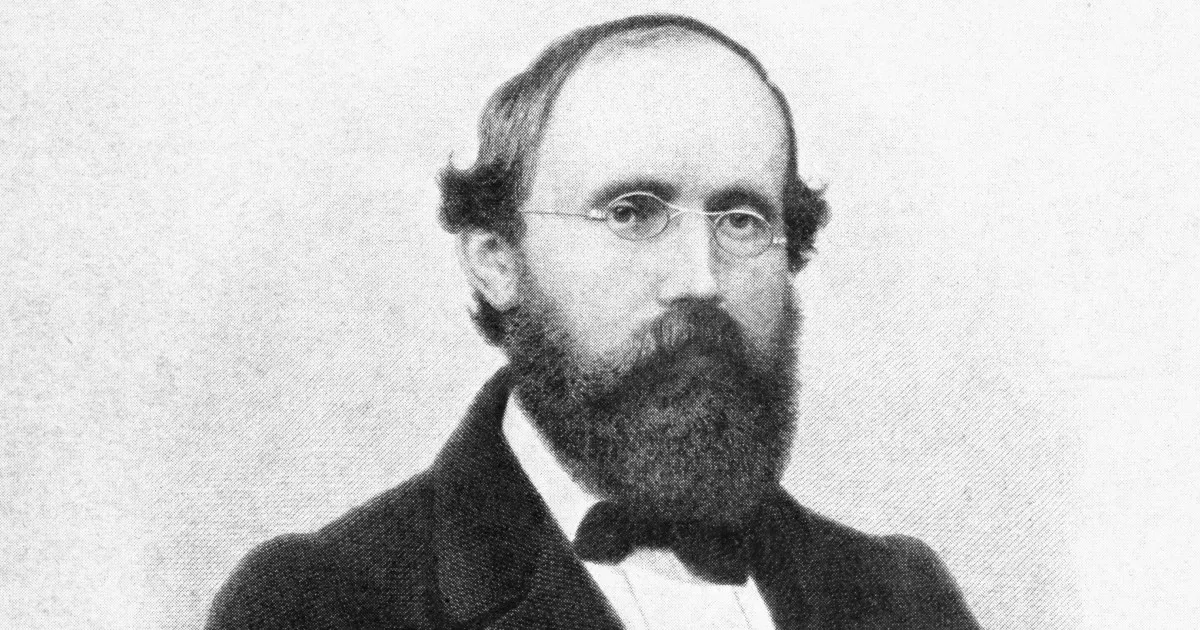
First proposed by German mathematician Bernhard Riemann in 1859, the hypothesis concerns the distribution of prime numbers and is widely regarded as the most important open question in pure mathematics.
Prime numbers are whole numbers which can be divided only by one and themselves, such as 2, 3, 5 and 7. They appear to be scattered along the number line with no obvious pattern but the Riemann hypothesis proposes that their overall distribution actually follows a deep, hidden order – just one that humans have yet to identify.
“The Riemann hypothesis is the most famous and important unsolved problem in mathematics,” Abhishek Saha, professor of mathematics at Queen Mary University of London, told Al Jazeera.
“The patterns of the primes are encoded in a mathematical object called the Riemann zeta function, introduced by Bernhard Riemann in 1859.”
It is one of the seven Clay Mathematics Institute Millennium Prize Problems, each carrying a $1m award.
What has the Anthropic mathematician claimed?
Alpoge, a member of the company’s technical staff, made the announcement on Friday in a four-page explanation posted on his website. He said the proof he has found covers the generalised Riemann hypothesis, which extends the original conjecture to a broader family of mathematical functions.
He did not publish a conventional paper. Alpoge released the argument in Lean, a programming language and proof assistant that checks reasoning step by step. He was open about how much of the work was Claude’s, writing that “Claude far outpaced me near the finish line”.
Kevin Buzzard, professor of pure mathematics at Imperial College London, said nobody yet understands what the proof actually shows.
“At the minute, we don’t even know why the theorem is true,” he told Al Jazeera. “It’s 17 million lines of Lean code, and this might correspond to tens of thousands of pages of mathematics. We don’t even yet know how much of this mathematics is new ideas, how much of it is just sort of standard stuff the machine just had to develop.
“At the minute, the proof is just millions of lines of gobbledygook written in a strange programming language,” he said. “And right now, as we speak, there’s people all over the world who are translating parts of this programming language back into English.”
He expects answers to come fairly soon, however. “Experience shows you that you give the humans the Lean code, and within a week or two, they have a much better understanding of what’s actually going on in this code,” he said.
Why is the Riemann hypothesis so important?
“The implications of this hypothesis extend across large parts of mathematics, and hundreds of other mathematical results have been proved assuming this hypothesis is true,” Saha said. “A proof would settle a question that has occupied some of the greatest mathematical minds for over 160 years.”
Buzzard said the result also matters beyond pure mathematics, including for internet security.
“We know there are some algorithms that we run where they’re very quick, but we don’t actually know for sure if they work,” he said. “They seem to work, and we know that if the generalised Riemann hypothesis is true, then they do work.”
He said cryptographers had long worked on the assumption that the Riemann hypothesis is true. “In practice, people do tend to assume that the Riemann hypothesis is true because it’s a viable hypothesis to assume, because there’s so much evidence that it’s true,” he said. “But we can sleep slightly safer in our beds at night because it is true.”
Buzzard said the result stands out among recent AI breakthroughs in mathematics. He compared it with the Navier-Stokes problem, another Millennium Prize problem, which OpenAI said an unreleased AI model had solved in September. “That one doesn’t really have any applications at all,” he said, calling it “just of theoretical interest”. “Whereas the Riemann hypothesis has applications to neighbouring fields.
“It’s a very hard problem, but it’s definitely not the hardest problem in mathematics,” he said, pointing to even stronger versions such as the “extended Riemann hypothesis and the grand Riemann hypothesis”.
“The Riemann hypothesis is just, in some sense, at the foot of a mountain,” he said. “We’re beginning our trek up the mountain with this theorem.”
Why has it remained so elusive for so long?
“The problem is relatively simple to state, but extraordinarily difficult to prove,” Saha said. “Mathematicians have developed vast amounts of sophisticated theory in their attempts to solve it, but none of the techniques developed over the past 167 years has been sufficient. The direct methods have all been tried, and none of them come close to resolving it.
“Until very recently, most mathematicians, myself included, believed that a proof would require substantial new mathematical theories, perhaps developed over the next few decades.”
He said the claimed proof had overturned his expectations. “My own intuition was that we were still several years away from a proof of the Riemann hypothesis. This claimed proof, if correct, shatters my model of reality,” he said.
“If difficult problems are like valuable mineral reserves buried miles underground, you first need to build the infrastructure to reach them. What this proof seems to have done is something completely different. It takes an incredibly complicated tour through the infrastructure built to reach a hundred other mineral reserves, situated far from the original destination, and somehow creates a wormhole to that destination.”
Buzzard said it is still too early to know what humans had been missing. “There is a chance that there were no ideas that the humans were missing. There is a chance that all of the ingredients were there, that nobody had just been smart enough to put everything together,” he said. “There is a chance that there’s a thousand pages of new ideas, very deep new theories.”
“Right now, we honestly can’t tell you, because nobody understands the proof of it. That will change. In a matter of weeks, that will change.”
What role is AI playing in solving major mathematical problems?
The past year has been one of AI-driven advances in mathematics. An earlier AI-assisted result showed that at least 67.25 percent of a particular set of mathematical values follow the pattern predicted by the Riemann hypothesis. The new claim, if correct, would extend this to all of them.
“AI is creating a revolution in mathematics,” Saha said. “It is helping us solve problems previously thought out of reach and, in doing so, it will undoubtedly lead to the creation of new mathematics. However, this also means that the way mathematicians have traditionally conducted research will no longer be how it is done in the future.
“Asking the right questions, creating new research directions, writing good expositions, and acting as an effective director or conductor for AI will become increasingly important, while technical brilliance in constructing proofs may become less so.”
He argued that the credit should go to Alpoge. “Much of the press is referring to this as a proof by Claude. I think they should instead credit the person involved: Levent Alpoge,” he said. “Others with similar access to frontier AI models and computing resources were not able to come up with a proof of the Riemann hypothesis.
“This proof shows that a brilliant mathematician can direct and orchestrate AI in ways that allow them to prove theorems others cannot. The honour of proving RH, if the proof holds up, belongs largely to him. He should get a Fields Medal for this.” The Fields Medal is a prestigious mathematics prize awarded every four years by the International Congress of Mathematicians (ICM) to mathematicians under age 40.
Do we even need humans to do maths any more?
Buzzard rejected fears that AI has made human mathematicians redundant. “The rumours that maths is dead have been greatly exaggerated,” he said. “What’s actually happening is that mathematics has a very exciting and powerful brand new tool.”
“Mathematics is infinitely big. You can’t solve all of it,” he said. He compared AI with the telescope. “Historically, astronomers were just staring at the sky, right? And then the telescope was invented, and all of a sudden we can see everything much, much more clearly.
“The AI doesn’t have taste, not yet anyway. You tell it what to do, and it does it,” he said. “We’ve basically got our own telescope.”
Buzzard said AI was “beginning to democratise” mathematics, although for now the breakthroughs are concentrated in a few firms. “Currently, it is the tech companies with access to the new internal models who are doing the best breakthroughs right now, but this will change as more powerful models become available to the public and the tech companies lose interest.”
He said some of the unease among mathematicians is about loss. “They are grieving because the field is changing rapidly, and with change comes loss. We will do mathematics in new ways going forward, and some people will miss the old ways,” he said.
“The other reason people are upset is that it has hurt a lot of people’s egos. Humans were the best at mathematics, and the best humans would prove theorems, and the theorems would be named after them.”
The One Show presenter Alex Jones will be co-hosting the BBC’s Children In Need coverage on Friday, November 13
Alex Jones is one of the BBC Children In Need presenters(Image: BBC)
Alex Jones has celebrated a decade of marriage.
The One Show host shared a throwback photo of herself and her husband as they reached the milestone. Alex, who celebrates her 50th birthday next year, often shares glimpses of her family life on her official Instagram account including her home renovations.
She also regularly updates her followers on her work commitments, which will tonight (November 13) see her co-hosting the BBC Children In Need 2026 show live on BBC One.
Mum-of-three Alex said of the role: “It means the absolute world to be part of the team for the big night of Children in Need, I have watched it avidly since I was a little girl and Sir Terry Wogan was at the helm. It was always one of the big highlights of the year.
“And more recently for me, The One Show has always been very much at the heart of Children in Need, as we will be again this year with our Challenge Squad, so it feels amazing to be there with Pudsey on his big night.”
Ahead of the show, we take a look at her life outside the spotlight, including her long marriage and life with her young children and her famous ex.
Who is Alex Jones’ husband?
Alex, who is from Ammanford in Carmarthenshire, is married to insurance broker Charlie Thomson. The pair met in 2011 but at the start of their relationship, Charlie had thought about going back to his homeland in New Zealand. But he remained with Alex in the UK and the pair married at Cardiff Castle on New Year’s Eve 2015.
Speaking to Woman & Home magazine, Alex said: “I feel proud that Charlie and I made our marriage work. We celebrated our 10th wedding anniversary in Auckland over New Year.
“We spent the week on the beach with the kids and it made me take stock. When we were first dating, there was a question mark over whether he’d go back to New Zealand, but he decided to stay. I’m grateful he did that for me and that we’re able to raise our children here.”
In the past, Alex has been open about her husband’s mental health crisis. In 2023 she shared that Charlie fell into a deep depression, becoming a “shadow of himself” after he was diagnosed with Lyme disease and viral meningitis.
Speaking on Gabby Logan’s podcast The MidPoint, Alex recalled watching him “fall apart” as he dealt with his physical health but thankfully shared he was in a “much better place now”.
The pair have three children together – nine-year-old Teddy, seven-year-old Kit and five-year-old Annie – and the family recently left London for the countryside and are renovating their new home.
Ensure our latest TV stories always appear at the top of your Google Search by making us a Preferred Source. Click here to activate or add us as Preferred Source in your Google search settings.
Famous ex
Alex dated fellow Welsh TV host Steve Jones, who presents Formula One coverage for Channel 4. The pair were in a relationship from 1999 to 2002 when they both worked on Channel 4 show Rise – but it reportedly led to their split too.
At the time Alex was the show’s Entertainment Correspondent – and the opportunity to interview Hollywood A-lister Angelina Jolie came in. But instead of telling Alex about the once-in-a-lifetime offer, she claims Steve pretended she was ill so he could steal her moment and do the interview himself, WalesOnline previously reported.
Alex made the confession when she appeared as a guest on the Dish podcast with hosts Nick Grimshaw and Michelin-starred chef Angela Hartnett. She told the duo: “Normally [Rise] would call in the morning and ask to come and do an interview or junket.
“I was staying in his [Steve’s] flat at the time when I was working in London and he picked up the landline and said ‘Al’s not here. She’s not feeling well, she’s had to go back to Cardiff’ – I was in Topshop. So he did the interview,” Alex claimed in the podcast preview.
Shortly after Steve interviewed Angelina, he went on to land one of his biggest gigs at the time as a presenter on iconic hangover TV show, T4. Alex previously told the Thanks A Million with Angela Scanlon podcast that Steve’s betrayal was the real reason they broke up.
But the pair remain on friendly terms and have appeared on The One Show alongside each other.
Children In Need 2026 is on BBC One on Friday, November 13 from 7pm.
CHRISTMAS is a time to cosy up in front of the fire to watch festive movies and some of the best ones were filmed right here in the UK.
From the country’s prettiest streets to beautiful Cotswolds villages, these beautiful places should be on your bucket list if you’re a fan of all things festive.
The Holiday was filmed in the quaint town of Shere in SurreySource: Alamy Stock PhotoSadly Iris’ s English cottage from The Holiday isn’t real, but there are lots of other locations you can visit in real lifeSource: Alamy
Knaresborough in North Yorkshire – Tinsel Town
Tinsel Town features Rebel Wilson and Kiefer SutherlandSource: �Sky UK LtdBeautiful Knaresborough in Yorkshire was used for a film released last DecemberSource: Alamy
Last year, Hollywood stars descended on the beautiful town of Knaresborough to film Tinsel Town, which came out last December.
It’s no surprise really, Knaresborough has waterfront cafes and visitors can canoe down the river during the summertime while watching steam trains travel over the viaduct.
The town has its own castle and locals say that for those who want views, visit in the daytime, or at nighttime the viaduct is all lit up.
It’s completely free to enter the castle grounds too.
Lots of the spots in town are independent too like Castlegate Books, Dragonfly Cards & Gifts, Fliss & Ivy and Lupins Coffee & Cafe House.
Shere in Surrey – The Holiday
The Holiday starring Cameron Diaz was filmed in the village of Shere in SurreySource: AlamyThe White Horse is where Graham and Amanda go on their dateSource: Alamy
Tucked away in Surrey is the tiny village of Shere which served as the background for The Holiday.
While sadly Kate Winslet’s cosy English cottage doesn’t actually exist, there are plenty of other spots to visit that featured in the movie.
The first is The White Horse pub which was where Graham (played by Jude Law) and Amanda (Cameron Diaz) had their cosy first date.
Guests have raved about the pub, praising both the staff and the food.
One person called it a “quaint old pub full of character” another said they had their “best meal all year”.
There are plenty of other cute places to stop in like the Dabbling Duck tearoom, and sweetshop called Shere Delights.
Nearby is the town of Godalming which has pretty cobbled lanes and the narrow road where Amanda attempts to drive around in her red MINI Cooper.
Elm Hill in Norwich – Jingle Jangle
Jingle Jangle: A Christmas Journey was filmed in Norwich in 2019Source: NetflixElm Hill, one of the prettiest streets in the UK, became CobbletonSource: Alamy Stock Photo
It’s no surprise that Elm Hill in Norwich has appeared in multiple films as it’s frequently called one of the prettiest streets in the UK.
The musical adventure follows toymaker Jeronicus Jangle who rediscovers his creative spark with help from his granddaughter.
Elm Hill is a cobbled street known for its medieval half-timbered buildings and dates back to 1200.
Many of the original buildings were destroyed in a fire in 1507, but one that survived is The Briton’s Arms, which is now a cafe and restaurant.
Also on the street is The Bear Shop which sells lots of toys and stuffed bears and the Elm Hill Craft Shop, a gift store.
Snowshill in the Cotswolds, Bridget Jones’s Diary
Bridget Jones’s Diary is partially filmed in a pretty Cotswolds townSource: AlamyThe village of Snowshill is where Bridget and Mr Darcy first meetSource: Getty
Snowshill, which appeared in the 2001 film, Bridget Jones’s Diary,is one of the most picturesque villages in the Cotswolds.
It has honey-coloured houses, winding roads, and is most famous for seeing Bridget turn up at her parents’ house in the show on New Year’s Day.
It’s in the same town where Bridget (Renee Zellweger) has her first on-screen encounter with her eventual husband Mark Darcy (Colin Firth).
The village has risen in popularity after the film and many of the properties have transformed into Airbnbs.
There are no shops in Snowshill, the closest are in the neighbouring town of Broadway.
There is one attraction in the village, Snowshill Manor which is a 16th-century National Trust property restored by eccentric architect Charles Paget Wade.
Inside are 22,000 objects to see including samurai armour, bicycles, musical instruments and toys.
It also has pretty gardens which are open during the spring and summer season.
DESCRIBED as “ruthless, calculated and manipulative”, the depravity of Russell Brand has appalled the nation as every chilling detail of his sex attacks played out in court.
By his own admission, he was a “hedonist” and “an exploiter of women” who used his celebrity status and every emotional tool in his arsenal to achieve what he considered to be “my birthright” – having an “orgasm”.
Russell Brand rose to fame on Big Brother’s Big Mouth and MTV showsSource: RexHe was jailed for nearly 11 years this week after being found guilty of three sexual assaults and one rapeSource: GettyBrand spent two years married to Katy Perry until 2012Source: GettyDuring their romance, Brand was called ‘cruel’ for sharing an unflattering photo of Perry onlineSource: Twitter
Brand, who was jailed for 10 years and six months this week, said he had “dedicated a lot of [his] life” to “beyond reckless philandering” – acts that saw him be “persuasive, seductive, begging and flirting” and even pretend to be gay to sleep with women.
It has been speculated that even his romances may have had a calculated nature behind them – apparently benefiting his career, status, wealth or a combination of them all.
Most notable in this theory is his relationship with Katy Perry. Before dating and then marrying the popstar, all within the space of 10 months, an ex-girlfriend claimed Brand told her his aim was to find a world-famous girlfriend in order to make him a global superstar.
At the time in 2010, Brand was famous in the UK for his stand-up specials, hosting Celebrity Big Brother spin-off Big Mouth and had parodied himself in films including Forgetting Sarah Marshall, Get Him To The Greek and St Trinian’s.
But the comedian was barely known stateside and no doubt, a relationship with Perry – who was quickly becoming the world’s most famous popstar thanks to mega hits I Kissed a Girl, Hot N Cold and Teenage Dream – would help him to achieve that.
Brand himself admitted that he “pushed to get married early” due to feeling “inadequate and insecure” and according to Perry, he longed to be “an equal” both in their relationship and to be seen as one by the outside world.
But this determination to be considered on the same level manifested itself in a dark way. It led him to “mock her and be mean behind her back,” according to one source, who claimed he “just couldn’t cope with her star eclipsing his”.
It also led him to share a deliberately unflattering, make-up free photo of Perry to his 1.8million followers on Twitter, now known as X, in 2010 – an act decreed as “cruel”, “mean” and “disrespectful” by fans.
While Brand deleted the snap within 48 minutes of posting, it had already gone viral and exposed his wife to bile from online trolls across the globe, who eagerly branded her “ugly” among other hurtful comments.
A source who knew the couple told The Times that Brand “found himself resenting her success” while “her career rocketed” and his was waning – most notably after his filmArthur, which he had been “given full rein on”, flopped at the Box Office in 2011.
Brand would later admit he “didn’t handle [their] marriage very well” due to his insecurity and loneliness while Perry was “pursuing her dream of … becoming the world’s most famous pop star”. They divorced in 2012.
Yet the romance with Perry wasn’t the only time Brand has faced claims of having weaponised his love life for fame and financial gain.
Back in 2006, Brand’s career was still in its early days. He was a BBCRadio host, presenter on Big Brother Efourum – later known as Big Mouth – and had appeared on shows like Richard & Judy, Kings of Comedy and The Bill.
That soon changed after he was photographed with world-renowned supermodel Kate Moss following a one night stand and the subsequent war of words in the love triangle involving them and Libertines frontman Pete Doherty.
The publicity from those snaps coupled with the attention garnered from fuming Doherty calling him a “hairy t***” and “no replacement”, gave Brand’s star a huge bump.
A year on from their romp, Brand had made a whopping 19 appearances on TV shows including on The Royal Variety Performance, The Big Fat Quiz Of The Year and Soccer AM.
He had also presented The BRIT Awards and released his first memoir My Booky Wook.
Brand would also capitalise from the Moss tryst by boasting about it in his second autobiography, My Booky Wook 2, where he described Moss as like “an angel of my own devising”.
Prior to those feats, Brand seemed keen to distance himself from bad boy, lothario image and paint himself in a more wholesome light by claiming he was ready for lasting love.
He told the Mirror in 2006 about having sworn off sex and his master plan: “I’d like to settle down and have children.”
Yet at the same time, Brand – who claimed to have deleted 784 numbers from his phone to avoid temptation – ferociously flirted with his female interviewer.
When asked how long his abstinence, then at 22 days, would last, he replied: “Is that an offer? Because it’s incredibly indiscreet!”
Brand would later tell her: “You’re quite attractive and it’s making me think I should maybe face the other way a bit more.
“I think it’s the tights, your hair, the cleavage, the boots. And you’re all cute and blushy and Northern and sweet.”
Brand would tell her “blushing is an indication of sexual availability” and quizzed her about cheating multiple times, including asking: “Are you faithful at the minute?”
That was the same year, that Brand was accused of drugging and raping a 20-year-old student at an Edinburgh flat he was renting.
Brand denied any knowledge of the 2006 claims and, later, his friend Trevor Lock was charged with rape. The case was later dropped by police and prosecutors.
Russell Brand admitted that he dedicated a lot of his life to ‘beyond reckless philandering’Source: E4He star rose after being caught in a love triangle with Kate Moss and singer Pete DohertySource: Getty – Contributor
‘Constant reinvention’ helps manipulators like Brand ‘escape from their previous crimes’
PSYCHOTHERAPIST Susie Masterson warns The Sun that the type of behaviour displayed by Russell Brand fits into the predators’ playbook:
As a trauma informed therapist, having trained and worked for Rape Crisis, I’ve observed the patterns of behaviour exhibited by predators such as Russell Brand for over a decade.
Ultimately, these behaviours stem from entitlement. In my upcoming book, Female Loading: How To Survive And Thrive In The Age Of Outrage, I explore the psychology of entitlement in relation to Jeffrey Epstein.
The Epstein files showed us the extent of entitlement across men in positions of power. It wasn’t only presidents and princes, the extensive list also included financiers and academics.
What these men all have in common is authority.
Authority leads to power and control over the actions of others. Over time, compliance from others reinforces the belief of superior competence and worth. As a result, the privileges, exceptions and special treatment that initially came as external perks of the job, become internalised as personal rights.
Personal rights often manifest as entitlement to rewards including access to financial resources and career advancement, but also to relationships and sex.
Manipulators and predators require constant affirmation, validation and compliance from others. In psychoanalytic theory this is called ‘narcissistic supply’. To maintain this supply over a period of time, usually requires reinvention. When one well runs dry, the predator needs to find a new source of attention.
The pivot to wellness, spirituality, or anti-establishment rhetoric is rarely accidental – these communities are often deeply trusting, seek healing, and value emotional openness, making them uniquely vulnerable to charismatic, confident newcomers claiming to hold hidden truths.
Constant reinvention also helps manipulators minimise their previous actions, by compartmentalising it to a previous era.
The next known relationship was with Perry, who he spent two years married to before dumping her and demanding a divorce via text message in 2012.
A source, who knew the couple, claimed the split followed his struggles living stateside and dealing with “her star eclipsing his”.
They added: “He was becoming more disillusioned spending time in Hollywood and the failure of Arthur – a project he had been given full rein on.”
That year Brand returned to the UK and appeared to be attempting to reestablish himself as a British icon, with performances including at the London 2012 Olympic Games Opening Ceremony.
He appeared in a BBC documentary about substance abuse and addiction – which drew heavily from heroin and sex addictions, made a comeback comedy tour called Only Joking and even briefly dated Spice Girl Geri Horner.
The romance was over in less than two weeks but was so intense that the singer and Brand apparently spent three days looking at houses together in North Devon, according to a source.
At the time of the split, Horner said: “It’s been a whirlwind. All I want is to be in a loving relationship. Is he my ideal man? I’m choosy. I want someone who’s trustworthy, sweet and kind.”
By 2014, Brand had reinvented himself again as an activist – following a scandal-hit relationship with Jemima Goldsmith, the then-editor of political magazine The Spectator.
Post Brand’s conviction, she claimed to have suffered “violence, coercive control and abuse” during their year-long romance. She has not reported those claims to the police.
Their split followed an alleged 2014 “violent incident”, which ended with her having to “call the police to have him removed from my house”.
Prior to the break up, there was more trouble linked to a masseuse hired by Brand, who claimed she was treated “like a prostitute” and was “the victim of wrongful and criminal conduct” – which the couple denied.
The case was investigated by police but no charges were brought. Masseuse Szilvia Berki was taken to the High Court, where she had no legal representation and would be bankrupted by the £50,000 legal costs she was forced to pay.
She was subjected to a type of gagging order called an anti-harassment injunction, which prevented her from speaking about the case.
While the case was all unfolding, Brand was painting himself as a man of the people and campaigner.
He released a book titled Revolution, which criticised capitalism and claimed democracy was broken.
The comedian briefly dated Geri Horner after they met at the London 2012 Olympics Opening CeremonySource: TwitterBrand’s ex Jemima Goldsmith claimed she endured ‘violence, coercive control and abuse’ in their relationshipSource: Getty
He joined housing and anti-gentrification protests and a group of young mothers who refused to leave their homes after being issued with eviction notices after funding was cut at their hostels.
Then in 2015, when the case with masseuse Berki was settled, he started dating future wife Laura for a second time – a woman he married two years later and had three kids with.
Recalling how Brand came back into her life, Laura told Grazia in 2020: “My ex had literally moved out of our flat that day, and I was heartbroken, with mascara running down my face
“A friend dragged me out on a walk to the canal in east London, where I’d never been in my life, and as we came on to the footpath, Russell was standing there, like he’d organised it.”
Laura would remain a bedrock who has stood by him through the claims of abuse in Channel 4’s Dispatches in September 2023 and the many police interviews that would follow.
In the lead up to those years, Brand had already started to raise doubts about the government, police and media online.
He began sharing dangerous myths that the Covid-19 jabs posed a risk to health and peddled anti-establishment narratives.
Six months after the documentary came out, Brand was baptised in the River Thames by TV adventurer Bear Grylls in a Christian rebrand that would endear him to religious worshippers in America and the UK.
Since then Brand has peddled false theories about the ‘mainstream media’, claimed those who spoke out are often silenced and pushed extreme far right theories.
It led to fans championing his cause outside of Southwark Crown Court throughout his trial – including one group with a banner that read: “Christ was crucified for telling the truth, Russell is the truth”.
Those worshippers will likely continue to cast doubt upon the three sexual assault and one rape convictions that a jury found Brand guilty of last week.
But for all of the many faces adorned by Russell Brand, it was not enough to prevent his past from catching up with him.
Yesterday, he was sentenced to nearly 11 years imprisonment and will have to serve at least seven years before he can be considered for parole.
Upon his release, Brand will no doubt emerge as another new man and with another grand plan to rise to fame once more.
OUR Spotlight On column gives you the lowdown on what to see and do in your favourite holiday hotspots.
This week we shine a light on the Cretan town of Agios Nikolaos.
Here’s everything you need to know about visiting Agios NikolaosSource: AlamySave time to explore the beautiful village of CretaSource: Alamy
MUST SEE/DO
Take a stroll around Lake Voulismeni, the heart of Agios Nikolaos.
Surrounded by cafes and tavernas, it’s a charming spot to wander, especially in the evening when the lights reflect off the still water.
Sign up for the Travel newsletter
Thank you!
Legend says the Greek goddess Athena bathed here in what was originally a small, freshwater lake – and while that’s probably myth, the atmosphere is genuinely magical.
Boats bob in the marina, locals fish, and the setting sun turns everything golden.
The Lions tour of Australia last summer was Russell’s third but the first in which he was the undisputed king of the 10 jersey. Leading the Lions to a series win down under was a fitting reward for one of the greatest players to ever pull on a Scottish jersey.
He laughs off questions about his career entering its final throes in typical Russell style, but there is a hint of frustration that the topic keeps coming up, probably because he feels there is so much left to do in the time he has left.
Title wins with Glasgow Warriors and Bath, a European final with Racing 92, three Lions tours and 95 caps for his country – Saturday will be his 100th international across Scotland and Lions Tests – is an impressive body of work, but finally winning something with the national team would surely top it all.
We know what Scotland can do at their best. They welcomed an England side on a 12-match winning run to Murrayfield in the last Six Nations and took them apart. They put 50-points on a French side that had looked on an unstoppable march to the Grand Slam.
They put seven tries on Argentina in Cordoba in the summer and, despite going down to South Africa the following week, the Scots ran in four tries and could have scored a few more as they gave the world champions an almighty scare in Pretoria.
At their best, they are a match for anyone, but their best often eludes them at the critical point in tournament rugby. How do Scotland make the step from a very good side to a title-winning one?
“It’s the million-dollar question, isn’t it?” Russell responds to a question he has been asked many times before.
“From the summer, we were really good against Argentina when we got into the 22 and we were really good at executing there. The percentage was really high.
“We actually had more chances, I think, or more entries against South Africa, but the conversion rate was a lot lower, probably half of what we had against Argentina. So, how to capitalise and convert when you get into the 22 is probably the main growth that we need to have.”
I STOOD on a dark street as hundreds of ghostly figures dressed all in white walked quietly past me, each with a single flame illuminating their skull-painted face.
For a moment things felt spooky, even sombre — but then came the crackle of a sound system, the pop of a tequila bottle and deafening laughter.
Locals wear traditional clothing during the ‘parade of the souls’Credit: AFPMérida is a walkable cityCredit: Alamy
You may be familiar with the Mexican tradition of Day of the Dead from that opening James Bond scene in Spectre, from the kid’s film Coco or from the ‘sugar skull’ makeup craze that became a Halloween trend.
Mexico City draws thousands of tourists annually with its impressive skeleton-themed parades around November 2, but the underrated city of Mérida also comes alive for the celebrations as well.
Sign up for the Travel newsletter
Thank you!
Set in the Yucatán peninsula — a patch of land more known for hotspots like Cancún and Tulum — Maya heritage is strong in Mérida, and it shows.
Day of the Dead is known here as Hanal Pixan (pronounced han-al pish-an), meaning ‘food for the souls’ in Mayan, and sees families and friends gather to celebrate departed loved ones, honouring them with a home-made altar often covered in pictures and their favourite foods.
I visited Mérida as its days-long fiesta kicked off with the ‘parade of the souls’.
The candlelit procession from the cemetery into town made for an eerie sight, but this soon changed when they scattered and cleared the way for a huge street party along Calle 64.
This long avenue was decorated with giant skeleton structures and millions of orange marigold flowers while the pavements were lined with shrines set up by different families, each blasting reggaeton or ranchera music from speakers.
It’s a great place to tuck into some authentic Mexican street food, because as well as leaving the deceased’s favourite meal as an offering, the families make it in bulk to sell to passersby.
Try Yucatán’s specialty, cochinita pibil (slow-roasted pork), some pan de muerto (a sweet bread made for the event) or a marquesita (if you’ve ever wondered whether Nutella and cheese taste good together).
Even beyond the festivities this city is a foodie’s dream.
Cochinita pibil is a must-try dish in the regionCredit: Getty ImagesSun journalist Nuria chatting to some ‘animitas’ or ‘little souls’Credit: Nuria Cremer-Vazquez
You can keep things cheap by eating tacos al pastor on virtually every street corner for as little as MX$10 (40p) each, or lunching at the sensational Taquería De La Unión.
The Museum of Yucatecan Gastronomy offers a fancier atmosphere, serving up traditional dishes in a gorgeous courtyard with a jungle-like tree canopy.
And no trip to Mexico is complete without a plate of chilaquiles for breakfast or brunch; Mérida’s best can be found at Marmalade 47.
It’s worth having pesos to hand everywhere in Mérida. Most bars and restaurants will take card, but you’ll need cash for food stands.
Marigold flowers are a common decoration on Day of the DeadCredit: Nuria Cremer-VazquezThe Maya ruins of Chichen Itza are just an hour and a half from MéridaCredit: Getty
On the day of the main parade, people line the streets early to get a good spot.
I was glad we did the same, or we would have only caught sight of the skeleton stilt walkers and missed the ever-changing flow of mariachi bands, traditional dancers and even pets in costume.
The Catrinas — people dressed as elegant, sombrero-wearing skeletal women — were the most stunning aspect of the evening, each donning their own unique outfits and elaborate face paint.
Unlike so many Halloween extravaganzas happening elsewhere in the world, this display was free of gore and jump-scares, making it extremely kid-friendly.
The Catrinas parade was an impressive spectacleCredit: Nuria Cremer-Vazquez
It wasn’t all about the parades, though.
Smaller-scale events were scattered across the city for almost a week surrounding Day of the Dead, from concerts in squares to shamans performing ancient Maya rituals on street corners.
Plus, the end of the fiesta didn’t mean the end of the fun; we tracked down a speakeasy called Malahat tucked away behind one of the plazas, where what looked like a fridge door led to a haven of mezcal-based cocktails.
Mérida is a picturesque and walkable city that’s easy to explore.
Its grand colonial architecture is splashed with colour as crumbling palatial buildings at every turn are painted pink, yellow or blue, and if you get tired of walking, you have the option of winding through its kaleidoscopic streets in a horse and carriage.
It’s a great base from which to explore the marvels of the Yucatán peninsula, too.
The region is covered in hundreds of cenotes (natural sinkholes) that make for magical swimming spots, and if you still need your beach fix, the white sands of Puerto Progreso are just 40 minutes away.
Also close by is Chichén Itzá, one of the New Seven Wonders of the World and the site of some of the planet’s most breathtaking Maya ruins.
An altar on Calle 64Credit: Nuria Cremer-VazquezThere are hundreds of cenotes around Mérida that are great for swimmingCredit: Alamy
Its fame too often eclipses Mérida in this part of the world, and the busloads of tourists you’ll meet there are usually heading back to the bustle and beach clubs of Cancún.
But if you linger in Mérida, you’ll find a city with its own pulse — and it beats strongest around during this famous, beautiful event.
The city has colourful buildings and colonial architectureCredit: AlamyDay of the Dead is celebratory, not sombreCredit: AFP
LEGENDARY rocker Noel Gallagher has admitted that compromising with his Liam has got “better” as he’s gotten older after their famous fallout. The brothers fell out in 2009 after a huge bust-up behind the scenes at a gig in Paris. The row started over Liam wanting to advertise his clothing line (Pretty Green) in the…