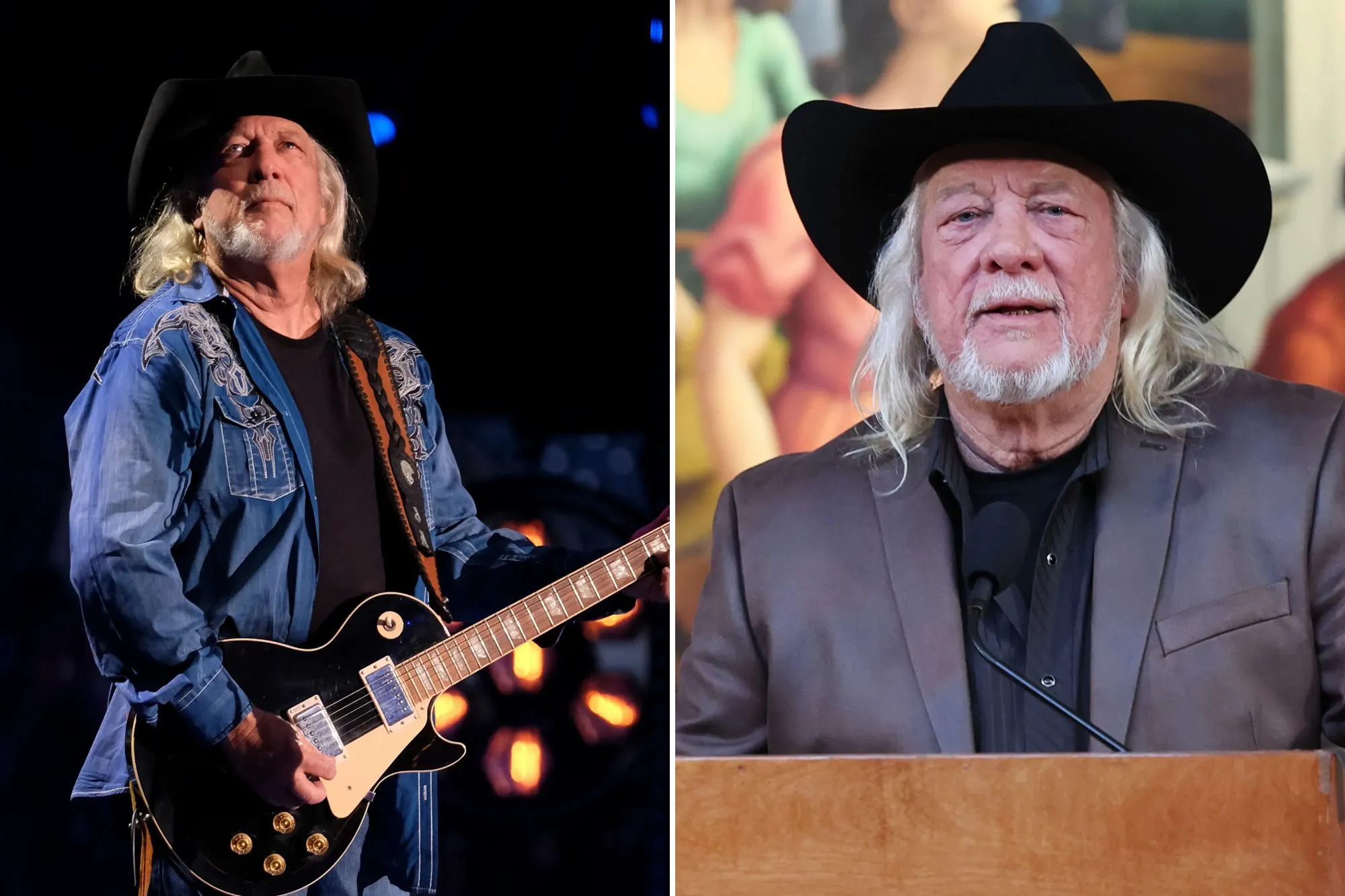
John Anderson, a country western star known for his traditional tunes and twangy voice, has died.
A representative for Anderson confirmed to The Times that the storied singer-songwriter died in his sleep at his home in Smithville, Tenn., on Wednesday. He was 71.
“It is with the heaviest of hearts that we share the passing of our beloved husband, father, grandfather, and best friend,” a statement from Anderson’s family read. “To the world, he was a gifted country music singer whose voice and songs touched countless lives. To us, he was so much more. He was the heart of our family, the one who made us laugh, loved us fiercely, and made every ordinary moment feel special. We are completely heartbroken. His music will live on, but for us, his greatest legacy will always be the love he gave his family and the memories we will carry with us forever. Please keep our family in your thoughts and prayers as we grieve this unimaginable loss.”
Born in Apopka, Fla., on Dec. 13, 1954, Anderson got his first guitar when he was 7 years old and played in garage bands as a teen. When he finished high school, Anderson packed his bags for Music City. He gigged at Nashville nightclubs until he landed his first record contract with the support of music publisher Al Gallico; he signed with Warner Bros. Records in 1976.
Over his storied career, Anderson earned 20 top 10 country hits, including five No. 1s. Through the 1980s and ’90s, Anderson was a leader in the explosion of neotraditional country tunes, and honky-tonks were filled with couples two-stepping to hits including “Swingin’,” “Seminole Wind,” “Straight Tequila Night,” “Wild and Blue” and “Black Sheep.”
In 1993, Anderson received the Academy of Country Music career achievement award. Introducing the award, Reba McEntire said Anderson was an early new traditionalist who “combined a sweet and pure country sound with great energy and emotion.” Billy Dean gave remarks, too, saying, “Back in the early ’80s, John’s sound and material struck the exact right chord with country record buyers and inspired a whole bunch of up-and-coming artists just like myself.”
In 2014, Anderson was inducted into the Nashville Songwriters Hall of Fame, and in 2024, Anderson he was inducted into the Country Music Hall of Fame alongside Toby Keith and James Burton.
“This is an institution that preserves greatness,” Anderson said of the honor. “That I get the chance to be amongst this kind of greatness, words can’t explain.”
COUNTRY music legend John Anderson has died at the age of 71.
The iconic voice behind Swingin and Straight Tequila Night was inducted into the Country Music Hall of Fame in 2024 with his heartbroken family paying a touching tribute.
Country music legend John Anderson has died at the age of 71Credit: GettyJohn was the iconic voice behind Swingin and Straight Tequila NightCredit: Getty
John, a native of Apopka, Florida, passed away on Wednesday.
His cause of death is yet to be announced.
Sign up for the Showbiz newsletter
Thank you!
An emotional statement from John’s family read: “It is with the heaviest of hearts that we share the passing of our beloved husband, father, grandfather, and best friend.
“To the world, he was a gifted country music singer whose voice and songs touched countless lives.
“To us, he was so much more. He was the heart of our family, the one who made us laugh, loved us fiercely, and made every ordinary moment feel special.
“We are completely heartbroken.
“His music will live on, but for us, his greatest legacy will always be the love he gave his family and the memories we will carry with us forever.
“Please keep our family in your thoughts and prayers as we grieve this unimaginable loss.”
Most read in Entertainment
John with his wife of 43 years Jamie Anderson at the Country Music Hall of Fame in 2026Credit: GettyJohn with Tim McGraw just four days agoCredit: Getty
He boasted a trio of hugely popular number one hits on the country charts for Wild and Blue, Black Sheep and his signature song Swingin.
John’s last public appearance saw him appear alongside his fellow inductees at the Country Music Hall of Fame Medallion Ceremony in Nashville on October 18.
They were inducting the 2026 stars Tim McGraw, Paul Overstreet and the Stanley Brothers.
John said his own induction into the elusive club was one of his best achievements.
He told Rolling Stone at the time: “One of the main gratifications is I got to live to see it.
“Several of my friends were inducted posthumously.”
John leaves behind his wife of 43 years Jamie Anderson and their two daughters Brionna and Alexa.
When it comes to City Section sports royalty, the Johnson family at Crenshaw High is in a class by itself.
Marques Johnson started the legacy in 1971, igniting the rise of Crenshaw basketball before moving on to UCLA and the NBA. He’s a City Section Hall of Famer. His son, Kris, was a City Section player of the year and led Crenshaw to consecutive state titles.
Now the last of the Johnsons for at least awhile — 6-foot-1 Shiloh Johnson — has transferred to Crenshaw from Windward. She’s the daughter of Marques and is a top junior girls’ basketball player.
Marques has been a strong supporter of the Crenshaw community and authored the book, “Crenshaw Chronicles.”
Just seeing him in the Crenshaw gym this winter with all the City and state championship banners on the walls will be something to enjoy. And look for Shiloh’s siblings and cousins to drop by, too.
“It’s always a great feeling,” Marques said.
Shiloh is now walking through the halls where her grandfather was a teacher, her aunt was a counselor and four of her five siblings went to school.
This is a daily look at the positive happenings in high school sports. To submit any news, please email eric.sondheimer@latimes.com.
The baseball world was captivated by left-handed pitching prospect Jim Abbott ahead of the 1988 major league draft mostly because he didn’t have a right hand. Seven teams passed on him before the Angels picked him.
Why? Largely because Angels scouting director Bob Fontaine Jr. ignored the potential limitations that others fixated on when evaluating Abbott. Rather than dwelling on the absence of a right hand, Fontaine saw something wondrous coming out of Abbott’s left hand — a cut fastball.
“He’s actually more suited to the pro game than the amateurs with the aluminum bats,” Fontaine told The Times after the draft. “He’s going to be breaking off a lot of these wood bats with that cut fastball.”
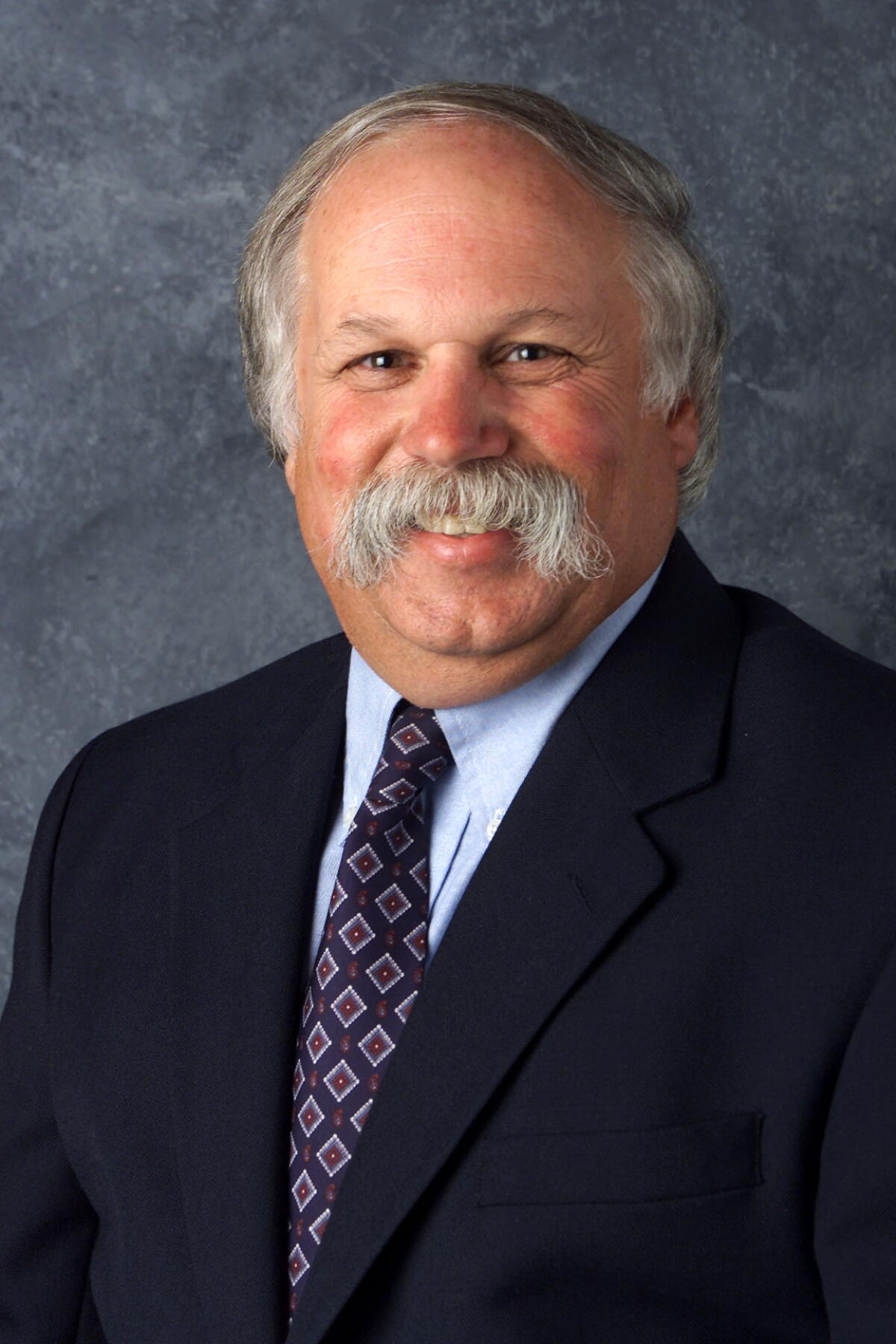
As usual, Fontaine, who died Saturday at age 73, was prophetic in his assessment. Abbott became the rare pitcher to go straight from college — he’d starred at Michigan — to the major leagues, skipping the minors entirely and enjoying a 10-year MLB career while inspiring numerous fans in disabled communities.
Bob Fontaine Jr. as director of player development for the Seattle Mariners.
(Seattle Mariners)
“I think every scout, if they scout for any length of time, is going to have one player that just is special to you. Jimmy Abbott was that,” Fontaine told JapanBall in 2022. “There were people that were even kind of saying, ‘Oh, they did it for a publicity stunt.’ I remember saying, ‘Yeah, we took the eighth player in the country for a publicity stunt? Give us some credit!’”
Fontaine was showered with plenty of posthumous credit over the weekend. He scouted for six teams, and a highlight of his resume was drafting the nucleus of the Angels’ roster that won the 2002 World Series.
“What a character … what a storyteller … and what a talent evaluator … there is no 2002 World Series title for the #Angels without Bob Fontaine Jr. … RIP,” wrote former longtime Times baseball writer Mike DiGiovanna on X.
What a character … what a storyteller … and what a talent evaluator … there is no 2002 World Series title for the #Angels without Bob Fontaine Jr. … RIP https://t.co/1eHIStuWWY
“Crushed regarding Bob Fontaine Jr.’s passing, as he was a special man who I was lucky to work closely with three times @WhiteSox @Mariners, and @BlueJays. Fun as hell, elite evaluator, and phenomenal people skills. RIP, Robert,” added former Dodgers general manager Dan Evans.
“A gifted talent evaluator and mentor, Bob helped shape generations of Angels by overseeing the signing and development of numerous Halos, including Jim Abbott, Jim Edmonds, Garret Anderson, Tim Salmon and Darin Erstad,” the Angels said in a statement. “Bob left a lasting mark on baseball by devoting over five decades to the game. Our thoughts are with his family and loved ones.”
The Angels frustrated Fontaine at times by declining to spend big on players from talent-rich Latin America. Rather than sulk, however, he scoured the globe, in 1992 signing three players from Russia and a fast-pitch softball player from New Zealand named Gus Leger.
Asked by The Times’ Bill Shaikin if he had ever played baseball, Leger responded, “I haven’t. Would it help?”
The experiment failed — none of the quartet advanced beyond Class A — yet Fontaine maintained the sunny outlook he inherited from his father. Bob Fontaine Sr. was a scout who worked under the legendary Branch Rickey with the Brooklyn Dodgers before becoming scouting director of the Pittsburgh Pirates for 18 years and the first scouting director of the expansion franchise San Diego Padres. He also served as general manager of the Padres from 1977 to 1980.
“[My father] told me when I got started, ‘Don’t you ever, ever not appreciate where you are and what you’re doing, because you’re lucky. You’re going to a ballpark to make a living, so your bad days aren’t that bad,’” Fontaine Jr. said. “I never forgot that, I never forgot how lucky I am.
“Hey, you’re looking at a guy that barely squeaked through high school, who doesn’t have any ability, and I lasted almost 50 years. It’s because in baseball, if you listen, and you’re not afraid to take a chance once in a while, even somebody with my lack of ability can stay around for a while,” he said.
Fontaine got his foot in the door through his father. His first job as a teenager was as a minor league bat boy with the Pirates. Next he became a peanut vendor at Forbes Field. By age 19, he caught on with the Padres as an area scout.
Both Fontaines were scouts well ahead of the deep empirical and objective analysis of baseball data — sabermetrics is the catchall term — that some believe has made scouts obsolete. Fontaine maintained the best evaluations come when scouting is utilized along with numbers.
“What the traditional scout gives you is personal reference, like with things I learned on players that I missed on,” he said. “Analytics didn’t do that. I’m a firm believer that the best video camera is your eyes, the best model is your brain, and the best way to make a tough decision is with your heart.”
Fontaine’s methods produced results. Under his guidance in 1977, the Padres drafted future Hall of Fame shortstop Ozzie Smith in the fourth round. Four years later Fontaine plucked another future Hall of Famer, taking outfielder Tony Gwynn in the third round.
And when Fontaine moved to the Montreal Expos in 1985, he took a 6-foot-11 left-handed pitcher out of USC named Randy Johnson in the second round — another Hall of Famer.
Fontaine co-authored a memoir in 2021, “In Search of Millionaires (The Life of a Baseball Gypsy): The Accounts of Bob Fontaine Jr.”
“Baseball has provided me with a fabulous opportunity to see the world and work in an industry that most people envy,” he wrote in the book. “I didn’t get rich, except in experiences. To meet and work against so many fine people, as well as some great general managers and owners, has been a privilege.”
Times sports columnist Bill Shaikin contributed to this story.