falls

US falls to ‘historic low’ in press freedom tracker: RSF | Donald Trump News

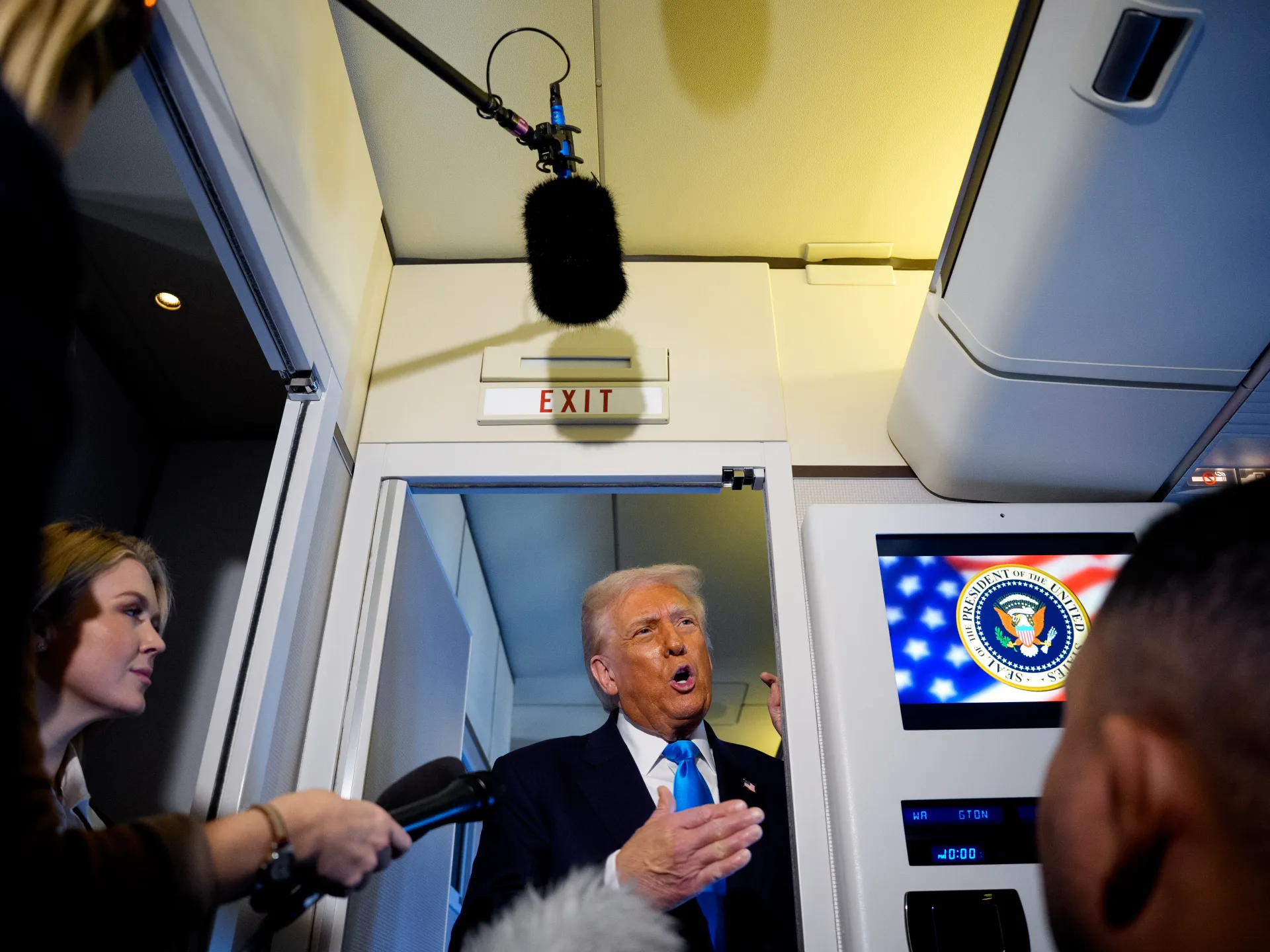
The United States has fallen to a “historic low” in the Reporters Sans Frontieres (RSF), or Reporters Without Borders, annual press freedom tracker, continuing a decade-long decline, the organisation has said.

The report on Thursday recorded a global drop in press freedom indicators in 2025, with, for the first time, more than half of the world’s countries labelled as “difficult” or “very serious”.

Recommended Stories

list of 3 itemsend of list

While the US, during the first year of US President Donald Trump’s second term, remained in the “problematic” category, it dropped seven spaces from 57th in the world to 64th. Norway led the list, with Eritrea ranked lowest among 180 countries.

In a statement, Clayton Weimers, executive director of RSF’s North America office, said the US was experiencing a “press freedom crisis”.

“Trump and his administration have carried out a coordinated war on press freedom since the day he took office, and we will live with the consequences for years to come,” he said in a statement.

“Our message is clear: Protect legal rights, ensure accountability for attacks on media professionals, and support independent media to restore American press freedom.”

The report pointed to both Trump administration policies and the wider consolidation of media companies in the US, which critics say opens the door to stifling certain points of view.

That has included Skydance Media’s acquisition of Paramount Global, which includes CBS News. Skydance is owned by David Ellison, whose father, Larry Ellison, is a confidant of Trump’s.

Paramount Skydance is also currently acquiring Warner Bros, which owns CNN.

All told, just six companies control most US media: Comcast, Walt Disney, Warner Bros Discovery, Paramount Skydance, Sony, and Amazon.

While Trump has long had an adversarial relationship with journalists, press freedom observers say the head of the Federal Communications Commission (FCC) has accelerated pressure on media figures and journalists during the president’s second term.

In March, FCC chair Brendan Carr said he would revoke the licences of broadcasters that are “running hoaxes and news distortions”, and that do not “operate in the public interest” in their reporting on the US-Israel war with Iran. Trump said he was “thrilled” by Carr’s statements.

Carr has also threatened to revoke the licenses of broadcasters for their coverage of Trump’s immigration policies, which critics say can have a chilling effect on local news organisations.

The effort has extended to television talk show hosts, who have been threatened by the FCC over jokes.

Most recently, Carr announced an investigation into several ABC channels.

That came days after the network’s flagship late-night host, Jimmy Kimmel, made a joke about the White House Correspondents Dinner (WHCD).

Kimmel had quipped that First Lady Melania Trump had the “glow of an expectant widow” before the event.

Days later, a gunman attempted to storm the WHCD in Washington, DC, which Trump was attending for the first time. The Trumps later connected Kimmel’s joke to the attack, calling for Kimmel’s firing.

Kimmel has said the joke was about the 79-year-old president and the 56-year-old first lady’s “age difference” and not a call for violence.

Critics of the FCC’s move included Republican Senator Ted Cruz, who said he does “not believe the FCC should operate as the speech police”.

The White House has repeatedly called Trump the most “transparent” president in US history, pointing to his regular news conferences.
Source link

Press freedom worldwide falls to its lowest level in 25 years | Freedom of the Press News

Freedom of the press around the world has fallen to its lowest level in a quarter of a century, according to the leading Paris-based press freedom NGO, Reporters Sans Frontieres (RSF), or Reporters Without Borders.

Every year, RSF publishes a World Press Freedom Index used to compare the level of freedom enjoyed by journalists and media outlets in 180 countries. Its ranking uses a five-point scale to assess a country’s level of press freedom, ranging from “very serious” to “good”.

Recommended Stories

list of 3 itemsend of list

For the first time since RSF started producing the index in 2002, more than half of the world’s countries fall into the “difficult” or “very serious” categories for press freedom – “a clear sign that journalism is increasingly criminalised worldwide”.

Only seven mostly Nordic countries are ranked with “good” press freedom, with Norway, the Netherlands and Estonia in the top three. France ranks 25th with a “satisfactory” score, while the United States ranks 64th with a “problematic” score, falling seven places since President Donald Trump took office.

RSF reports that Trump “has turned his repeated attacks on the press and journalists into a systematic policy”, citing the detention of Salvadoran journalist Mario Guevara, who was later deported, while he was documenting a protest against immigration raids, as well as the suspension of several notable public media institutions.

In Latin America, RSF highlighted the dramatic fall of Javier Milei’s Argentina (98th, -11) and of El Salvador (143rd), which has dropped 105 places since 2014 following the launch of a war against the Maras criminal gangs.

The press freedom NGO said that “Eastern Europe and the Middle East are the two most dangerous regions for journalists in the world, as they have been for 25 years”, notably putting Russia (172nd) and Iran (177th) in the bottom 10.

It added that wars and restrictions on access to information are some of the driving factors for the decline in press freedom. It cited Israel’s attacks on journalists in Gaza, the occupied West Bank and Lebanon as an example of this, ranking Israel 116th.

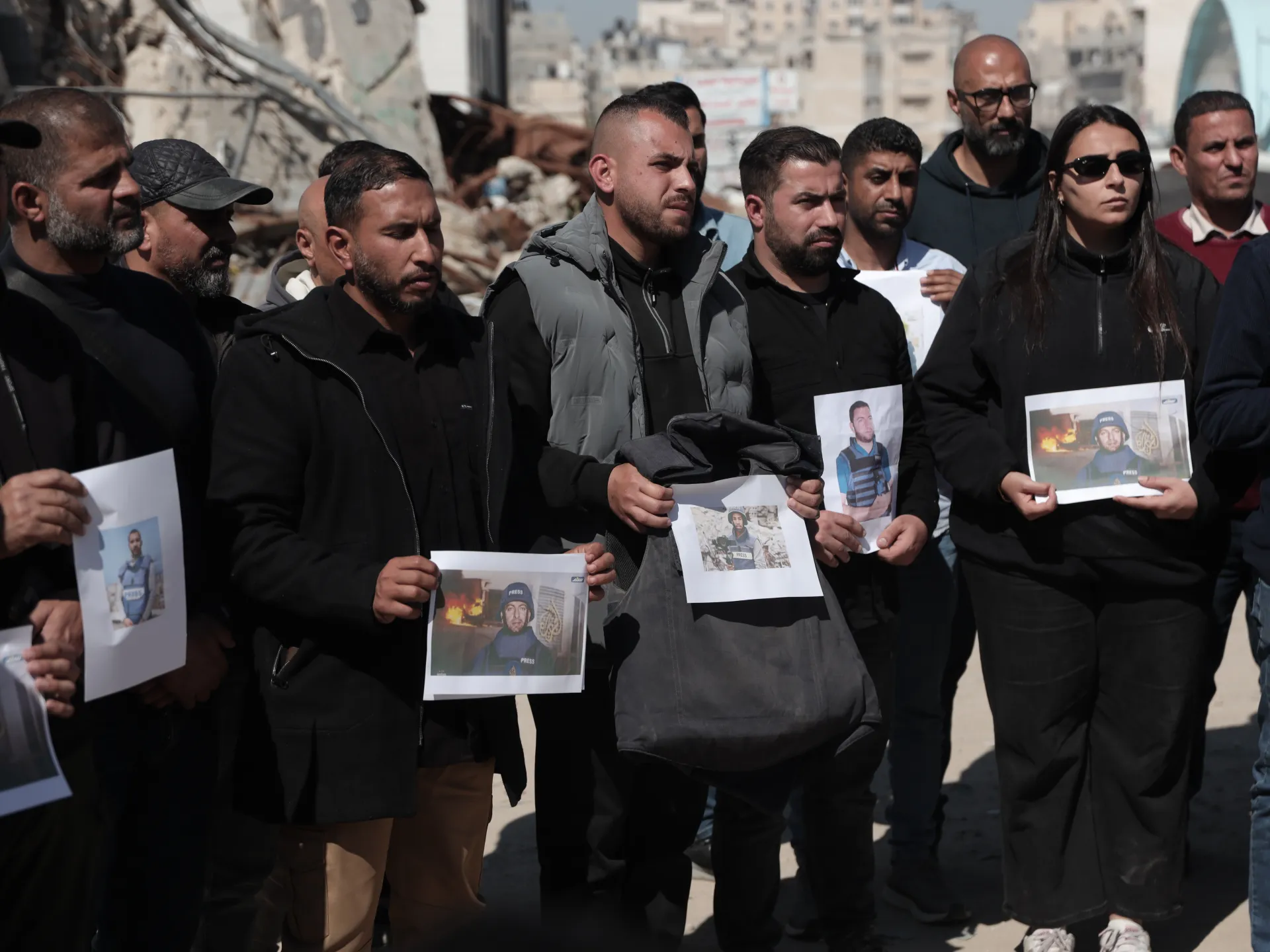
“Since October 2023, more than 220 journalists have been killed in Gaza by the Israeli army, including at least 70 who were slain while carrying out their work,” it said.

Broadly speaking, RSF reported that “the criminalisation of journalism, which is rooted in circumventing press law and misusing emergency legislation and common law, is proving to be a global phenomenon”.

It reported that more than 60 percent of countries – 110 out of 180 – have criminalised media workers in various ways, notably citing India (157th), Egypt (169th), Georgia (135th), Turkiye (163rd) and Hong Kong (140th) as prime examples of state-imposed crackdowns.

“Although attacks on the right to information are more diverse and sophisticated, their perpetrators are now operating in plain sight,” Anne Bocande, RSF’s Editorial Director said.

She cited “authoritarian states, complicit or incompetent political powers, predatory economic actors and under-regulated online platforms” as the main causes “for the global decline in press freedom”.

Bocande called on democratic governments and citizens to do more to end this global criminalisation of journalists, particularly through “firm guarantees and meaningful sanctions”.

“Current protection mechanisms are not strong enough; international law is being undermined and impunity is rife,” she said. “Inaction is a form of endorsement,” while concluding that “the spread of authoritarianism isn’t inevitable”.

Source link

Iran’s currency falls to new low as US blockade, sanctions impact trade | US-Israel war on Iran News

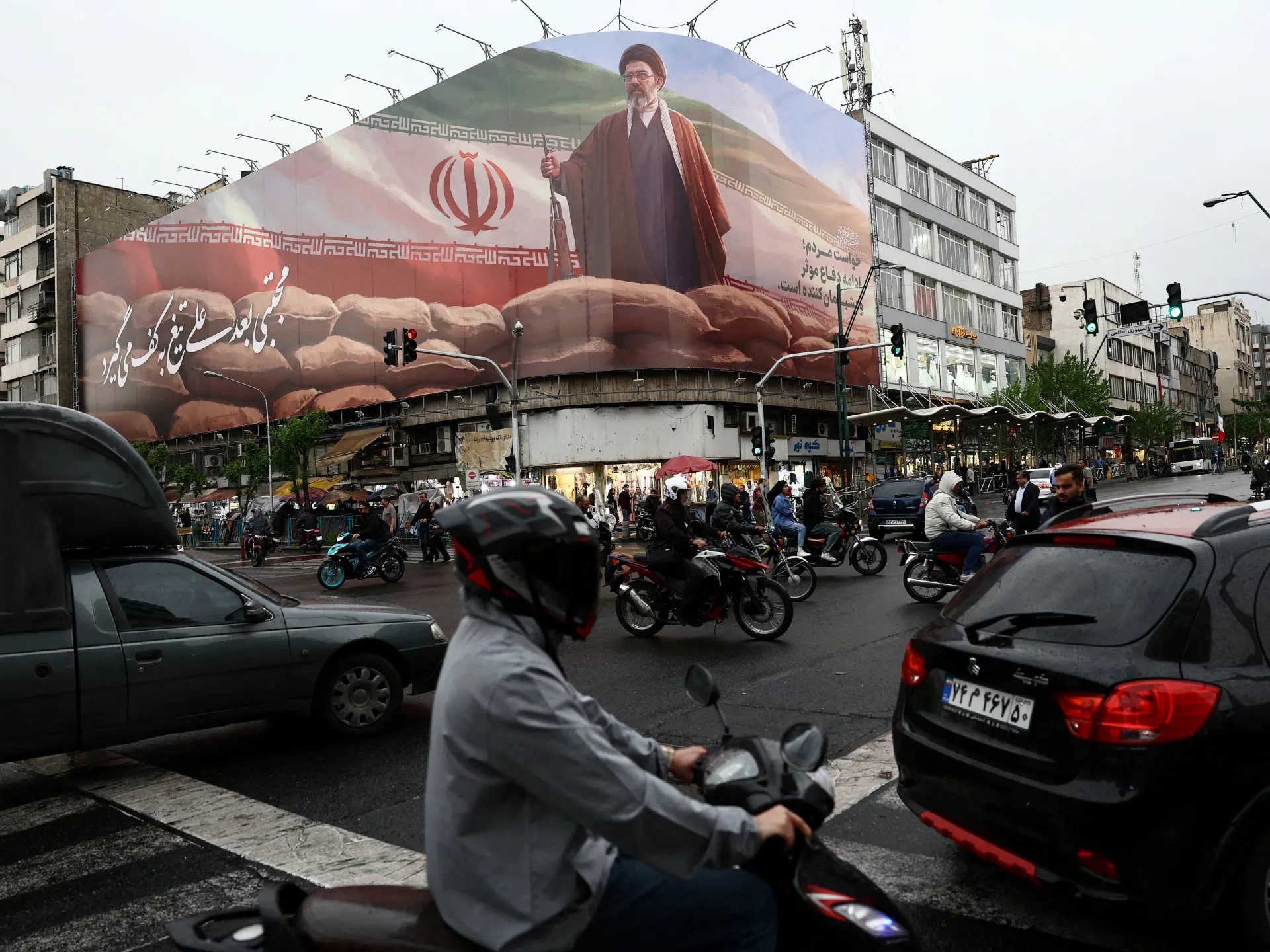
Tehran, Iran – Iran’s national currency has plunged to new lows as authorities mobilise to dampen the impact of the naval blockade enforced by the United States.

The Iranian rial shot above 1.81 million to the US dollar on the open market by early afternoon on Wednesday before partially recovering. The embattled currency changed hands for about 1.54 million earlier this week, and its rate was about 811,000 per US dollar a year ago.

Recommended Stories

list of 3 itemsend of list

The rial had remained relatively stable over the past two months after experiencing an earlier drop as US forces amassed in the lead-up to the US-Israeli war on Iran, which began at the end of February.

The latest freefall follows on from unchecked inflation, which has been increasingly plaguing the Iranian economy as a result of mismanagement and sanctions, and continues to ravage households. Washington now has three aircraft carriers in the region and is bringing in more troops and equipment as Israel expresses readiness to restart fighting, three weeks after a ceasefire began.

Iran’s authorities this week projected a hardened stance on negotiations with Washington, and pledged to fight the naval blockade of Iran’s southern waters, which the US Central Command insisted on Tuesday had “cut off economic trade going into and coming out of” the country.

Amid threats by US President Donald Trump, the Iranian government has also tried to empower its own border provinces to import essential goods by reducing red tape. It has also allocated $1bn from the sovereign wealth fund to buy food, and made a partial policy U-turn to restart offering a preferential subsidised exchange rate with the goal of reducing prices, despite concerns about corruption.

Non-oil trade takes hit

According to customs data released by state media, Iran’s non-oil trade has been negatively affected after commercial ties were disrupted or cut off as a result of the war, and critical infrastructure was bombed.

Iran’s customs authority put the total value of non-oil trade in the Iranian calendar year that ended on March 20 at close to $110bn, with $58bn going to imports. The figure was about 16 percent lower than the year before.

The volume of non-oil trade was valued at approximately $9bn for the 11th month of the calendar year ending on February 19, and $6.46bn in the final month, indicating a drop of about 29 percent in connection with the war, which started on February 28. The final month was also about 50 percent lower than the more than $13bn estimated value for last year’s corresponding month.

Part of the drop is linked with the fact that shipping has been significantly disrupted through the Strait of Hormuz as Iran and the US spar over control of the strategic waterway. The US and Israel also directed some of their thousands of strikes against ports, naval facilities, airports, and railway networks across the country.

Iran’s top steel and petrochemical producers were also extensively bombed, as were oil and gas facilities, power stations, and major industrial zones. The US and Israel have threatened to take Iran “back to the Stone Age” through systematic bombing of civilian infrastructure like power plants.

To manage the impact and preserve domestic supply, Iranian authorities have imposed temporary restrictions on exports of steel, petrochemicals, polymers and other chemicals.

Oil exports in the crosshairs

The US is using its military capabilities and economic chokeholds to drive down Iran’s oil exports, a goal that it has also pursued over recent years through sanctions.

Since mid-April, the US military has been deploying its soldiers to take over or inspect ships transiting through waterways near Iran, in addition to targeting what is known as a shadow fleet of tankers used by Iran to circumvent sanctions and ship its oil.

Warships and thousands of troops could still launch a ground invasion or destructive aerial attacks against Iran’s Kharg and other critical islands, and the Trump administration expects increased pressure on Iran’s oil sector due to hampered access to export routes and supertankers keeping the oil stored on the water.

The US Treasury has been blacklisting refineries in China, the biggest buyers of Iranian crude oil, and going after the banking and cryptocurrency channels alleged to be facilitating Tehran’s oil trade, and having links to the IRGC – which Washington considers a “terrorist” organisation.

“We will follow the money that Tehran is desperately attempting to move outside of the country and target all financial lifelines tied to the regime,” said US Treasury Secretary Scott Bessent on social media.

Chinese refineries buy roughly 90 percent of Iran’s oil shipments, and imported a record 1.8 million barrels per day ⁠in March, according to Vortexa Analytics data cited by the Reuters news agency, which also said purchases were expected to slow due to worsening domestic refining and processing margins.

According to figures released by the General Administration of Customs of China, the volume of the country’s bilateral trade with Iran during the first quarter of 2026 stood at $1.55bn, down 50 percent year-on-year.

In March, the first month of the war, trade stood at $184m, which was nearly 80 percent lower than the year before and 64 percent lower than the month before. China’s imports from Iran and exports to the country were both considerably reduced as a result of the war.

The removal of the United Arab Emirates as a major trade partner and import market for Iran has also significantly affected the country’s economy, increasing its reliance on land neighbours like Turkiye and Iraq to the west and Pakistan to the east.

The UAE, a big part of the Trump-led Abraham Accords that saw multiple countries normalise relations with Israel, was heavily targeted by ballistic missiles and drones launched by Iran.

The UAE has closed down numerous Iranian institutions on its soil over the past two months, including financial facilitators, instructed Iranian citizens to leave, and has said it will take years to restore bilateral relations to previous levels.

Source link

Sydney Sweeney almost falls out of blue corset dress as she joins Diplo at Stagecoach festival

SYDNEY Sweeney left very little to the imagination as she almost fell out of a blue corset dress at Stagecoach.

Stunning Sydney, 28, made a surprising appearance on stage at Diplo’s Honkytonk during the 2026 Stagecoach Festival.

Sydney appeared on stage Diplo’s HonkyTonk during the 2026 Stagecoach Festival at Empire Polo Club Credit: Getty
The Euphoria star handed out panties to fans Credit: Getty
She then crooned while performing a karaoke session with Diplo Credit: X
She looked amazing as she almost spilled out of her tiny blue corset Credit: X

The Euphoria star looked sensational as she handed out knickers while on stage.

Sydney’s baby blue corset dress looked as though it was held up by luck alone as she appeared on stage.

Fans were so shocked by Sydney’s appearance at the festival, with many overjoyed to see her on stage.

After handing out panties from her SYRN lingerie line, she and Diplo took part in a fun karaoke session

PILLOW TALK

Euphoria’s raunchiest sex scenes as Sydney Sweeney strips down for new season


‘NEXT LEVEL’

Olivia Dunne wows as she poses for Sydney Sweeney’s skimpy lingerie brand SYRN

A video of Sweeney and Diplo was posted via the underwear brand’s Instagram stories on Saturday evening, with the caption: “@diplo Thanks for stopping by!!!”.

Fans rushed to the comments of the main post shared on SYRN’s Instagram reels, which showcased all of the famous guests who stopped by.

One fan said: “This whole look, I am in love.”

While another added: “The people’s princess.”

And a third wrote: “She’s too hot, it’s almost uncomfortable.”

Meanwhile, since the footage of Sydney made its way onto X, one person on the platform penned: “Love it. Love how she doesn’t give 2 sh*t’s about her haters and living her absolute best life with no apologies needed!!!”

“I love her so much,” said a second.

“She owns the damn place. She can do whatever the F she wants,” wrote a third.

“She looks stunning and she also looks happy and free. Haters gonna hate,” chimed a fourth.

While a fifth said: “Sydney is an ALL AMERICAN BADDIE!!”

“I love sydneys outfit,” swooned a sixth.

And a seventh gushed: “Sydney Sweeney is literally perfect.”

This comes as Sydney continues to enrage fans with her portrayal of Cassie in Euphoria.

Sydney plays the role of Cassie Howard in one of TV’s steamiest shows, with fans left angered by the level of raciness in its third season.

Cassie’s controversial new career choice as an OnlyFans model with a montage of raunchy photoshoots.

In one compromising position, Cassie licks a melting ice cream cone as it drips down her entire naked body – including on her bare chest.

Another shot showed Cassie, butt naked in nothing but a backwards baseball hat on her head and her hand covering her modesty.

These have not been the only controversial scenes in Euphoria season three thus far.

Sydney is dressed as a baby with a pacifier in her mouth in episode one.

Posing in a suggestive way with her legs open, fans were left fuming over the NSFW display.

Sydney’s scenes in Euphoria season three have caused quite the stir Credit: HBO
She goes completely nude in several scenes across episode one and two Credit: HBO

Source link