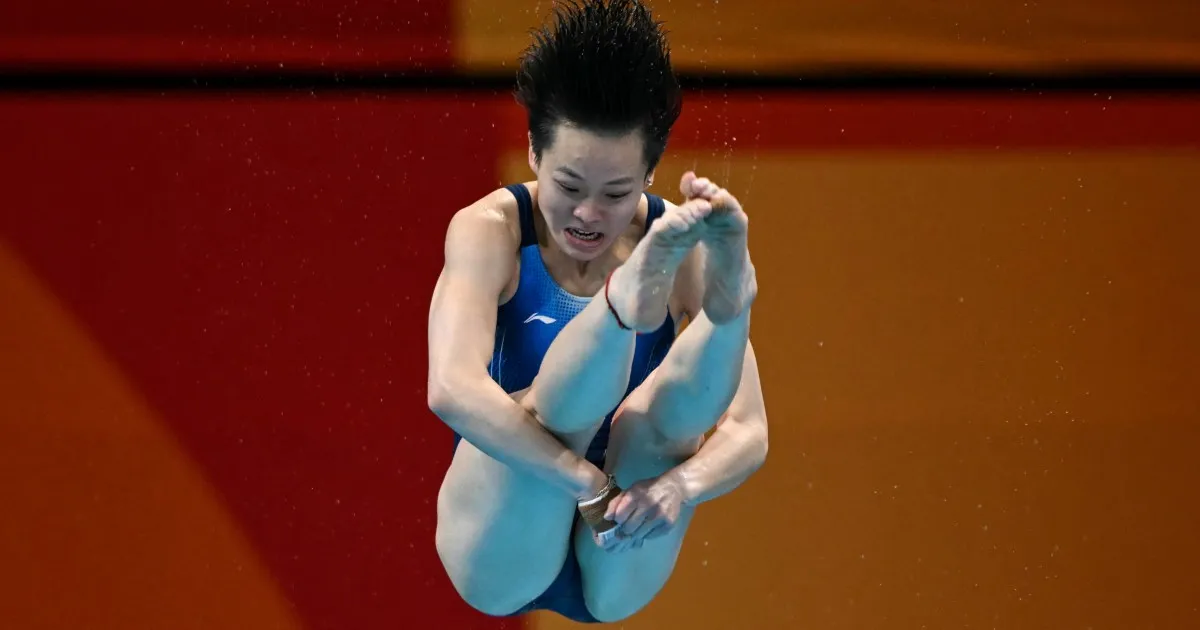
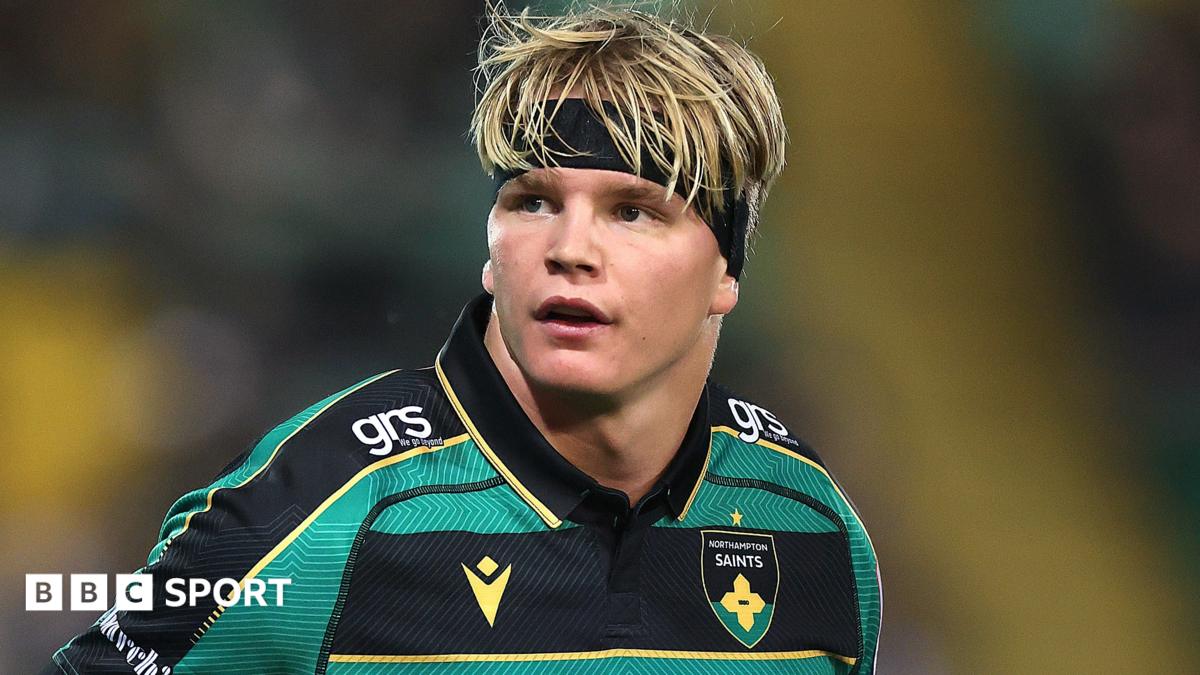
Maiara Niehues scored for the fifth straight game and Sveindís Jonsdottir added a late goal to lead Angel City (7-6-1) to its third straight win, 2-0 over the Chicago Stars on Saturday.
Niehues scored on a penalty kick in the 56th minute after a video review determined Ary Borges was fouled in the box.
Jonsdottir scored on a breakaway in stoppage time.
Since taking over as interim coach, Leif Smerud has led Angel City to three straight 2-0 wins, the first time the club has had three consecutive shutout wins.
Spain international Leila Ouahabi made her debut for the Stars (4-11-0).
Reigning MotoGP champion Marc Marquez has extended his contract with Ducati until 2028.
The 33-year-old Spaniard joined the team in 2024 and last year won his seventh title – his first since 2019.
“I continue to compete because I love this sport and I want to achieve even more ambitious goals. I’m convinced this is the right place to do it,” said Marquez.
He heads into this weekend’s Dutch Grand Prix trailing championship leader Marco Bezzecchi by 40 points after the start of his season was hampered by injury.
Marquez secured his 100th career victory across all classes with a commanding win in the Hungarian Grand Prix this month, less than a month after shoulder and foot surgery.
He followed it up with victory in Sunday’s Czech Grand Prix.
“I’m super happy with this new agreement with the Ducati Lenovo Team and to continue being part of this family,” Marquez said.
“With this renewal, they have once again reaffirmed this commitment, respecting my times and giving me the peace of mind I needed to make the right decision.”
A judge on Friday permanently blocked President Donald Trump’s “anti-weaponization” fund because, despite administration officials’ statements that the fund will not be enacted, she does not believe them. Photo by Samuel Corum/UPI | License Photo
June 12 (UPI) — A federal judge on Friday extended an order to indefinitely block President Donald Trump‘s $1.776 billion “anti-weaponization” fund because she does not trust the administration’s word that it will not attempt to enact it.
The fund was announced last month and meant to compensate people the Trump administration alleged were targeted by the Biden administration, including people who were convicted for their actions during the Jan. 6, 2021, riots at the Capitol Building in Washington, D.C.
Judge Leonie Brinkema of the Eastern District of Virginia in her ruling blocked Acting Attorney General Todd Blanche, Associate Attorney General Stanley Woodward, Jr., and Treasury Secretary Scott Bessent from taking “any action to create or operate” the fund and that they not proceed with the concept “in any manner, or under any name.”
Brinkema’s ruling builds atop one from Washington, D.C., Judge Richard Leon that they do not believe the administration will not attempt to distribute money in the scheme.
Both judges indicated that they do not believe that the Department of Justice will back off from the plan because no officials from the agency have said they would do so while sworn in and under penalty of perjury.
“When the President of the United States says” that he wants something, referring to Trump, Brinkema said “that’s a pretty good indicator there will be an incentive and motive to make it happen,” CNN reported.
Even with the fund having been on hold for the last week, at least one person already has attempted to file a claim, to which the federal court responded that it is “not accepting applications”
President Donald Trump speaks to reporters about restoring commercial fishing access to areas of the Pacific during a signing ceremony in the Oval Office of the White House on Thursday. Photo by Jim Lo Scalzo/UPI | License Photo
Justice Department had walked back controversial plan after meeting backlash from lawmakers and lawsuits.
Published On 12 Jun 202612 Jun 2026
A federal judge in the United States has indefinitely blocked the Trump administration from moving forward with plans for a $1.8bn “anti-weaponisation” fund, meant to offer payments to those who experienced alleged “lawfare” and “weaponisation” of the government.
The ruling on Friday represents another setback for the scheme, which has faced heavy resistance from lawmakers and has been walked back by the Department of Justice previously.
Recommended Stories
list of 3 itemsend of list
Judge Leonie Brinkema of the US District Court for the Eastern District of Virginia had issued a temporary halt to the fund last week and issued a preliminary injunction as it was set to expire on Friday.
The fund was the product of a settlement between Trump and the Justice Department of a $10bn lawsuit the president had brought against the Internal Revenue Service (IRS).
The Justice Department set up a $1.776bn fund that would have been helmed by a five-member commission to distribute funds to those they deemed victims of “weaponisation”, a term that Trump has used to describe investigations and criminal cases into himself and his allies.
Attorney General Todd Blanche walked back the plans earlier this month amid growing criticism, and government attorneys have argued that lawsuits challenging the scheme are now irrelevant.
Even before the administration announced it was dropping the fund, the Justice Department did not form the five-member commission to decide on payout criteria, so no money was paid out or claims accepted.
Many of the Republican president’s allies are opposed to compensating rioters who stormed the US Capitol on January 6, 2021. In May, however, Blanche would not rule out the possibility that Capitol rioters who engaged in violence could be eligible to apply for payments from the fund.
Trump issued mass pardons to Capitol rioters on his first day back in the White House last year. More than 1,500 people were charged in the January 6 attack before Trump erased every case with his sweeping act of clemency.
Plaintiffs who sued to block the plan argued that the scheme diverted taxpayer funds into what was essentially a slush fund and have expressed doubt about Blanche’s assurances that the fund will not move forward.
While the administration has moved away from the scheme, Trump himself has not endorsed its cancellation and has continued to discuss it positively in comments to the press.
ALEXANDRIA, Va. — A federal judge agreed on Friday to extend a court-ordered block on the Trump administration’s creation and operation of a $1.8 billion settlement fund for compensating people who claim to be victims of a weaponized government.
Earlier this month, acting Atty. Gen. Todd Blanche told Congress that the government is scrapping its plans for the fund in the face of a fierce bipartisan backlash. Government attorneys have argued that lawsuits challenging the fund are now moot, but plaintiffs’ attorneys aren’t satisfied by Blanche’s assurances that the fund won’t move forward.
Neither was U.S. District Judge Leonie Brinkema, who ruled that the “Anti-Weaponization Fund” will remain blocked until further notice from the court.
“The (government’s) mootness argument, in my view, doesn’t go anywhere,” the judge said.
President Trump, meanwhile, has not publicly and unequivocally endorsed its cancellation. He has continued to express support for the fund in remarks to reporters.
Brinkema gave the parties a week to negotiate an agreement for Blanche to submit a sworn declaration that the administration won’t revive the fund.
Brinkema previously agreed to temporarily block the administration from proceeding with the fund for at least two weeks. Her May 29 order was due to expire on Friday.
Trump’s Republican administration created the fund to resolve his lawsuit against the Internal Revenue Service over the leak of his tax returns.
Plaintiffs who sued to block fund payouts argue that the government can’t legally divert taxpayer money into what they argue is a slush fund for compensating Trump’s allies.
In a separate case on Wednesday, a different judge in Washington, D.C., rejected a government watchdog’s parallel request for a court order temporarily blocking the Trump administration from forging ahead with the fund. U.S. District Judge Richard Leon said he accepts Blanche’s representation that the fund is now moot.
Leon had asked Justice Department attorney Andrew Block why Blanche doesn’t formally rescind his May 18 order establishing the fund. Block said he didn’t know. He still didn’t have an answer to that question when Brinkema posed it two days later.
“It’s a huge gap in the record that we don’t have an answer to that question,” the judge said.
In the Virginia case, attorneys from the legal advocacy group Democracy Forward asked for an order to temporarily suspend the fund’s implementation and stop the Trump administration from disbursing any payouts from it.
The plaintiffs include a fired prosecutor and a college professor acquitted of assaulting federal agents at a protest.
Even before the administration said it was dropping the fund, the Justice Department did not form the five-member commission that would decide on payout criteria, so no money was paid out nor claims accepted.
Many of the Republican president’s allies are opposed to compensating rioters who stormed the U.S. Capitol on Jan. 6, 2021. In May, however, Blanche wouldn’t rule out the possibility that Capitol rioters who engaged could be eligible to apply for payments from the fund.
Trump issued mass pardons to Capitol rioters on his first day back in the White House last year. More than 1,500 people were charged in the Jan. 6 attack before Trump erased every case with his sweeping act of clemency.
Brinkema was nominated to the bench by President Clinton, a Democrat.
Serena Williams has added another stop to her comeback tour: the Berlin Tennis Open.
Just a day after announcing her return to professional tennis, the 23-time Grand Slam singles champion has been added to the 16-team doubles field at Germany’s WTA 500 event.
“Every tournament I add to my schedule right now feels special, and Berlin is no exception,” Williams said in a statement shared by the event on Tuesday. “I’m excited to compete in front of the German fans and continue building momentum throughout the grass-court season.”
Williams is set to play in the doubles tournament at the HSBC Championships at London’s Queen’s Club, which kicks off June 8. On Thursday, 19-year-old Canadian rising star Victoria Mboko confirmed on Instagram that she’ll be Williams’ partner at the event. The Berlin Tennis Open will begin June 13 and Williams’ partner has yet to be named.
The 44-year old tennis great is returning to the sport after almost four years away from competition. She firmly denied rumors of her return on social media just last year.
Williams appeared to poke fun at her own turnaround with a short ad video posted to X on Thursday captioned “I changed my mind.”
Despite prior rumors, Williams’ sister Venus seemed just as surprised as everyone else that Serena was returning to the competitive circuit.
“I think she hits every now and then,” Venus Williams, who also still competes professionally, said during a recent interview at Roland-Garros. “I never see her on the court that often, so I don’t know when she’s been practicing, honestly.”
Despite not having seen her practice first-hand, Venus Williams is not worried about how Serena will play at the upcoming competitions.
“She’s, I think, a little bit of a natural,” she said with a laugh. “She has a pretty good record. She knows what she’s doing. She’s very tenacious. I’m not worried about how she’s going to play, even though I really haven’t seen her play. It’s so crazy.”
MILWAUKEE — Looking back, Alex Vesia can say that when was traded from the Miami Marlins to the Dodgers with fellow pitching prospect Kyle Hurt in 2021, he had “no idea” what it actually meant to trust the process.
Sure, it’s a cliche, and one most strongly associated with the Philadelphia 76ers’ rebuild in the NBA a decade ago. But it’s had staying power in the sports lexicon for a reason.
The mantra clicked for Vesia in his first season with the Dodgers.
“When I first heard of it, it was just like, OK, I know what a process is,” he said before the Dodgers’ 5-1 win against the Milwaukee Brewers on Sunday. “But then watching it over the course of the year — where fastballs need to be placed, where sliders need to go, just trusting the information. That when a guy swings a lot at sliders and misses them, trusting that when you throw yours, he will miss it.
The Dodgers’ Andy Pages celebrates his two-run home run with teammate Kyle Tucker during a win over the Brewers Sunday in Milwaukee.
(Patrick McDermott / Getty Images)
“And then over the course of a few outings, when you see those results, it’s like, ‘OK, I can do this’ more and more and more.”
Vesia is now one of the veteran leaders in a Dodgers bullpen that set a franchise record Saturday with 36 consecutive scoreless innings, surpassing the mark of 33 set in 1998. The Dodgers extended the streak to 38 on Sunday.
“Last night was awesome,” Vesia said Sunday, a day after a dominant 11-3 win. “It was a really great game because it showed how versatile our bullpen can be, that we don’t need a set inning for the guy.”
Instead, manager Dave Roberts could play matchups — having left-handers Vesia and Tanner Scott face the more heavily left-handed heart of the order, and Hurt check in for the right-handers at the bottom and top — until the Dodgers’ offense made it a blowout.
On Sunday, the bullpen had only to cover two innings, thanks to a steady performance by Yoshinobu Yamamoto, who limited the Brewers to one run through seven innings. And the Dodgers relievers had a four-run cushion to work with, thanks to a fifth-inning rally that included a two-run triple from Kyle Tucker and a two-run homer from Andy Pages.
Right-hander Will Klein retired the top of the order in a clean eighth inning, and Scott set down the next three Brewers, putting the finishing touches on a series win in a rematch of last year’s National League Championship Series.
Dodgers shortstop Mookie Betts turns a double play during a win Sunday in Milwaukee.
(Kayla Wolf / Ap Photo/kayla Wolf)
As Roberts reflected on the 7-2 road trip to Anaheim, San Diego and Milwaukee, he highlighted the bullpen’s impact: “There’s a lot of different guys that are the reason why they’ve been so successful recently.”
Entering the season, much of the chatter surrounding the bullpen centered on the addition of closer Edwin Díaz. But he’s been on the injured list (elbow surgery) since April 20, and the relief corps has been on a roll.
Without a closer, the Dodgers’ circle of trust in close games includes a good mix of veteran arms and budding talent, from Scott, Vesia and Blake Treinen to Hurt, Klein and Jack Dreyer (on the 15-day IL because of left shoulder discomfort).
“It’s a bunch of selfless guys who know that the job is to throw up a zero and give it to the next guy,” Klein said. “I think we’re all just trying to give our offense a chance to do what we know they can do. And I think that showed up last night, and it showed up a lot the last two weeks. They’ve been playing really well, and so I think we know if we just go out there, put up a zero, they’ll do it the next inning — and if they don’t, we try again.”
The bullpen’s scoreless streak stretches back through the eighth inning of a 6-2 loss to the San Francisco Giants on May 12. It covers a bullpen game, when the group filled in for Blake Snell after he was scratched from his start in Anaheim, and the series in San Diego, where the Dodgers relievers outperformed the Padres’ renowned bullpen.
“We’ve got to give credit to the starters and the hitters, and the guys playing great defense too,” Hurt said. “So, it’s not just us.”
Though good defense and some luck is involved in any scoreless streak this long — opponents entered Sunday with a .147 batting average on balls in play against Dodgers relievers since their shutout performance on May 13 — it’s no fluke either. The Dodgers bullpen still leads the majors in the Fielding Independent Pitching category (2.35) in that time.
So, what’s the secret stuff?
“The secret stuff is, there is no secret stuff,” Klein said. “Sometimes when you look for an answer, or you look for the magic to fix things, that’s when you overdo it and things start spiraling. But I think everyone knows that it’s one pitch at a time, and if you think about the result, you’re not as ingrained in the process.”
That was the moral in “Space Jam” too.
The ripple effects of that consistency have been clear.
“It frees up the offense a little bit,” Roberts said. “Regardless of who comes into a ballgame, I think they have the confidence now to go up and put up a zero. And it makes my life easier because you trust a lot more guys. And that’s what these guys have earned.”
May 19 (UPI) — The Trump administration has issued temporary Russia sanctions relief for a third straight month, extending a waiver allowing the delivery and sale of Russian oil already loaded onto tankers at sea amid the ongoing energy crisis cause by the U.S. war with Iran.
Treasury Secretary Scott Bessent announced the 30-day reprieve on social media, saying it will “provide the most vulnerable nations with the ability to temporarily access Russian oil currently stranded at sea.”
“This extension will provide additional flexibility, and we will work with these nations to provide specific licenses as needed. This general license will help stabilize the physical crude market and ensure oil reaches the most energy-vulnerable countries,” he said in a statement.
The United States has imposed thousands of sanctions on Russia since it invaded Ukraine in February 2022, in an effort to cut it off from a lucrative revenue source to fund its war.
The sanctions relief — first issued on March 5 to permit the sale of Russian crude to India before being broadened March 12 — may have helped Russia generate ab additional $150 million per day in oil revenue, or $3.3 billion to $5 billion in the month of March alone, according to the Council on Foreign Relations.
Ukrainian President Volodymyr Zelenskysaid in mid-April that about $10 billion worth of Russian oil was at sea, condemning the sanctions relief by stating “every dollar paid for Russian oil is money for the war.”
Democrats and Ukrainians have been sharply critical about the sanctions relief, describing it as undercutting their years of work to try to hobble Russian President Vladimir Putin’s ability to make war.
Following the announcement of the extension on Monday, Democratic Sens. Jeanne Shaheen of New Hampshire and Elizabeth Warren of Massachusetts described the waiver as “delivering another dangerous and indefensible gift” to Putin.
“Every additional dollar the Kremlin earns from this license helps Putin finance his illegal war against Ukraine and kill innocent Ukrainians,” the Democratic pair said in a joint statement.
The Trump administration initially issued the waiver as oil prices surged in response to the war in the Middle East, which began Feb. 28 when the United States and Israel launched joint attacks on Iran.
Shaheen, ranking member of the Senate Foreign Relations Committee, and Warren, ranking member of the Senate Banking, Housing and Urban Affairs Committee, criticized the Trump administration over its reasoning that the waiver is to support vulnerable countries, stating that justification “would be more credible had it not launched this war, or if it had used policy tools to limit the prices Russia could push on those countries.”
“Instead, the Trump administration has helped Russia charge more for its oil cargoes by removing the risk of sanctions,” they said.
“Continuing to show weakness like this will only invite more aggression and put a just end to the war in Ukraine further away.”
WASHINGTON — The Supreme Court is leaving access to a widely used abortion pill untouched until at least Thursday, while the justices consider whether to allow restrictions on the drug, mifepristone, to take effect.
Justice Samuel A. Alito Jr.’s order Monday allows women seeking abortions to continue obtaining the pill at pharmacies or through the mail, without an in-person visit to a doctor. It prevents restrictions on mifepristone imposed by a federal appeals court from taking effect for the time being.
The court is dealing with its latest abortion controversy four years after its conservative majority overturned Roe vs. Wade and allowed more than a dozen states to effectively ban abortion outright.
The case before the court stems from a lawsuit Louisiana filed to roll back the Food and Drug Administration’s rules on how mifepristone can be prescribed. The state claims the policy undermines the ban there, and it questions the safety of the drug, which was first approved in 2000 and has repeatedly been deemed safe and effective by FDA scientists.
Lower courts concluded that Louisiana is likely to prevail, and a three-judge panel of the U.S. 5th Circuit Court of Appeals ruled that mail access and telehealth visits should be suspended while the case plays out.
The drug is most often used for abortion in combination with another drug, misoprostol. Medication abortions accounted for nearly two-thirds of all abortions in the U.S. in 2023, the last year for which statistics are available.
The current dispute is similar to one that reached the court three years ago.
Lower courts then also sought to restrict access to mifepristone, in a case brought by physicians who oppose abortion. They filed suit in the months after the court overturned Roe.
The Supreme Court blocked the 5th Circuit ruling from taking effect over the dissenting votes of Alito and Justice Clarence Thomas. Then, in 2024, the high court unanimously dismissed the doctors’ suit, reasoning they did not have the legal right, or standing, to sue.
In the current dispute, mainstream medical groups, the pharmaceutical industry and Democratic members of Congress have weighed in cautioning the court against limiting access to the drug. Pharmaceutical companies said a ruling for abortion opponents would upend the drug approval process.
The FDA has eased a number of restrictions initially placed on the drug, including who can prescribe it, how it is dispensed and what kinds of safety complications must be reported.
Despite those determinations, abortion opponents have been challenging the safety of mifepristone for more than 25 years. They have filed a series of petitions and lawsuits against the agency, generally alleging that it violated federal law by overlooking safety issues with the pill.
President Trump’s administration has been unusually quiet at the Supreme Court. It declined to file a written brief recommending what the court should do, even though federal regulations are at issue.
The case puts Trump’s Republican administration in a difficult place. Trump has relied on the political support of antiabortion groups but has also seen ballot question and poll results that show Americans generally support abortion rights.
Both sides took the silence as an implicit endorsement of the appellate ruling. Alito is both the justice in charge of handling emergency appeals from Louisiana and the author of the 2022 decision that declared abortion is not a constitutional right and returned the issue to the states.
Sherman, Mulvihill and Perrone write for the Associated Press. Mulvihill reported from Haddonfield, N.J.
President Trump said the US would extend the ceasefire until Iran presents a proposal and talks are concluded, but a naval blockade of its ports continues.
Published On 22 Apr 202622 Apr 2026
President Donald Trump said the United States is extending the ceasefire until Tehran submits its latest proposal with conditions for ending the war, and until negotiations conclude, keeping diplomacy open while maintaining pressure on Iran.
However, Trump said the US naval blockade on Iran would remain. Iran has insisted that the blockade represents a violation of the ceasefire, and has said it will not negotiate under the “shadow of threats” or while the blockade remains in place, underscoring the fragile and uncertain path to talks.
Meanwhile, violence continues across the region, with Israeli settlers killing two people, including a child, in the occupied West Bank, and Israeli strikes in southern Lebanon wounding civilians and damaging homes despite a 10-day ceasefire.
In Iran
The Islamic Revolutionary Guard Corps (IRGC) said oil production across the Middle East could be targeted if attacks were launched from Gulf neighbours’ territory.
The US is continuing its naval blockade of Iranian ports despite the truce, a move Iran says undermines the ceasefire.
An adviser to Iran’s parliamentary speaker said the ceasefire extension could be a “ploy to buy time” for potential military escalation.
Foreign Minister Abbas Araghchi described the US naval blockade as an “act of war” and a violation of the truce.
War diplomacy
Tehran open to diplomacy: Reporting from Tehran, Al Jazeera’s Almigdad Alruhaid said there was no official response to Trump’s ceasefire extension, but officials signalled openness to talks. The US blockade of the Strait of Hormuz is seen as a violation of the truce, with commanders saying forces are fully prepared to respond to any escalation.
US sanctions widened: The US imposed new sanctions linked to Iran’s weapons programmes, while the European Union is moving to expand its own measures.
Talks planned in Washington, DC: The US is set to host ambassador-level negotiations between Israel and Lebanon, as Lebanese Prime Minister Nawaf Salam pushes for a full Israeli withdrawal from the country’s territory as Beirut’s main objective.
In the Gulf
Trump said a potential currency swap with the United Arab Emirates is “under consideration”, adding Washington would support the Gulf ally if needed, after reports the idea was raised with US officials amid concerns the war could strain the UAE’s economy.
In the US
The US president said he was extending a ceasefire with Iran to give more time for negotiations, but would maintain the naval blockade of Iranian ports.
Reporting from the White House, Al Jazeera’s Alan Fisher said Trump has shifted between conciliatory and hardline rhetoric, linking the blockade of the Strait of Hormuz to forcing Iran to negotiate, while warning of military action if negotiations fail.
The mixed messaging has unsettled markets, but some analysts argue the strategy shows calculated pressure and a willingness to wait for Iran’s response.
In Israel
Israeli Prime Minister Benjamin Netanyahu said the country has been strengthened by its campaigns against Iran and its allies, claiming joint efforts with the US weakened Tehran’s capabilities and boosted Israel’s regional position, opening the door to new alliances.
In Lebanon
Prime Minister Salam said on Tuesday that Lebanon needed $587m to address the conflict’s ongoing humanitarian fallout amid a fragile ceasefire between Israel and Hezbollah.
Tensions remain high as Israel and Hezbollah accuse each other of breaching the truce. Israel said rockets were fired at its troops in southern Lebanon and that it responded with strikes, while Hezbollah said its attacks were retaliation for Israeli shelling and ongoing strikes on Lebanese areas.
Oil and global economy
Shipping through the Strait of Hormuz remains severely limited, raising concerns over global oil flows.
In a social media post, President Trump announced an extension of the ceasefire in the war on Iran, but with the US blockade still in place. Al Jazeera’s Alan Fisher says there are signs of movement as Trump shifts towards discussing a ‘unified proposal’.