Russia’s Energy Crisis: An Exporter Becomes Importer
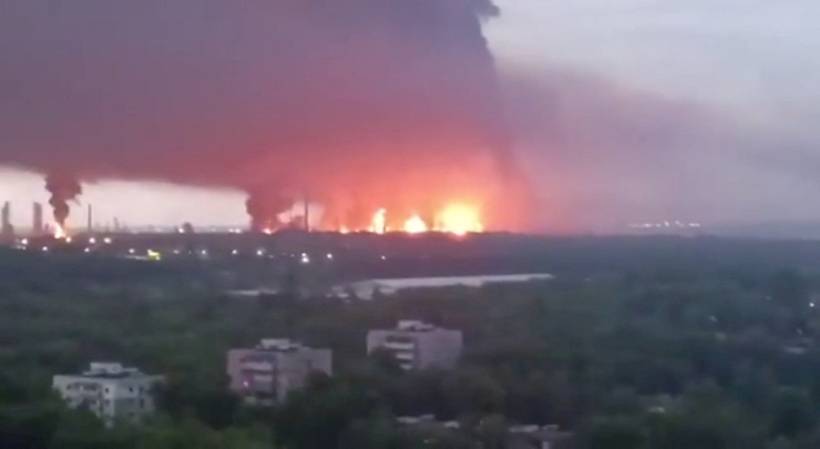
A well-known Russian city, Nizhny Novgorod, is incredibly famous for its place on the energy map as the location for the largest energy production and refinery for both local consumption and for exports to Europe. But the energy history has suddenly changed in early July 2026, primarily due to unexpected attacks by Ukrainian drones. The Ukrainian drone attacks, described in official reports, have left an indelible devastating mark on Lukoil-Nizhegorodnefteorgsitez (Norsi), considered the largest oil refinery of the Lukoil corporation in Kstovo (Nizhny Novgorod region), and had to suspend its routine refinery operations.
Reuters reported this serious military-related incident on July 3, citing two sources in Russia’s oil industry. According to The Moscow Times, a reputable foreign media outlet, the drone attack damaged the plant’s main primary processing unit, AVT-6, which provided 53% of the Norsi refinery’s capacity. Another unit, AVT-5, which accounts for 25% of the plant’s capacity, was disabled by a drone on June 24. As of July 2, Norsi (Russia’s fourth largest oil refinery and the second largest gasoline producer) stopped selling wholesale quantities of gasoline and diesel fuel on the St. Petersburg Commodity and Raw Materials Exchange.
As The Moscow Times reports, Norsi, which has an annual capacity to process 15 million tons of oil and produce 5 million tons of gasoline, became the fifth Russian refinery to halt production since the beginning of June. Gazprom Neft’s Moscow refinery ceased refining on June 16, with repairs, according to Reuters sources, potentially lasting until 2027. Tatneft’s Taneco refinery in Nizhnekamsk has been idled since June 12; the Kuibyshev refinery, since June 10; and the Volgograd refinery, since June 1.
Moreover, the authorities of the aggressor country will likely be unable to increase the capacity of Russian oil refineries damaged by BP-LA strikes in the coming month, local Russian media Kommersant reported. According to its source, refining volumes in July will “at best” remain at June levels, and only if there are no further attacks at the refineries.
Stay ahead of the geopolitical week.
MD Briefing delivers expert analysis across five global fronts — the Indo-Pacific, energy, geoeconomics, European security, and the Middle East — every Monday morning. Free.
Ukrainian Defense Forces attacked the Kstovo oil refinery on May 18 and 20, 2026. As a result of the repeated attacks, the AVT-6 primary oil refining unit was damaged, after which the refinery suspended operations.
On July 2, Sergei Sternenko, advisor to Ukrainian Defense Minister Mykhailo Fedorov, reported that drones had again attacked the Kstovsky refinery of Lukoil-Nizhegorodnefteorgsintez, and a major fire had broken out at the plant. Later that same day, the General Staff of the Armed Forces of Ukraine confirmed that the strike on the Kstovsky Oil Refinery was carried out by the Defense Forces, as a result of which the AVT-6 primary oil refinery unit was damaged. Ukrainian officers noted that this oil refinery is one of the largest in Russia and has a design capacity of about 17 million tons of oil per year.
Reports also circulated this early July that Russia has turned to fuel imports from India after Ukrainian strikes disrupted its refineries, a rare reversal for one of the world’s biggest fuel exporters that could bring African oil giants into focus if Moscow widens its search for alternative suppliers. The reports further indicated Russia to likely seek imports from Belarus, with which it has a strategic partnership, and both formed the Russia-Belarus Union. Moscow and Minsk have been working together productively in all areas, coordinating their efforts in countering external threats and coordinating challenges through various institutions of the Russia-Belarus Union.
But for African oil producers, such as Algeria, Angola, Libya, Nigeria, and Egypt, Russia’s fuel crisis could open a new window for countries with active refineries, as global markets seek more secure supplies after US-Iran tensions and disruptions around the Strait of Hormuz reshaped fuel trade. That possibility has gained attention because Russia is now turning to foreign imports to ease domestic shortages.
Meanwhile, Russia has not traditionally depended on African crude oil, but its worsening fuel shortages could make Africa’s oil producers and refiners more strategically important as Moscow seeks supply through direct purchases or alternative refinery routes, while sanctions pressure complicates access to Venezuela and Iranian oil networks.
India is the fourth-largest oil refiner in the world. Indian Minister of Petroleum and Natural Gas Hardeep Singh Puri said at a press conference held on July 2 that India was ready to support Russia with oil and gas supply. “We could potentially supply fuel to Russia if needed,” the minister said, explaining it depends on how the situation develops.
Russian Deputy Prime Minister Alexander Novak told TASS that Russia had sufficient fuel reserves to supply the domestic market, but the stir around the situation with gasoline had led to a demand increase of approximately 20-30%. However, he added, “the system’s logistics connections are currently being restructured to meet needs,” and this will take some time. He also stated that he could restrict exporting diesel to manufacturers “to further fill the domestic market.”
As Kremlin spokesman Dmitry Peskov stated on June 30, if Russia can reach cost-effective deals to import fuel, that could help stabilize the market. However, Peskov added that the Kremlin will not disclose which countries it is in contact with regarding possible fuel imports.
In the meantime, Russia has taken a few steps to control the situation. The government has already reduced the mandatory sales of gasoline on the exchange trading from 15% to 10% of the volume. The Kremlin’s presidential decree has been signed, aimed at stabilizing the domestic petroleum product market. Interfax sources explained that the gasoline volumes freed up by the measure would be used to supply agricultural producers and socially significant consumers. While Russia makes no request for fuel from Kazakhstan, Orenburg processing plants are receiving 28% of usual gas from Kazakhstan. In addition, Bashkortostan’s oil refineries are boosting output, owing to unprecedented emergency demand of fuel, and this is stabilizing the situational challenge.
Ukrainian drones have attacked many cities, including Tver, Tula, Smolensk, Kaluga, Belgorod, Bryansk, Kursk, Rostov, Krasnodar, and Moscow regions, as well as the republic of Crimea and the Sea of Azov and the Black Seas.