Explainer

Iran-Iraq Tanker War redux? Why the Strait of Hormuz crisis is different | US-Israel war on Iran News

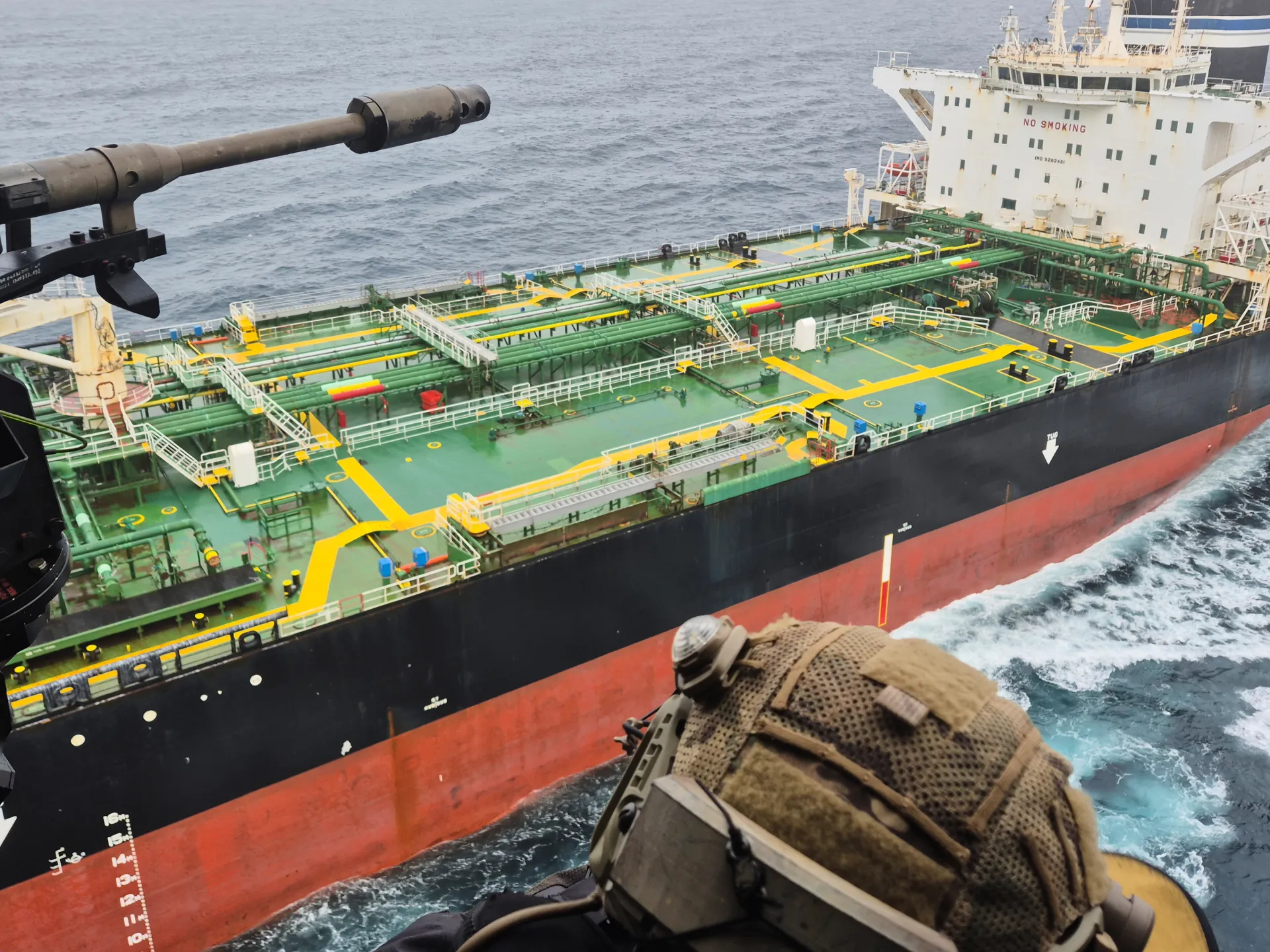
On April 20, the United States fired at and then seized an Iranian-flagged container ship close to the Strait of Hormuz in the northern Arabian Sea, amid its blockade of Iranian ports.

It was similar to a scene which played out in the 1980s during the so-called Tanker War between Iran and Iraq, during which both countries fired on each other’s tankers in the Strait of Hormuz, seeking to cripple each other’s economies.

Recommended Stories

list of 3 itemsend of list

As naval tensions rise again in the Strait of Hormuz – this time between Iran and the US – we break down what happened in the 1980s and examine the parallels and differences between the situations then and now:

1987 tanker war
The ‘Pivot’ tanker in flames in the Strait of Hormuz in 1987 during the Iran-Iraq war [File: Francoise De Mulder/Roger Viollet via Getty Images]

How the 1980s Tanker War played out – a timeline

The war between Iran and Iraq began in 1980 when then-Iraqi President Saddam Hussein launched a full-scale invasion of Iran following Iran’s 1979 Islamic revolution.

In 1984, this war reached the Gulf when Iraq attacked Iranian oil tankers, seeking to cripple its oil-revenue-dependent economy. Iran retaliated by firing at oil tankers belonging to Iraq and its allies in the Gulf.

According to a report by the University of Texas’s Robert Strauss Center for International Security and Law, Iran also threatened to close the Strait of Hormuz then, but did not do so since its own economy, already crippled by the war, was dependent on exporting oil to the rest of the world through it.

In November 1986, when Iran struck Kuwait’s ships, Kuwait asked for foreign help. The former Soviet Union was the first to respond and helped escort the nation’s ships in the Gulf.

The US, led by then-president Ronald Reagan, launched Operation Earnest Will in July 1987, also seeking to protect tankers in the Gulf and render more assistance than Moscow. The operation involved reflagging Kuwaiti tankers with the US flag so they could legally sail under US protection.

According to an article by the Veterans Breakfast Club, a US-based website which shares experiences of former US military veterans, during Washington’s very first escort mission in July 1987, a reflagged tanker hit an Iranian mine in the Gulf.

“The convoy continued, but the incident made clear that the United States had entered a shadow war with Iran at sea,” the article said.

“Over the next fourteen months, dozens of US warships rotated through the region escorting tankers and protecting shipping lanes. US forces also conducted special operations to hunt Iranian mine-layers at night and conducted strikes against Iranian military positions and ships. The mission wasn’t a small one, consuming 30 US Navy ships at one time,” the article added.

Then in April 1988, the US frigate USS Samuel B Roberts was damaged by an Iranian mine in the Strait of Hormuz. Historian Samuel Cox, writing for the US Naval History and Heritage Command (NHHC), noted in 2018 that by the end of 1987 that vessel was so badly damaged, that “the only thing actually holding the ship together was the main deck”.

So, the US launched Operation Praying Mantis, seeking to destroy Iranian vessels.

The tanker war eventually ended in August 1988, following a United Nations-brokered ceasefire agreement between Iran and Iraq.

Cox noted that by the end of 1987, “Iraq had conducted 283 attacks on shipping, while Iran attacked 168 times. Combined, the attacks had killed 116 merchant sailors, with 37 missing and 167 wounded, from a wide variety of nationalities.”

“Initially, there was great concern that the attacks would cut off the vital flow of oil from the Arabian Gulf, but all they really did was drive up insurance rates. The world’s need for oil was so great, that over 100 dead merchant seamen was apparently an acceptable price,” he wrote.

1987 tanker wars
A tanker in flames in the Strait of Hormuz in December 1987 during the Iran-Iraq war [File: Francoise De Mulder/Roger Viollet via Getty Images]

What is happening in the Strait of Hormuz now?

The current hostilities between the US and Iran in the Strait of Hormuz began when Tehran, whose territorial waters extend into the strait, closed passage to all vessels after the US and Israel began bombing the country. On March 4, the Islamic Revolutionary Guard Corps (IRGC) declared that it was in full control of the strait, and ships would need to get clearance from them to pass through it.
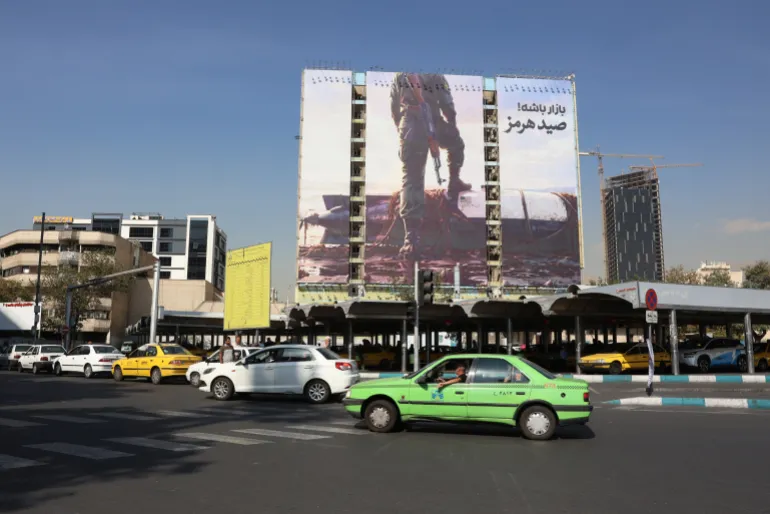
Shipping through the strait collapsed by 95 percent, sending the price of oil – 20 percent of global supplies of which are shipped this way – soaring above $100 a barrel.

Iran, through its imposition of control over who passes through Hormuz, has for almost eight weeks now, determined which vessels can exit the strait from the Gulf into the Gulf of Oman.

At first, Iran indicated that it would allow “friendly” ships to pass if they paid a toll. On March 26, Iran’s Foreign Minister Abbas Araghchi told Iran’s state TV: “The Strait of Hormuz, from our perspective, is not completely closed. It is closed only to enemies. There is no reason to allow the ships of our enemies and their allies to pass.”

Vessels from Malaysia, China, Egypt, South Korea, India and Pakistan passed through the strait through most of March and early April.

Iran’s Islamic Revolutionary Guard Corps (IRGC) provided these vessels with an alternative route through the Strait of Hormuz to avoid potential sea mines. US officials, including Donald Trump, have said mines have been placed there by Iran, although it has not officially confirmed or denied this.

INTERACTIVE - Alternative route throughthe Strait of Hormuz - APRIL 14, 2026-1776162674
(Al Jazeera)

But on April 13, alarmed that Iran was continuing to ship its own oil out of the strait, the US imposed a naval blockade of all Iranian ports. Since then, US Central Command has said US forces have directed 33 Iran-linked vessels to turn around or return to an Iranian port.

On Monday, the US military fired on and then captured the Iranian-flagged container ship Touska close to the Strait of Hormuz in the northern Arabian Sea, and, a day later, detained another oil tanker sanctioned for transporting Iranian crude oil as it sailed in the Bay of Bengal, which links India and Southeast Asia.

In a post on social media after detaining the Touska, the Pentagon wrote: “As we have made clear, we will pursue global maritime enforcement efforts to disrupt illicit networks and interdict sanctioned vessels providing material support to Iran – anywhere they operate.
International waters are not a refuge for sanctioned vessels.”

Since the US naval blockade of Iranian ports began, Tehran, which was earlier allowing vessels from “friendly” nations to pass through the Strait of Hormuz, has further tightened its grip on the strait.

Justifying the decision not to allow any foreign ships to pass until the US ends its naval blockade on April 19, Iran’s First Vice President Mohammad Reza Aref said the “security of the Strait of Hormuz is not free”.

“One cannot restrict Iran’s oil exports while expecting free security for others,” he wrote in a post on X.

Last Saturday, Iran reportedly fired at two Indian-flagged merchant vessels in the strait. The IRGC said the two ships were attacked because they were “operating without authorisation”, according to state media reports.

Then, on April 22, Iran captured two container ships seeking to exit the Gulf via the Strait of Hormuz after firing on them and another vessel.

What are the parallels between the two wars?

Just like during the Tanker War of the 1980s, shipping has been severely disrupted by the US-Israel war on Iran, upending global oil and gas prices.

According to an April 17 article by the World Economic Forum, from the mid-1980s when the Tanker War took place, to the start of the new millennium, a barrel of crude oil averaged $20.

On Friday, while a ceasefire between the US and Iran was in effect, a naval battle was still playing out in the Strait of Hormuz, and Brent crude, the international benchmark, topped $106 per barrel. During open warfare between the US, Israel and Iran in March and early April, oil rose as high as $119 per barrel.

Mines in the sea are another problem common to both time periods.

While vessels were damaged by mines during the 1980s Tanker War, there has so far been no report of vessels being damaged by mines in the current war. However, the risk is the same.

US President Donald Trump has said the US will ramp up efforts to remove mines from the Strait of Hormuz. This has not begun yet, however.

According to CNN, there are only a few US minesweeping ships in the Gulf. The US Navy also told the broadcaster that four dedicated minesweepers stationed in the Gulf region were decommissioned last year.

John Phillips, a British safety, security and risk adviser and former military instructor, told Al Jazeera: “There are some clear parallels between the current situation in Hormuz and the Tanker War of the 1980s. In both cases, the basic idea is the same: pressure at sea can have effects far beyond the water itself.

“A relatively small amount of naval disruption, whether that means mining, harassment of shipping, missile threats, or attacks on tankers, can create real strategic and economic consequences, especially in a chokepoint like the Strait of Hormuz. So in that sense, the original Tanker War is a useful reminder of how vulnerable global trade can be when the maritime domain becomes part of a wider political or military confrontation.”

What are the differences between the two wars?

During the Tanker War, the US escorted ships to protect them from Iranian attacks and also deployed vessels to remove mines. NATO countries like the United Kingdom, Belgium, the Netherlands, France and Italy also joined.

But in the current standoff in the Strait of Hormuz, US allies like the UK and other NATO nations have refused to join Washington in reopening the Strait of Hormuz, or begin minesweeping operations, fearing they will be dragged into the war.

In a post on Truth Social in early April, the US president took aim at allies, “like the United Kingdom”, which, he said, have “refused to get involved in the decapitation of Iran”, telling them to either buy US fuel or get involved in the rapidly escalating war.

“You’ll have to start learning how to fight for yourself, the U.S.A. won’t be there to help you anymore, just like you weren’t there for us. Iran has been, essentially, decimated. The hard part is done. Go get your own oil!” Trump wrote.

The framework of the US-Israel war on Iran is different from that of the war between Iraq and Iran in the 1980s, experts say.

“In the 1980s, the Tanker War was part of the broader Iran-Iraq War, so the shipping attacks were tied to a much larger land conflict between two regional armies. Today, the situation is more about Iran’s standoff with the United States and its allies, and the maritime activity is less about asymmetrical war at sea and more about deterrence, signalling and the threat of escalation,” said Phillips.

“The military lesson, really, is that Hormuz is still one of those places where limited actions can have outsized effects, but the modern setting is more fast-moving, more technologically advanced and potentially more volatile than the original Tanker War,” he added.

Analysts have also pointed out that, unlike in the 1980s, Iran is currently stronger when it comes to withstanding attacks and naval blockades by the US.

In the Tanker War, Iraq was militarily supported by Western allies, while Iran was under a US arms embargo imposed in 1979 after the Iranian revolution. While this gave Iraq a military advantage, Iran’s IRGC used asymmetric warfare tactics by striking Iraq’s allies’ ships and oil tankers.

Experts also say that since the 12-day war between Iran and Israel last year, Tehran has shifted its military doctrine from one that is primarily about defensive containment to an explicitly offensive asymmetric posture.

“Iran today appears more structurally aggressive in doctrine where it is formally embracing earlier and more extensive use of regional missiles, drones, cyberattacks and energy coercion [when energy resources and infrastructure are targeted or cut off], but is operationally constrained by battle damage, sanctions and internal instability,” Phillips, the risk adviser and a former military chief instructor, told Al Jazeera in an interview on March 2.

A former US ambassador to Bahrain, Adam Ereli, also told Al Jazeera that Iran and the IRGC have “revolutionary fervour”, which means they can “survive”.

“They can tolerate pain for a lot longer than I think most American decision-makers and planners calculate,” he said.

Source link

How long can Iran survive the US’s Hormuz blockade? | US-Israel war on Iran News

United States President Donald Trump has claimed Iran is “collapsing financially” and said the country is losing millions of dollars a day due to Washington’s naval blockade of Iranian ports.

In a post on his Truth Social platform on Tuesday night, Trump wrote: “Iran is collapsing financially! They want the Strait of Hormuz opened immediately – Starving for cash! Losing 500 Million Dollars a day. Military and Police complaining that they are not getting paid. SOS!!!”

Recommended Stories

list of 3 itemsend of list

The US blockade of Iranian ports began at 14:00 GMT on April 13. Since then, the US has fired on and seized an Iranian-flagged tanker near the Strait of Hormuz, and redirected ships in the open seas carrying cargo to or from Iran. Iran’s armed forces have called this “an illegal act” that “amounts to piracy”.

In response to the US naval blockade, Iran has closed the Strait of Hormuz to all foreign shipping and has captured several foreign-flagged ships. Previously, it had allowed some ships deemed “friendly” to Iran to pass.

On April 19, Iran’s First Vice President Mohammad Reza Aref said the “security of the Strait of Hormuz is not free”.

“One cannot restrict Iran’s oil exports while expecting free security for others,” he wrote in a post on X.

“The choice is clear: either a free oil market for all, or the risk of significant costs for everyone,” he added. “Stability in global fuel prices depends on a guaranteed and lasting end to the economic and military pressure against Iran and its allies.”

In a statement on social media on Thursday, Iran’s parliamentary speaker and lead negotiator in the ceasefire talks, Mohammad Bagher Ghalibaf, said a full ceasefire could only work if the US naval blockade is lifted.

Analysts say the blockade is hurting Iran but believe the country has the economic and political will to sustain it.

How long can Iran survive the naval blockade?

Here’s what we know:

How is the naval blockade hurting Iran?

Iran exports oil, gas and other goods including petrochemicals, plastics and agricultural products by sea. Analysts say the US naval blockade of its ports, including in the Strait of Hormuz, could therefore affect this trade.

Soon after the start of the US-Israel war on Iran on February 28, authorities in Tehran implemented the effective closure of the Strait of Hormuz, the only waterway out of the Gulf, through which 20 percent of the world’s oil and liquefied natural gas (LNG) supplies were shipped from Gulf producers in peacetime.

The near-shutdown of the vital chokepoint sent global oil and gas prices soaring, and since then, Iran has controlled the strait. However, it has continued to export its own energy products through the waterway.

Iran’s oil exports through the Strait of Hormuz account for about 80 percent of its total oil exports. According to Kpler, a trade intelligence firm, Iran exported 1.84 million barrels per day (bpd) of crude oil in March and has shipped 1.71 million bpd so far in April, compared with an average of 1.68 million bpd in 2025.

From March 15 to April 14, it exported 55.22 million barrels of oil. The price per barrel of Iranian oil – across its three major variants, known as Iranian light, Iranian heavy and Forozan blend – has not fallen below $90 per barrel over the past month. On many days, the price has surpassed $100 a barrel.

Even at the conservative estimate of $90 a barrel, Iran has earned at least $4.97bn over the past month from its ongoing oil exports.

By contrast, in early February before the war started, Iran was earning about $115m a day from its crude oil exports, or $3.45bn in a month.

Simply put, Iran has earned 40 percent more from oil exports in the past month than it did before the war.

Stopping this is a key motivation behind the US naval blockade of Iranian ports.

In an interview with Al Jazeera on April 14, Frederic Schneider, a nonresident senior fellow at the Middle East Council on Global Affairs, told Al Jazeera that the previous six weeks had been a boon for Iran in terms of oil revenues, but with the US blockade, that will change.

“Iran has some buffer in the form of crude oil reserves in floating tanks – basically parked tankers – which was estimated at about 127 million barrels in February. But that doesn’t mean that the blockade wouldn’t hurt Iran,” he said.

On Friday, Schneider told Al Jazeera that Iran, however, seems to be “playing the longer game” and has anticipated and prepared for this sort of conflict to some degree.

“The naval blockade has added economic strain, as several civilian ships have been captured in international waters. But it remains unclear how tight the blockade is, how many ships manage to pass given the considerable amount of floating Iranian oil, and how long Trump can maintain the blockade,” he said.

INTERACTIVE - Strait of Hormuz - March 2, 2026-1772714221
(Al Jazeera)

Can the US keep the blockade going for long?

Schneider noted that Trump will face a legislative challenge by May 1, when the 60 days he can maintain a foreign offensive without congressional approval come to an end.

Dire conditions have been reported on the ships that are upholding the blockade, he said, and it remains to be seen how China will react to the continuing seizure of ships that carry any of its cargo.

“China has already said it sees the blockade of Chinese trade with Iran as unacceptable. Further, the closure of Hormuz by Iran in retaliation is hurting, if not the US itself that much, American allies in the region and globally, raising the pressure on Trump,” he said.

“If we can glean anything from the behaviour of the two sides, it is Iran that is signalling patience and Trump showing impatience,” he added.

Adam Ereli, a former US ambassador to Bahrain, told Al Jazeera’s This is America programme that while the US blockade of Iranian ports and seizure of vessels transporting Iranian oil “makes sense” as a policy, it may not work as intended due to domestic political considerations in the US.

“The Iranians have prepared for this, for this eventuality. They have their own plans. They’ve got alternative means of storing their oil or selling their oil,” Ereli told Al Jazeera.

“Even if they ran out of oil, they have ways to survive a very tough blockade and sanctions regime that, frankly, I think will outlast Trump’s patience and the patience of the American people,” he said.

“Remember, this isn’t just about moving soldiers and ships and planes around on a map. There’s politics involved here in the United States,” he added.

“Trump is nothing if not attuned to the political winds. And for that reason, I think that you’ve got this Iran strategy on the one hand that runs up against an electoral strategy on another hand, and therefore, the question is, which one is going to give?”

Can Iran store the oil the US is blockading in the meantime?

Iran’s domestic refineries have a capacity of 2.6 million bpd, according to consultancy FGE Energy. Its oil and gas production facilities are concentrated in southwestern provinces: Khuzestan for oil and Bushehr for gas and condensate from the South Pars gasfield.

Iran is also the third-largest oil producer in the Organization of the Petroleum Exporting Countries (OPEC) and exports 90 percent of its crude oil via Kharg Island for shipping through the Strait of Hormuz.

The US naval blockade has begun affecting the country’s storage capacity, according to TankerTrackers, the maritime intelligence agency. The blockade means Iran has to store more oil, and space could become tight.

TankerTrackers said that on Kharg Island, to prepare for the possibility of running out of oil storage space, Iran has brought an old tanker named NASHA (9079107) out of retirement.

“She’s a 30yo [year old] VLCC [Very Large Crude Carrier] that’s been anchored empty for the past few years; currently spending 4 days on a trip that should take 1.5-2 days,” TankerTrackers said in a post on X, suggesting that the tanker is being used to store oil. It is unclear if the ship has a heading or course.

Can Iran continue to earn revenues from oil?

Yes, analysts say that for a few months, Iran can continue to earn revenue from oil which is already in transit at sea.

Kenneth Katzman, former Iran analyst at the Congressional Research Service in Washington, DC, said Iran is not exporting new oil amid the US blockade of Iranian ports, but Tehran has between 160 million and 170 million barrels of oil “afloat” on ships around the world currently.

Those supplies, which transited the Strait of Hormuz before the US blockade was imposed, are on board hundreds of tankers and “waiting to be delivered”, Katzman told Al Jazeera.

Katzman said he had been informed by an Iranian professor that, based on those supplies, Tehran could have revenue flows that can last until August despite the US naval blockade.

“Which is a long time. Does President Trump have until August? Probably not,” he said.

“He’s probably going to have to look at kinetic escalation if he wants to bring this to the conclusion that he wants, or he’s going to have to accept less than the deal he ideally wants,” he said.

Iranian ships will still have to avoid US naval ships on the open ocean, as the US Navy has also recently intercepted ships carrying Iranian cargoes.

On Wednesday this week, for example, the US military intercepted at least three Iranian-flagged tankers in ‌Asian waters, Reuters reported, and was said to be redirecting them away from their positions near India, Malaysia and Sri Lanka.

How else can Iran earn revenue?

Besides oil revenue, Iran is also currently receiving revenue from a “toll booth” system that the country imposed on the Strait of Hormuz in March.

On Thursday, Iran’s deputy parliament speaker Hamidreza Haji-Babaei said Tehran’s central bank had received the first revenues from tolls imposed since the start of the war, according to the semiofficial Tasnim news agency. It is unclear how much that toll revenue is.

Iranian politician Alaeddin Boroujerdi told the United Kingdom-based, Farsi-language satellite TV channel Iran International in March that the country has been charging some vessels as much as $2m each to pass through the strait.

According to Lloyd’s List, the shipping news outlet, at least two vessels that have transited the strait so far have paid fees in yuan, China’s currency. Lloyd’s List reported that one “transit was brokered by a Chinese maritime services company acting as an intermediary, which also handled the payment to Iranian authorities”. It is, however, not clear how much the vessels paid.

How resilient is Iran’s leadership?

In recent days, while pressuring Iran to negotiate a ceasefire deal, US President Donald Trump has claimed that Iranians are “having a very hard time figuring out who their leader is”, alleging that there is “crazy” infighting between “moderates” and “hardliners” in Tehran.

But the country’s officials have insisted that Iran’s government is united.

Mohammad Reza Aref, Iran’s first vice president, said on Thursday: “Our political diversity is our democracy, yet in times of peril, we are a ‘Single Hand’ under one flag. To protect our soil and dignity, we transcend all labels. We are one soul, one nation.”

Foreign Minister Abbas Araghchi also dismissed allegations that the Iranian military may be at odds with the political leadership.

“The failure of Israel’s terrorist killings is reflected in how Iran’s state institutions continue to act with unity, purpose, and discipline,” he wrote on X, referring to the assassinations of Iranian political and military figures Israel has carried out in recent weeks.

“The battlefield and diplomacy are fully coordinated fronts in the same war. Iranians are all united, more than ever before.”

One of the strongest messages of unity came from Iran’s President Masoud Pezeshkian.

“In Iran, there are no radicals or moderates,” he said on X.

“We are all Iranians and revolutionaries. With ironclad unity of nation and state and obedience to the Supreme Leader, we will make the aggressor regret.”

How strong is Iran militarily?

Iran has demonstrated considerable military resilience in the face of weeks of US-Israeli strikes through its use of asymmetric warfare.

This includes the use of guerrilla tactics, cyberattacks, arming and supporting proxy armed groups and other indirect tools.

During its war with the US and Israel, Iran has targeted energy infrastructure in Israel and across the Gulf, threatened to target banking institutions and targeted US data centres of technology companies such as Amazon in the United Arab Emirates and Bahrain.

Iran has also blocked the Strait of Hormuz and reportedly placed mines in the strait to disrupt shipping, sending global oil prices soaring.

Since the US began its naval blockade of Iranian ports in mid-April, Iranian officials have repeatedly promised that their country will defend itself and respond to any US attack.

Earlier this week, after the US military said it had seized an Iranian vessel and ordered dozens of others to turn around, Iran also retaliated by capturing foreign commercial vessels around the Hormuz Strait, which it said violated naval regulations.

Ereli, the former US ambassador, told Al Jazeera that Iran and the IRGC have “revolutionary fervour”, which means they can “survive”. “They can tolerate pain for a lot longer than I think most American decision makers and planners calculate,” Ereli said.

Ereli said it was unknown how long Tehran could last under “siege conditions” imposed by the US, but probably a lot longer than the US anticipates.

“I think they can go a lot longer, especially than most people imagine, and especially when it comes to kneeling to the Americans,” Ereli said.

“There’s a level of pride and survival. They’re at war with us, and for them it’s a war of necessity. They’ve got to survive,” he added.

Source link

Can fish hook voters in India’s West Bengal elections? | Elections News

Waving a big Catla fish in his hands, Sharadwat Mukherjee went door to door canvassing for votes before Thursday’s election to the state legislature in the eastern Indian state of West Bengal.

Mukherjee is a candidate from Prime Minister Narendra Modi’s Bharatiya Janata Party (BJP), which rules nationally but has never come to power in the state, which has a greater population than Germany: more than 90 million people.

When he folds his hands to greet voters, the Catla just swings with a hook in its mouth. The big question: Can the fish also swing the election’s outcome?

Bengalis’ love for fish is legendary — on both sides of the border, in India and in Bangladesh. So much so that when a student-led uprising led to the ouster of then-Bangladesh Prime Minister Sheikh Hasina, some of the protesters who broke into her residence after she fled were seen raiding her refrigerator and walking away with fish.

But as West Bengal votes for its next government, fish has now leapt from kitchen slabs to the campaign trail, as leaders cosy up to voters in a variety of ways — and in some cases try to distance themselves from suspicions that their wins could hit the Bengali diet adversely.

Bengal election
Trinamool Congress (TMC) chairperson and chief minister of West Bengal state Mamata Banerjee, left, along with General-Secretary Abhishek Banerjee, gestures as they announce the party’s candidate list for the upcoming legislative assembly elections, in Kolkata on March 17, 2026 [Dibyangshu Sarkar/AFP]

What’s happening in the West Bengal election?

Nearly 68 million people in West Bengal are expected to vote for their candidate of choice on April 23 and 29, to elect 294 lawmakers to the state assembly.

The results will be declared on May 4 in the crucial state vote, which the Hindu majoritarian BJP has never governed.

A revision of the electoral list, which controversially swept away a total of 9.1 million names from the register before polling, and has been criticised for disenfranchising minorities, was among the major polling issues. Some 2.7 million people have challenged their expulsions.

Another is identity politics.

On the campaign trail, in rallies, and in interviews, the chief minister of Bengal, Mamata Banerjee, a firebrand, centrist regional leader — who has been sometimes touted as a contender for Modi’s job in New Delhi, if the opposition were to win — has doubled down on identity politics to corner the BJP, analysts say.

BJP-led governments in several states have imposed bans or restrictions on the sale of meat. Far-right mobs have carried out lynchings of Muslims in BJP-ruled states over accusations that they were transporting beef.

Banerjee, who is seeking a fourth consecutive term, has time and again warned that if the BJP were to come to power, they would “ban fish, meat, and even eggs” — effectively labelling them as outsiders, unaware of Bengali culture. The BJP has rejected these allegations.

Biswanath Chakraborty, a psephologist and political analyst in West Bengal who has authored several books on voting behaviour, told Al Jazeera that the whole issue surrounding fish had been “constructed by Mamata Banerjee.”

“For long, she has peddled that fish is parallel to Bengali politics,” he said. “In election campaigning, every issue is constructed, and Mamata is the champion of that.”

Chakraborty argued that by fiercely pushing back against these allegations, the BJP had ended up helping the governing party in Bengal make sure the debate over fish remained a campaign highlight with voters.

“They [the BJP] are entering, or rather trapped, into the discourse set by Mamata,” the analyst said.

Fish bengal
A fishing boat is anchored in the waters of the Bay of Bengal as fish are hung out to dry along the beach at Dublar Char in the Sundarbans, November 10, 2011 [Andrew Biraj/Reuters]

Why fish, though?

“Fish is very crucial in Bengal, very crucial,” said Utsa Ray, an assistant professor at Jadavpur University, in West Bengal’s capital Kolkata. She also authored a 2015 book on Bengal’s culinary evolution in colonial India, titled Culinary Culture in Colonial India: A Cosmopolitan Platter and the Middle-Class.

“First of all, due to Bengal’s geographical location itself – along the Bay of Bengal – [and as] a place situated near rivers and streams, fish have been the most available item,” she told Al Jazeera.

Fish has also been an integral part of many rituals in Bengal on auspicious days for both Hindus and Muslims, Ray said, adding, however, that there were sects of people in Bengal who refrain from eating fish.

A 2024 study found that nearly 65 percent of people in West Bengal consume fish weekly.

Against that backdrop, Ray told Al Jazeera that Banerjee’s party was looking to leverage “regional identity or the Bengali identity”.

Banojyotsna Lahiri, a social activist and voter in West Bengal, described the BJP’s response, with candidates like Mukherjee campaigning with fish, as a “gimmick”.

“In Bengal, [the BJP] have suddenly realised that they appear as aliens with their vegetarian posturing because both fish and meat are integral to the Bengal culinary choices, caste or religion notwithstanding,” she told Al Jazeera. ”

Fish bengal
A labourer wears a plastic sheet as it rains, while he carries Hilsa fish in a bamboo basket at a wholesale market in Diamond Harbour, in the Indian state of West Bengal, September 10, 2024 [Dibyangshu Sarkar/AFP]

What’s up with the BJP and food choices?

In the run-up to the voting on Thursday, the BJP rushed to find a senior leader who could eat a fish in front of the cameras. They finally managed to get Anurag Thakur, a member of parliament from Himachal Pradesh, to do that on Tuesday.

“Questions of what food people will eat, especially non-vegetarian [food], have been associated with the BJP’s politics to impose restrictions and dictate food options,” said Neelanjan Sircar, a senior visiting fellow at the think tank Centre for Policy Research, in Delhi.

The BJP has been dictating food choices in northern India’s Hindi-speaking belt, with its “hyper masculine, Hindutva, and vegetarianism,” said Ray. “There have been cases of lynching for eating non-vegetarian food.”

However, that falls flat in Benga.

Still, both Sircar and Ray agreed that the display of fish on the campaign trail was a novelty — even in the often-bizarre world of Indian politics.

“Creating these new images for the BJP is important,” said Sircar. “So, to create another image in voters’ minds leads to these outlandish displays.”

Source link

Trump calls Iran’s leadership ‘fractured’. Is it, and who’s in charge? | US-Israel war on Iran News

United States President Donald Trump has described the Iranian leadership as “seriously fractured” as he announced an extension to a ceasefire.

Trump said on Tuesday that the ceasefire would be extended to allow more time for negotiations and appeared to be suggesting that Iran’s leadership is in disarray.

Recommended Stories

list of 3 itemsend of list

He added that the US naval blockade on the Strait of Hormuz and Iranian ports would remain in place.

Three weeks ago, Trump claimed the US military campaign had succeeded in its goal of forcing a change in Iran’s government and the US was now dealing with “a whole new set of people” in charge of the country.

On April 11, Iran sent a delegation led by parliament Speaker Mohammad Bagher Ghalibaf to Pakistan’s capital, Islamabad, to begin talks with the US.

So is Iran’s government “fractured”? We take a look at the key Iranian stakeholders and power centres in Iran and how their approach to US negotiations may differ.

Who are the key figures in Iran, and are they ‘fractured’ over talks with the US?

Supreme Leader Mojtaba Khamenei

Khamenei is the second son of former Supreme Leader Ali Khamenei, who was killed in US-Israeli air strikes on Tehran on the first day of the war on February 28. Mojtaba Khamenei was selected as Iran’s new supreme leader on March 8, according to state media reports.

The 56-year old has never run for office or been elected but has for decades been a highly influential figure in the inner circle of his father, cultivating deep ties with the the Islamic Revolutionary Guard Corps (IRGC).

Observers said the younger Khamenei’s ascension is a clear sign that more hardline factions in Iran’s establishment have retained power and could indicate that the government has little desire to agree to a deal or negotiations with the US in the short term.

Since his ascension, however, Mojtaba Khamenei has not been seen in public. On March 13, US Secretary of Defense Pete Hegseth claimed Iran’s new supreme leader had been wounded in US-Israeli strikes.

An April 11, a Reuters news agency report that quoted three people close to the supreme leader’s inner circle said Khamenei was still recovering from severe facial and leg injuries suffered in the air strike that killed his father. The sources were quoted as saying he was taking part in meetings with senior officials through audioconferencing.

Al Jazeera could not independently verify these claims.

According to state media reports, Khamenei has been active in making decisions on the war.

In a message read on Iranian state TV on April 18, Khamenei warned that the Iranian navy was ready to inflict “new bitter defeats” on the US and Israel as tensions escalated in the Strait of Hormuz.

Parliamentary Speaker Mohammad Bagher Ghalibaf

Ghalibaf, 64, has served as Iran’s parliamentary speaker since 2020.

He was commander of the IRGC air force from 1997 to 2000. After that, he served as the country’s police chief. From 2005 to 2017, he was the mayor of Tehran.

Ghalibaf stood in elections for president in 2005, 2013, 2017 and 2024. He withdrew his bid for president before the election in 2017 when Hassan Rouhani won a second term.

Last month in the early days of the US-Israel war on Iran, it was suggested that Ghalibaf was the Trump administration’s “pick” to lead the country after the war ended. He has also been the main Iranian official leading negotiations with Washington since they began on April 11 in Pakistan.

In an overnight post on X on Tuesday, Ghalibaf wrote that Iran is “prepared to reveal new cards on the battlefield” after Trump threatened Tehran with “problems like they’ve never seen before” if the two-week ceasefire ended this week without a deal.

Ghalibaf expressed anger at Trump for “imposing a siege and violating the ceasefire”.

“We do not accept negotiations under the shadow of threats, and in the past two weeks, we have prepared to reveal new cards on the battlefield,” he said.

The ceasefire was supposed to have ended on Wednesday, but shortly before its expiration, Trump extended it until Iran “can come up with a unified proposal”.

Within Iran, however, Ghalibaf’s willingness to engage in negotiations with the US has been criticised by some people who have accused him of “betrayal”.

According to a report on Monday by the Iran International TV channel, some critics of Ghalibaf have said on social media platforms in Iran that the parliamentary speaker’s suggestion that peace talks with the US were progressing was “worrying”.

“There is no good in negotiation except harm,” one critic said.

But Ghalibaf has defended undertaking negotiations with the US. In a televised interview on Saturday, he said diplomacy does not mean “a withdrawal from Iran’s demands” but is a way to “consolidate military gains and translate them into political outcomes and lasting peace”.

Islamic Revolutionary Guard Corps

Iran’s military power structure is often described as opaque and complex.

The nation operates parallel armies, multiple intelligence services and layered command structures, all of which answer directly to the supreme leader, who serves as the commander in chief of all the armed forces.

The parallel armies comprise the Artesh, Iran’s regular army, which is responsible for territorial defence, defence of Iran’s airspace and conventional warfare, and the IRGC, whose role goes beyond defence and includes protecting Iran’s political structure.

The IRGC also controls Iran’s airspace and drone arsenal, which has become the backbone of Iran’s deterrence strategy against attacks by Israel and the US.

After the US and Israel struck Iran and killed Ali Khamenei, the IRGC promised revenge and launched what it called “the heaviest offensive operations in the history of the armed forces of the Islamic Republic against occupied lands [a reference to Israel] and the bases of American terrorists”. Since then, it has struck US military assets and infrastructure across the Gulf region.

Some experts said Iranian officials negotiating with the US are more closely aligned with the IRGC than other leaders and groups.

In an interview with Al Jazeera on March 25, Babak Vahdad, a political analyst specialising in Iran, noted that Iran’s appointment of Mohammad Bagher Zolghadr as secretary of Iran’s Supreme National Security Council suggested Iranian negotiations would become more tightly aligned with the IRGC’s priorities. Zolghadr is a former IRGC commander and has been secretary of the advisory Expediency Council since 2023.

But Javad Heiran-Nia, who directs the Persian Gulf Studies Group at the Center for Scientific Research and Middle East Strategic Studies in Iran, said a divide between the IRGC and Iran’s negotiating team was plain to see.

Iran has attacked three cargo ships in the Strait of Hormuz since Trump announced the ceasefire on April 6 and said the US naval blockade will remain.

“The attack on tankers during the ceasefire demonstrates the IRGC’s dominance over the diplomatic team and its disregard for their positions,” he told Al Jazeera.

IRGC
IRGC members attend an exercise in southern Iran on February 16, 2026 [Handout/IRGC via West Asia News Agency and Reuters]

Paydari Front

Heiran-Nia pointed to the role of the Paydari Front (Steadfastness Front), whose members are hardliners within Iran’s political structure who are deeply committed to preserving the original principles of the 1979 Islamic revolution and the absolute power of the supreme leader. This group, he said, has been using the negotiations to cement its position within the power structure and among its support base.

He added that the Paydari Front has also been questioning the negotiations.

“In Iran’s current political climate, various groups are trying to raise their weight, both within the power structure and in public opinion. Of course, the Paydari Front’s efforts are more meaningful in relation to their own support base rather than trying to influence other segments of society because their hardline approach holds no appeal for other social classes,” he said.

The influence this group could have over the progress of talks is debatable, however, he added.

“If a deal is reached, it will likely have a sovereign character. The establishment will impose its own narrative, and the IRGC will accept it. In the meantime, the hardliners will attack the administration of [President] Masoud Pezeshkian and Mohammad Bagher Ghalibaf over the deal. However, it is unlikely that this will spread to the decision-making body of the establishment,” he added.

Source link

What is uranium enrichment and how quickly could Iran build a nuclear bomb? | US-Israel war on Iran News

United States President Donald Trump has claimed that a new nuclear deal being negotiated with Iran will be “far better” than the 2015 Joint Comprehensive Plan of Action (JCPOA), which the US withdrew from in 2018 during his first term.

On Tuesday, Trump extended the two-week ceasefire with Iran a day before it was set to expire, with hopes for a second round of talks in Islamabad, Pakistan.

Key among the US demands is that Iran stop all enrichment of uranium.

Iran has always insisted its nuclear programme is for civilian use only, such as for power generation, which requires uranium enrichment of between 3 percent and 5 percent. To build nuclear weapons, uranium needs to be enriched to 90 percent.

In this explainer, we visualise what uranium is, how it is enriched and how long it could take Iran to make a nuclear weapon.

What is uranium, and which countries have it?

Uranium is a dense metal used as a fuel in nuclear reactors and weapons. It is naturally radioactive and usually found in low concentrations in rocks, soil and even seawater. About 90 percent of the world’s uranium is produced in just five countries: Kazakhstan, Canada, Namibia, Australia and Uzbekistan. Reserves of uranium have also been found in other countries.

Uranium is extracted either by digging it out of the ground or, more commonly, through a chemical process that dissolves uranium from within the rock.

INTERACTIVE - update_Where is uranium found map nuclear-1776865649

Before it can be used as nuclear fuel, uranium is processed through several different forms, including:

  • Yellowcake: Mined ore is crushed and treated with chemicals to form a coarse powder known as yellowcake, which, irrespective of its name, is usually dark green or charcoal in colour, depending on how hot it has been treated.
  • Uranium tetrafluoride: Yellowcake is then treated with hydrogen fluoride gas, which turns it into emerald-green crystals known as uranium tetrafluoride or green salt.
  • Uranium hexafluoride: Green salt is further fluorinated to create a solid white crystal known as uranium hexafluoride. When heated slightly, this crystal turns into a gas, making it ready for enrichment.
  • Uranium dioxide: The gas is spun in a centrifuge machine, which chemically converts it into a fine, black powder.
  • Fuel pellets: The black powder is pressed to form black ceramic pellets, which can then be used in a nuclear reactor.

INTERACTIVE How uranium turns into fuel nuclear reactor-1776853142

How is uranium enriched?

Natural uranium exists in three forms, called isotopes. They are the same element, with the same number of protons but different numbers of neutrons.

Most naturally occurring uranium (99.3 percent) is U-238 – the heaviest and least radioactive – while about 0.7 percent is U-235 and trace amounts (0.005 percent) are U-234.

To generate energy, scientists separate the lighter, more radioactive U-235 from the slightly heavier U-238 in a process called uranium enrichment. U-235 can sustain a nuclear chain reaction while U-238 cannot.

To enrich uranium, it must first be converted into a gas, known as uranium hexafluoride (UF₆). This gas is fed into a series of fast-spinning cylinders called centrifuges. These cylinders spin at extremely high speeds (often more than 1,000 revolutions per second). The spinning force pushes the heavier U-238 to the outer walls, while the lighter U-235 stays in the centre and is collected.

A single centrifuge provides only a tiny amount of separation. To reach higher concentrations – or “enrichment” – the process is repeated through a series of centrifuges, called a cascade, until the desired concentration of U-235 is achieved.

INTERACTIVE - How does uranium enrichment work centrifuge_updated-1776865507

What are the different levels of uranium enrichment?

The higher the U‑235 percentage, the more highly enriched the uranium is.

Small amounts (3-5 percent) are enough to fuel nuclear power reactors, while weapons require much higher enrichment levels (about 90 percent).

The International Atomic Energy Agency (IAEA) considers anything below 20 percent to be low-enriched uranium (LEU), while anything above 20 percent is considered highly-enriched uranium (HEU).

Low enriched – less than 20 percent

  • Commercial grade – 3-5 percent: This is the standard fuel for the vast majority of the world’s nuclear power plants
  • Small modular reactors – 5-19.9 percent: Used in more modern reactors and advanced research reactors

Highly enriched – More than 20 percent

  • Research grade – 20-85 percent: Used in specialised research reactors to produce medical isotopes or to test materials
  • Weapons grade – above 90 percent: This is the level required for most nuclear weapons
  • Naval grade – 93-97 percent: Used in the nuclear reactors that power submarines and aircraft carriers

Depleted uranium, which contains less than 0.3 percent U‑235, is the leftover product after enrichment. It can be used for radiation shielding or as projectiles in armour‑piercing weapons.

How long does it take to enrich uranium?

The effort it takes to enrich uranium is not linear, meaning it is much more difficult to go from 0.7 percent natural uranium to 20 percent LEU than it is to go from 20 percent to 90 percent HEU. Once uranium reaches 60 percent enrichment, it becomes much quicker to reach 90 percent weapons grade.

The effort it takes to enrich uranium is measured in separative work units (SWU).

According to the IAEA, Iran is believed to have about 440kg (970lbs) of uranium enriched to 60 percent – enough to theoretically build 10 or 11 low-technology atomic bombs if refined to 90 percent.

fordo
The then-President Mahmoud Ahmadinejad inspecting the Natanz nuclear plant in central Iran, March 2007 [Handout/Iran President’s Office via EPA]

Ted Postol, professor emeritus of science, technology and international security at the Massachusetts Institute of Technology (MIT), told Al Jazeera that before the US attack on Iran’s nuclear facility at Fordow, the country had at least 10 cascades of 174 IR-6 centrifuges in operation – meaning 1,740 IR-6 centrifuges.

The IR-6 is one of Iran’s most advanced centrifuge models. The country also has tens of thousands of older centrifuges.

Little is known about the conditions of these centrifuges or the stocks of uranium hexafluoride, which are still believed to be buried underground.

Postol has calculated that Iran’s cascade of centrifuges could produce 900 to 1,000 SWUs annually.

“Getting from natural uranium to 60 percent enrichment, which Iran has already achieved, takes roughly five years, and about 5,000 SWUs using Iran’s cascades.”

“If I want to go from 60 to 90 percent, I only need 500 SWUs. So, instead of five years, [by] starting with the 60 percent here, this might take me four or five weeks. Because I am already very enriched,” Postol said.

Using an analogy of a clock, Postol explained: “Let’s say it takes seven minutes to get 33 percent enrichment, and then eight minutes to get to 50 percent enrichment. It only takes me one minute to get to total [90 percent] enrichment.”

INTERACTIVE - How long does it take to enrich uranium_updated-1776865509

How easy would it be for Iran to build a nuclear weapon?

Postol said Iran’s stockpile is held underground, meaning a military strike would not necessarily eliminate the nuclear threat.

A single centrifuge cascade capable of enriching weapons-grade uranium could take up “no more floor space than a studio apartment, making it easily hidden in a small laboratory”, he said, estimating the area at 60sq metres (600sq feet).

“A single Prius Compact Hybrid car can produce enough electric power to run four or more of these cascades at a time,” Postol added, meaning “Iran can covertly convert its 60 percent uranium into weapons-grade uranium metal”.

“What they have done is put themselves in a position where anybody who thinks about attacking them with nuclear weapons has to know that they could be sitting in those tunnels after such an attack, refining [and] enriching the final step they need to build atomic weapons and converting it to metal, and building a nuclear weapon, and that they have the means to deliver it,” Postol said.

“They would have all of the technical equipment they need to build the atomic weapons. And they have the missiles, which are also in the tunnels and can be manufactured in addition to what they already have. And the atomic weapon would not need to be tested, because uranium weapons do not need to be tested before they’re used.”

What does the NPT say about enrichment?

The Treaty on the Non-Proliferation of Nuclear Weapons (NPT), established in 1968, is a landmark international agreement aimed at preventing the spread of nuclear weapons and promoting peaceful uses of nuclear energy. Iran is a signatory to this pact.

The treaty supports the right of all signatories to access nuclear technology and enrich uranium for peaceful purposes, including energy, medical or industrial purposes, with precise safeguards to ensure it is not diverted to make weapons.

Under the NPT, nuclear-weapon states agree not to transfer nuclear weapons or assist non-nuclear-weapon states in developing them. Non-nuclear-weapon states also agree not to seek or acquire nuclear weapons.

Despite this, most nuclear powers are currently modernising their arsenals rather than dismantling them.

Most of the countries are signatories, except five: India, Pakistan, Israel, South Sudan and North Korea.

INTERACTIVE - Nuclear weapons NPT members-1776853134

What agreements has Iran made about its nuclear programme in the past?

In 2015, under the Obama administration, Iran struck a deal with six world powers — China, France, Germany, Russia, the United Kingdom and the US — plus the European Union, known as the JCPOA.

Under the pact, Tehran agreed to scale down its nuclear programme, capping enrichment to 3.67 percent, in exchange for relief from sanctions.

“The Iranians agreed to it, and they were following the treaty. There was no problem with the treaty at all, absolutely no problem,” Postol said.

“They were allowed to have 6,000 centrifuges, which, if they had natural uranium, they could probably build a bomb within a year if they were secretly using these centrifuges, but that was all under inspection. They were just simply going to enrich to 3.67 percent, which is for a power reactor. They’re allowed to do that by the Non-Proliferation Treaty.”

But in 2018, Trump pulled out of the deal, calling it “one-sided” and reimposing sanctions on Iran. Iran responded by eventually resuming enrichment at Fordow.

After the US killed Iran’s General Qassem Soleimani in January 2020, Tehran stated it would no longer follow the set uranium enrichment limits.

Former President Joe Biden made attempts to revive the deal, but it never came to fruition due to disagreements over whether sanctions should be lifted first or Iran should rejoin the JCPOA first.

Trump has repeatedly said Iran should not have the ability to produce nuclear weapons. It has been one of Washington’s red lines during talks with Iranian officials over the past year, and was also the central justification that Washington used when it bombed Iranian nuclear facilities during the 12-day US-Israel war on Iran last year.

In the current negotiations, Iran has said it is willing to “downblend” its 60 percent enriched uranium to about 20 percent – the threshold for low-enriched uranium. The process of downblending involves mixing stocks with depleted uranium to achieve a lower percentage of enriched U-235 overall.

“From the point of view of showing goodwill, I think it’s good, it shows that the Iranians are thinking of ways to address what the Americans claim are their concerns,” Postol said.

INTERACTIVE - TImeline of Iran nuclear programme JCPOA-1776853136

Which countries have nuclear weapons?

Nine countries possessed roughly 12,187 nuclear warheads as of early 2026, according to the Federation of American Scientists. Approximately two-thirds are owned by two nations – Russia (4,400) and the US (3,700), excluding their retired nuclear arsenals.

Some 9,745 of the total existing nuclear weapons are military stockpiles for missiles, submarines and aircraft. The rest have been retired. Of the military stockpile, 3,912 are currently deployed on missiles or at bomber bases, according to the Federation of American Scientists. Of these, some 2,100 are on US, Russian, British and French warheads, ready for use at short notice.

While Russia and the US have dismantled thousands of warheads, several countries are thought to be increasing their stockpiles, notably China.

The only country to have voluntarily relinquished nuclear weapons is South Africa. In 1989, the government halted its nuclear weapons programme and began dismantling its six nuclear weapons the following year.

Israel is believed to possess nuclear weapons, with a stockpile of at least 90. It has consistently neither confirmed nor denied this, and despite numerous treaties, it faces little international pressure for transparency.

INTERACTIVE - which countries have nuclear weapons-1776853140

Source link

Virginia redistricting election results: Key takeaways from Democrats’ win | US Midterm Elections 2026 News

Virginia voters have narrowly approved a referendum to redraw the state’s congressional map, with about 51.5 percent voting yes and 48.6 percent voting no, and 97 percent of ballots counted, according to The Associated Press news agency.

The map redraws the boundaries of Virginia’s congressional districts, changes that can directly shape which party wins seats in the United States House of Representatives.

With most votes counted, the result remained close, but Democratic-leaning areas helped push it through.

The vote is part of a broader national fight over district lines – a battle that could decide who controls Congress.

Republicans in Florida, for instance, are planning a special session of the state legislature next Tuesday where they are expected to seek to redraw their state’s political map – a move that could help them gain as many as five seats, potentially wiping out any Democratic gain in Virginia.

Here are five key takeaways:

Democrats gain a major advantage in the House race

Currently, Virginia sends 11 members to the US House. At the moment, they comprise six Democrats and five Republicans.

The new map changes how those seats are drawn. By reshaping district boundaries, it makes most areas more favourable to Democrats by clumping together voters who lean towards the party strategically, while splintering communities that typically vote Republican.

  • Eight districts would be safely Democratic
  • Two would be competitive but lean Democratic
  • Only one would be safely Republican.

Because of this, Democrats could realistically win at least eight and possibly up to 10 of the 11 seats in the US house, instead of just six.

This shift follows a high-stakes political battle, with total spending estimated at $100m.

Democratic leaders, including Virginia Governor Abigail Spanberger, framed the new map as a direct response to efforts by US President Donald Trump and Republicans to redraw districts in their favour in other states.

However, even with this win, “there’s no guarantee they’ll send a delegation dominated by Democrats to Washington,” Al Jazeera’s Rosiland Jordan said, reporting from Virginia.

There are still six months until the midterm elections, and voter behaviour can shift. Even favourable maps can produce unexpected outcomes.

Virginia is one part of a bigger battle

Virginia is just one part of a bigger fight over who controls the US House.

After the 2024 election, Trump pushed Republican-led states to redraw congressional maps before the usual timeline to improve their chances in the 2026 midterms.

Republicans moved first in states like Texas, where new maps could give them up to five more seats.

Democrats responded with their own moves. In California, voters approved a plan backed by Governor Gavin Newsom that allowed lawmakers to draw a new, more partisan map. This is expected to give Democrats up to five extra seats.

The Virginia result fits into this bigger picture. If Democrats gain up to four seats there, it could help cancel out Republican gains in other states.

But the fight is not over. More changes could still happen, including in Florida, where Governor Ron DeSantis is looking at redrawing the map.

“Virginia just changed the trajectory of the 2026 midterms,” Democratic state House Speaker Don Scott said in a celebratory statement.

“At a moment when Trump and his allies are trying to lock in power before voters have a say, Virginians stepped up and levelled the playing field for the entire country.”

The measure has been approved by voters, but its future is still uncertain.

The Supreme Court of Virginia is expected to review ongoing legal challenges that could affect whether the new map takes effect. While the court allowed the vote to go ahead, it said it would examine the case in full if the measure passed.

The challenges focus on two key issues: Whether Democratic lawmakers followed the correct legal process when putting the proposal forward, and whether the wording on the ballot may have been misleading to voters.

A narrow win

Both parties were watching the vote closely.

Democrats were happy to win, even if it was close. Republicans, meanwhile, were relieved it wasn’t a big loss.

“Virginia Democrats can’t redraw reality,” said Republican Congressman Richard Hudson. “This close margin reinforces that Virginia is a purple state that shouldn’t be represented by a severe partisan gerrymander.”

Gerrymandering is the process of redrawing electoral maps in ways that can benefit one party over another.

Democrats said the tight result was partly down to voter confusion, which they blamed on Republican messaging. Democrats framed the effort as a response to Trump, promoting the plan with advertisements featuring former US President Barack Obama.

Opponents pushed back by pointing to past comments from Obama and Spanberger, both of whom have previously criticised gerrymandering, using that to question the Democrats’ position.

Gerrymandering is at the centre of the fight

The vote highlights the growing importance of partisan map-drawing in US politics.

Democrats say this balances Republican advantages elsewhere. Republicans call it a power grab in a competitive state.

Either way, redistricting is now a key tool shaping election outcomes, not just reflecting them.

Source link

Iran war: What’s happening on day 54 as Trump extends ceasefire? | US-Israel war on Iran News

President Trump said the US would extend the ceasefire until Iran presents a proposal and talks are concluded, but a naval blockade of its ports continues.

President Donald Trump said the United States is extending the ceasefire until Tehran submits its latest proposal with conditions for ending the war, and until negotiations conclude, keeping diplomacy open while maintaining pressure on Iran.

However, Trump said the US naval blockade on Iran would remain. Iran has insisted that the blockade represents a violation of the ceasefire, and has said it will not negotiate under the “shadow of threats” or while the blockade remains in place, underscoring the fragile and uncertain path to talks.

Meanwhile, violence continues across the region, with Israeli settlers killing two people, including a child, in the occupied West Bank, and Israeli strikes in southern Lebanon wounding civilians and damaging homes despite a 10-day ceasefire.

In Iran

  • The Islamic Revolutionary Guard Corps (IRGC) said oil production across the Middle East could be targeted if attacks were launched from Gulf neighbours’ territory.
  • The US is continuing its naval blockade of Iranian ports despite the truce, a move Iran says undermines the ceasefire.
  • An adviser to Iran’s parliamentary speaker said the ceasefire extension could be a “ploy to buy time” for potential military escalation.
  • Foreign Minister Abbas Araghchi described the US naval blockade as an “act of war” and a violation of the truce.

War diplomacy

  • Tehran open to diplomacy: Reporting from Tehran, Al Jazeera’s Almigdad Alruhaid said there was no official response to Trump’s ceasefire extension, but officials signalled openness to talks. The US blockade of the Strait of Hormuz is seen as a violation of the truce, with commanders saying forces are fully prepared to respond to any escalation.
  • US sanctions widened: The US imposed new sanctions linked to Iran’s weapons programmes, while the European Union is moving to expand its own measures.
  • Talks planned in Washington, DC: The US is set to host ambassador-level negotiations between Israel and Lebanon, as Lebanese Prime Minister Nawaf Salam pushes for a full Israeli withdrawal from the country’s territory as Beirut’s main objective.

INTERACTIVE_LIVETRACKER_IRAN_US_ISRAEL_MIDDLEEAST_ATTACKS_April 21_2026_GMT0830

In the Gulf

  • Trump said a potential currency swap with the United Arab Emirates is “under consideration”, adding Washington would support the Gulf ally if needed, after reports the idea was raised with US officials amid concerns the war could strain the UAE’s economy.

In the US

  • The US president said he was extending a ceasefire with Iran to give more time for negotiations, but would maintain the naval blockade of Iranian ports.
  • Reporting from the White House, Al Jazeera’s Alan Fisher said Trump has shifted between conciliatory and hardline rhetoric, linking the blockade of the Strait of Hormuz to forcing Iran to negotiate, while warning of military action if negotiations fail.
  • The mixed messaging has unsettled markets, but some analysts argue the strategy shows calculated pressure and a willingness to wait for Iran’s response.

In Israel

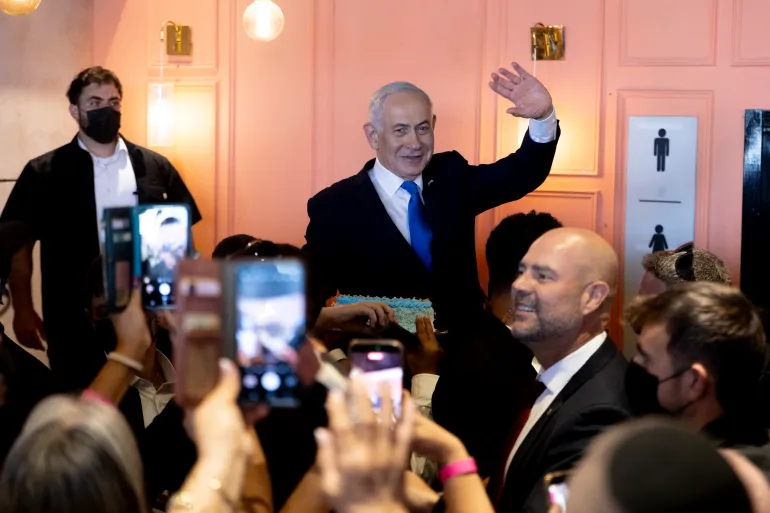
  • Israeli Prime Minister Benjamin Netanyahu said the country has been strengthened by its campaigns against Iran and its allies, claiming joint efforts with the US weakened Tehran’s capabilities and boosted Israel’s regional position, opening the door to new alliances.

In Lebanon

  • Prime Minister Salam said on Tuesday that Lebanon needed $587m to address the conflict’s ongoing humanitarian fallout amid a fragile ceasefire between Israel and Hezbollah.
  • Tensions remain high as Israel and Hezbollah accuse each other of breaching the truce. Israel said rockets were fired at its troops in southern Lebanon and that it responded with strikes, while Hezbollah said its attacks were retaliation for Israeli shelling and ongoing strikes on Lebanese areas.

Oil and global economy

  • Shipping through the Strait of Hormuz remains severely limited, raising concerns over global oil flows.

Source link

What was the Iran nuclear deal Trump dumped in search of ‘better’ terms? | US-Israel war on Iran News

United States President Donald Trump has said a nuclear agreement currently being negotiated with Iran will be “far better” than the 2015 Joint Comprehensive Plan of Action (JCPOA), which he withdrew from in 2018 during his first term in office.

The original 2015 accord took roughly two years of negotiations to reach and involved hundreds of specialists across technical and legal fields, including multiple US experts. Under it, Iran agreed to restrict the enrichment of uranium and to subject itself to inspections in exchange for the relaxation of sanctions.

Recommended Stories

list of 3 itemsend of list

But Trump took the US out of that pact, calling it the “worst deal ever”. Before the initial US-Israeli strikes on Iran at the end of February, the US had made new demands – including additional restrictions on Tehran’s nuclear programme, the restriction of its ballistic missiles programme and an end to its support for regional armed groups, primarily in Lebanon, Yemen and Iraq.

Trump’s latest remarks come amid growing uncertainty about whether a second round of talks will proceed in the Pakistani capital Islamabad, as a two-week ceasefire between the US-Israel and Iran approaches the end in just a day.

So, what was the JCPOA, and how did it compare to Trump’s new demands?

What was the JCPOA?

On July 14, 2015, Iran reached an agreement with the European Union and six major powers – China, France, Russia, the United Kingdom, the US, and Germany – under which these states would roll back international economic sanctions and allow Iran greater participation in the global economy.

In return, Tehran committed to limiting activities that could be used to produce a nuclear weapon.

These included reducing its stockpile of enriched uranium by about 98 percent, to less than 300kg (660lb), and capping uranium enrichment at 3.67 percent – far below weapons-grade of 90 percent, but high enough for civilian purposes such as power generation.

Before the JCPOA, Iran operated roughly 20,000 uranium-enriching centrifuges. Under the deal, that number was cut to a maximum of 6,104, and only older-generation machines confined to two facilities, which were subject to international monitoring.

Centrifuges are machines which spin to increase the concentration of the uranium-235 isotope – enrichment – in uranium, a key step towards potential bomb-making.

The deal also redesigned Iran’s Arak heavy water reactor to prevent plutonium production and introduced one of the most intrusive inspection regimes ever implemented by the global nuclear watchdog, the International Atomic Energy Agency (IAEA).

In exchange, Iran received relief from international sanctions which had severely damaged its economy. Billions of dollars in frozen assets were released, and restrictions on oil exports and banking were eased.

The deal came to halt when Trump formally withdrew Washington from the nuclear deal in 2018, a move widely criticised domestically and by foreign allies, and despite the IAEA saying Iran had complied with the agreement up to that point.

“The Iranian regime supports terrorism and exports violence, bloodshed and chaos across the Middle East. That is why we must put an end to Iran’s continued aggression and nuclear ambitions. They have not lived up to the spirit of their agreement,” he said in October 2017.

He reimposed crippling economic sanctions on Tehran as part of his “maximum pressure” tactic. These targeted Iran’s oil exports, as well as its shipping sector, banking system and other key industries.

The goal was to force Iran back to the negotiating table to agree to a new deal, which also included a discussion about Tehran’s missile capabilities, further curbs on enrichment and more scrutiny of its nuclear programme.

What has happened to Iran’s nuclear programme since the JCPOA?

During the JCPOA period, Iran’s nuclear programme was tightly constrained and heavily monitored. The IAEA repeatedly verified that Iran was complying with the deal’s terms, including one year after Trump announced the US’s withdrawal from the agreement.

Starting in mid-2019, however, Iran began incrementally breaching the deal’s limits, exceeding caps on uranium stockpiles and enrichment levels.

In November 2024, Iran said it would activate “new and advanced” centrifuges. The IAEA confirmed that Tehran had informed the nuclear watchdog that it planned to install more than 6,000 new centrifuges to enrich uranium.

In December 2024, the IAEA said Iran was rapidly enriching uranium to 60 percent purity, moving closer to the 90 percent threshold needed for weapons-grade material. Most recently, in 2025, the IAEA estimated that Iran had 440kg (970lb) of 60-percent enriched uranium.

What are Trump’s latest demands for Iran’s nuclear programme?

The US and its ally, Israel, are pushing Iran to agree to zero uranium enrichment and have accused Iran of working towards building a nuclear weapon, while providing no evidence for their claims.

They also want Iran’s estimated 440kg stock of 60pc enriched uranium to be removed from Iran. While that is below weapons-grade, it is the point at which it becomes much faster to achieve the 90 percent enrichment needed for atomic weapons production.

Iran has insisted its enrichment effort is for civilian purposes only. It is a signatory to the 1970 Treaty on the Non-Proliferation of Nuclear Weapons (NPT).

In March 2025, Tulsi Gabbard, the US director of national intelligence, testified to Congress that the US “continues to assess that Iran is not building a nuclear weapon”.

On Sunday, Iranian President Masoud Pezeshkian, in a strongly worded statement, said Trump had no right to ⁠⁠”deprive” Iran of its nuclear ⁠⁠rights.

INTERACTIVE- NPT
(Al Jazeera)

What else is Trump asking for?

Restrictions on ballistic missiles

Before the US-Israel war on Iran began, Tehran had always insisted negotiations should be exclusively focused on Iran’s nuclear programme.

US and Israeli demands, however, extended beyond that. Just before the war began, Washington and Israel demanded severe restrictions on Iran’s ballistic missile programme.

Analysts say this demand was at least partly triggered by the fact that several Iranian missiles had breached Israel’s much-vaunted “Iron Dome” defence system during the 12-day war between the two countries in June last year. While Israel suffered only a handful of casualties, it is understood to have been alarmed.

For his part, Trump has repeatedly warned, without evidence, about the dangers of Iran’s long-range missiles, claiming Iran is producing them “in very high numbers” and they could “overwhelm the Iron Dome”.

Iran has said its right to maintain missile capabilities is non-negotiable. The JCPOA did not put any limits on the development of ballistic missiles.

However, a United Nations resolution made when adopting the nuclear agreement in July 2015 did stipulate that Iran could not “undertake any activity related to ballistic missiles designed to be capable of delivering nuclear weapons”.

Ending support for proxy groups

The US and Israel have also demanded that Iran stop supporting its non-state allies across the Middle East, including Hezbollah in Lebanon, the Houthis in Yemen and a number of groups in Iraq. Together, these groups are referred to as Iran’s “axis of resistance”.

In May last year, Trump said Tehran “must stop sponsoring terror, halt its bloody proxy wars, and permanently and verifiably cease pursuit of nuclear weapons”, during a GCC meeting in Riyadh.

Three days before the war on Iran began in February, during his State of the Union address to Congress, Trump accused Iran and “its murderous proxies” of spreading “nothing but terrorism and death and hate”.

Iran has refused to enter a dialogue about limiting its support for these armed groups.

Can Trump really get a new deal that is ‘much better’ than the JCPOA?

According to Andreas Kreig, associate professor of Security Studies at King’s College, London, Trump is more likely to secure a new deal that closely resembles the JCPOA, with “some form of restrictions on enrichment, possibly with a sunset clause, and international supervision”.

“Iran might get access to frozen assets and lifted sanctions much quicker than under the JCPOA, as it will not agree to a long drawn-out, gradual lifting of sanctions,” Krieg pointed out.

However, he warned that the political landscape in Tehran has hardened. “Iran now is a far more hardline and less pragmatic player that will play hardball at every junction. Trump cannot count on any goodwill in Tehran,” he said.

“The IRGC is now firmly in charge… with likely new powerful and tested levers such as the Strait of Hormuz,” he said, referring to the Islamic Revolutionary Guard Corps, which operates as a parallel elite military force to the army and has a great deal of political and economic power in Iran. It is a constitutionally recognised part of the Iranian military and answers directly to the supreme leader.

Overall, Krieg stressed, the US-Israel war on Iran “leaves the world worse off than had Trump stuck to the JCPOA”, even if a new compromise is eventually reached.

Moreover, since the revocation of the JCPOA, the US and Israel have waged two wars on Iran, including the current one. The 12-day war in June last year included attacks on Iran’s nuclear sites and killed more than 1,000 people.

Attacks on Iran’s nuclear infrastructure have continued since the latest war began on February 28, including on the Natanz enrichment facility, Isfahan nuclear complex, Arak heavy water reactor, and the Bushehr nuclear power plant.

Iran nuclear facilities

Nevertheless, King’s College’s Krieg said there is still room for a negotiated outcome if Tehran and Washington scale back their demands.

“Both sides can compromise on enrichment thresholds, and on temporary moratoriums on enrichments. But Iran will not surrender its sovereignty to enrich altogether, and the Trump administration will have to meet them halfway,” he said.

“While the Iranians will commit on paper not to develop a nuclear weapon, they will want to keep R&D [research and development] in this space alive.”

Economic incentives will be central, he added. “Equally, Iran would want to get immediate access to capital and liquidity. Here, the Trump administration is already willing to compromise.”

Source link

Virginia redistricting vote: What polls suggest and what voters will decide | US Midterm Elections 2026 News

Voters in Virginia head to the polls on Tuesday to decide on a measure that could redraw the state’s congressional map and potentially shift the balance of power in Washington.

Major political figures, including former President Barack Obama and House of Representatives Speaker Mike Johnson, have weighed in on the high-stakes vote, with nearly $100m spent on campaigning around it.

Part of a broader redistricting battle that began in Texas and spread nationwide, the vote may be the Democrats’ last chance this year to gain seats by changing district maps. The vote comes about six months before the 2026 midterm elections.

Here is what we know:

What is Virginia voting on?

Virginia currently sends 11 members to the House. At the moment, six of them are Democrats, and five are Republicans, reflecting the state’s balance.

Democrats now want to redraw the map to favour them in a way that could help them win up to 10 of the 11 seats. Under the proposal, most districts would be safely Democratic or lean towards the party, with only one strongly Republican.

A breakdown would be:

  • Eight districts would be safely Democratic
  • Two would be competitive but lean Democratic
  • Only one would be safely Republican

If approved, this could give the Democrats several extra seats in Congress, helping them win back or strengthen control of the House in Washington, where majorities are often decided by just a few seats.

That would be a big political shift for the state, which was once closely contested but has become more Democratic-leaning in recent years.

Supporters depart a campaign rally against Virginia Democrats' proposed state redistricting constitutional amendment
Supporters depart a campaign rally against Virginia Democrats’ proposed state redistricting constitutional amendment [FILE: Ken Cedeno/Reuters]

How would the vote work?

Voters in Virginia can cast their ballots either early or on Election Day.

Polling stations will be open across the state on Tuesday:

  • Polls open at 10:00 GMT
  • Polls close at 23:00 GMT

Votes will be counted after polls close, with early results expected later that evening and fuller results overnight or the next day.

What are voters being asked to decide?

The proposed constitutional amendment is the only statewide contest on the ballot.

It reads:

“Should the Constitution of Virginia be amended to allow the General Assembly to temporarily adopt new congressional districts to restore fairness in the upcoming elections, while ensuring Virginia’s standard redistricting process resumes for all future redistricting after the 2030 census?”

A “yes” vote would support allowing the General Assembly to redraw congressional districts before the midterms.

A “no” vote would leave current boundaries unchanged until the next round of regularly scheduled redistricting after the 2030 census.

What do the latest polls suggest?

The result is expected to be close.

A recent poll by State Navigate, a nonpartisan research group, suggests a small lead for supporters, with about 53 percent in favour and 47 percent against.

Why do district lines matter so much?

District lines decide how voters are grouped, which can shape who wins elections.

Moving the lines can make a district more favourable to a Democratic or Republican win, by adding or removing neighbourhoods and communities that lean one way or the other.

It can turn a close race into a safe seat, or the other way around. It affects which communities are kept together and who represents them.

This process, often called gerrymandering, allows parties to draw maps that benefit them.

In a closely divided state like Virginia, even small changes to the map can shift several seats and influence who holds power in Congress.

A 2023 study by Harvard University researchers found that gerrymandering often creates “safe” seats for politicians, meaning their races are less competitive.

In turn, those politicians become less responsive to the needs of their constituents, who become discouraged about voting as a result.

Supporters pray during a campaign rally against Virginia Democrats' proposed state redistricting constitutional amendment
Supporters pray during a campaign rally against Virginia Democrats’ proposed state redistricting constitutional amendment [Ken Cedeno/Reuters]

When could new maps take effect?

If approved, the new map could be used as early as the next election cycle, including the upcoming midterms, depending on legal approval.

However, the plan could face legal challenges. Critics have questioned the ballot wording and the process used by lawmakers.

The Virginia Supreme Court has allowed the vote to go ahead while reviewing those concerns.

If it later finds that rules were broken, the results could be overturned, and the current maps would remain.

Why this vote could shape power in Washington?

A handful of seats could decide control of the US House.

Republicans currently hold a narrow 218–213 majority, but Democrats are seen as competitive heading into the midterms.

Political leaders have underscored the stakes.

Hakeem Jeffries, the Democratic Party’s leader in the House, has pointed to Virginia as a crucial battleground, while Mike Johnson has said the result will be closely watched across the country.

U.S. House Speaker Mike Johnson (R-LA) speaks during a campaign rally
US House Speaker Mike Johnson (R-LA) speaks during a campaign rally [Reuters]

What it means to control the US House

The party with the majority (more seats) in Congress can:

  • Set the agenda, deciding which bills are brought up for debate
  • Control committees, including investigations and hearings
  • Pass legislation more easily (if they stay united)
  • Block bills from the minority party.

The majority party also chooses the speaker of the House, who has major influence over what reaches the floor.

Where else has this happened?

Virginia’s redistricting vote is part of a larger political battle playing out in the US. Republicans in Texas, encouraged by Donald Trump, have redrawn district maps to strengthen their advantage, prompting similar efforts in other states.

In rare cases, voters have been asked to decide directly, including in California last year and now in Virginia.

In California, voters backed the changes despite concerns about fairness. Now it’s Virginia’s turn to decide.

What Democrats are saying, and why?

Democrats argue the plan is a response to Republican actions in other states, not just a power grab.

Leaders like Obama had long opposed gerrymandering in principle, but have now backed the Virginia move, even releasing a video asking voters to go out and vote for the constitutional amendment.

Source link

Technofacism? Why Palantir’s pro-West ‘manifesto’ has critics alarmed | Technology News

The US tech giant Palantir Technologies has posted what it terms a summary of Palantir CEO Alex Karp and head of corporate affairs Nicholas Zamiska’s book, The Technological Republic, on social media.

Many of the positions articulated in the book go far beyond what would normally be expected of a tech company: calling for the introduction of national service, the “moral” duty of technology companies to participate in defence, the necessity for hard power if what it calls free and democratic powers are to prevail, and an embrace of religion in public life.

Recommended Stories

list of 4 itemsend of list

The publication of what appears to be a 22-point manifesto comes at a critical time for Palantir, which faces global criticism for its support of US President Donald Trump’s controversial immigration crackdown and its backing of the Israeli military’s actions in Gaza and the occupied West Bank.

Many have expressed alarm at the book’s emphasis on cultural hierarchies and what it calls “regressive” cultures.

Eliot Higgins, the founder of the online investigations platform Bellingcat, sarcastically pointed out how “completely normal” it was for a tech company to post what he said was a manifesto attacking democratic norms. “It’s also worth being clear about who’s doing the arguing,” Higgins added. “Palantir sells operational software to defence, intelligence, immigration & police agencies. These 22 points aren’t philosophy floating in space, they’re the public ideology of a company whose revenue depends on the politics it’s advocating.”

So, what is Palantir, why is it so controversial, and why has it posted the “manifesto” now?

What does the book say?

As well as referring to the hard power needed to replace the “soaring rhetoric” previously used to defend “free and democratic societies”, the book rails against what it calls the “psychologization of modern politics”, which appears to criticise anyone the authors feel has become too emotionally invested in their political representatives and identity.

The call for people to care less about politics appears to critics as a way of deflecting from Palantir’s own controversial political positions and its openness to working with government policies that clamp down on liberty. Worryingly for some is also the book’s emphasis on what it calls the technology sector’s “obligation to participate in the defence of the nation”, and on the supposed inevitability of developing AI weapons.

Among other points, the writers appear to defend billionaires, such as Elon Musk, whose achievements, they say, are not met with “curiosity or genuine interest” but are instead dismissed by those who “snicker” at the South African-born businessman. Musk was heavily criticised for his role as the head of DOGE, or the US Department for Government Efficiency, which scrapped several government agencies without much regard for the roles those agencies played, or the legal and political process necessary to shut such agencies down.

Palantir’s post concludes by criticising “the shallow temptation of a vacant and hollow pluralism”. It argues that an unthinking commitment to inclusivity and pluralism “glosses over the fact that certain cultures and indeed subcultures… have produced wonders. Others have proven middling, and worse, regressive and harmful”.

How have people reacted?

Not well.

Mark Coeckelbergh, a Belgian philosopher of technology who teaches at the University of Vienna, described Palantir’s messaging as an “example of technofascism”, while Greek economist and former Finance Minister Yanis Varoufakis said Palantir had effectively signalled a willingness “to add to nuclear Armageddon the AI-driven threat to humanity’s existence”.

Posting on social media, Arnaud Bertrand, the entrepreneur and geopolitical commentator, claimed that Palantir had revealed a dangerous “ideological agenda”.

“They’re effectively saying ‘our tools aren’t meant to serve your foreign policy. They’re meant to enforce ours’,” he wrote.

What is Palantir?

Palantir Technologies is widely regarded as one of the world’s most influential data analytics firms, securing major contracts with governments, militaries and global corporations.

Founded in 2003 by Alex Karp and Peter Thiel, with support from In-Q-Tel, the CIA’s venture capital arm, it built its early business on post-9/11 intelligence work and has since expanded internationally, with contracts across Europe, the Middle East, and beyond.

While retaining his shares in Palantir, Thiel is understood to no longer play an active role in its day-to-day operations. Karp has positioned himself as the public face of the company.

Under Karp’s leadership, Palantir has drawn heavily on the expertise of former members of Israel’s cyber-intelligence unit, 8200. After the company announced a “strategic partnership” with Israel in January 2024, its involvement in Gaza and the occupied West Bank expanded considerably. Using a mix of intercepted communications, satellite material and other digital data sources, Palantir began integrating these inputs to help produce targeting databases – effectively, “kill lists” – for the Israeli military.

It has also cultivated close ties with US security agencies, particularly during the Trump administration, of which Thiel has been an enthusiastic backer, and has also worked with Israel in its occupation of the West Bank and genocide in Gaza.

According to its critics, including the rights group Amnesty International, “Palantir has a track record of flagrantly disregarding international law and standards, both in the violations of the human rights of migrants in the United States, to which it risks contributing to, and its ongoing supply of artificial intelligence (AI) products and services to the Israeli military and intelligence services that are linked to Israel’s ongoing genocide in Gaza.”

FILE - In this Wednesday, May 15, 2019, file photo, Palantir CEO Alex Karp arrives for the Tech for Good summit in Paris. Seventeen years after it was born with the help of CIA seed money, Palantir Technologies is finally going public. (AP Photo/Thibault Camus, File)
CEO Alex Karp founded Palantir with Peter Thiel, with investment from the CIA, in 2003 [File: Thibault Camus/AP Photo]

What exactly has Palantir been accused of in Israel and the US?

Palantir Technologies has faced criticism across the world for its enabling of government surveillance and military systems in the US and Israel.

In the US, it has been accused of supporting immigration enforcement and policing tools that aggregate vast personal datasets, including medical information, enabling profiling and raising due process and privacy concerns. In Israel, critics allege that its AI and data platforms have been used in military operations in Gaza, potentially contributing to the targeting decisions that have underpinned Israel’s genocide there.

Responding to questions from Al Jazeera earlier this year, a spokesperson for Palantir said, “As a company, Palantir does support Israel. We’ve chosen to support them because of the appalling events of October 7th. And more broadly, we’ve chosen to support them because we believe in supporting the West and its allies – and Israel is an important ally of the West.” The spokesman was referring to the Hamas-led October 7, 2023, attack on Israel, after which Israel launched its genocidal war on Gaza.

Why post the ‘manifesto’ now?

Palantir’s politics and alarm over its influence are growing and gaining traction across much of the West.

As well as concern among US Democrats, politicians in Germany, Ireland, and in the European Parliament have criticised the tech giant, whose products, according to one German lawmaker and cyber security expert, have fallen short of security standards across the bloc.

In the UK, the row over the National Health Service’s adoption of Palantir technology has led to some of the fiercest criticism yet. MPs calling for the UK to take advantage of an early break in the tech giant’s 330 million-pound ($446.4m) contract with the health service labelled Palantir “dreadful” and “shameful” in a debate last week, after which even the government conceded that it was “no fan” of the US company’s politics.

Louis Mosley, the head of Palantir Technologies UK, defended the company by arguing that it had no interest in patient data and existed only as a tool to better manage health service resources.

Source link

Bulgaria’s former President Radev wins election: All you need to know | Elections News

Bulgaria’s eighth parliamentary election in five years has concluded with former president Rumen Radev’s Progressive Bulgaria party emerging as the clear winner. Radev will be the next prime minister.

While pollsters predicted a win for Radev ahead of the election, they did not necessarily expect it to be such a large one.

Recommended Stories

list of 3 itemsend of list

With 98.3 percent of ballots tallied on Monday, official figures show Radev’s party taking 44.7 percent of the vote, and likely to secure roughly 130 of the 240 seats in parliament. The centre-left party has come in far ahead of rivals, raising hopes among voters for a more stable government after years of fragile coalitions and repeated votes.

However, questions remain over what Radev’s foreign policy will entail and what his election means for Bulgaria’s position within the European Union and NATO.

Here is what you need to know:

Who is Rumen Radev?

The 62-year-old served as Bulgaria’s president for nearly a decade before stepping down in January this year to launch his bid to become prime minister.

The former air force commander has positioned himself as an outsider, saying he wants to rid the country of its “oligarchic governance model”, amid widespread frustration with corruption and political turmoil that has gripped the country of 6.6 million people.

In 2025, Radev supported anti-corruption protests that brought down the conservative-backed government of former Prime Minister Rosen Zhelyazkov. He urged voters to turn out in large numbers to counter vote-buying.

At a pre-election rally on Wednesday last week, he pledged to “remove the corrupt, oligarchic model of governance from political power”.

epa12899730 Rumen Radev, leader of the Progressive Bulgaria (PB) coalition, casts his ballot during the parliamentary elections in Sofia, Bulgaria, 19 April 2026. Approximately 6.6 million voters are heading to the polls to elect 240 members of the National Assembly in an attempt to establish a stable coalition government following a period of prolonged political deadlock in the Balkan nation. EPA/BORISLAV TROSHEV
Rumen Radev, leader of the Progressive Bulgaria (PB) coalition, casts his ballot during the parliamentary elections in Sofia, Bulgaria [Borislav Troshev/EPA]

Radev’s stance on foreign policy has drawn attention in Europe, however.

Although he publicly condemned Russia’s 2022 invasion of Ukraine, he has also opposed providing military support to Ukraine and called, instead, for renewed, “practical relations with Russia based on mutual respect and equal treatment”.

Radev objected to a 10-year defence pact concluded between Bulgaria and Ukraine in March.

He has also called for the resumption of Russian imports to Europe, despite EU sanctions on Russian oil and a decision at the end of last year to cease all energy imports from Russia by 2027.

All this has led to critics labelling him “pro-Russian”. Radev, however, says he is merely taking a pragmatic approach.

“We are the only member state of the European Union that is both Slavic and Eastern Orthodox,” he said in an interview with Bulgarian journalist Martin Karbovski.

“We can be ‌a very important ⁠link in this whole mechanism … to restore relations with Russia,” he added.

Following the election, Russia congratulated Radev, welcoming his victory.

“Of course, we are impressed by the statements made by Mr Radev, who won the election, and by some other European leaders regarding their willingness to resolve problems through pragmatic dialogue,” said Kremlin spokesman Dmitry Peskov on Monday.

On Europe, some label Radev a eurosceptic, as he has criticised aspects of EU policy, including reliance on renewable energy and Bulgaria’s adoption of the euro.

At his campaign rally on Wednesday last week, he said: “The coalition-makers introduced the euro in Bulgaria without asking you. And now, when you pay your bills, always remember which politicians promised you that you would be in the ‘club of the rich’.”

Following his victory, he told reporters: “A strong Bulgaria and a strong Europe need critical thinking and pragmatism. Europe has fallen victim to its own ambition to be a moral leader in a world with new rules.”

Nevertheless, Radev has signalled his willingness to cooperate with pro-European parties on issues like judicial reform and has stated that Bulgaria will “continue on its European path”.

Following his win, European Commission President Ursula von der Leyen said: “Bulgaria is a proud member of the European family and plays an important role in tackling our common challenges.”

How significant is this result?

Since 2021, Bulgaria has been through multiple governments, many brought down by protests or parliamentary disagreements.

The election result places Radev’s party, with 44 percent of the vote, well ahead of the centre-right GERB party of former Prime Minister Boyko Borissov, which secured 13.4 percent of the vote, and the reformist PP-DB coalition, with 12.7 percent.

The margin between the parties is wider than pollsters predicted. On Friday last week, according to Bulgaria’s Alpha Research, Radev’s Progressive Bulgaria was projected to win, but with only 34.2 percent of the vote, followed by Borissov’s GERB-UDF with 19.5 percent. This led observers to predict that a coalition government would be necessary.

Despite securing a clear majority, however, Radev has yet to rule out creating a coalition with a smaller party to form a government.

“We are ready to consider different options so that Bulgaria can have a regular and stable government,” he told reporters on Sunday.

This latest election was called after former PM Zhelyazkov announced in December that his cabinet would resign, amid a looming no-confidence vote.

The election campaign centred heavily on cost-of-living pressures, corruption, and other economic concerns, with many voters expressing frustration at the lack of credible political alternatives.

What will Radev’s role as prime minister be?

Although Radev is best known for holding the title of president, that is a largely ceremonial role in Bulgaria’s political system.

The president serves as head of state, representing national unity and playing a role in foreign policy; executive power lies primarily with the prime minister and his cabinet.

The prime minister appoints his cabinet ministers, sets the government agenda, and is the key representative of Bulgaria in international affairs, including within organisations like the European Union and NATO.

The prime minister remains in office unless he chooses to resign or is removed in a no-confidence motion.

Source link

Iran war: What is happening on day 52 of the US-Israeli conflict? | Explainer News

Islamabad talks in limbo as Tehran says it will retaliate after US marines capture an Iranian-flagged ship near the Strait of Hormuz.

Donald Trump announced on Sunday that a second round of US-Iran talks is to be held in Pakistan on Monday – but Tehran has not confirmed participation, two days before a ceasefire deal expires.

The capture by US Marines of an Iranian-flagged container ship near the Strait of Hormuz on Sunday has further clouded the Islamabad talks, as Tehran has pledged to retaliate.

Recommended Stories

list of 4 itemsend of list

The attack came hours after President Trump announced he is sending a team to Islamabad for talks, while once again threatening to knock out Iran’s power plants and bridges if there is no deal. The ceasefire, which ended more than a month of war, expires on Wednesday.

Pakistan’s Prime Minister, Shehbaz Sharif, spoke on Sunday with Iranian President, Masoud Pezeshkian, as he reaffirmed his government’s readiness to mediate the conflict.

Here is what we know:INTERACTIVE-IRAN-DEATH-TOLL-TRACKER-APRIL-15-2026-1776273758

In Iran

  • ⁠Iran’s top ⁠joint ⁠military command, Khatam al-Anbiya, accused the US of ⁠violating the ceasefire by shooting at ⁠an Iranian ship in the Gulf of Oman and vowed ‌to retaliate.
  • President Trump ⁠posted on Truth ⁠Social on Sunday that US Marines ‌captured a vessel that tried to get past ⁠the American blockade on ⁠Iranian ports, adding that ⁠US forces ⁠stopped the ⁠ship by blowing a hole in ‌its engine room.
  • Iran ⁠executed ⁠two men convicted of cooperating with Israel’s Mossad ⁠intelligence service and planning attacks inside the ⁠country, the judiciary’s news outlet Mizan reported on Sunday.
  • French ⁠shipping ⁠company, CMA CGM, confirmed on Sunday that “warning shots” were fired at one ⁠of its ships in the Strait of Hormuz on Saturday. 
  • ⁠Iran’s ⁠armed forces turned back two tankers attempting ⁠to transit the Strait ⁠of Hormuz on Sunday after issuing warnings. The semi-official Tasnim ‌news agency said that was a result of the continuing US maritime ⁠blockade on Iran.
  • International flights from Mashhad airport in northeast Iran will resume on Monday, the civil aviation authority said.

War diplomacy

  • Iranian state media reported that Tehran had rejected new peace talks, citing the ongoing blockade, threatening rhetoric, and Washington’s shifting positions and “excessive demands.”
  • Iranian state media reported on Sunday that Tehran was not planning to take part in talks with the United States, hours after Trump said he was dispatching negotiators to Islamabad.
  • The US president posted on Truth Social ⁠on Sunday that representatives are going to Islamabad “tomorrow night” for Iran negotiations. “We’re offering a very fair and reasonable deal, and ⁠I hope they ⁠take it because, if they don’t, ⁠the United States ⁠is going to ⁠knock out every single power plant, ‌and every single bridge, in Iran,” ‌Trump ‌wrote.
  • Pakistan’s Prime Minister ⁠Sharif ⁠said on Sunday that he spoke with ⁠Iran’s President Masoud Pezeshkian about the conflict ⁠in the Gulf.
    Sharif posted on X that he shared insights with Pezeshkian regarding his recent ‌conversations with the leaders of Saudi Arabia, Qatar and Turkiye.
  • “I appreciated ⁠Iran’s engagement, including ⁠its high-level delegation to Islamabad for the historic talks, and ⁠recent discussions with Field Marshal Syed ⁠Asim Munir in ⁠Tehran,” Sharif said.
  • Turkiye’s Foreign Minister, Hakan Fidan, said on Sunday he was “optimistic” that a two-week ceasefire between Iran and the United States, which expires on Wednesday, would be extended, allowing more time for talks between the sides.
    Vice President JD Vance, second left, shakes hands with Pakistani Deputy Prime Minister and Foreign Minister Mohammad Ishaq Dar, as Pakistan's Interior Minister Mohsin Naqvi, left, Pakistan's Chief of Defence Forces Chief of Army Staff Field Marshall Asim Munir, third left, and Charge d'Affaires of the U.S. Embassy in Islamabad Natalie A. Baker, right, look on, as he prepares to board Air Force Two
    Vice President JD Vance led the US delegation for the first round of talks in Islamabad. They ended without a deal [Jacquelyn Martin/Pool/AP Photo]

In the US

  • Trump said on Sunday that the guided-missile destroyer, USS Spruance, fired on and seized the Iranian-flagged cargo ship, Touska, in the Gulf of Oman, and US Marines were “seeing what’s on board!”
  • The US president said Iran has committed a “serious ⁠violation” of the ceasefire ⁠but still thinks he can get a peace deal, ABC ‌News reporter Jonathan Karl posted on X on Sunday. Trump added that a peace deal “will happen. ⁠One way or another”.

In Israel

  • Argentine President Javier Milei, has reaffirmed his country’s support for the campaign against Iran, citing his government’s earlier decision to designate the Iranian Revolutionary Guards as a “terrorist organisation”.
  • Milei, who is visiting Israel for the third time since taking office, declared on Sunday that the joint US-Israel war against Iran was the “right thing to do”, as he signed on to the so-called Isaac Accords aimed at deepening bilateral ties between Israel and Latin American countries.

In Lebanon

  • ⁠The Israeli ⁠military on Monday warned residents in southern ⁠Lebanon not to move ⁠south of a specified line of villages or approach areas ‌near the Litani River, saying its forces remain deployed in the area during a ceasefire ⁠due to what ⁠it described as continued Hezbollah activity.
  • The Israeli army also said it had determined that an image circulating on social media showing a soldier in south Lebanon hitting a statue of Jesus Christ is authentic and depicts one of its troops.
  • The viral photo of the Israeli soldier hitting the Jesus statue with a sledgehammer has sparked outrage.
  • French President Emmanuel Macron is due to meet Lebanese Prime Minister Nawaf Salam in Paris on Tuesday. The announcement follows the killing of a French peacekeeper in Lebanon during the fragile 10-day ceasefire between Israel and Iran-backed militant group Hezbollah.
  • Israel’s Defence Minister Israel Katz said the military will use “full force” in Lebanon – even during the ongoing ceasefire – should Israeli troops face any threat from Hezbollah.
  • Lebanon’s military said it has reopened a road and bridge between Nabatieh and Khardali, which were damaged by Israeli strikes in the south.

Oil prices rise

  • Oil prices surged on Monday following the re-escalation of hostilities in the Middle East war However, lingering hopes that a deal to end the seven-week crisis continued to support equities, despite Tehran saying it was not planning to attend peace talks.

Source link

Can Hungary wean itself off Russian energy, as its new leader has promised? | Explainer News

Hungary’s newly elected leader, Peter Magyar, stormed to power last weekend after campaigning to, among other things, take a step back from Russia.

Instead, Magyar has promised voters he will steer Hungary back towards the European Union, following the 16-year rule of far-right Prime Minister Viktor Orban, who went to great lengths to deepen ties with Russia.

Recommended Stories

list of 3 itemsend of list

Under Orban, Hungary opposed most of the European Union’s stances against Russia and  blocked sanctions and obstructed military aid for Ukraine.

Above all, he and his Fidesz party entrenched Hungary’s reliance on Russian oil.

Now, following a massive electoral turnout and a landslide victory, Magyar – once a devotee of Orban and now leader of the centre-right Tisza party – has promised to end Russian oil imports by 2035. But how realistic a goal is that? And can he achieve it?

Magyar
Peter Magyar celebrates after Prime Minister Viktor Orban conceded defeat in the parliamentary election in Hungary, April 12, 2026 [File: Leonhard Foeger/Reuters]

How much does Hungary depend on Russia for energy?

Hungary has been central to keeping Russian oil and gas flowing into the EU, even as Europe and the US banned some imports and imposed sanctions on anyone paying more than $60 a barrel for Russian oil.

Following Russia’s invasion of Ukraine, the EU banned seaborne imports of Russian oil but kept land flows legal. That allowed Hungary to continue importing most of its crude by pipeline via Ukraine.

The EU first announced plans to phase out Russian energy imports in May 2022, shortly after Russia’s invasion of Ukraine. In December 2025, a binding agreement was made for member nations to completely phase out Russian oil and gas imports by late 2027. But, instead of diversifying from Moscow, Hungary increased its dependency.

According to a 2026 report by the Center for the Study of Democracy (CSD), Hungary had expanded its reliance on Russian crude from 61 percent in 2021 to 93 percent by 2025.

Much of the crude oil Hungary imports from Russia comes via the Druzhba pipeline. It is one of the key pipelines that ensures the continued flow of Russian crude to both Hungary and Slovakia. At 5,500 km (3,420 miles) long, it begins in Almetyevsk in western Russia and runs into Belarus. It splits at Mozyr, with one branch going to Poland and Germany and the southern branch goes through Ukraine into Slovakia, Hungary and Czechia.

pipeline
The Druzhba oil pipeline from Russia at the Danube Refinery in Szazhalombatta in Hungary, May 18, 2022 [File: Bernadett Szabo/Reuters]

In January, the section of the pipeline running through Ukraine suffered significant damage. Ukraine blamed a Russian airstrike – Moscow denies that.

Hungary and Slovakia have complained that Ukraine has been deliberately slow to repair the damage. As a result, in March, Orban vetoed a 90 billion euro ($106bn) loan from the EU to Ukraine until the pipeline reopens.

On Tuesday this week, Ukraine’s President Volodymyr Zelenskyy said oil will flow again through the conduit by the end of April as he expects the new Hungarian leadership to lift its veto on the loan by then.

As for gas, Hungary remains one of the most dependent EU member states on Russian natural gas, accounting for roughly three-quarters of its annual imports, the CSD report shows.

Since the start of Russia’s invasion, Hungary has imported an estimated 15.6 billion euros ($18.4bn) worth of Russian gas. Long-term contracts with Russia’s state-owned Gazprom, the continued reliance on TurkStream – a natural gas pipeline running from Russia to Turkiye – and “the weak use of alternative interconnectors have locked the country into Russia’s reconfigured gas export system”, the CSD report states.

Nuclear energy dependency is yet another issue. Hungary granted Rosatom, the Russian state nuclear energy corporation, the construction contract for the expansion of its Paks atomic plant, 100km (62 miles) southwest of Budapest on the Danube River. Russia, in turn, provided Hungary with a state loan to finance most of the development of new reactors. The European Commission approved the plan in 2017 and construction started in February.

Now, Magyar says he intends to reassess the project’s financing. But the Paks plant provides 40 to 50 percent of all electricity generated in Hungary. The expansion plans will increase that to between 60 and 70 percent, which would cut reliance on imported energy, but keep Hungary tied to Russia. 

According to a 2025 joint research paper by the Center for the Study of Democracy and the Center for Research on Energy and Clean Air, Hungary could potentially diversify its energy supply by importing non-Russian oil via alternative sources such as the Adria pipeline. It transports crude from the Adriatic Sea to refineries in Croatia, Serbia, Hungary and Slovakia. Their refiners, which are controlled by Hungarian oil and gas company MOL, are capable of processing non-Russian crude, the research paper said.

Russian oil has been coming in at a discounted rate as a result of Western sanctions, so any diversification will likely be more expensive.

Can Hungary wean itself off its dependence on Russian oil?

It won’t be easy, and Magyar knows it. “The geographical position of neither Russia nor Hungary will change. Our energy exposure will also be here for a while,” he said before last weekend’s election. And in an interview with the Financial Times, Magyar insisted that Russian imports should remain an option. “This does not mean that by ending dependence on someone you no longer continue to buy from them,” he said.

Magyar will seek to strike a balance between respecting current contracts with Moscow to ensure Hungary’s energy security, while establishing political distance, said Pawel Zerka, a senior policy fellow at the European Council on Foreign Relations.

“I would expect this government not to be pro-Russia in the sense of going to Moscow and keeping ties with the Russian government, but they don’t have easy options to replace Russian fuel with something else, especially considering the international situation with the Middle East,” Zerka said, referring to the closure of the Strait of Hormuz in the Gulf which has blocked the shipping of 20 percent of the world’s oil and LNG supplies.

Zerka added that the newly elected leader will not have political room to be particularly cordial with Russian President Vladimir Putin, considering the disapproval of Russia by his electoral base. A recent poll by the European Council on Foreign Relations shows that a majority of Tisza’s voters see Russia as an adversary or rival to compete with.

“It will be interesting to see how he combines this with energy needs,” Zerka said.

How does the EU view Hungary’s energy ties to Russia?

The strong energy ties between Russia and Hungary have long caused friction with the EU. Following Moscow’s invasion of Ukraine in 2022, the European bloc has worked to cut imports of Russian oil and gas. Budapest has done the opposite.

In January, the EU passed legislation to completely phase out Russian gas and LNG imports by late 2027.

Orban’s government had called for all restrictions on Russian oil to be lifted as a result of the global energy crisis triggered by the war in the Middle East. While Trump has made some concessions on Russian oil already loaded on tankers at sea – causing several heading for China to head to India instead – EU leaders have maintained they will hold firm on sanctions.

In the lead-up to last weekend’s election, Magyar’s manifesto called the dependence on Russian energy a “systemic risk” and he would wean Hungary off its reliance by 2035. But whether he can do that in time to beat the EU’s 2027 deadline is likely to provoke discussion in Brussels.

Source link

Iran war’s big winners: Wall Street, weapons firms, AI and green energy | Business and Economy News

The International Monetary Fund has downgraded its global growth forecast for 2026 from 3.3 to 3.1 percent, citing the impact of the United States-Israeli war on Iran and the shutdown of the Strait of Hormuz on the world economy.

The war has damaged energy infrastructure across the Gulf, while critical exports like oil, gas, chemicals and fertiliser remain largely stranded by Iran’s shutdown of the strait and the subsequent US naval blockade of Iranian ports.

Recommended Stories

list of 4 itemsend of list

In the worst-case scenario of a prolonged war, the IMF said global growth could fall to 2.5 percent in 2026, with low-income and developing economies hit the hardest by soaring commodity and energy prices. The global shipping and logistics industry is facing a separate crisis.

But every economic crisis also has beneficiaries: despite the dire macroeconomic outlook, some corners of the global economy are thriving on the uncertainty.

Here’s a look at five industries that are doing well either despite – or because of – the darkening economic outlook.

Wall Street investment banks

Global investors have been on a rollercoaster since the start of US President Donald Trump’s second term last year. The president’s erratic decision-making, where he often issues an ultimatum one day and then changes it the next, has led traders to coin the term “TACO trade”, where TACO stands for “Trump Always Chickens Out”.

The recent volatility has made some investors anxious, but it’s been a boon to investment banks, which make millions in commissions and revenue from the surging volume of trade, according to Sean Dunlap, a director of equity research at Morningstar Research Services.

“Clients want to reposition, so they trade frequently,” he told Al Jazeera. “Spreads tend to increase, which increases the profitability for trade intermediaries like banks.”

First-quarter results for 2026 – released this week – showed that Morgan Stanley reported a profit of $5.57bn, up 29 percent year on year, while Goldman Sachs reported a profit of $5.63bn, up 19 percent year on year.

JP Morgan Chase also reported major gains, with first-quarter earnings of $16.49bn, up 13 percent year on year. The banks all cited high levels of trading, deal-making, and “robust client engagement” as the reasons behind surging profits.

The boomtime for banks could reverse course, however, if volatility persists for too long, Dunlap warned, because investors may become increasingly cautious and less willing to borrow money to make trades.

Prediction markets

As mainstream Wall Street banks reap profits, the crypto-based prediction platform Polymarket has been earning upwards of $1m a day since the start of the month by letting users make peer-to-peer bets on everything from sports tournaments to elections.

Polymarket has been doing well since the start of the war, but it revised its fee structure on March 30 to cash in even more on its popularity.

Rival platforms like Kalshi, Novig and Robinhood also follow the same business model, but Polymarket has been the standout winner of 2026 because it controversially allows users to bet on the outcome of conflicts like the Iran war.

Polymarket revised its fee structure on March 30 to cash in on its popularity. The change has already netted the platform more than $21m in fees since April 1, up from $11.6m for all of March and $6.23m for all of February, according to DefiLlama, a website that provides data analysis for decentralised finance platforms.

If the current trend continues, Polymarket could make $342m in fees this year alone, according to DefiLlama’s analysis.

Anonymous users have also made millions correctly predicting the dates of major events like the US-Iran ceasefire, but the outcomes for rank-and-file users are typically less impressive.

Researchers found that the top 1 percent of Polymarket users captured 84 percent of all trading gains, according to a new report released this month analysing 70 million trades from 2022 to 2025. The returns are so high that US federal regulators have pledged to crack down on insider trading in prediction markets following suspiciously well-timed bets on Iran war outcomes.

Aerospace and defence

Unsurprisingly, the aerospace and defence industries are booming this year due to major conflicts in Ukraine, Iran, Sudan, Gaza and Lebanon and a surge in global defence spending.

About half of the world’s countries have increased their military budgets over the past five years, according to an April report from the IMF, which means they are also buying everything from drones to missiles — more than ever before. Demand is growing particularly fast in Europe, where NATO countries have committed to raising defence spending to 5 percent of gross domestic product (GDP) by 2035.

The defence industry has, in turn, seen major gains on the stock market. The MSCI World Aerospace and Defence Index – which tracks aerospace and defence stocks across 23 global markets – reported net returns of 32 percent year on year at the end of March.

The defence index outpaced the MSCI World Index, which tracks 1,300 large and mid-cap companies across the same 23 markets. The index, which gives a broader overview of global stock markets, reported net returns of 18.9 percent over the same period.

Artificial intelligence

Last year, the United Nations Trade and Development (UNCTAD) office predicted that the AI industry would grow from $189bn in 2023 to $4.8 trillion by 2033, and the Iran war does not seem to have dented the outlook.

“Despite the shocks from the Iran war, we’re still seeing resilience in a lot of sectors like artificial intelligence and renewable energy,” said Nick Marro, lead analyst for global trade at the Economist Intelligence Unit.

One metric for the AI boom has been the high volume of semiconductor chips still being exported out of East Asia, he said. At the top of the chart is chipmaking powerhouse Taiwan, which reported record-breaking merchandise exports of $80.2bn in March, up 61.8 percent year on year, according to EIU analysis.

The surge was led by exports to the US, which grew by 124 percent year on year, the EIU said.

Taiwan Semiconductor Manufacturing Company, the world’s top chipmaker better known by its acronym “TSMC,” on Thursday posted a net income of 572.8 billion New Taiwan Dollars (NTD) ($18.1bn) for the first three months of 2026 – up 58 percent year on year in NTD.

Another metric, initial public offerings or “IPOs,” also shows that the industry is confident for the moment, with industry leaders Anthropic and OpenAI both planning to go public this year.

Renewable energy

The Iran war has highlighted the need to transition from fossil fuels not only for environmental reasons, but also for reasons of energy security. The war marks the third major energy shock this decade, following the COVID-19 pandemic and the 2022 Russian invasion of Ukraine.

The Iran war has “boosted” renewable energy “given the urgency to switch away from fossil fuels and diversify towards renewable sources,” Marro of the EIU said.

Even before the Iran war began, the International Energy Agency reported that global governments were already taking active measures to invest in renewable energy for geopolitical reasons.

According to an IEA report released this month, “150 countries have active policies to advance renewable and nuclear deployment, 130 have energy efficiency and electrification policies, and 32 have policies to incentivise supply chain resilience and diversification across critical minerals and clean energy technologies.”

The Iran war has triggered another flurry of policymaking in Asia, which typically buys 80 to 90 percent of the oil and gas that transits through the Strait of Hormuz. Since the shutdown, the region has been struggling to find alternative sources of energy, forcing governments to deploy emergency measures like fuel rationing and price caps.

South Korea, Thailand, India, Cambodia, Indonesia, Vietnam and the Philippines have all announced a variety of measures from tax breaks for at-home solar panels to commissioning new renewable energy projects – and even restarting nuclear reactors.

The surge in policymaking has been good for the renewable industry. The S&P Global Clean Energy Transition Index, which tracks 100 companies that produce solar, wind, hydro, biomass and other renewable energy across emerging and developed markets, is up 70.92 percent year on year.

Source link

Iran war: What is happening on day 48 of the US-Iran conflict? | US-Israel war on Iran News

US–Iran talks gain pace as Pakistan mediates, with fresh optimism for a new round of talks in Islamabad.

Efforts to revive US-Iran negotiations are gathering pace, with Pakistan again having an important mediating role as its leaders hold high-level talks in Tehran and the Gulf.

Amid a renewed push to end the war, a Pakistani delegation, led by army chief Field Marshal Asim Munir is in Tehran. He is expected to relay messages from the United States, while Pakistan’s Prime Minister, Shehbaz Sharif, arrived in Saudi Arabia as part of a regional tour that includes Qatar and Turkiye.

Recommended Stories

list of 4 itemsend of list

Iran’s Foreign Ministry spokesman, Esmael Baghaei, said Tehran and Washington have remained in contact since talks in Islamabad ended on Sunday. On Wednesday, Washington signalled optimism about a new round of talks in the Pakistani capital.

But the diplomatic push comes amid increasing tension, as Iran warns it could expand its response to the US naval blockade beyond its own waters.

Divisions in Washington persist, with the US Senate rejecting a measure to limit the war without congressional approval.

Here is what we know:

In Iran

  • Hormuz tensions remain high: Adviser Mohsen Rezaei warned that Iran could target US ships, if Washington continues to enforce its naval blockade in the Strait of Hormuz. The warning comes as the US tightens restrictions on vessels linked to Iranian ports, with ships already being turned back amid the standoff.
  • Nuclear issue shows potential breakthrough: Analyst Abas Aslani says Tehran is open to nuclear transparency if Washington is serious about a deal, but new US sanctions and the blockade of Iranian ports are fuelling distrust.
  • “There is a sense of distrust, and at the moment, Iran is ready for every possible scenario, either progress in the negotiations or returning to the military conflict,” he told Al Jazeera.
  • Iran’s Foreign Minister Abbas Araghchi warned of consequences over US “provocative actions” in the Gulf and the Strait of Hormuz during a call with his Chinese counterpart Wang Yi.

War diplomacy

  • Round two of talks: The US is discussing holding a second round of peace talks with Iran and is optimistic about reaching a deal, the White House said.
  • China supports ‘momentum’ of peace talks: China’s Foreign Minister, Wang Yi, told his Iranian counterpart that Beijing “supports maintaining the momentum of the ceasefire and peace talks”.
  • Saudi crown prince, Pakistan PM meet: Crown Prince Mohammed bin Salman and Shehbaz Sharif met in Jeddah to discuss regional issues, including US-Iran negotiations. Talks hosted by Pakistan were a key focus, said the Saudi Press Agency.
  • US and Qatar: US President Trump discussed regional developments and energy concerns, specifically regarding the oil market and gas prices, with Qatari Emir Sheikh Tamim bin Hamad Al Thani.
Saudi Crown Prince Mohammed bin Salman meets with Pakistan's Prime Minister Shehbaz Sharif in Jeddah
Saudi Crown Prince Mohammed bin Salman and Pakistan’s Prime Minister Shehbaz Sharif in Jeddah, Saudi Arabia [Saudi Press Agency/Reuters]

In the US

  • US President Donald Trump has announced that Israeli and Lebanese leaders will hold direct talks later today – their first such contact in 34 years.
  • New oil sanctions: US officials targeted more than two dozen individuals, along with companies and vessels linked to the oil transport network of Iranian shipping magnate Mohammad Hossein Shamkhani.
  • US says 10 vessels blocked from Iranian ports: The US military’s Middle East command (CENTCOM) said 10 ships were stopped or redirected within the first 48 hours of a naval blockade, with none leaving Iranian ports.
  • US Congress divisions: The Senate rejected efforts to limit US involvement in the war and blocked measures targeting arms sales to Israel, though growing opposition signals shifting political pressure.

In Israel

  • ‘Identical’ goals: Israeli Prime Minister Benjamin Netanyahu said that Israel and the US are fully aligned in their objectives to contain Iran.
  • Ceasefire pressure, no halt in fighting: Despite pressure, Netanyahu said Israel would continue military operations.
  • End of Hezbollah: The Israeli prime minister said the country’s top priority in Lebanon was to secure the “dismantling” of Hezbollah, in its first direct talks with the country in decades.
  • “There are two central objectives: first, the dismantling of Hezbollah; second, a sustainable peace… achieved through strength,” he said.

In Lebanon

  • Relentless strikes continue: Air raids and shelling hit southern and eastern Lebanon, including Kafr Sir and Nabatieh, while a “triple-tap” strike in Mayfadoun killed four paramedics. Israeli vehicles and bulldozers remain active.
  • Lebanon’s Minister for Administrative Reform Fadi Makki said an Israeli attack that killed four paramedics in southern Lebanon was “a new war crime”.
  • Rising toll: Israeli strikes have killed at least 2,167 and injured more than 7,000 people, according to the Lebanese Health Ministry. About 1.2 million people have been displaced since March 2. Israel has been accused of destroying homes in southern Lebanon, as happened in Gaza.
  • ‘Homes that no longer exist’: “Even if a ceasefire is reached, the reality on the ground is devastating.. entire communities along the border have been destroyed,” Al Jazeera’s Malcolm Webb reported from Beirut. He added that Israel has yet to secure its objective of controlling territory up to the Litani River.
  • Balakrishnan Rajagopal, the UN special rapporteur on the right to housing, has joined other UN human rights experts, calling for Israel to immediately stop its bombing of Lebanon. Rajagopal wrote on social media that the Israeli military is using the “same strategy” in southern Lebanon as in Gaza or the occupied West Bank.
  • Diplomatic tensions grow: Hezbollah has condemned US-hosted Israel-Lebanon talks as “shameful,” while a failed Senate vote to block bulldozer sales to Israel highlights increasing concern over civilian harm.
An armoured Israeli military vehicle operates inside Israel, near the Israel-Lebanon border
An armoured Israeli military vehicle near the Lebanon border [Florion Goga/Reuters]

Global economy

  • Growing hunger fears: The war could push millions more towards hunger as its economic fallout reverberates around the globe, the World Bank’s chief economist told AFP.
  • “You have about 300 million people who suffer from acute food insecurity already,” Indermit Gill said.  “That’ll go up by about 20 percent very, very quickly,” as knock-on effects grow.
  • Wall Street records: Major Wall Street stock indices finished at record highs on Wednesday following optimism about an accord in the US-Iran conflict.

Source link

What’s at stake in Benin’s presidential election? | Elections News

Benin will elect a new president on Sunday in a race that is shaping up to favour the chosen successor of the governing party, which has been in power for the past decade.

Outgoing President Patrice Talon, 67, is barred under the constitution from running again after two terms in power, and will step down with a legacy of mixed results: economic growth, but also a clampdown on the opposition and critics.

Recommended Stories

list of 3 itemsend of list

The small West African nation with a population of 14 million has also seen increasing numbers of attacks in its north as Sahel-based armed groups expand their territories towards the Atlantic coast.

Benin is sandwiched between its bigger neighbour, Nigeria, to the east and Togo to the west. The coastal country has increasingly gained attention as a tourist destination as more people from the African diaspora flock to its windy beach towns.

A former French colony, Benin retains French as its official language. Fon, Yoruba, Bariba, and Fulfulde are among the largest local languages spoken in the country.

Here’s what to know about Sunday’s election:

What’s happening?

About eight million eligible voters will choose a president for the next seven years.

Candidates will need to secure at least 50 percent of the votes; otherwise, a run-off will be called on May 10 between the top two candidates.

There are only two candidates, however.

The main opposition party, the Democrats, failed to get enough lawmakers to sponsor a candidate, so it is not on the presidential ballot. It earlier failed to win any seats in legislative elections in January.

Reporting from a governing party campaign event in the commercial capital, Cotonou, this week, Al Jazeera’s Ahmed Idris said the mood there was lively, but that it did not represent feelings in all of Benin after the main opposition party was sidelined.

“Most supporters of President Talon feel that this is a walkover …The only question will be whether the voting population will turn out in huge numbers. The last election we had only 50 percent,” he said.

Wadagni
Romuald Wadagni, Benin’s finance minister and the governing party’s candidate for the presidential election, speaks during the presentation of his platform in Cotonou, Benin, on March 21, 2026 [Charles Placide Tossou/Reuters]

Who is running?

Romuald Wadagni: The 49-year-old is presently the country’s finance minister and is the candidate of the governing alliance between the Progressive Union Renewal (UPR) and the Republican Bloc (BR).

A former Deloitte executive, he is expected to take a comfortable lead on Sunday, having been endorsed by current leader Talon, with whom he says he has a “father-and-son” relationship.

Wadagni, in his campaign, has touted the benefits of continuity that would come with his win. He has highlighted achievements under Talon, like tripling the national budget and posting the cotton-exporting country’s highest GDP growth rates in more than two decades.

He is also proposing new development hubs and expanding healthcare access.

Under Talon, “I had the honour of managing one of your most precious assets: your money,” Wadagni told supporters on the campaign trail in March. “I will do the job with the same seriousness and dedication,” he said.

On Friday, the final day of campaigning, he told supporters in Cotonou: “We are going to move forward, go even further with what began before your very eyes,” referring to a decade of economic transformation in the country.

Benin
People ride past an electoral campaign billboard of Presidential candidate Paul Hounkpe of FCBE (Force Cauris pour un Benin Emergent) ahead of the presidential election scheduled for April 12, in Cotonou, Benin, on April 2, 2026 [Charles Placide Tossou/Reuters]


Paul Hounkpe: The 56-year-old is the only opposing candidate.

A former teacher, he represents the Cowry Forces for ⁠an Emerging Benin party (FCBE).

He was formerly the culture minister under the government of ex-leader Thomas Boni Yayi of The Democrats. He also ran as a vice presidential candidate in the 2021 elections.

He is seen as a moderate, and has pledged to reduce the price of basic products and to secure the release of opponents imprisoned under Talon’s administration.

Hounkpe has campaigned on the perceived sidelining of citizens despite economic growth and flashy tourism projects under the current government.

What are the key issues?

Continuing Talon’s economic legacy

Economic growth sustained for a decade has been among Talon’s strongest achievements, and Beninese will be looking for a president who can sustain or improve on that.

Benin’s economy grew 7 percent in 2025 according to the International Monetary Fund, making it one of the region’s steadiest economies.

That’s driven by investments in trade, agriculture and infrastructure, including port expansions in Cotonou.

On the other hand, benefits have not been equally distributed across the country as poverty remains widespread in rural areas, especially in the poorer north.

Rising insecurity and political stability

Benin made headlines in December after a group of military officers attempted but failed to seize power. About 100 alleged coup planners are still in jail awaiting trial.

The coup leaders’ key complaints were the deterioration of security in northern Benin, where al-Qaeda and ISIL(ISIS)-affiliated armed groups from neighbouring Sahelian countries have increasingly launched attacks on communities. They said soldiers were “neglected” on the front lines.

Benin’s north is close to the tri-border area, a hotbed for armed violence. Lack of security cooperation with Niger and Burkina Faso, both now led by military leaders, has worsened the situation.

An attack by the al-Qaeda-backed Jama’at Nusrat al‑Islam wal‑Muslimin (JNIM) on Benin military posts last year killed 54 soldiers. Last month, another 15 were killed.

Candidate Wadagni has promised to defend the north by creating municipal police forces to guard border towns.

Shrinking democratic space

Talon has also been accused of dragging the country back into an era of autocracy, especially after authorities shut down cost-of-living protests in April 2024.

Beninese treasure the country’s reputation as one of West Africa’s most stable democracies in recent times, but critics say that has changed under Talon, and opposition groups accuse him of using the justice system to undermine other parties.

A constitutional reform in November extended presidential terms from five to seven years. It also established grounds for the president to nominate candidates to the Senate, which further raised the bar for opposition parties to enter parliament.

In January’s parliamentary election, Talon’s two allied parties controlled all 109 seats in the National Assembly.

Rights groups like Human Rights Watch and Amnesty International have meanwhile accused Talon’s government of cracking down on dissent through arbitrary detentions, restrictions on demonstrations, and pressure on independent media.

Source link

What is Iran’s Strait of Hormuz protocol and will other nations accept it? | US-Israel war on Iran News

The Strait of Hormuz, which links the Gulf to the Gulf of Oman, has held global attention since Israel and the US began their war on Iran in February.

Until fighting began, the narrow channel, through which 20 per cent of the world’s oil and liquefied natural gas (LNG) supplies are shipped from Gulf producers in peacetime, remained toll-free and safe for vessels. The strait is shared by Iran and Oman and does not fall into the category of international waters.

Recommended Stories

list of 4 itemsend of list

After the US and Israel began strikes, Iran retaliated by attacking “enemy” merchant ships in the strait, effectively halting passage for all, stranding shipping, and creating one of the worst-ever global energy distribution crises.

Tehran continued to refuse to re-open the strait to all traffic at the start of this week, despite US President Donald Trump’s threats to bomb Iran’s power plants and bridges if it did not relent. Trump backed away from his threat on Tuesday night when a two-week ceasefire, brokered by Pakistan, was declared.

That followed a 10-point peace proposal from Iran that Trump described as a “workable” basis on which to negotiate a permanent end to hostilities.

As part of the truce, Tehran has now issued official terms it says will guide its control of the Strait going forward. The US has not directly acknowledged the terms ahead of talks set to begin in Islamabad on Friday. However, analysts say Tehran’s continued control will be unpopular with Washington, as well as other countries.

During the crisis, only a few ships from specific countries deemed friendly to Iran and those which pay a toll have been granted safe passage. At least two tolls for ships are believed to have been paid in Chinese yuan, in what appears to be a strategy to weaken the US dollar, but also to avoid US sanctions. China, which buys 80 percent of Iran’s oil, already pays Tehran in yuan.

Here’s what we know about how shipments will work from now on:

INTERACTIVE - Strait of Hormuz - March 2, 2026-1772714221
(Al Jazeera)

Who is controlling the strait now?

On Tuesday, Iran’s Foreign Minister Abbas Aragchi said Iran would grant safe passage through the strait during the ceasefire in “coordination with Iran’s Armed Forces and with due consideration of technical limitations”.

On Wednesday, the Islamic Revolutionary Guard Corps (IRGC) released a map of the strait showing a safe route for ships to follow. The map appears to direct ships further north towards the Iranian coast and away from the traditional route closer to the coast of Oman.

In a statement, the IRGC said all vessels must use the new map for navigation due to “the likelihood of the presence of various types of anti-ship mines in the main traffic zone”.

Alternative routes through the Strait of Hormuz have been announced by Iran's Islamic Revolutionary Guard Corps (IRGC), providing new entry and exit pathways for maritime traffic.
Alternative routes through the Strait of Hormuz have been announced by Iran’s Islamic Revolutionary Guard Corps (IRGC), providing new entry and exit pathways for maritime traffic [Screen grab/ Al Jazeera]

It is unclear whether Iran is collecting toll fees during the ceasefire period.

However, Trump said on Tuesday the US would be “helping with the traffic buildup” in the strait and that the US army would be “hanging around” as the negotiations go on.

The Strait will be “OPEN & SAFE” he posted on his Truth Social media site on Thursday, adding that US troops would not leave the area, and threatening to resume attacks if the talks don’t go well.

It’s not known to what extent US troops are directing what happens in the strait now.

Delhi-based maritime analyst C Uday Bhaskar told Al Jazeera that there is a lot of “uncertainty” about who can sail through the strait, and that only between three and five ships have transited since the war was paused.

How does Iran’s 10-point plan affect the Strait?

Among Tehran’s main demands listed on its 10-point plan are that the US and Israel permanently cease all attacks on Iran and its allies – particularly Lebanon – lift all sanctions, and allow Iran to retain control over Hormuz. The plan has not been fully published but is understood to be a starting point for talks.

Iranian media say Iran is considering a plan to charge up to $2m per vessel to be shared with Oman on the opposite side of the strait. Other reports suggest Iran could charge $1 per barrel of oil being shipped.

Revenues raised would be used to rebuild military and civilian infrastructure damaged by US-Israeli strikes, Tehran said.

Oman has rejected the idea. Transport minister Said Al-Maawali said on Wednesday that the Omanis previously “signed all international maritime transport agreements” which bar taking fees.

Interactive_Iran_US_Ceasefire_April8_2026

What does international law say about tolls on shipping?

Critics of Iran’s plan to charge tolls say it violates international law guiding safe maritime passage, and should not be part of a final ceasefire agreement.

The United Nations Convention on the Law of the Sea (UNCLOS) says levies cannot be charged on ships sailing through international straits or territorial seas.

The law allows coastal states to collect fees for services rendered, such as navigation assistance or port use, but not for passage itself.

Neither the US nor Iran has ratified that particular convention, however.

Even if they had, there could be ways to get around this law anyway. Analyst Bhaskar told Al Jazeera that if Iran instead charged fees to de-mine the strait and make it safe for passage again, that could be allowable under maritime laws.

There is no precedent in recent history of countries officially taxing passage through international straits or waterways.

In October 2024, a United Nations Security Council report alleged that the Iran-backed Houthis in Yemen were collecting “illegal fees” from shipping companies to allow vessels to pass through the Red Sea and the Bab-el-Mandeb strait, where it was targeting ships linked to Israel during the Gaza war.

Last week, a top adviser to Supreme Leader Mojtaba Khamenei suggested the Houthis could shut the Bab al-Mandeb shipping route again in light of the war on Iran.

INTERACTIVE - Bab al-Mandeb strait red sea map route shipping map-1774773769
(Al Jazeera)

How might countries react to a Hormuz toll?

Tolls for passage through the Strait of Hormuz would likely most affect oil and gas-producing countries in the Gulf, but ripple effects will spread to others as well, as the current supply shocks have shown.

Gulf countries, which issued statements calling for the reopening of the passage and praising the ceasefire on Wednesday, would also face a continuing degree of uncertainty, analysts say, as Iran could again disrupt flows in the future.

Before the ceasefire was announced, Bahrain had already proposed a resolution at the UN Security Council calling on member states to coordinate and jointly reopen the passage by “all necessary means”. It was backed by Qatar, the UAE, Saudi Arabia, Kuwait and Jordan. On April 7, 11 of 15 UNSC members voted in favour of that resolution.

But Russia and China vetoed the resolution, saying it was biased against Iran and did not address the initial strikes on Iran by the US and Israel.

Beyond the region, observers say the US is unlikely to accept indefinite toll demands by Iran as part of the negotiations expected to begin on Friday.

A toll to pass through the Strait of Hormuz “is not going to go down well with President Trump and his expectations that the strait should be open for everyone”, Amin Saikal, a professor at the Australian National University, said.

Other major powers have also voiced opposition. Ahead of the ceasefire, Britain had begun discussions with 40 other countries to find a way to reopen the strait.

Practical realities in the strait might see a different scenario play out with ship owners losing millions each day their vessels remain stranded seeking to get them out quickly and undamaged experts say. They are more likely to comply with Iran, at least for now.

“If I were the owner of a VLCC [very large crude carrier] which weighs about 300,000 tonnes, whose value could be a quarter billion dollars…I would believe the Iranians if they said we have laid mines,” Bhaskar said.

Source link

From 9pm shutdowns to remote work: Egypt cuts fuel amid power crisis | US-Israel war on Iran News

The US-Israel war on Iran has sparked a global fuel crisis as thousands of tankers carrying crucial deliveries of oil and liquefied natural gas (LNG) remain stranded on either side of the Strait of Hormuz, currently under a blockade imposed by Iran.

On Saturday, Egypt’s government said it is among the “best-performing” countries in tackling the crisis because of the measures it has implemented to save on fuel.

Here is what we know about the steps Egypt is taking and whether other countries are doing the same.

Why has the Iran war caused an energy crisis?

Pressure on oil and gas markets is mounting due to the almost complete halt to shipping through the Strait of Hormuz as well as air strikes on and around key energy facilities in the Gulf as the United States-Israel war on Iran enters its sixth week.

One-fifth of the world’s oil and LNG is shipped from producers in the Gulf through the Strait of Hormuz in peacetime. This is the only route from the Gulf to the open ocean.

On March 2, two days after the US and Israel began strikes on Iran, Ebrahim Jabari, a senior adviser to the commander in chief of Iran’s Islamic Revolutionary Guard Corps (IRGC), announced that the strait was “closed”. If any vessels tried to pass through, he said, the IRGC and the navy would “set those ships ablaze”. Since then, traffic through the strait, carrying cargoes including 20 million barrels of oil each day, has plunged by more than 95 percent.

Now, Tehran is allowing just a handful of tankers through after reaching agreements with some countries to do so.

Besides this, energy infrastructure in the Middle East has suffered damage over the course of the war.

On March 24, QatarEnergy declared force majeure on some of ⁠its long-term LNG supply contracts after an Iranian attack on Qatar’s Ras Laffan LNG facility – the largest in the world – wiped out about ⁠17 percent of the country’s LNG export capacity, causing an estimated $20bn in lost annual revenue and threatening supplies to Europe and ⁠Asia.

All of this disruption has sent energy prices soaring. On Tuesday, global oil benchmark Brent crude was around $109 per barrel, compared to around $65 per barrel right before the war started.

How is Egypt tackling the energy crisis?

Egypt’s Petroleum Ministry has announced rises in fuel prices ranging from 14 percent to 30 percent.

On March 28, Egyptian Prime Minister Mostafa Madbouly’s office told a press conference that the country’s energy import bill had increased from $1.2bn in January to $2.5bn in March.

Egypt is both one of the region’s largest energy importers and among its most heavily indebted economies. While domestic gas and oil account for the majority of its total energy supply, the country still relies on imported fuels, especially refined oil products and some natural gas, from Israel and the Gulf states.

Madbouly announced measures Egypt is taking to mitigate this and preserve state energy resources.

  • From March 28, shops, malls and restaurants are closing at 9pm (19:00 GMT) every day for one month, except Thursdays and Fridays.
  • On Thursdays and Fridays, the closing time will be 10pm (20:00 GMT).
  • Fuel allocations for government vehicles will be reduced by 30 percent.
  • Street lighting and street advertisement lighting will be cut by 50 percent.
  • From April 1, eligible employees will work remotely on Sundays, the first day of the working week. Some essential services, such as pharmacies, grocery stores and tourist facilities, will be exempted from this.

Which other countries have introduced energy conservation measures?

Besides Egypt, other countries are also taking steps to save energy.

Last week, Malaysia ordered civil servants to work from home to save energy in government offices.

In mid-March, it was revealed that government offices in the Philippines had moved to a four-day work week, officials in Thailand and Vietnam were being encouraged to work from home and limit travel, and Myanmar’s government had imposed alternating driving days.

Pakistan, which imports about 80 percent of its energy from the Gulf, announced on Monday of this week that markets and shopping malls would close at 8pm (15:00 GMT) across the country, except in Sindh province. The government’s statement added that food outlets would close at 10pm (17:00 GMT), which is also when marriage ceremonies at private properties and houses must end.

Bangladesh has reduced working hours for government and private workers and banking services hours in a bid to conserve electricity.

In Sri Lanka and Slovenia, authorities have introduced fuel rationing and purchase limits to manage shortages and soaring costs.

Source link

What’s Iran’s 10-point peace plan that Trump says is ‘not good enough’? | International Trade News

Iran has proposed a 10-point peace plan to end the war as the United States and Israel intensify their attacks on Tehran and a deadline looms that was set by US President Donald Trump for Iran to open the Strait of Hormuz, whose near-closure has triggered a global energy crisis.

At the White House on Monday, Trump called the 10-point plan a “significant step” but “not good enough”.

Recommended Stories

list of 4 itemsend of list

Iran’s top university and a major petrochemical plant were hit on Monday after Trump threatened to target power plants and bridges until Tehran agreed to end the war and open the strait, through which 20 percent of the world’s oil and gas supplies pass.

Here is more about Iran’s 10-point plan and Trump’s response to it:

What is Iran’s 10-point plan?

On Monday, Pakistan, which has mediated talks in Islamabad aimed at ending the war, put forth a 45-day ceasefire proposal after separate meetings with US and Iranian officials. The Iranian and US negotiators have not met face to face about the 45‑day truce plan. In late March, Trump told reporters that his envoys were talking to a senior Iranian official, but this was not confirmed by Iran. Tehran has denied holding talks with US negotiators.

Iran’s state-run IRNA news agency said Tehran had conveyed its response via Islamabad. Iran reportedly rejected the proposed ceasefire, putting forward instead a call for a permanent end to the hostilities.

The Iranian proposal consisted of 10 clauses, including an end to conflicts in the region, a protocol for safe passage through the Strait of Hormuz, the lifting of sanctions and reconstruction, IRNA reported. The conflict has spread to the Gulf region and Lebanon, where 1.2 million Lebanese people have been displaced due to Israeli attacks.

Details about the 10 clauses have not been published.

How did the White House respond?

Speaking to reporters about Iran’s plan, Trump said: “They made a … significant proposal. Not good enough, but they have made a very significant step. We will see what happens.”

“If they don’t make a deal, they will have no bridges and no power plants,” he added.

In a profane Truth Social post on Sunday, Trump threatened to attack Iran’s civilian infrastructure, including bridges and power plants, if the Strait of Hormuz is not fully reopened. “Tuesday will be Power Plant Day, and Bridge Day, all wrapped up in one, in Iran. There will be nothing like it!!! Open the F****** Strait, you crazy bastards, or you’ll be living in Hell – JUST WATCH! Praise be to Allah,” he wrote.

The deadline is set for 8pm Washington time on Tuesday (00:00 GMT). Tehran has rejected this ultimatum and threatened to retaliate.

Human rights organisations and members of the US Congress have criticised Trump for threatening to attack civilian targets, which is considered a war crime.

The Axios news website reported that an unnamed US official who saw the Iranian response called it “maximalist”.

What other proposals have been on the table?

The last time the word “maximalist” was used to describe a peace plan in this war was late last month when Iran called a US plan “maximalist”.

An unnamed, high-ranking diplomatic source told Al Jazeera on March 25 that Iran had received a 15-point plan drafted by the US. The plan was delivered to Iran through Pakistan.

The source said Tehran described the US proposal as “extremely maximalist and unreasonable”.

“It is not beautiful, even on paper,” the source said, calling the plan deceptive and misleading in its presentation.

The 15-point plan included a 30-day ceasefire, the dismantling of Iran’s nuclear facilities, limits on Iran’s missiles and the reopening of the Strait of Hormuz.

In return, the US would remove all sanctions imposed on Iran and provide support for electricity generation at Iran’s Bushehr Nuclear Power Plant.

Iran has rejected a temporary ceasefire, arguing it would give the US and Israel time to regroup and launch further attacks. Tehran has pointed to Israel’s 12-day war on Iran in June. The US joined that conflict for one day, hitting Iran’s three main nuclear sites with air strikes. Trump claimed at the time that the US had destroyed Iran’s nuclear facilities but months later justified the current war by saying Iran posed an imminent threat.

The UN nuclear watchdog, however, said Iran was not in a position to make a nuclear bomb.

The US and Israel launched the war on February 28 as Washington was holding negotiations with Iran. On the eve of the war, Oman, the mediator of the talks, had said a deal was “within reach”.

Tehran has said for years that its nuclear programme is for civilian purposes and it does not intend to create nuclear weapons. It even signed a deal with the US in 2015 to limit its nuclear programme in exchange for sanctions relief. But Trump withdrew from the landmark deal in 2018 and slapped sanctions back on Iran.

In response, Iran decided to enrich uranium from 3.6 percent, which was allowed under the 2015 deal, to almost 60 percent after its Natanz nuclear facility was bombed in 2021. Iran blamed Israel. A 90 percent level of purity is required to make an atomic bomb.

Why does this matter?

With Tuesday’s deadline fast approaching, chances for a ceasefire appear remote as the two sides remain far from agreement and the conflict is now in its second month.

On Tuesday, Reza Amiri Moghadam, Iran’s ambassador to Pakistan, posted on X: “Pakistan positive and productive endeavours in Good Will and Good Office to stop the war is approaching a critical, sensitive stage …”

“Stay Tuned for more”.

Source link

Where are Iran’s power plants that Trump has threatened to destroy? | US-Israel war on Iran News

US President Donald Trump has issued a direct ultimatum to Iran: reopen the Strait of Hormuz by 8pm Eastern Time in the United States on Tuesday, April 7 (midnight GMT on April 8), or face the destruction of national power plants and bridges.

This echoes an earlier March 21 ultimatum in which he threatened to attack Iran’s power plants – “the biggest one first” – if the strait was not fully reopened within 48 hours.

President Trump has since extended that deadline several times, citing progress in negotiations he claims the US is having with Iran to end the ongoing war. Iran denies it is holding direct talks with the US.

While Trump has made grand statements such as “they’re going to lose every power plant and every other plant they have in the whole country”, he has not mentioned specific targets.

The US president has also threatened to destroy the country’s bridges. Over the weekend, a US-Israeli strike hit the B1 bridge in the city of Karaj, west of Tehran. The major highway link, described as the tallest bridge in the Middle East, had been scheduled to be inaugurated soon. It sustained significant damage in the strike.

Legal experts say that targeting civilian sites amounts to “collective punishment”, which is prohibited under the laws of war.

Where are Iran’s power plants?

Iran operates hundreds of power plants which, together, form one of the largest electricity systems in the Middle East, supplying energy to 92 million people.

Most of the country’s power plants are close to major population centres and industrial hubs. The majority of Iran’s population lives in the western half of the country, with Tehran, Mashhad and Isfahan the three largest cities.

INTERACTIVE - Iran population density - FEB26, 2026-1772104770
(Al Jazeera)

Iran has a mixture of gas, coal, hydro, nuclear and oil-fired power plants, but most are gas-fired. In the north and centre of the country, clusters of gas-fired plants supply electricity to the country’s largest population centres, including Tehran, Karaj, Isfahan and Mashhad.

Another major concentration of power plants lies along the Gulf coast. These plants sit close to major gasfields and ports, allowing large thermal stations to run on abundant natural gas.

The coast is also home to the Bushehr Nuclear Power Plant, Iran’s only nuclear power facility, which has a capacity of 1,000MW. The US and Israel have repeatedly hit this nuclear power plant, raising risks of radioactive contamination far beyond Iran’s borders, the state-run Atomic Energy Organisation of Iran (AEOI) has warned.

bushehr
A satellite image shows new reactors under construction at the Bushehr site in Iran in this handout image dated January 1, 2025 [Maxar Technologies/Handout via Reuters]

Iran also operates a handful of hydropower dams concentrated along the Karun River, the country’s most important source of hydroelectric generation.

Electricity generated from all these plants is fed into a national transmission network operated by Iran Grid Management Company, which distributes power to cities, industries and homes across the country.

The map below shows all of Iran’s power stations with a capacity of 100MW or more.

A 100MW power plant can typically supply electricity to roughly 75,000 to 100,000 homes, depending on consumption patterns.

Iran’s largest power plant by capacity is the Damavand Power Plant located in the Pakdasht area, roughly 50km (31 miles) southeast of Tehran, with a capacity of some 2,900MW, enough to power more than two million homes.

Which are Iran’s most important power plants?

Iran’s largest power plants include:

  • Damavand (Pakdasht) Power Plant – Near Tehran.
    Fuel: Natural gas (combined-cycle).
    Capacity: 2,868MW.
  • Shahid Salimi Power Plant – Neka, along the Caspian Sea coast.
    Fuel: Natural gas.
    Capacity: 2,215MW.
  • Shahid Rajaee Power Plant – Near Qazvin.
    Fuel: Natural gas.
    Capacity: 2,043MW.
  • Karun-3 Dam – Khuzestan Province.
    Fuel: Hydropower.
    Capacity: 2,000MW.
  • Kerman Power Plant – Kerman.
    Fuel: Natural gas.
    Capacity: 1,912MW.

Other smaller but strategically important power plants include:

  • Ramin Power Plant – Ahvaz, Khuzestan.
    Fuel: Gas.
    Capacity: 1,903MW.
  • Bushehr Nuclear Power Plant – On the Gulf.
    Fuel: Nuclear.
    Capacity: 1,000MW.
  • Bandar Abbas Power Plant – Near the Strait of Hormuz.
    Fuel: Oil.
    Capacity: 1,330MW.

How does Iran generate its electricity?

Iran’s electricity system relies heavily on large thermal power plants fuelled by natural gas. The country has one of the world’s largest natural gas reserves, and this fuel forms the backbone of its power system.

In 2025, 86 percent of Iran’s electricity came from natural gas.

Oil-fired plants provide a smaller share, generating roughly seven percent of electricity. Some power stations switch to diesel or fuel oil when natural gas supplies are tight, especially during winter demand peaks.

INTERACTIVE - How does Iran generate its electricity - April 3, 2026-1775478160
(Al Jazeera)

Hydropower accounts for about five percent of electricity. Large dams on rivers such as the Karun River generate power by using flowing water to spin turbines.

Nuclear energy contributes around two percent of the country’s electricity, mainly from the Bushehr Nuclear Power Plant, Iran’s only operational nuclear reactor.

Renewables such as solar and wind play a very small role, together accounting for less than one percent of electricity generation.

Overall, more than 90 percent of Iran’s electricity comes from fossil fuels, making it one of the most gas-dependent power systems in the world.

Source link

How US operation to rescue air officer from Iran unfolded | US-Israel war on Iran News

United States President Donald Trump has announced that the US military has rescued a missing American fighter jet crew member in Iran.

The Air Force officer went missing in a remote part of Iran after the downing of his F-15 jet on Friday. Its two crew members ejected from the plane. The pilot was quickly rescued by US forces, but a search had to be launched for the F-15’s weapons systems officer.

In a Truth Social post on Sunday, Trump wrote that the US had rescued the second “seriously wounded, and really brave” airman from “deep inside the mountains of Iran”. It was reported that a firefight between US and Iranian forces took place in Kohgiluyeh and Boyer-Ahmad province before the rescue. Iran has not confirmed this, however.

Here is how the complicated rescue mission unfolded:

What has Trump said about the rescue?

While the identity of the rescued airman has not been made public, Trump referred to him as “a highly respected Colonel”.

He added that the type of rescue mission that recovered him “is seldom attempted because of the danger to ‘man and equipment’”.

Trump said two raids had taken place, and the pilot was rescued in “broad daylight” during the second raid. It is unclear when precisely the pilot was rescued. The US president wrote that the rescue was “unusual, spending seven hours over Iran”.

In his post, Trump said he would talk more about the rescue mission during a news conference with the US military in the Oval Office of the White House on Monday at 1pm (17:00 GMT).

Trump wrote on Truth Social: “This brave Warrior was behind enemy lines in the treacherous mountains of Iran, being hunted down by our enemies, who were getting closer and closer by the hour, but was never truly alone because his Commander in Chief, Secretary of War, Chairman of the Joint Chiefs of Staff, and fellow Warfighters were monitoring his location 24 hours a day, and diligently planning for his rescue.”

Trump added that he had ordered dozens of aircraft carrying “lethal weapons” to be sent to retrieve the airman, who had managed to evade Iranian forces for two days.

The Iranian state media said to show fragments of a downed U.S. jet in this picture said to be taken in central Iran and released on April 3, 2026. IRIB/Handout via REUTERS THIS IMAGE HAS BEEN SUPPLIED BY A THIRD PARTY. IRAN OUT. NO COMMERCIAL OR EDITORIAL SALES IN IRAN. NO USE BBC PERSIAN. NO USE VOA PERSIAN. NO USE MANOTO. NO USE IRAN INTERNATIONAL. NO USE RADIO FARDA. REFILE - CORRECTING FROM "JETS" TO "JET" VERIFICATION: -Reuters was not able to confirm the location or date when the photos were taken. -The red stripe seen on the tail fin of the plane in the photos is consistent with the tail section of a F-15E Strike Eagle seen in file photos.
Iranian state media released on April 3, 2026, images of what they said were fragments of a downed US fighter jet found in central Iran [Handout/IRIB via Reuters]

How did the search unfold?

On Friday morning, the US confirmed that an F-15E Strike Eagle had been shot down over southern Iran. The F-15 is a tactical fighter jet used by the US Air Force that first flew in 1972. Modern variants of the jet cost more than $90m each.

State media outlets in Iran showed photos of what they said was wreckage from the F-15 and what appeared to be an ejection seat with an attached parachute.

Trump suggested that the US knew the location of the plane’s second airman and was tracking him as the rescue mission unfolded.

Iran was also racing to locate the airman. Tehran called on the public to hand over the soldier to the authorities in what appeared to be an effort to secure an American prisoner of war.

Iran’s Islamic Revolutionary Guard Corps claimed on Sunday that Iranian forces had also destroyed two C-130 aircraft and two Black Hawk helicopters during the operation to rescue the US airman in southern Isfahan province.


INTERACTIVE - F-15


What do we know about the two C-130 planes that Iran says it destroyed?

The C-130 Hercules and the newer C-130J Super Hercules variant were developed by the US weapons manufacturer Lockheed Martin. They are military transport aircraft primarily used for tactical airlifts, troop transport and medical evacuations.

The Wall Street Journal reported that each C-130 costs more than $100m.

The newspaper said in a report on Sunday that the US blew up the C-130 jets on the ground during the rescue operation, quoting an unnamed person familiar with the matter. This unnamed official did not explain how the jets were downed during the rescue operation but told the outlet that it was necessary to destroy them to ensure they did not fall into enemy hands.

Has the US lost other military assets or personnel?

Yes. This conflict has killed 13 US service members and wounded more than 300, the US military’s Central Command said, but no US soldiers have been taken prisoner by Iran.

Since the start of the war on February 28, the US has lost three F-15 fighter jets in what it said was a friendly fire incident over Kuwait. A US military refuelling aircraft also went down over Iraq last month, killing all six crew members.

According to the US military, the last US fighter jet to be shot down by enemy fire before the F-15 on Friday was an A-10 Thunderbolt II during the 2003 US invasion of Iraq.

At least one Black Hawk helicopter was hit during the initial rescue operation, US officials said, but it managed to stay airborne.

An A-10 Warthog aircraft was also hit near the Strait of Hormuz a short time after the F-15E on Friday, but its pilot was able to eject before the plane crashed and was subsequently rescued. Iranian media reported this aircraft was hit by Iran’s defence systems.

Iran has not yet confirmed that a firefight took place before the F-15 airman’s rescue. Al Jazeera’s Tohid Asadi, reporting from Tehran, said a firefight appeared to have occurred in Kohgiluyeh and Boyer-Ahmad province and nine people were reported to have been killed in “strikes” there although it was unclear if this was related to the US rescue mission.

Source link

How the US and Israel are waging war on Iran’s medicines, vaccines | US-Israel war on Iran News

The United States and Israel have carried out multiple attacks on medical facilities in the course of their war on Iran.

On Thursday, Iranian President Masoud Pezeshkian appealed to international health organisations to respond to attacks on medical facilities in Iran, including the Pasteur Institute in capital Tehran, a key centre that Iranian officials said had been targeted that day.

At least 2,076 people have been killed and 26,500 have been wounded in Iran since the US and Israel first launched strikes on the country on February 28.

Here is a closer look at how the US and Israel have hit healthcare facilities in Iran.

What has the Iranian president said about attacks on healthcare?

On Thursday, Pezeshkian wrote in an X post: “What message does attacking hospitals, pharmaceutical companies and the Pasteur Institute as a medical research center in Iran convey?”

The Iranian president, 71, a heart surgeon by profession, continued: “As a specialist physician, I urge WHO [the World Health Organization], the Red Cross, Doctors Without Borders and physicians worldwide to respond to this crime against humanity.”

What is the Pasteur Institute, which has been targeted?

On Thursday, Iranian Foreign Ministry spokesman Esmaeil Baghaei wrote in an X post: “The American-Israeli aggressors have attacked the Pasteur Institute of Iran – the oldest and most prestigious research and public health centre in Iran and the entire Middle East, founded in 1920 through an agreement between the Pasteur Institute of Paris and the Iranian government.”

Baghaei deemed the attack “heartbreaking, cruel, despicable, and utterly outrageous”.

He did not specify whether there were casualties from the attack.

The institute was founded more than 100 years ago in collaboration with the Institut Pasteur in Paris, an internationally renowned centre for biomedical research, which itself was founded in 1887.

The institute in Iran conducts research on infectious diseases, produces vaccines and biological products and provides advanced diagnostics.

The centre has played a central role in fighting endemic diseases such as smallpox and cholera. It also supports Iran’s national immunisation programme by developing and producing vaccines and related biologicals – including those used against diseases such as tetanus, hepatitis B and measles.

Tedros Adhanom Ghebreyesus, the director general of the WHO, wrote in an X post on Friday that two departments of the Pasteur Institute of Iran have also been working closely with the WHO.

“The conflict in Iran, and the region, is impacting the delivery of health services and the safety of health workers, patients, and civilians present at health facilities,” Ghebreyesus wrote.

Which other healthcare facilities have been hit in Iran?

“Since 1 March, WHO has verified over 20 attacks on health care in Iran, resulting in at least nine deaths, including that of an infectious diseases health worker and a member of the Iranian Red Crescent Society,” Ghebreyesus wrote in his X post.

Some of the facilities hit include:

Red Crescent warehouse

On Friday morning, a drone strike hit a Red Crescent relief warehouse in Iran’s Bushehr province.

While no casualties were reported, the attack destroyed two relief containers, two buses and emergency vehicles, Fars news agency reported.

Tofigh Daru

On March 31, Israeli-US strikes hit one of Iran’s largest pharmaceutical companies in Tehran, the Iranian government said in a post on X.

The company was later identified as Tofigh Daru Research and Engineering Company, which is owned by the Social Security Investment Company, a state-run holding firm. On LinkedIn, Tofigh Daru states that it develops and produces active pharmaceutical ingredients “in the anticancer, narcotics, cardiovascular to immunomodulatory segments”.

No confirmed casualty numbers were reported from that strike.

Delaram Sina Psychiatric Hospital

This newly constructed hospital in Tehran was significantly damaged during an attack on the capital on March 29, according to the state-run Islamic Republic News Agency (IRNA).

About 30 patients were in the hospital at the time of the strike late on Monday, the hospital’s director told IRNA. No specific casualty figures for the hospital have been reported.

Ali Hospital

The hospital in Andimeshk in Iran’s Khuzestan province sustained damage from an explosion on March 21, according to the Mehr and Fars news agencies.

In his post on Friday, Ghebreyesus confirmed this attack and said the facility had been forced to evacuate staff and cease services.

Reports about the attack do not mention casualties at the hospital.

Gandhi Hospital

On March 2, Gandhi Hospital in Tehran was damaged during attacks on a television communications tower nearby.

No confirmed casualty figures were reported for the hospital itself.

What does international law say about attacks on healthcare?

International humanitarian law states that health establishments and units, including hospitals, should not be attacked, according to the International Committee of the Red Cross.

These protections also apply to the sick and wounded, to medical staff and to means of transport such as ambulances.

In 2016, the United Nations Security Council resolution 2286 was adopted unanimously. This condemns attacks on healthcare and calls on nations to respect international law.

However, last year record attacks on healthcare during armed conflict were recorded, according to the WHO’s Surveillance System for Attacks on Health Care (SSA).

The SSA said that in armed conflicts worldwide, 1,348 attacks on medical facilities resulted in the killing of 1,981 people. The majority of these deaths were in Sudan, where 1,620 people were killed, followed by Myanmar, where 148 people were killed.

This was a sharp uptick from 2024, when 944 patients and medical personnel were killed in armed conflict.

Where else has Israel targeted medical staff and facilities?

Lebanon

Besides Iran, Israeli attacks have also targeted healthcare facilities in Lebanon.

A month into its latest bombardment of Lebanon, Israel has killed 53 medical workers, destroyed 87 ambulances or medical centres, and forced the closure of five hospitals, according to Lebanon’s Ministry of Public Health.

“Israeli strikes and blanket evacuation orders are cutting people off from care and shrinking the space for health services to function,” Luna Hammad, the Lebanon medical coordinator for Doctors Without Borders (MSF), told Al Jazeera, adding that MSF has seen “a documented pattern of attacks affecting healthcare”.

Gaza

Throughout its genocidal war in Gaza, Israel has also attacked healthcare facilities in the Palestinian enclave.

In October 2023, hundreds of people sheltering in the car park of Gaza’s al-Ahli Hospital were killed in an Israeli attack, according to Palestinian health officials.

Israel attributed the explosion at the facility to a misfired rocket launched by the Palestinian Islamic Jihad, an allegation denied by the armed group.

In March 2024, the Israeli military said it killed 90 people in its raid on al-Shifa Hospital during a siege, as displaced Palestinians sheltering in the facility described long detentions and abuse.

In December 2024, the Israeli army arrested Dr Hussam Abu Safia, the director of Kamal Adwan Hospital, after refusing to follow orders to abandon one of the last functioning hospitals in northern Gaza. His arrest came a day after the military killed approximately 20 Palestinians and apprehended about 240 in a raid inside the hospital, which was one of the “largest operations” conducted in the territory until that time.

In March 2025, Israeli forces reportedly shot dead 15 Palestinian medics for the Palestine Red Crescent Society and inside clearly identifiable PRCS ambulances, during a rescue mission in Rafah’s Tal as-Sultan neighbourhood.

Source link