Expert Advice

Jet2’s message to all passengers flying with soft-sided suitcases

The airline offered a reminder to passengers who should check the advice before travel

Jet2 has guidance for all passengers travelling with soft-sided luggage. The airline has an important travel reminder on its website, which shares ‘top tips before travel‘ for all customers. The guidance highlights the importance of checking that baggage is strong and suitable for use before travel.

While many passengers use soft-sided suitcase, Jet2 wants customers to be aware they can be vulnerable. Highlighting the message on the advice page, the airline said: “Please ensure your baggage is strong and fit for purpose, to protect the contents and to withstand the normal baggage handling process.

“Soft sided cases and handles, wheels and locks can be particularly vulnerable.” Nonetheless, many customes might still choose to travel with soft-sided suitcases.

Regardless of their choice, passengers are asked to make sure they label all of their luggage carefully. Jet2 says: “Label each piece of baggage with your name, flight number, and phone number.”

When packing, customers are urged to ensure any important documents and items are packed inside their hand luggage. This includes any essential medications and cash. “Never pack cash, valuable items, perishable goods, important documents or essential medications in your checked baggage,” the advice stated.

Passengers are also urged to add a name tag to their bags and ensure all zips are closed before travel. Jet2’s guidance says: “Secure your baggage and ensure all pockets and zips are fully closed. Please note that the security authorities in some countries may open your bags without you present to make any necessary checks.

“At check-in, each item of checked baggage will be given a destination tag showing your flight number. Do not get rid of your checked baggage receipts (if given) until you pick up all checked baggage at your destination airport. Never carry unidentified items on behalf of other people.

“Take care when claiming your baggage at your destination, as many suitcases look the same. It is best to always check the name on the baggage tag.”

For passengers in need of new luggage, it could be worth browsing high street retailers, such as Dunelm, Primark, Home Bargains, B&M, or TK Maxx. Luggage options typically include both hard-sided and soft-sided suitcases and bags.

While some passengers might prefer to use soft-sided bags because they offer more flexibility than other suitcases, hard-sided suitcases could be preferable when you’re transporting fragile items.

Source link

Flight attendant urges all plus-size passengers to follow simple advice

A flight attendant has shared the piece of advice she would give plus-size passengers who are boarding the plane, especially if they’re feeling anxious about the journey

A flight attendant has urged plus-size passengers to follow her simple advice when boarding a plane, especially if they’re feeling anxious about what’s ahead.

Flying when plus-size can feel daunting. You may be worried about whether people will be kind to you, or if they’ll cause a scene about sitting next to someone in a bigger body, rather than questioning why plane seats are so small in the first place. But there’s something you can do before you even make it to your seat to ensure the flight is comfortable for you, and you’re not stressing or feeling embarrassed.

Jeenie Weenie, who shares videos about her life as a flight attendant, said she was making content for “all the beautiful plus-size passengers”.

Someone said they feel uncomfortable and have “anxiety” about asking for a seatbelt extender in front of their seatmate.

Of course, in an ideal world, seatbelt extenders wouldn’t be necessary, as belts would be longer and more accommodating for all, but alas, this isn’t the case right now.

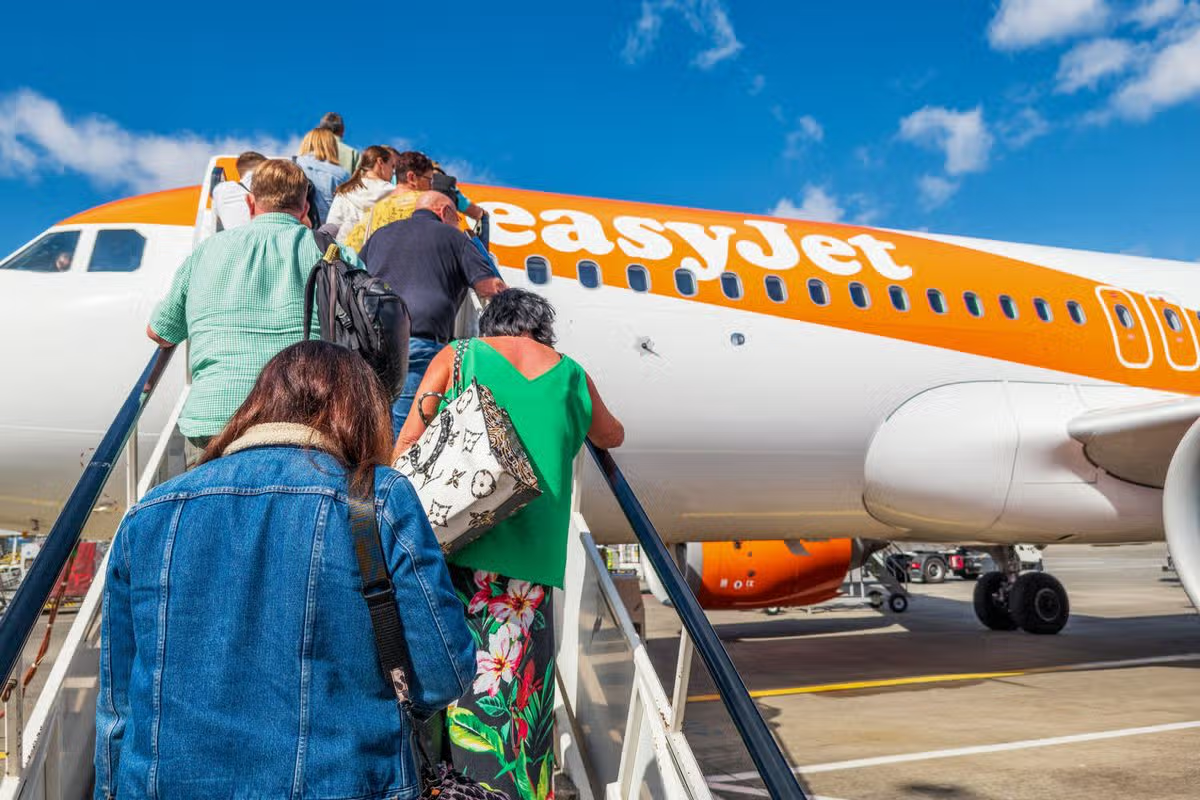
However, Jeanie said: “When you’re boarding the plane, ask a crew member at this time for a seatbelt extender. Some airlines keep the extenders at the boarding area, so they’ll give them to you right away.

“And if they don’t have it there, you can give them your seat number, and once boarding is complete, they will give you the extender without you having to ask for it.”

This means the only person who will hear you asking for a seatbelt extender is the crew member, because everyone else “will be busy boarding”.

In the comments, someone praised the professionalism of all the cabin crew members they’d ever dealt with, as one wrote: “I no longer need a seat extender, but when I did, I’d ask when boarding. The flight attendants were always so nice about it and never made me feel ashamed.”

Another shared: “I remember struggling with my weight (still do) after my car accident, and I put on a lot of pounds. As soon as I was given the okay to work out, I went to the pool daily, ate better, etc. I did lose weight, but not enough.

“My first flight since the accident, I could alllllmost click the buckle. I remember being so upset and having to stop myself from crying, as I already hate walking with a limp.

“An attendant -I assume was off the clock- sat down next to me, and as she saw me quietly losing my mind and feeling desperate, she passed me an extender like a ninja and told me ‘it’s okay’ with such a reassuring smile. It was so nice to be treated with genuine care and human respect. I hope she is doing well.”

Someone else commented: “I always ask as I’m boarding. I don’t always need it since seat belt lengths aren’t the same, but I always ask just in case I need it.”


Source link

Wizz Air’s updated June rule ‘won’t work’ at most UK airports

It seems sensible in theory, but thousands of budget travellers won’t benefit

Earlier this month, budget airline Wizz Air told all travellers to get to the airport three hours ahead of their flight due to new border control checks that have been brought in. Managing director Yvonne Moynihan warns that holidaymakers have missed their return or connecting flights due to lengthy airport queues since the rollout of the Entry Exit System (EES).

Problems were flagged when the travel system was launched in April, but as more people pass through airports this summer for the first time since regulations changed, travellers may face hold-ups. Taking to TikTok, travel specialist Kate Donnelly (@Thedonnellyedit) argues that the latest guidance from the airline is “useless” for most people jetting off this summer.

She said: “We know when you’re travelling short haul that the general advice is to get to the airport two hours before your flight. Wizz Air is advising people to arrive three hours before their departure to beat queues and reduce the risk of missing their flight due to the EES system.

“So, while this advice appears sensible, the reality is that most check-in desks only open two hours before departure, in some cases two and a half hours,” Kate argues that only certain travellers would actually gain from turning up at the airport three hours before take-off.

Details available directly on Wizz Air’s website (as of June 7) state: “Airport check-in and baggage drop-off start two hours and close 40 minutes before departure. It’s worth noting that at some airports, the check-in desk may open or close earlier.”

Content cannot be displayed without consent

Nearly all airports listed with an earlier-than-standard check-in time are international. London Luton Airport was the only UK airport with differing rules, with check-in desks that open “180 minutes (three hours) before the scheduled time of departure” for all travellers, reports the Express.

Kate also suggested that passengers travelling with hand luggage only could be among those who stand to gain the most from arriving early. Without any luggage to weigh and drop off, the whole process becomes considerably faster, and passengers “would be allowed to get straight through security and into duty-free”.

The airport itself remains one of the most significant factors that could cause delays, even for those who arrive earliest. Kate claims: “A lot of airports have more than one border control, meaning that you are still going to have to wait until the announcement is made for your gate so that you know which border control you need to go to.”

What is the general advice on when to arrive at the airport?

To avoid any issues, it is best to double-check with your specific airline about the earliest time check-in opens. Arriving as early as possible can give extra time for delays, but being ready too soon could result in pointless delays just by waiting around.

Kate said: “If you are travelling to the Schengen area this summer, two hours before your departure is enough time, based on the fact that the airport processes have not changed. Unless [airlines] decide to start opening up check-in desks earlier and announcing gates sooner, you might as well stick with the two-hour rule.”

The Schengen area is an extensive, border-free travel zone encompassing 29 European countries. It features numerous popular summer holiday destinations such as Spain, Turkey and Greece – which means many British holidaymakers will encounter EES checks.

Hold-ups are likely to come from first-time EES users who are required to scan their passport, have a photo taken, and submit a 4-fingerprint scan (children under 12 are exempt from fingerprints). This establishes a digital record valid for three years, and during new trips within that timeframe, travellers just need to scan their passport and provide one biometric identifier (photo or fingerprint).

Source link

‘Blank page’ passport rule could see travellers denied boarding at the airport

Expiry dates aren’t the only passport detail holidaymakers need to check before flying – another overlooked rule could derail your travel plans

Preparing for a trip abroad can be stressful enough. From making sure you’ve packed everything you need to checking airport liquid restrictions and ensuring your passport is still valid, there is plenty for holidaymakers to think about before they travel.

However, some holidaymakers could face an unwelcome surprise at check-in even if their document have months to years left before it expires.

This relates to the number of blank pages remaining in a passport. While many people focus on expiry dates, some countries require visitors to have one, two or even more completely blank pages available for entry stamps or visa stickers.

Travel experts warn that passengers who fail to meet these requirements could be denied boarding by airlines or refused entry on arrival.

Airlines are often responsible for ensuring passengers meet a destination’s entry requirements and can face penalties for transporting travellers who do not qualify for entry.

According to travel guidance published by Schengen, some destinations require at least two blank passport pages for visas and border stamps. The guidance warns that airlines may refuse boarding if passengers do not have sufficient space remaining in their passport.

The requirement can catch out frequent travellers whose passports are filled with entry and exit stamps from previous trips. Experts say many people mistakenly assume a passport is suitable for travel provided it remains in date.

For travel to the Schengen Area, for instance, passport rules already require Brits to ensure their passport was issued within the previous 10 years and remains valid for at least three months after their planned departure date. Some guidance also notes that travellers may need at least two blank pages available for visas and stamps where applicable.

A recent travel warning highlighted that a lack of blank pages can become a particular issue for frequent flyers and those taking multi-country trips. Countries may require empty pages for visa stickers, while immigration officials also need room for entry and exit stamps.

Travel experts recommend checking passport validity, issue dates and the number of remaining blank pages well in advance of departure. Unlike an expired passport, extra pages cannot simply be added to a modern British passport, meaning travellers who are running out of space may need to renew the document before travelling.

According to guidance cited by travel experts, some countries require between two and four blank pages depending on the destination and visa requirements. Travellers planning complex itineraries involving multiple countries are therefore advised to check entry rules carefully before travelling.

Source link

Flight attendant says phone rule people break makes her ‘jump out of her skin’

A flight attendant has said she can’t stand it when passengers break one common phone rule, as it could actually be quite dangerous for the pilot and other passengers

When boarding a plane, there are several things passengers are required to do to ensure their own safety and that of fellow travellers. Once everyone has taken their seats, cabin crew will deliver safety information that must be listened to, and it’s frequently essential that you take their warnings seriously.

If you’re someone who flies regularly, you may believe you no longer need to absorb this safety information as you’ve encountered it numerous times before. But one cabin crew member on social media has insisted it’s always crucial that you remain attentive, as flouting the rules could result in injury, disruption to the aircraft, and possibly harm to your own possessions.

Yasmeen, a flight attendant working out of Los Angeles, posted a video on TikTok from a recent flight, revealing she was left stunned by what one passenger was doing while the aircraft was airborne.

The cabin crew member was travelling as a passenger on this occasion, but explained that her professional experience means she understands just how risky it can be to disregard the rule that the other traveller was so openly flouting.

In the footage, Yasmeen revealed that another passenger seated across the aisle had received a phone call mid-flight and proceeded to answer it with the phone on loudspeaker, allowing everyone within earshot to listen in on their conversation.

Content cannot be displayed without consent

Not only is blaring your phone on speaker thoughtless when crammed into a confined space with dozens of other passengers, but you’re meant to switch your mobile to aeroplane mode upon boarding, which blocks all signal and prevents you from making or taking calls.

Yasmeen said: “As a flight attendant, I’m actually about to jump out of my skin.”

Viewers of her clip were split, though. Some insisted they’d never dream of leaving their phone on during a flight, while others claimed they’ve “taken full Zoom calls” on planes previously, suggesting it shouldn’t be a problem.

One person said: “I just don’t understand. With all this technology, and supposedly we went to the moon, but we can’t use our phones on the plane?”

Another added: “I don’t understand what some of y’all don’t understand. You are NOT supposed to be making phone calls while in the air!”

A third wrote: “I’ve taken full Zoom calls on the plane. It’s not against the rules to be on a call.”

Why do phones need to be on aeroplane mode when flying?

Phones, tablets, and other wireless-enabled devices should be switched to aeroplane mode as a safety measure. According to the Federal Aviation Administration (FAA), any device that emits radio waves has the potential to interfere with navigation and radar systems, as well as disrupt pilots’ headsets.

The extent to which mobile phones impact aviation technology hasn’t been thoroughly researched, but pilots have reported hearing background noise and interference from handsets while in the air, particularly during landing. This could prove distracting to pilots at a critical stage of the flight, so it’s advisable to simply keep your phone on aeroplane mode throughout.

Failing to switch your phone to aeroplane mode is unlikely to bring the plane down, but even if it doesn’t irritate your pilot, it could also result in unnecessary strain on your own device.

Ways not putting your phone on aeroplane mode can affect you include:

  • Severe battery drain: Your phone will be working overtime to try and find a signal in the air by attempting to connect to towers on the ground, which can drain your battery.
  • Costly roaming charges: On international flights, flying over multiple countries and having your phone connect to their towers could land you with hefty roaming fees that you weren’t prepared to pay.

Source link

Pilot reveals hand luggage item to pack if you’re a nervous flyer

An airline pilot has shared advice for anyone who deals with anxiety on flights

Anxious travellers could enjoy calmer travel days by following three pilot-approved tips. An airline pilot has revealed several steps nervous passengers can take to calm their nerves before boarding.

The advice was shared by Simon Belmont, who describes himself as an airline pilot, Airbus A350 Captain and a fear-of-flying coach. With over 130,000 followers on TikTok, Simon regularly shares tips and tricks for passengers on social media as @Flyman_simon. In a recent video, the pilot shared his top recommendations for holidaymakers feeling anxious about upcoming trips.

He wrote: “Holiday travel can feel extra intense when you are already a nervous flyer. Crowded airports, delays, noise and rushing around can make anxiety feel even bigger.” Fortunately, the pilot identified three steps passengers can take to help alleviate their stress.

In the post, Simon urged passengers to give themselves plenty of time on travel days, be polite to staff, and ensure they’ve packed properly. As he explained, making sure you “keep fed, watered, and entertained” is key to a good flight. “A calmer flight often starts before you even board. Small changes really do help,” the expert pointed out.

In his video, Simon told viewers: “I’ll give you three top tips to try and make it de-stressed. If you’re a fearful flyer, de-stressing that journey really does lower your levels, and it stops you peaking, maybe overthinking, and doing all that doom thinking that gets you worried about flying.”

Content cannot be displayed without consent

Simon said: “Number one, give yourself plenty of time. That is one of the biggest things. If you’re up against the clock, wondering whether that gate’s going to close and you’re going to make the flight, it’s stress from the second you leave your home or the hotel, sat in traffic. So give yourself that extra bit of time.”

He continued: “When you get to the airport, be really courteous, really nice and friendly. Remember all of those staff, all the security staff, and everyone else, they’re not trying to hold you up. They’re trying to do their job. They’re not going to cut corners on safety, and they are going to try to get you through as soon as possible.”

The pilot also advised people to pack entertainment. He explained: “Keep entertained and keep fed and watered. So keep things to keep you busy when you are sat around waiting.”

“Make sure that you have got some snacks, you’ve got some things to eat to keep that blood sugar level up, and that will again de-stress you, put you in a much happier mood, and give you a much better chance,” Simon explained.

He continued: “Keep hydrated because at the other end you want to be able to enjoy the holiday, the business trip, seeing family and friends. Dehydrated, you’re going to feel groggy and crappy.

“So yeah, give yourself plenty of time. Be courteous, remember the people are working hard, and keep yourself fed, watered, and entertained. So download those videos, take little games, card games, whatever you can.”

Source link

Brits heading to Portugal issued vital advice over ‘troubling reality’

Brits planning trips to Portugal this summer have been urged to stay vigilant, as there is a ‘troubling’ scam on the rise that targets tourists

If you’re jetting off to Portugal this summer, there’s one “troubling” threat facing tourists that you need to know about. Portugal ranks among the most sought-after holiday spots for Brits, with roughly 3 million of us flocking to sun-drenched destinations such as Porto, The Algarve, and Madeira each year.

However, for those planning to chase the sunshine in the months ahead, there’s an important warning to heed. According to travel experts on social media, Portugal is grappling with a crisis that sees criminals deliberately targeting tourists to turn a quick profit – all while the nation’s cultural heritage pays the price.

Eric and Josien, a couple based in Portugal who frequently post travel content on Instagram, revealed that thieves across the country are pinching the iconic ceramic tiles adorning buildings and flogging them on the street, mainly to unsuspecting tourists who have no clue about the tiles’ origins.

The tiles, known as azulejos, are hand-painted ceramic pieces used to decorate churches, palaces, train stations, and even some residential properties. They represent a cherished element of Portugal’s culture and heritage, yet according to locals, there’s an “illegal black market” centred around stealing these tiles and hawking them on the street.

They explained: “Azulejos – those beautiful, hand-painted ceramic tiles – are one of Portugal’s most iconic and treasured art forms. Dating back over 500 years, these tiles cover churches, palaces, train stations, and even ordinary homes, turning buildings into vibrant storytellers of Portuguese history, culture, and craftsmanship.

Content cannot be displayed without consent

“But behind this beauty lies a troubling reality: an illegal black market that thrives on stealing these tiles.

“Thieves often target abandoned or under-renovation buildings, or even occupied homes late at night, using special tools to remove the tiles without damaging them. Once taken, these tiles are sold as ‘vintage’ or ‘reclaimed’ pieces through online shops, antique markets, and tourist areas – sometimes even shipped abroad.

“Because buyers rarely ask where these tiles come from, and regulations around these sales are limited, thieves profit while Portugal’s heritage suffers.”

Visitors to Portugal can purchase genuine azulejos from local craftspeople throughout the country, and the Instagram duo encouraged travellers to seek out artisan boutiques rather than purchasing from street sellers.

They added: “Never buy tiles without knowing their origin. If it looks like an authentic azulejo, ask questions and proof of its source. And support local artisans and shops that create or sell new, authentic tiles.”

What are azulejos?

Azulejos are intricately decorated ceramic tiles that typically measure around 5 to 6 inches (13 to 15cm) square. They’re most commonly found in Portugal and Spain, where they’ve been crafted since the 14th century. In Portugal, the tiles have predominantly featured in religious architecture, including adorning the Coimbra Cathedral.

While Spain largely stopped making the tiles by the 18th century, Portugal pressed on, eventually shipping them to the Azores, Madeira, and Brazil. They’re now frequently manufactured in Puebla, Mexico, where they’re regarded as the finest in the Western Hemisphere.

Due to their historical and cultural importance, they’ve become a sought-after keepsake for holidaymakers visiting Portugal. That said, you should always ensure what you’re purchasing has been ethically sourced, and its origins can be verified. If you suspect the tiles being offered could be stolen, steer clear of buying them.

The Portuguese National Tourist Board has been contacted for comment.

Source link

EasyJet urges passengers to ‘switch off’ item on board or risk lifetime ban

easyJet passengers are being warned they could face serious consequences if they don’t completely switch off certain electronic devices

Holidaymakers travelling with easyJet this summer are being warned that they could unknowingly fall foul of strict cabin rules unless they fully switch off a commonly used electronic device before stepping on board. The trouble is that many passengers only discover the rule once they’ve already reached the airport or are on the verge of boarding, where last-minute slip-ups could spell serious problems.

According to EasyJet, the warning relates to e-cigarettes and vaping devices, which must be carried in hand luggage only and are strictly forbidden from being stowed in hold baggage under any circumstances. The airline’s official policy states: “All electronic cigarettes and vaping devices must be carried in the cabin, re-charging is strictly prohibited and the device must be completely switched off.”

It also advises passengers to keep their devices on their person where they can be kept an eye on throughout the flight, reducing the risk of accidental activation. These rules are in place due to concerns over lithium-ion batteries, which are used to power vaping devices and are well known for posing a fire risk if they become damaged or overheat.

The UK Civil Aviation Authority categorises lithium batteries as a significant safety risk in aviation due to their potential for ‘thermal runaway’, producing intense heat and flames that are notoriously difficult to extinguish in confined spaces. The International Air Transport Association has highlighted a worldwide rise in lithium battery-related incidents, which has gone hand in hand with the increasing prevalence of portable electronic devices, prompting airlines across the globe to tighten their rules considerably.

EasyJet also warns that passengers must take precautions to prevent their vaping devices from being switched on accidentally during flights, including ensuring they are fully powered down before boarding. The airline stipulates that travellers may carry no more than two spare batteries in their hand luggage, and that these must be properly protected to prevent them from coming into contact with metal objects.

Under UK aviation rules, vaping devices must be kept in hand luggage at all times. Official government guidance states that e-cigarettes are strictly prohibited from hold baggage.

Industry experts point out that confusion often arises because rules can vary between airlines and destinations, which can leave passengers unknowingly packing the wrong items before they even reach airport security. Aviation safety specialists also warn that using or charging vaping devices while on board flights is strictly prohibited by all major airlines, with penalties ranging from confiscation to fines or even travel bans in severe cases.

As summer travel demand picks up, holidaymakers are being urged to check airline regulations before they set off to avoid delays, confiscations, or being refused entry at the boarding gate.

Source link

People returning from holiday urged to check all suitcase pockets

According to pest control, people should routinely check their luggage for warning signs

Many people will be heading home today after a bank holiday weekend getaway. While travellers often take great care when packing, it’s quite common to spend far less time unpacking – simply tipping the contents of your suitcase straight into the wash.

Throwing your clothes in the washing machine as soon as you arrive home is a sensible idea. However, there is another crucial step everyone is urged to take when emptying their luggage. Holidaymakers are advised to check their suitcases carefully for signs of any unwelcome guests, such as bed bugs.

The advice comes from James Rhoades, the founder of ThermoPest, a pest control firm specialising in bed bug treatment and registered with the British Pest Control Association. James says frequent travellers should check their suitcase as part of their routine whenever they return from a holiday.

The tip could help to prevent issues year-round, but it could be especially helpful for travellers to get into the habit now, ahead of the summer holidays. He explained: “During hot weather, bed bugs become more active and need to feed more frequently.

“They get all their hydration from blood, so a warm, humid summer gives them the perfect opportunity to bite. With people wearing lighter sleepwear or using thinner sheets, there’s less of a barrier between the bugs and their food source – us.

“There’s also typically a rise in cases after holiday periods, as bed bugs can easily be brought back hidden in suitcases or laundry. Once inside, they spread quickly, so early detection and prevention are key.”

Fortunately, there are steps people can take to minimise the risk when they arrive at their holiday and when they return home. “Hotels, guest houses, and short-term rentals can become hotspots for bed bugs during peak travel periods. Before unpacking, check the seams of the mattress, headboard, and upholstered furniture for telltale signs such as tiny rust-coloured spots or shed skins.

“Keep luggage elevated on racks rather than placing it directly on the floor to reduce the chance of bed bugs crawling into your belongings. You could also store clothes in sealed bags inside your suitcase for added protection and to make it harder for bugs to hitch a ride home,” says James.

When it is time to return home, it’s recommended that you unpack your clothes straight into the machine and carefully inspect your suitcase. James claims: “Returning home is one of the most common times for bed bugs to be introduced into your living space. As soon as you arrive back, unpack directly into the washing machine and wash everything on a hot cycle.

“Visually inspect your suitcase inside and out, paying close attention to pockets, seams, and linings for any signs of bed bugs such as dark spots, shed skins, or live insects. If you travel frequently, making this a routine step can help you spot potential issues early before they spread.”

Source link

Travel expert’s passport warning as Brits risk £160 fee or being denied boarding

There’s a simple passport and booking mistake that could see holidaymakers pay up to an extra £160 per passenger, just to correct it, or be denied boarding at the airport

An easy passport mistake could see holidaymakers denied boarding at the airport or charged a fee.

Jetting off abroad is always exciting, but there are a few key pre-planning checks everyone should make to ensure a smooth, safe journey. From ensuring the passport is in date, securing valid travel insurance, checking any travel advice on the Foreign Office website, to understanding the country’s entry requirements and the European Union’s (EU) new Entry/Exit System (EES).

Then comes the fun part: booking a luxurious hotel or resort, planning a desirable itinerary, finding the best flights, and heading to the airport. Yet, amid the anticipation, there’s a simple mistake with passports and flight bookings that could cause major disruption to anyone’s travel plans, and it’s easily avoidable.

READ MORE: Jet2 issues Spain warning over four popular destinationsREAD MORE: All holidays cancelled with no refunds as major UK travel company goes bust

Gavin Lapidus, Company Director at eShores, a UK-based travel agent, warned that a traveller’s name on a passport must match the name on their booking. This can be an issue for shortened or nicknames, name changes, including for those who are married, and any spelling mistakes.

If the name on their booking does not match the passport, holidaymakers could “be denied boarding, experience delays at security or check‑in, or be charged a fee to correct the name”, Gavin exclusively told the Mirror. “Airline policies vary, so it’s important to triple‑check name details before booking.”

The travel expert further advised: “Travellers should never use shortened names, nicknames, or aliases when booking flights. For example, booking under ‘Bob’ instead of ‘Robert’ can result in being denied boarding if it doesn’t match the passport exactly. Always use your full legal name as it appears on your passport to avoid delays or additional fees.”

Gavin also warned about the cost of correcting a spelling mistake. “Minor spelling errors can sometimes be corrected, often for a fee. However, full name changes are usually not allowed,” he explained.

“If you spot an error, contact your airline as soon as possible, as acting quickly improves your chances of having it fixed. Be prepared to show valid identification and expect potential charges.”

For easyJet passengers, they can amend their title or correct spelling mistakes via the airline’s website or mobile app free of charge. However, if anyone needs to change the name on the flight booking, easyJet will charge £60 per passenger per flight when amended online, or £65 with the customer service team.

Meanwhile, Ryanair will charge £115 per passenger for a name change when made online, or £160 through an agent. For Jet2, if a name change is made 15 days before the departure date, it will cost £50, but 14 days or less will set a passenger back £150.

For Brits who are married but have not yet changed their maiden name on their passport, Gavin further advised: “If a traveller has recently married, the name on the booking must still match the name shown on the passport. There is no legal obligation to change your surname immediately after marriage.

“If your passport is still in your maiden name, you can continue to travel using it until it expires, as long as your flight booking is made in the same name. You can update your passport at any time using your marriage certificate.”

Do you have a travel story to share? Email webtravel@reachplc.com

Source link