expectation

Taylor Frankie Paul is distancing herself from Mormon church

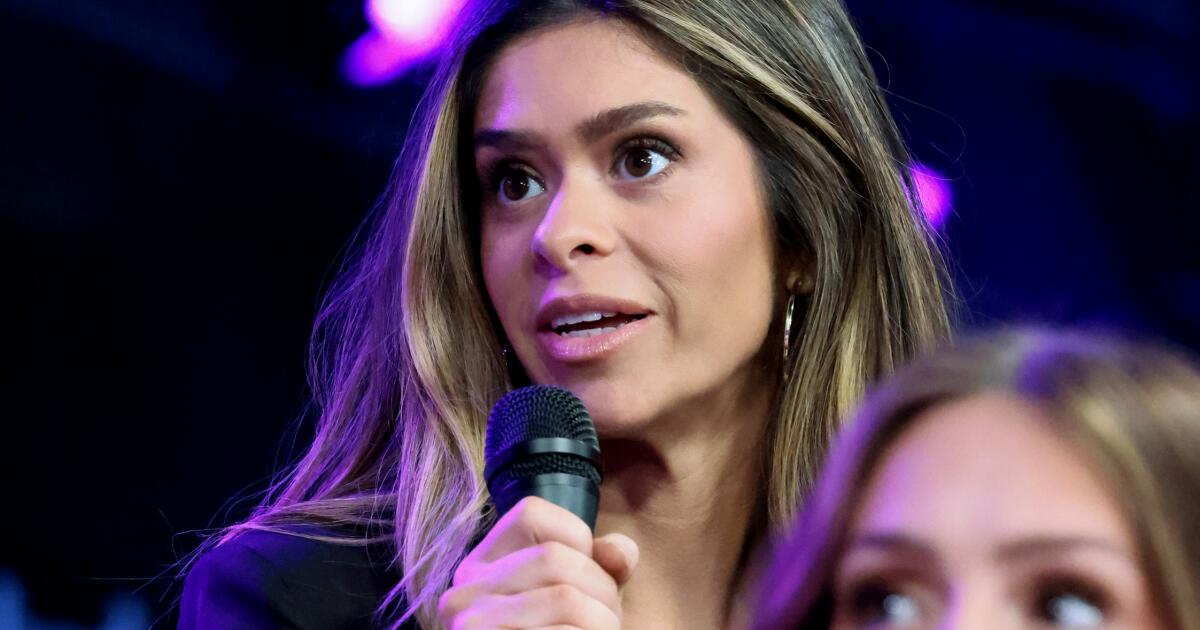
Taylor Frankie Paul is breaking from the Church of Jesus Christ of Latter-day Saints.

The embattled “Secret Lives of Mormon Wives” star announced on Easter Sunday that she’s parting ways with the religion she built her brand on.

“Born and raised Mormon (lds) and I’ll always have love and respect towards it,” she wrote Sunday in an Instagram story. “I’ll even continue to go with my family at times, with that being said, it’s time to detach myself from it.”

Paul launched her career as a Mormon mom-fluencer on TikTok before she landed “The Secret Lives of Mormon Wives,” the reality television series that leveraged her #MomTok success.

The series offered a look at Mormon moms in Utah that subverted viewers’ expectations. Paul drank alcohol and scandalized her online following when she admitted that her social circle participated in “soft swinging” in which they swapped partners for hookups but “didn’t go all the way.” The series followed her through the aftermath of a divorce and an on-again, off-again relationship with Dakota Mortensen, all of which is frowned upon by the Mormon church.

“I strongly believe in Christ, God, the bible, the divine,” she continued in her post. “I believe we are loved whether we are praying in [a] church building or from a bathroom floor at home.”

Paul was set to lead Season 22 of ABC’s “The Bachelorette” until a leaked video of a 2023 domestic dispute between Paul and Mortensen made its way across the internet. Though the entire season had been taped, ABC nixed the premiere, and “Secret Lives” also paused production. Her casting was a break from “The Bachelorette” tradition in that she had not been a contestant on a previous season of “The Bachelor.”

Now police are investigating allegations of a second and third domestic violence incident involving Paul and Mortensen, and as a result of the inquiry Paul has temporarily lost custody of the son she shares with Mortensen. A hearing regarding the protective order is set for Tuesday and may determine whether a final protective order is granted by the Utah court.

“The last 40 days felt like hell on earth,” Paul wrote in a separate Instagram post on Sunday. The post stitched together photos of Bible scripture, Paul crying, pain relief patches and personal notes scrawled through notebooks.

“Through every panic attack I prayed for strength as I could feel my body breaking down and out from the distress of it all. … I’ve prayed since I was young and never strayed away because I believe he wants us to ask for help especially during our lowest points.”


Source link

Contributor: A Democratic takeover of the Senate is now imaginable

I’ve seen enough. It’s time to revise our expectations about the midterms.

For more than a year now, conventional wisdom has been that Democrats would take back the House — but not the Senate — in the November midterms.

That’s because this year’s Senate map would require Democrats to win numerous seats in red states.

In fact, if you had asked me a couple of months ago, I would have told you that, yes, Democrats have a shot at the Senate, but in the same way my teenage son has a shot at someday dating Sydney Sweeney. Which is to say, technically possible but cosmically unlikely.

But recent developments (such as President Trump’s plunging approval ratings on the economy) are encouraging me to revise my thinking.

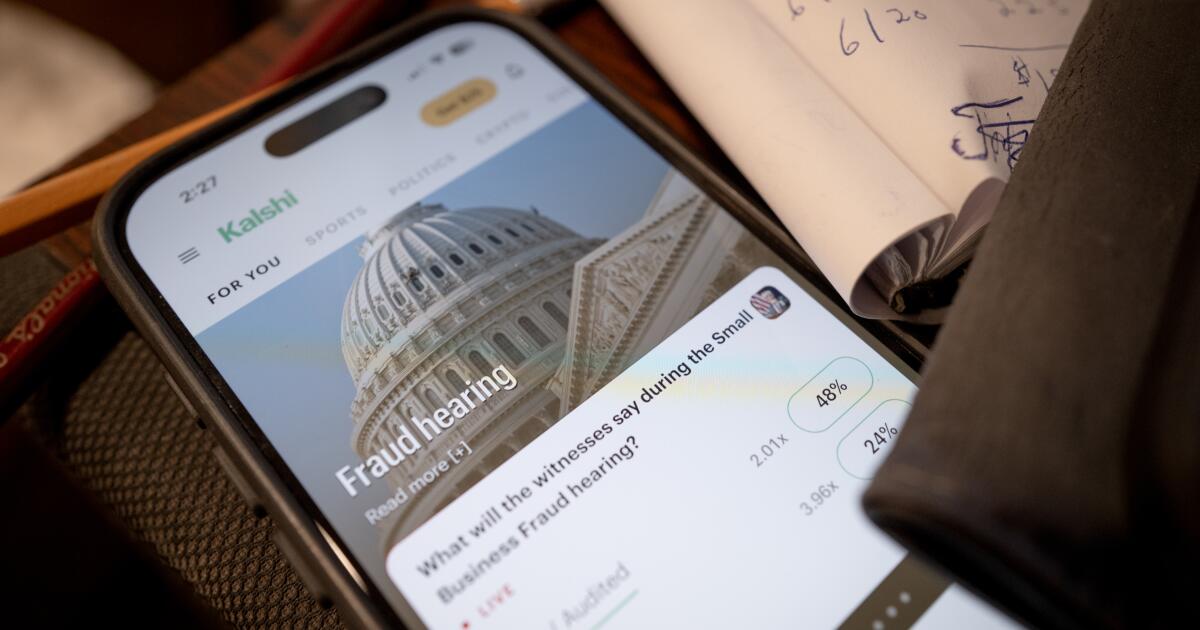
I’m not alone. Independent journalist Chris Cillizza recently observed that for the first time ever, prediction markets like Polymarket and Kalshi showed Democrats with a narrow edge.

Now, prediction markets are not scientific. Neither, for that matter, is licking your finger and holding it up to the wind — but both have outperformed political polling at various times in the last couple of years.

The difference is that in prediction markets, people are wagering actual money, which tends to sharpen the mind in ways that answering a pollster’s call during dinner does not.

Of course, you probably haven’t heard much about this revised political outlook. That’s because nobody has any incentive to shout it from the rooftops.

Democrats don’t want to inflate expectations and risk turning a solid win into a perceived disappointment. Republicans, meanwhile, are not eager to advertise that their Senate majority is wobbling like a shopping cart with a bad wheel. And we pundits, chastened by having been burned, are reluctant to get too far out over our skis.

Even Cillizza still leans Republican on balance. But if I had to bet today — and I tend to define bet as “regret later” — I’d put my chips on the Democrats. Not because it’s a sure thing, but because almost every political and economic development seems to be trending in their direction.

History helps. The “out” party in the midterms usually does well. Current events help. Policies, including the war in Iran and rising gas prices, tend to sour voters on whoever’s in charge. And candidate quality helps. Voters do occasionally notice who’s actually on the ballot, and Democrats are serving up a semi-respectable offering.

Let’s pause to appreciate what’s at stake. Control of the Senate isn’t just about who gets the nicer office furniture. It determines judicial confirmations, including the possibility that Trump could fill a fourth Supreme Court vacancy (if one opens up in 2027 or 2028).

Now, it would be irresponsible of me to just drop this idea without delving into some logistical details.

For Democrats to flip the Senate, they need to net four seats. That means defending everything they already have while winning four more. The encouraging news (if you’re rooting for the Democrats) is that there are at least eight plausible opportunities for that to happen.

In North Carolina, incumbent Gov. Roy Cooper, a Democrat, is widely expected to win. In Maine, Republican Sen. Susan Collins once again finds herself in a political knife fight — her natural habitat, though perhaps not her preferred one. She will face Maine’s current governor or a flamboyant and controversial oysterman. I’m not sure who’d be the tougher opponent.

Out in Ohio, former Sen. Sherrod Brown benefits from the rare political skill of being a Democrat who still seems at home in Ohio.

The Democrat running in Alaska is a former member of Congress (and the first Alaska Native elected to Congress). And for the open seat in Iowa, Democrats seem likely to nominate a two-time Paralympic gold medalist who represents the reddest state house seat held by a Democrat.

Then there’s Texas, the perennial Democratic mirage — always shimmering on the horizon. But this year, it might come into clear view. James Talarico has emerged for Democrats, while Republicans are stuck choosing between scandal-plagued Atty. Gen. Ken Paxton and incumbent Sen. John Cornyn — a process that currently resembles a family feud conducted with vicious attack ads.

Meanwhile, in Nebraska and Montana, Democrats aren’t even pretending to compete. Instead, they’re relying on independents who — like Sens. Bernie Sanders and Angus King — would likely caucus with them.

In Nebraska, independent Dan Osborn already proved he can make it close: He lost in 2024 — a bad year to run against a Republican. And in Montana, the sudden announced retirement of Sen. Steve Daines has created an opening that didn’t exist five minutes ago (in political time).

Let’s not get carried away. The idea that Democrats could sweep all these races is still the kind of thing you say after your third drink. But winning half of them? That’s no longer fantasy. That’s … plausible. Maybe even more likely than not.

This isn’t a safe bet. It’s not even a comfortable one. But for the first time, it’s starting to look like smart money isn’t laughing at the idea anymore — it’s quietly sliding chips across the table.

Matt K. Lewis is the author of “Filthy Rich Politicians” and “Too Dumb to Fail.”

Source link