The early rounds of the BNP Paribas Open began Wednesday, with top seeds slated to start play Friday during the 12-day ATP and WTPA Master 1000 tournament.
A busy stretch of the tennis season reaches another gear at Indian Wells Tennis Garden, the second-largest outdoor tennis stadium in the world.
While many consider it the “fifth Grand Slam” because of its elite player field, amenities and equal prize money for men and women, professionals acknowledge the tournament is part of a stressful stretch on the tennis calendar.
Indian Wells is followed by the Miami Open, another two-week Master 1000 tournament. The tour stops are known as the “Sunshine Double.”
Some players made the short trip from Indian Wells to Las Vegas this past weekend to participate in the MGM Grand Slam, an exhibition designed to help players ramp up for back-to-back tournaments.
American Reilly Opelka, a 6-foot–11 pro, said managing fatigue after a series of tournaments before hitting Indian Wells has altered his practice and play in exhibition matches, including a loss to 19-year-old Brazilian Joao Fonseca in Las Vegas.
“Normally in any kind of competition, you get excited and play with a pressure point … but you don’t feel this when you are practicing,” Opelka said.
“I was trying to feel like this a few days ago while practicing with … [Tommy Paul,] but instead we got tired and hungry. … That usually doesn’t happen. We just decided to stop and go to eat somewhere.”
Paul said despite the decision to cut practice short, he feels fresh for the upcoming events.
“I started the year pretty well and for Americans, we are excited for the Sunshine Double,” Paul said.
Casper Rudd lost to Opelka during the first round of the Las Vegas exhibition. The Norwegian also lost a week ago during the first round of the Acapulco Open, falling to Chinese qualifier Yibing Wu in straight sets.
Rudd said he felt “extremely tired” after the Australian Open in January.
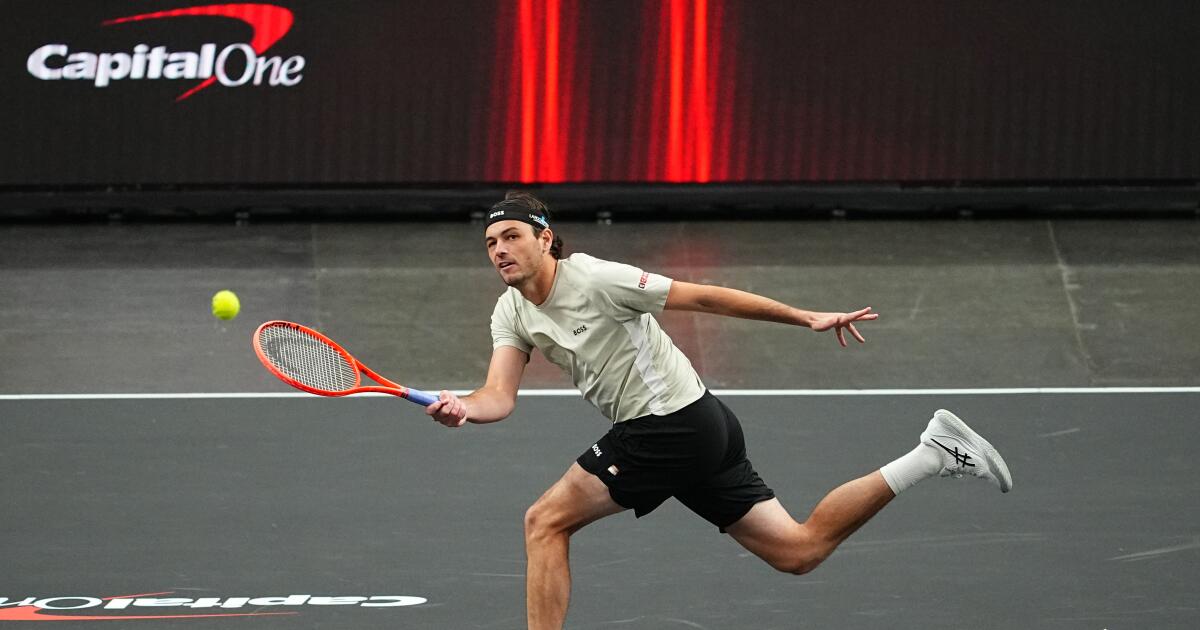
Rancho Palo Verdes resident Taylor Fritz, ranked No. 7 in the world, said the best way to prepare for the grueling tour schedule is “putting [in] the time, work and repetition.”
“… Be there, be focused on the quality that you are doing,” said Fritz, a 28-year-old who won the Indian Wells title in 2022.
While some players are guarding against burnout, others struggled to even reach California. Some players who live in Dubai, including Russians Daniil Medvedev and Andrey Rublev, have to contend with closed airspace triggered by the U.S. and Israel bombing Iran.
The ATP announced Wednesday that, “the vast majority of players who were in Dubai have successfully departed today on selected flights.”
It’s a Wednesday afternoon in West Hollywood, one day after the city was blanketed in a light coating of rain. The midday sun has only just begun to peek through the overcast sky.
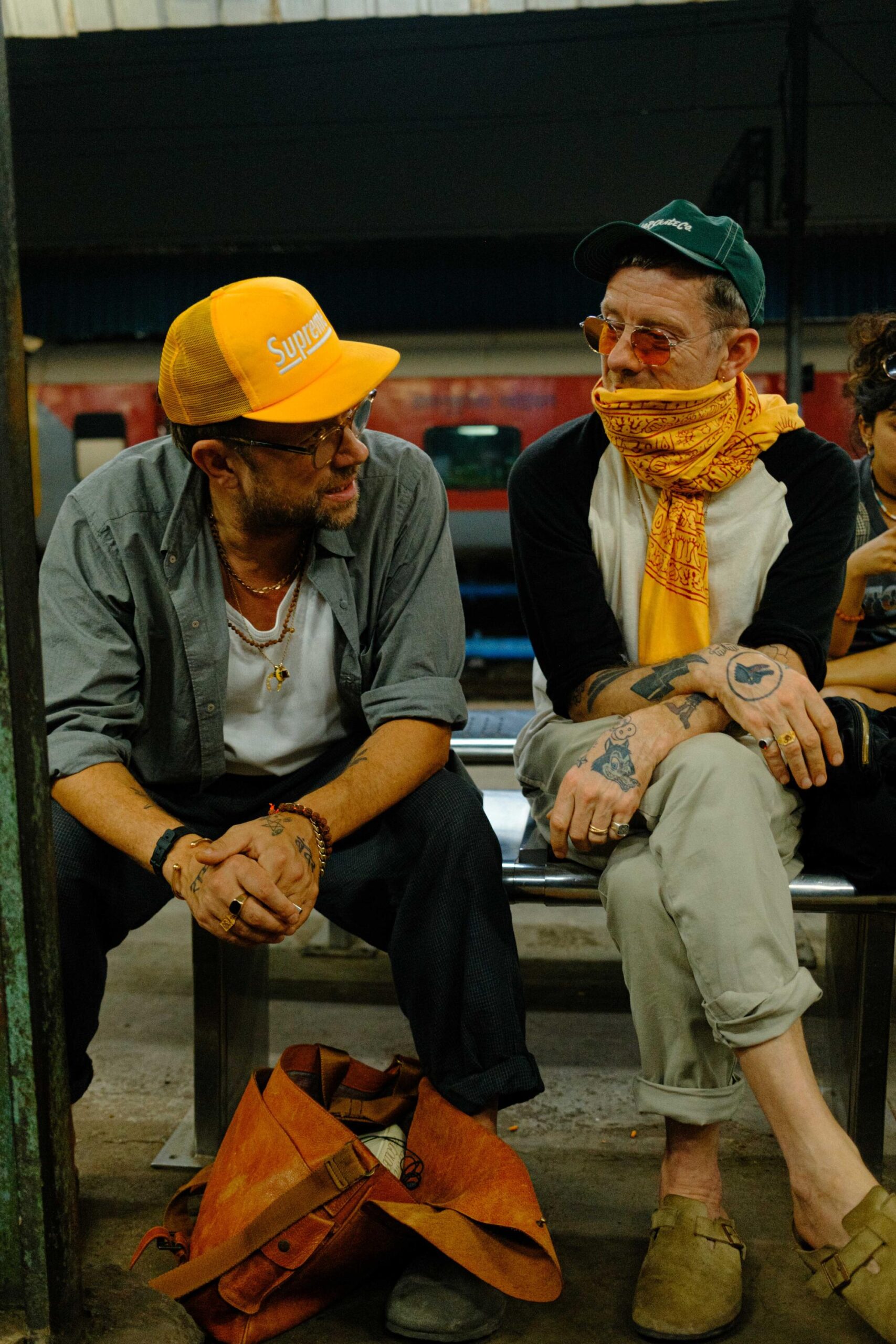
Its beams are slightly more vivid through the large windows of the Edition, which sit at the edge of a secluded area of the hotel. Jamie Hewlett sits at a wooden table stirring a cappucino with a black straw.
“I mean, who drinks out of a straw when you get past the age of 10, right?” he says, jokingly. After 25 years of bouncing around the globe with Gorillaz, he’s still longing for a jet lag cure. Coffee can only do so much.
Leaning back in his chair, in a suave, all-beige outfit, he starts to grin while recounting his day in Los Angeles.
“We’ve been walking around the streets having a very rare morning off together. We bought some weed, which is always one of the most wonderful things about this state,” he recalls.
He also finds humor in L.A.’s obsession with driver-less food delivery.
“Every time we saw a post-bot driving down the road, we stopped and doffed our caps. … In the future, when robots take over and destroy us all, they’ll remember me for being nice to the post-bot!”
It’s been a long few weeks for Hewlett and bandmate Damon Albarn as they roll out the group’s latest endeavor, “The Mountain,” out Friday. Just one day prior, “House of Kong” opened at Rolling Greens in downtown L.A. The exhibition, initially intended as a Gorillaz 25th anniversary event, has landed on the West Coast.
“I think with this album, we were both quite happy with what we’ve done … and feeling like it was an honest, genuine adventure that was taken, and what we’ve given is something that we’re proud of,” Hewlett says.
He and Albarn are also artists at heart and in nature. It’s why Gorillaz continues to look and sound the way it does, and why the group is consistently pushing the agenda of how a nonexistent band can still resonate with a group of fans who are very much alive.
“The process, the research, the putting it together, the making of it is really fun, and the delivery of it is kind of like a mini death syndrome,” he says. “What you’re required to do is get straight on to the next thing, and you won’t have any time to waste thinking about the fact that the completion of that left you feeling numb, because then you’re excited about the next project.”
He adds that Albarn, similarly, is like a “kid in a sweet shop” when he’s making music: “The moment it’s finished, there’s no interest in discussing it.”
Even so, the album is undeniably their most intimate in recent history.
Perhaps it’s something to do with the experience of grief that the two lived through, losing their fathers only 10 days apart and just before a trip to India. Or maybe it’s a testament to the process behind “The Mountain,” which saw Hewlett and Albarn travel the country, spending more time together there than during previous album productions.
“It’s weird, because I’m born 10 days after Damon… the idea presented itself, and at that point we were going down that road, and there was no avoiding it… It wasn’t even necessarily going to be a Gorillaz project; ‘Let’s go together and see what happens.’ ”
“I completely fell in love with the place and got into their whole concept of death,” Hewlett says of India.
(Blair Brown)
Hewlett says the album was also inspired by his late mother-in-law, Amo, who was diagnosed with cancer in 2010 and opted for Eastern medicine instead of chemo.
“She said, ‘No, I’m going to India.’ … She was into Ayurveda medicine and knew this doctor, and she spent three months in India [being treated]. When she came back, her cancer had gone. In France, they call her in for a checkup, and they give her a scan. They say, ‘Where’s your cancer gone?’ She said, ‘I’ve been in India,’ and they say, ‘We don’t believe in that.’ ”
It wouldn’t be until 2022 when Jamie visited India himself, under unfortunate circumstances. He was in Belgrade with Albarn shooting the second video from “Cracker Island” when he received a call from his brother-in-law, who said that Amo had just had a stroke.
“They said they saved her, but she went into a coma. I was on a plane to India as quickly as I could get a visa, which wasn’t easy at the Indian Embassy in London,” he said. “I spent eight weeks with my wife, Emma, in Jaipur, dealing with that, in a public hospital during a pneumonia epidemic… having that experience that was traumatic; it should have been a reason for me to never go back to India ever again.”
But during his time there, it became clear that being in the country had the opposite effect on him.
“I completely fell in love with the place and got into their whole concept of death. … We met a lot of families who became friends of ours because we were at the hospital every day,” he continued.
“A loved one who was dying, who was in tears because they knew they were going to die, but also there was a celebration about the fact that they were coming back,” he said. “Their understanding of the cycle of life is a lot more appealing to me.”
Shortly after, Hewlett returned to Europe and went straight to Albarn with an idea: “I said, ‘We have to go to India, it’s so amazing,’ and of all the places he’d been around the world, that was the place he still hadn’t been. So we decided to go.”
Albarn first visited India in May 2024 alongside Hewlett.
(Blair Brown)
“The Mountain” is, as expected, heavily doused with notions on the concept of death. Inevitably, the question arose: “How can we make an album about death that would leave the listener feeling optimistic?”
But Gorillaz has always been a group entwined with different, equally heavy topics. On “Plastic Beach,” they tackle the climate crisis and human extinction. The enchanting and rhythmic “Dirty Harry” also examines war and soldiers, with its single cover even giving a nod to Stanley Kubrick’s “Full Metal Jacket.”
The tone Gorillaz achieved on “The Mountain” is an extension of that.
“The Happy Dictator,” released as the lead single in September, parodies megalomaniac Saparmurat Niyazov’s approach to governing in Turkmenistan. As Sparks produce stunning vocals, singing “I am the one to give you life again,” Gorillaz fictional frontman 2-D (voiced by Albarn) breaks in to pronounce, “No more bad news!”
Equally as enjoyable is “The God of Lying,” the third single released, featuring Idles. Joe Talbot hauntingly asks, “Do you love your blessed father? / Anoint by fear of death / Do you feel the lies creep on by? / As soft as baby’s breath.” It’s a bouncy song that could have been pulled straight out of the band’s self-titled debut, all the way back from 2001.
Even so, it feels criminal to compare it with the band’s earlier catalog, given that Hewlett and Albarn are artists in “perpetual motion.” This has resulted in some of their most sonically and visually impressive work — with styles and genres consistently shifting — but also asks the listener to be willing to evolve with them.
“I think art has to be an evolution,” Hewlett explains. “I know what David Hockney does at 88 years old, still smoking and drinking his red wine. He wakes up every day … and he does something new, and then the next day he does something new, and that promotes longevity. He’s never bored.”
Gorillaz’s exhibition in “House of Kong” seems to be contradictory in its existence, more or less serving as a retrospective from a band that not only doesn’t like to look in the rearview, but likely has it taped over altogether.
But it’s also an organic experience, teeming with originality, despite its familiar marketing as an “immersive experience.” It’s more comparable to something out of a Disney or Universal theme park than another gallery that merely projects video onto a wall.
“Down here at Kong, we are creating something that … only really existed in Jamie’s drawings and animations and in the minds of the fans of Gorillaz,” says Stephen Gallagher of Block9. He served as creative director on the project but has worked with the band since 2018 and previously collaborated with Banksy for his “The Walled Off Hotel” and “Dismaland.”
“I’d had this idea already: ‘What about if we built a film studio, and then you could do a backstage tour, and you’re seeing behind the scenes of the making of all of these music videos?’ ” he continued. “Then that evolved, and it became the ‘House of Kong.’ ”
As for why the exhibition landed in L.A. for its second showing, Hewlett compares the city to Shanghai when it was “still free and decadent and swinging.”
“I love L.A. … I love it. I’ve been coming here since I was 19 years old. … L.A. might be the last one [showing], to be honest,” he says. “All that stuff in the exhibition belongs to me; this is part of my lifelong collection of weird s—!”
“I’d love to get it back at some point,” he jokes.
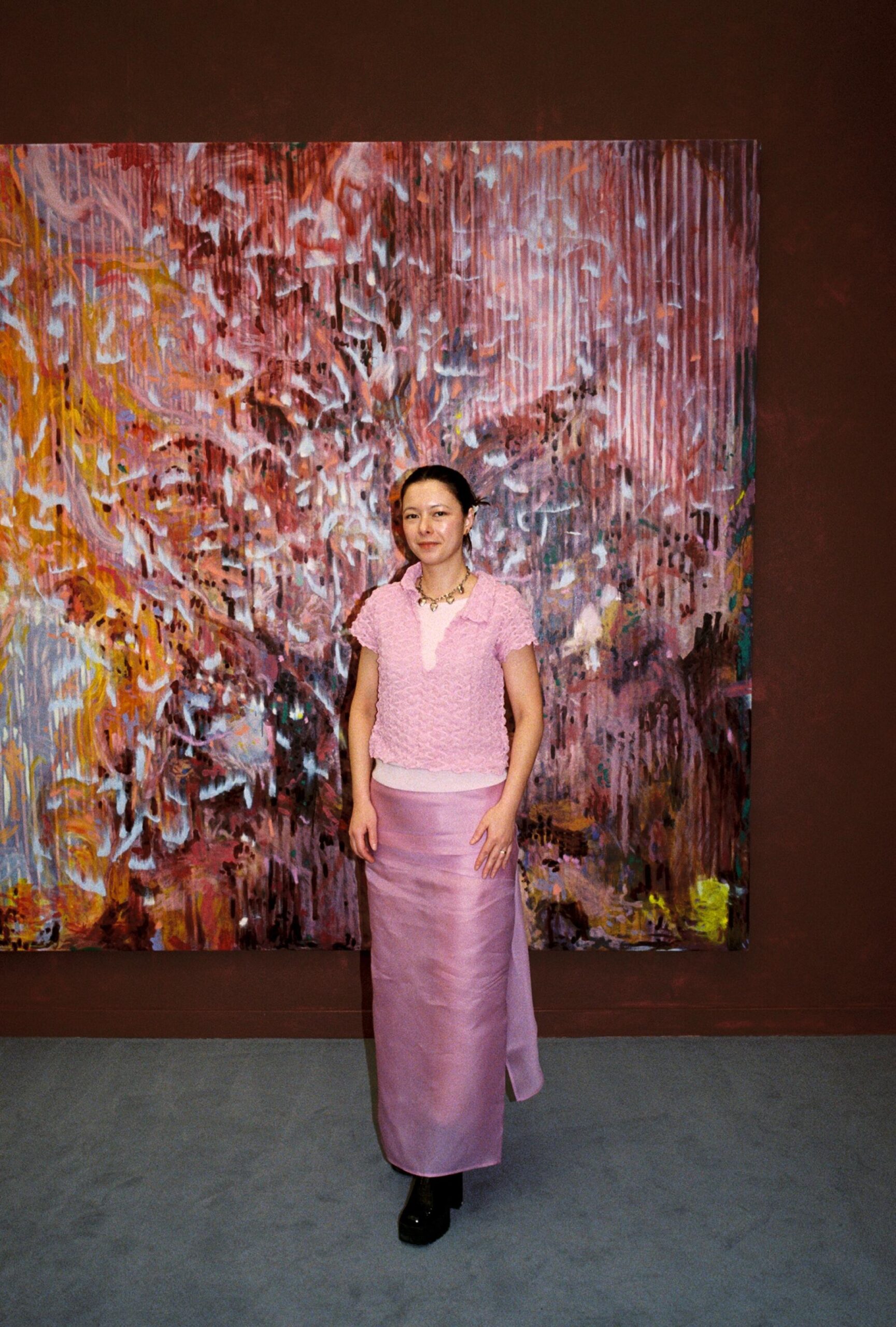
Erica Mahinay, showing with Make Room Gallery at Frieze L.A.
Some art shows are not just about the art. At Frieze L.A., it’s also about seeing — and being seen.
On Thursday morning, over 100 artists, gallerists and collectors representing 24 countries wafted into the maze that is Frieze at the Santa Monica Airport and transformed the space into a winding runway. The dress code was eclectic and appropriately L.A.: hyper-curated and nonchalant. Archival Mugler was paired with reconstructed relaxed denim. Silk pajama pants slouched over Wales Bonner loafers. And much like the works on display, attendees dared to be visually undefinable.
This year, the four-day frenzy is expected to draw about 30,000 attendees to exhibitions both in and outside the tent, including public installations from Frieze Projects’ “Body & Soul,” and the Focus section curated by Essence Harden, which spotlights young and lesser-known artists.
Storm Ascher, left, founder of Superstition Gallery and Greg Ito pictured with his solo booth, “A Cautionary Tale,” in the Focus Section curated by Essence Harden.
Undeniably, the art this year is a product of now. Outside, Patrick Martinez welcomes guests with neon quotes supporting immigrant rights. Across the tent, in a display of performance art, Amanda Ross-Ho continuously pushes a giant, inflatable Earth around a soccer field, symbolic of “the labor it takes to just keep things going all the time.” Walking around the fair, a shared sentiment of post-fire rejuvenation, cultural collaboration and a pride for the Los Angeles community was deeply felt.
Angeleno and artist Sharif Farrag said he’s “excited to show in the city [he] grew up in.” His ceramic collection “Hybrid Moments” with Jeffrey Deitch is a cultural analogy for his childhood. “I hope my work can reflect the times we’re in through a lens of color,” he said, “and the flora and fauna of L.A.”
Nicole Reber, an L.A.-based real estate agent, was giving “’90s sparkle princess,” coupling a pair of Chanel loafers with a vintage Escada jacket that’s “highly underrated.” She came to Frieze to scope out the next addition to her home. “There’s something valuable about living and collecting art,” she said. “It’s a chance to live with somebody else’s energy.”
Dr. Joy Simmons wore a calf-length button-down by South African designer Thebe Magugu. Collecting art, like clothes, is her way of exploring the diaspora. “I just want to find something that’s different,” she said. “[African American artists] bring a different kind of color palette and excitement to the art world.”
Sharon Coplan Hurowitz came to Frieze with her “support animal, ‘Hector.’” The pebble grain Thom Browne shoulder bag, though, was no size comparison to the 10-foot John Baldessari sculpture she stood in front of. Coplan, who recently authored a catalog of Baldessari’s notable art, is excited to see support for his archival works.
Nevine Mahmoud sculpture at Sebastian Gladstone Gallery
Sebastian Gladstone, owner of namesake New York and L.A. galleries, said he loves the L.A. art community because it brings together “people that would never mix otherwise.” If he could describe “good” art in a sentence, it would be: “an alchemy where there’s a mystery of its creation, and how it makes you feel.”
Kibum Kim, partner at the Commonwealth and Council gallery
rafa esparza at Commonwealth and Council booth
Kibum Kim, a partner at the Commonwealth and Council gallery, said sifting through Frieze is like making “Sophie’s choice.” He wore a jacket from Jakarta-based brand Tanah le Saé, adorned with mixed-matched buttons. In a similar spirit of upcycling, his exhibition shows Rose Salane’s newest project from Pompeii featuring rocks and other ephemera taken from the historic site.
William Escalera, left, and Francisco George
Francisco George, a longtime art collector and docent at LACMA, is a Frieze regular. To him, good art “grabs your attention and keeps it. It communicates.” He visits the fair with his husband, William Escalera, who this year is looking for art that incorporates textiles. “It’s different,” he said.
Gallerist Susanne Vielmetter
Gallerist Susanne Vielmetter layered an Issey Miyake Pleats Please dress with a skirt from J.Crew underneath. At Frieze, she never knows whether it’s going to be cold or hot in the tent. “It’s an onion look,” she said. Although she is particularly excited to display paintings by Alec Egan, depicting the trauma of the Palisades fire, she is glad that the fair is bustling and joyous. “People are just done with doom and gloom,” she said. “They’re positive, they’re energetic, they want to go back to collecting.”
Shio Kusaka, left, and Jonah Wood
An artwork by Jade Guanaro Kuriki-Olivo, aka Puppies Puppies
Conny Maier wears a Healthy Boy Band tee and MISBHV biker shorts.