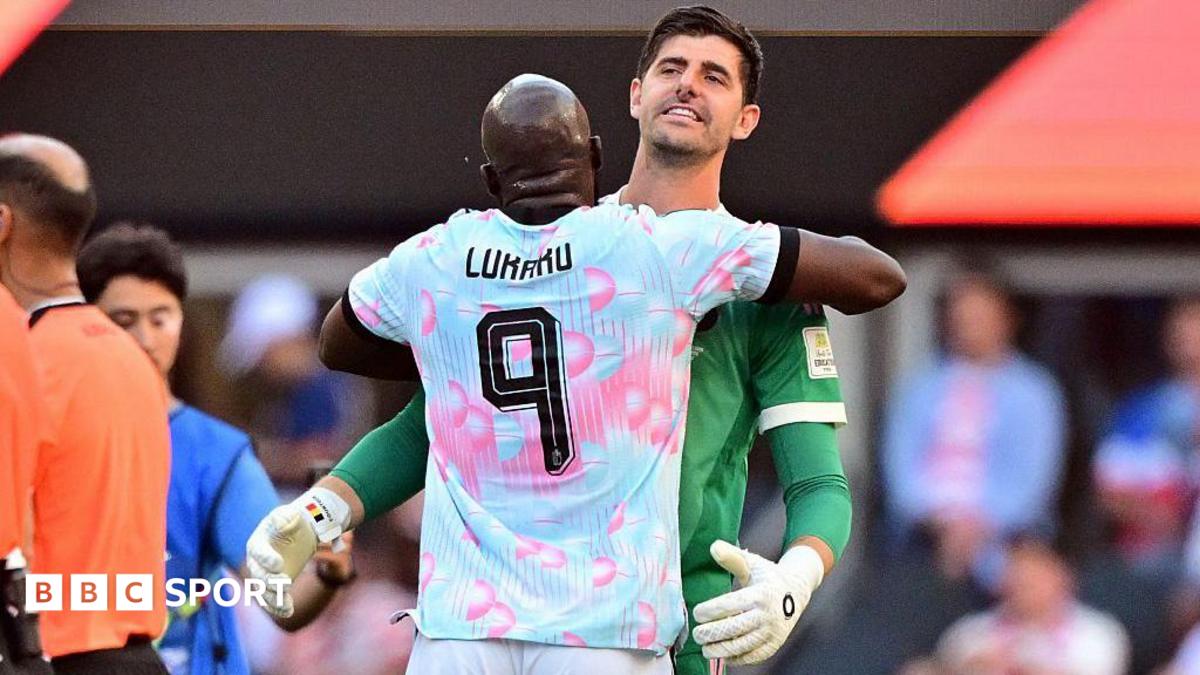
Evolved

World Cup 2026: How US football has evolved since hosting the 1994 event | World Cup 2026 News

Football has gained a foothold in the United States, and the country seems ready to host the World Cup this summer – which was not clear in 1994.

Back then, when the US last hosted the World Cup, the country had no professional league and the national team was cobbled together with ex-collegians, journeymen, and semi-professionals.

Recommended Stories

list of 4 itemsend of list

“Leading into ’94, we were at risk on the ticket side,” former US Soccer President Sunil Gulati told Al Jazeera in a recent interview. “For the US Organizing Committee, it was a big concern if we could sell all the tickets.’’

In the end, the 1994 tournament was successful. A record 3.5 million (68,991 per game) attended matches; the US advanced from the group stage for the first time since 1930, losing 1-0 to eventual champions Brazil in the last 16; and seeds were planted for a professional league, Major League Soccer.

Football has since moved from the margins to the mainstream in the US.

MLS is thriving, the national team is ranked a creditable 16th in the world by FIFA, and as the World Cup returns this summer, ticket demand far outpaces supply.

“If you said in 1994 MLS would be a 30-team league, with [22] soccer-specific stadiums and averaging 20,000 crowds – not in our wildest dreams,” Gulati said.

“The landscape is completely different. The most visible thing is the development of professional leagues, MLS and the women’s league [NWSL]. We had no first division league. And now there is [also] USL Division 2 and 3. The number of teams has increased dramatically.”

Today, the US Soccer Federation, commonly referred to as US Soccer, sanctions 127 professional teams – 102 men’s and 25 women’s.

“Eighteen of the top 50 [valued] teams in the world are in MLS,” Gulati said. “That’s an extraordinary statistic. The women’s team in Columbus just sold for $205m. Commercial interest in soccer and soccer leagues is at an all-time high.”

Credit Joao Havelange for seeing the future. During his reign as FIFA president, Havelange usually got what he wanted, and he wanted the 1994 World Cup in the US, along with a professional league.

Easier said than done, though. Organised football has been played in the US since the late 19th century, with the American Cup inaugurated in 1884. But over the following decades, several professional leagues collapsed, and after the North American Soccer League (NASL) folded in 1984, there appeared to be little future for the game. Enter Havelange and FIFA.

“FIFA recognised a long time ago that, for the sport to grow internationally, it had to be successful in the US,” Farrukh Quraishi, a Tampa, Florida-based administrator who played in the NASL, told Al Jazeera.

“For me, it was purely a matter of time. This is a huge and wealthy market. Now, you look at who is buying clubs in MLS, and it’s a who’s who of NFL owners.”

Looking back, it’s remarkable that the US actually competed in World Cups and played host to one at all, without a nationwide professional league.

Romario (with trophy) and captain Dunga of Brazil and the Brazilian team celebrate after winning the1994 FIFA World Cup Final against Italy on 17 July 1994 played at the Rose Bowl in Pasadena, California, United States. Brazil defeated Italy 3-2 in a penalty shootout.(Photo by Ben Radford/Getty Images)
Brazil celebrates winning the 1994 World Cup after defeating Italy 3-2 in a penalty shootout [Ben Radford/Getty Images]

For years, football’s foundation in the country was built on amateur and youth participation. By the early 1990s, the numbers were high, with an estimated 18 million people playing the sport at some level in the US. But the pyramid lacked a top tier, leaving a dead end for aspiring players, little media coverage, and scattered fan interest.

The 1994 World Cup came and went, and, in 1996, MLS finally kicked off.

Havelange duly arrived to commemorate the inaugural game, sitting in the rickety stands of Spartan Stadium in San Jose, California.

The San Jose Clash edged DC United 1-0, as Eric Wynalda scored an 88th-minute goal – just in time to avoid the game going to a “shootout”, in which draws were decided by players going one-on-one with goalkeepers from 32 metres (35 yards) out. This novel method of deciding games ended in 2000.

Football-specific stadiums started springing up in 1999. Lamar Hunt’s Columbus Crew Stadium became the country’s first major purpose-built football venue since Mark’s Stadium in Fall River, Massachusetts, in 1922. Now, Columbus are on their second stadium, the ScottsMiracle-Gro Field, and a total of 22 MLS teams compete at their own venues.

Football finally became part of the American sporting scene.

“Is it in the same way as the NFL, with [average figures of more than 18 million] watching it, or the American Pastime that baseball is? No,” Gulati said.

“It’s not at that viewership level, [but] there is worldwide coverage of games. Look at everyone wearing jerseys on the street, Lionel Messi playing in Miami. It is part of the mainstream.”

‘Soccer still isn’t king in the US’

Not that the picture is not flawed. Wynalda, who went on to score 34 goals in 106 games for the US national team, sees the current system as a recipe for mediocrity, registering millions of youngsters but limiting their ambition as few US players take up prominent roles on MLS teams.

Most are offered the league’s minimum annual salary ($80,622) and only two US players were listed last year among the top 40 highest-paid, according to the MLS Players Association – Austin FC forward Brandon Vazquez (24th at $3.55m) and Nashville SC defender Walker Zimmerman (27th at $3.45m).

“Look at the growth of [MLS] and you can say soccer looks professional, looks like a big deal, looks major league. And a lot of people look at the sport with a different lens now because it’s a legitimate sport,” Wynalda, now a coach and commentator, told Al Jazeera.

“[But] facilities do not create ability. We need more focus on a competitive environment to develop players. We tell them winning doesn’t matter and then wonder why they can’t win. We’ve lost that competitive mentality.”

He favours introducing promotion/relegation as a solution.

“If you’re going to a team that is never going to be relegated, because it’s got enough money, you never learn how to fight relegation, how to beat 11 angry men with their livelihood on the line,” Wynalda said.

And while the MLS franchise model has created riches, with teams valued as high as Los Angeles FC at $1.25bn (thanks to owning the 22,000-seat BMO Stadium) by Forbes Magazine, the quality of play does not always correspond.

MLS teams have tended to struggle in CONCACAF competitions, although in 2022 the Seattle Sounders ended a 22-year drought for an MLS side to win the federation’s elite competition, which was previously won by DC United in 1998 and LA Galaxy in 2000.

“There are things we agree with and disagree with, on and off the field, but [MLS] is successful,” Fox Sports commentator Alexi Lalas, a central defender for the US in 1994, told Al Jazeera. “I don’t think you can argue against that.”

Thanks to the 1994 WC and MLS, football in the US became “a very different world, to finally be even recognised for what you did, let alone respected”, Lalas said. “You know, soccer still isn’t king in the US, but, let’s be honest, it’s part of the palate and certainly part of the landscape when it comes to this generation.”

Lalas predicts the US will harness the “magic” of being hosts to reach the quarterfinals, while Gulati expects the sport to continue to grow in the US after the World Cup.

“That is what the legacy of the tournament is about and why we bid,” Gulati said.

Source link

Super-Adaptable Mayhem 10 Swarming Drone Evolved From The Switchblade

  • Mayhem 10 is a versatile evolution of Switchblade. AeroVironment’s new drone system offers modular payloads for diverse missions, enhancing adaptability in combat scenarios.
  • Rapid deployment and reconfiguration capabilities. Mayhem 10 can be assembled and launched in under five minutes, with a range of 62 miles and 50 minutes of flight time.
  • Designed for collaborative swarm operations. The AV_Halo Command architecture enables Mayhem 10 to operate in swarms, enhancing coverage and coordinated effects.
  • Advanced autonomy and resilience features. AI-driven processors and secure communication systems ensure functionality in contested environments.
  • Production readiness and scalability. AeroVironment is prepared to produce up to 2,000 units annually, targeting the U.S. Army’s LE-SR program.

Bottom line: AeroVironment’s Mayhem 10 drone system advances the Switchblade lineage with modularity, rapid deployment, and swarm capabilities, positioning it as a versatile option for the U.S. Army and other customers in an increasingly crowded marketplace.

AeroVironment has unveiled a new entrant in the rapidly evolving launched effects space, introducing the Mayhem 10 system as a further evolution of its combat-proven Switchblade family. While pitching Mayhem 10 toward U.S. Army requirements, the manufacturer anticipates considerable demand and has already started to develop a production line that will be able to push out as many as 2,000 examples of the vehicle annually. The price of a Mayhem 10 has not been disclosed.

Revealed yesterday at the Army Aviation Association of America’s Army Aviation Warfighting Summit in Nashville, Tennessee, the Mayhem 10 is intended to equip air, ground, and maritime platforms and to be capable of being rapidly deployed and reconfigured in the field.

Mayhem 10 Launched Effects | One System. Multiple Effects. thumbnail

Mayhem 10 Launched Effects | One System. Multiple Effects.


At its core, Mayhem 10 is an autonomous launched effects system with a heavy focus on modularity. Its payload architecture allows operators to swap between lethal and non-lethal configurations depending on mission needs. That includes intelligence, surveillance, and reconnaissance (ISR), electronic warfare, communications relay, deception/decoy, and precision strike roles. As such, commanders can rely on a single platform that can pivot as conditions evolve.

According to company leadership, the focus is on compressing the sensor-to-shooter timeline while reducing risk to personnel and high-value assets. “Mayhem 10 sets a new standard for operational versatility and survivability on the modern battlefield,” said Wahid Nawabi, AeroVironment’s chairman, president, and CEO, emphasizing its ability to operate effectively even in heavily contested environments.

A head-on view of the Mayhem 10 at the Army Aviation Association of America’s Army Aviation Warfighting Summit in Nashville, Tennessee. Jamie Hunter

The system draws heavily on the lineage of AeroVironment’s Switchblade family, but is intended to push beyond traditional loitering munitions in terms of scale and flexibility. The Mayhem 10 name reflects the fact that it can carry a payload of up to 10 pounds. It has a range of roughly 62 miles and can remain airborne for up to 50 minutes. Notably, it is designed for rapid deployment, with assembly and launch said to be achievable in under five minutes.

Speaking to TWZ at the summit, Austin Johnson, AeroVironment’s business development director for U.S. Army programs, stressed that, while Mayhem is an evolution of Switchblade, “it’s not a Switchblade.”

A video showing the Switchblade 600 loitering munition being used in combat in Ukraine:

Ukraine’s Best Weapon? The Switchblade 600 thumbnail

Ukraine’s Best Weapon? The Switchblade 600


“Mayhem is not just leave-the-tube, find-the-armor, kill-the-armor, kill-the-enemy. Mayhem is any mission, anywhere, anytime. So right now, we launch out of a Common Launch Tube. We can air and ground launch,” Johnson added.

A Common Launch Tube. Systima

Physically, the system incorporates a removable forward section — seen in the video embedded below — to speed up integration of new payloads. More than eight different payloads have been integrated so far, Johnson said. Its launcher is self-contained and adaptable, so it can be used by dismounted troops as well as from vehicles, aircraft, and other mobile platforms. In terms of aircraft, the same promotional video shows the Mayhem 10 being launched from tubes carried on the stub wings of an H-60 Black Hawk series helicopter.

Another difference with Switchblade is Mayhem 10’s use of rocket-assisted takeoff, rather than using a gas generator. This reflects the Army’s pivot toward rocket-assisted launch, the company told us.

Kevin Williams, the chief engineer for Mayhem, told TWZ another way in which Mayhem 10 differs from Switchblade.

“Mayhem 10 is highly optimized; this is purpose-built for the launched effects mission, as opposed to a Switchblade, which is very much purpose-built for a singular anti-tank, anti-armor mission,” Williams explained. “Modularity is at its very core.”

A rendering of the launch of a Mayhem 10 from a tracked uncrewed ground vehicle. AeroVironment

Thanks to its modular open systems approach (MOSA), Mayhem 10 can receive upgrades and have third-party payloads integrated without major redesign.

“The modularity is really the main point here,” Johnson said. “We held a payload conference about a year and a half ago. We brought multiple vendors in, from across the spectrum, with different payloads. We shared our ICD, our interface control document, and then they came back. We wanted to make this as open architecture as we could for the Army, and it shares a lot of that same open architecture design that we’ve already incorporated with our P550,” — AeroVironment’s autonomous Group 2 eVTOL uncrewed air system, which is already in service.

A video showing the AeroVironment P550 UAS:

AeroVironment's P550 eVTOL: Rapid Deployment and Enhanced Situational Awareness thumbnail

AeroVironment’s P550 eVTOL: Rapid Deployment and Enhanced Situational Awareness


Among the payload options, Johnson brought attention to one that “effectively can act as a HARM missile, meaning that we can identify, detect, and kill an emitter.”

Williams described one real-life scenario in which the company ran a hackathon to prove the payload modularity. The result was payload designers getting access to the interface control model, which can even be done via QR code, to get a full understanding of electrical, mechanical, and data interfaces. In at least one instance, the resulting payload was then physically integrated within 90 minutes of the supplier showing up at the AeroVironment facility.

Meanwhile, operators interface with the system through AeroVironment’s Tomahawk Grip and the AV_Halo Command environment, which are optimized for networked and distributed operations.

The AeroVironment Tomahawk Grip TA5. The Grip TA5 is an eight-inch tactical controller designed to combine situational awareness and precision strike capabilities. AeroVironment

Perhaps most significantly, the AV_Halo Command architecture allows Mayhem 10 to operate in collaborative swarms. By networking multiple systems together, units can expand coverage, saturate defenses, and execute coordinated effects across a wide area. Brian Young, the company’s senior vice president for loitering munitions, framed this as a shift in how combat power is generated, scaling effects without concentrating forces or increasing platform risk.

The @USArmy @usarmyrccto has selected Kinesis – part of our AV_Halo Command open, modular software ecosystem – as the lead command and control software for the Human-Machine Integrated Formations (HMIF) program. Kinesis will give warfighters a unified interface to field and… pic.twitter.com/04wxsGlPHJ

— AV (@aerovironment) October 20, 2025

“We can complete multiple missions in one swarm,” Johnson continued. “They can communicate with each other and complete it. They can jam the enemy with EW payloads. We have multiple kinetic payloads, so we can run a full mission profile with multiple Mayhems.”

On the autonomy side, Mayhem 10 leverages an AI-driven processor, which the manufacturer says ensures operations in denied or degraded environments. It is designed to have resilience against jamming, spoofing, and loss of traditional navigation signals. Secure positioning and communications are enabled through M-Code GPS and a Silvus datalink, while a MANET-based mesh network provides command-and-control connectivity at ranges of roughly 16-25 miles.

A pair of Mayhem 10 vehicles in a promotional image from the manufacturer. AeroVironment

At this point, AeroVironment has conducted over 50 internally funded flight tests with Mayhem 10. These have included live ordnance, EW, and Link relay flight tests, with various payloads.

“We’re approaching TRL 8 [Technology Readiness Level 8, meaning it has been tested and flight qualified] with this system this summer and entering low-rate initial production later this year,” Williams explained.

Considering that the Army is yet to place a contract, that might seem like jumping the gun, but AeroVironment says they wanted to go fast, to have a reliable product ready for when the service started to look to buy them.

“We’re entering the competitions,” Williams said. “We wanted to go fast, reliably, though. We didn’t want to come in and have a lesser product. We’re delivering a weapon system, not an experimental system.”

Currently, the company is mainly using Mayhem 10 to target the U.S. Army’s Launched Effects-Short Range (LE-SR) program, but stresses that this is part of a new family of products, so additional variants will likely appear in the future.

The Uncrewed Aircraft Systems Project Office is running the Army’s Launched Effects-Short Range (LE-SR) program. Photo Credit: David Hylton

Should the Army choose Mayhem 10, the company has already made preparations to ramp up production. While low-rate initial production is being handled at a production line in Simi Valley, California, the company is establishing a new manufacturing facility in Salt Lake City, Utah. This will have the capacity to scale production up to between 1,000 and 2,000 units annually.

Taken together, Mayhem 10 reflects a clear trajectory in modern warfare: smaller, smarter, and more networked systems that can be fielded quickly, easily adapted, and employed in large numbers to overwhelm an adversary. At the same time, it is entering the market that is fast becoming saturated with similar products, and there will be no shortage of rivals for future Army orders.

Jamie Hunter contributed to this story.

Contact the author: thomas@thewarzone.com

Thomas is a defense writer and editor with over 20 years of experience covering military aerospace topics and conflicts. He’s written a number of books, edited many more, and has contributed to many of the world’s leading aviation publications. Before joining The War Zone in 2020, he was the editor of AirForces Monthly.


Source link