Evo Morales

Bolivia roadblocks ease after state of emergency declared

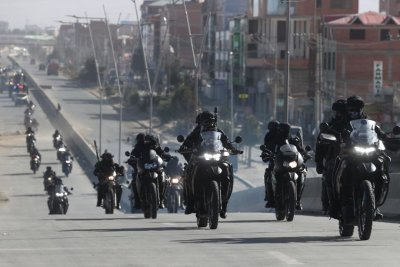
Members of the Bolivian police and Army work to clear roadblocks in El Alto on Saturday after the declaration of a state of emergency. Photo by Luis Gandarillas/EPA

June 22 (UPI) — Bolivia began the week with 11 active roadblocks remaining across the national highway network — a sharp decline from the dozens that had disrupted transportation and commerce for more than 50 days, according to a road accessibility report from the Bolivian Highway Administration.

Local media outlets, including El Deber and La Razón, reported that reopening the country’s main transportation routes occurred shortly after President Rodrigo Paz declared a state of emergency Saturday in response to internal unrest.

Vehicle traffic and essential goods distribution have gradually returned to normal after a joint deployment of the Bolivian National Police and the Armed Forces, officials said. The operation dismantled much of the network of more than 50 critical roadblocks that had pushed the country toward a logistical and economic crisis.

The presidential decree, which the Legislative Assembly backed, temporarily authorized the Armed Forces to support police efforts to maintain order and guarantee freedom of movement.

In key areas such as El Alto and access roads to La Paz, security forces used excavators and other heavy equipment to clear tons of debris, dirt and rocks left on highways.

Negotiations also aided the reduction in roadblocks. Alongside the emergency measures, the government finalized a pacification agreement with the Bolivian Workers’ Center, the country’s largest labor federation.

Authorities also reported the peaceful removal of a 38-day blockade in the strategic municipality of San Julián in the eastern Santa Cruz department. Despite the large-scale demobilization, protests continue in several strongholds.

The remaining roadblocks are concentrated primarily in the Tropic of Cochabamba region and parts of Oruro and La Paz, Diario Libre reported.

Those areas are led by coca growers’ unions and Indigenous and peasant groups aligned with former President Evo Morales. The groups oppose the emergency decree, describing it as repressive, and continue to press political demands against the government.

Authorities reported isolated incidents during security operations, including chemical agents used in high-tension areas such as the Río Seco district of El Alto and roadways leading to Laja.

In those locations, protesters attempted to rebuild barricades and engaged in verbal confrontations with joint police and military patrols.

After the military deployment, Bolivia’s Ombudsman’s Office launched a nationwide monitoring plan. In a report released Sunday, the institution said most roads were reopened without the use of violent force.

With the country’s main transportation corridor restored, hundreds of fuel tankers and cargo trucks carrying food and medical supplies began to enter major cities as part of an emergency logistics effort to mitigate the economic damage caused by the prolonged conflict.
Source link

Bolivian president pushes state of emergency law as 2 ministers resign

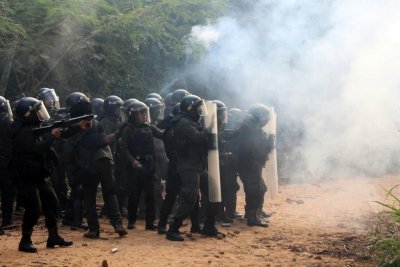
Members of the Bolivian police in riot gear deploy tear gas during an operation to regain control of the seized Humberto Suarez Roca plant and oil field, in the municipality of Santa Rosa del Sara, Bolivia, on Wednesday. Hundreds of demonstrators stormed the plant a day earlier, forcing operations to halt and blockading the facility to demand President Rodrigo Paz’s resignation. Photo by Juan Carlos/EPA

June 3 (UPI) — Bolivian President Rodrigo Paz sent a bill to Parliament on Wednesday to regulate states of emergency, while two ministers resigned amid a crisis that has entered its fifth week of road blockades.

The crisis, which began in early May with protests over fuel shortages, rising living costs and opposition to economic measures promoted by the government, has left at least five people dead and caused economic losses that exceed $1.6 billion.

Since the inception, more than 100 roadblocks have disrupted the transportation of goods, food and medical supplies, and fuel distribution in different parts of the country.

“This law regulating states of emergency in the nation has already been sent to Parliament, and I hope it will be resolved soon,” Paz said during a public statement.

Paz said the initiative would provide a legal framework for actions the government plans to implement to ensure assistance to the population and distribution of essential supplies.

Bolivia’s Constitution provides for a state of emergency in extraordinary situations that affect the country’s security or normal functioning. However, the newspaper La Razón reported the government considers it necessary to have a specific law establishing procedures, scope and implementation mechanisms for that constitutional tool.

Paz added that any action taken by the police, armed forces and government would be guided by a “logic of humanitarian action” and defended dialogue as the path to resolving the crisis.

“We come from the real, democratic and constitutional culture of dialogue,” he said.

The announcement came the same day defense and education ministers submitted resignations, becoming the most significant cabinet departures since the protests began, according to reports from Bolivian media outlets.

Their departures follow the resignation of Labor Minister Edgar Morales less than two weeks ago.

The resignations represent a new political blow to Paz, who took office six months ago and is facing a growing humanitarian crisis.

The protests, led by labor unions, Indigenous organizations, teachers and groups aligned with former President Evo Morales, have expanded their demands, and some groups have begun to call for the president’s resignation.

According to reports by El País and Infobae based on data from Bolivian authorities and business organizations, the Federation of Private Business Entities of Bolivia warned that the road blockades continue to affect productive sectors, exporters and transport operators, while agricultural producers have warned of growing difficulties in moving goods and guaranteeing domestic supply.

The Legislative Assembly must now debate the proposal on states of emergency as protests continue and pressure mounts on the executive branch to solve the crisis.

The government maintains that road blockades are intended to destabilize the constitutional order, while protesters say the demonstrations are a response to deteriorating economic conditions and shortages that affect much of the country.


Source link