Real Madrid’s Brazilian forward Vinicius Jr alleges he was racially abused by Benfica’s Gianluca Prestianni.
Published On 19 Feb 202619 Feb 2026
Share
Real Madrid has sent UEFA, football’s governing body in Europe, “all available evidence” of an alleged racist insult against Vinicius Jr in a Champions League match against Benfica.
“Our club has actively collaborated with the investigation opened by UEFA following the unacceptable episodes of racism experienced during that match,” the Spanish club said on Thursday without elaborating on the evidence.
Recommended Stories
list of 4 itemsend of list
UEFA appointed a special investigator on Wednesday to gather evidence about what happened in Lisbon on Tuesday in Madrid’s 1-0 win at Benfica in the first leg of the knockout round of the Champions League.
Vinicius accused Benfica player Gianluca Prestianni of calling him “monkey” after the Brazilian scored the only goal. Prestianni was among the Benfica players upset with Vinícius after the forward celebrated by the Benfica corner flag.
Prestianni covered his mouth with his shirt when he allegedly spoke to the Brazilian player and denied racially abusing Vinicius, who is Black and has been subjected to repeated racist insults in Spain.
“Real Madrid appreciates the unanimous support, backing, and affection that our player Vinicius Jr. has received from all areas of the global football community,” the club said. “Real Madrid will continue working, in collaboration with all institutions, to eradicate racism, violence, and hate in sports and society.”
Benfica said Prestianni was the victim of a “defamation campaign” and welcomed the investigation opened by UEFA, saying it “fully supports and believes the version presented” by Prestianni.
FIFA President Gianni Infantino said on Wednesday he was “shocked and saddened to see the incident of alleged racism” and praised the referee for activating the antiracism protocol during the match, which was halted for nearly 10 minutes at the Stadium of Light.
Federal authorities announced an investigation Friday of two immigration officers who appeared to have made untruthful statements under oath about a shooting in Minneapolis last month.
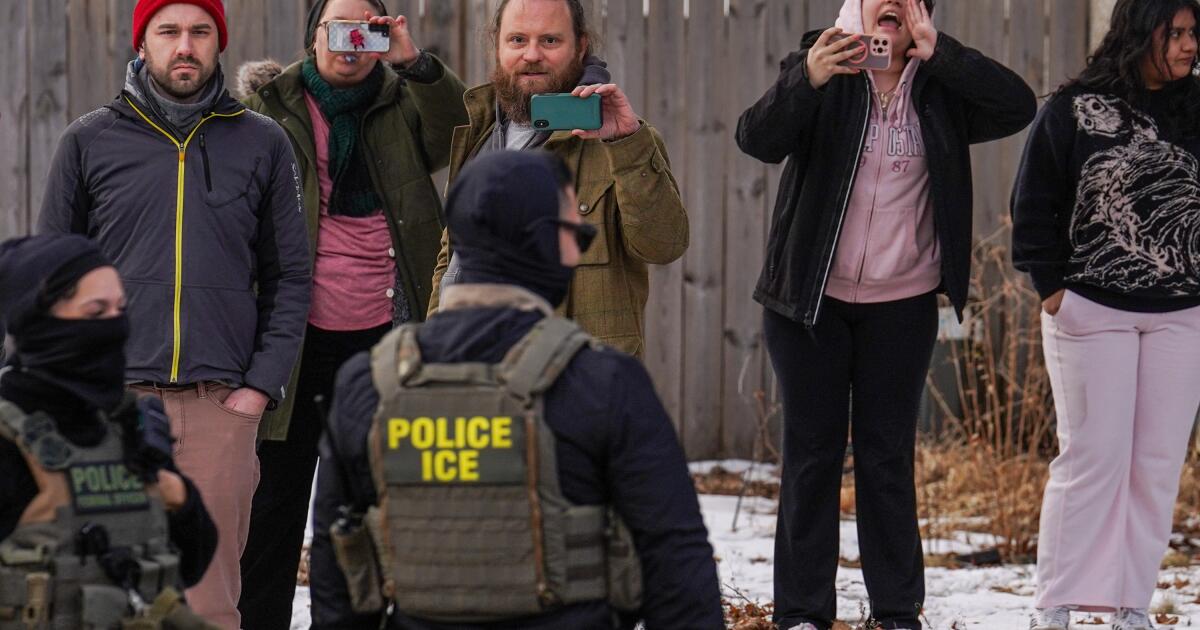
It is among at least five shootings in which initial descriptions by the immigration officials were later contradicted by video evidence. Those included the fatal Minneapolis shootings of Renee Good and Alex Pretti, in which bystander video quickly raised questions about how federal officials initially described the incidents.
The inquiry announced Friday came hours after a federal judge dismissed felony assault charges against two Venezuelan men who were accused of beating an Immigration and Customs Enforcement officer with a broom handle and a snow shovel on Jan. 14. The officer, who is not named in court filings, fired a single shot from a handgun that struck one of the men, Julio Cesar Sosa-Celis, in the thigh.
In an unusual reversal, prosecutors asked to dismiss the cases because they said new video evidence contradicted allegations made against the men in a criminal complaint and at a hearing last month.
Here is a look at how the five shootings were initially described and what was later learned:
Julio Cesar Sosa-Celis
Date and location: Jan. 14, 2026, in Minneapolis.
What federal officials said initially: Homeland Security Secretary Kristi Noem said the immigration officer was “ambushed” by Sosa-Celis and others, and fired a “defensive shot” out of fear for his life. “What we saw last night in Minneapolis was an attempted murder of federal law enforcement,” she said.
What came out later: Investigators have not released the new evidence that led charges to be dropped, but cracks were already apparent in a Jan. 21 court hearing. The immigration officer’s testimony recounting the moments before the shooting differed significantly from that of the defendants and three eyewitnesses. Available video evidence did not support the officer’s account of being assaulted with a broom and shovel.
Renee Good
Date and location: Jan. 7, 2026, in Minneapolis.
What federal officials said initially: Noem described the incident as an “act of domestic terrorism” carried out against ICE officers by a woman who “attempted to run them over and rammed them with her vehicle.” She said the immigration agent shot “defensively” to protect himself and the people around him. Good died of gunshot wounds to the head.
What came out later: Videos filmed from multiple angles challenged the administration’s narrative. Shortly before the shooting, Good is seen at the wheel of her SUV that is parked diagonally on a street. She tells an immigration officer, “I’m not mad at you.”
Seconds later, another immigration officer grabs at the driver’s side door while Good’s wife urges her to “drive, baby, drive.” It’s unclear in the videos whether the SUV makes contact with ICE officer Jonathan Ross, who shoots while standing near the front of the driver’s side of the SUV and then twice more while quickly moving to the driver’s side as the vehicle pulls forward.
Alex Pretti
Date and location: Jan. 24, 2026, in Minneapolis.
What federal officials said initially: Homeland Security spokesperson Tricia McLaughlin said Pretti approached Border Patrol officers with a handgun and he “violently resisted” when they tried to disarm him. An agent feared for his life and fired “defensive” shots, she said. Pretti was pronounced dead at the scene. Border Patrol senior official Greg Bovino claimed Pretti intended to “massacre law enforcement,” and Deputy White House Chief of Staff Stephen Miller described him as “a would-be assassin.”
What came out later: None of the half-dozen bystander videos collected by investigators showed Pretti brandishing his gun, which he had a permit to carry. The videos showed Pretti was holding his mobile phone as a masked Border Patrol officer opened fire.
In a tense hearing Thursday in Washington, Republican Sen. Rand Paul of Kentucky made leaders tasked with carrying out Trump’s mass deportation agenda watch a video of the shooting while he repeatedly scrutinized the forceful tactics used by immigration agents. Paul argued that Pretti posed no threat to the agents and said it was clear from the video that he was “retreating at every moment.”
Silverio Villegas González
Date and location: Sept. 12, 2025, in suburban Chicago.
What federal officials said initially: Homeland Security officials said federal agents were pursuing a man with a history of reckless driving who entered the country illegally. They alleged that Villegas González drove at officers and dragged one with his car. The Department of Homeland Security said the officer fired because he feared for his life and was hospitalized with “serious injuries.”
What came out later: Body-camera videos from local police contradicted the Trump administration’s account. Footage showed the agent who shot Villegas González walking around afterward and dismissing his own injuries as “nothing major.”
An autopsy made public in November declared Villegas González’s death a homicide. The report showed he was shot at “close range,” with wounds to his neck and fingers.
Marimar Martinez
Date and location: Oct. 14, 2025, in Chicago.
What federal officials said initially: A Homeland Security Department news release asserted that Martinez and the driver of another car involved in a crash with a Border Patrol officer were “domestic terrorists.” An FBI agent said in court documents that she was chasing the Border Patrol vehicle and drove at one of the officers after they got out of the vehicle. The officer was forced to open fire, the FBI agent alleged, striking Martinez seven times. She was treated at a hospital and arrested on felony assault charges.
What came out later: Videos emerged that her attorneys said showed agent Charles Exum steering his SUV into her truck.
In a text message presented during a Nov. 5 hearing, Exum appeared to brag about his marksmanship. “I fired 5 rounds and she had 7 holes. Put that in your book boys,” the text read.
Washington wants Beijing to join a new nuclear weapons treaty after expiration of the New START accord between the US and Russia.
Published On 7 Feb 20267 Feb 2026
Share
An international monitor said it has seen no evidence to support the claim by a senior United States official who accused China of carrying out a series of clandestine nuclear tests in 2020 and concealing activities that violated nuclear test ban treaties.
US Under Secretary of State for Arms Control and International Security Thomas DiNanno made the assertions about China at a United Nations disarmament conference in Geneva, Switzerland, on Friday, just days after a nuclear treaty with Russia expired.
Recommended Stories
list of 3 itemsend of list
“I can reveal that the US government is aware that China has conducted nuclear explosive tests, including preparing for tests with designated yields in the hundreds of tonnes,” DiNanno said at the conference.
China’s military “sought to conceal testing by obfuscating the nuclear explosions because it recognised these tests violate test ban commitments,” he said.
“China conducted one such yield-producing nuclear test on June 22 of 2020,” he said.
DiNanno also made his allegations on social media in a series of posts, making the case for “new architecture” in nuclear weapons control agreements following the expiration of the New START treaty with Russia this week.
“New START was signed in 2010 and its limits on warheads and launchers are no longer relevant in 2026 when one nuclear power is expanding its arsenal at a scale and pace not seen in over half a century and another continues to maintain and develop a vast range of nuclear systems unconstrained by New START’s terms,” he said.
Robert Floyd, executive secretary of the Comprehensive Nuclear-Test-Ban Treaty Organization, said in a statement on Friday that the body’s monitoring system “did not detect any event consistent with the characteristics of a nuclear weapon test explosion” at the time of the alleged Chinese test, adding that that assessment remains unchanged after further detailed analyses.
China’s ambassador on nuclear disarmament, Shen Jian, did not directly address DiNanno’s charge at the conference but said Beijing had always acted prudently and responsibly on nuclear issues while the US had “continued to distort and smear China’s national defence capabilities in its statements”.
“We firmly oppose this false narrative and reject the US’s unfounded accusations,” Shen said.
“In fact, the US’s series of negative actions in the field of nuclear arms control are the biggest source of risk to international security,” he said.
Later on social media, Shen said, “China has always honored its commitment to the moratorium on nuclear testing”.
Diplomats at the conference said the US allegations were new and concerning.
China, like the US, has signed but not ratified the Comprehensive Nuclear Test Ban Treaty (CTBT), which bans explosive nuclear tests. Russia signed and ratified it, but withdrew its ratification in 2023.
US President Donald Trump has previously instructed the US military to prepare for the resumption of nuclear tests, stating that other countries are conducting them without offering details.
The US president said on October 31 that Washington would start testing nuclear weapons “on an equal basis” with Moscow and Beijing, but without elaborating or explaining what kind of nuclear testing he wanted to resume.
He has also said that he would like China to be involved in any future nuclear treaty, but authorities in Beijing have shown little interest in his proposal.
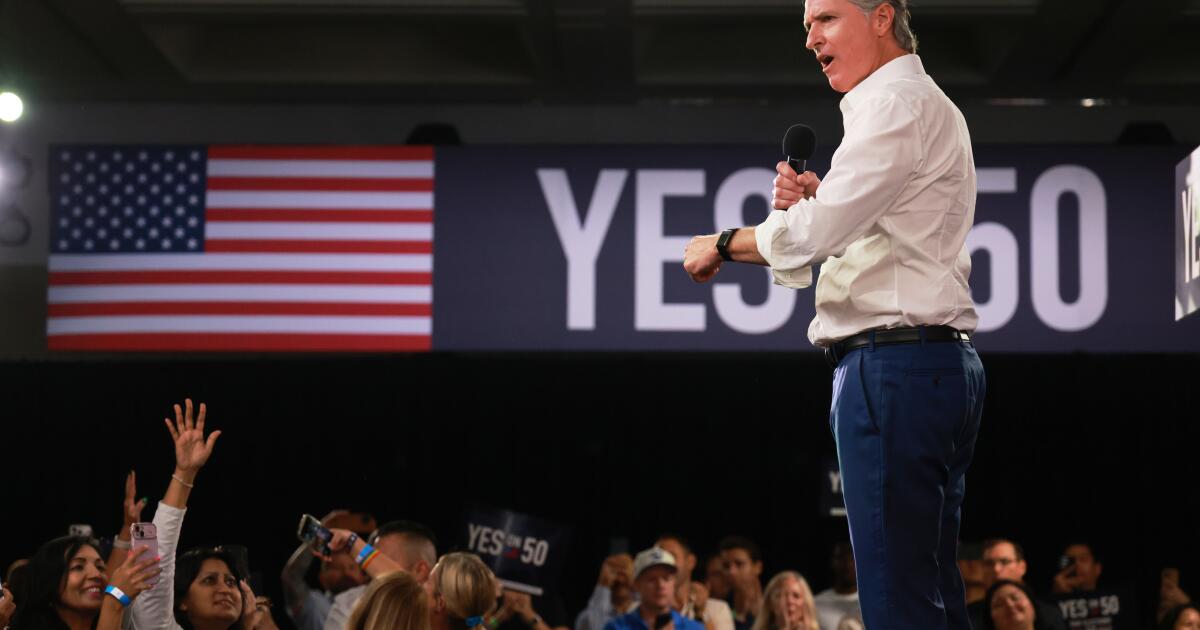
WASHINGTON — The Supreme Court ruled Wednesday that California this fall may use its new election map, which is expected to send five more Democrats to Congress.
With no dissents, the justices rejected emergency appeals from California Republicans and President Trump’s lawyers, who claimed the map was a racial gerrymander to benefit Latinos, not a partisan effort to bolster Democrats.
Trump’s lawyers supported the California Republicans and filed a Supreme Court brief asserting that “California’s recent redistricting is tainted by an unconstitutional racial gerrymander.”
They pointed to statements from Paul Mitchell, who led the effort to redraw the districts, that he hoped to “bolster” Latino representatives in the Central Valley.
In response, the state’s attorneys told the court the GOP claims defied the public’s understanding of the mid-decade redistricting and contradicted the facts regarding the racial and ethnic makeup of the districts.
Gov. Gavin Newsom proposed re-drawing the state’s 52 congressional districts to “fight back against Trump’s power grab in Texas.”
He said that if Texas was going to redraw its districts to benefit Republicans so as to keep control of the House of Representatives, California should do the same to benefit Democrats.
The voters approved the change in November.
While the new map has five more Democratic-leaning districts, the state’s attorneys said it did not increase the number with a Latino majority.
“Before Proposition 50, there were 16 Latino-majority districts. After Proposition 50, there is the same number. The average Latino share of the voting-age population also declined in those 16 districts,” they wrote.
It would be “strange for California to undertake a mid-decade restricting effort with the predominant purpose of benefiting Latino voters and then enact a new map that contains an identical number of Latino-majority districts,” they said.
Trump’s lawyers pointed to the 13th Congressional District in Merced County and said its lines were drawn to benefit Latinos.
The state’s attorneys said that too was incorrect. “The Latino voting-age population [in District 13] decreased after Proposition 50’s enactment,” they said.
Three judges in Los Angeles heard evidence from both sides and upheld the new map in a 2-1 decision.
“We find that the evidence of any racial motivation driving redistricting is exceptionally weak, while the evidence of partisan motivations is overwhelming,” said U.S. District Judges Josephine Staton and Wesley Hsu.
In the past, the Supreme Court has said the Constitution does not bar state lawmakers from drawing election districts for political or partisan reasons, but it does forbid doing so based on the race of the voters.
In December, the court ruled for Texas Republicans and overturned a 2-1 decision that had blocked the use of its new election map. The court’s conservatives agreed with Texas lawmakers who said they acted out of partisan motives, not with the aim of denying representation to Latino and Black voters.
“The impetus for the adoption of the Texas map (like the map subsequently adopted in California) was partisan advantage pure and simple,” Justice Samuel A. Alito Jr. wrote in a concurring opinion.
California’s lawyers quoted Alito in supporting their map.
Weekly insights and analysis on the latest developments in military technology, strategy, and foreign policy.
Video has emerged that is said to show a Russian-made Mi-28NE Havoc attack helicopter flying over the Iranian capital Tehran. Last week, pictures had also appeared online that looked to show at least one Mi-28NE in Iran. The arrival of Havocs in Iran might also point to the delivery of weapons and other materiel from Russia, or plans to do so soon, amid a new spike in geopolitical friction between the Middle Eastern country and the United States.
TWZ has not been able to independently confirm where and when the footage in question, seen in the social media post above, was taken. However, the pictures that began circulating online last week look to have taken at a hangar belonging to Iran’s Pars Aerospace Services Company (PASC). Situated at Mehrabad International Airport in Tehran, PASC is tied to Iran’s powerful Islamic Revolutionary Guard Corps (IRGC) and is subject to sanctions in the United States and other Western countries.
One of the pictures that began circulating online last week said to show an Mi-28 in Iran. via X
🇷🇺🇮🇷 It is believed that Iran has received the first batch of Mil Mi-28NE attack helicopters ordered in Russia.
Photos of a Mil Mi-28 helicopter in digital desert camo stationed in a hangar have emerged on social media.
— Status-6 (War & Military News) (@Archer83Able) January 28, 2026
Geo-Location of the warehouse where the recently delivered to Iran Mil-28 helicopter photo is taken. Pars Aerospace Services Company in Tehran. 35.69899, 51.29459 pic.twitter.com/VV7ruGVPWj
In addition, on January 3, Iranian journalist Mohamad Taheri wrote “Inshallah you have a good military service,” according to a machine translation of a Persian-language post on X, which included a stock picture of an Mi-28 wearing a two-tone desert camouflage scheme. Taheri has been associated with Iran’s quasi-official Tasnim News Agency. Tasnim was among the first to report on a possible Iranian acquisition of Havocs, as well as Su-35 Flanker fighters and Yak-130 jet trainers, all the way back in 2023. The Yak-130s appeared in Iran that same year. There had been talk of a batch of Su-35s originally built for Egypt, but that were never delivered, being sent instead to the Iranians. However, at least some of those jets appeared instead in Algeria last year.
The two-seat Mi-28 traces back to before the fall of the Soviet Union, with the original variant making its first flight in the 1980s. The project was shelved in the 1990s and then subsequently revived. The first version to enter actual operational service was the Mi-28N in the late 2000s. Russia subsequently introduced an NE export version, different subvariants of which have been delivered to foreign customers in the past. A further upgraded NM variant for the Russian military was also developed in the 2010s, but has been slow to enter operational service. You can read more about the Mi-28 family in this past TWZ feature.
An example of the latest Mi-2NM variant. Russian Ministry of DefenseMi-28NEs in Iraqi service. The nose of an Mi-24 Hind gunship is also seen at right. Iraqi Army
Mi-28s are armed with a 30mm automatic cannon in a turret under the nose and can carry various munitions, including anti-tank guided missiles and unguided rockets, on four pylons, two on each of a pair of stub wings on either side of the fuselage. The default sensor suite on the Mi-28N includes a mast radar and a turreted infrared video camera under the nose.
The exact configuration of any Mi-28s for Iran, and how many the country may have ordered in total, is unclear. The recently emerged video is too low quality to see any fine details, though it does appear to be fitted with a mast-mounted radar that has been lacking on certain other export versions of the Havoc. The still pictures show a partially disassembled helicopter, which also makes it very difficult to assess the overall configuration. The images do not offer a clear view of the nose, either, where various sensors, as well as the turreted main gun, are located.
Russian Helicopters, the main helicopter conglomerate in Russia today, also notably unveiled a further improved NE variation in 2018 that was said to incorporate lessons learned from the conflict in Syria. This included a directional infrared countermeasure system to provided add defense against incoming heat-seeking missiles, as well as other survivability improvements. It had new engine air filters, a particularly desirable feature for operations in desert environments, and a digital camouflage scheme, as well. The Mi-28 seen in the pictures that emerged last week looks to have the air filters, though they are covered by tarps, and has a digital paint job.
An image reportedly depicting an Mi-28NE attack helicopter recently delivered from Russia to Iran, featuring digital desert camouflage and lacking specialized screen-exhaust devices (SEDs), also known as infrared signature suppressors. https://t.co/e6AZK0g7OWpic.twitter.com/Etc5eo4RPo
New Mi-28s in any configuration would be a notable addition to the Iranian arsenal. The main attack helicopter in service in Iran today is the AH-1J International Cobra, which the country first acquired during the reign of the Shah. The Islamic Republic has made some upgrades to its AH-1 fleet since the 1970s, with the resulting helicopters variously referred to as Toufans or Panha 2091s. However, at their core, these are American-made helicopters that are increasingly difficult for the current regime in Tehran to sustain. The Havoc is more survivable overall and can carry a greater weapons load, as well.
IR Iran unveils Toufan 2 helicopter (upgraded Cobra)
If Iran’s Mi-28s feature the infrared sensor turret and the mast-mounted radar, the helicopters could offer an even greater boost in capability, even at night or in poor weather. That, in turn, could be valuable for responding to any kind of foreign ground incursion in the future, or to internal threats to the regime. At the same time, when an Iranian Havoc fleet might reach a level of real operational capability, and how well the country is able to sustain the helicopters going forward, remains to be seen. Moscow’s own demands in relation to the war in Ukraine have created additional challenges for foreign operators of Russian-made helicopters and other materiel.
As noted, the appearance of Mi-28s in Iran could also reflect larger deliveries of weapons and other materiel from Russia, or the potential for that to occur in the near future. In January, online flight tracking data showed at least five flights by Il-76 airlifters from Russia to Iran, which could have been carrying Havocs or other cargo. Those aircraft could also have been bringing cargo back to Russia from Iran, or carrying payloads both ways. Ties between Moscow and Tehran have grown, in general, in recent years, as Russia has found itself increasingly isolated globally over the ongoing conflict in Ukraine. There has been much talk of Iran receiving exchanges in kind for its support to the Russian war effort.
Flight-tracking data from Flightradar24 shows at least five Russian Il-76 cargo aircraft flying to Tehran in the past 48 hours, pointing to a spike in undeclared Russian deliveries to Iran. pic.twitter.com/jLP8bz45iA
The Mi-28 imagery has come amid the backdrop of a new surge in geopolitical friction with the United States. Just today, American authorities announced that an F-35 Joint Strike Fighter flying from the aircraft carrier USS Abraham Lincoln in the Arabian Sea shot down an Iranian drone that had “aggressively approached” the ship. U.S. officials also accused the IRGC of harassing a U.S.-flagged merchant vessel transiting the Strait of Hormuz.
Speaking earlier on Fox News, White House Press Secretary Karoline Leavitt confirms the shoot down of an Iranian drone that was “acting aggressively” towards the USS Abraham Lincoln (CVN-72) today over the Arabian Sea, though states that President Trump remains committed to… pic.twitter.com/sVPzPjZIy8
When it comes to Mi-28s for Iran, evidence is growing that at least one of the helicopters has now been delivered, and more details may now continue to emerge.
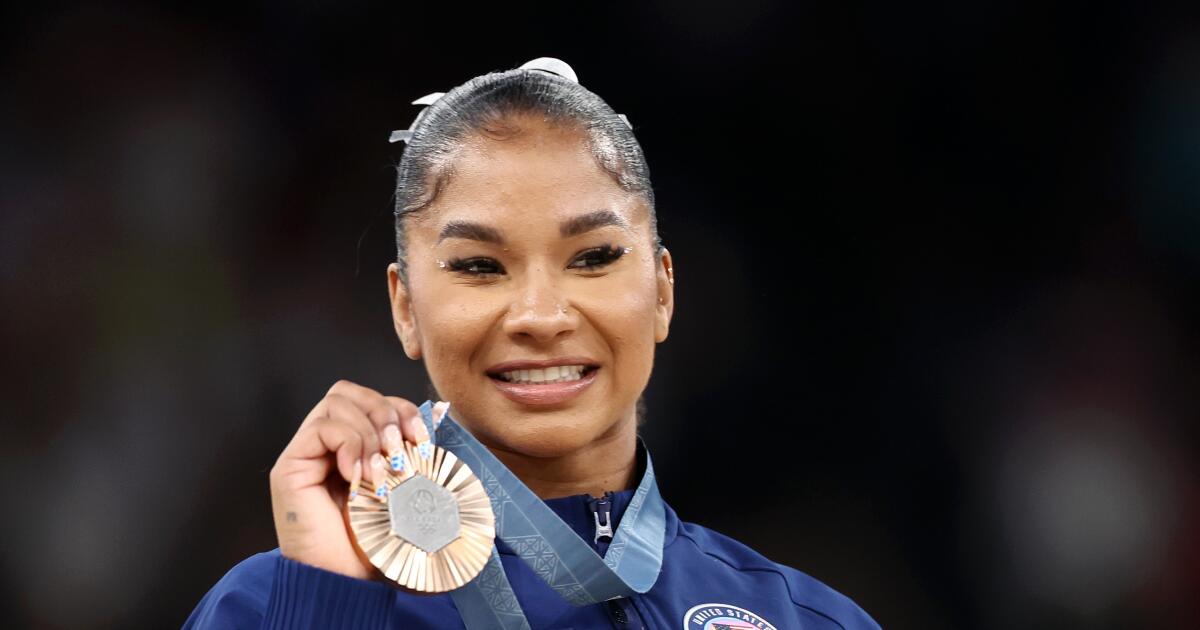
On Jan. 23, Swiss Federal Supreme Court sent the U.S. gymnast’s case back to the Court of Arbitration for Sport to re-examine the matter “on the basis of an audio-visual recording” that could provide evidence in Chiles’ favor, the court said Thursday in a news release.
“The Federal Supreme Court acknowledged that this new evidence may justify a modification of the contested award,” Switzerland’s highest court stated. “It referred the case back to the CAS for it to re-examine the situation, taking this new evidence into account.”
Chiles initially was deemed the fifth-place finisher in the women’s floor exercise final on Aug. 5, 2024, but was bumped up to third place after a judging inquiry placed by U.S. coach Cecile Landi gave Chiles an extra tenth of a point.
Days later, however, the CAS ruled that Landi’s inquiry was registered four seconds too late and that Chiles’ original score of 13.666 should be restored. That decision knocked the UCLA star back down to fifth place.
Chiles, with the support of the United States Olympic and Paralympic Committee and USA Gymnastics, filed an appeal of that ruling with Switzerland’s Supreme Court in September 2024. Her appeal maintains that the CAS had refused to allow video evidence she feels would show that Landi’s inquiry was filed within the required time frame.
In its Thursday statement, the Swiss court acknowledged that the video could “lead to a modification of the contested award in favour of the applicants, since the CAS could consider, in the light of this audio-visual sequence, that the verbal inquiry made on behalf of Jordan Chiles had been made before the expiry of the regulatory one-minute time limit.
“The Federal Supreme Court therefore partially overturns the contested award and refers the case back to the CAS for a new ruling, taking into account the probative value of the audio-visual recording in question.”
In a statement emailed to The Times on Thursday, the CAS agreed with the Swiss court’s ruling that “new evidence provided by the athlete after the CAS decision justifies a re-examination of the appeal.”
“During the Olympic Games, CAS renders sporting decisions in a demanding time frame,” the statement read. “CAS cannot reopen a closed procedure without the agreement of all Parties. Following the [Swiss Supreme Court’s] decision, CAS can now ensure a thorough judicial review of the new evidence that has since been made available.”
Maurice M. Suh, one of the attorneys representing Chiles, issued a statement Thursday praising the decision.
“We are delighted that the Swiss Federal Supreme Court has righted a wrong and given Jordan the chance she deserves to reclaim her bronze medal,” Suh said. “… We appreciate that Jordan will receive a full and fair opportunity to defend her bronze medal. She is ready to fight vigorously, and we look forward to helping her achieve that result.”
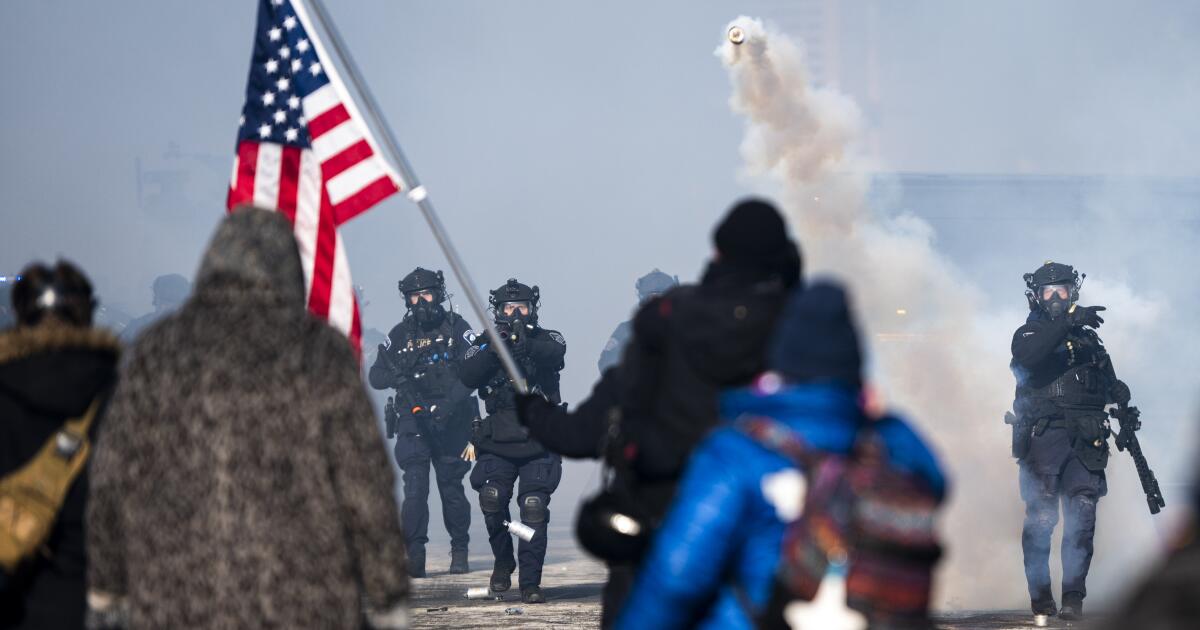
As federal immigration tactics face mounting legal and political scrutiny after a U.S. Border Patrol agent fatally shot a Minneapolis man over the weekend, Donald Trump announced Monday he was dispatching his border czar Tom Homan to Minnesota.
Until now, Border Patrol Commander Gregory Bovino has overseen the federal government’s immigration crackdown in Minnesota. But as the Trump administration’s Department of Homeland Security faces widespread criticism for its aggressive tactics since it launched Operation Metro Surge in December, Trump signaled Monday that he could be shifting strategy as he deploys Homan to the region.
“He has not been involved in that area, but knows and likes many of the people there,” Trump said of Homan on TruthSocial. “Tom is tough but fair, and will report directly to me.”
Trump’s deployment of Homan comes as a federal judge hears arguments Monday on whether to temporarily halt the Trump administration’s immigration enforcement in Minnesota. Meanwhile, Democratic senators plan to oppose a funding bill for DHS, raising the possibility of a partial government shutdown, and a small but growing number of Republicans have joined Democratic calls for a thorough investigation into the killing of Alex Pretti
The Department of Homeland Security said Pretti, a 37-year-old intensive care unit nurse, approached federal officers on the street Saturday morning with a 9 mm semi-automatic handgun and “violently resisted” when officers tried to disarm him. But cellphone videos recorded by eye witnesses contradict that account.
According to videos taken on the scene, Pretti was holding a phone, not a handgun, when he stepped in front of a federal agent who was targeting a woman with pepper spray. Federal agents pulled him to the ground and shot him.
Pretti is the second U.S. citizen in Minneapolis to be killed by immigration officers this month. On Jan. 7, Renee Good, a 37-year-old mother, was shot in the head by an Immigration and Customs Enforcement officer.
Secretary of Homeland Security Kristi Noem raised criticism this weekend when she said that her agency would lead the investigation into Pretti’s killing.
After federal officials denied Minnesota state investigators access to the shooting scene in South Minneapolis, local and state officials in Minnesota accused DHS of mishandling evidence. Late Saturday, the Minnesota Bureau of Criminal Apprehension asked a federal court to block Homeland Security and Justice Department officials from destroying or concealing evidence.
It is not immediately clear how Bovino’s role could change as Homan arrives in Minneapolis.
Noem, who has backed Bovino’s aggressive tactics, said Monday it was “good news” that Homan was going to Minneapolis.
“I have worked closely with Tom over the last year and he has been a major asset to our team,” Noem wrote on X. Homan’s “experience and insight,” she said, would “help us to remove even more public safety threats and violent criminal illegal aliens” off Minneapolis streets.
But some Democrats in Minnesota oppose sending Homan to Minnesota. Minneapolis City Council member Soren Stevenson said the move would only aggravate tension.
“They are losing the battle in people’s minds,” Stevenson told CNN, noting that people could see video evidence contradict federal accounts of border patrol agents’ actions.
“They’re losing this narrative battle, and so he’s sending in his top guard,” Stevenson added. “And really, it’s escalating, because we just want to be left alone. The chaos in our community is coming from ICE. It’s coming from this invasion that we’re under … and it’s got to stop.”
In a short interview with The Wall Street Journal Sunday, Trump criticized Pretti for carrying a gun during protest activity.
“I don’t like any shooting. I don’t like it,” Trump said. “But I don’t like it when somebody goes into a protest and he’s got a very powerful, fully loaded gun with two magazines loaded up with bullets also. That doesn’t play good either.”
The President declined to comment on whether the agent who shot Pretti had done the right thing. “We’re looking,” Trump said when pressed. “We’re reviewing everything and will come out with a determination.”
Democratic officials, including Minnesota Gov. Tim Walz and Minneapolis Mayor Jacob Frey, have called on federal immigration officers to leave Minneapolis. On Sunday, Trump suggested they could withdraw, but he did not give a timeline.
“At some point we will leave,” the president said. “They’ve done a phenomenal job.”
President Trump has an army of bootlickers that seems to stretch to the sunset. Many of them creep around on social media and almost certainly legions of them come from bot accounts on X.
Then there’s Bill Essayli. When it comes to saying anything to please a president with autocratic dreams, the former Assembly member is a bootlicking All-Star.
Att. Gen. Pam Bondi appointed him as the top prosecutor for the Central District of California in April with the explicit mandate to do Donald J. Trump’s will. His record so far has been unsurprisingly embarrassing and outlandish.
The guy can’t even call himself acting U.S. attorney anymore after a judge ruled in October he was “not lawfully serving” in the position since he was never formally appointed in the first place. So you’d think Essayli would hear the music and go back to being an inconsequential California legislator, but no! If there’s one thing Trumpworld has shown, it’s that once you’ve knelt to offer the Dear Leader a lick-and-shine, you better keep it up until your tongue’s as dry as Death Valley.
Which leads us to this weekend. And Essayli’s bootlicking-gone-wrong.
On Saturday morning, Border Patrol agents in Minneapolis shot and killed 37-year-old Alex Jeffrey Pretti after they gang-tackled him. He had tried to help a woman shoved to the ground by a federal immigration officer; an officer maced him and he soon collapsed — and shortly after, was dead. A Department of Homeland Security social media post justified what happened by saying Pretti seemed intent on “want[ing] to do maximum damage and massacre law enforcement” because he was in possession of a legally registered handgun. He never brandished it though. In fact, multiple videos showed Pretti clearly holding what looked like a phone as agents swarmed him.
Even though the incident was thousands of miles away from Los Angeles, Essayli had to flick his tongue — it’s the bootlicker way, after all.
“If you approach law enforcement with a gun, there is a high likelihood they will be legally justified in shooting you,” he snickered on social media hours after Pretti died. “Don’t do it!” He also reshared the posts of right-wing social media influencers Jack Posobiec and Andy Ngo who claimed Pretti, an intensive care unit nurse at a Department of Veterans Affairs hospital, was following “antifa” tactics.
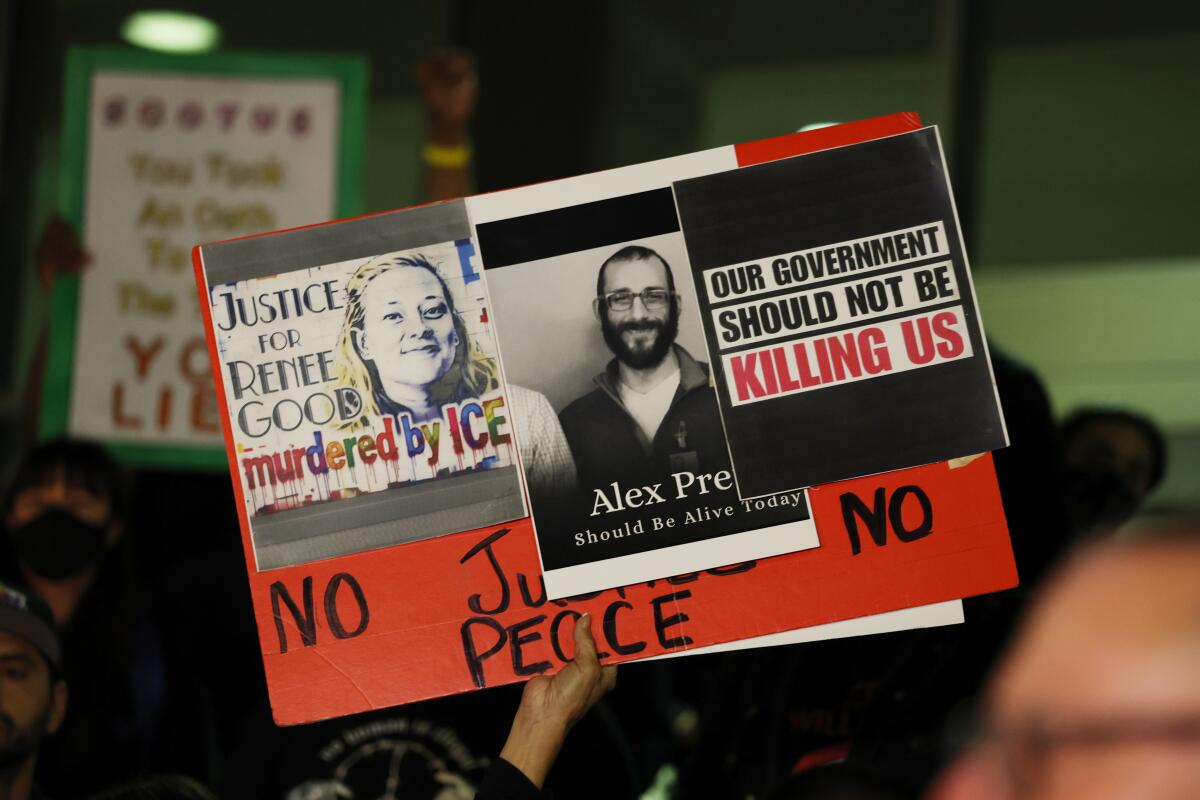
A sign is raised in support of Renee Good and Alex Pretti at a candlelight vigil during a peaceful protest at the federal building in Los Angeles on Saturday.
(Gina Ferazzi / Los Angeles Times)
It blasted his rant as “dangerous and wrong” on social media, adding that “responsible public voices should be awaiting a full investigation, not making generalizations and demonizing law-abiding citizens.”
The Gun Owners of America, a group that’s even more conservative than the NRA, called Essayli’s comments “untoward,” leading to the first assistant U.S. attorney — because bootlickers love their titles — to whine about the nonprofit “adding words to mischaracterize my statement” even though they directly quoted him.
When history looks back at all the cowards, sycophants, apologists, enablers, henchmen and other miscreants that made Trump possible, the bootlickers will have a starring role. The “I voted for this” tribe — even when this is cruelty and actions that are more those of a Macbeth than an American president.
The bootlicker is a universally reviled archetype. Their bread-and-butter is comforting the most comfortable by afflicting the most afflicted. They try to top fellow bootlickers with even more obsequious acts of flattery, hellbent on making the most damning line of Orwell’s “1984” come to life: “The Party told you to reject the evidence of your eyes and ears. It was their final, most essential command.”
The bootlicker’s moral compass is malleable. Wherever the Big Boss has moved the goal posts, that’s where he or she will kick the ball. If all goes to hell and America devolves into a rank dictatorship, beware the bootlicker.
The Trump regime currently has a lineup of them that’s like the bootlicking version of the 1927 Yankees.
In addition to Essayli, you have Stephen Miller, who kept calling Pretti an “assassin” and “domestic terrorist” on social media as if repeating the slurs would make them true. Vice President JD Vance, who described Renee Good, a woman shot and killed on Jan. 7 by an Immigration and Customs Enforcement agent in Minneapolis after she tried to drive away from him, as a “deranged leftist.”
Repeating what the big bootlickers say is a character trait. Call it the bootlicking trickle-down-effect.
There’s Border Patrol chief at large Gregory Bovino, a migra man a federal judge accused of “outright lying” during depositions over the actions of his team in Chicago this fall. During a news conference about the death of Pretti, Bovino claimed that the victim looked like he “wanted to do maximum damage and massacre law enforcement” — the exact same language used in the original Department of Homeland Security social media post on the killing. Hours later, Homeland Security Secretary Kristi Noem also impersonated a macaw, parroting Miller by accusing Pretti of “domestic terrorism.”
On Fox News on Sunday, FBI Director Kash Patel — the agency that in ye olden days would be leading an impartial investigation into what happened to Good, Pretti and other victims of la migra — told host Maria Bartiromo that “No one who wants to be peaceful shows up at a protest with a firearm. That led a skeptical-looking Bartiromo, who’s about as liberal as the Spanish Inquisition, to ask, “And how was he using that handgun in terms of threatening Border Patrol?”
A wide-eyed Patel could only say he trusted Noem’s version of the events.
Homeland Security Secretary Kristi Noem speaks during a news conference on Saturday to address an incident where federal immigration agents shot and killed Alex Pretti during operations in Minneapolis.
(Al Drago / Getty Images)
These are just some of the most prominent, powerful bootlickers stumbling right now on their own deceit and desperation.
Space prohibits me from quoting all the Republicans who last week were stalwart 2nd Amendment fans now saying Pretti had no right to carry his legally registered firearm to a protest even though they cheered on Kyle Rittenhouse when the Wisconsin teen showed up at one very openly carrying an AR-15, which he ended up using to fatally shoot two people who tried to assault him. There’s no evidence Pretti ever handled his firearm during the protest, let alone threatened federal agents with it.
Then there’s the bootlickers who cheered on the Jan. 6 rioters for rising up against what they saw as government tyranny, who insist the dozens of law enforcement officers injured that day were just deep-state agents. Today, those bootlickers are telling folks pushing back against Trump’s police state to respect it.
Obey or die.
The Roman philosopher Plutarch described flatterers in his immortal essay on the subject as “the plague in kings’ chambers, and the ruin of their kingdoms” that “prey upon a noble quarry.” So to Essayli, Patel, Noem and all the other bootlickers in Trump’s orbit, and to the relatively anonymous legions beyond, I’ll leave you with the warning that I saw in a meme that I’m sure Plutarch would endorse:
No matter how hard you lick it, the boot will never love you.