Elizabeth Holmes is the convicted fraudster at the center of Nathan Fielder and Lance Oppenheim’s hit documentary “You Can See Everything,” but for many viewers, it’s her longtime partner, Billy Evans, who has emerged as the film’s marquee villain.
Evans, 34, comes from a wealthy San Diego hotel family and stood by Holmes as her blood-testing startup Theranos collapsed and she was convicted in 2022 of defrauding investors. The couple has two children, 5-year-old son William and 3-year-old daughter Invicta. With Holmes serving an 11-year federal prison sentence in Texas, Evans is raising their children while pursuing a new biotech venture of his own.
In the film — warning: spoilers ahead — Evans comes across as controlling and increasingly volatile, taking over from Holmes as she whisks eggs, interrupting an interview to demand that the cameras be turned off and at one point casually brushing his teeth while standing stark naked in the shower, with Fielder awkwardly looking on. He speaks of Holmes dedicating her life to building “monuments of love” to him, and in one heated confrontation threatens to ruin the lives of people he believes have wronged her. “I’ve got vengeance in my heart,” he declares.
So who is Evans, how did he end up with one of Silicon Valley’s most infamous figures and what is he up to now?
What do we know about Evans’ upbringing?
Evans grew up in a wealthy, prominent San Diego family. His grandparents, William and Anne Evans, founded Evans Hotels in 1953, opening what became the Bahia Resort Hotel on Mission Bay. The family business later expanded to include the Catamaran Resort Hotel and Spa and the Lodge at Torrey Pines in La Jolla.
Evans attended Francis Parker School, an exclusive private school in San Diego, before graduating from MIT with a degree in economics in 2015. Despite his family’s wealth, Evans is neither an employee nor a shareholder of Evans Hotels, according to a statement the company issued Oct. 1.
His family reportedly had reservations about his relationship with Holmes at first. But his father, also named William, became a supporter — and even went undercover of sorts at her 2021 fraud trial. According to NPR, the elder Evans showed up for jury selection under the name “Hanson,” introducing himself to reporters as a concerned citizen who fixed up old cars for a living. His expensive loafers and a Starbucks cup bearing a different name eventually raised suspicions.
How did Evans meet Holmes?
The two met Oct. 7, 2017, at a Fleet Week party hosted by a venture capitalist in San Francisco, according to Evans. Theranos was already engulfed in scandal, though Holmes had yet to be criminally charged.
In the documentary, Evans recalls that he initially didn’t recognize Holmes because she was wearing a floppy hat, dark sunglasses and a Band-Aid on her face from a scratch by her husky. He says he fell in love with her almost immediately. When Fielder points out that he could barely see her face, Evans replies, “I guess that wasn’t what mattered to me.”
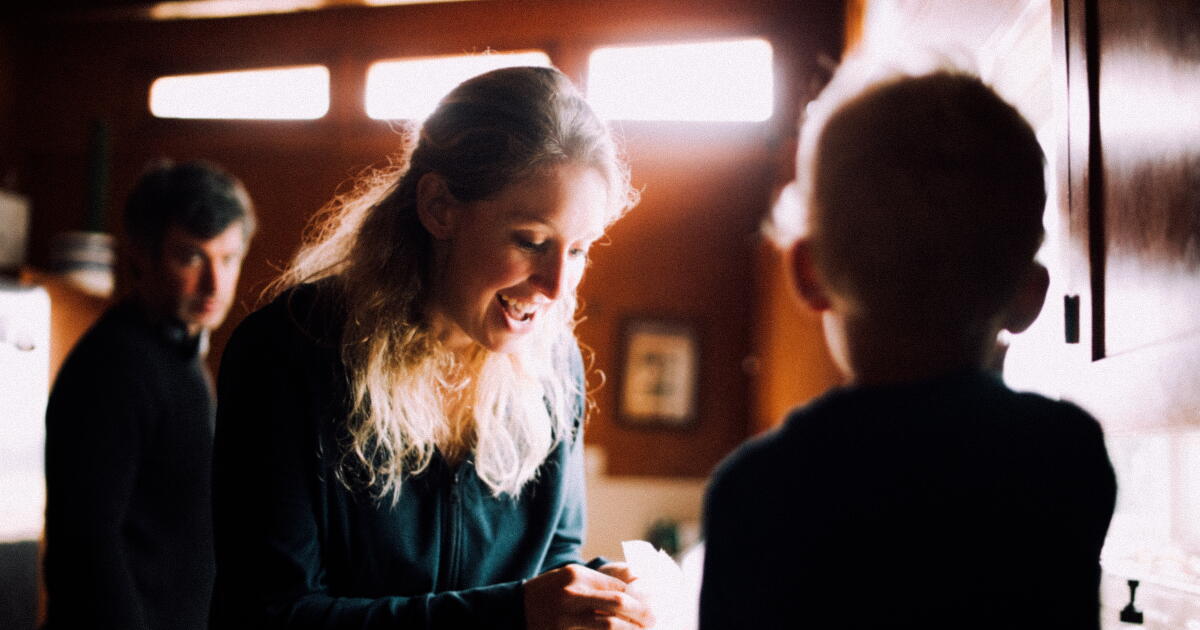
Nathan Fielder observes Elizabeth Holmes with her family in “You Can See Everything.”
(A24)
Holmes says the attraction was mutual. The two became friends and started dating about six months later, just weeks before she was indicted on federal fraud charges.
Fielder asks Evans whether he worried early on that Holmes might be conning him. “100%,” Evans replies, before asking what she would have had to gain from him. “Well, isn’t your family rich?” Fielder asks.
Pressed about the family’s money, Evans grows visibly uncomfortable and cuts the conversation short, saying he needs to get to a cousin’s event.
How is Evans managing life with Holmes in prison?
Since Holmes entered federal prison in May 2023, Evans has been raising their two children in Austin, Texas, bringing them to visit her at the federal prison camp in Bryan. Holmes is expected to transfer to a halfway house outside Austin in August.
In an appearance last week on the tech podcast “All-In,” Evans described the difficulty of the experience. “It’s hard because I’m building a business and I’m trying to free my wife from federal prison and I’m raising two kids,” he said.
Though Evans routinely refers to Holmes as his wife, Holmes said in a 2025 interview from prison with People that they had not legally married: “Maybe we’ll get married someday, but our bond is more than a piece of paper.” The two got engaged in 2018, reportedly at a Taylor Swift concert.
Is Evans trying to revive Theranos?
After graduating from MIT, Evans reportedly attempted to launch a medical concierge service before working at companies including LinkedIn and Luminar Technologies, which developed lidar systems for autonomous vehicles.
In 2022, he founded Haemanthus, a biotech startup developing technology to analyze biological samples using lasers. The company hopes to make diagnostic testing cheaper and more accessible — a mission that may sound awfully familiar to anyone who followed the rise and fall of Theranos.
Haemanthus has reportedly raised millions of dollars but has yet to release a commercial product. Eric Potma, a UC Irvine chemistry professor who consults for the company, told Wired this week that its technology is worth exploring despite significant technical challenges. “The engineers at Haemanthus are legit,” he said.
Holmes’ name does not appear in Haemanthus’ incorporation documents, according to Wired. But in the documentary, the couple is shown discussing plans for a new diagnostic venture, with Evans speaking openly about his desire to revive her original ambitions.
“The idea is to put the band back together and do it all again,” Evans tells Fielder.
How has Evans responded to ‘You Can See Everything’?
Evans and Holmes agreed to participate in the documentary in hopes of changing the public perception of her. Early in the film, Evans explains that they wanted to give the filmmakers extraordinary access to their daily lives, embracing what he calls “radical transparency.”
But Evans’ commitment to transparency had its limits. In the film, he repeatedly tries to shut down uncomfortable conversations and, in a meeting reenacted for the cameras, demands a share of the documentary’s profits — an arrangement Fielder fears could compromise the project’s integrity. Evans ultimately agreed to forgo payment.
“We felt Billy was trying to exert a lot of control over the process, and it sort of caused our communication to break down a little bit,” Fielder said during a Q&A after the screening. “The challenging thing is he’s sort of a conduit to her.”
Speaking on the “All-In” podcast before seeing the finished movie, Evans acknowledged that participating might turn out to be a mistake. “I haven’t seen it yet,” he said. “I might think this is like the dumbest thing I’ve ever done.”
Evans attended a private screening of the documentary on Oct. 16, followed by an off-the-record conversation with Bryan Johnson, the tech entrepreneur known for his elaborate efforts to reverse aging.
In a post on X the following day, Johnson called the film “a masterpiece” and described Evans as “magnanimous in conversation.” Though Johnson said he gave Evans every opportunity to defend himself and “strike back because Fielder roughed him up,” Evans declined.
Evans replied publicly, thanking Johnson for treating their conversation with care. “When the world is against you and the pain is so real,” Evans wrote, “it means so much to have people like you show such kindness.”
The ITV psychological thriller drama boasts a star-studded cast and concluded on Monday evening
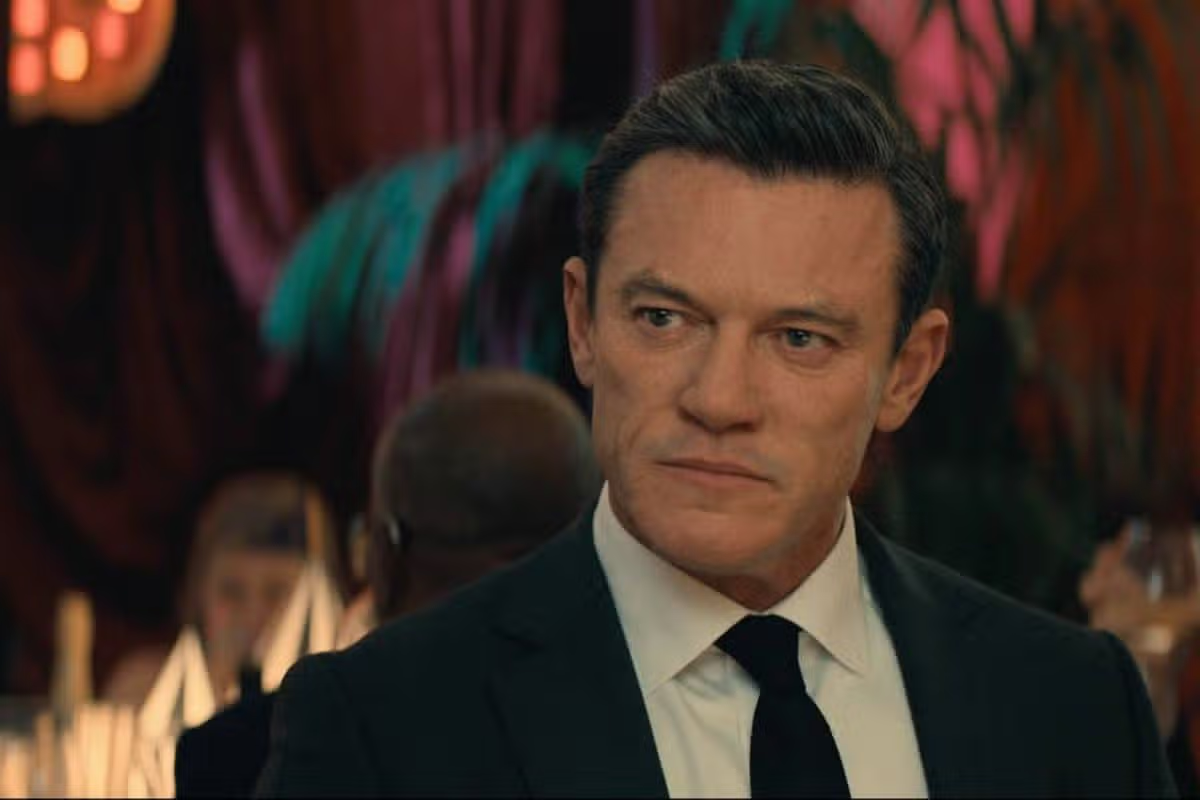
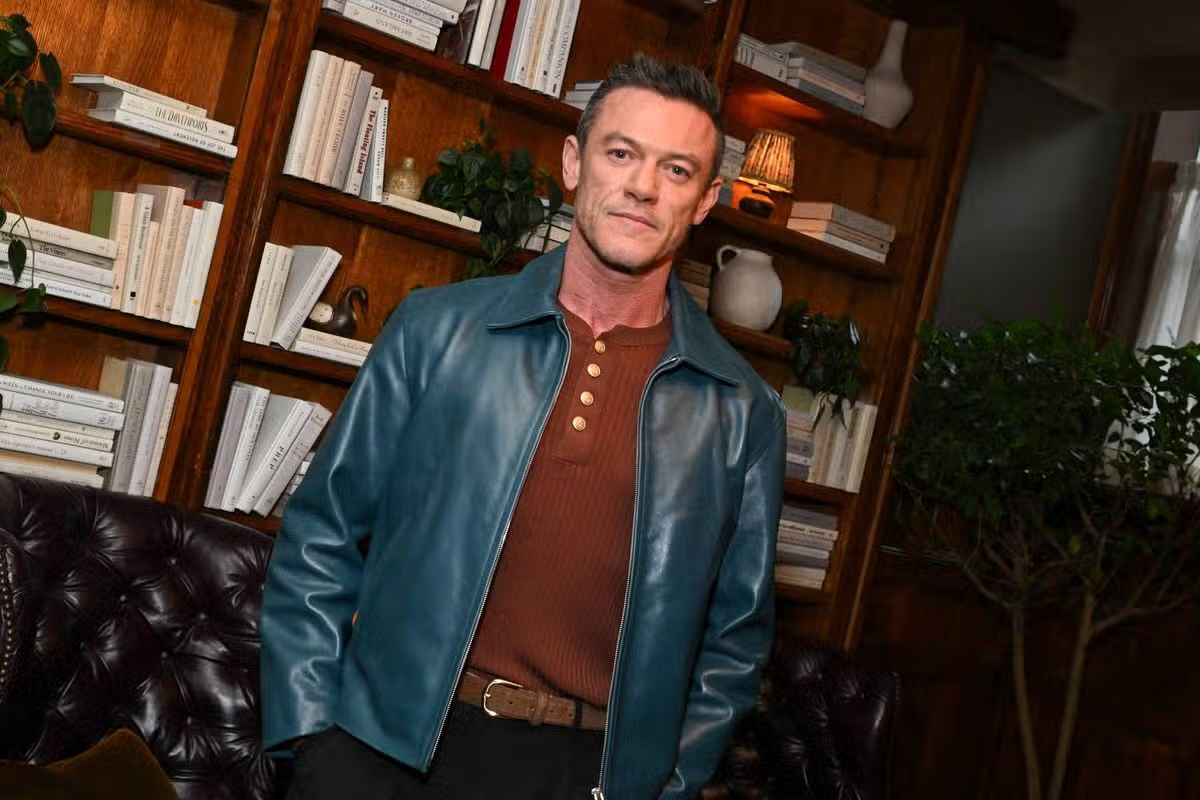
Luke Evans heads up the cast of ITV’s The Party. (Image: ITV)
Tensions were high as The Party concluded on Monday evening.
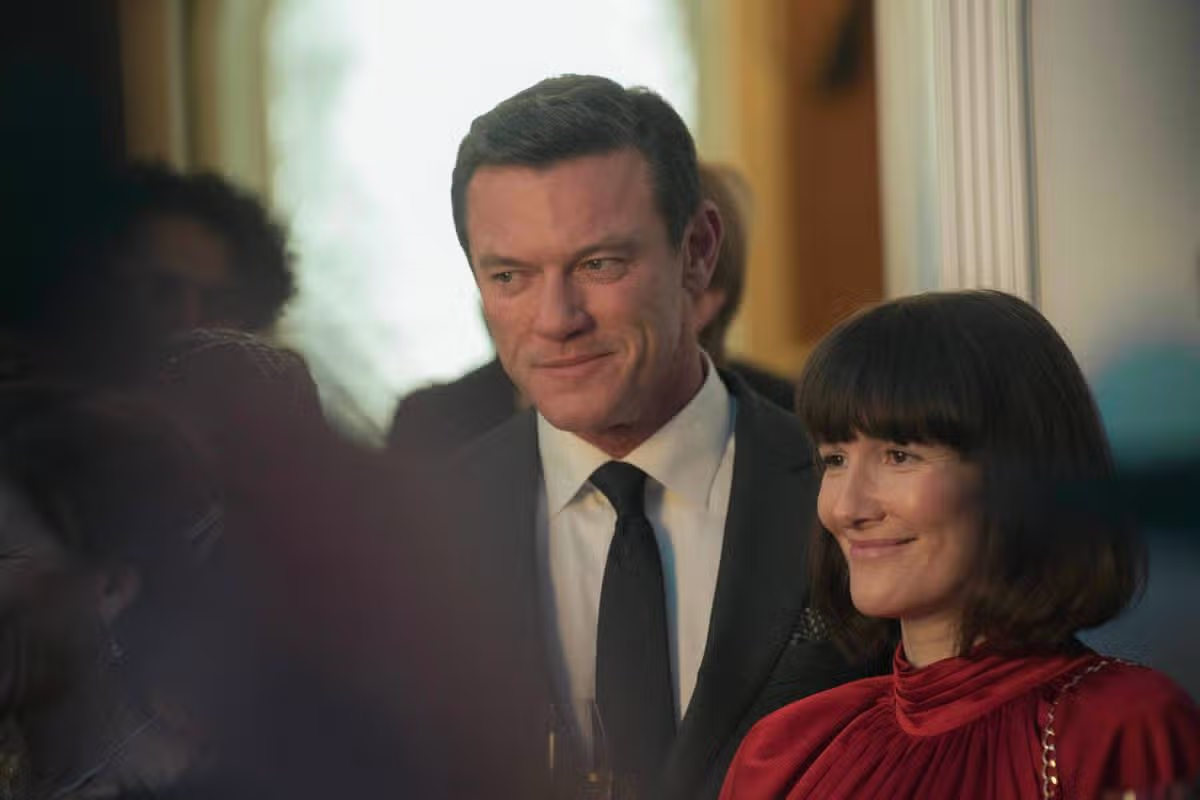
The ITV political thriller is adapted from Elizabeth Day’s bestselling novel and written for the screen by Sarah Solemani, who also stars. Made up of five episodes, The Party also stars Luke Evans as Martin Gilmour, a working-class boy who wins a scholarship to an elite boarding school and forges a lifelong bond with the wealthy, charismatic Ben Fitzmaurice, played by Tom Cullen.
Years on, and married, Martin attends Ben’s lavish birthday party as Ben weighs a run for the Conservative leadership, and fears the attendant publicity could expose secrets from their past, with tragic consequences.
The twisty story moves between the party itself, a police investigation and flashbacks to the pair’s earlier lives. It was revealed that the pair had been involved in a car crash when they were teenagers, which killed Ben’s twin sister.
While Ben was behind the wheel, three times over the limit, Martin took the fall after being coerced by Ben’s father, Lord George Fitzmaurice (Douglas Hodge), resulting in a huge payoff each year. Although this happened decades ago, the tragic event was the catalyst for the shooting, as a journalist revealed she knew the truth and was about to expose Ben after he had shared his plans to run as the next conservative leader.
In the final episode, Martin pulled a gun on Ben as he accused him of ruining his childhood and leaving him broken as an adult. In the end, Ben talked his friend down and took the gun off of him, although after admitting he always loved him, he shot himself in the head.
Ben’s wife, Serena (Lydia Leonard), heard the gunshot and saw Martin holding the gun, which he took from Ben when he fell to the floor. She believed Martin had shot her husband and told the police.
Ben didn’t die, and Martin was arrested before being later released by the police. However, a police detective was adamant that they wanted to investigate the historical car crash further. Martin realised that the time had come to walk away and put some distance between himself and the Fitzmaurice family. After visiting Ben at the hospital, he left and began facing the world with fresh purpose.
As he walked through the park, he saw a male couple with a newborn baby in the park, a smile played around his lips, as though he’d had a glimpse of the happiness that could be his at some point in the future.
Despite the gripping final episode being full of twists and turns, The Party viewers were left questioning the “abrupt” ending and accused the drama of leaving the plot “incomplete”.
Taking to X, one viewer fumed: “Is that it? What a waste of my time… #TheParty”, while a second agreed: “What a waste of 5 nights #theparty.”
A third asked: “#theparty is that it?”, while another chimed in: “What a **** ending. So many unanswered questions and loose ends #TheParty.”
“#TheParty the night went on for weeks and now it’s getting wrapped up quicker than Poirot says no no mon ami !”, joked another
In the mindbending documentary “You Can See Everything,” comedian Nathan Fielder and professed inventor Elizabeth Holmes sit in her beach house staring at each other like gunslingers. Fielder is the creator of the TV series “The Rehearsal” and “Nathan for You” who constructs discombobulating sham realities that include bogus businesses such as Dumb Starbucks. Holmes is the former billionaire CEO of Theranos who pretended she’d built a revolutionary blood testing machine to squeeze investors for a few dollars more.
Each is an expert in the con. But Fielder is deadpan and cold where Holmes is earnest and warm — and he’s been nominated for Emmys while, in May of 2023 when the film begins, she’s about to serve an 11-year sentence in federal prison. As the camera cuts between close-ups of his narrowed eyes and her big, blue ones, Fielder tries to suss whether he can trust the famous fibber to be honest with him. The showdown is riveting.
“You’re being real right now?” Fielder asks, dubious.
Holmes beams. “I’m always being real,” she swears with a smile.
Her charm hits Fielder in the gut. His face stays neutral yet you can see his own confidence bleed out across the screen.
Co-directed by Fielder and Lance Oppenheim (“Primetime”), “You Can See Everything” is the closest Fielder has come to making a traditional documentary. A thrillingly cringe-tastic interviewer, he blurts out blunt questions like a bungee jumper leaping off a bridge, including asking Holmes’ romantic and business partner Billy Evans, the heir to a San Diego boutique hotel chain, whether it’s possible a woman convicted of fraud might be with him for his money.
At nearly three hours long, “You Can See Everything” won’t bore you for a minute. The hook is right there in the title, Fielder’s challenge to the audience: Here’s how Holmes held up to his scrutiny — do we think she’s telling the truth? But be alert. Fielder remains a trickster. One shot in particular proves you can see everything while being blind to what you’re actually watching.
In the first half of the movie, Holmes and Evans, the father of her two young children, give the small crew complete access to their lives during her last weeks of freedom, including inviting Fielder to sleep in their guest bedroom. It’s an act of “radical transparency,” Evans says. As evidence, there’s a fully nude shot of Evans in the shower, testifying to the intimacy the subjects claim they’re granting the team and the confidence they have that the documentary will make them look great. (Evans also boasts that he’s “excellent” in the sack.)
Holmes maintains both her innocence and her eerie smile, a rictus of empathy. She constantly nods, subliminally snake-charming the listener into a sense of agreement. That assessment might be fair or it might be her reputation making you over-analyze her tics. Doubling down, she even insists she’s never told a lie in her life — a claim that momentarily leaves Fielder at a loss for words.
Yet at times, Holmes really does appear to be sincere. Once she surrenders herself to the Bryan Federal Prison Camp in Texas (where, in an unmentioned coincidence, Epstein collaborator Ghislane Maxwell is also incarcerated), the tone shifts into film noir as Fielder struggles to reconcile Elizabeth Holmes’ dual identities. Is she the sweet-natured scientist, the only version of her he’s ever met, or a femme fatale who may still be running a scam?
“It’s personal,” Fielder says of his fixation. How frustrating that he of all people — the dark prince of pranks — may be Holmes’ latest patsy. Composer Ari Balouzian borrows bits of Bernard Herrmann’s violin score from “Vertigo” while cinematographer David Bolen makes the audience hold its breath by framing an image of Fielder and Holmes like they might kiss.
When the movie’s style gets weird, that’s when Fielder is most in his wheelhouse. Stop reading now if you want to preserve the surprise. Micro-analyzing his encounters with Holmes, he reenacts them with an actor, Amanda Seyfried, whose emotional intensity blows into the film like a gust of fresh air. Seyfried, of course, won an Emmy and a Golden Globe for playing Holmes in the 2022 miniseries “The Dropout.” The twists to come, however, feel as much like last year’s naughty hit “The Housemaid,” the domestic thriller in which Seyfried played a shady wife with a marriage made of lies.
Evans initially seems to think they’re participating in a project closer to Netflix’s glossy portrait of Meghan Markle and Prince Harry. The couple doesn’t know much about humor, pop culture or Fielder himself. Fumbling to figure out what makes him tick, Evans attempts to neg the provocateur as someone who lacks the passion to think differently. (Evans may also be the person who used Holmes’ social media account to write a flattering post calling JD Vance “Lisan al-Gaib,” revealing he’s entirely missed the point of “Dune.”)
But thinking differently is Fielder’s awkward superpower. Sooner or later, all of his projects circle around to his concern that he’s simply wired to be unpleasant. His interactions with Holmes are pure cringe comedy, like when she starts to cry perhaps a bit on cue and he stiffly sputters, “Do you want, like, a tissue?” For the record, he brings her one.
As a viewer, the biggest strike against Holmes is this documentary’s very existence. Whether or not you think she’s guilty of fraud, she is about to be separated from her infant and toddler until they’re in grade school. Who on Earth would genuinely want Fielder, the human equivalent of a skunk, to crash their last moments with their loved ones as he does his darnedest to stink up the place?
Fielder is most comfortable as the film’s villain, shooting himself lurking in the couple’s house like “Halloween’s” Michael Myers. At times, his presence does feel monstrous. In one scene, he needles Evans about whether he thinks his soulmate has ever lied to him while Holmes is on the phone in the next room, tearing up as she asks how often she’ll be able to bathe in prison.
The film doesn’t drill into the technical details of Theranos beyond one dizzying scene where Fielder tries to pin Holmes down on exactly what she meant when she said her machine can run hundreds of different tests. She means it just as I would if I bragged I can benchpress a beer keg — that is, once I strength-train beyond my piddly 5 lb dumbbells.
Instead, it tilts into becoming a caper flick as Seyfried’s commitment to understanding her character’s motivation inspires the actor to invite herself along. The drama they uncover is psychological, as befits an era where Silicon Valley CEOs are closer to cult leaders than engineers, making their cash from being televangelists for their IPOs. And both are attuned to the moments when Evans lets his aggravation slip. One scene is a doozy.
Ultimately, suspicion reigns. “You Can See Everything” is an absorbing study of public presentation and private doubts, a documentary that asks more questions than it answers. I hope Fielder will smile and nod approvingly at me if I say I left the film distrusting him, too, especially Seyfried’s re-staging of a long monologue Holmes delivered in prison where recording devices aren’t allowed. Can we believe that Holmes really did say, “I’m tired of having other people speak for me,” or was that laugh line written by the master manipulator himself? I’m now as paranoid as he is — and what a pleasure.
Nathan Fielder would rather you not read this article. At least not until you’ve seen his new movie.
He has a point.
Now in theaters, “You Can See Everything,” the nearly three-hour documentary Fielder co-directed with filmmaker Lance Oppenheim about convicted Theranos founder Elizabeth Holmes, is full of head-spinning twists and turns best left unspoiled, and the filmmakers have gone to extreme lengths to keep them that way. At its secret premiere at the Telluride Film Festival last month, audience members were required to lock their phones in pouches and warned that security guards with night-vision goggles would be watching for anyone trying to record the screening. Afterward, Fielder pleaded with the crowd to keep the film’s biggest surprises to themselves.
Holmes was convicted in 2022 of defrauding investors in her failed blood-testing company and sentenced to more than 11 years in federal prison. Fielder and Oppenheim began filming her and longtime partner Billy Evans, an MIT graduate and heir to a family-owned San Diego hotel business, shortly before she reported to prison in 2023, gaining extraordinary access to the couple and their two young children.
Holmes and Evans welcomed the cameras, hoping they would help vindicate her. But the closer Fielder and Oppenheim got to the couple, the harder it became to distinguish candor from calculated performance. Fielder, whose series “Nathan for You” and “The Rehearsal” put real people through elaborate, often uncomfortable experiments, began to wonder whether the tables had been turned.
“I really am struggling to this day to understand exactly what I experienced in this,” Fielder admitted during a post-screening Q&A at Telluride. “I don’t quite know what I went through.” He said he hoped audiences might help him make sense of the “glitchy feeling” it left in his head.
Having seen the film twice, we’re not entirely sure we can help him.
In deference to Fielder’s wishes, this is your last chance to turn back: Major spoilers follow. For those still with us, here are 10 of the film’s strangest moments — by no means the only ones — along with a few clues from Fielder himself about how they came to be.
Evans takes ’radical transparency’ too far
Evans has a theory about why the world sees his partner as a monster: Nobody really knows her. “In the absence of knowing somebody, it’s really easy to make them feel other and scary,” he tells the filmmakers. His proposed solution is “radical transparency” — a familiar Silicon Valley mantra with an ironic resonance given Theranos’ notorious culture of secrecy. The filmmakers are allowed virtually unlimited access to the family’s life, with Fielder even invited to move into their rented house in Del Mar, near San Diego. In one scene, Evans stands completely naked in the shower, brushing his teeth with the bathroom door wide open and the cameras rolling, as Fielder stands awkwardly nearby. At Telluride, Fielder, who had initially planned to stay behind the scenes, admitted he was still perplexed by the couple’s openness. “I’m a weird guy — why do they want me there?” he said. “That messed with my head a little bit.”
Fielder observes Holmes and her family in a scene from the documentary “You Can See Everything”
(A24)
Theranos, the sequel
A federal fraud conviction apparently hasn’t ended Holmes’ ambitions to revolutionize medical testing. Before heading to prison, she and Evans begin laying plans for a new venture involving lasers and artificial intelligence that Evans describes as “2.0” — a chance, he says, “to put the band back together and do it all again.” Holmes declares, “From wherever I am, I’m going to continue to work inventing, even if it’s inventing from a cage.”
Holmes claims she’s never told a lie
For someone convicted of defrauding investors, Holmes has a remarkably uncomplicated view of her own honesty. Asked by Fielder whether she’s ever told a lie in her life, she replies, “I don’t think so.” Pressed — surely she’s pretended to be sick to get out of a party? — she concedes she has, explaining that she thought he meant the criminal case against her. In a scene that became the centerpiece of the film’s teaser trailer, Holmes fixes Fielder with an unwavering stare. “Why would I deceive you?” she asks. “There’s no reason for me to do that.” When Fielder asks whether she’s being real with him, she doesn’t miss a beat: “I’m always being real.”
The Theranos device gets a second look
Holmes hauls out of storage the infamous Theranos device, the machine that helped bring down her company. “So this is the famous scam device,” Fielder says. “It is not a scam device,” Holmes replies. When she insists the machine can perform any medical test, Fielder finds himself drawn into an absurd debate over the meaning of the word “can.” Did she mean it could actually perform those tests, or that it theoretically would once the necessary chemistry had been developed? The man who has made a career out of baffling other people seems genuinely baffled himself, reduced to explaining the word “can” to the founder of Theranos.
Holmes and Evans enter federal court in 2022.
(Nic Coury / Associated Press)
Elizabeth Holmes meets Abbott and Costello
Still trying to make his point, Fielder turns to Abbott and Costello. He plays Holmes the classic “Who’s on First?” comedy routine — two people hopelessly talking past each other. Holmes watches politely and says she finds it funny. But she seems to have missed the central joke: The first baseman’s name is actually Who. “I didn’t pick it up,” she admits. Fielder’s attempts to explain the joke and why he showed it to her get him nowhere. Evans, watching the exchange, regards his wife’s difficulty following the joke as further evidence that her mind simply works differently from everyone else’s.
Fielder gives Holmes an escape kit
On the morning Holmes is due to report to prison, Fielder arrives with a parting gag gift: hair dye and glasses, in case she’d prefer to disguise herself and flee the country. Fielder is famous for excruciatingly awkward deadpan comedy, but Holmes’ parents are there, the family is preparing for an emotional goodbye and he seems to realize almost immediately that he has misjudged the situation. “I didn’t know your parents would be here,” he says, assuring everyone that it’s “just kind of like a joke.” The more he tries to explain himself, the more uncomfortable things become. “Maybe not appropriate for the moment,” he concedes.
Amanda Seyfried becomes a surprise co-star
Seyfried won an Emmy for playing Holmes in Hulu’s “The Dropout,” which Holmes had avoided watching for fear it would be too emotionally disturbing. Fielder persuades Holmes to watch it for the first time, on a laptop in the couple’s bed. She soon breaks down in tears and asks him to turn it off. Later, Fielder visits Seyfried at her apartment and shows her footage of Holmes watching her performance. So we watch Seyfried watch Holmes watch Seyfried playing Holmes as Fielder watches her. And things only get weirder from there.
At Telluride, Fielder said the filmmakers initially doubted Seyfried would want to participate. But after a brief phone call, she invited them over and agreed to be filmed. Neither side knew where things would lead. “It just actually evolved in that organic way, which was really exciting,” Fielder said.
Seyfried as Holmes in a scene from Hulu’s “The Dropout.”
( Beth Dubber / Hulu)
Seyfried plays detective
Seyfried soon finds herself reenacting Holmes’ conversations with Fielder as he tries to make sense of their encounters. She becomes so invested that she joins Fielder on a visit to Evans’ home, hoping she might get him to open up in ways Fielder can’t. “I feel like an undercover cop right now,” she says, clearly getting a rush. There, after meeting the couple’s children, she unexpectedly winds up on a prison phone call with Holmes herself. With only two minutes for the family to talk, Seyfried suddenly seems mortified to be intruding. “I’m so sorry — I don’t want to ruin your two minutes with your beautiful family,” she says. Fielder, naturally, has a camera running.
Evans takes control of the narrative
With Holmes behind bars, Evans seems determined to manage her public image himself. Armed with power of attorney, he takes over her verified X account, posting messages in her name, some of which sound nothing like the carefully controlled Holmes, including one telling another user to “f— off.” “There’s just so much trust that most things I don’t really consult her on,” Evans says at one point. “I know what she’d want.”
Evans’ attempts to steer the documentary itself begin even before Holmes reports to prison. In a meeting later reenacted in the film, after Holmes leaves the room, he raises the subject of money with Fielder, Oppenheim and executives from A24, the studio behind the film, demanding a share of the profits. Fielder says A24 reluctantly agreed, leaving him worried that the integrity of the project may have been compromised. When Holmes later insists she has no financial interest in the film, Fielder is taken aback. Either she’s “fully sincere,” he tells Seyfried, or “she honestly might be the most manipulative person that’s ever lived.” (The film notes at the end that Evans later changed his mind and decided not to accept payment.)
On Oct. 5, Holmes’ X account promoted the documentary with a tantalizing warning: “I really don’t think you are ready for this doc.” Whether that was Holmes speaking or Evans speaking for her is anyone’s guess.
Seyfried confronts Evans
Things turn ugly during that same visit to Evans’ home. A conversation about conjugal visits and Evans’ sex life gives way to a heated argument over his use of Holmes’ X account. Evans brings up the social media backlash Seyfried faced for criticizing Charlie Kirk after his shooting death, then attacks her portrayal of his partner in “The Dropout.” Soon he’s threatening vengeance against people he believes have wronged Holmes. “I’m going to ruin their lives,” he declares. Asked whose lives he means, Evans replies, “F—ing everyone. I’ve got vengeance in my heart.”
Later, away from Evans, Seyfried offers her own assessment: “He is bat— crazy.”
The school visit was followed by the event in Dolgellau’s Eldon Square, where crowds had gathered despite the persistent rain.
Most of the supporters were local, but some had travelled significant distances to be at the event.
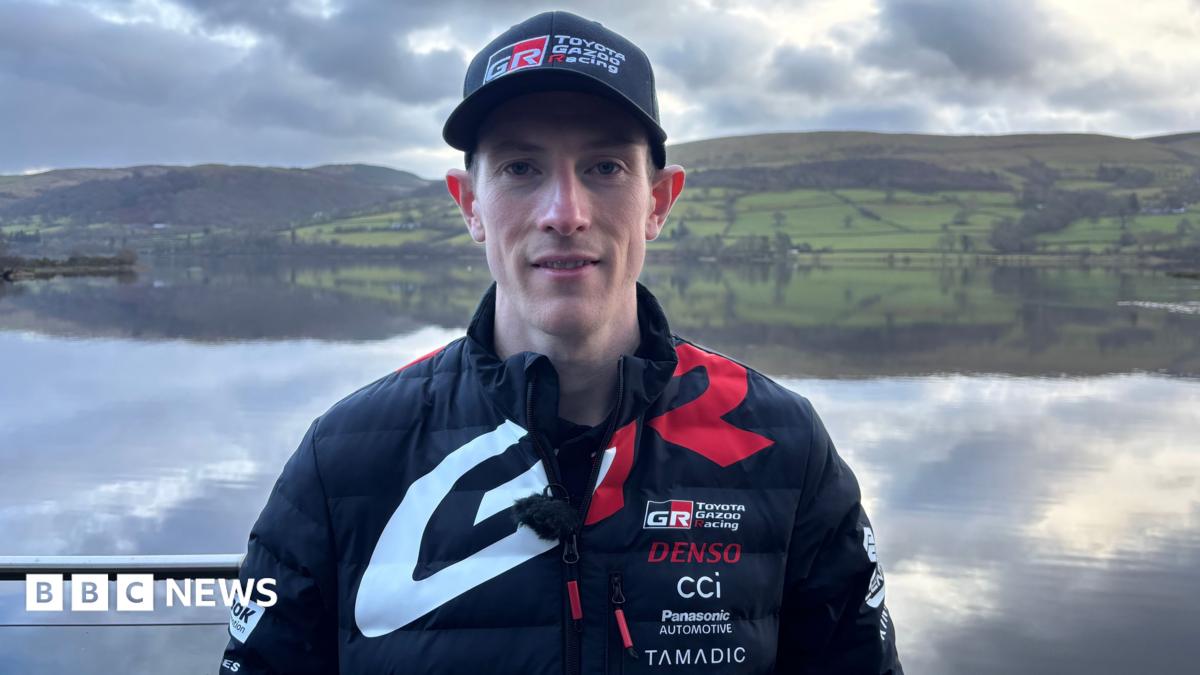
When Elfyn Evans spoke from the podium, he thanked his family for supporting him throughout his career, saying his grandfather had “taught me to drive probably far too early”.
Wyn Williams from Llanrwst and Neil Pringle from Betws-y-Coed were in Sardinia when Evans clinched the championship.
Williams said the celebration was “the icing on the cake after being in Sardinia”.
Pringle added that the evening was “fantastic” and that the first minister’s presence “shows what this means to Wales”.
“This is for Elfyn, his family and the country.”
Heledd Edwards travelled from Talerddig to Dolgellau and described Elfyn’s perseverance as an inspiration.
Several members of Elfyn’s family were also in the crowd. His aunt, Lowri Edwards, had travelled from Glan Conwy, saying she was immensely proud to have a world champion in the family.
“We’re absolutely thrilled, to be honest. He’s come so close and been terribly unlucky, finishing second five times – we’re absolutely thrilled.”
Dolgellau Town Council helped organise the celebration, with Deputy Mayor Nia Wyn Evans, saying: “We are absolutely thrilled and delighted to be able to welcome Elfyn back as a world champion; there’s a real buzz in the town.”
The Party stars Luke Evans and Sarah Solemani play husband and wife in ITV’s gripping new five-part drama
Luke Evans and Sarah Solemani have opened up about playing husband and wife in The Party(Image: ITV / World Productions)
The Party stars Luke Evans and Sarah Solemani have opened up about playing husband and wife in ITV’s gripping new drama.
The pair portray couple Martin Gilmour and Lucy Farni and Luke, who also serves as executive producer, originally conceived the idea of bringing Elizabeth Day’s widely praised novel to the small screen.
Showrunner and actress Sarah was subsequently approached by the team behind The Pembrokeshire Murders, World Productions, to adapt Elizabeth’s critically acclaimed novel of the same name.
Reflecting on his collaboration with Sarah, Luke said: “The wonderful part of this whole project, of course, is that very soon after she’d written a few episodes, she expressed an interest in playing Lucy.
“I thought it was just absolutely perfect. I thought, ‘What a brilliant thing. Now we’ll have the writer on set’.”, reports Wales Online.
“Any changes we want to make, or any conversations we want to have, there won’t be any phones being picked up. We can just literally go, ‘Sarah, what do you think of this?'”.
“That is exactly what happened. It was such a rewarding experience. She’s immensely talented in so many different ways, and it was just wonderful to see her just fill this character, and also to build this on-screen relationship together. I loved every day I was on set with Sarah. It was really special.”
Sarah has since spoken out about her own experience of collaborating with Luke on the project. She revealed: “It was wonderful. I hadn’t worked with him before.
“I was making a show with David E. Kelley, starring Nicole Kidman, and I asked Nicole about him because they had just done Nine Perfect Strangers together.
“I was really blown away by him in that – it was probably the performance that made me think ‘I would love to work with this actor’. And so, I asked Nicole about him, and she said he was not only just a brilliant actor, but he was great fun. That counts for a lot.
“When you’re jumping into bed with someone on a production and spending a lot of time together, it’s important to have a good vibe on set – and he really had that.
“So it was Nicole’s recommendation that made me trust that Luke would be excellent – and he was. He was very grateful for the scripts and really dedicated to making the best story we could.”
The Party continues on Tuesday, October 13 on ITV1 and ITVX at 9pm
San Francisco 49ers receiver Mike Evans may have earned a spot in the trash-talking hall of fame on Sunday without even trying.
Or so he says.
Late in the second quarter of the 49ers’ 32-29 victory in Seattle, Fox Sports cameras showed Evans and Seahawks cornerback Trevon Diggs jawing after a play. In one of the season’s most meme-able moments so far, Evans put his hands on Diggs’ shoulder pads and turned the two-time Pro Bowl selection around to look at his name, as if to say, “Who are you?”
Diggs, a seven-year veteran who led the league with 11 interceptions in 2021 as a member of the Dallas Cowboys, appeared to be offended and shoved Evans in the facemask.
Retired cornerback and renowned trash-talker Richard Sherman, who played for both the Seahawks and 49ers during his 11-year career, gave Evans some high praise on X.
“Mike Evans Checking to see the name on the back of the Jersey is an all-time Gif and trash talk moment that I wish I would have thought of,” Sherman wrote.
Evans’ move was very similar to one from a 2019 viral clip in which Toronto Maple Leafs star Auston Matthews checked the back of then-career minor leaguer Scott Sabourin of the Ottawa Senators during a preseason game. (Sabourin would go on to play in 74 NHL games for four teams over seven seasons.)
But Evans, a five-time Pro Bowler in his first season with San Francisco after 12 years with the Tampa Bay Buccaneers, told reporters after the game that he was just trying to figure out his vocal opponent‘s identity.
“I was blocking him until the whistle, and then he said something, like I’m doing extra, something like that,” said Evans, who finished with seven catches for 113 yards and one touchdown. “I didn’t know that was him at first, because I played against him a few times and we always been cool, you know? He was a good player. I honestly didn’t know it was him, because in the helmet, it’s hard to tell sometimes.
“And we were just talking trash, and I think I like pushed him and then I was like, ‘Who are you?’ And I looked to make sure. ‘Oh, it’s f— Diggs.’”
Hmmmm, Diggs was a good player? Maybe Evans is a trash-talking master after all.
Welsh actor Luke Evans is currently starring in ITV psychological thriller The Party
Luke Evans is starring in ITV’s The Party(Image: Variety via Getty Images)
Hollywood actor Luke Evans admits he was once ‘very isolated’.
The Welsh actor, now 47, has appeared in Hollywood films like Fast & Furious and Beauty And The Beast and TV dramas including The Pembrokeshire Murders. He can currently be seen in the latest ITV thriller The Party.
But the star, who was raised in Aberbargoed in the South Wales Valleys and started out in his career in West End musicals like Avenue Q and Miss Saigon, hasn’t had it easy and has previously spoken out about how he contemplated suicide during his teenage years.
As The Party, based on the novel by Elizabeth Day, unfolds on ITV and ITVX, we examine Luke’s life beyond the cameras.
Feeling ‘very isolated’
Luke has previously discussed reaching a “dark place” during his adolescence when he faced challenges growing up as gay while being part of the Jehovah’s Witness community, reports Wales Online.
In the third instalment of the BBC series, Alison Hammond’s Big Weekend, Luke revealed his experiences of bullying and the clash between his sexuality and faith, which led him to a “dark place” where he considered taking his own life.
“I knew I was different, I didn’t know I was gay,” he explained. “I just knew I was different from the ages of 7, 8, 9, you know, very young.”
He continued: “I also didn’t have anyone outside the religion to be able to confide in or ask what was wrong. I’ve been baptised in the religion and that meant if I chose to be openly gay, I would be cut-off from everyone and everything I knew.”
Luke acknowledged the situation was “very complicated” and “very confusing”. He said: “I felt very, very isolated.”
Alison then asked if he had reached a “dark place”, to which Luke replied with: “Oh god, yeah. My teenage years, when it was clear in my mind who I was, and I was just… I had no-one to talk to. It was a very difficult position, place to be. Yeah, I contemplated suicide for sure.”
Love life
Luke previously dated Spanish model and actor Jon Kortajarena. Jon has fronted advertising campaigns for prestigious brands including Just Cavalli, Versace, Giorgio Armani and Guerlain, and in 2009 Forbes placed him eighth on The World’s 10 Most Successful Male Models list.
Luke is currently in a relationship with entrepreneur Fran Tomas. Speaking previously to People magazine, Luke described his boyfriend, whom he has been with since 2021, as his “best friend”.
“We’re a great team in life. He’s my best friend. He’s the calm, deep waters, and I am the rushing, bubbly water. And between the two of us, we can solve anything,” he told the publication.
What is The Party about?
Elizabeth Day’s bestselling 2017 psychological thriller has been adapted into a five-part series following Martin Gilmour ( Luke Evans ), a scholarship pupil who escaped poverty to enter British high society after befriending the affluent, magnetic Ben Fitzmaurice at boarding school.
The delicate relationship shatters during Ben’s extravagant 40th birthday celebration at his newly acquired grand country manor. The following morning, Martin discovers himself inside a police station facing questioning over a disturbing incident that occurred overnight.
For what must have felt like an eternity, Elfyn Evans feared history was repeating itself yet again.
At 3.05pm local time in Sardinia on Sunday, Evans could only stand and watch as another world rally title looked to be slipping from his grasp.
Evans was preparing in his head yet another runners-up speech – it would be his sixth – as he waited for Oliver Solberg to cross the finish line and be crowned world champion.
How could this be happening again?
Of the five previous times he had been championship runner-up, three had been decided on the final day and twice after he had taken a lead into the final event.
But at 3.06pm, for once the motor-racing gods were on his side.
With just two turns to go on the final stage of the final round and with victory in sight, Solberg somehow careered off the track into the Sardinian sand to hand Evans his first world title.
In the most dramatic of finishes, the 37-year-old from north Wales became the first British winner of the of the World Rally Championship (WRC) in 25 years.
Only two British men had taken the title since the WRC’s 1977 inception, matching the exploits of legendary pair Colin McRae (1995) and Richard Burns (2001).
Louise Aitken-Walker was Britain’s first world champion when WRC ran a women’s version in 1990.
PHILADELPHIA — Safety Kam Curl did not see it happen initially because he was on the Rams sideline teasing the Philadelphia Eagles about what he thought was his team’s certain victory.
Punter and holder Ethan Evans had a close-up view of the first part, but could not stop the second.
Quarterback Matthew Stafford, an 18th-year pro, said he had never witnessed a game-ending play like it.
Those were just a few of the memories from Rams players when asked about last season’s game against the Philadelphia Eagles at Lincoln Financial Field.
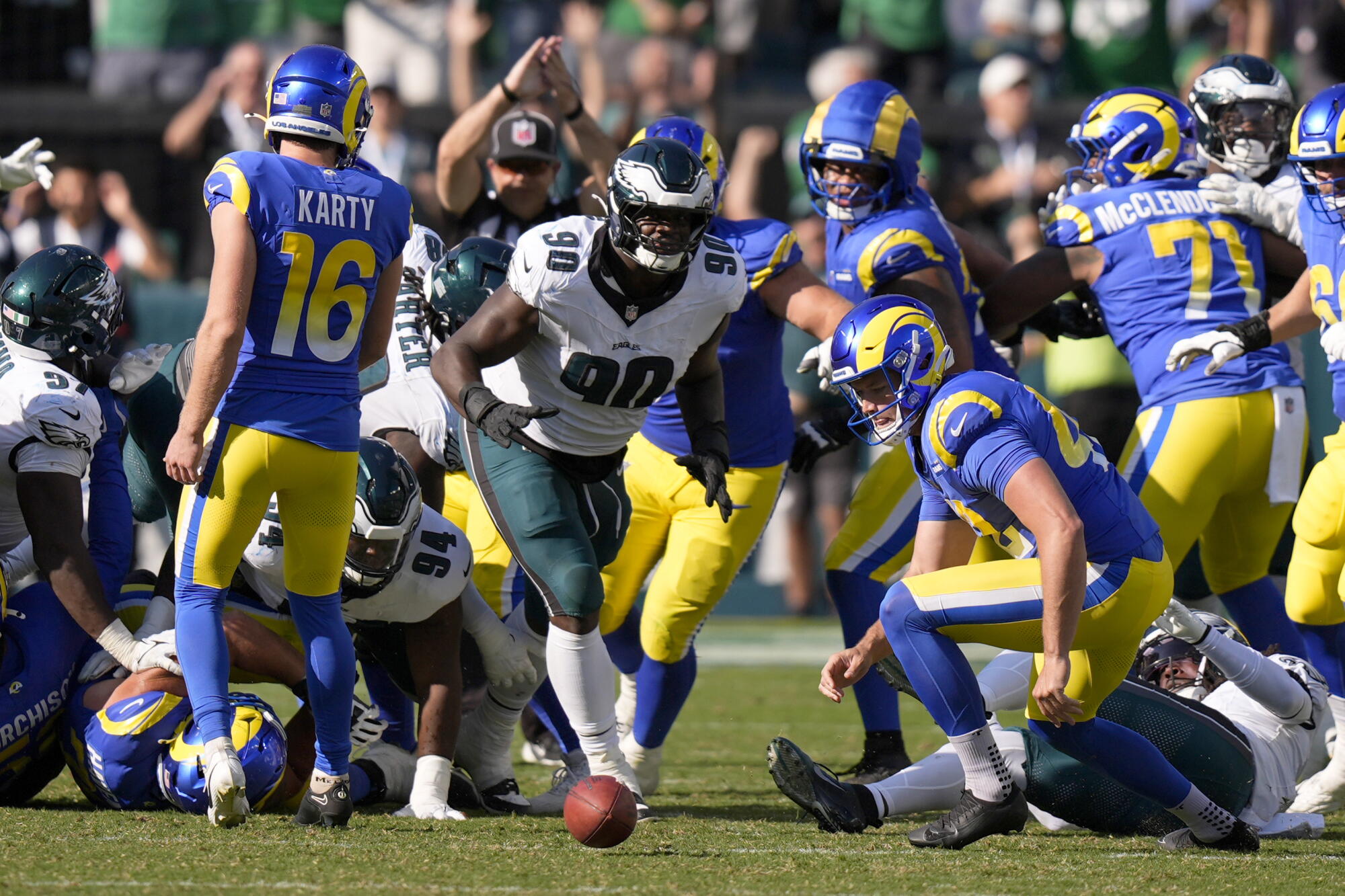
Minutes after the Eagles blocked a late field-goal attempt, the Rams lined up for another one on the final play. Jordan Davis of the Eagles leaped and blocked the kick, scooped the ball and returned it 61 yards for a touchdown that sent the Rams to a 33-26 defeat.
“All I heard was ‘boom, boom,’” Curl said of the kick and subsequent block, “and then I looked and it was all bad from there.”
Philadelphia Eagles defensive tackle Jordan Davis prepares to pick up a loose ball after blocked field-goal attempt against the Rams on Sept. 21, 2025.
And they arrive with several special teams units that remain a concern for a star-studded team that opened the season as the overwhelming favorite to win Super Bowl LXI at SoFi Stadium.
Not that the Rams have looked the part.
They lost their opener against the San Francisco 49ers in Australia, rebounded with a victory over the New York Giants, and last Sunday blew a 16-0 halftime lead in a 30-26 loss to the Denver Broncos in Denver.
Now they play an Eagles team coming off a 27-7 defeat by the Chicago Bears.
Late last season, coach Sean McVay fired special teams coordinator Chase Blackburn, and Ben Kotwica served as interim coordinator for the final two games. During the offseason, McVay hired Bubba Ventrone, who had coordinated special teams for the Indianapolis Colts and Cleveland Browns.
They also signed veteran long-snapper Joe Cardona and linebacker Grant Stuard, a special teams veteran.
The Rams’ field-goal unit is seemingly in a better place than it was last season.
Kicker Harrison Mevis replaced Joshua Karty several games after the debacle against the Eagles. He made 18 of 19 field-goal attempts in nine regular-season games and the playoffs, and has made four of five attempts this season, including two against the Broncos.
The Rams have improved in “that particular phase,” McVay said, “but you have to do it again” against a formidable Eagles field-goal block unit.
“That certainly is not anything we’re taking for granted,” McVay said.
On the same day the Rams lost to the Eagles last season, Ventrone was coaching for the Browns, who blocked a field-goal attempt by the Green Bay Packers with less than 30 seconds left, and then won the game with a field goal.
“It comes down to execution and playing with good fundamentals in those areas,” Ventrone said. “If we can do that, then we’ll be in a better spot.”
While the field-goal unit has mostly thrived, Evans has struggled with consistency, specifically directional placement of his kicks. On Friday, the Rams waived punt returner Xavier Smith, who fumbled in last season’s NFC championship game and made several decision-making errors against the Broncos. Alex Bachman will return punts against the Eagles, McVay said.
The kickoff coverage unit gave up a long return against the 49ers but appears to have improved.
The Rams will need solid performances from the offense, defense and special teams if they hope to defeat the Eagles for only the second time in eight games under McVay.
The Rams would be going for the second consecutive victory over the Eagles had they not blown a 19-point third-quarter lead and had two kicks blocked last season.
The Rams trailed 27-26 when they lined up for a 44-yard attempt with three seconds left.
“You knew it was going to be the last play no matter what,” Rams defensive coordinator Chris Shula said. “You weren’t going to [overtime]. I think I put my headset down.
“You put everything away and you’re like, ‘All right, here we go. This kick is going to decide my mood for this next week.’”
Evans recalled that after Davis blocked Karty’s kick, the ball went over Evans’ head. He attempted to dive on the ball, but he was hit in the back.
“By the time I got up and looked,” Evans said, “[Davis] was already in the end zone.”
The Rams aim to avoid a repeat.
Curl said the formula for success was simple. And it applied for offense, defense and special teams.