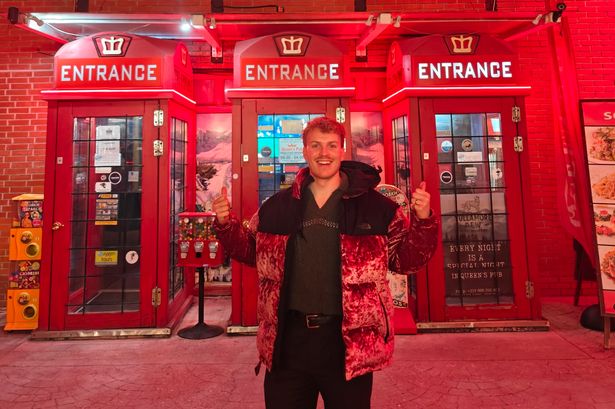
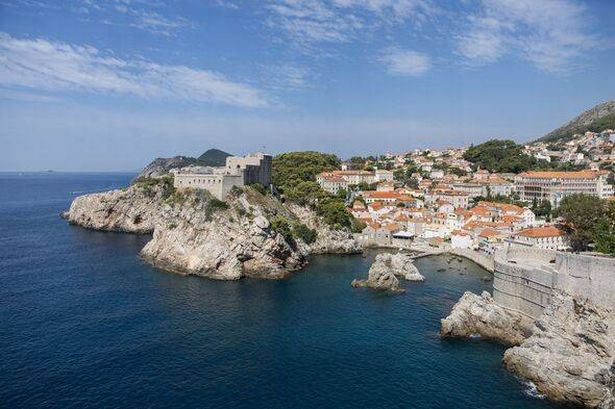
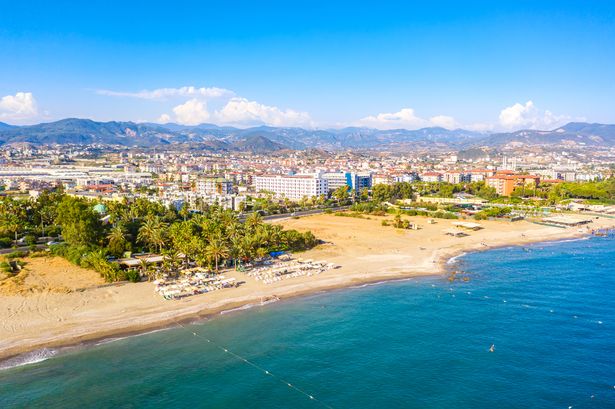
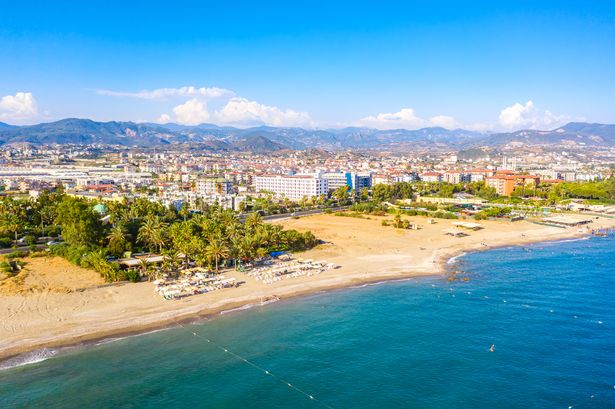
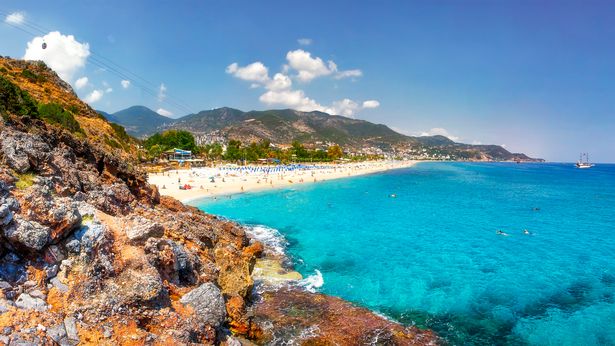
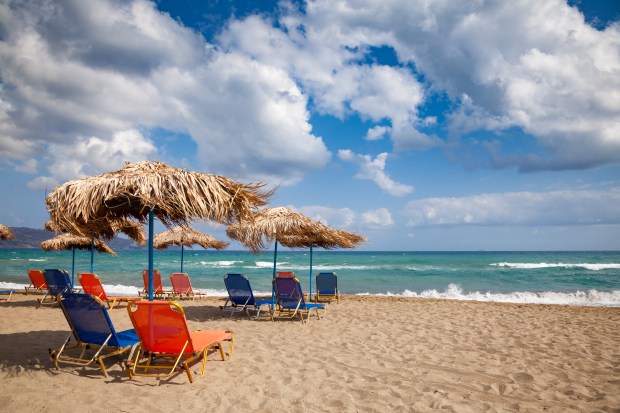
Charles Wadepalmer goes skiing in Bankso in Bulgaria. He stayed at the Four Points by Sheraton Bankso, which looked so good he’s already booked it for another trip taking place a month later
The new initiative, known as Eastern Sentry, follows incursion of Russian drones in Polish airspace on Wednesday.
Published On 12 Sep 202512 Sep 2025
Share
NATO has announced a new initiative to bolster the security of its eastern European members in the wake of Russia’s violation of Polish airspace.
“NATO is launching Eastern Sentry to bolster our posture even further along our eastern flank,” Secretary General Mark Rutte said on Friday in Brussels during a joint news conference with NATO’s top commander in Europe, US General Alexus Grynkewich.
Recommended Stories
list of 3 itemsend of list
“This military activity will commence in the coming days and will involve a range of assets from allies, including Denmark, France, United Kingdom, Germany,” Rutte added.
The announcement comes two days after multiple Russian drones crossed into Poland on Wednesday, prompting NATO to send fighter jets to shoot them down and underlining long-held concerns about Russia’s three-year war in neighbouring Ukraine expanding.
NATO is still assessing whether Russia intentionally violated Poland’s airspace or not, Rutte said, but repeated that, either way, “it is reckless. It is unacceptable.”
“Although the immediacy of our focus is on Poland, this situation transcends the borders of one nation. What affects one ally affects us all,” Grynkewich said.
“Eastern Sentry will be flexible and agile, delivering even more focused deterrence and defence exactly when and where needed,” he added.
Russia said its forces had been attacking Ukraine at the time of the drone incursions and had not intended to hit any targets in Poland.
More allies to join
The new NATO mission, which begins on Friday evening, will involve a range of assets integrating air and ground bases.
Allies, including Denmark, France, the United Kingdom and Germany, have so far committed to the mission with others set to join, Rutte said.
Earlier on Friday, French President Emmanuel Macron said he would deploy three Rafale fighters to Poland.
“The security of the European continent is our top priority. We will not yield to Russia’s growing intimidation,” Macron posted on X.
The United Nations Security Council was set to meet on Friday at Poland’s request to discuss the incident.
Poland’s Defence Minister Wladyslaw Kosiniak-Kamysz thanked NATO for its “decisive action and decisions in response to Russia’s aggressive policy”.
The new deployment was “not only a strategic decision” but “an expression of responsibility for the security of the entire eastern flank of the alliance,” he added.
Dubbed the ‘Camino of the East’, the 1,400 km long-distance walking trail, Via Transilvanica, is helping position Romania as Europe’s next great walking destination
Via Transilvanica is a pilgrimage route that start in Drobeta-Turnu Severin near the Danube river(Image: Getty Images)
One of the cheapest countries in Europe has been tipped as the next go-to destination for walkers.
Following Romania’s recent inclusion in the Schengen area, travel interest in the eastern European nation has spiked. There is plenty going for it. Romania enjoys warm weather in the summer; its countryside is verdant and vast; and it’s cheaper compared to its neighbours.
This week, one particular part of the country has featured on Intrepid Travel’s Not Hot List, which highlights ten parts of the world where few people currently visit.
Via Transilvanica is Romania’s entry this year. Dubbed the ‘Camino of the East’, the 1,400 km long-distance walking trail, Via Transilvanica, is helping position the country as Europe’s next great walking destination.
The path is known as the ‘road that unites’(Image: Getty Images)
Initiated by Intrepid Foundation partner Tășuleasa Social Association, and known as ‘the road that unites’, its route is intentionally designed to connect travellers to lesser‑known communities and share the economic benefits of tourism more widely.
The trail takes travellers through villages, ancient forests, and 12 UNESCO World Heritage sites. With visitor numbers rising, now is the perfect time for the nation to consider its approach to sustainable tourism.
Romania welcomed 7.1 million overnight international visitors in 2024. The addition of 170 km of new paths opening in 2026 marks the first phase of a larger 20-year expansion plan to grow the Via Transilvanica trail beyond its original footprint, broadening its reach across Romania.
Smoother travel times, thanks to Romania’s 2025 Schengen debut that scrapped border checks with its European neighbours, and new flight routes from Birmingham to Sibiu have opened the door to a new era of travel for the region.
Anna Székely, vice-president of the Tășuleasa Social Association, said: “This slow-travel route isn’t just scenic, it’s built to revive depopulated villages, support local enterprise and give visitors a rare chance to experience traditions that feel untouched by time.
“For us, hospitality means creating genuine meeting points between hikers and locals – places where shared meals, old stories and the rhythm of rural life are as much a part of the journey as the miles walked.” Intrepid’s new 11-day Hiking in Romania via Transilvanica Trail trip gives travellers early access to some of the newly added sections of the trail.
“Hike to spiritual sites such as the UNESCO World Heritage-listed Sucevita and Moldovita monasteries and explore Bran Castle, linked to the Dracula legend. Enjoy the occasional homemade dinner and local wine with residents living in small villages along the trail and learn about each community’s culture.”
It was the only destination to score five stars for value for money
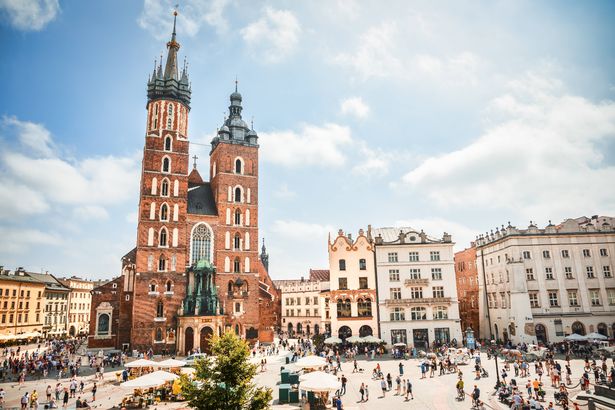
Krakow is Europe’s best city break, according to tourists(Image: Westend61 via Getty Images)
Europe boasts countless stunning cities ideal for weekend breaks or extended holidays, with one destination claiming the ultimate crown. Research by Which? Travel has declared Krakow the continent’s finest city break for an unprecedented fifth consecutive year.
The Which? study evaluated seven key factors: cuisine and beverages, lodging, cultural landmarks and attractions, retail offerings, transport convenience, crowd levels, and financial value. An overall rating was then determined based on general satisfaction and the likelihood visitors would recommend the destination.
Krakow topped the rankings with a remarkable 92% score. The Polish city earned five-star ratings for its food and drink, accommodation, and transport links.
Uniquely, it was the sole destination to achieve five stars for value for money, with Kayak data showing average nightly accommodation costs of just £86. The city also secured four stars for its cultural offerings.
Krakow has been named the best city for value for money(Image: Antagain via Getty Images)
One survey respondent commented: “Beautiful, mainly unspoilt city. Superb food at a fair price. I’ve stayed many times, and there are lots of good-value hotels. Friendly and pretty safe.”
Kraków is particularly renowned for enabling day excursions to historically significant sites like Auschwitz and the Wieliczka Salt Mine, creating a deeply meaningful travel experience.
One visitor to Kraków shared on TripAdvisor: “We visited over Easter weekend so it was extremely busy but the atmosphere was buzzing. The markets were on, a sun was blazing and the horse and carriages were clattering around the streets.
“Whilst there the area was clean and tidy, there was no trouble at all and it was great to see people carrying their Easter baskets. The buildings and churches were beautiful and we really enjoyed the park.”
This is the fifth year in a row that Krakow has topped Which?’s survey(Image: Alexander Spatari via Getty Images)
Another chimed in: “Beautiful city, what I can highly recommend as a place to discover a little Poland. Lots of attractions around and legends.”
Naomi Leach, Deputy Editor of Which? Travel, sharing the survey results, said: “Whether you are looking for culture, art, history or top gastronomy, there are several European cities that deliver. Book ahead and choose to visit off season to secure the best prices.
“British holidaymakers who look beyond the most famous destinations, can find great value for money in foodie escapes, such as Krakow and Valencia. Despite the crowds, classic city breaks Venice and Vienna scored highly with visitors due to their unparalleled cultural attractions.”
Europe’s most beautiful cities often boast breathtaking old towns but there’s one budget-friendly destination that’s worth having on your radar especially when the festive season kicks off
It’s been named the most charming Old Town in Europe(Image: Getty Images/iStockphoto)
While we may be coming to the end of ‘Euro summer’, have no fear; there are still heaps of incredible European destinations to be explored, some of which particularly shine in the autumn and winter months.
In fact the colder months can be an excellent time to plan European city breaks, as the crisp fresh air makes for ideal conditions to go wandering through fairytale-worthy cobbled streets, enjoy a spot of sightseeing without fighting the crowds, and come winter even exploring a Christmas market or two.
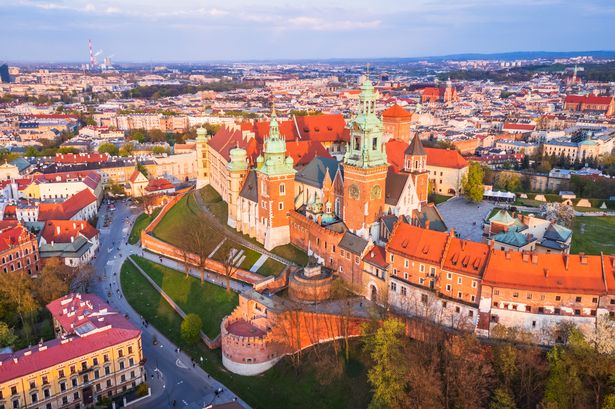
One city that’s well worth having on your radar is Krakow in Poland, which has recently topped the list for having Europe’s most charming Old Town. Highlights include the breathtaking St Mary’s Basilica and Wawel Hill castle which never fail to be hits with history buffs.
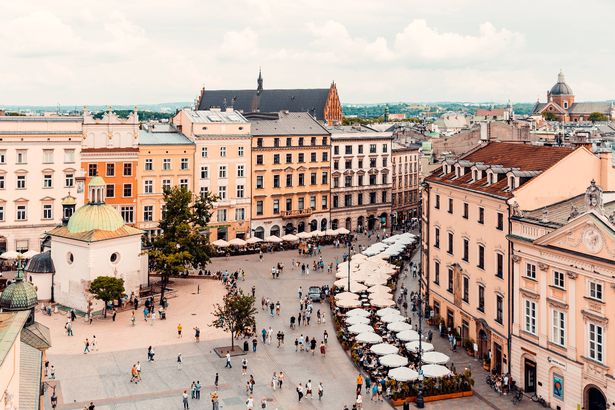
Krakow’s Old Town is a must-visit (Image: Getty Images/iStockphoto)
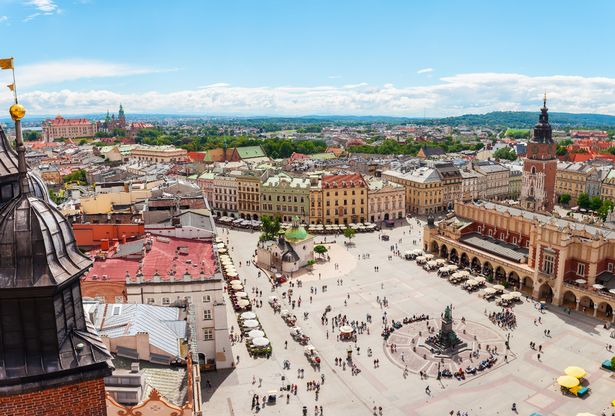
At the centre of the medieval Old Town sits the aptly-named Central Square, where you’ll find plenty of restaurants, cafés, museums, bars and hotels, not to mention it’s a short walk to most of the region’s most famous landmarks. The city’s nightlife also offers up heaps of choices, so it’s no surprise that it’s also a firm favourite with stag and hen dos.
Meanwhile the pretty buildings and eye-catching architecture throughout the Old Town make for countless photo opportunities (it’s easy to see why this city is popular with the social media crowd). The bulk of the area is pedestrianised too so you can stroll around at your leisure.
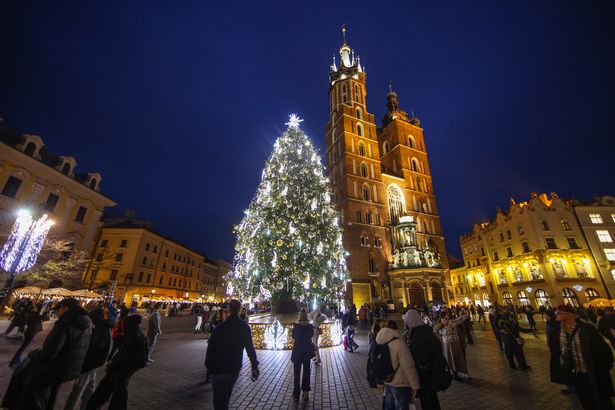
While for some it may feel far, far too early to be thinking about Christmas, there’s no denying that there’s something extra magical about Krakow during the festive season. After all, the Polish city regularly features rankings of Europe’s best Christmas markets, not to mention that last year it picked up the crown for being Europe’s ‘most festive’ destination thanks to the wide array of stalls offering up everything from trinkets and Christmas decorations, to mulled wine and plenty of delicious food.
Krakow’s Christmas market has been hailed as one of the best budget-friendly options in Europe(Image: NurPhoto via Getty Images)
Throw in the fact that come December time it’s not uncommon for snowy weather to hit the city, and you can see why it’s earned a reputation as quite the winter wonderland. It also tends to be one of the more budget-friendly options with heaps of cheap flights and stays available.
This year the main Christmas market is expected to return to the Central Square, with dates between November 29, 2025, to January 1, 2026. Of course because of its festive reputation, it can be one of the busier markets so be prepared during those peak Christmas weeks for a few crowds! (There are some smaller markets nestled throughout the city too so that festive cheer is spread across a few destinations if you want to escape the hustle and bustle).
Krakow’s picturesque city centre saw it recently named as Europe’s most charming Old Town, in a new study from the travel insiders at Tourlane. Researchers ranked cities on a number of factors including their age and history, the cost of a guided tour, their appeal for pedestrians and popularity as a photo spot on social media. Krakow impressed with roots dating back to the 7th century, while a guided tour could be picked up for approximately £10.
“Krakow offers an incredibly easy way to experience centuries of history,” explained Roman Karin, Head of Travel Experience at Tourlane. “Its old town is so thoughtfully laid out that you can simply stroll from the Main Market Square to St. Mary’s Basilica and up to Wawel Castle, taking in all the highlights on foot.”
You can also find out more about Krakow and its old town on visitkrakow.com.
Do you have a travel story that you want to share with us? Email us at [email protected].
A LITTLE-known resort with white sands, a Unesco-listed old town and beer for less than £2 tops a new listing of most affordable autumn beach breaks in Europe this year.
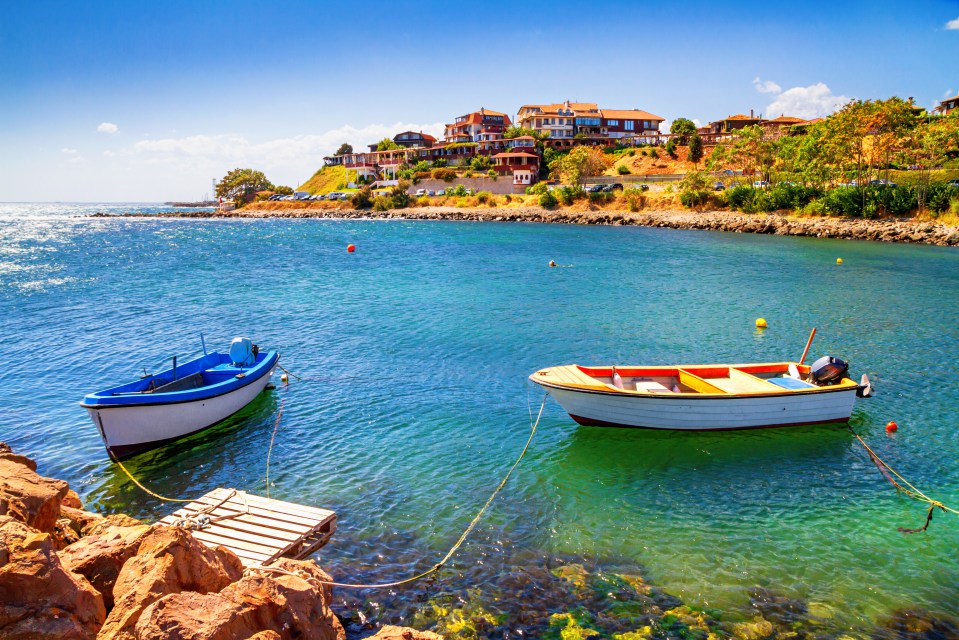
Nessebar, on a peninsula in Bulgaria, is No1 in budget airline easyJet’s Cheap Beach Index, thanks to its affordable hospitality and dependable deals on flights and hotels.
7
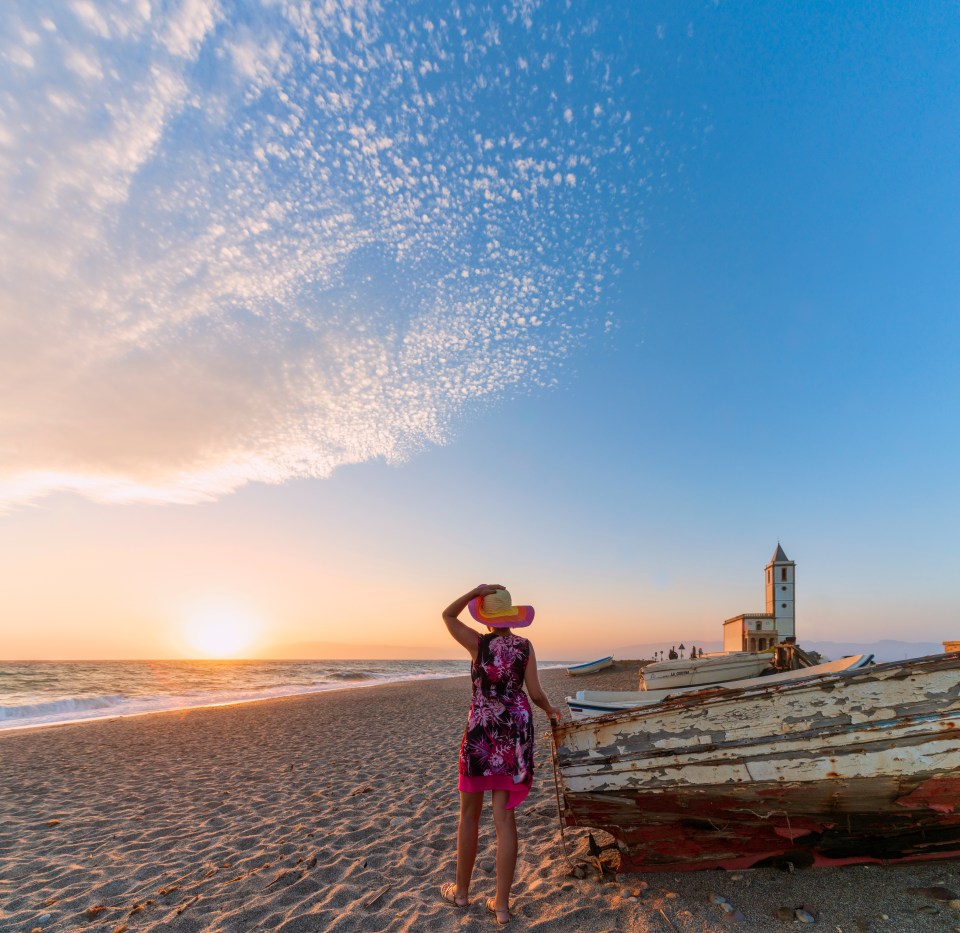
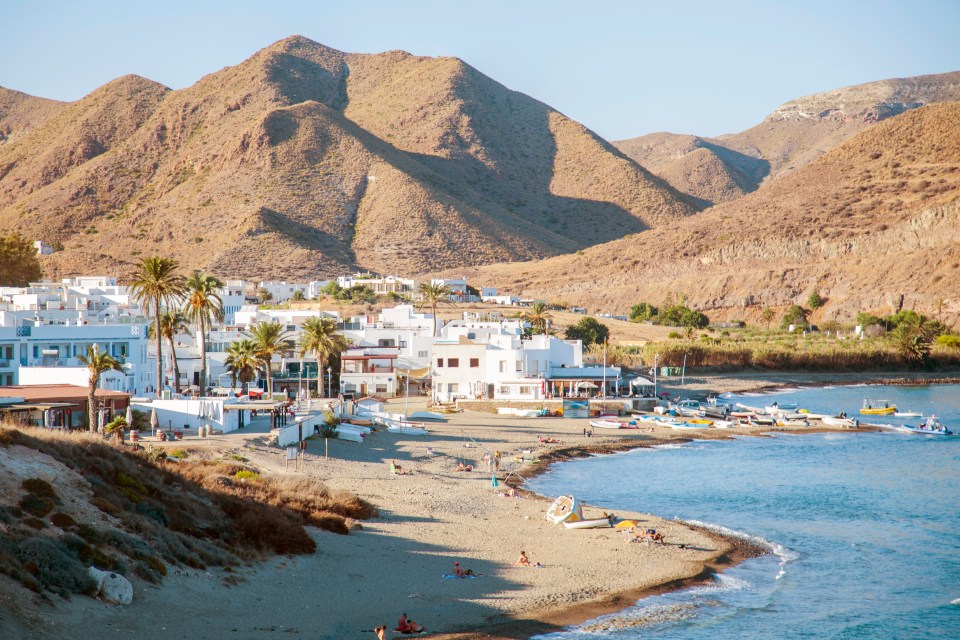
The scenic Iglesia de Las Salinas beach, Costa de AlmeriaCredit: Getty
The research analysed areas within easy reach of airports that offer affordable direct routes from the UK, and the costs of a typical holiday “basket” of essentials including beer, ice cream and family meals out.
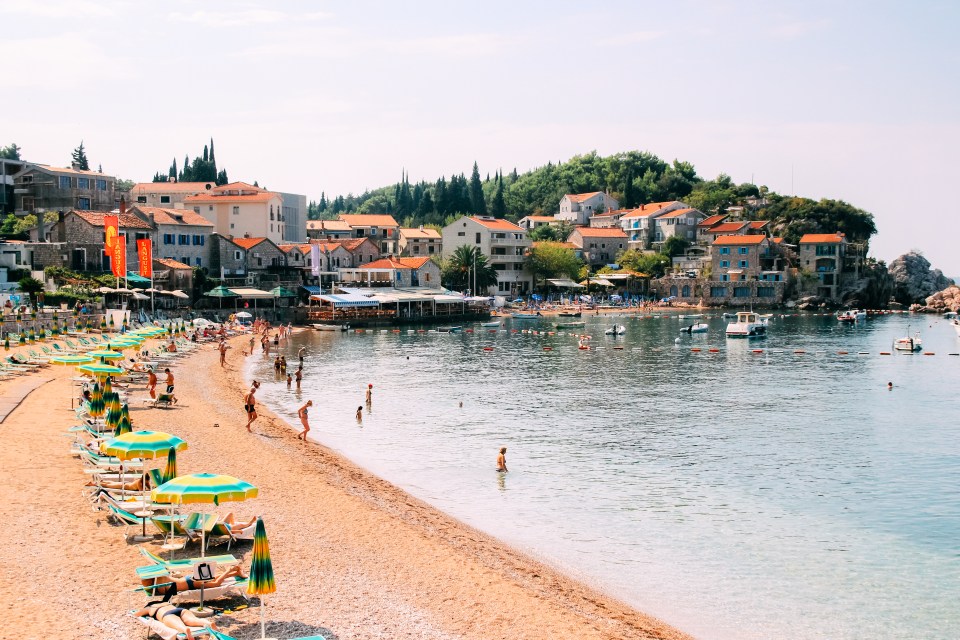
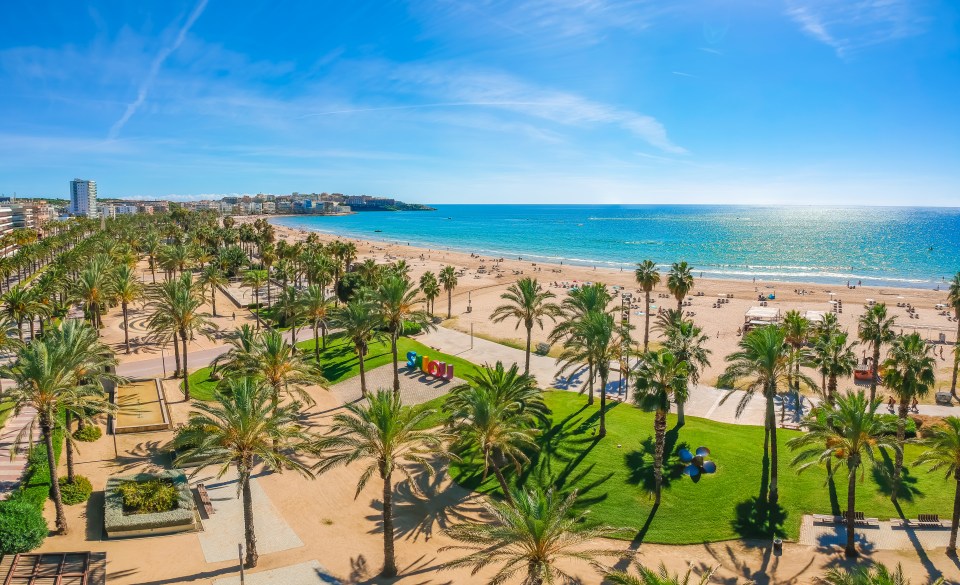
The Budva Riviera in Montenegro came second, followed by Spain’s Costa de Almeria then Costa Dorada.
Lisa Minot describes what makes these autumn breaks winners, and offers some great deals . . .
NESSEBAR, BULGARIA
THIS little gem offers the best of both worlds with golden sands on South Beach and plenty of charm in the Old Town with its Roman and Ottoman architecture, 19th-century wooden houses and cobbled streets.
It’s not all culture, though – the resort has plenty to keep visitors happy with lots of bars and restaurants and a lively nightlife.
7
Nessebar, Bulgaria offers the best of both worlds with golden sands on South Beach and plenty of charm in the Old TownCredit: Getty
The report found beers would cost on average £1.60, while a three-course meal will set you back around £22 for a couple.
GO: Seven nights’ all-inclusive at the 4H Festa Panorama, Nessebar is from £477pp including flights from Manchester departing on September 30, 23kg luggage and transfers.
FOR a more authentic Spanish experience, distinct from the more crowded Costas, the Costa de Almeria is Europe’s only desert landscape, providing a dramatic backdrop.
Highlight is the Cabo de Gata-Nijar Natural Park, a protected area with volcanic geology, hidden coves like Monsul and vast, unspoiled beaches for you to set aside the pressures of life.
7
The Costa de Almeria is Europe’s only desert landscape, providing a dramatic backdropCredit: Getty
Roquetas de Mar is a perfect beachfront town with lots of shops, bars and restaurants close by.
The report found beers will cost just £3 and a meal for two £36.
GO: Seven nights’ half-board at the Best Roquetas Hotel, Costa de Almeria is from £372pp including flights from Southend on September 27, 23kg luggage and transfers.
ALWAYS among the best value of the Costas, this area is known as the Golden Coast – perfect for families with its long, gently shelving golden sand beaches.
The Italian travel hub Rome Fiumicino was recognised with its “impressive commitment to passenger experience, sustainability and innovation in the ACI Europe Best Airport Awards
15:40, 03 Sep 2025Updated 15:43, 03 Sep 2025
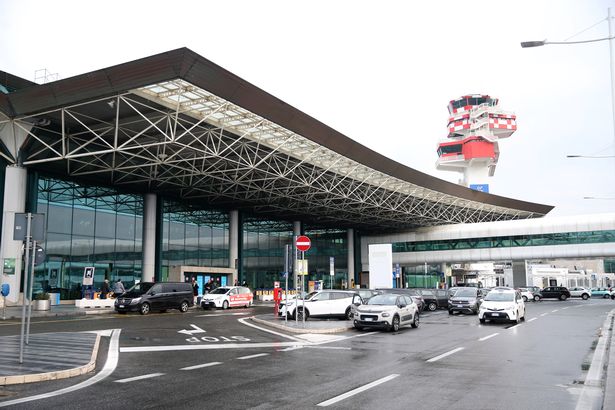
Rome is not just blessed with some of the greatest art and monuments on Earth, but one of the best airports to boot(Image: Photolibrary RM)
An airport in the Italian capital has been named the best in Europe for a seventh year in a row.
Rome Fiumicino has scooped the gong as the best airport handling more than 40 million passengers a year in the ACI EUROPE Best Airport Awards. The Roman travel hub was recognised with its “impressive commitment to passenger experience, sustainability and innovation.”
While no one is pretending that flying is good for the environment – in fact, it is one of the most polluting forms of transport – Fiumicino’s bosses have made better efforts than most when it comes to decarbonising the airport itself. It recently launched Europe’s largest solar farm, which should cut more than 11,000 tons of CO2 a year. Judges also highlighted its data-driven approach to management.
Fiumicino has now snatched the prize for a seventh year in a row, asserting its dominance in the ‘large airport’ category.
A spokesperson for the airport said: “Rome’s Fiumicino Airport has been named the best airport in Europe for the seventh time. This award celebrates its great service, comfort, and modern spaces. Travelers enjoy smooth arrivals, clear signs, and many food and shopping options. Fiumicino keeps growing, making travel easier and welcoming millions each year.”
On Airline Quality, some passengers have shared what they like about Fiumicino. One person from Taiwan wrote: “It is clean, modern and spacious. It is easily accessible by the Leonardo Express from Termini in about half an hour. Employees are friendly and helpful and can speak English well. The WiFi connection is stable. Signposts are clear.”
Another, from the UK, added: “Great facilities, huge range of luxury and non-luxury shops and restaurants/food choices. I travel to/from this airport often and have never experienced long queues, not at the security checks nor when recollecting my luggage.”
A third, from the UAE, shared: “Since my last visit, there have been tremendous improvements in the lounges and in the food and beverage on the second floor. The electronic passport scanner. I’m impressed. I’m positively impressed. Management efforts, I think, were amazing, and for me and my family, it has been a very pleasant experience.”
While some aviation buffs may make their way to Fiumicino just to check out its award-winning facilities, most will only grace its hallowed halls on the way into the Eternal City.
Each year, 35 million people visit Rome. And you can certainly feel it on the streets. Earlier this year, one holidaymaker told of how they’d resorted to visiting the Trevi Fountain at 2am in an attempt to dodge the notorious crowds that congregate there.
Fiumicino has scooped the top spot yet again(Image: Anadolu Agency via Getty Images)
Even at such a small hour, she was confronted by throngs.
In truth, visiting any of the great city’s main attractions – whether that be the Colosseum, the Forum, or the Vatican – will bring you shoulder-to-shoulder with the masses. When visiting, picking up a book such as the Blue Guide, which is written by locals or those with a very intimate understanding of destinations, can help you find lesser-trod corners, underrated restaurants and ancient buildings with a baffling small number of visitors.
If you’re after broad stroke recommendations, the Castel Sant’Angelo is a good bet. Also known as the Mausoleum of Hadrian, it was once the tallest building in Rome and used as a fortress by popes. Nowadays, it’s a museum packed with incredible artwork, sculptures and artefacts that offer you a glimpse into Rome’s rich history.
The Galleria Borghese houses a spectacular range of artwork including pieces by Rossi and Bernini. Consisting of paintings and sculptures from throughout the ages, it is impossible not to fall in love with the grandeur of their histories.
The city is known for its rich history, stunning beaches, vibrant nightlife, and a pleasant Mediterranean climate
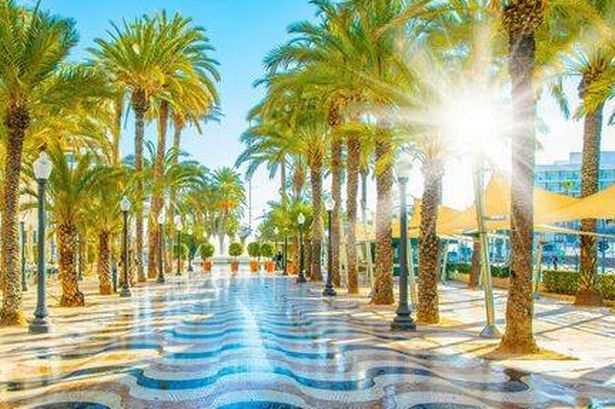
The city has a pretty tree-lined promenade (Image: Getty)
A lively European destination that boasts a distinctive mix of heritage, culture and scenic splendour has been crowned the continent’s “sunniest” city.
Alicante, situated on Spain’s south-eastern coastline within the Valencia region, is renowned for its deep-rooted heritage, breath-taking coastlines, buzzing nightlife, and delightful Mediterranean weather.
According to information from 2009 to 2021 compiled by World Weather Online, Holidu, and timeanddate.com, the city basks in 349 hours of sunshine monthly on average and around 300 days of sun over the year.
Alicante boasts a heritage spanning millennia, with traces of communities from numerous civilisations, including the Greeks, Romans, and Moors. During Roman occupation, it was originally called “Lucentum”, reports the Express.
Alicante is a vibrant city on Spain’s southeastern coast(Image: Getty)
The city has been moulded by its varied cultural heritage, especially from the Moors, who governed the area for hundreds of years. This extensive past is mirrored in the architectural styles and cultural customs that endure today.
Positioned along the Costa Blanca, overlooking the Mediterranean Sea, it is encircled by spectacular natural terrain, featuring mountains and coastlines. The city benefits from a Mediterranean climate distinguished by scorching summers and gentle winters.
Typical summer temperatures frequently surpass 30C, whilst winters stay comparatively temperate, averaging approximately 15-20C. Even in October it still experiences daily highs of 25C. The city boasts several remarkable attractions that travellers simply must experience.
Things to do in Alicante
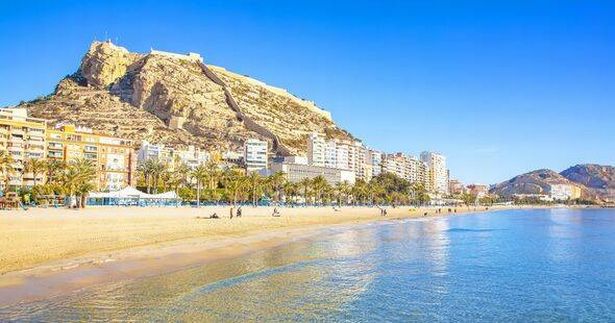
One of Spain’s largest medieval fortresses is Santa Barbara Castle. Positioned atop Mount Benacantil, it provides sweeping vistas across the city and shoreline. The fortress traces its origins to the 9th century and boasts remarkable defensive walls and towers.
Visitors can reach the castle on foot, by vehicle, or via a lift from the seafront, and it contains displays chronicling Alicante’s past.
Amongst the favoured beaches is Playa del Postiguet, situated directly adjacent to the city centre. This stretch of coastline draws crowds thanks to its soft sand and crystal-clear waters, making it beloved by both residents and holidaymakers.
Alicante has become a popular tourist destination(Image: Getty)
Explanada de España stands as a renowned boulevard adorned with palm trees and showcasing a distinctive undulating mosaic pattern.
It serves as a cherished location for leisurely walks, al fresco dining, and various events and markets. The boulevard regularly showcases musicians and performers, creating a vibrant social hub.
Holidaymakers who have visited this stunning destination have posted glowing testimonials on the TripAdvisor travel platform.
One visitor commented: “Fabulous place to go for a few days very easy going stayed a spa portas and we had a lovely time great beach and fab food .the castle is a lovely place to walk around.”
Another traveller said: “Coming from Icelandic glaciers, warm up at a Spanish beach. The Hotel: Hotel Maya with a swimming pool 49 euros per room per night for 3 nights.
“The stroll: 10 minutes walk to Postiguet Beach and La Rambla shopping street. The drink: Tinto de verano red wine spritzer. Choose your tapas at Lizarran on La Rambla. People watch at the old market at the top of the Rambla. Alicante is: Miami without attitude.”
Using data from TripAdvisor, Numbeo, LightPollutionMap.info, and official tourist sources, 30 cities was scored across five stress factors: tourist density, hotel density, noise, light pollution, and crime rates
10:30, 01 Sep 2025Updated 10:43, 01 Sep 2025
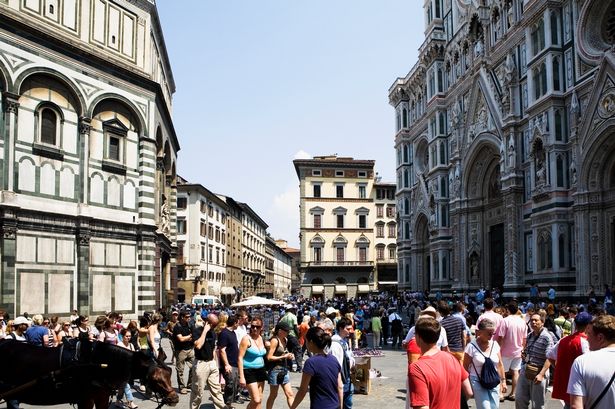
Florence can feel a little intense (Image: Getty Images/Glowimages RF)
Popularity does not always equal quality.
At least that is according to Icelandair, which has commissioned analysis of 30 popular European destinations to highlight those which might be worth skipping when you come to booking your next holiday.
Using data from TripAdvisor, Numbeo, LightPollutionMap.info, and official tourist sources, each city was scored across five stress factors: tourist density, hotel density, noise, light pollution, and crime rates.
At the top of the pile was Florence in Italy. Known as the cradle of the Renaissance, Florence attracts more than 5.2 million visitors annually, which is the equivalent of around 10 tourists arriving every minute. Given its population of 362,000, each year roughly 15 tourists arrive for every local.
More than five million people visit Florence each year(Image: AFP via Getty Images)
The majority of visitors are packed into the city centre, where most of Florence’s 2,000 hotels are located. Florence has one of the highest tourist and hotel densities in Europe. Add in heavy noise levels and some of the brightest light pollution recorded in this index, the city can feel less than tranquil.
I’ve visited Florence a number of times and have been taken aback by the intensity of the crowds. If you’re in town, you’ve got to lay your eyes on perhaps the world’s best known sculpture, Michelangelo’s David, who stands in all his marble-clad glory in the Accademia Gallery. If you do fancy a glimpse of that historically toned bod, then make sure you’ve got your elbows sharpened.
The area around David is always packed, and efforts to admire his splendour are often thwarted by an elevated selfie stick. It can be as dissatisfying an experience as viewing the Mona Lisa in the Louvre.
Once you’ve escaped the hustle and bustle of the Accademia, you’ll have to re-gird your loins for a trip to the Uffizi Gallery, which sits next to the Piazza della Signoria. The gallery is packed full of works from the Italian Renaissance, having been gifted to the Uffizi when the House of Medici died out.
Top of most visitors’ list is a spot of serious swooning in front of two of Botticelli’s most famous paintings – Primavera and The Birth of Venus. They are both huge and both fantastic. However, much like David, getting close enough to have a decent look can be difficult.
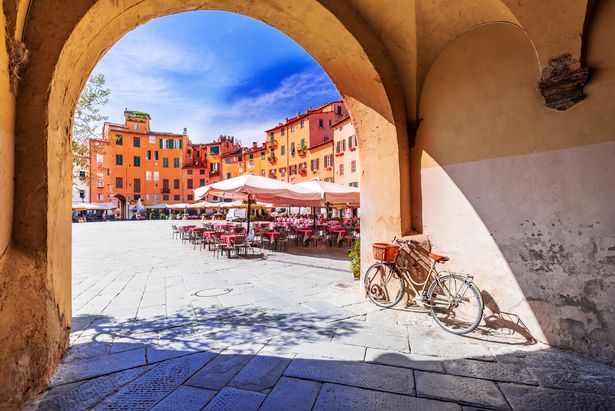
Lucca is a great, calmer alternative (Image: Getty Images/iStockphoto)
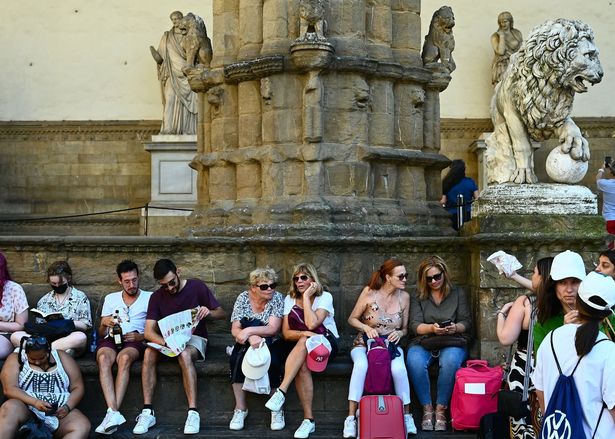
Once you’ve decided that you’ve had enough art for one day, you’d be forgiven for heading back to the Piazza della Signoria for a quick rest and recalibration. There you’ll find yourself bombarded with street performers, overheated children and worst of all, mimes.
While Florence should, arguably, be visited once in a lifetime, if you’re open to alternatives, then Lucca is a great choice. The city is about a quarter of the size and situated an hour’s train ride from Florence, closer to the Cinque Terre coastline and Pisa, meaning getting there from the region’s main airport is a breeze.
And if you do visit Lucca, you’ll quickly realise it’s no downgrade. I have spent several afternoons walking through and around the city on its perfectly preserved Renaissance-era defensive walls. They provide a wonderful route through Lucca and are largely free from crowds, beyond the occasional wandering local and cyclist.
In its medieval core, you will find attractions such as the Guinigi Tower, the Piazza dell’Anfiteatro and the birthplace of composer Giacomo Puccini. Head to Piazza dell’Anfiteatro for a bite to eat when you’re down culture vulturing. It may be central and popular, but that doesn’t mean it isn’t lovely. In fact, it consistently hits a sweet spot of lively but not overwhelming.
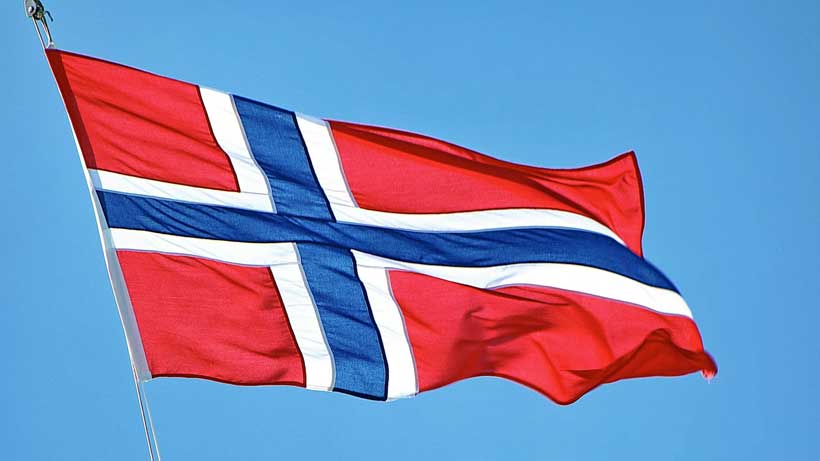
Norway heads to the polls on September 7-8, 2025, in a closely fought general election that could reshape both domestic economic policy, as well as the wider European energy landscape. Prime Minister Jonas Gahr Store’s Labour Party, in power since 2021, seeks to extend its rule after eight years of Conservative-led governments. Labour governs as a minority with backing from both the Socialist Left and Centre Party.
What Happened?
The election places the centre-left bloc led by the Labour Party against the centre right, dominated by the populist Progress Party and Conservatives.
Inequality and taxation top the list of Nordic voter concerns, followed by cost of living pressures, job security, and food price inflation (5.9% over the past calendar year).
Labour promises stable taxes, though allies push for higher rates on the wealthy; Conservatives and Progress advocate deep tax cuts across all income levels.
The campaign has also been shaped by debates surrounding Norway’s $2 trillion sovereign wealth fund, oil and gas exploration, and power exports to Europe.
Why It Matters:
Norway is Europe’s leading gas supplier, replacing Russia after the 2022 invasion of Ukraine. The election outcome could determine whether new oil and gas fields are opened or restricted, with consequences for both domestic revenues and Europe’s energy security. In addition, political control over the sovereign wealth fund could reshape debates about Nordic investments, including calls from the Socialist Left to divest from companies with links to Israel’s actions in Gaza. Energy policy and fiscal direction will not only shape Norway’s future but also ripple across the European Union, where stability of gas flows and power exports are closely monitored and viewed as a key commodity.
Stakeholder Reactions:
Socialist Left Party: Urgently demands divestments tied to Israel’s war in Gaza as a condition for backing the Labour Party in the next government if they were to emerge victorious.
Labour Party: Rejected the demand but may face pressure to revisit it post-election depending on both the landscape of the Gaza conflict and overall party productivity in regards to addressing the concerns of the everyday Nordic citizen.
Smaller Parties (Liberals, Greens): Deeply divided on oil exploration, some pushing for expansion with controls to ensure domestic revenue inflows, others calling for tighter restrictions or eventual phase-outs to become a greener economy.
EU observers: Undoubtedly watching closely as Norway debates limiting electricity exports, which would breach single market rules established by the Union.
What’s Next/
Election days: September 7-8, with polls closing September 8th at 1900 GMT.
Results: Early exit polls expected the same evening; final outcome could possibly take until September 9th to be announced.
Likely Scenarios: A continued Labour-led minority government, or a centre-right coalition led by Conservatives or Progress Party.
Wider Implications: Coalition negotiations will decide Norway’s position on tax policy, sovereign wealth fund investments, oil and gas exploration, and electricity exports, with consequences for both domestic voters and European partners.
Europe’s most beautiful cities have a strong contender in the form of one underrated spot that has epic coastal views and yet doesn’t have tourist crowds like other hotspots
This article contains affiliate links, we will receive a commission on any sales we generate from it. Learn more
It’s been named Europe’s most ‘peaceful’ city(Image: Getty Images)
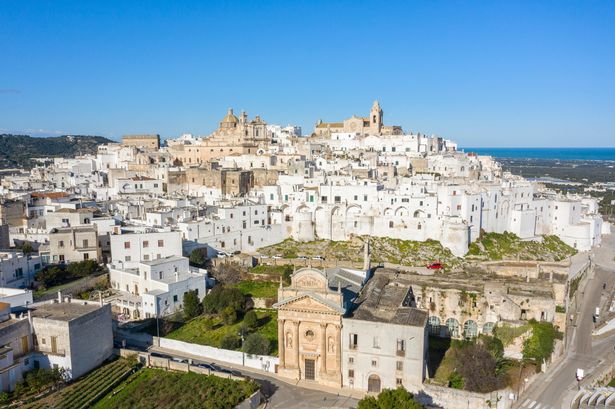
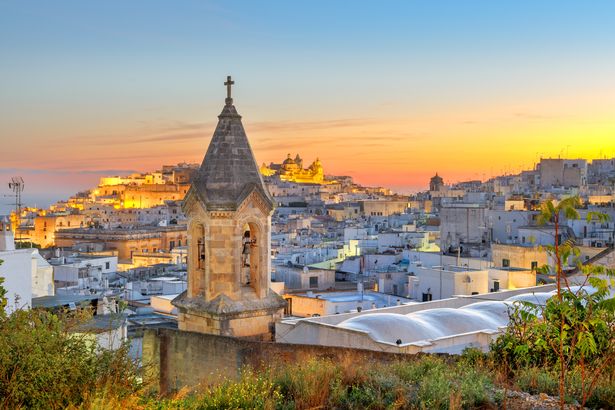
You’d be forgiven for thinking that a beautiful European city rivalling Santorini with whitewashed buildings and postcard-worthy sea views would also be crammed with tourists.
However there’s one breathtaking spot in Italy which offers just that, but it’s often overlooked by tourists who flock to hotspots such as Amalfi, Positano and Rome when it comes to Italian getaways.
Ostuni isn’t necessarily a hidden gem, but it’s not a classic spot for city breaks despite offering some incredible restaurants and hotels, charming beaches and a hilltop location that means you can get unrivalled views of those crystal-clear waters in the Mediterranean Sea.
Of course there’s more to Ostuni than just gorgeous views. The city is packed with antique shops, hidden eateries serving up that world-famous Italian cuisine, quirky shops and hotels to suit a wide array of budgets. It’s also a great base for exploring the rest of Puglia as it’s within driving distance of plenty of spots such as the likes of Valle d’Itria. (If you are going to drive, take note that the city’s historic centre has strict rules around which cars are allowed in, and often it’s not those available to tourists).
Ostuni is an underrated Italian city(Image: Getty Images)
Ostuni boasts balmy weather all through summer, but you can enjoy temperatures of approximately 26C well into September if you do want to avoid peak holiday season crowds in the rest of the region.
As for the beaches, expect pebbled and rocky shores rather than pristine sandy beaches (although you can find a few such as Lido Onda Blu), but they all boast picture-perfect clear waters. Top-rated beaches on Tripadvisor including Spiaggia di Torre Pozzelle and Spiaggia Costa Merlata are popular with locals thanks to those unrivalled views.
The lack of overtourism has seen Ostuni named Europe’s ‘most peaceful’ destination, in a recent study conducted by the travel insiders at Omio. They analysed over 500 destinations to identify the top 100 least crowded spots, and then examined the likes of top-rated Tripadvisor attractions in each location. According to the data, Ostuni ranked as the best overseas destination in Europe. Nancy in France took the second spot, closely followed by the Greek island of Santorini.
The latter may come as a surprise considering this year has seen tourists needing to queue up to get to some of the best viewpoints, restaurants being crowded and prices being hiked up as peak holiday season hit. However, it’s worth noting that these are in concentrated areas on the island, such as the village of Oia. There is actually a quieter side to Santorini including hidden hot springs, and black sand beaches such as Mesa Pigadia and White Beach.
The island is also taking steps to combat the large numbers of tourists that come to its shores. This has included recently upping tourist fees for cruise passengers. Visitors who arrive on cruises between June to September face costs of €20 per night, which will need to be paid at the port.
Meanwhile on the mainland, tourists can expect to pay a tourist tax of €8.00 per night between April and October, or €2.00 per night outside of this peak season. This is compared to the previous charge of €0.50, making for a huge jump. The new charges have been brought in to reportedly help fund efforts against climate change, as well as improving infrastructure and disaster prevention.
Do you have a travel story you’d like to share with us? Email us at [email protected].
You may dash for your morning commuter train, but you won’t want to rush for the sleeper to Vienna. The Nightjet train to the Austrian capital is the most illustrious departure of the day from Amsterdam. There is an art to conducting the perfect departure and the perfect arrival, the bookends of a thrilling overnight journey.
There are four major hubs for sleeper services across western and central Europe: Amsterdam, Berlin, Vienna and Zurich. Then there are secondary nodes at Budapest, Brussels, Milan, Munich, Paris and Prague. Most of the region’s night trains start or end in one of these 10 cities. Whatever your departure point, savour the moment by going for an aperitif and a relaxed dinner before boarding. And upon arrival, don’t just dash on – linger over a coffee and let the morning, and the city, develop around you.
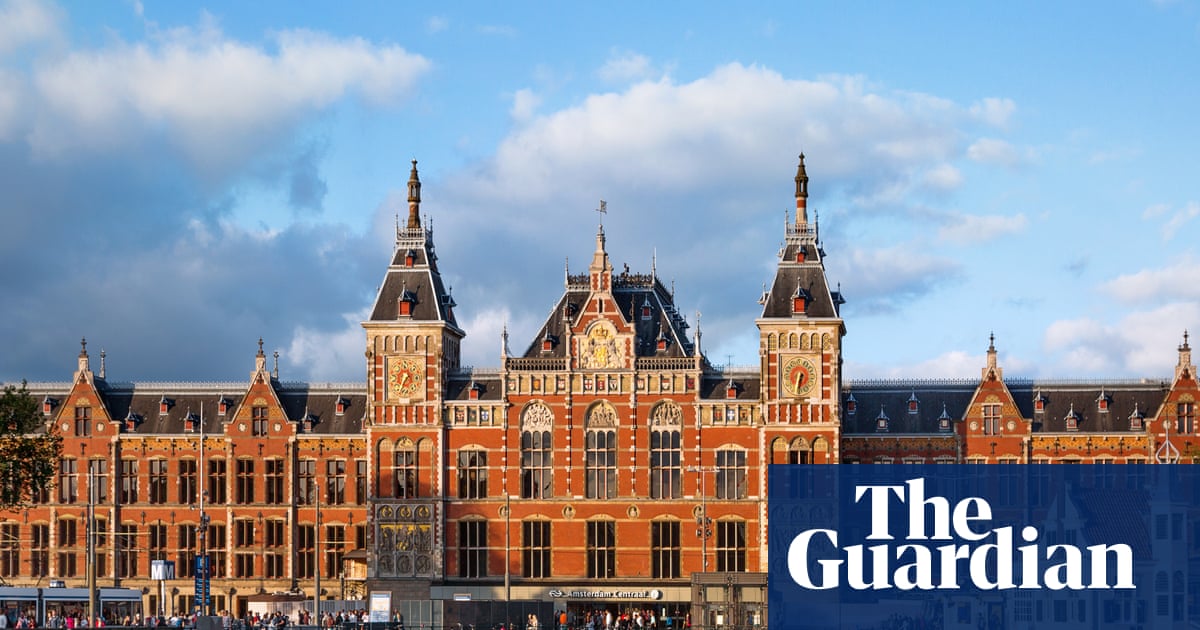
Don’t miss the excellent Grand Café Restaurant 1e Klas in the former first-class waiting room (entrance via platform 2B). It opens at 9.30am, so the perfect spot for breakfast after decanting from a Nightjet (or an early-morning Eurostar from London), and stays open till late evening, so also ideal for pre-departure supper. It serves fairly priced Dutch staples in a space that oozes retro flair. The Guardian, no less, has called it one of the “finest station eateries in Europe”.
An alternative pre-departure option for drinks and dinner is Bistro Berlage in the undercroft of the former Beurs (stock exchange), seven minutes walk from the station.
The Grand Café Restaurant 1e Klas in Amsterdam Centraal. Photograph: Greg Balfour Evans/Alamy
This can be a frustrating station, with fierce ticket barriers guarding platform access (luggage lockers in the east wing from €10 per day). It gets another black mark for the lack of showers for passengers arriving on overnight trains, but a big plus for being at the very heart of the city it serves – its enchanted canal network is right outside the station.
Just head south from the station to hit the main sights. If, like me, you prefer to cut away from the crowds, then leave the station on the north side and hop on the F4 ferry for a free 15-minute ride to the NSDM Wharf, an old shipyard that is now a creative and cultural hub with many alt-vibe cafes.
Berlin Hauptbahnhof
A stroll by the Spree River is an ideal prelude for a long distance train journey from Berlin. Photograph: John Kellerman/Alamy
For ÖBB Nightjets to Basel, Graz, Paris, Vienna and Zurich; SJ/RDC or Snälltåget to Stockholm; MÁV Euronight to Bratislava, Prague and Budapest; European Sleeper to Amsterdam and Brussels; and, from later this year, PKPIC night sleepers to Chelm and Przemyśl in eastern Poland
A multi-level essay in glass with a striking vaulted roof, the station is on five levels, with level 0 in the middle and trains departing/arriving on levels -2 and +2 – all utterly confusing for a first-timer. The station isn’t the most relaxing spot to linger, but for the exalted few, Deutsche Bahn’s premium (first-class) lounge is an oasis of calm.
For an extraordinary breakfast in a stunning setting, book a table at Käfer on the roof terrace of the Reichstag (900 metres from station, open daily from 9am). For a posh pre-departure dinner, Paris-Moskau at Alt-Moabit 141 (open from 6pm) is a traditional Berlin restaurant in a half-timbered building just 400 metres away.
Breakfast at Käfer on the roof terrace of the Reichstag. Photograph: Thomas Rosenthal
With time on your hands, catch the vibe of the German capital by wandering along the banks of the River Spree, passing the Reichstag en route to the Brandenburg Gate.
Leave luggage at the DB Gepäck lockers (levels -1 and +1, from €2 for two hours or €4 a day). Shower for a fee at the “rail and fresh” facility on level 0.
Vienna Hauptbahnhof
A visit to Vienna’s stunning Amelienbad pool will help compensate for the lack of showers at the city’s railway station. Photograph: Viennaslide/Alamy
For ÖBB Nightjets to Amsterdam, Berlin, Bregenz, Brussels, Cologne, Dresden, Hamburg, Hanover, Milan, Paris, Venice and Zurich (also until late September, additionally with ÖBB Nightjets to Florence, Rome and Verona); for Euronight to Kraków, Stuttgart and Warsaw; and other operators to Bucharest, Braşov, Kyiv and Lviv, plus summer-season overnight trains to Rijeka and Split
Fully opened 10 years ago, Vienna’s Hauptbahnhof rates as one of Europe’s most efficient transport hubs and boasts a greater range of destinations than any other station in Europe.
For a relaxed breakfast, skip the fast-food options in the station and head for Café Goldegg, with its elegant wood panelling and art nouveau style (on corner of Goldeggasse and Argentinierstrasse). Ask nicely and they’ll even knock you up a full English.
For evening eats, I recently followed the advice of Mark Smith, the legendary Man in Seat 61, and tried the excellent Ringsmuth at Johannitergasse 1 (closed Sun and Mon), a traditional Viennese restaurant with schnitzel galore as well as fish and veggie options.
Vienna Hauptbahnhof is south of the city centre. Three stops north on the U1 metro is Stephansplatz, where you can cleanse your soul at the lovely St Stephens Cathedral. Or go two stops south on the U1 to Reumannplatz to cleanse the body in art deco elegance at the wonderful Amelienbad indoor pool – a triumph of progressive socialist design. A visit will help make up for the lack of showers at the railway station for those arriving on night trains (but there are luggage lockers aplenty, from €2).
Zurich Hauptbahnhof
A colourful angel floats over the concourse at Zurich Hauptbahnhof. Photograph: eFesenko/Alamy
For ÖBB Nightjets to Amsterdam, Berlin, Bremen, Cologne, Graz, Hamburg and Vienna; and Euronight to Budapest, Dresden, Ljubljana, Prague and Zagreb
Zurich’s main station is a place for grand arrivals – check out the colourful flying angel pivoting over the concourse. Then freshen up with a shower (mezzanine level, €12). And now it’s time for breakfast …
My go-to spot is Roots on Lintheschergasse, just two minutes from the platforms. Power porridge and avocado toast go down a treat after a night on the rails, as do all sorts of shakes and juices. For pre-departure supper, try Maru, a little oasis of Japan on level 2 of the shopping complex under the station serving matcha and “Japanese comfort food”.
I love Zurich for its small-town feel. Having arrived on a night train and lingered over breakfast, I usually wander down pedestrianised Bahnhofstrasse and make for St Peterhofstatt, a haven of calm in the historic heart of the city.
London
The Caledonian Sleeper chugging through the Highlands
Paddington station for the GWR Night Riviera for 11 destinations in Cornwall;Euston station for Caledonian Sleeper trains to 40-plus stations in Scotland
Let’s not forget London. The last direct night sleeper service to the continent stopped 45 years ago (that was the Night Ferry to Brussels and Paris, which for a spell even conveyed a through sleeping car to Switzerland) but you can slip between crisp, clean sheets in sleepers departing the UK capital for the Cornish coast or Scottish Highlands.
Arriving passengers can benefit from posh arrival lounges with free showers at both Paddington and Euston, although the facilities at the latter are only for those who booked en suite accommodation on the train.
Passengers departing Euston should board early and head straight to the Club Car (seats are limited) for dinner for a taste of Scotland and a wee dram as they head north. Those departing from Paddington to Cornwall should take a chilled bottle of champagne to enjoy in the GWR lounge (the former royal waiting room) on Platform 1.
Via dell’Amore, also known as the “Path of Love”, is a UNESCO-listed coastal walk in Italy that is considered the most romantic in the world and is said to be one of the best walks in Europe
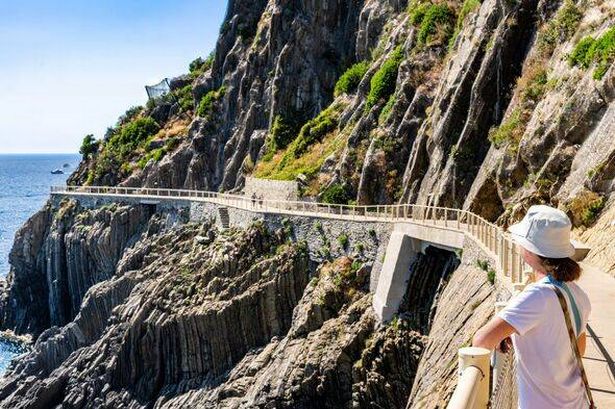
The path offers stunning views of the sea and majestic cliffs(Image: Getty)
Celebrated as amongst Europe’s finest coastal walks, this picturesque route guides you through stunning villages and spectacular vistas.
Via dell’Amore isn’t dubbed the “Path of Love” without good reason – and it’s definitely worth a visit if you’re after a scenic spot. According to AllTrails, this UNESCO-listed trail is regarded as the globe’s most romantic walk, thanks to its dramatic clifftops, delightful villages and panoramic views of the sparkling waters beneath.
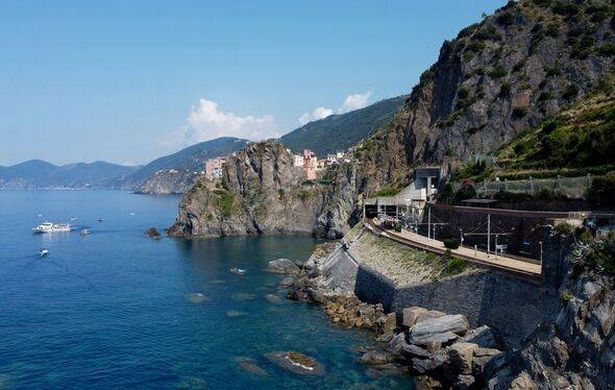
Situated in Cinque Terre, along Italy’s northwestern coastline, this famous pathway links the region’s two most southern settlements – Riomaggiore and Manarola – and has earned recognition as one of Europe’s premier three walks by travel blog, The World is Waiting.
The path reopened last year after being closed for 12 years(Image: Getty)
Initially carved out during the 1920s whilst building the coastal railway, legend tells that the route swiftly became a romantic rendezvous spot for sweethearts from the adjacent villages, reports the Express.
Nowadays, the tunnel linking both communities throughout the journey brims with love proclamations and padlocks deposited by couples from across the world who come to visit the iconic spot.
Among the most striking features stands a sculpture depicting a pair locked in an embrace against the ocean backdrop, which becomes particularly enchanting as twilight falls and the sun’s rays dance across the water.
Roughly midway along the trail, there is a delightful café which provides a peaceful spot to savour the scenery whilst enjoying a cooling beverage. Riomaggiore, the trail’s starting point, is a 13th-century village ingeniously built into the steep, rocky terrain. The tall houses have two entrances – one at street level and another higher up to accommodate the hillside.
The town is a labyrinth of narrow lanes, stone staircases, and vibrant buildings that seem to defy gravity as they ascend from the cliffs. Riomaggiore also boasts a breathtaking beach just a stone’s throw away from the harbour, with turquoise waters framed by the dramatic cliffs of the Liguria coastline.
Manarola, similarly, is dramatically situated on a high rock about 70 metres above sea level. This village features a tiny harbour and a quaint square surrounded by multicoloured houses all overlooking the sea.
After being shut for 12 years due to a landslide, the Via dell’Amore officially reopened in 2024. Access is restricted to certain times of the year, and visitors are advised to book a time slot in advance via the official Cinque Terre website. From June 1st to October 25th, the path stays open from 9am to 9.30pm, with the last admissions at 9pm.
One popular European city has been named the safest place to visit, according to new research
There’s one city that ranks the safest in Europe(Image: Getty)
When it comes to planning a holiday, there’s a lot to consider from the local cuisine and attractions to accommodation. However, one crucial factor is the safety of the destination.
Topping the list with an overall safety score of 44.14 is the Croatian city of Dubrovnik.
Not only is Dubrovnik a safe place to visit, but it also attracts crowds of tourists with its medieval architecture and status as a UNESCO World Heritage site.
Known as the ‘Pearl of the Adriatic’, the city boasts a charming Old Town for visitors to explore.
Dubrovnik scored 8.76 from Numbeo for crime level, indicating it’s ‘very low’ and 35.38 for crime increasing over the last five years, also deemed ‘low’.
Coming in second with an overall safety score of 55.81 is Tallinn, the capital of Estonia.
Like Dubrovnik, Tallinn is a UNESCO World Heritage site and a medieval city.
Visitors can safely enjoy a plethora of cafes and restaurants serving local cuisine.
Poland’s capital, Warsaw, ranks third with a safety score of 60.19.
Despite seeing a ‘moderate’ increase in crime over the past five years, the popular destination maintains a ‘very low’ crime level.
Many tourists flock to this city to delve into its rich history and sample the vast array of Polish cuisine on offer.
Prague, the Czech Republic’s capital, came in fourth with a score of 60.88, its ‘moderate’ crime rating over the past five years contributing to an overall ‘very low’ crime score.
As the largest city in the Czech Republic, Prague draws in thousands of tourists annually, who are captivated by its gothic cathedrals and skyline filled with spires.
Kraków took fifth place with a score of 64.31. According to Riviera Travel, it has a ‘low’ crime level of 20.7 and a ‘moderate’ increase in crime over the past five years of 43.61.
Kraków is home to Europe’s largest medieval market square, a renowned Old Town, and is also a UNESCO World Heritage Site.
Meanwhile, Amsterdam ranked sixth with a score of 71.09, followed by Munich in Germany with 73.74 and Reykjavik, the capital of Iceland.
Zurich was ninth, with Budapest, the capital of Hungary, rounding out the top ten.
Turkey’s serene Konakli is the most affordable destination for couples looking for a break, with prices averaging £421 per person for an all‑inclusive stay, according to TravelSupermarket
Konakli is the place to go for a cheap holiday(Image: Getty Images)
TravelSupermarket, a holiday comparison site, has revealed the most affordable beach destinations for couples looking to escape once the summer holidays end, with September offering great value for romantic getaways.
Alanya features prominently on the list(Image: Getty Images/iStockphoto)
Konakli sits on the Turkish Mediterranean coast and is best known for its beautiful beaches. Hospitality is by far the biggest business in the region, with 15 five‑star hotels in a town of just 18,000 people.
It’s just 20 minutes away from Alanya, which is a bustling resort packed full of restaurants, bars and holidaymakers from across the world. If Konakli begins to feel a little quiet, then a visit to Alanya is a good bet.
If Konakli doesn’t float your boat, fear not. There are plenty of other cheap all0inclusive resorts to choose from.
TravelSupermarket ranked Puerto de la Cruz in Tenerife second on the list at £487 per person. Turkey’s popular Alanya resort claims third place at £493 per person, while Spain’s Costa Dorada destination Salou ranks fourth at £506 per person.
Greek destinations feature prominently with two Corfu locations making the list, alongside Zante’s Alykes which secures fifth place at £508 per person. Marrakech in Morocco offers excellent value in sixth position at £531 per person, with Corfu’s lively Kávos ranking seventh at £543 per person, followed by Bulgaria’s Sunny Beach at £557 per person in eighth place.
Steph Marinkovic, head of editorial at TravelSupermarket, shares her expert couples tips for five of the destinations below, alongside a great deal for each destination:
Konakli – £421 per person
Turkey is a great bet for couples on a budget, and serene Konakli offers the best of all worlds. There’s a quiet, sandy beach for sunbathing, the Taurus Mountain for hiking and lively Alanya – ideal for fun nights out – just 20 minutes away.”
Deal: Seven nights all‑inclusive at the 5‑star NoxInn Deluxe Hotel from £419pp
Puerto de la Cruz – £487 per person
“Puerto de la Cruz is a world away from the resorts in Tenerife’s south. Colourful streets splashed with huge murals make this north coast city a joy to explore. The black‑sand beaches and cool Lago Martiánez pools are just the cherry on top!”
Deal: Seven nights B&B at the 4‑star Melia Costa Atlantis Tenerife from £479pp
Alanya – £493 per person
“Couples can combine culture, history and plenty of opportunities for R&R in sun‑drenched Alanya. Highlights include Cleopatra Beach, Alanya Castle, and the city’s excellent range of traditional Turkish hammams and spa hotels.”
Deal: Seven nights all‑inclusive at the 4‑star Club Big Blue Suite Hotel from £465pp
Salou – £506 per person
“Salou’s three‑park PortAventura World is much quieter in September, so kids‑at‑heart can indulge their inner child without the crowds. Couples will also love the resort’s chilled‑out side – think romantic seaside strolls, spa hotels and wine tasting in ‘cava country’ close to nearby Tarragona.”
Deal: Seven nights B&B at the 4‑star H10 Salauris Palace from £440pp
Alykes, Zante – £508 per person
“Low‑key Alykes is the perfect antidote to rowdy Laganas just 30 minutes’ drive away. The village centres around a golden beach lined with loungers and relaxed bars. Paddleboard together by day, then sip cocktails as the sun sinks over the Ionian Sea.”
Deal: Seven nights B&B at the 4‑star Koukounaria Hotel & Suites from £499pp
One of Europe’s coolest seaside towns has flown under the radar for years but in recent months it’s becoming quite the hotspot rivalling popular holiday towns in Spain
(Image: Getty Images)
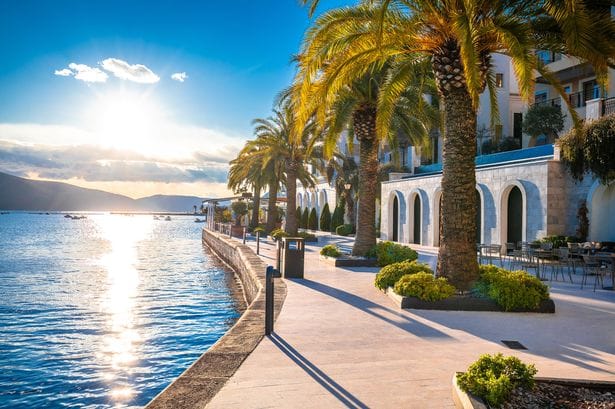
A beautiful seaside town that boasts a palm-fringed promenade and azure waters has been named as one of ‘Europe’s coolest’, with insiders saying it rivals hotspots in the likes of Majorca and Ibiza.
Tivat in Montenegro is being hailed as an alternative summer destination for Brits, thanks to its balmy temperatures, gorgeous coastal views and lack of huge tourist crowds to be found in other European destinations.
The good news for Brits is that you don’t need to break the bank if you want to see it for yourself. easyJet and Jet2 both offer direct flights to Tivat from London, and the cheapest fares tend to be in October according to Skyscanner, which shows return flights from £59 to the gorgeous seaside town, with a flight time of just under three hours.
As for accommodation, Tivat has a reputation of being all about luxury hotels and chic stays, but there are actually a number of budget-friendly options too. For example, you can find hotel stays from £34 a night with Kayak.
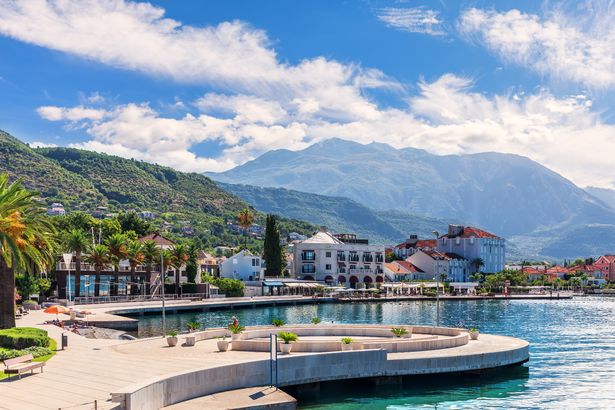
There’s plenty to see and do in town too. One of the highlights has to be Porto Montenegro which is home to plenty of harbour-front restaurants and shops with views out to the boats as well as some of the area’s rocky beaches. Adventure seekers may also want to consider a boat trip to explore the region.
Porto Montenegro is popular with visitors (Image: Getty Images/iStockphoto)
The Pine Embankment tends to be a hit with visitors because it boasts a wide promenade lined with shops and restaurants as well as attractions such as the historic Jadran Ship. It’s worth noting that this area can be a little pricey – think the sort of vibes you’d get at Mykonos but with less of a party scene.
For those who want to explore some of the beautiful scenery that Montenegro has to offer, Tivat can be a great base from which to head into the mountains and take on the breathtaking hiking trails. Mount Vrmac tends to be a popular spot for those who want everything from an easy stroll to challenging hikes.
In recent months Tivat has been capturing the attention of intrepid explorers. Insiders at travel firm Welcome Pickups, which organises airport and port transfers, described it as “one of Europe’s most exciting summer alternatives” after seeing a 200% increase in bookings to the hotspot just this year.
Dimitris Floros, the company’s CCO, added: “Tivat is capturing the attention of holidaymakers who are looking for the luxury and scenery of the Mediterranean without the premium price tag. We’ve seen a remarkable 200% increase in airport transfers in Tivat since 2024, reflecting how quickly this destination is climbing the ranks with British travellers.
“Its sleek infrastructure, combined with the charm of Porto Montenegro and seamless connectivity from the UK, make it a standout alternative to more saturated spots like Dubrovnik or Ibiza. The surge in demand shows that British travellers are not just looking for new destinations, they’re looking for ease, value, and a touch of indulgence, all of which Tivat delivers beautifully.”
Do you have a travel story that you want to share with us? Email us at [email protected].
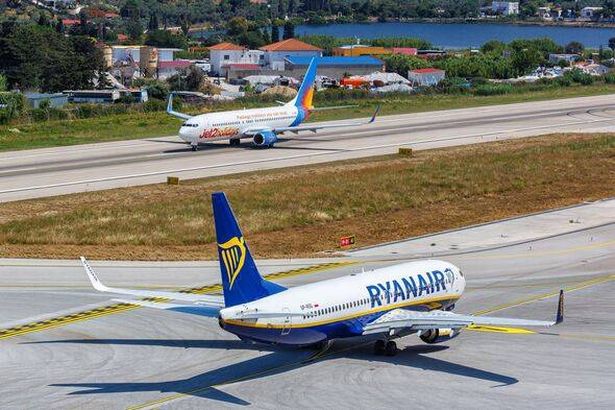
The airport in Greece has one of the shortest runways for passenger jets in Europe – but it can accommodate aircraft as large as a Boeing 767-200
Flights from across Europe fly to the airport(Image: Getty)
For many jet-setters, the lengthy taxi down the airport runway before take-off can feel like an eternity. It often seems as though the plane will never lift off as it trundles along the tarmac before the engines roar into action and it ascends.
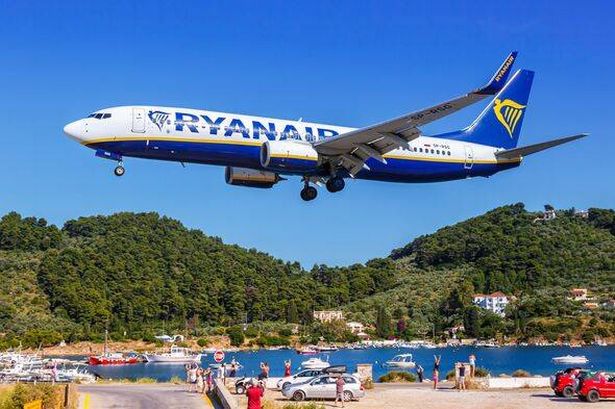
However, travellers to a small Greek island may be surprised to learn that it boasts the shortest runway for passenger jets in mainland Europe. The runway at Skiathos measures a mere 5,341 feet, significantly shorter than the norm.
To put it into perspective, London Heathrow’s northern runway stretches approximately 12,801 feet, Manchester’s runway spans 10,948 feet, and Birmingham’s runway is 10,013 feet long, reports the Express. Despite its relatively modest length, the airport can handle aircraft as large as a Boeing 767-200 and welcomes flights from across Europe.
The airport is popular with planespotters(Image: Getty)
These include routes from various UK airports, with numerous seasonal flights operating to this Aegean island. Due to the island’s rugged terrain, land had to be reclaimed from the sea to facilitate the construction of the airport, which opened its doors to passengers in 1972.
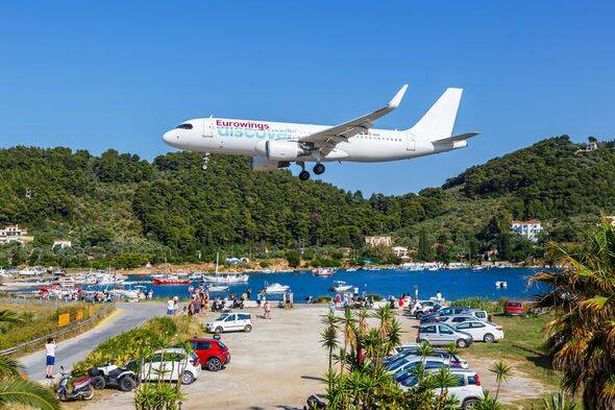
Now, hundreds of thousands of passengers pass through each year, with over 552,000 recorded in 2023 – including more than 192,000 travelling to or from the UK. Its proximity to a public road, coupled with its location and frequency of flights, makes Skiathos Airport a favourite spot for plane enthusiasts who often share snaps of massive aircrafts swooping in low for landing.
The airport’s runway is ‘short and narrow’(Image: Getty)
Despite having one of the shortest runways in Europe, it doesn’t hold the record for the shortest runway within a European nation. That distinction belongs to Juancho E. Yrausquin Airport on Saba, boasting a mere 1,312 feet long runway and being part of the Kingdom of the Netherlands.
The twist is that Saba is actually an island located in the Caribbean, across the Atlantic.
El Capricho, on the outskirts of Madrid, is one of the city’s lesser-known parks. It was built in 1784 by the Duke and Duchess of Osuna, and visited by 18th-century artists such as Francisco de Goya. Its 17-hectare gardens were designed by Jean Baptiste Mulot, who also worked on the Petit Trianon gardens at the Palace of Versailles. They are in three sections: Italian, French and English landscape. The park also has a small lake, a labyrinth, a bandstand and a mansion. One fascinating feature is an underground bunker, built in 1937 during the Spanish civil war – there are free guided tours at weekends. Open weekends and public holidays, 9am-9pm, April to September, then 9am-6.30pm, October to March, esmadrid.com
Onion Garden, London
The Onion Garden is in Westminster, near St James’s Park. Photograph: Anthony Dawton
You’re never far from a garden in London: 20% of the city is public green space, including about 3,000 parks, and it became the world’s first National Park City in 2019. As well as eight royal parks and vast areas of greenery such as Hampstead Heath, the city has numerous hidden havens. One of them is the tiny Onion Garden near Victoria Station and St James’s Park. According to the tour guide Jack Chesher, it was a “derelict concrete corner” until late 2021, when it began to be transformed into the “hanging gardens of Westminster”. The pocket park now has more than 200 species of plants – including a fair few onions – and displays artworks such as mosaic wall art and sculptures. There is a cafe and events including singing, craft workshops and poetry recitals. Open weekdays 7.30am-5.30pm (until 10pm on Thursdays), weekends 8.30am-4.30pm, theoniongarden.org
Anne Frank Garden, Paris
Jardin Anne-Frank in the Marais area of Paris. Photograph: Samantha Ohlsen/Alamy
This little-known walled garden, found down a dead-end road in the Marais, once belonged to the Hotel de Saint-Agnan. The hotel is now the Musée d’Art et d’Histoire du Judaisme (mahJ), and the garden, dedicated to Anne Frank, is open to the public. The central plot dates to the 17th century, and there is a small orchard, vegetable garden, pergola and children’s play area. Most moving is the chestnut tree, planted in 2007 from a graft of the tree Anne looked at from her window in Amsterdam and wrote about in her diary. As well as the mahJ, the Pompidou Centre is a short walk away. Open 10am-9pm in summer, paris.fr
Brera Botanical Garden, Milan
Flowering peonies at Brera. Photograph: E Fesenko/Alamy
Hidden behind the south wall of the Palazzo Brera in the centre of Milan is an ancient medicinal garden. Humiliati priests grew plants and meditated here in the 14th century, followed by the Jesuits. In 1775, Empress Maria Theresa of Austria ordered it be turned into a botanical garden, and it has been managed by the University of Milan since 1935. The 5,000sq m garden still has its original layout: two oval ponds; an arboretum containing two centuries-old Ginkgo biloba trees and other exotic specimens; and themed flowerbeds (medicinal, Mediterranean, plants used for dyeing, textiles, paper …) Open 10am-6pm, Monday to Saturday, until 31 October, then 9.30am-4.30pm, until 31 March, ortibotanici.unimi.it
Centralbadets Garden, Stockholm
Centralbadets dates from 1904. Photograph: Konstantinos Angelopoulos
Right in the middle of Stockholm, off the main shopping street of Drottninggatan, is a hidden courtyard garden. In the 18th century, it was the garden of the farm where the architect Carl Hårleman lived – two of the pear trees are thought to date from this period. Another architect, Willhelm Klemming, bought the property in 1901, renovated the garden and built the Centralbadets in 1904 – still an affordable day spa today. The lush little garden has a pond with a water sculpture, flowerbeds, winding paths and shady places to sit. There are three adjacent restaurants, all with outdoor tables. Closed at night, parker.stockholm
The Garden of the Royal Library, Copenhagen
Royal Library Garden in Copenhagen. Photograph: Oliver Forstner/Alamy
Hidden between Christiansborg Palace and the Royal Library in a historic part of central Copenhagen is a tranquil public garden. The garden was built in 1920 on top of Tøjhushavnen, an old naval port. Reminders of this maritime past include a pond in the middle of the garden, with an eight-metre-high column that shoots a spout of water every hour on the hour, and an old mooring ring at one end. There is also a statue of the Danish philosopher Søren Kierkegaard, whose manuscripts are in the library’s collection and occasionally go on display. There are benches under the trees to sit quietly with your own book. Open 6am-10pm year-round, visitcopenhagen.com
Károlyi-kert, Budapest
Karolyi-kert is thought to be Budapest’s oldest garden. Photograph: Michael Brooks/Alamy
Tucked away in the palace district, the Károlyi-kert is thought to be Budapest’s oldest garden, and contains Hungary’s oldest mulberry tree. It was once the private garden of the Károlyi Palace, and has been a public park since 1932 (don’t be deterred by the forbidding-looking iron railings). It is a mix of styles: geometric central flowerbeds and fountain, and English-style paths and plant arrangements. There is a children’s playground and a statue of a beloved late resident: Károly, a Belgian giant rabbit. The wine bar and restaurant Csendes Társ is next to the park and has outdoor tables right outside the gate. Open 8am-9pm in summer, welovebudapest.com
University Library Roof Garden, Warsaw
The University of Warsaw’s library has one of hte largest roof gardens in Europe. Photograph: Olena Kachmar/Alamy
The landscaped garden on top of the University of Warsaw’s library is one of the biggest roof gardens in Europe, at more than a hectare (2.5 acres). It opened in 2002 and remains a little-known escape from the busy Powiśle district. A gentle slope leads to the lower garden, which has a duck pond and a series of granite sculptures. The upper garden is divided into four colourful sections: gold, silver, red and green. The areas are connected by paths, bridges and pergolas, and a cascading water feature joins the upper and lower parts. The garden has panoramic views of the Warsaw skyline. Upper garden open from April to October, lower garden open year-round, en.uw.edu.pl
Vrtba Garden, Prague
Vrtba has Italianate gardens on a hillside. Photograph: Lucie Debelkova/Alamy
Although it is close to sights such as Charles Bridge and Lesser Town Square, this terraced garden on Petřín hill is hard to find. Visitors who seek it out are rewarded with baroque beauty. The Italianate garden was created around 1720 on the site of Vrtbovský Palace’s former vineyards. Three terraced platforms, connected by steps, are full of hornbeams, yews, and tens of thousands of flowers and shrubs. The gardens are decorated with statues, vases and paintings, and a ceremonial lighting event is held twice a year. From the pavilion on the top terrace, there are views of the castle, cathedral and old and new towns. £5 adults/£4 children/£15 families, open 10am-7pm, April to October, prague.eu
Diomedes Botanical Gardens, Athens
Much of Diomedes has been left as a natural habitat . Photograph: Coin Up/Alamy
The National Garden in central Athens is a well-known attraction, but the city also has a lesser-known botanic garden, a 20-minute bus ride away. Most of this vast, 186-hectare (460-acre) green space is left as a natural habitat, but 11% (about 20 hectares) is cultivated and contains more than 2,500 plant species. Visitors can walk through the arboretum, with trees from most continents; the ornamental plants section, with 15 flowerbeds and 25 ponds; the historic plants sections, with species recorded by ancient Greeks; and many more – medicinal and aromatic plants, plants of economic importance, hothouse plants, rare plants … There is also a small cafe. Open weekdays 8am-2pm, weekends and holidays 10am-3pm, closed in August, diomedes-bg.uoa.gr
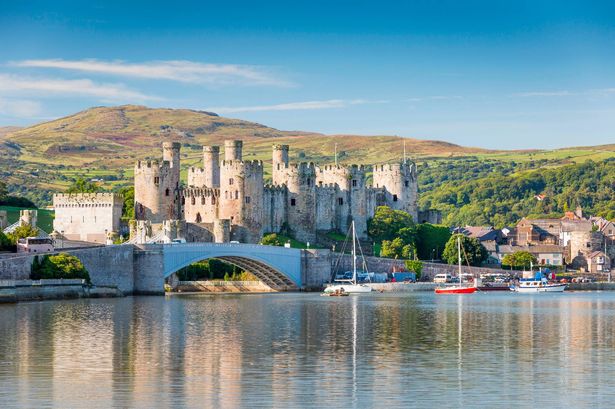
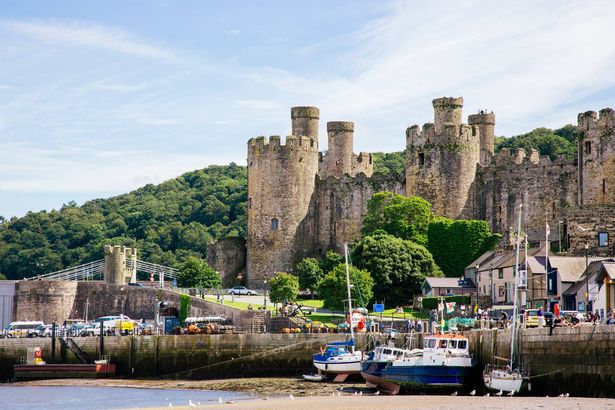
With its towering walls, ancient castle and bustling harbour, Conwy is one of the most stunningly picturesque towns you’ll visit in Wales. This historic coastal retreat isn’t just popular with tourists; it even earned a spot on the Sunday Times’ list of the top places to live in the UK.
“Every kind of natural adventure is within easy reach of the brooding towers and tumbledown castle walls that cast an enchanting spell over this coastal hotspot,” they wrote of Conwy.
“Those lucky enough to live in the town can pick up groceries and grab a coffee in impeccably historic surroundings, while enjoying the reassurance of regular trains and a fast road.”
Conwy Quay is the ideal starting point for your exploration, adorned with lobster pots, entwined fishing nets, and all the delightful seaside paraphernalia you’d expect. Right next to The Liverpool Arms there’s even a convenient information board displaying the current rates if you’re considering docking your boat in the harbour, reports Wales Online.
Conwy is one of the most beautiful places you’ll ever visit (Image: The Quay Hotel and Spa)
Along the harbour, you’ll also discover one of Conwy’s most charming features: The Smallest House in Great Britain. Acknowledged by the Guinness Book of World Records, this petite red-fronted dwelling measures a mere 72 inches wide and 122 inches high and was inhabited until May 1900.
It’s been handed down through the same family for over 130 years. Its last known resident was a 6ft 3in fisherman named Robert Jones. Today, it serves as a quaint attraction and picture-perfect backdrop.
Things to do in Conwy
If you fancy a pint with a view, pop into The Liverpool Arms, the oldest traditional pub in Conwy town.
Situated right on the waterfront, just across the road from the quay and beaches, it’s particularly popular on a warm day with patrons spilling out onto the streets. History, harbour views and a good pint, what more could you ask for?
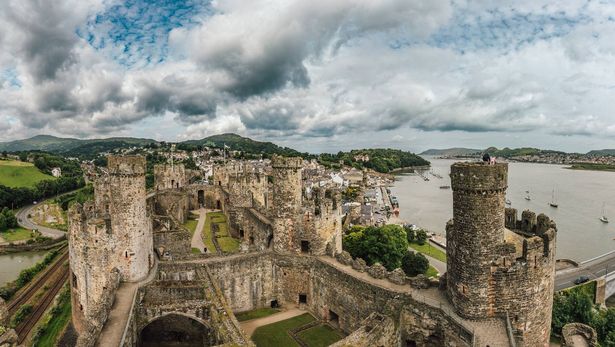
Alongside the harbour, Conwy’s main attraction is the Castell Conwy (Conwy Castle) and its walls.
Conwy Quay is the perfect place to kick off your exploring(Image: Alexander Spatari)
Part of Wales’ UNESCO World Heritage Sites, Castell Conwy boasts a concentric design with eight towers. It’s a key component of King Edward I’s “Iron Ring”, a chain of impressive fortresses built in Wales during the late 13th century to cement English dominance following the conquest of Wales.
Visitors can delve into the inner and outer wards, which house numerous rooms, and explore the castle walls, which feature 21 towers and fully encircle the town of Conwy.
Recognised for its aesthetic appeal and historical importance, the castle was dubbed one of Europe’s ‘most beautiful’ by influential publication Condé Nast Traveller.
They noted: “Aside from getting us one step closer to living out our fairytale fantasies, the staggering structures showcase some of the world’s best architecture, most stunning landscapes, and maybe even a ghost story or two. There’s perhaps no better place on earth to find awe-inspiring castles than in Europe, where it seems like you can’t visit a city or take a road trip without stumbling upon some sort of royal dwelling.”
Like many historical structures in Wales, Conwy Castle is said to be haunted, much to the delight of ghost hunters and paranormal fans.
Eerie sightings have included various silhouettes and dark figures observed from the battlements and windows overlooking the town. Given that King Henry VIII used the castle as a prison in the 16th century, many believe these apparitions to be former inmates.
In 2016, a group of paranormal investigators claimed to have captured the voice of a young girl spirit uttering ‘don’t tell them’. Not exactly what you want to hear in a dim, echoing fortress. In 2020, a man snapped a photo outside Conwy Castle, which he believes shows a procession of phantoms led by a male ghost with a sword, as reported by North Wales Live.
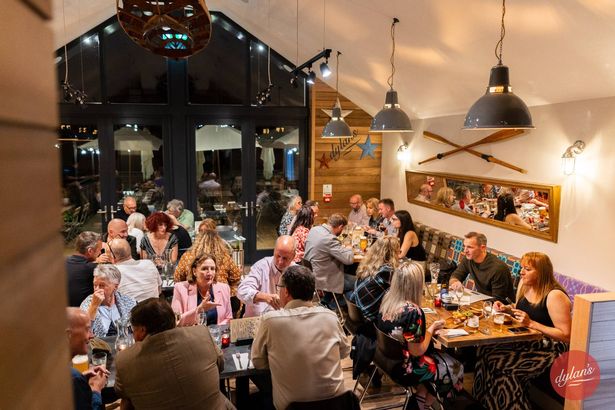
Dylan’s has opened its latest restaurant in the centre of Conwy(Image: Dylan’s)
Once you’ve had your fill of castles and spectres, it’s time for a treat, and Dylan’s Restaurant is just the place. Established in 2012, Dylan’s aimed to celebrate the produce, character, and natural beauty of North Wales, and they’ve hit the mark with this latest venture.
The menu is a heartfelt tribute to local produce, gathered from across the region and served in a building as stunning as the dishes themselves. From the upper levels, you can enjoy panoramic views of the 13th-century St Mary’s Church and Conwy Castle.
For somewhere to stay, the Quay Hotel and Spa is a great option.
This destination spa hotel boasts breathtaking views of the grand Conwy Castle and estuary and is conveniently situated near the Welsh towns of Conwy and Llandudno.
NEED a holiday this summer but outrageous prices putting you off? We’ve crunched the numbers to find the cheapest locations for family holidays across Europe.
All-inclusive family package holidays from the UK have jumped in price for some of the most popular destinations among Brits, including Spain, Cyprus and Greece.
5
We’ve gone to the UK’s top tour operators to find Europe’s cheapest sports for a family holiday this summer, from Kos in Greece to Sozopul in Bulgaria (pictured)Credit: Getty
However, some holiday hotspots in these countries still have some great deals, if you know where to look.
TUI, Jet2, Travel Supermarket and Love Holidays all gave us the inside knowledge on their most affordable destinations still on sale for summer 2025.
Because where you go in Europe can make a big difference to how much you spend.
These are the cheapest destinations in Europe for a holiday this summer 2025 (All package prices are for two adults and two children and include return flights from the UK).
Sozopol, Bulgaria
Sozopol is a top pick for budget-conscious Brits who want a break in the sun without a big price tag.
As well as a beautiful old town dotted with cute and cheap cafes and shops, Sozopol has one of the most beautiful beaches in Bulgaria.
This sweeping bay is rich in golden sand and has beautiful, calm blue water that is perfect for swimming.
Central Beach, as well as Sozopol itself, is also less busy than the capital Sofia and its popular beaches.
Plus, the beach bars and cafes along the sand are slightly cheaper and you’ll find it easier to get a table overlooking the sea.
Beach Bar, Sparrow, has a shady terrace on the sand and you can get a beer for £2.50 and chicken and chips for £6.
Book with: travelsupermarket.com for seven nights bed and breakfast, staying at the 3-star Flagman Hotel, with flights on Jet2 from Birmingham, £399 per person.
Kos, Greece
5
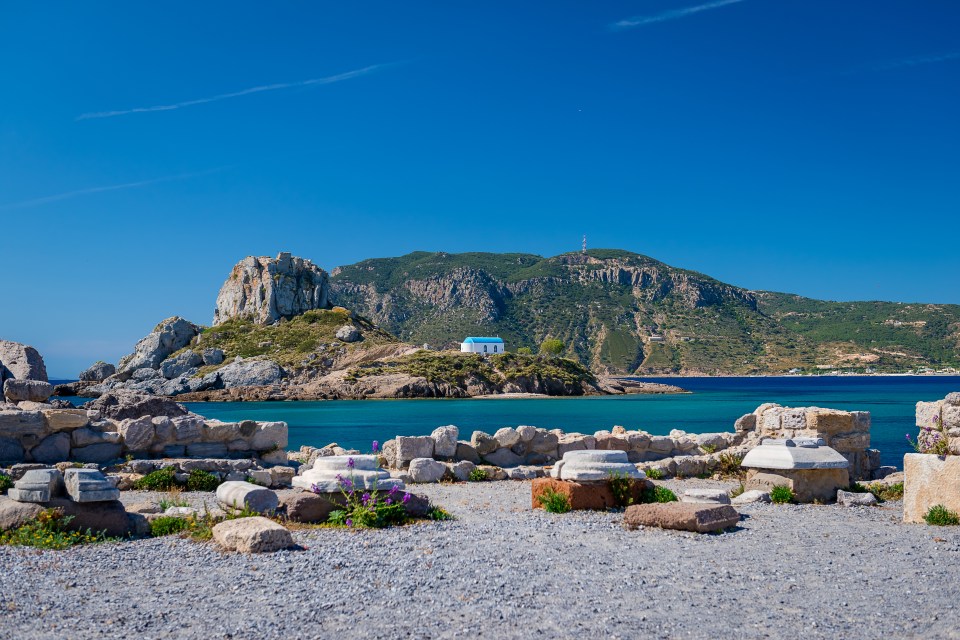
Historic St.Stefanos ancient church ruins on Kos islandCredit: Getty
Kos has always had a quiet reputation for being one of the lesser crowded, more affordable of the Greek islands.
You are spoiled for choice here with brilliant blue waters, sandy beaches and quiet coves, where if you go at the right time of day, you could be the only person on the beach.
Rent a small speedboat for £50 a day and explore the harder to reach beaches, or just take it a mile off the shore and spend the day sunbathing or and jumping off the boat into the crystal clear sea to get cool.
For dinner, one of the many local restaurants in Kos Town will have you filling your boots with gyros wraps, hummus and chips for only £5.
A cold glass of wine to wash it all down is around £4 at most places.
Sunsets are free and stunning, especially when viewed from a table on the beach.
Book with: jet2holidays.com for seven nights at Anastasia Apartments self catering, with return flights from East Midlands Airport, including 22kg checked luggage per passenger, for £438pp.
Paphos, Cyprus
5
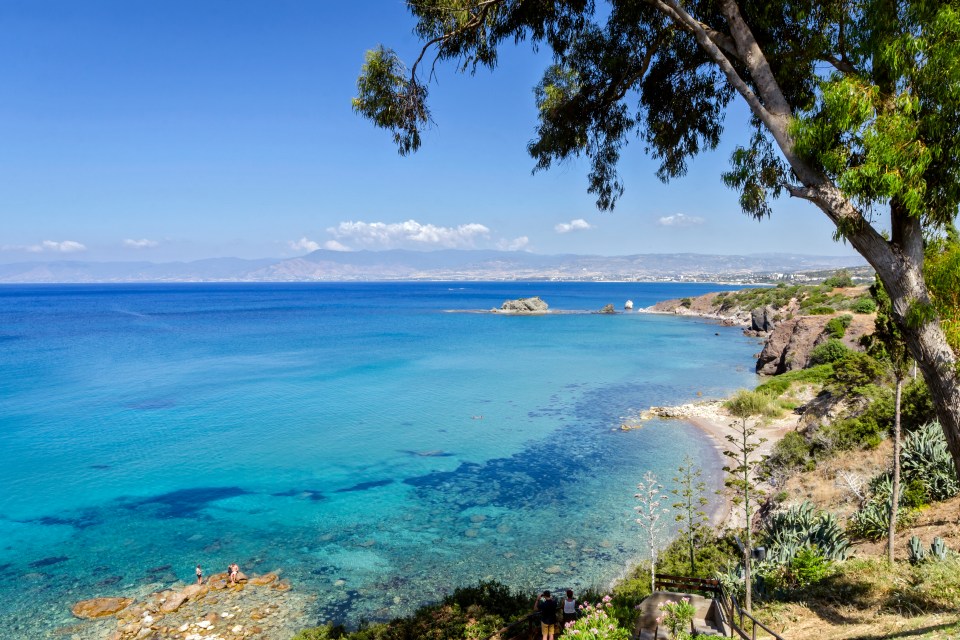
The coastlne in Paphos, Cyprus is stunning and affordable for families on a budgetCredit: Getty
Paphos is a top budget destination if you want a mix of sunbathing and sightseeing.
The coastline is packed with stunning Blue Flag beaches, and spacious sandy stretches all along the coast.
There is a range of hotels in every price range, from 2* self-catering apartments where you can get terrific deals, to luxury villas and 5* star hotels.
If you want to spend time exploring, many of Paphos’ main attractions are within walking distance of the harbour.
Ask if your hotel has a shuttle to get you there, the rest can be explored on foot.
This includes the UNESCO World Heritage Site, Kato Paphos Archaeological Park, which has some of the Mediterranean’s best-preserved mosaics and Paphos Old Town, which mixes ancient buildings and streets with modern additions better than most classic cities.
You have to go to Pinguino on the harbour for breakfast. A full English or a huge pile of pancakes is only £5 and we guarantee you won’t need lunch that day.
Book with: travelsupermarket.com seven nights at the Hilltop Gardens Hotel Apartments self catering, with return flights from London Stansted on Jet2, including 22kg checked baggage per passenger, for £282pp. This deal lands back in the UK on the 4th September, so if you have a few extra inset days at the end of the school holidays, take full advantage!
For a similar, mid-holiday package, departing on 25th July and staying at the Marion Apartments, in Paphos, it’s £339 with loveholidays.com.
Heraklion, Greece
5
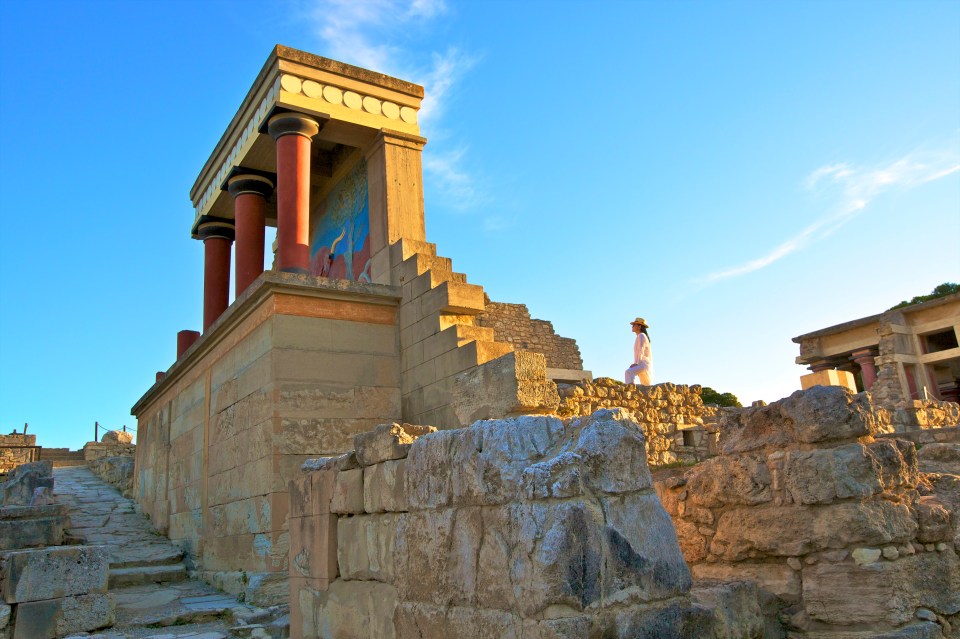
Heraklion has a lot of historic sites but beautiful beaches and excellent value resorts are a short drive away.Credit: Getty
Crete is the largest of the Greek Islands. In the Heraklion area, you have a choice of different resorts, including Malia, Rethymnon and upmarket Elounda.
Heraklion is the largest city in Crete and has an interesting history, including the 16th century Koules fortress on the old Venetian port and the striking fortification walls.
The best deals for beach holidays in this area are just outside the city on the north coast.
There are a lot of resorts along the coastline, most look out onto the brilliant blue Aegean Sea.
The beaches close to Analipsi are the longest and sandiest. The rocky coastline here also makes this a great area for snorkelling.
You will find there are lots of boat trips and guides offering tours at affordable prices.
Book with: loveholidays.com for seven nights self catering at the 3-star Kasapakis Hotel & Apartments and return flights from London Stansted, £339 per person.
Lanzarote, Canary Islands
5
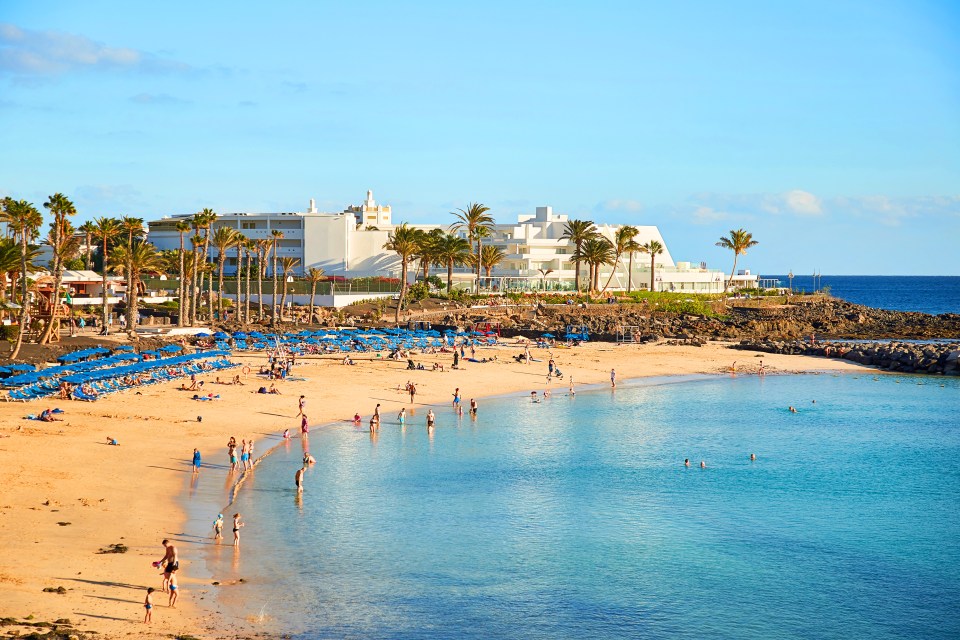
Playa Blanca in Lanzarote is just one of the island’s beautiful budget beachesCredit: Getty
Lanzarote is one the best islands in the Canaries for families.
You are spoiled for choice with more than 100 beaches, many of which are Blue Flag standard with crystal clear water.
Everything is on offer here, from paddleboarding to boat hire, paragliding and of course, paddling and swimming in the calm waters, which are ideal for younger children.
Plus, the weather here is almost guaranteed to be sunny and hot almost all year, so those who can travel outside of term time can get an even better deal.
The beaches are framed by green hillsides that have hotels and residential homes nestled in cliffs.
Deals on hotels from all the major holiday companies are very competitive with packages for as little as £200 per person for a week if you can travel outside of the school holidays.
And there are so many beachfront bars and restaurants, if you don’t get food with your hotel package, there is no end of offers to get you in.
Bottles of beer are £4 on the seafront but only £2 if you pick up a pack in the supermarket.
Book with: travelsupermarket.com for seven nights in the 4-star Sands Beach Resort and flights on Thomas Cook from Bournemouth, for £339pp.
Tips for booking bargain breaks in summer 2025
Budget-conscious ways to save money booking a holiday this summer
Go somewhere different.
You may have set your sights on the Costa del Sol but you may find much better deals for lesser-known beach places like Bulgaria and Poland. These destinations have beautiful beaches and low lifestyle costs, with beer as low as £2 a pint.
Money talks.
To be really clever, choose destinations where the value of the pound is strong. This means more bang for your buck whether you are buying a beer and a sandwich or indulging in a serious shopping spree. This year, the weakest currencies against the GBP include Turkey, Bulgaria and Portugal.
Staycation in the UK
Staying on British soil means you don’t have to navigate the airport or pay extra for baggage, transfers or currency exchange. There are still some excellent deals going on UK holiday parks that have water slides, kids clubs and beaches on the doorstep. These can often work out less than overseas flights alone. See our round up of what holiday parks to book this summer here.
Is all-inclusive always best?
If you are not a big drinker or eater or have fussy kids in the family, booking an all-inclusive might not be the best option for your group. So many resorts have self-catering packages too. You will get all the perks of the resort facilities, like kids clubs, evening entertainment and pools, but with a small kitchenette to make your own lunch and dinner and save big.
Book very early…
Some packages, such as with Jet2hoidays and TUI can be booked a year in advance and those willing to commit early can sometimes get some unbelievable discounts.
If you know when you want to travel, keep an eye out for prices on the destinations and resorts you want to book. They may go up and down in price throughout the year, depending on whether airlines and companies have a sale on.
…or, last minute.
Alternatively, booking last minute can mean some fantastic final dash prices. See our list below for the cheapest places to holiday in Europe this summer.