
essayli

Union power vs. MAGA politics in California school superintendent race

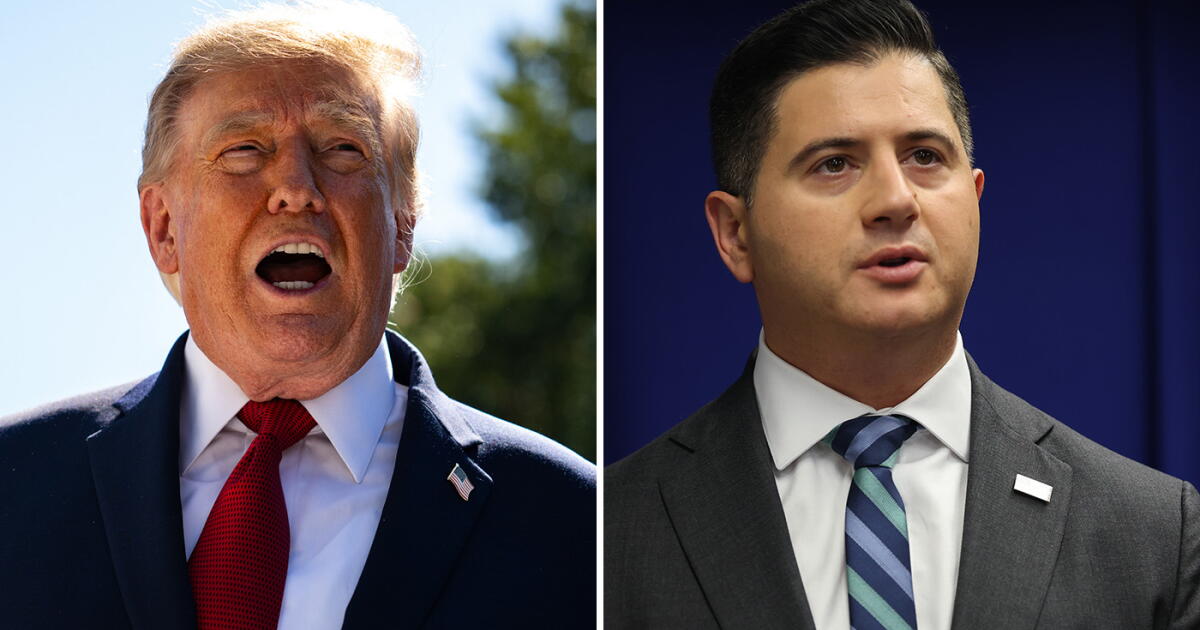
The race for California’s next superintendent of public instruction is meant to be nonpartisan. Still, the two candidates — both school board presidents — are pushing decidedly political campaigns, one aligning with liberal Democrats and the other with pro-Trump Republicans as they present dueling visions for how the state’s children should be taught.

Democrat Richard Barrera, the favorite, beat out six other Democrats with his background in union organizing and liberal politics — and with more than $5 million from the California Teachers Assn. Republican Sonja Shaw rode a wave of support from a conservative education movement she helped build alongside MAGA organizations, Christian nationalists and anti-LGBTQ+ groups, while also consolidating mainstream Republicans behind her.

Although Democratic state lawmakers recently stripped many of the powers from the superintendent, the race remains a bellwether for how Californians feel about the public education of about 5.7 million children — as the Trump administration aggressively targets the state over its progressive policies.

Candidates’ disparate visions

Taking the California Democratic Party convention stage in February, Barrera, president of the San Diego Unified Board of Education, gave a quick shout-out to the California Teachers Assn. for backing his bid.

He then promoted his work in San Diego to improve student performance, raise teacher salaries and construct “environmentally sustainable schools built by union workers.” He blasted “downtown Republican business interests” for trying to privatize schools, and President Trump’s immigration policies, which he said terrify many California students who fear losing their undocumented parents.

“It’s time for us to organize, stand up to Trump, abolish ICE and create the schools our students are worthy of,” Barrera said.

Two months later, Shaw, president of the Chino Valley Unified School District Board of Education, introduced herself at an event as a mom and a “fighter” who isn’t afraid to “look the enemy in the eye” because God protects her.

She described her opponents as California liberals who pushed school closures and mask policies during the COVID-19 pandemic and now advocate for the rights of transgender students at the expense of other students.

Shaw said she entered politics inspired by the MAGA-aligned group Moms for Liberty, which campaigns against teaching about ongoing systemic racism, opposes diversity programs as discriminatory and has fought against classroom instruction on sexual orientation and gender identity.

Shaw also described being called a year prior and encouraged to run for superintendent by then-state Assemblymember Bill Essayli, who is now the lead federal prosecutor in Los Angeles and one of Trump’s strongest local allies.

“And I kind of laughed,” she said. “Ha ha. Me? The soccer mom? Really?” She said she told Essayli that she had to talk to God and her family. Essayli urged her to decide quickly.

Despite her humble, “who, me?” persona on the campaign trail, Shaw argues that her message resonates with parents in both parties. Shaw said she would use the superintendent position as a bully pulpit to expand that base beyond party lines and fight what she sees as the state’s failed liberal schooling policies from within. She also would challenge in court the new state law that transferred most of the post’s authority to an appointee of the governor.

Morgan Polikoff, a USC education professor, said that to win, Shaw would have to “dramatically broaden her base, inviting people who aren’t animated primarily by anti-LGBTQ animus to vote for her.”

Barrera, meanwhile, a senior aide to current state Supt. Tony Thurmond, represented the California Department of Education at a recent event held by the statewide LGBTQ+ group Equality California, where school districts were rated on their LGBTQ+ policies and resources. San Diego Unified received a high rating, while Chino Valley did not participate in the voluntary analysis.

Tony Hoang, executive director of Equality California, has described Shaw as a threat to LGBTQ+ students and endorsed Barrera as a candidate who has spent his career “advancing policies that make schools safer and more inclusive.”

Lance Christensen, of the conservative California Policy Center, disagreed. He said Barrera “will continue to be the servant and mouthpiece of the CTA,” while Shaw “represents a return to common sense, or better yet, good sense — because she’s speaking to basic issues of education policy that have been ignored for far too long.”

Barrera acknowledged his primary win over the other Democratic challengers was largely thanks to the CTA, which he said “made all the difference.” But he also credited a “long partnership” with San Diego educators and a record of believing in public education.

Shaw consolidated conservative Republican support in the primary, in which she finished first, with her campaign raising $399,000.

Barrera’s campaign collected $274,000 in primary contributions. Since the primary, Barrera’s campaign has raised at least $340,000, compared with $104,000 for Shaw.

However, it is in independent expenditures — spending by outside groups on behalf of political candidates — that Barrera has the financial leg up on Shaw. Already considered the likely fall winner because he no longer will be splitting the state’s sizable liberal vote with other Democratic candidates, Barrera also has benefited from the CTA’s massive spending covering the cost of mailers, text message campaigns and TV, radio, newspaper and digital ads, among other things.

Shaw: Soccer mom to MAGA warrior

Shaw, a 44-year-old Chino native and mother who has worked in fitness training and photography, said pandemic school closures and mask and vaccine mandates she opposed prompted her to show up to school board meetings, confront officials and challenge school policies in court. “I’m relentless. I don’t let go,” she said.

In November 2022, she was elected to the Chino Valley Unified school board, part of a small wave of evangelical Christians and far-right candidates to win seats across the state that cycle, and quickly became a go-to conservative voice on education issues.

Shaw has sidestepped concerns about immigration agents targeting schools as an issue outside of a school district’s jurisdiction. She also has derided the influence of unions in the education sector. And she lambasted efforts by California Democrats to oppose “school choice,” calling charter schools, homeschooling and other “alternative learning models” critical “lifelines” for families.

Shaw also became laser-focused on LGBTQ+ issues, challenging state laws that allow transgender students to participate in athletics and use school facilities in line with their gender identity. She also fought a state privacy policy that dissuaded school administrators from informing the parents of children who change their gender presentation or pronouns at school, and backed bans on library books with passages deemed sexually obscene. Critics have said the policy targets LGBTQ+ books, which Shaw denied.

Separately, Shaw has rallied her followers online to protest transgender teen athletes, including Jurupa Valley High School track star AB Hernandez. Shaw has showed up at track meets to protest Hernandez’s participation — which Hernandez’s mother has called threatening.

Shaw also has filed federal civil rights complaints on behalf of and helped draft complaints for cisgender high school athletes — including some of Hernandez’s teammates — who, she said, told her they were unhappy with sharing races, podiums and athletic facilities with transgender peers.

Shaw said she did not consult with Essayli on his recent unsuccessful lawsuit challenging the state’s transgender sports policies, which was based on the participation of some of the same high school athletes Shaw has protested. However, she said she would be in touch with federal authorities about such issues were she to win.

“You don’t think I’ll be calling, in my position, to the federal government?” she said. Essayli did not respond to a request for comment.

Barrera: Built by labor

Barrera, a 59-year-old father of grown children and member of the San Diego Unified school board since 2008, has been a union organizer for decades.

He never has been a teacher — nor has Shaw — but said his organizing experience makes him a natural fit as the chosen candidate of the teachers union and other labor groups, where he said he believes “the educator voice comes out most powerfully.”

“For me, the unions are a partner and will always be a core … voice in influencing the way that I make decisions,” he said.

In the 2000s, Barrera served as a regional organizer for the United Domestic Workers and United Healthcare Workers, then helped start the Chula Vista chapter of ACORN, a liberal pro-labor group.

Barrera rejects the assertion that California’s public schools are failing and wants to help “create a different narrative,” that students are “capable of anything” and educators are “capable of bringing out the best in our young people.”

Barrera helped turn the San Diego school board from a conservative-dominated body to a liberal, union-allied one. He once joined a five-day hunger strike in support of hotel workers.

Barrera has long subsidized his school board pay — a stipend of about $20,000 a year plus health benefits — with outside union work. In 2013, he was appointed secretary-treasurer of the San Diego and Imperial Counties Labor Council, earning about $110,000 per year. The council includes the San Diego Unified employee unions, which critics considered a clear conflict of interest because as a school board member, Barrera was on the opposite side of the negotiation table from unions that were helping pay his Labor Council salary.

In 2016, Barrera switched to a lower-profile role as secretary-treasurer of UFCW Local 135, holding the No. 2 position in the San Diego area’s largest private-sector union representing grocery, pharmacy, casino and factory workers but not school employees.

During that period, Barrera’s direct supervisor, Mickey Kasparian, was accused of sexual harassment, which Kasparian denied. Three accusers were paid settlements with no admission of wrongdoing. Barrera was not accused of sexual misconduct but was swept out of office alongside Kasparian in 2018.

The subsequent union leadership, which is still in place, opposes Barrera for superintendent, arguing that he should have taken a stand against Kasparian. Barrera dismissed these criticisms as part of a “decade-old internal union leadership fight.”

In 2021, as officials debated when and how to reopen campuses closed during the pandemic, Barrera was aligned with the local teachers union, and his school board approved a vaccine mandate for all district employees and conditioned the return to in-person instruction on educators having the opportunity to be fully vaccinated.

Today, Barrera is in near lock-step with the CTA when it comes to policy. His only critique is that CTA lobbying in Sacramento should be better connected to ground-level demands, a goal that CTA leadership has been working toward, he said.
Source link

Public defenders target Trump federal prosecutor Bill Essayli in SoCal

The Los Angeles federal public defender’s office on Friday joined a renewed effort to oust Bill Essayli, the top federal prosecutor in Southern California, accusing the government of “playing shadow games with the most consequential powers a government can wield against its population.”

Citing a recent order from the 9th Circuit Court of Appeals in United States v. Jackson, the public defender’s office renewed a motion seeking to disqualify Essayli from participating in or supervising the prosecution of their client, Jaime Ramirez.

The federal appellate court ruled last month that the Department of Justice cannot keep an official who has not been confirmed by the Senate in charge of a U.S. attorney’s office simply by giving that person a different title and the full powers of the job.

In their motion filed Friday, James Anglin Flynn and Ayah A. Sarsour, deputy federal public defenders, accused the government of asking them “to trust that there are some undisclosed limits on Essayli’s authority that render it valid.”

“The buck should stop here, and it should stop now,” they wrote.

The U.S. attorney’s office in L.A. did not immediately respond to a request for comment.

H. Dean Steward, a defense attorney, first kicked off the renewed effort last week, filing a motion asking Senior U.S. District Judge J. Michael Seabright to reconsider his prior ruling. Steward argued that Essayli should not be allowed to continue leading the office.

Seabright previously disqualified Essayli as acting U.S. attorney in October, finding he was “not lawfully serving” in the top role. But Seabright — who was appointed to the bench by President George W. Bush — said the court had “no basis to preclude Essayli from performing the lawful duties” of first assistant U.S. attorney, which left the door open for him to remain in charge.

Seabright scheduled a hearing for Oct. 13 on the latest motion. At a Zoom hearing on Aug. 28, Seabright appeared to signal which way he is leaning.

“I’m not sure if the government is just saying my decision was different from Jackson and therefore it stands. I’m not sure that passes muster given how the 9th Circuit ruled in Jackson,” Seabright said. “I think there’s going to have to be more in-depth briefing than the government has given me to date.”

The federal appellate court ruling stemmed from a challenge to the authority of Nevada’s top federal prosecutor, Sigal Chattah, whom the Justice Department had designated “first assistant” U.S. attorney. With no one above her in the office, Chattah has seemingly been calling the shots on federal prosecutions in the state, handling cases referred by the FBI, the Drug Enforcement Administration and other law enforcement agencies.

The Justice Department previously said it disagreed with the 9th Circuit’s decision and plans to appeal it to the Supreme Court. The agency did not respond to questions about what effect the ruling could have on Essayli.

The Trump administration has used a similar workaround to keep Essayli running the U.S. attorney’s office in L.A. without going through the Senate confirmation process, where he likely would have faced strong opposition from California’s elected representatives.

Essayli, 40, has continued leading the federal prosecutor’s office in the Central District of California as “first assistant” despite a federal judge’s ruling last year that said he was unlawfully serving as the acting U.S. attorney. The Justice Department did not appeal that ruling.

Instead, Essayli’s office has maintained that he can prosecute and supervise cases as first assistant. He also was appointed as a “special attorney” by the Trump administration, a title similarly held by Chattah in Nevada.

“To be sure, First Assistant Essayli may be the highest-ranking DOJ lawyer in the U.S. Attorney’s Office, and (like many in the office) he supervises others,” Assistant U.S. Atty. Alexander P. Robbins said in a filing last month. “But that cannot make him a “de facto” U.S. Attorney, and he does not purport to exercise “all of the functions of [that] office.”

Flynn and Sarsour pushed back on that claim in their motion, arguing that the government “is asking this Court to accept a theory that the Ninth Circuit rejected, nearly verbatim less than three weeks ago.” The government, they wrote, “appears to be asking this Court to consider and approve a hypothetical delegation to Essayli of some subset of the U.S. Attorney powers.”

“For over a year, this illegal exercise of prosecutorial powers has violated Mr. Ramirez’s constitutional rights and undermined the legitimacy of the criminal justice system in this district,” Flynn and Sarsour wrote. “In line with Jackson, two other Courts of Appeals have now affirmed the common-sense remedy that this illegality should be stopped.”

The deputy federal public defenders said a defense analysis identified invalid service as acting or de facto U.S. Attorneys in at least 16 districts across the country.

A former Republican member of the California state Assembly from Riverside, Essayli has used his position to act as one of Trump’s fiercest legal foot soldiers. He has pursued criminal charges against protesters, activists and immigrants while dropping cases involving administration allies and supporting lawsuits challenging transgender and environmental policies in California.

Essayli was sworn in as interim U.S. attorney in April 2025. Around the time he hit that role’s 120-day limit, he resigned from his interim role and was allowed to continue under his current titles by then-Atty. Gen. Pam Bondi.

Challenges to Essayli’s position were brought in several criminal cases, with defense lawyers arguing that charges filed under his watch are invalid and should be dismissed. The federal public defender’s office in L.A. had asked the judge to disqualify Essayli from participating in and supervising criminal prosecutions.

Source link

AG Rob Bonta, Bill Essayli spar over California election integrity

Two of the highest-ranking law enforcement officials in California are publicly sparring over the integrity of state elections, trading barbs on social media that highlight the fierce partisan divide on the issue heading into the November midterms.

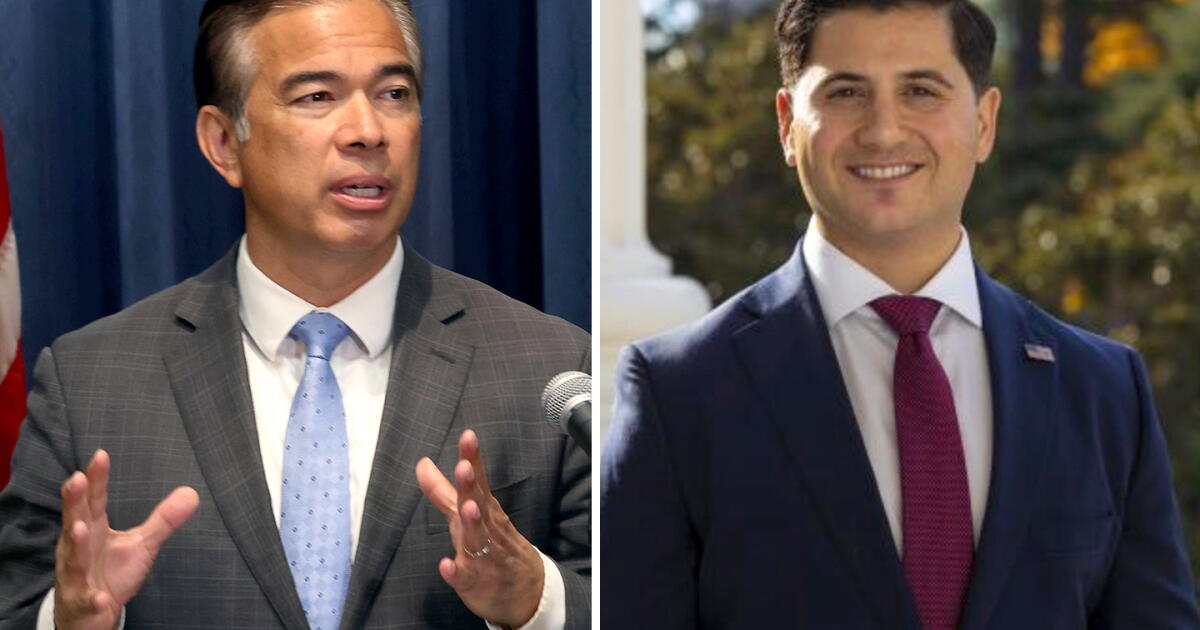
In a post to X on Wednesday, First Assistant U.S. Atty. Bill Essayli, the top federal prosecutor in Los Angeles, accused California Atty. Gen. Rob Bonta, the state’s highest-ranking law enforcement official, of fighting to “preserve non-citizens’ access to mail ballots” and “shield fraudsters and illegals from accountability.”

On Thursday, Bonta fired back, accusing Essayli of being “more interested in currying favor with a desperate wannabe dictator” — a reference to President Trump — “than upholding the law himself.”

Bonta and Essayli’s back-and-forth followed an announcement from Bonta that California and 24 other Democratic-led states were suing to block the U.S. Postal Service from implementing new nationwide rules on mail ballots that were developed at Trump’s behest.

Late Thursday, a federal judge sided with the states, issuing a temporary restraining order halting the implementation of those rules as the litigation continues. An appeal is likely.

Such a public and personal rift between Bonta and Essayli is highly unusual and has broader implications, given the California Department of Justice and the U.S. Attorney’s Office in Los Angeles coordinate on statewide law enforcement initiatives and traditionally maintain a cordial relationship.

They have worked together in recent years to target Los Angeles street gangs trafficking guns and drugs statewide, as well as international drug syndicates trafficking fentanyl and other narcotics through L.A.

The U.S. Justice Department at times finds itself on the opposing side of litigation involving local or state law enforcement partners, including in cases in which it investigates local police departments for civil rights violations and forces them into consent decrees, as it has done with the Los Angeles Police Department.

However, it is extremely rare for U.S. attorneys and top state law enforcement officials to engage in direct attacks on each other’s integrity — or the integrity of state voting processes, which both are tasked with defending. Federal prosecutors in particular have historically sought to avoid the appearance of political partisanship and rarely taken aim at elected officials over policy matters.

That tradition certainly has faltered under Trump, who has filled the Justice Department with outspoken loyalists who make no secret of their allegiance to him. And Essayli, the administration’s embattled appointee to lead one of the largest federal prosecutor’s offices in the country, has been no exception.

Essayli did not respond to a request for comment on the public exchange Thursday.

A spokesperson for Bonta’s office, which has sued this Trump administration more than 85 times, said in a statement that office staff regularly work with the U.S. Justice Department and federal prosecutors to keep Californians safe, and that work won’t stop “just because some are dead set on politicizing our work and theirs.”

At a news conference this week touting major crime declines in the state, Bonta said partnerships with both local and federal law enforcement remain a vital part of public safety in the state.

“That remains the secret sauce — the magic — when it comes to making our communities more safe. Working together, collaborating, sharing intel and resources and teaming up,” he said. “That remains a priority and is behind a lot of our success.”

Still, the new Postal Service rules sparked a clash. The rules require states to submit lists of eligible voters to the Postal Service and to use new ballot envelopes with digital bar codes that would allow the Postal Service to identify and reject ballots that don’t match those lists. Trump requested the changes as part of a broader executive order in March to combat what he claims is widespread voter fraud across the country and particularly in big blue states such as California.

Independent election experts say there is zero evidence of such problems existing in significant numbers. The Trump administration has said that is because states are keeping voter rolls secret and refusing to cooperate with federal efforts to vet them for noncitizens and other ineligible voters.

On Monday, the U.S. Supreme Court lifted a separate lower court ruling blocking the Postal Service changes, on the grounds that they had yet to be implemented and had not yet caused any harm to the states challenging them. The high court made clear, however, that it was not weighing in on the substance or merits of the rules themselves.

Essayli has long made allegations of voter fraud in California, and lawyers in his office were involved in an unsuccessful lawsuit in which the Justice Department sought California’s unredacted voter rolls. After the Supreme Court issued its ruling, and Gov. Gavin Newsom pledged the state would sue again, Essayli responded to defend the administration’s efforts.

“These measures wouldn’t be necessary if states like California didn’t allow non-citizens to easily register to vote and get mail ballots,” he wrote. “We are actively identifying ineligible citizens on California’s dirty voter rolls and will soon announce criminal arrests related to our election fraud investigation.”

Essayli’s office did not respond to a request for information on those alleged arrests or its broader investigation.

Then, on Wednesday, Bonta, who is seeking reelection in November, announced the latest lawsuit challenging the merits of the Postal Service rules, which he noted had been formally issued last week. He called the rules “an unlawful overreach that shows just how far President Trump will go to control elections,” and the state’s lawsuit an effort to “protect election integrity.”

Essayli soon replied, writing, “What election integrity? You’re fighting to preserve non-citizens’ access to mail ballots. I’ve never seen a state AG fight this hard to shield fraudsters and illegals from accountability. Imagine if he used his efforts to protect citizens.”

On Thursday morning, Bonta replied. “Simply untrue. We’re fighting to uphold the constitution and protect California’s right to administer our own elections,” he wrote.

“If you’re really concerned with election integrity, might I suggest starting with Donald Trump who: asked for 10,000+ votes from election officials in Georgia, fueled January 6, seized ballots, and issued two blatantly unlawful elections executive orders,” Bonta said.

After he lost the 2020 presidential election to Joe Biden, Trump called Georgia Secretary of State Brad Raffensperger and asked him to “find 11,780 votes” for Trump to swing the state from Biden to him.

A later congressional investigation found that Trump provoked his supporters into attacking the U.S. Capitol on Jan. 6, 2021, in an attempt to prevent the certification of Biden’s win. This January, the FBI raided and seized ballots from an election center in Fulton County, Ga. — a focus of Trump’s 2020 election denial.

“Trump has repeatedly shown he’ll stop at nothing to interfere in our elections. He’s repeatedly broken the law, so we’ve repeatedly taken him to court,” Bonta continued in his post. “Unfortunately, it appears that the First Assistant is more interested in currying favor with a desperate wannabe dictator than upholding the law himself.”

In agreeing late Thursday to halt the Postal Service rules, U.S. District Judge Indira Talwani wrote that the court did not have “any evidence regarding fraudulent absentee or mail-in voting” before it, and that the Postal Service’s “interest in correcting an unsubstantiated problem through likely unconstitutional means is dwarfed by the overwhelming risk of pervasive disenfranchisement of citizens who need access to mail ballots in order to vote.”

Bonta, back on X, praised the ruling, writing, “President Trump must keep his hands off our elections.”

Source link