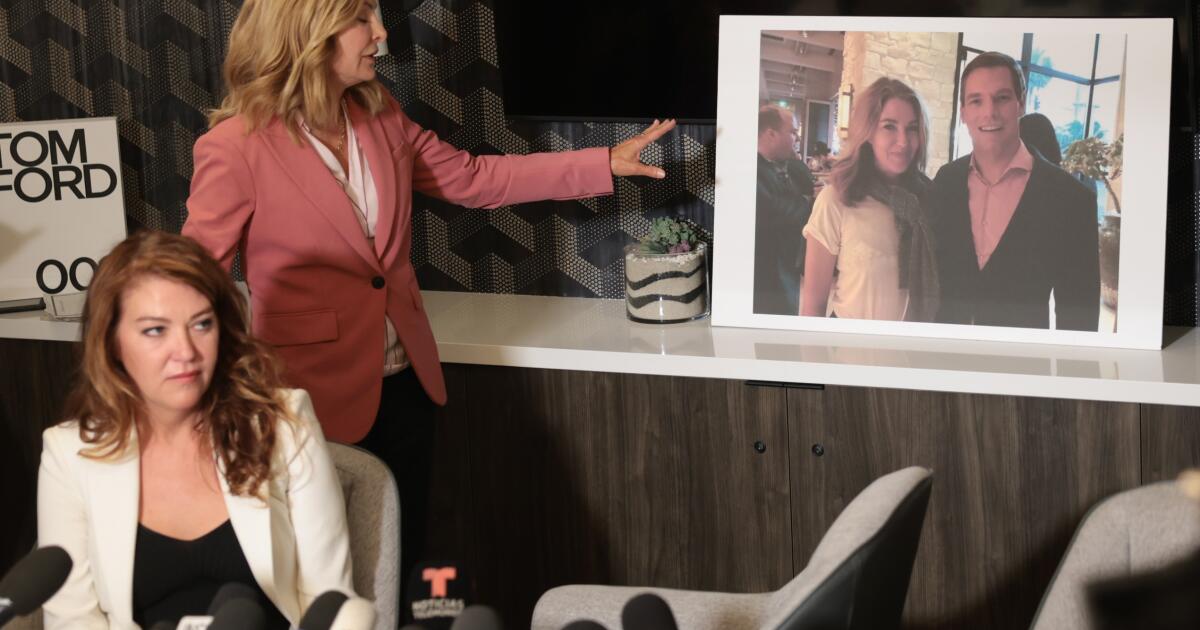
Eric Swalwell

Voter voices from the San Gabriel Valley on California governor’s race

Eddie Martinez can’t stand Donald Trump. So when Eric Swalwell entered the race for California governor, Martinez had his candidate.

“I liked the way he took Trump on, the impeachment thing in Congress,” Martinez said of the former Bay Area congressman, a Trump nemesis who served as one of the House prosecutors in 2021 when Democrats held the wayward president to account for the second time.

Then, suddenly, Swalwell’s campaign collapsed under the weight of allegations of abuse, including charges he sexually assaulted a former aide. With Martinez’s choice out of the running, the Democrat turned to the candidate who’d been his second pick all along, Xavier Becerra.

Martinez has been familiar with Becerra for decades, going back to when the former congressman, state attorney general and Biden Cabinet member was in the state Assembly. To his credit, said the 65-year-old retired public relations strategist, Becerra has largely kept clear of controversy and there’s never been a whiff of personal scandal — an important consideration after Swalwell’s spectacular self-destruction.

On top of all that, Martinez said as he prepared to drop his mail ballot at a post office in Alhambra, it would be nice for California to elect its first Latino governor in modern times. It’s been, Martinez observed, more than 150 years.

With the gubernatorial primary entering its final two weeks, a contest that had been stubbornly formless has finally gained coherence. Becerra, who’d been widely given up for dead as he foundered near the bottom of polls, has unexpectedly emerged as the Democrat to beat.

“He has the most experience,” said Ruben Avita, a 57-year-old actor who leans Democratic and is tilting toward Becerra over hedge-fund billionaire Tom Steyer. “At this point,” Avita said as he waited to catch a double feature at a cineplex in Monterey Park, “I want someone with a proven track record.”

Among the Republicans running, Trump’s pick — conservative commentator Steve Hilton — seems firmly ensconced atop the GOP field.

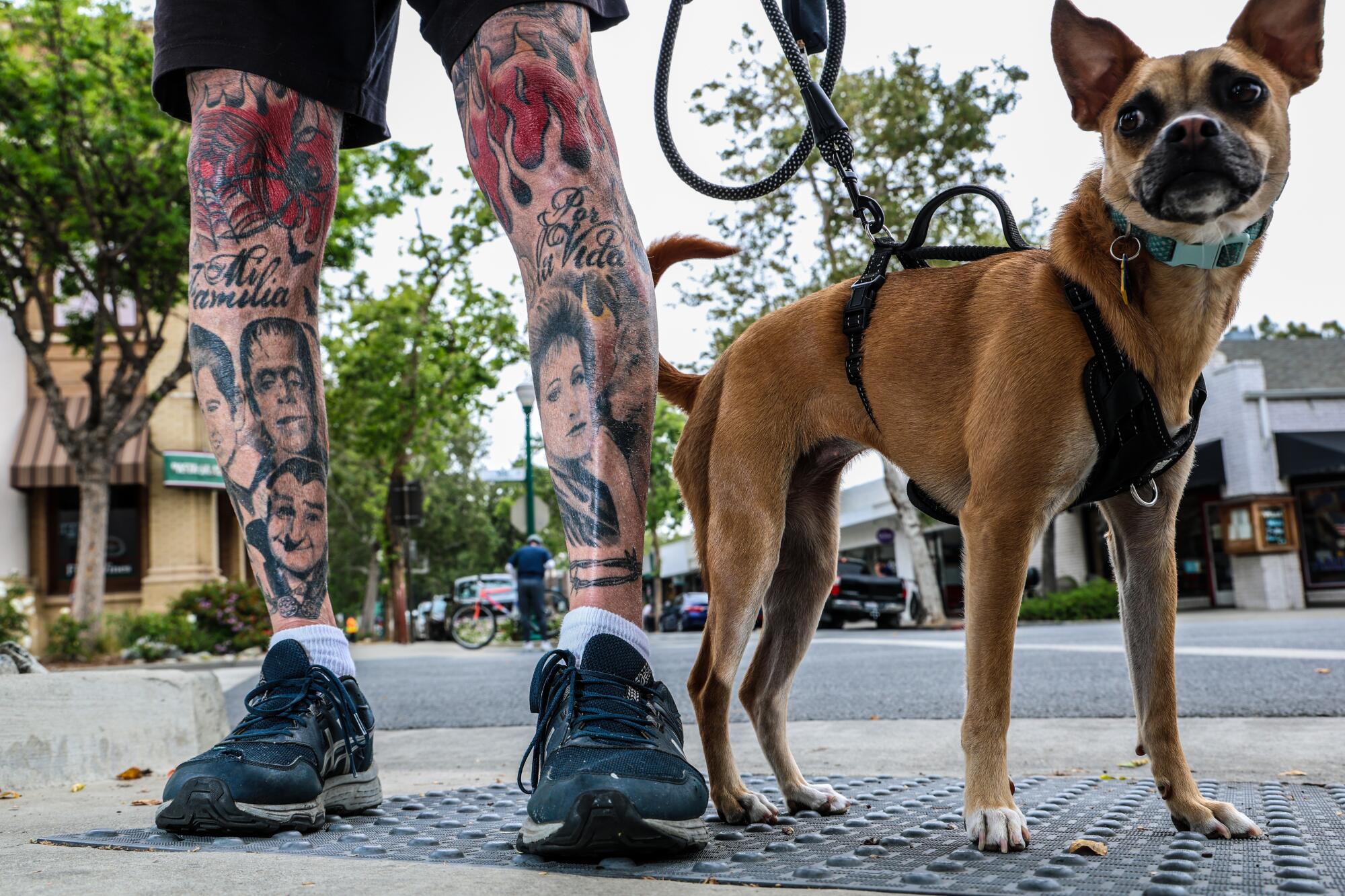
“He’s got a lot more common-sense approach than any of these other idiots,” said Wayne The Flame — yes, he explained, that’s his legal name —which, while not exactly a ringing endorsement, still counts as a vote.

The Claremont independent, retired at 73 after a career selling motorcycles and hot rods, described Riverside County Sheriff Chad Bianco, the other major GOP contestant, as a racist and dismissed the entire Democratic field with a string of epithets. “Dumb—,” he said of the voters who keep putting the likes of them in power.

A dog standing alongside the legs of her heavily tattooed owner

Peaches, a chihuahua/boxer rescue, stands alongside her owner, Wayne The Flame

If not terribly enthused, at least The Flame has made up his mind. Many voters remain undecided — or, at least, not entirely wed to a candidate.

Some are holding on to their ballots longer than usual, awaiting any last-minute developments and weighing the election odds as though wagering in a high-stakes game of poker.

Like many Democrats, Bryce Dwyer’s concern is that Hilton and Bianco will seize both spots in June’s top-two primary, advancing to a November runoff and giving California its first Republican governor in 16 years.

A 40-year-old project manager at the Getty Research Institute, Dwyer held his 2-year-old daughter as his son, 6, romped on a pleasant afternoon in Sierra Madre’s Memorial Park. Across the street, the bells of Christ Church chimed the hour.

“None of the Democrats are putting forth anything that is making me excited,” said Dwyer, who’s ruled out Becerra (he doesn’t see much there) and is deciding between Steyer and former Orange County Rep. Katie Porter. He’s trying to cast his ballot strategically, the East Pasadena resident said, and “it’s the first time in a while I haven’t really had a clue who I’m going to vote for so close to election day.”

A woman in a red dress in profile with her hands held in front of her

Democrat Priscilla Vega of Monrovia has yet to settle on her candidate for governor

This is a deeply unsettled season in California, with precious little hope the next governor — whoever he or she turns out to be — will make things better anytime soon. That mix of discouragement and discontent surfaced repeatedly, like a dull ache, in conversations with dozens of voters across the San Gabriel Valley.

The region’s ethnic and economic diversity — from the working-class neighborhoods of Pomona through the Asian-majority suburbs to the mountainside mansions of San Dimas and Pasadena — make the valley a prime battleground in the race for governor.

Alana H., who asked not to use her last name, said she wasn’t even bothering to vote.

She ticked off some reasons: The soaring price of gas and rising cost of, essentially, everything else. The fear her college-age daughter will never be able to buy a home in California. Worse, is her loss of faith. She no longer believes in the promise, once taken for granted, that each generation will improve its lot over the last. And, Alana said, she’s not alone: “Anyone who’s an average person is in the same boat, we’re all just trying to stay afloat.” Standing in front of the post office in Alhambra, the 52-year-old paddled her arms as though to keep from sinking.

A man stands in front of a wall full of framed pictures

Jaunenito Pavon, in his Glendora wine and chocolate bar, would like California to elect a governor who could unify the state. He’s still deciding on a candidate

The politicians in both parties are “so out of touch,” she said, “all they’re doing is fighting over this and that, when everyone I know doesn’t care what party you’re in. They just want to put food on their table. They want their kids to have a better life.”

Shelby Moore has some of the same concerns. Forget about ever buying a home, said the 30-year-old California native, a Democratic-leaning independent. It’s no small feat scraping up money for rent. “I’ve lost almost every single friend that I went to high school or college with,” Moore said between waiting tables at a Mediterranean restaurant in Glendora. “They’ve all moved out of state.”

A waitress places food on the table at a Glendora restaurant

Shelby Moore, 30, a waitress in Glendora, said all her friends from high school and college have left California because it’s so expensive.

She’ll definitely vote, Moore said, though she doesn’t know for whom. One of the Democrats. Someone who’ll work to make California more affordable and keep people like her friends from being priced out.

In Claremont, Eric Hurley was another undecided Democrat. He attended last month’s gubernatorial debate at Pomona College, where the 56-year-old professor teaches psychological science and Africana studies. Otherwise, he’s been too busy to pay much attention to the race.

But it’s important, Hurley said, that whoever wins “keep fighting the good fight and standing by our liberal principles. I would hate to see someone in the governor’s office start capitulating to what the current administration is asking.”

A man sitting outside a coffee shop with his image reflected in the window

Democrat Eric Hurley is undecided in the governor’s race. But he wants someone who’ll stand up to the Trump administration.

Others seconded that notion, that California needs to stand as a bulwark against Trump and his excesses, such as the draconian crackdown that has terrorized the state’s large immigrant population.

But there’s not a great appetite for the sort of performative pushback that’s won the current governor a wide audience on social media and boosted Gavin Newsom’s political stock as he positions himself ahead of the 2028 presidential campaign.

Jennifer Harris, 56, is a single mom in Monrovia who oversees payroll at a food manufacturing company. She has to stretch each of her dollars to make ends meet; soon she’ll be shelling out $30,000 a year for her daughter to go to college. Buying a home, Harris said, is out of the question.

She confessed to chuckling at the governor’s memes — an over-the-top oeuvre that includes Newsom as super hero, Newsom as religious beacon, Newsom as romance-novel hunk — and his other cheeky jabs at the president. “But that’s not an adult way to handle it,” Harris said between errands in Monrovia’s quaint shopping district. “It’s not solving any problems.”

Better, she said, for the next governor — she hasn’t decided whom she’ll support — to focus on practicalities: improving the economy, making housing and healthcare more affordable, dealing with homelessness and the underlying mental health issues.

A woman seen in profile

Jennifer Harris said Gov. Newsom’s over-the-top social media presence is amusing. But she wants the next governor to focus on more practical things.

Britnee Foreman echoed that sentiment.

The 41-year-old, who lives in Azusa and works in the music business, was meeting a friend, Priscilla Vega, 43, for lunch in Monrovia. Along with a meal, the two Democrats shared their concerns about inflation and income inequality.

“Memes are great for publicity,” said Foreman, who’s deciding between Becerra and Porter, based on their policy experience. (Vega, a lifestyle marketer, has yet to narrow down her choice.)

A woman gestures while discussing the California governors race

Britnee Foreman says the next governor needs policies “with teeth,” not an active social media presence.

“But I prefer policy,” Foreman went on. “I don’t want them just to be the popular person out there on social media. It’s great if they’re tweeting and have a cute little Insta-story. But I need their policies to have teeth and actively move us forward. And not just look like it’s moving forward.”

After nearly eight years, amid widespread unease, California seems ready to put the Newsom era in the past. It’s just not clear what path voters will choose, or which candidate they’ll prefer to steer the state toward, hopefully, a better place.
Source link

House Ethics Committee investigates Republican Rep. Chuck Edwards

May 15 (UPI) — The House Ethics Committee has launched an investigation into Rep. Chuck Edwards over allegations of creating a hostile work environment and engaging in sexual harassment.

Little information about the probe was made public.

In a brief statement issued Thursday, the committee said it was “reviewing allegations that Representative Chuck Edwards may have created or fostered a hostile work environment and engaged in sexual harassment in violation of the Code of Official Conduct or any other applicable standard of conduct.”

The committee said that its investigation and public disclosure do not indicate a violation has occurred.

Edwards told The Hill that he welcomes the investigation and plans “to comply fully with the committee.”

“I am confident the investigation will expose the facts, not politically motivated fiction,” he said.

The announcement follows recent reports that the committee was investigating Edwards, with Axios having been the first to report on the development.

Specifics of the allegations were not clear, but Politico earlier this week reported that he allegedly had an improper relationship with a subordinate as well as allegedly engaged in sexually harassment.

The investigation comes on the heels of two high-profile House resignations last month over sexual misconduct allegations.

Rep. Eric Swalwell, D-Calif., stepped down amid accusations of sexual misconduct and abuse, while Tony Gonzales, R-Texas, resigned after admitting he had an affair with a former aide who died by suicide.

Amid growing concern and anger about alleged abuses by members of the lower chamber, House Speaker Mike Johnson, R-Ky., and House Minority Leader Hakeem Jeffries, D-N.Y., announced Wednesday the creation of a bipartisan partnership between their parties’ women’s caucuses to combat workplace sexual misconduct in Congress.

Reps. Teresa Leger Fernandez, D-N.M., and Kat Cammack, R-Fla., were designated to lead the effort as respective chairs of the Democratic and Republican Women’s Caucuses in the House.

“To state the obvious, all women should feel comfortable and safe working in the halls of Congress,” Johnson said in a statement, adding that he is happy Cammack and Leger Fernandez “will lead this bipartisan partnership to find ways we can continue to make Capitol Hill safer for women and all staff.”

Source link

Winners, losers of the CNN California gubernatorial debate

For the third time in as many weeks, the leading candidates for California governor met on the debate stage Tuesday night.

The latest installment was a two-hour session, hosted and carried live from Monterey Park by CNN. The debate marked the first time the candidates appeared before a national audience and came as mail ballots have begun arriving in homes throughout the state.

Columnists Gustavo Arellano, Mark Z. Barabak and Anita Chabria took in all 120 minutes, absorbed every zinger — scripted and otherwise — and dutifully observed each parry and thrust. Here’s what they took away:

Arellano: Antonio Villaraigosa finally rises above his gubernatorial rivals. Is it too late?

I wrote my thoughts about this debate while writing my next columna on … something, stopping to pay attention only when issues in my bailiwick like immigration and the failure of the Democratic Party were the subject of discussion. The rest of the time, what the candidates said came off as one giant shout-fest straight out of the studios of the late, great Wally George, with everyone playing true to form.

Chad Bianco raged, Steve Hilton tried to mask his MAGA-ness with his British accent. Katie Porter scolded, Tom Steyer channeled Bernie. Xavier Becerra did his best impression of the old Bunsen character from “The Muppet Show.” Matt Mahan was just … there.

You know who sounded the best? Antonio Villaraigosa.

Anyone who really knows the former L.A. mayor has always seen him as Chicano Prince Hal, someone who doesn’t take himself as seriously as he should. His infidelities effectively killed his political career after his mayoral years; his consulting for the nutritional supplement company Herbalife made Villaraigosa a walking joke among too many Latinos I know.

He has spent the last decade effectively embodying Marlon Brando’s famous quote in “On the Waterfront”: He coulda been a contender. Even his gubernatorial run, announced way before many of his opponents, has mostly had the air of a has-been — that’s one of the reasons why Villaraigosa has polled so low through most of the race to the point he was excluded from many of the early debates.

But that hangdog Villaraigosa was nowhere to be seen tonight.

His wisecracks were kept to a minimum. He stayed mostly within his time limits and didn’t interrupt much. He hammered Hilton over his refusal to admit that President Trump lost the 2020 presidential election and his dismissal of undocumented immigrants.

Villaraigosa especially went hard on his forever frenemy Xavier Becerra on everything from his time as President Biden’s health secretary to how former staffers have been charged with stealing millions of dollars from his campaign funds. (Becerra has not been accused of any wrongdoing.)

When CNN co-moderator Elex Michaelson asked Villaraigosa if he would cancel California’s much-maligned high-speed rail project, the candidate’s emphatic “No” thundered down like a Lebron James dunk. He called out the waste on the multibillion-dollar project, said he revived L.A.’s subway to the sea, and spoke with a passionate gravitas that Becerra could only dream of doing.

“When I make a mistake, I’m accountable,” Villaraigosa said at the end of the debate. This sounded like a candidate who can win — and now he has a month to make a comeback worthy of his political mentor, the late, great Gloria Molina.

Four weeks to prove them wrong, Antonio.

Barabak: It was a no-hitter.

No startling breakthrough. No game-changing moment. No candidate so irresistibly charming he or she knocked the race akimbo and stamped themselves as the far-and-away front-runner in the slowly consolidating contest.

By now, the candidates are plowing well-furrowed ground.

To anyone who has watched each of the debates — and there may not be a great many of those viewers out there — it was all quite familiar.

What is new, and what may have been the draw for those just tuning in, is a sense the race is finally taking a coherent shape, with Xavier Becerra unexpectedly emerging as the candidate to beat.

A month ago, Eric Swalwell was a leading contender in the dozy contest and Becerra was an afterthought, being urged to quit for the sake of his dignity and the good of the Democratic Party. (Fears of a Democratic shutout in the June 2 primary have greatly receded.)

When Swalwell left the race and vacated his congressional seat amid allegations of sexual assault and other potentially illegal misconduct, it was widely assumed much of his support would move to either Steyer or Porter, the two other leading Democratic contenders.

But Becerra has been the clear-cut beneficiary and his new status was evident Tuesday night as he faced repeated attacks. He didn’t particularly dazzle, but that’s not his appeal. It’s his steadiness and seeming unflappability in a time of great upheaval and stress, and that was again evident.

With less than four weeks to election day — and voting already underway — time is waning for another dramatic shake-up like the one that took place between Swalwell’s implosion in April and Becerra’s surge in May.

It seems, however, as though little to nothing will change, with Becerra steadily gaining ground, Hilton consolidating GOP support and the remainder of the field looking for something — or someone — to drastically shake up the race one more time.

Chabria: I don’t know about a winner, but the debate definitely had a biggest loser: Bianco. The Riverside County sheriff, to his credit I guess, didn’t try for a hot second to hide who he really is — a conspiracy-loving immigration hardliner with ties to an extremist group.

Bianco sort-of said he was a member of the Oath Keepers, a far-right organization best known for some of its members participating in the Jan. 6, 2021, storming of the Capitol. He threw out election fraud theories, even suggesting state Atty. Gen. Rob Bonta could be involved. He made it clear that undocumented folks are breaking the law by existing in the state.

Maybe some MAGA voters will stick by that shtick, but I’m guessing independents and more moderate Republicans will find Hilton, the Trump-endorsed Republican, even more appealing after Bianco’s ragey ramblings. Hilton may well be sending his opponent a thank-you note and a bottle of bubbly for that performance.

As for winners, a couple of the Democrats had their moments. Porter spoke with clarity and force on issues including single-payer healthcare (she supports it) and resisting Trump’s immigration policies in this state of immigrants.

But she also directly addressed the criticism of her having a bad temper in a way that I think may haunt her.

As her male opponents bickered back and forth, taking swipes at each other, Porter said that given all the “shouting” and “disrespect” onstage, she was shocked that “anyone wants to talk about my temperament.” It’s a pushback she tried out earlier in the week with a new advertisement that sought to make a punchline out of the criticism.

I get her point and I don’t think a male candidate would face the same scrutiny for yelling at a staffer as she has, but also — what’s more unappealing to voters than an angry woman? A complaining one. That moment of resistance against the narrative may not land the way she intends with voters.

I agree with Gustavo that Villaraigosa had a good night, and that Steyer had Bernie energy — which may be good.

Steyer was the most lively and direct he’s been in a debate, landing a few punches and making points with clarity (far less wonky than he’s been in the past). He’s owning his far-left politics, and labeling himself the “change-maker.”

Steyer has been trailing Becerra in the polls, but Becerra again had a steady if less-than-thrilling appearance. For fed-up Democrats, Steyer may be looking better all the time.

Source link

Here’s why Eric Swalwell escaped accountability for so long

The implosion of Eric Swalwell’s gubernatorial campaign and his once-promising political career has left a great many questions rising from the smoldering wreckage.

Questions about his character, judgment and staggering recklessness.

The question — as misguided as it is inevitable — of why his accusers hadn’t come forward sooner. (My columnizing colleague, Anita Chabria, incisively addressed that one, discussing the nature of suppressed trauma and the believability hurdle that many victims of sexual assault unduly face.)

Then there’s the question of how and why Swalwell’s creepy and allegedly criminal behavior stayed hidden from public view for so long — especially when the impossible-to-miss fixture of cable TV embarked on a high-profile campaign to lead the nation’s most-populous state.

Swalwell, 45 and married, had a widely whispered about reputation for showering inappropriate and unwelcome attention on younger women. Rumors — vague, unsubstantiated — were a source of incessant dirt-dishing among political insiders and also circulated extensively online. (Not, however, the more serious allegations of sexual assault.)

The veil was finally pierced last week when the San Francisco Chronicle published a graphic account of a woman alleging sexual encounters with Swalwell while the Democratic lawmaker was her boss. She said he sexually assaulted her twice when she was too intoxicated to consent.

A few hours later, CNN followed up with a report that three other women had recounted various kinds of sexual misconduct. On Tuesday, yet another alleged victim came forth, saying she was drugged and raped by Swalwell in 2018.

The former congressman has flatly and vigorously denied criminal wrongdoing while acknowledging and apologizing for unspecific “mistakes.”

Those vociferous, flat-out denials had been enough to sway the politicians and union leaders who endorsed Swalwell’s gubernatorial bid, until the weight of evidence made Swalwell’s assertions untenable.

If the allegations are true and Swalwell is, in fact, a liar, lecher and sexual assailant, why wasn’t that widely reported up until now? Was it negligence, or gullibility on the part of the political press corps? The short answer is that a wide gulf exists between rumor and fact and Swalwell lurked in that gray space, living and thriving in the shadows between provability and denial.

It’s not unusual for rumors about financial, sexual or other peccadilloes to attend a campaign. They’re often trafficked by political rivals, which automatically raises suspicion and invites particular skepticism.

Much of the chatter never moves past a relatively small, dishy circle of political gossips because the supposed misdeeds, while titillating, can’t stand up to rigorous scrutiny. Or a legal challenge. That’s the baseline for many news outlets to broadcast or publish a story. Call them what you will — legacy, corporate, mainstream, lamestream — many of the largest, most influential sources of news and information won’t pass along allegations they can’t independently verify and, if necessary, defend in court.

The challenge is verifying all that loose talk.

Politicians don’t wear body cams, or broadcast their lives 24/7. (OK, Beto O’Rourke did livestream from a Texas laundromat during his 2018 Senate bid, holding up a soggy pair of underwear when he addressed the “boxers or briefs” question. But he’s an exception.)

Journalists don’t have subpoena power and can’t force people to tell them what they know. A reporter is only as good as his or her sources, their knowledge, truthfulness and credibility.

Reporting on misdeeds of an intimate nature can be especially difficult and complex. There’s rarely black-and-white documentation, such as a money trail leading to a hotel bedroom. It’s hard to find an eyewitness or reliable third party who can vouch for what took place between people behind closed doors. It takes time and trust to develop sources who can substantiate incidents of sexual misconduct, assault or abuse.

Swalwell apparently did an excellent job deceiving those around him, including some congressional and campaign staffers who’d known him for years and worked closely with the seven-term lawmaker, day in, day out. They were shocked by the statements of his alleged victims; the words “double life” have come up many times.

If Swalwell managed to hoodwink those closest to him, it’s easy to see why journalists had a hard time wrangling the firsthand accounts and other facts they needed to make their findings public.

When it comes to reporting on scandal, there is often the question of timing.

In 2003, The Times was widely criticized for publishing an account of Arnold Schwarzenegger’s misconduct — touching women in a sexual manner without their consent — just days before California’s gubernatorial recall election. Despite the report, which Schwarzenegger did not contest, voters kicked Gray Davis out and replaced him with the Hollywood super-duper star.

In 1992, the Washington Post and Portland Oregonian were widely criticized for their failure to publish accounts of Sen. Bob Packwood’s misconduct — unwanted sexual advances and touching women without their consent — until weeks after he was elected to his fifth term. Packwood resigned in 1995 after the Senate Ethics Commission voted unanimously to expel him.

The allegations against Swalwell were revealed well before the June 2 primary. Not soon enough for those asking how he managed to get away for so long with his predatory behavior. But plenty of time to inform California voters before they weighed in on his candidacy.

Public attention will soon shift. But for Swalwell, the legal and other ramifications are just beginning.

Source link