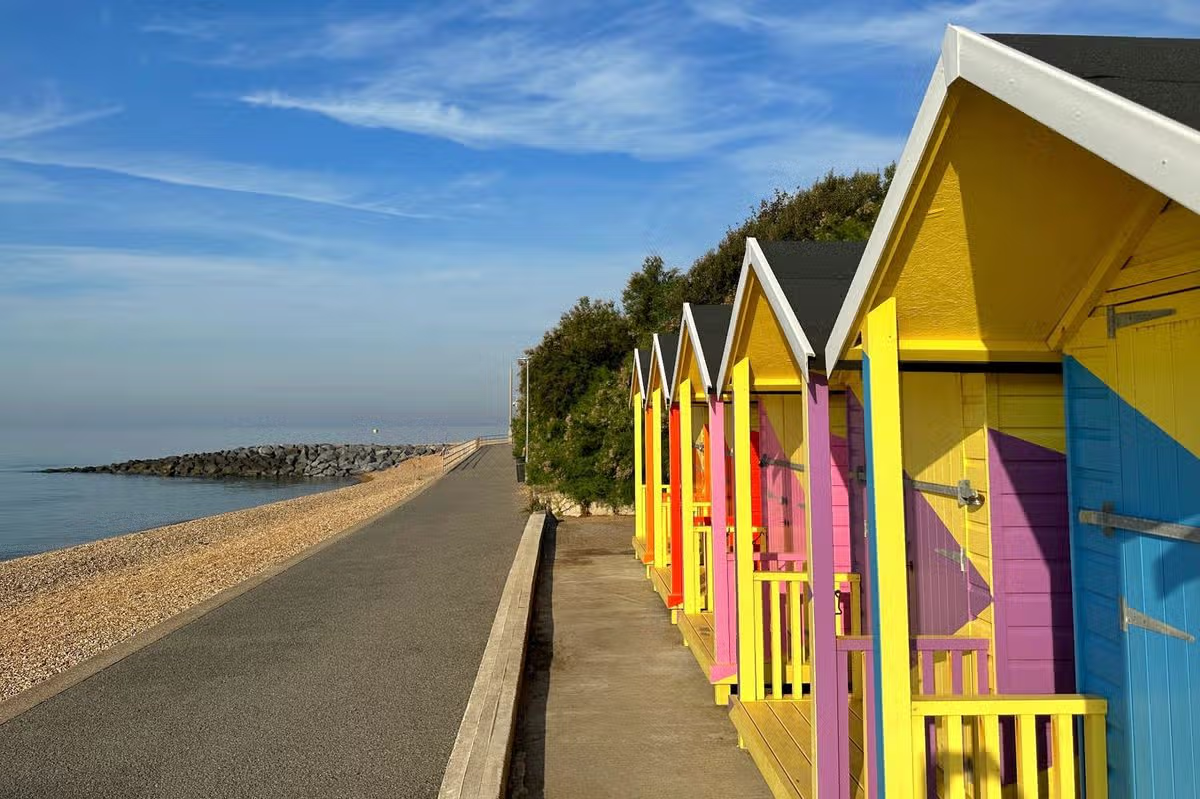
The area frequently pops up in rankings of the best places to live, but its beaches have a dirty secret, with an average bacteria score that’s over twice as high as the national average

The area is known for its seaside charm(Image: Getty Images/RooM RF)
A district that includes one of the UK’s best places to live, and home to an iconic seaside town, has been named as the local authority with the ‘dirtiest’ sea water in England in a recent ranking.
The study carried out by online tour operator Exoticca.com looked at the Environment Agency’s publicly available bathing water statistics for all designated coastal swimming spots across England. The Environment Agency has an online tool where anyone can check the quality of beach and bathing water.
Water quality scores are based on two types of bacteria – Escherichia coli (E. coli) and intestinal enterococci – which can be an indicator of faecal contamination on beaches. Using this data, the study was able to rank local authorities across the country, and a surprising spot had the highest mean bacteria score.
The local authority with the highest mean bacteria score was Folkestone and Hythe, with a mean bacteria score of 3.273. Across all beaches in the study, the mean was 1.033, meaning bacteria levels on its beaches appeared to be three times higher than average.
Included in the study was Littlestone, which had a score of 8.213, making it the third dirtiest beach in England, while Dymchurch had a score of 4.173 and came in tenth, meaning both these beaches were rated poor by the Environment Agency.
However, the area did have two beaches where the waters were ranked as excellent; Hythe and Seabrook scored 0.627 and 0.504 respectively.
A Folkestone & Hythe District Council spokesperson said: “We continue to champion the district as an extraordinary place to visit – whether that be our stunning coastline, breathtaking countryside or world-class creative and cultural scene.
“This council believes there should be out-of-season testing (between October and April) to try to establish the reasoning behind the deterioration of bathing water classifications. We continue to make this case to the Environment Agency and Southern Water.”
Folkestone beach itself ranked at number 20 in the list of individual beaches with potentially contaminated sea water in England. That comes as a surprise, given the seaside town has seen a surge in popularity in recent years. In 2024, it was included in the Times’ 2024 Best Places to Live guide, ranking as the regional winner of the best place to live in the South East of England.
Despite its appearance on the list, Dymchurch was once named best beach in the south east in The Sunday Times best beaches guide back in 2022. In the same year, it was one of the Kent beaches to receive the Seaside Award from Keep Britain Tidy, which according to the BBC “is presented to the best beaches in England and is used to celebrate the quality and diversity of resorts”.
A spokesperson for Exoticca.com said: “It’s important to remember that a local authority’s overall average doesn’t always tell the whole story for a specific beach. Coastal water quality can change a surprising amount in just a few miles.”
They added: “In Folkestone and Hythe, the local authority with the dirtiest water on average. Here, Seabrook’s water is classed as excellent with a score of 0.504 and Littlestone, which is just nine miles away, has the third dirtiest water in the entire country with a score of 8.213. A local authority average gives a great idea of a region’s water cleanliness, but it’s always best to look at the specific numbers for the exact beach you plan to visit.”
Have a story you want to share? Email us at webtravel@reachplc.com