entire

Israel is ‘disrupting entire ecosystems’, including Lebanon’s wheat crop | Israel attacks Lebanon News

Israel’s war on Lebanon has damaged the country’s wheat production and harmed the lives of farmers, experts told Al Jazeera.

For the last three years, Israel has been waging a war on Lebanon, where it has occupied large parts of the south and destroyed homes and infrastructure, in what some experts have said is a deliberate effort to make the land uninhabitable.

Recommended Stories

list of 3 itemsend of list

Repeated Israeli attacks have created havoc on the country’s wheat production, particularly in the south and in eastern Lebanon’s Bekaa Valley, where lands abandoned due to the impacts of war have increased to around 24 percent.

“They’re disrupting entire ecosystems,” Munira Khayyat, author of A Landscape of War: Ecologies of Resistance and Survival in South Lebanon, told Al Jazeera. “[Israel is] advancing the possibilities of drought and desertification, basically weakening the capacity of this land to hold life.”

Farmlands damaged

Since 2023, Israel has been attacking large swaths of southern Lebanon, including using chemicals like white phosphorus, in what analysts and locals said was an effort to make the ground sterile or uninhabitable. A ceasefire was brokered in 2024 by France and the United States, but Israel never stopped attacking targets in Lebanon.

On March 2, Israel escalated its war on Lebanon for the second time in under two years. Hezbollah had attacked Israel following Israel’s assassination of Iran’s Supreme Leader Ayatollah Ali Khamenei two days earlier. The group also said it was in response to near-daily ceasefire violations by Israel.

Since then, Israel has reinvaded southern Lebanon, taking land up to 10 kilometres (6.2 miles) inside the country. Beirut and Tel Aviv signed a US-brokered framework agreement in June, which was supposed to put into motion so-called “pilot zones”. Under these pilot zones, Israeli troops would withdraw to be replaced by the Lebanese Armed Forces, who would also work to disarm Hezbollah.

Instead, Israeli troops have continued to level destruction in southern Lebanon, detonating homes and crucial infrastructure, including farmland.

“The South [of Lebanon] experienced the highest average losses [in wheat-growing areas], reaching 47 percent in 2023-2024 and 61 percent in 2024-2025,” Mariam Ibrahim, a researcher with Lebanon’s National Council for Scientific Research [CNRS-L] and author of a recent paper called “Wheat in Crisis” that tracked Lebanon’s wheat struggles from 2017 to 2025, told Al Jazeera. “The Bekaa plain, which accounts for approximately 64 percent of Lebanon’s national wheat production, was also significantly affected, losing around 43 percent and 57 percent of its wheat area during the two respective seasons.”

In areas like the border town Bint Jbeil, 100 percent of cropland was destroyed, while in the Baalbeck district to the east, the study says approximately 32 percent of cropland was destroyed.

Wheat price influences

Ibrahim said the Russian-Ukrainian war led to an increase in bread prices and incentivised some domestic Lebanese production.

“The depreciation of the Lebanese pound meant that farmers could potentially generate higher revenues and profits in local currency when selling their wheat, as wheat prices were increasingly influenced by international market prices,” she said. “This provided an additional economic incentive to expand wheat cultivation, and our results showed that Lebanon’s wheat cultivation area reached its peak [during] the 2022-2023 season.”

However, experts said that since 2023, Israel’s war on Lebanon led to the proportion of land that had been used to grow wheat that was now left fallow increasing from 9 percent to 24 percent, mostly in the south and the Bekaa Valley.

Elias Ghadban, a food security expert with the independent Beirut-based consultancy firm AgriDev, told Al Jazeera that the destruction of land used to farm wheat has not made a “significant difference” at the national level, but it has had a damaging effect on southern wheat farmers who “lost their livelihoods”.

Ghadban also pointed to the fact that the cost of living has increased in Lebanon while salaries have failed to match that increase. “The expenditure on basic needs went up,” he said.

The economic crisis, followed by three years of war, has devastated many farmers, particularly as much of southern Lebanon’s farmland is largely unindustrialised. Experts warn that the destruction caused by Israel’s war could prevent many farmers from rebuilding their livelihoods, even after the fighting ends.

“All those small farmers who have made southern Lebanon what it is today and have been able to hold that land through their attachment to it, through their farming of it, through their existential need to be on that land in order to make their lives viable, that’s going to be broken,” Khayyat said.


Source link

Major European airport to CLOSE for entire month with all flights suspended including Ryanair and easyJet

IT’S BAD news for travellers heading to a popular European city as its airport is set to close for an ENTIRE month.

Naples Capodichino Airport, which is one of the busiest airports in Italy, will be closed for all of November to carry out major works.

Naples airport will be closed for the entirety of November to undergo a massive upgrade Credit: Naples Capodichino Airport
The airport’s runway will be refurbished Credit: Alamy

Around €30million (£25.1million) of the €250million (£209.2million) project will focus on the runway with a complete refurbishment.

A second terminal for non-Schengen flights, which would include flights to the UK, will also be built.

Across the entire airport, there will be new aircraft stands, as well as a new area for cargo and logistics.

The airport will get a new hotel, with road links and underground connections as well.

Read more on travel inspo

CHEAP BREAKS

UK’s best 100 cheap stays – our pick of the top hotels, holiday parks and pubs


GO ON

All the little-known websites for cheap or FREE tickets to gigs, theatre & festivals

And the overall airport will be modernised to allow for increased passenger numbers.

Currently 13million travellers use the airport each year, but this is set to rise to 17.3million by 2035.

The area surrounding the airport will also be redeveloped.

All the changes being made will allow the airport to use higher-capacity aircraft, which means more passengers at the airport.

Naples Airport website states: “Naples Airport will be closed in November 2026 for extensive and planned runway upgrades, in compliance with stringent industry regulations and in line with GESAC’s priority commitment to ensuring the highest safety standards.”

Collage of travel items including a plane, sunscreen, passport, suitcase, and plane tickets, advertising The Sun's travel Instagram account.
And a new non-Schengen terminal will be added at the airport Credit: Alamy

Current airlines that fly to the airport include easyJet from London Gatwick and Ryanair from London Stansted, Manchester and Edinburgh.

During the closure, travellers will need to head to the new Salerno-Pontecagnano Airport.

Gesac, the company managing the Naples airport, has launched a shuttle bus between Naples Piazza Garibaldi and Salerno Costa d’Amalfi and Cilento Airport to help travellers get to the airport.

There will be eight services in each direction, each day and costs €12 (£10.04) per person.

Alternatively, you can get the train from Naples Central to Salerno for £5 per way.

Naples airport will then reopen on November 30.


Source link

One of the UK’s busiest train stations to CLOSE for entire weekend with all trains cancelled

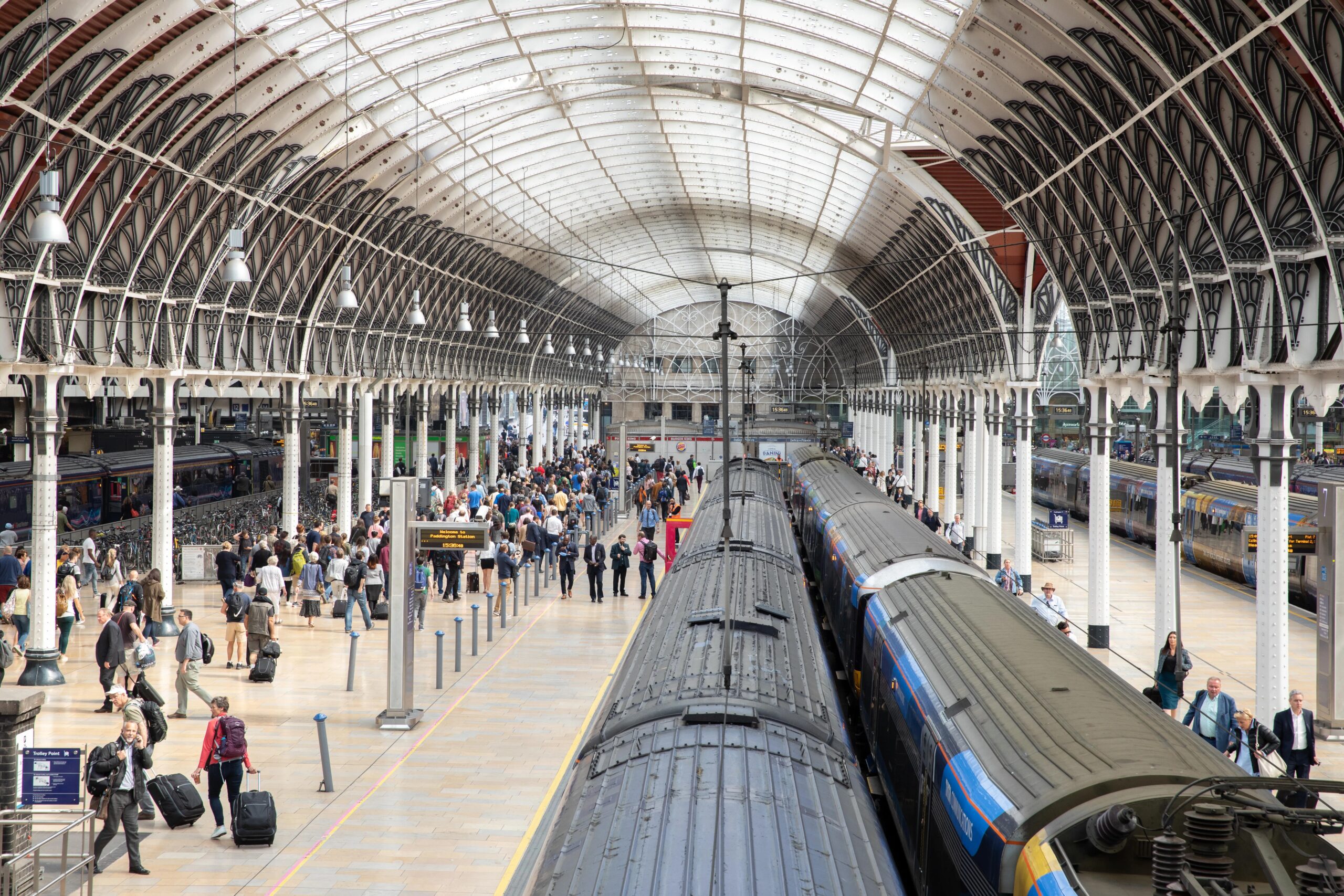
Interior view of Paddington station showing trains parked at the platforms beneath the large iron and glass arched roof, with commuters walking on the concourse.

A MAJOR train operator has issued a travel warning for Brits planning to travel next month.

Great Western Railway has confirmed that all trains will be cancelled at London Paddington for one of the busiest weekends this year.

The London station – which is the third busiest in the UK – will close to passengers from Saturday 28-29.

With this being the weekend of Black Friday, there are fears this could cause huge problems for anyone travelling to the capital for shopping.

According to GWR, all high speed services to and from Bristol and South Wales will instead go to London Euston.

Trains will also not call at Reading or Didcot Parkway, with replacement buses running between places like Ealing Broadway and Slough.

TRACK STAR

Tiny Victorian train station with trackside bar & Airbnb crowned best in the UK


NEXT STOP

Another UK train station could soon be made international in £1.3BILLION boost

The Night Riviera Sleeper from London to Penzance will depart from London Euston instead.

And passengers heading to London Heathrow have been warned as well.

Heathrow Express trains and the Elizabeth line will also not be operating from London Paddington.

The closure is due to huge £28million upgrade plans, which will affect other routes for the rest of the year.

The train operator warns: “Journey times to and from London will be considerably extended

“Passengers are strongly advised to check their journey before travelling, especially when travelling later in the day, to ensure that their whole journey is still possible.”

Interior view of Paddington station showing trains parked at the platforms beneath the large iron and glass arched roof, with commuters walking on the concourse.
London Paddington is closing for an entire weekend next month Credit: Alamy
GWR train at Paddington Station, London.
No trains will operate from the station Credit: Alamy

GWR Operations Director Richard Rowland added: “Although trains won’t run into London Paddington for a short period, we’ve worked closely with Network Rail and our industry partners to put alternative routes in place, including GWR services from London Euston, and connections via Waterloo and Marylebone.

“This does however mean some journeys may take longer than usual; so we ask anyone travelling to or from London during this period to plan ahead and check before they travel.”

It isn’t the only train station set to undergo huge works in the next few months.

No trains will be running at Birmingham New Street from December 24 to 28 while the station undergoes a £13million upgrade.

Source link