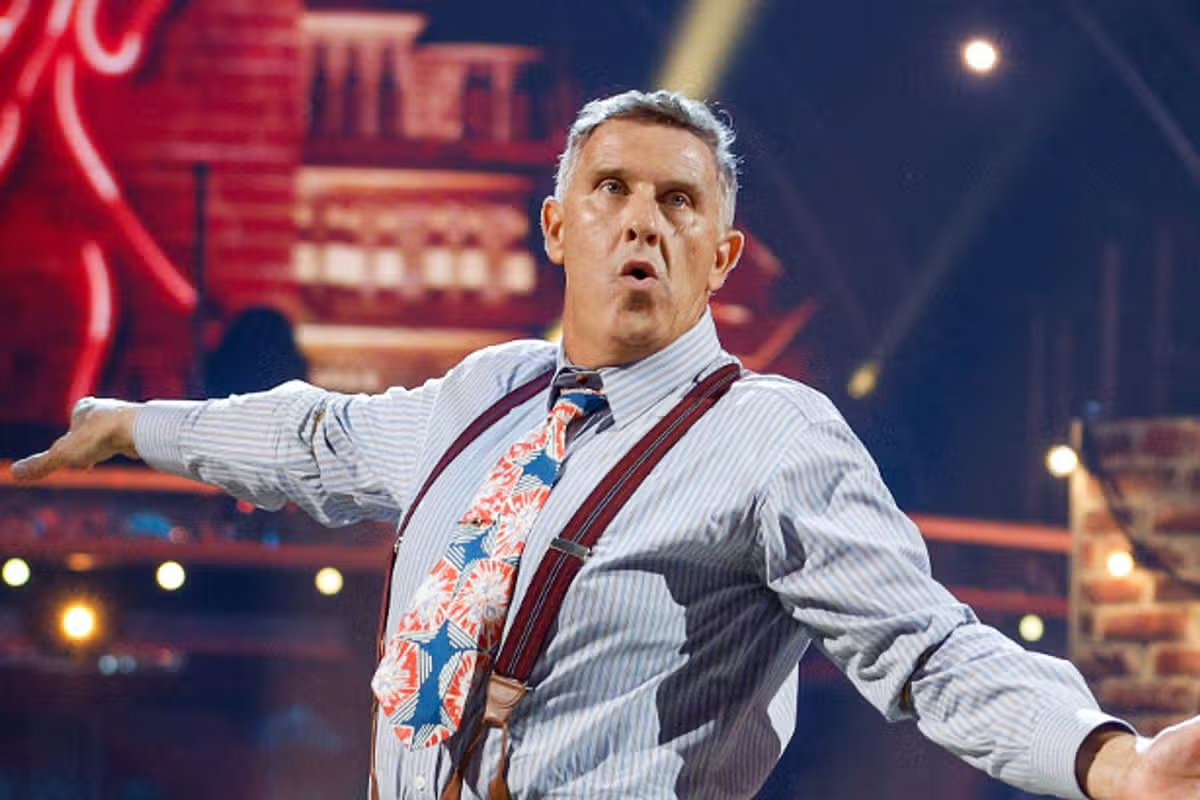
Strictly Come Dancing contestant Graeme Hall has been forced to defend his prior dance background on It Takes Two, after it emerged that he took part in ballroom and latin competitions

Graeme Hall on Strictly Come Dancing(Image: Guy Levy/BBC/PA Wire)
Strictly Come Dancing star Graeme Hall has addressed his dance background on It Takes Two. He was the subject of online speculation after it emerged that he had entered ballroom and latin competitions in the past.
Graeme, 60, made his live Strictly debut on Saturday 26 September, when he and Lauren Oakley danced a Cha Cha Cha and surprised fans with how rhythmical he was. Soon after, fans took to the internet to share that the celebrity dog trainer did, in fact, have dance experience.
An online record was put on social media of Graeme’s dance scores from competitions, dating back to 2013 when he competed in an Over 35s Intermediate Latin contest. His most recent competition was was in 2019, when he took part in the ballroom section of the Champions of Tomorrow competition.
Graeme was asked about his dance experience on Strictly spin off show It Takes Two. Host Ellie Taylor said: “A lot of people online have been talking about the fact that you have had sort of some dance experience – do you think that’s helping you, do you think it’s something to be considered?”
To see more of the Strictly stories you love from The Mirror and to find them easily in Google then make us your preferred source. Free and easy-to-do, just click on the link here to find more from The Mirror at the top of your feed.
Graeme answered: “It does and it doesn’t. You’re right as a hobby I did a bit of ballroom and latin and I entered a few competitions. The problem with that is, I wasn’t very good then and that was quite a few years ago.”
He added that his dance partner Lauren had to “undo all the bad things that I was doing” and put it right and indicated with his hands that their training was very up and down.
Graeme and Lauren’s first dance was to Elvis Presley’s Hound Dog and they received 24 out 40 for their routine. Fans complimented the pair on their dancing, with one writing: “I already loved Graeme and we all know Lauren is a superstar but nothing could’ve prepared me for this! What a fabulous pairing and what a great first dance. Think I’ve found my winners already.”
Another added: “This is the only dance all night that had me smiling from beginning to end! Graeme has such an ease and quiet elegance when he dances and he’s so light on his feet! He also looks like he’s genuinely enjoying himself which translates to the viewer.
“I feel so relaxed and chill watching him and so uplifted! I can’t wait to see what him and Lauren do next. I think they will be fan favourites.”
Graeme has previously coughed up to the dance experience, saying: “I have danced it before, but I’ve had a real mental block over one particular step and my leg just keeps doing something in the opposite direction to the way it’s meant to go.
“I’m convinced it’s a bit of muscle memory from 10 years ago. So it’s as much a hindrance as a help.”
Like this story? For more of the latest showbiz news and gossip, follow Mirror Celebs on TikTok, Snapchat, Instagram, Twitter, Facebook, YouTube and Threads.

