‘Clueless’ and the 24 more movies entering National Film Registry
As if they’d leave “Clueless” off the list.
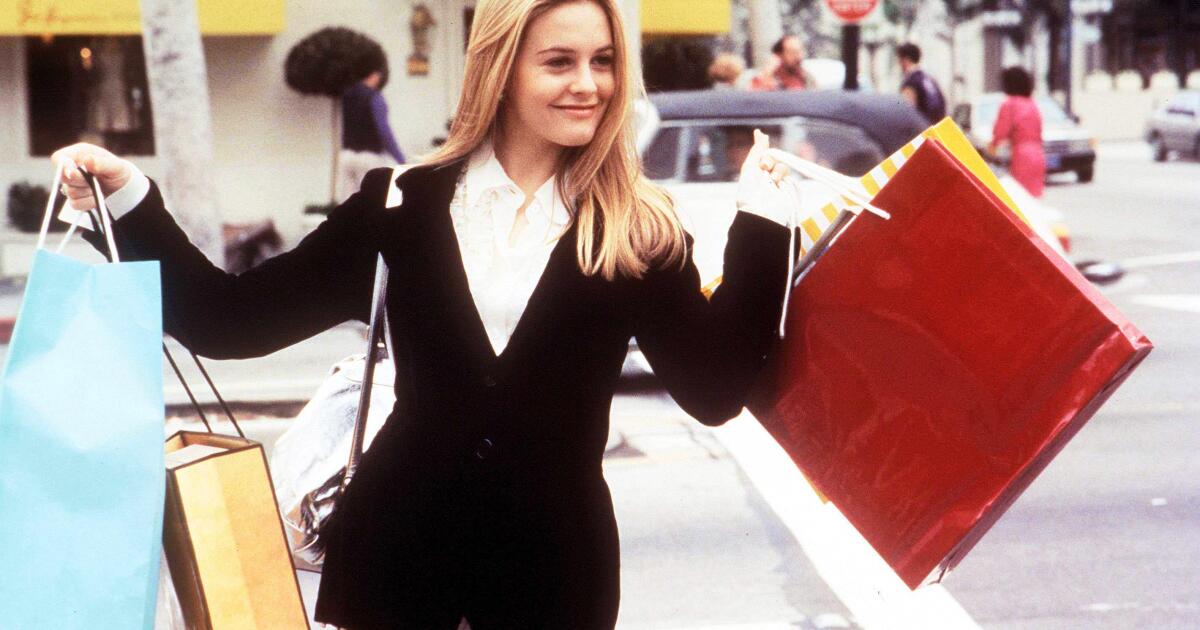
Cher Horowitz fans, rejoice: Amy Heckerling’s 1995 teen comedy is one of 25 classic movies chosen this year by the Library of Congress for its National Film Registry.
And if “Clueless” wasn’t your jam — whatever! — maybe this will send you deep into your dreams: Christopher Nolan’s mind-bending “Inception” is in the mix. Other films chosen for preservation include “The Karate Kid,” “Glory,” “Philadelphia,” “Before Sunrise,” “The Incredibles” and “Frida.” There are four documentaries, including “Brooklyn Bridge” by Ken Burns. From old Hollywood, there’s the 1954 musical “White Christmas,” and the 1956 “High Society,” Grace Kelly’s last movie before marrying into royalty.
Since 1988, the Library of Congress has selected 25 movies each year for preservation due to their “cultural, historic or aesthetic importance.” The films must be at least 10 years old.
The oldest of the 2025 picks dates from 1896, filmmaker William Selig’s “The Tramp and the Dog.” The newest of the group is from 2014: Wes Anderson’s “The Grand Budapest Hotel,” which, the registry noted, involved “meticulous historical research at the Library of Congress to create visually striking scenery.”
Turner Classic Movies will host a TV special March 19 to screen a selection of the films.
A closer look at some of this year’s selections:
“The Tramp and the Dog” (1896): Once deemed lost, but discovered in 2021 at the National Library of Norway, Selig’s silent film tells the story of a tramp who tries to steal a pie from a backyard windowsill — and is foiled by a dog. The registry notes it’s an early example of “pants humor” — “where a character loses (or almost loses) its pants during an altercation.”
“The Maid of McMillan” (1916): This 15-minute “whimsical silent romance” shot by students at a drama club at Washington University in St. Louis tells the story of the track team captain, Jack, who’s in love with Myrtle, “a pretty coed,” according to the university’s library. It is known, the registry says, as the first student film on record.
“Ten Nights in a Barroom” (1926): A silent film featuring an all-Black cast, it’s based on a stage melodrama adapted from “Ten Nights in a Bar-room and What I Saw There,” an 1854 “temperance novel” written to discourage readers from drinking alcohol.
“High Society” (1956): In what the registry calls “the last great musical of the Golden Age of Hollywood,” Bing Crosby appeared with Frank Sinatra and Grace Kelly, in her last movie before retiring and marrying Prince Rainier of Monaco. Louis Armstrong appeared with his band. Kelly wore her Cartier engagement ring during filming, the registry notes.
“Brooklyn Bridge” (1981): Ken Burns’ first documentary broadcast on PBS, in which the filmmaker recounted the building of the iconic landmark. “More than just a filmmaker, Burns has become a trusted public historian,” the registry says.
“The Big Chill” (1983): Lawrence Kasdan’s era-defining story of a group of friends reuniting after a suicide features Glenn Close, William Hurt, JoBeth Williams, Kevin Kline, Jeff Goldblum and Meg Tilly in an ensemble that “portrays American stereotypes of the time — the yuppie, the drug dealer, the TV star — and deftly humanizes them.”
“The Karate Kid (1984): The first film in the franchise, starring Ralph Macchio and Pat Morita, is “as American as they come,” the registry says — “a hero’s journey, a sports movie and a teen movie — a feel-good movie, but not without grit.”
“Glory” (1989): Denzel Washington won an Oscar as Private Trip in this story of the 54th Regiment, a unit of Black soldiers who fought in the Civil War. The cast also included Morgan Freeman, Matthew Broderick, Cary Elwes and Andre Braugher.
“Philadelphia” (1993): Tom Hanks starred — and won an Oscar — in one of the first big studio movies to confront the HIV/AIDS crisis. The film is also known for Bruce Springsteen’s Oscar-winning song, “The Streets of Philadelphia.”
“Before Sunrise” (1995): The first film of Richard Linklater’s deeply romantic “Before” trilogy, starring Ethan Hawke and Julie Delpy. The registry notes Linklater’s “innovative use of time as a defining and recurring cinematic tool.”
“Clueless” (1995): Heckerling’s teen comedy, starring Alicia Silverstone, was a loose adaptation of Jane Austen’s “Emma” and forever enshrined the phrase “As if!” into popular culture. The registry hails “its peak-1990s colorful, high-energy, soundtrack-focused on-screen dynamism.”
“The Wrecking Crew” (2008): Danny Tedesco’s documentary — not to be confused with the 2026 buddy cop movie of the same name — looks at a group of Los Angeles studio musicians who played on hit songs of the ‘60s and ’70s such as “California Dreamin’” and “The Beat Goes On.”
“Inception” (2010): In a movie that asks whether it’s possible to influence a person’s thoughts by manipulating their dreams, Nolan “once again challenges audiences with multiple interconnected narrative layers while delivering thrilling action sequences and stunning visual effects.”
Noveck writes for the Associated Press.
Full chronological list of 2025 National Film Registry inductees
“The Tramp and the Dog” (1896)
“The Oath of the Sword” (1914)
“The Maid of McMillan” (1916)
“The Lady” (1925)
“Sparrows” (1926)
“Ten Nights in a Barroom” (1926)
“White Christmas” (1954)
“High Society” (1956)
“Brooklyn Bridge” (1981)
“Say Amen, Somebody” (1982)
“The Thing” (1982)
“The Big Chill” (1983)
“The Karate Kid” (1984)
“Glory” (1989)
“Philadelphia” (1993)
“Before Sunrise” (1995)
“Clueless” (1995)
“The Truman Show” (1998)
“Frida” (2002)
“The Hours” (2002)
“The Incredibles” (2004)
“The Wrecking Crew” (2008)
“Inception” (2010)
“The Loving Story” (2011)
“The Grand Budapest Hotel” (2014)