After nearly buying Warner Bros., Netflix is laying off 1,000 workers. What happened?
It was a crowning moment. Netflix appeared to have prevailed in an audacious $82.7-billion deal to scoop one of the industry’s most prestigious studios: Warner Bros. The move seemed to cement Netflix’s status as the ultimate Hollywood gate-crasher and its dominance as the leading new player in media.
Now, nearly a year later, the plotline for Netflix has dramatically changed. The streaming giant lost out to Paramount Skydance in its bid for Warner Bros. Discovery and is facing headwinds on multiple fronts.
That was underscored this week when the streaming giant Netflix began shedding 6% of its workforce, or about 1,000 jobs — believed to be the largest layoff in the company’s history and exceeding the last round of job cuts in 2022, when it reported subscriber declines.
On Wednesday morning, Ted Sarandos and Co-Chief Executive Greg Peters sent a note to employees confirming the job losses, adding that the bulk of the cuts would affect the tech, product, legal and human resources teams.
“Our mission — to entertain the world — is ambitious, and delivering on it requires us to be disciplined about where we prioritize our people and resources,” wrote Sarandos and Peters in the memo obtained by The Times.
The cuts mark the latest reductions across the film and TV industry. Other entertainment and media companies have slashed their payrolls, including Walt Disney Co., Paramount and Sony Pictures Entertainment during a period of economic uncertainty in Hollywood.
But the scale of such downsizing is unusual for Netflix. Industry analysts and insiders chalk up the reversal of fortune to several factors. Although it still dominates the television business, the Los Gatos company hasn’t been able to produce enough new hit franchises to replace culture-defining shows from years past such as “Stranger Things” and “Squid Game.”
At the same time, Netflix faces rising competition from rivals such as HBO Max, Apple TV, Hulu and others that have upped their game. Free, ad-supported streaming platforms such as YouTube are increasingly taking a larger slice of consumer streaming hours. And Netflix’s efforts to diversify its business into new areas such as games have yielded mixed results.

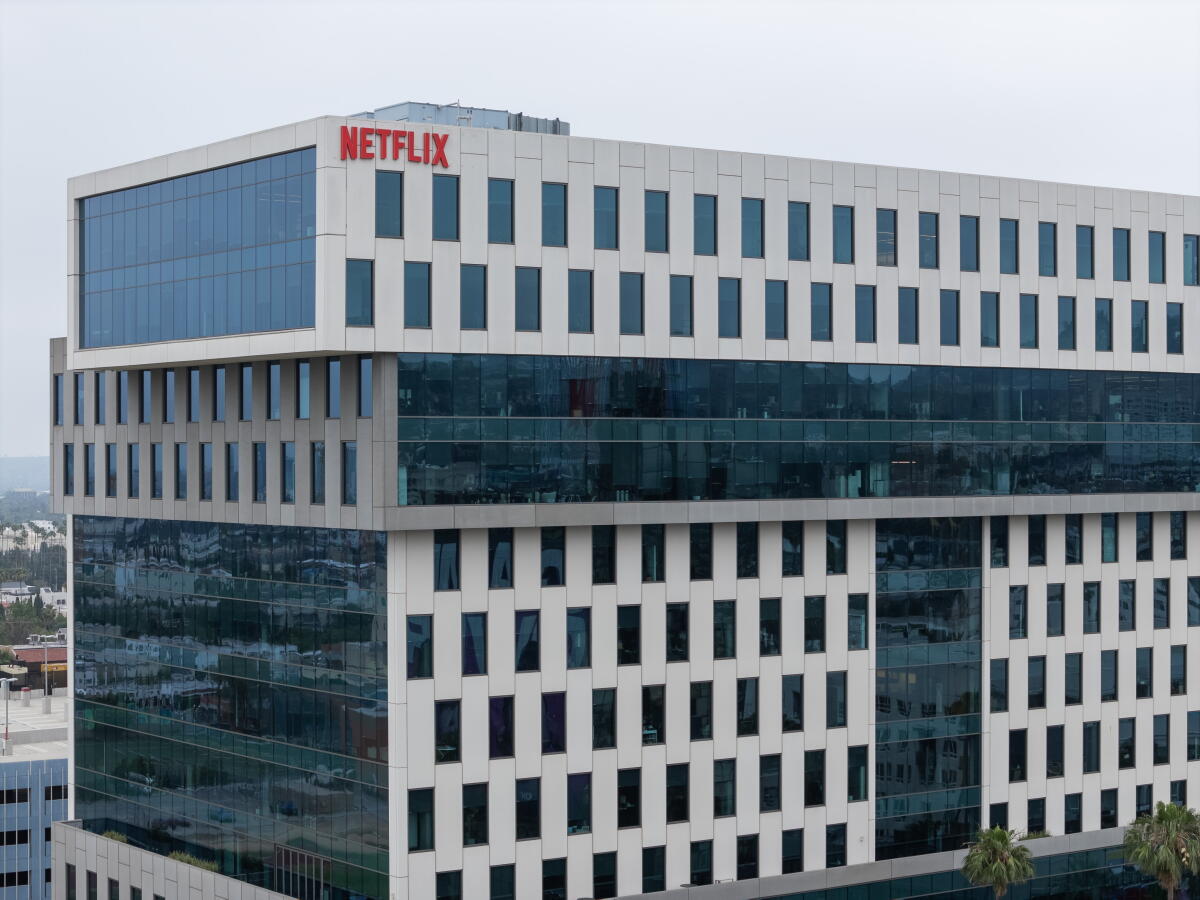
A Netflix building on Sunset Boulevard in Los Angeles in 2025.
(Myung J. Chun / Los Angeles Times)
The upshot: Netflix continues to be the dominant video subscription streaming player with more than 325 million subscribers, but the time that consumers spend on the platform is growing at a slower pace than what investors want. In the first half of this year, consumer watch time on Netflix increased only 2% compared with a year earlier, even as content spending increased 11% to $20 billion this year. Netflix also narrowed its annual revenue forecast last summer, disappointing some investors.
“Netflix’s layoffs show that even the top streaming companies are not immune to stagnation and financial difficulties,” said Ross Benes, senior analyst at research firm Emarketer.
Amid the sobering signs, investors have grown restless. Netflix shares, which closed at $70.57 on Wednesday, have plummeted 42% in the last year. Part of that decline was fueled by anxiety among investors over Netflix’s deal to buy Warner Bros. Discovery, but the share price hasn’t rebounded even after that deal fell apart.
“They need to better prepare their balance sheet and economics since engagement has plateaued,” said Brandon Katz, director of insights and content strategy at Greenlight Analytics.
Katz said that Netflix’s five most-watched English-language scripted summer movie releases in their first eight weeks posted the lowest average hours watched compared with the streamer’s top five summer releases in 2025, 2024 and 2023, citing Nielsen data.
Sarandos acknowledged concerns about engagement at a Bloomberg Screentime event Sept. 30.
“Overall we’re not growing as fast as I want us to, and we’re working on making that move faster,” Sarandos said.
Netflix declined to comment on the layoffs.
“We’ll continue to invest aggressively in high-impact areas to improve our service and further drive growth and innovation,” Sarandos and Peters said in their memo to employees.
In some ways, Netflix has been victim of its own success. It has produced a string of shows and movies that have hit the cultural zeitgeist such as “KPop Demon Hunters” and “Squid Game.” But finding enough new popular shows that continue to drive subscriptions has been a challenge.
“A lot of these major hits are coming to an end at similar times, and they don’t yet really have heir apparents to replace them,” Katz said.
Sci-fi hit “Stranger Things” released its finale last year, followed by the young-adult drama “Outer Banks” and “Emily in Paris,” which ends this year. Netflix also announced that “The Witcher” and “The Lincoln Lawyer” will wrap after their next seasons.
What’s more, the second seasons of some shows with big followings have seen large view drop-offs compared with their first seasons. For example, the fantasy series “Avatar: The Last Airbender” season 1 debuted with 21.2 million views, but views for its second season dropped 59% to 8.7 million, according to Netflix data.
New series from Netflix also haven’t captured as much consumer demand as other competing shows from rival streamers, according to Parrot Analytics.
Last year, Netflix had just one show — the Japanese anime and manga series “Sakamoto Days” — that made it in Parrot’s top 10 list of first season original series on streaming platforms. Parrot’s ranking measures consumer demand in the U.S. and is based on digital interactions such as social media chatter and Google searches. By comparison, Netflix had three titles in 2022 alone: the true crime show “Monster,” the documentary series “Harry & Meghan” and the sci-fi mystery show “1899,” Parrot said.
Sarandos told investors in July that such declines are typical and that second season falloff is slightly improved this year. But popular shows on rival streaming services such as the medical drama “The Pitt” on HBO Max have not seen such declines. “The Pitt” drew even more viewers in its second season than the first.
To diversify its business, Netflix has expanded its programming offerings beyond TV shows and movies to include live sports, such as football and baseball games.
Although live programs have helped to spur significant subscription sign-ups, they still represent just 1% of watch time on Netflix while costing 5% of the company’s content budget, Sarandos has said.
Netflix also has added video podcasts that have helped to boost daytime viewing on the platform, and has made deals with YouTube creators to bring their content to the streaming service.
But some of the new content hasn’t clicked, particularly in games, analysts said. In August, Netflix shut down Hollywood-based Night School, the maker of supernatural adventure game “Oxenfree,” and said it was closing a Helsinki-based games studio.
“They are spending on a lot of things that haven’t necessarily proven to be effective yet,” said Rob Rosenberg, a partner at law firm Moses & Singer and former Showtime Networks general counsel. “It feels a lot like they’re trying to send a message to Wall Street that ‘we’re re-examining how we do business.’”
Meanwhile, Netflix continues to face more competition from rivals such as YouTube, which offers a free, ad-supported version of its video library.
Unlike Netflix, YouTube does not pay for the creation of many of the videos on its platform. Instead, creators or companies upload and produce the programs themselves and YouTube shares ad and subscription revenue.
YouTube’s share of streaming watch time in the U.S. on TVs has steadily increased. In July, YouTube represented 14.2%, compared with Netflix’s 7.8%, according to Nielsen.
The pressure to boost engagement on Netflix has caused tension within the company, particularly between the teams of people responsible for how programs are promoted on the platform and the employees responsible for bringing shows and movies on Netflix, according to people familiar with the matter who were not authorized to speak publicly.
Some blame the content for not being enticing enough, while others contend that the programs could be promoted better on Netflix.
“It’s a bit of a quagmire,” said one of the sources familiar with the matter. “There is a tension when things aren’t working. People tend to point fingers.”
In their staff memo, Sarandos and Peters said Netflix is on track to deliver its full-year forecast and will continue to invest in areas that improve its service and drive growth and innovation.
“Doing that means making focused choices across the business so we can keep delivering for our members, partners, employees, and investors,” they wrote.
Despite the downsizing, Netflix remains highly profitable. In the second quarter, the company generated $3.4 billion in net income, up 9% from a year earlier. Revenue rose 13% to $12.6 billion last quarter, including double-digit revenue growth in all of its regions. Next week, the company will share its third-quarter results.
The streamer is expected to get a boost from new seasons of popular shows — including season 4 of the political drama “The Diplomat” and spy series “Lupin: Part 4,” as well as Thanksgiving Eve and Christmas Day NFL games.
Having new seasons of popular shows such as “Lupin” and “The Diplomat” will help boost Netflix’s engagement, said Alejandro Rojas, vice president of applied analytics at Parrot Analytics.
“The new season is like a catalyst for people to watch the previous seasons,” Rojas said.
On the theatrical side, Netflix also has high hopes for upcoming movies including La Bola Negra, starring Penelope Cruz; and “The Further Mis-Adventures of Cliff Booth” featuring Brad Pitt. Next year, Netflix will release the Greta Gerwig-directed film, “Narnia: The Magician’s Nephew” on Imax screens.
Netflix has not signaled any changes to its strategy for releasing movies or TV shows. But some analysts said it could benefit from having more theatrical releases and by dropping episodes of shows once a week, instead of all at once, to generate more buzz for programs. They also expect that Netflix will be more disciplined in its content spending.
“While the company will expand its sports roles, it’s cutting back at a time when revenue matters much more than subscriber additions,” said Benes of Emarketer. “With pressure mounting, Netflix will look to turn the tide by getting a boost from low-cost content. The battle for top creators will become more pitched.”
Times staff writer Samantha Masunaga contributed to this report.