elevated

US Fed holds interest rates steady citing ‘elevated’ inflation | Inflation News

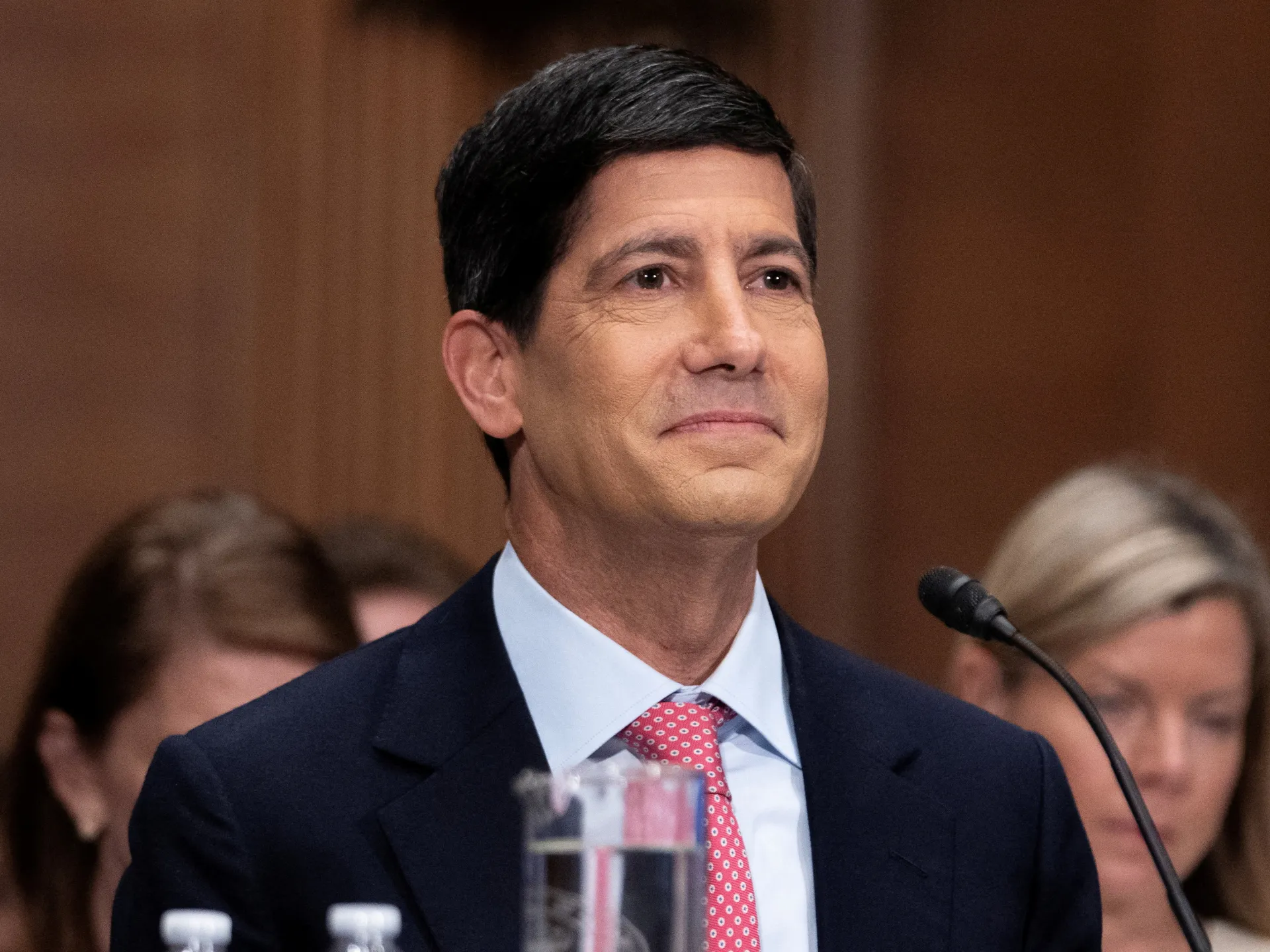
The United States Federal Reserve is set to hold interest rates steady as inflationary pressures mount, driven by heightened fuel prices as tensions between the US and Iran continue.

The central bank said on Wednesday that it will maintain rates at 350-375 basis points during the second monetary policy decision under new Chairman Kevin Warsh.

Recommended Stories

list of 4 itemsend of list

“Inflation remains elevated relative to the Committee’s 2 percent goal, in part reflecting supply shocks that have driven price increases in certain sectors, including energy. The Committee will deliver price stability,” the central bank said in a statement upon the release of its decision.

CME FedWatch, which tracks the likelihood of monetary policy decisions, forecast a 66.3 percent chance of maintaining rates, while there was a 33.7 percent chance that rates would increase to 375-400 basis points.

Of the 12, three members, Beth M Hammack, Neel Kashkari, and Lorie K Logan, voted to raise rates by 25 basis points.

“My colleagues and I considered the economic shocks of recent years, strained supply chains arising from the pandemic, military conflicts, energy supply disruptions, substantial increases in tariff rates, and yes, the surge in AI-related investment,” Warsh told reporters.

“We are not relying on any one individual piece of data as cover or as an excuse, or as validation. What I care about and what I think the Committee cares about is trends on the data.”

Monetary policy decisions have become more uncertain as Warsh has scrapped forward guidance, which typically helps financial institutions and journalists better understand upcoming policy choices.

Flying blind

That is putting pressure on analysts.

“With little guidance on the reaction function under the new chairman, markets are filling the void with speculation that Warsh may be eyeing a surprise hike to reinforce anti-inflation credibility,” Barclays economists said in a note.

Citadel Securities earlier this week forecast a rate hike. Meanwhile, analysts at S&P Global forecast that rates would hold steady.

At the last meeting, the central bank’s governors were evenly split on whether to raise interest rates this year, as the central bank maintained rates during its first meeting under Warsh.

Warsh had previously said that there was “no tolerance” for inflation as the central bank pushes to reach the Fed’s 2 percent target.

Market shifts

Financial pressures on the broader market eased last month, with consumer inflation moderating. The Consumer Price Index report released in July for the month of June by the US Labor Department’s Bureau of Labor Statistics showed a 0.4 percent decline in consumer inflation, marking the first monthly decline since April 2020 in the early days of the COVID-19 pandemic. However, that was a correction from the previous month, when the CPI rose by 0.5 percent.

The CPI remains elevated at 3.5 percent on an annual basis, according to the report, though that is still a slowdown from 4.2 percent in May. However, consumers are still feeling the pinch, especially at the petrol pump.

Prices are on the upswing. The average price for a gallon of petrol is $4.09 ($1.08 per litre), up 3 cents from this time last week, and up from $3.86 ($1.02 per litre) this time last month, according to the American Automobile Association (AAA), which tracks daily petrol prices. By comparison, daily petrol prices were $2.98 ($0.78 per litre) when the US and Israel first struck Iran on February 28.

Those pressures are echoed by a slump in consumer confidence for the third straight month, according to The Conference Board, which released its report on Tuesday.

“Consumers anticipate little improvement in business conditions over the next six months,” Dana M Peterson, chief economist at The Conference Board, said upon the report’s release.

Political flashpoint

The decision is overshadowed by pressure from the White House. Interest rates have been a point of contention between Trump and the central bank. Trump has long pushed the Fed to cut rates, putting former Chair Jerome Powell in the crosshairs and making him the subject of investigations by the US Department of Justice.

But Warsh has yet to become a target of Trump’s scorn. “Kevin is fantastic,” he told reporters on Monday on board Air Force One. “He’s got a board, and the board members are very political.”

Trump made those claims despite the central bank’s longstanding commitment to maintaining its independence from political pressure.
Source link

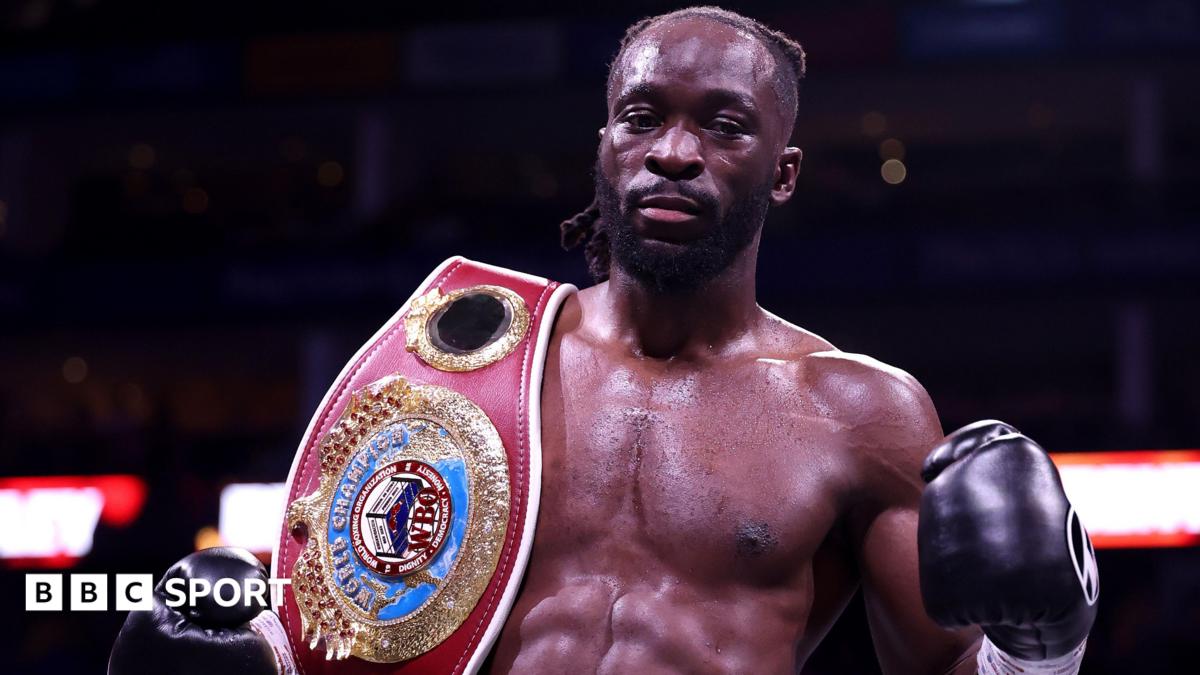
Denzel Bentley elevated to WBO middleweight champion

Britain’s Denzel Bentley has been elevated to full WBO middleweight champion after Janibek Alimkhanuly relinquished the belt.

The WBO said, external Kazahkstan boxer Alimkhanuly, who was suspended for a year after testing positive for a banned substance, external in December, wants to move up to super middleweight.

Bentley, 31, beat Endry Saavedra in April to become the interim WBO middleweight champion.

“Great news for Denzel Bentley,” said promoter Frank Warren. “A huge achievement for him, [manager] Martin Bowers and the whole team.

“Said back in April he grabbed the opportunity when it came, one that was fully deserved. Congratulations, champ!”

Bentley has 22 wins, three defeats and a draw from his 26 professional fights.

A statement from the WBO said that “no mandatory championship defence has been satisfied in the middleweight division for more than two years” and that it “reserves determination of whether the champion’s first defence shall be mandatory or voluntary by subsequent ruling”.

It added that the mandatory challenger for the belt was 29-year-old Yoenli Hernandez, of Cuba.

Source link

Clive Davis elevated hitmaking to an art form

Barry Manilow has told the story behind his first big hit so many times that I had no intention of bringing up the half-century-old “Mandy” when I sat down with the singer on a recent afternoon at his home in Palm Springs. Among the questions I did ask was how he ended up recording the song that opens his new album, and the answer — as it’s so often been throughout Manilow’s career, beginning with that 1975 chart-topper — was Clive Davis.

“It was all Clive,” Manilow said of “Once Before I Go,” the Peter Allen/Dean Pitchford number that leads off his just-released “What a Time” LP. Davis, the star-making record executive with the so-called golden ears, had been urging him to record the song for years, Manilow told me, which inevitably brought him back to the well-rehearsed tale of “Mandy” — to Davis’ decision that Manilow’s debut for his Arista label lacked a breakout smash and to his suggestion that the singer cut a version of a modest hit called “Brandy” by Scott English.

“So I went in the studio and did it trying to sound like that guy,” Manilow recalled, stomping his foot to approximate a lumbering rock beat. “Clive came in and said, ‘That’s terrible.’ I said, ‘I know it’s terrible.’ But in order to learn the song, I’d slowed it down and changed the key — I found the love song hiding in ‘Brandy,’” Manilow continued. (He also changed the title to avoid any confusion with Looking Glass’ “Brandy,” which had recently reached No. 1.) Manilow played the tune in his more romantic style for the exec. “I’ll never forget it — Clive said, ‘Just do that.’ And that was the record.” He laughed.

“He’s a kind of a genius.”

Davis, who died Monday at age 94, didn’t sing or play an instrument. “I knew nothing about music,” he once said, looking back at his entry into the record business. Yet his instincts made him one of the surest spotters and nurturers of talent in pop history, with a long — and varied — line of success stories that included Manilow, Janis Joplin, Neil Diamond, Lou Reed, Patti Smith, Whitney Houston, Aretha Franklin, Dionne Warwick, Alicia Keys, Jennifer Hudson and Maroon 5, among many others. He even helped the Grateful Dead score a Top 10 single with “Touch of Grey” in 1987.

Davis, who got his start in Columbia Records’ legal department, could identify original voices and seemed to intuit which songs were likely to become hits. Sometimes the hits came from the voices themselves, as in the case of Bruce Springsteen, whom Davis cajoled into writing “Blinded by the Light” for his Columbia debut; sometimes the exec match-made performers and composers, as in the case of “Mandy” or “Freeway of Love,” a zippy Narada Michael Walden jam that launched Franklin’s comeback in the mid-1980s.

A natty dresser with a cosmopolitan air, Davis founded Arista in 1974 after he was fired from Columbia (where he’d ascended to the presidency) amid an embezzlement scandal of which he was later cleared. In 2000, he was ousted from Arista in a corporate shakeup — just months after the label won eight Grammy Awards with Carlos Santana’s 15-times-platinum “Supernatural” LP — then launched a new label, J Records, which scored an immediate blockbuster with Keys’ “Songs in A Minor.”

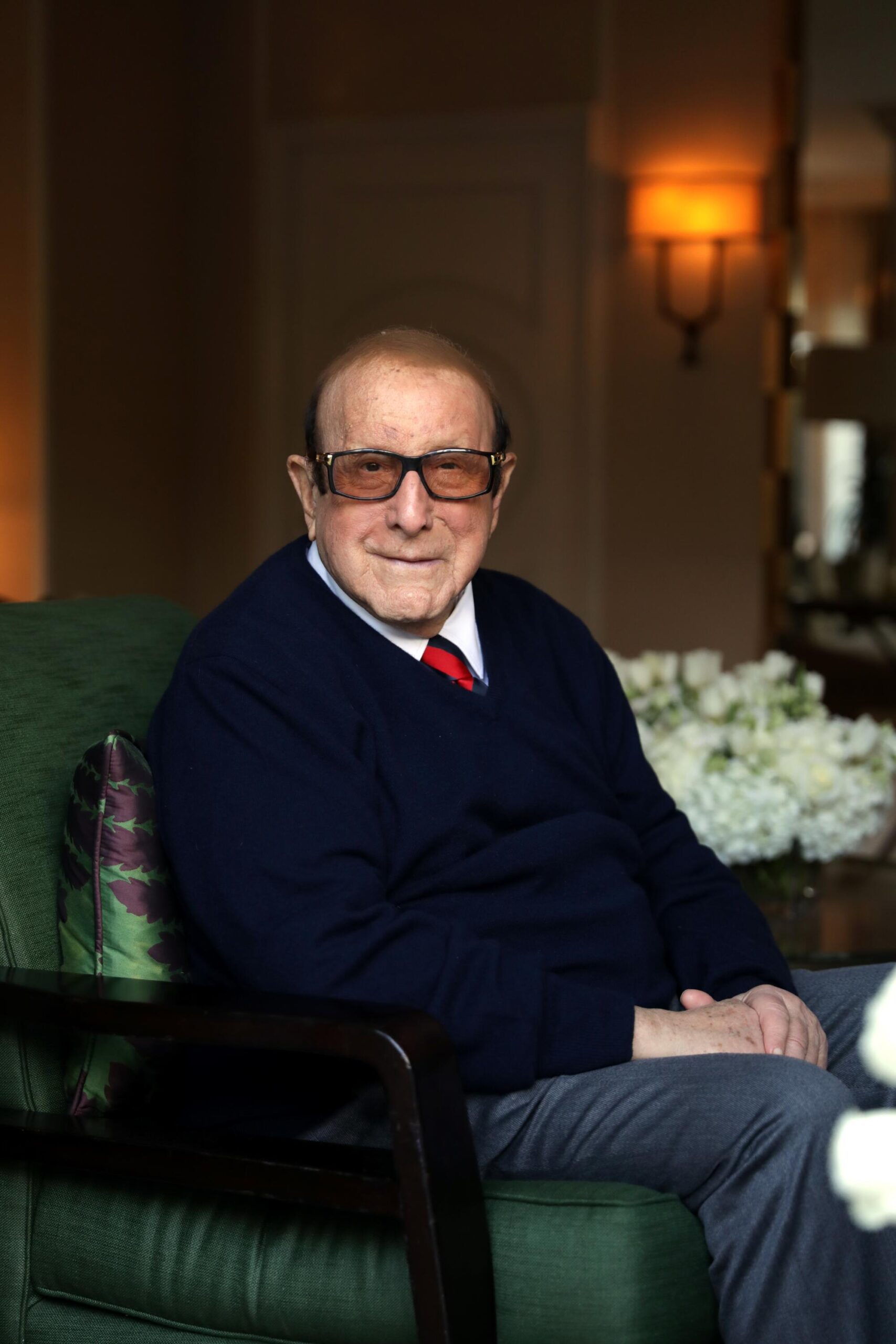
Clive Davis at the Beverly Hills Hotel in 2020.

Clive Davis at the Beverly Hills Hotel in 2020.

(Christina House / Los Angeles Times)

Wherever he worked, Davis’ goal was shepherding hits that spanned formats and generations; he delighted in projects like “Smooth,” the inescapable Santana single pairing the rock guitarist and Rob Thomas of Matchbox Twenty, and a series of Great American Songbook albums by the once-scruffy Rod Stewart. He might also have been the music industry’s biggest believer in ballads, at least among suits: Between 1985 and 1992, Houston alone released almost a dozen of music’s all-timers, including “Saving All My Love for You,” “Didn’t We Almost Have It All” and — perhaps the greatest pop ballad ever recorded — her take on Dolly Parton’s “I Will Always Love You.” (It wasn’t a huge hit, but listen to Houston and Jermaine Jackson’s pedal-steel-drenched “Nobody Loves Me Like You Do,” from Houston’s debut, for an early instance of that crossover ambition.)

One of relatively few nonperformers inducted into the Rock & Roll Hall of Fame, Davis brought his flair for variety to the party he threw at the Beverly Hilton every year on the night before the Grammys — a famously hot ticket that drew A-list celebs from the worlds of music and Hollywood as well as business and politics. You could always count on the exec to have persuaded some number of the year’s splashiest new acts to perform; this year’s bash, in January, had Sombr, Olivia Dean and the women of “KPop Demon Hunters.” But my favorite part of the show was always seeing which veteran Davis had tapped to mix it up with the youngsters — Diamond or Manilow, for instance, or Johnny Mathis, who absolutely killed in 2015.

Davis horrified many in 2012 when he opted to proceed with his party just hours after Houston was found dead in a hotel room at the Beverly Hilton. In the years after the singer’s death, Davis drew criticism for taking too much credit for Houston’s artistic achievements; to some, he became a symbol of the music industry’s efforts to tone down Houston’s Blackness in order to reach white audiences. Five years ago, I asked Warwick, who was Houston’s cousin, whether she’d taken on any kind of consulting role on “I Wanna Dance With Somebody,” the 2022 Whitney biopic that Davis produced.

Bobby Brown, from left, Whitney Houston and Clive Davis in New York in 1998.

Bobby Brown, from left, Whitney Houston and Clive Davis in New York in 1998.

(Stuart Ramson / AP)

“Not one thing,” she told me. “I want them to let Whitney rest in peace. Leave her alone. Ten years [since she died] — it’s time to let her sleep.” (In a statement Monday, Warwick called Davis her “dear friend” and said she “can think of no other record man that seemed to have that magical ability to know a hit when he heard a song.”)

I spoke with Davis many times over the years and was always struck by his enthusiasm about music and about his recall of events from decades ago. In 2017, I interviewed the exec alongside Mathis and Kenneth “Babyface” Edmonds about a record the three made together that had Mathis singing newish pop songs like Adele’s “Hello” and Pharrell Williams’ “Happy” — a concept Manilow told me in March he and Davis had been talking about replicating. After my story ran, Davis emailed me and said he’d enjoyed the piece, which had a couple of lines about Davis’ tendency to go overboard hyping his projects.

“Yes, a few of your bites required a personal Band-Aid,” he wrote, “but I did appreciate your perspective of the Mathis album’s quality.”

He knew the music was good; Clive Davis always knew when the music was good.

Source link