Venezuelans Rage as Blackouts Intensify
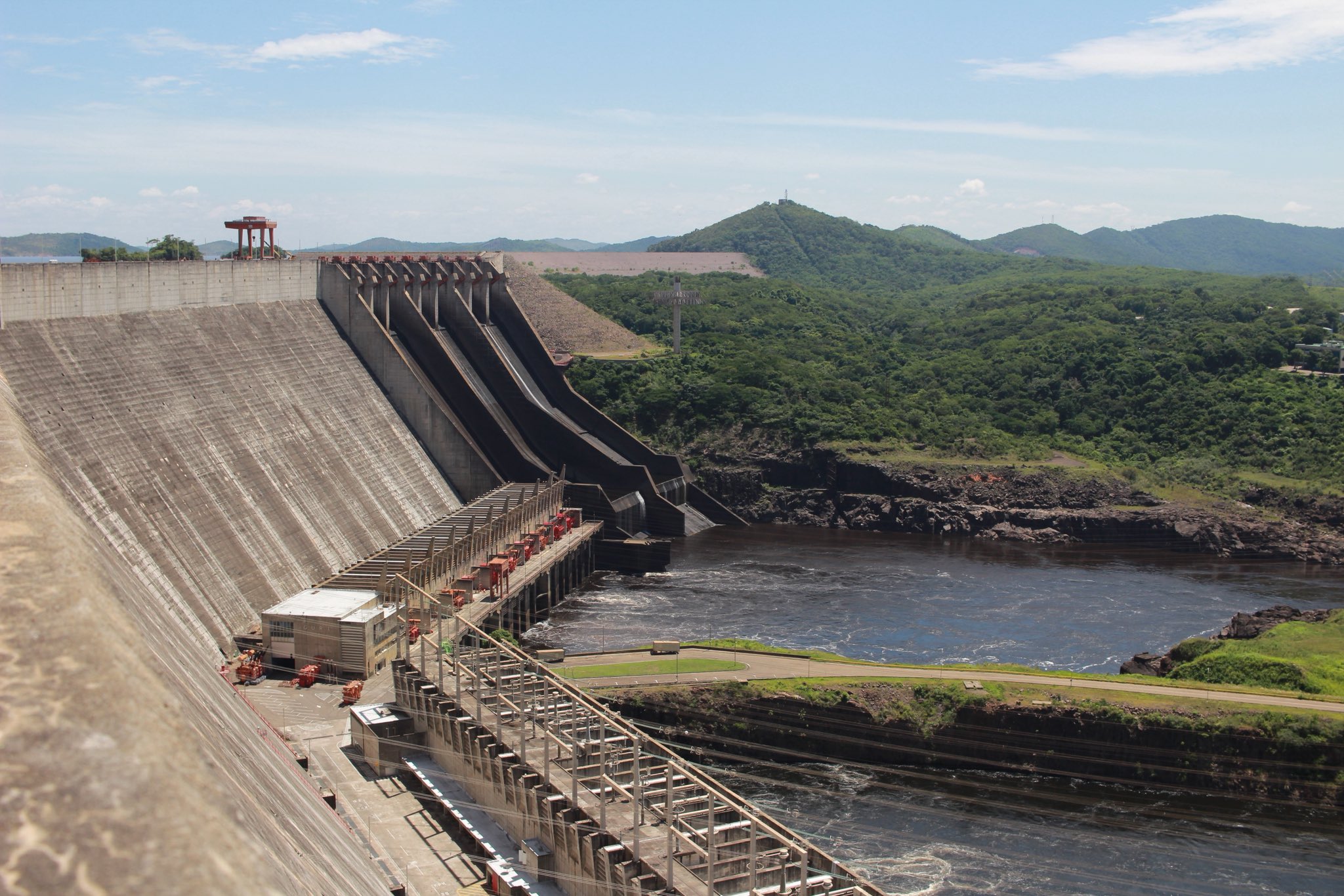
Photo of the Guri Hydroelectric Plant posted by the US Embassy on August 3
In the last few days, a sight that had become unusual in Venezuela for years took place in multiple parts of the country: street protests over electricity. The blackouts are increasing in frequency and duration without any warning, along with several strong brownouts. This recent uptick has even reached the capital, which the chavista government usually tries to protect from the chronic power deficit, at the expense of the rest of the nation.
In Carabobo state, people in Valencia and its surrounding cities reported both prolonged cuts and swift interruptions, which have taken their toll on their daily routine. Local authorities say that the full recovery of the thermoelectric plant Termocarabobo (directly affected by the earthquakes just like Planta Centro, close to the epicenter of the first quake) will help alleviate the problem.
Next door, in Aragua state, things are not much better. People in Maracay report daily double cuts of four to five hours, hitting the city’s commercial sector despite the use of power plants. In the smaller towns of Villa de Cura and San Mateo, citizens held peaceful protests to complain as governor Joana Sánchez blamed current electricity woes on the June 24 earthquakes.
The increase in power outages has reached both the east and west of Venezuela. In the western Lara state, an unannounced blackout right after midnight on July 31 left large parts of the state in the dark, in addition to the lengthy daily rationing that reaches up to five hours. Local NGO Activos por la Luz, which monitors the effects of the electric crisis in the region, released in response a very scathing statement on social media:
Protests spanning affluent Lechería and impoverished El Callao spell bad news for Delcy Rodríguez’s promise of economic recovery.
“This has stopped being just an electrical problem. This is a systematic destruction of our mental health, our emotional stability, of our dignity and of our hope as people. It’s not normal to live under constant stress, without knowing when the power goes out, how long the blackout will last or how you will go to sleep, work or just survive the heat and the burnout. We have been pushed to a permanent state of anxiety, frustration and impotence…”
Very bad mood in Oriente
Meanwhile in the eastern cities of Maturín and Anaco, people made their voices heard in front of the offices of State-owned electricity Corpoelec without incident. Sadly, that wasn’t the case in Guayana, as a public gathering in the road to enter the town of Guasipati on July 28th was dissolved by a group of unidentified men using firearms. The following day, the nearby town of El Callao witnessed a civic strike protesting six-to-seven hour power cuts and the collapse of other public services caused by increasing mining activity in the area and the growing population influx.
Such is the level of exasperation that the mayor of Lechería, Manuel Ferreira, publicly called Corpoelec to establish a proper scheduling of the electrical cuts. “Without schedules, without timetables and without respect: that’s how our neighbors have been treated. We understand the climate variables or the structural system failures, but if the rationing is unavoidable, the least we demand is respect and dignity. People have the right to know when the service is taken off so they can prepare.”
To better understand the relevance of this: both Guasipati and El Callao belong to the region covered by the Mining Arc, where there is a documented presence of gangs (hence the recent killing of Tren de Aragua’s leader in nearby Kilometro 88), and the military is currently deploying intense control over the population. The gold industry in the region is vital for the regime’s interests and has recently fallen under the eye of the Trump administration and the international mining companies the White House aspires to attract to Venezuela. Lechería remains an enclave for the privileged, the ones who built or preserved a comfortable life during the worst years of the country’s economic decline. The fact that both regions are witnessing protests of this scale is more bad news for Delcy Rodríguez’s promise of economic recovery.
The electric transition hasn’t started either
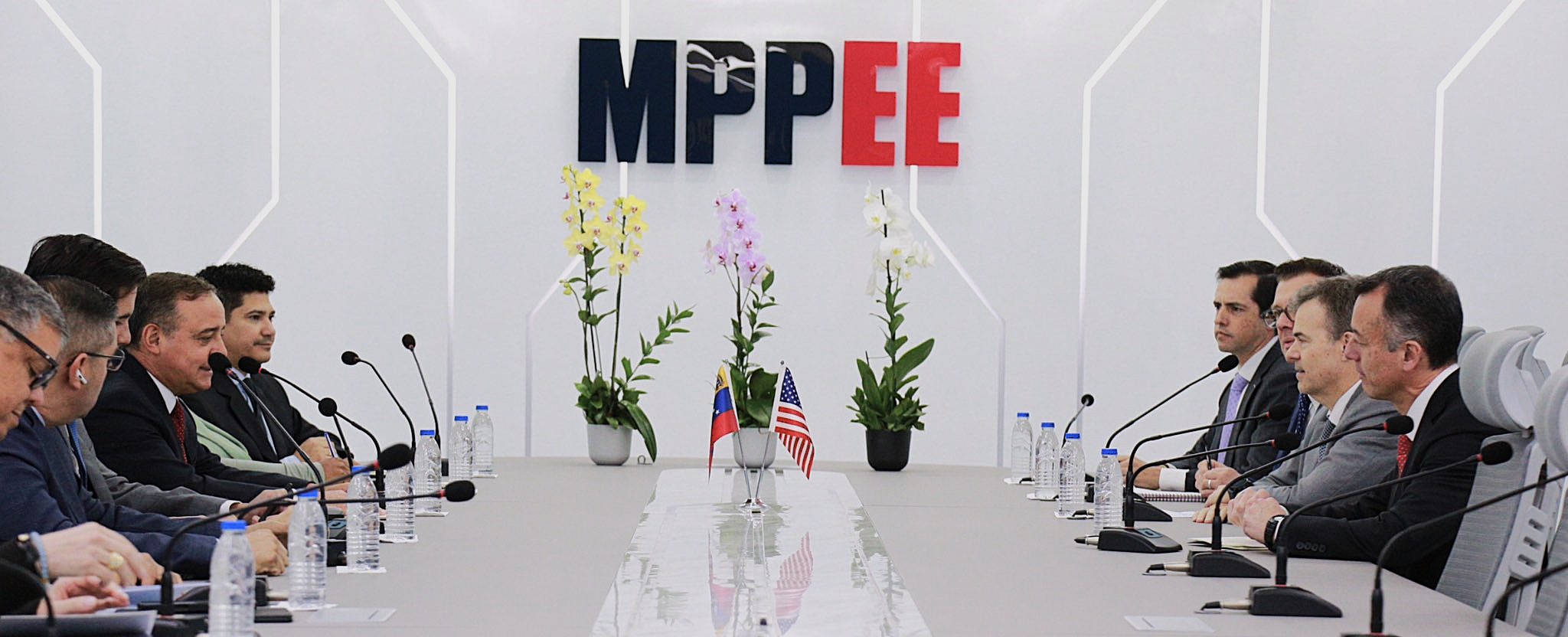
Back in May, as the national power grid was stretching thin because of high temperatures and rising demand, the Electricity Minister Ronald Alcalá and the US Chief of Mission John Barrett met to discuss plans to rebuild the country’s power grid.
In the early days of June, the National Assembly apparently advanced in the drafting of a partial reform to the Electric System and Service Organic Law, allowing the private sector to participate in the electricity service but still keeping the State mostly in control of it. Some have criticized the changes as insufficient.
After that, the interim government signed two memorandums of understanding in June. The first one with Argentinian company IMPSA, which involves two hydroelectric plants in Guayana: repairing the Macagua Dam and finishing the long-delayed and unfinished Tocoma Dam.
IMPSA was formerly a State-owned company which won the contracts in 2008 when Cristina Kirchner was in charge but stalled around 2013-14 as the Maduro government stopped paying.
With the arrival of Javier Millei to La Casa Rosada, IMPSA was privatized and later sold to US consortium Industrial Acquisitions Fund (IAF), which decided to pick up the pending projects in Venezuela again right after the events of January 3rd, with Washington’s help.
The second MoU was with GE Vernova, a major US energy company which was once part of the famous conglomerate General Electric until its breakup in 2024. In the agreement, GE Vernova would assist with improving Venezuelan energy supply to one gigawatt in the first 24 months and more than five gigawatts over the course of four years. The company also committed to properly train personnel and transfer technology to modernize the infrastructure.
The second reading and final passing of the electricity reform is now on hold as the Rodríguez-controlled National Assembly says it is focused on more urgent, disaster-related matters.
Days after those preliminary agreements were announced and signed, the earthquakes occurred and some of the set priorities took a backseat. For example, the grid was heavily hit in places like La Guaira and power had to be restored in parts of Falcón. As mentioned earlier, Carabobo’s generation plants were also affected.
As those short-term fixes are on the top of the list, some of those positive developments from June have gone down on the to-do list, as the CEO of GE Vernova Scott Strazik admitted to Bloomberg: “Practically speaking, if not for the earthquake that had taken place that took us off track, we could be very close to a contract today…” The company is optimistic to start working this year.
In a similar vein, the second reading and final passing of the electricity reform law is now on hold as the Rodríguez-controlled National Assembly says it is focused on more urgent disaster-related matters. But the earthquakes deepened the many issues the national grid had been carrying for long, as this Runrun.es report indicates:
Letters of intent that the government signed with international consortiums to recover turbines in the Caroni (River) or to rehabilitate trunk transmission do not accelerate engineering times. Therefore, specialists insist that stabilizing the system is a complex process that’ll take years.
Until those projects materialize, the interior of the country will keep paying the cost of the system that works to its limits. The seismic doublet of June not only shaken distribution lines of those who usually don’t lose the light; for the rest of Venezuela, the true earthquake is day-by-day in the darkness of a structural crisis that is not solved with speeches.
The official response from Delcy Rodriguez is to simply throw the ball back and ask them to keep carrying that weight as she just announced a brand new plan to save electricity and water. The pretext: the effects of El Niño are being felt around the world and the solar radiation phenomenon that caused the original declaration of electric emergency in March is returning later in August.
For the record, there have been previous precedents of planned power rationing timetables like in 2016, when there was a situation similar to the current one. However, a rationing plan like the one announced for the summer of 2026 is the first in years. Corpoelec chose instead to send SMS messages of questionable accuracy.
In the meantime, she can at least count on the Trump administration giving her a little help-out, thanks to the visit of John Barrett to Guri, along with experts from the US Energy Department.