electric bill

How the Trump administration sold out public lands in 2025

Last February, I climbed into a Jeep and rumbled up a rocky shelf road that took me high above a breathtaking corner of the Mojave National Preserve. At the top was an old gold mine where an Australian company had recently restarted activities, looking for rare earth minerals.

The National Park Service had been embroiled in a years-long dispute with the company, Dateline Resources Ltd., alleging that it was operating the Colosseum Mine without authorization and had damaged the surrounding landscape with heavy equipment. Dateline said it had the right to work the mine under a plan its prior operators had submitted to the Bureau of Land Management decades before.

President Trump had taken office just weeks before my visit. Environmentalists told me the conflict posed an early test of how his administration would handle the corporate exploitation of public lands.

You’re reading Boiling Point

The L.A. Times climate team gets you up to speed on climate change, energy and the environment. Sign up to get it in your inbox every week.

By continuing, you agree to our Terms of Service and our Privacy Policy.

At the time, observers weren’t sure how things would shake out. Conserving public lands is one of the rare issues that’s popular on both sides of the political aisle, they pointed out.

Almost a year later, it’s clear that the Trump administration has sided with the corporations.

Trump directed the Department of Interior to inventory mineral deposits on federal lands and prioritize mining as the primary use of those lands. He instructed officials to dramatically fast-track permitting and environmental reviews for certain types of energy and critical minerals projects — and designated metallurgical coal a critical mineral, enabling companies that mine it to qualify for a lucrative tax credit.

His budget bill lowered the royalty rates companies must pay the government to extract coal, oil or gas from public lands and provided other financial incentives for such projects while reducing the authority of federal land managers to deny them.

Under the president’s direction, the DOI has opened up millions of acres of federal land to new coal leasing and moved to rescind both the 2021 Roadless Rule, which protects swaths of national forest lands from extractive activities by barring most new road construction, and the 2024 Public Lands Rule, which puts conservation and restoration on par with other uses of BLM land like mining, drilling and grazing.

The administration is seeking to roll back limitations on mining and drilling for specific pieces of public land, including portions of the National Petroleum Reserve in Alaska, the watershed feeding the Boundary Waters in Minnesota and a buffer surrounding Chaco Culture National Historical Park in New Mexico. Meanwhile, conservative lawmakers overturned management plans limiting energy development on certain BLM lands in Alaska, Montana, North Dakota and Wyoming.

Altogether, the Trump administration and its legislative allies have taken steps to reduce or eliminate protections for nearly 90 million acres of public land, according to the Center for American Progress, a progressive think tank. That figure rises to more than 175 million acres if you include the habitat protections diminished by the administration’s moves to weaken the Endangered Species Act, the organization notes.

“All of these things represent in some ways the largest attack on our public lands and giveaway to large multinational mining corporations that we’ve seen probably since the 19th century,” said U.S. Rep. Melanie Stansbury of New Mexico, who likened the level of resource exploitation to “something like what happened during the robber baron era when there was no regulation or protection for our communities or the environment.”

Stansbury has introduced legislation that would increase the fees mining companies must pay to sit on speculative claims on federal lands and require those funds be used for conservation. She told me it’s just a tiny contribution to a larger effort to push back against the administration’s approach to initiate extraction on public lands, which she described as so frequent and pervasive that “it’s a bit like whack-a-mole.”

“So much damage has been done, both administratively and legislatively, over the last 11 months since Trump took office,” she said.

As for the Colosseum Mine, the DOI sided with its operators back in the spring, saying Dateline Resources did not have to seek authorization from the Park Service to keep mining. The announcement was followed by public endorsements from Trump and Interior Secretary Doug Burgum. The company’s stock value soared, and by September, it had kicked off a major drilling blitz.

The company has already uncovered high-grade gold deposits. It’s taking a break for Christmas, but is expected to resume drilling in the new year.

More recent land news

The Pacific Forest Trust returned nearly 900 acres of land near Yosemite National Park to the Southern Sierra Miwuk Nation in a transfer partially financed by the state, reports Kurtis Alexander of the San Francisco Chronicle. Members of the Indigenous group were forced off their ancestral lands during the California Gold Rush, when state-sponsored militias undertook efforts to exterminate them. Some now hope the new property will bolster their decades-long push for federal recognition.

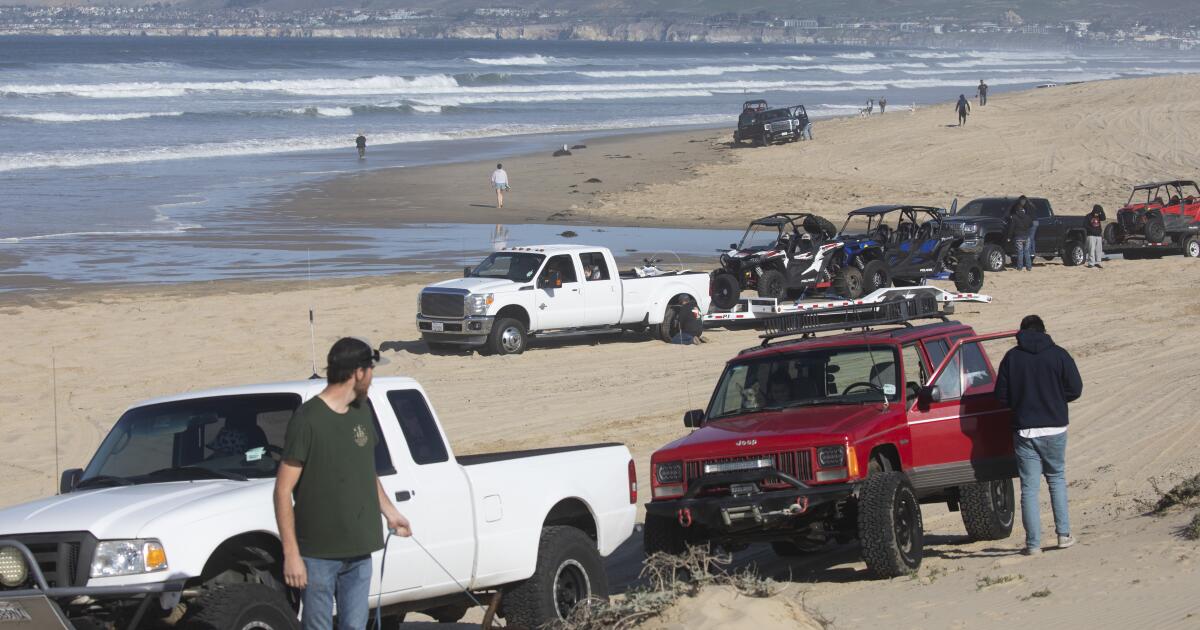
California State Parks is violating the Endangered Species Act by allowing offroaders to drive over dunes that are home to western snowy plovers, a judge recently ruled in a long-running legal case over the use of Oceano Dunes State Recreation Area along the Central Coast. Edvard Pettersson of the Courthouse News Service reports that State Parks will need a federal “take” permit to continue to allow offroading at the popular beachside spot.

California lawmakers introduced legislation to conserve more than 1.7 million acres of public lands across the state, in part by expanding the Los Padres National Forest and the Carrizo Plain National Monument, according to Stephanie Zappelli of the San Luis Obispo Tribune.

The federal public lands grazing program was created as a bulwark against environmental damage but has been transformed into a massive subsidy program benefiting a select few, including billionaire hobby ranchers and large corporations, according to an investigation by ProPublica and High Country News. The three-part series also found a loophole allowing for the automatic renewal of grazing permits has led to less oversight over the health of these lands.

A few last things in climate news

President Trump’s media company is merging with a nuclear fusion energy firm in a $6-billion deal that some analysts have described as a major conflict of interest, my colleague Caroline Petrow-Cohen reports.

House Republicans pushed through a bill that would overhaul the federal environmental review process in a way that critics say could speed up the approval process for oil and gas projects while stymieing clean energy, report Aidan Hughes and Carl David Goette-Luciak of Inside Climate News.

The iconic chasing-arrows recycling symbol is likely to be removed from California milk cartons, my colleague Susanne Rust reports. The decision exposes how used beverage packaging has been illegally exported to East Asia as “recycled” mixed paper, violating international environmental law.

Wind energy is again under attack from the Trump administration, which this week ordered all major wind construction projects to halt. As The Times’ Hayley Smith notes, the White House has been consistent in slowing down clean energy development in 2025, but offshore wind has been a particular bête noire for the President.

We’ve published a comprehensive collection of stories looking back on the wildfires that burned though Altadena and Pacific Palisades last January and all that’s happened since, which columnist Steve Lopez calls “one of the most apocalyptic years in Southern California history.” Check out After the Fires here.

This is the latest edition of Boiling Point, a newsletter about climate change and the environment in the American West. Sign up here to get it in your inbox. And listen to our Boiling Point podcast here.

For more land news, follow @phila_lex on X and alex-wigglesworth.bsky.social on Bluesky.

Source link

State regulators vote to keep utility profits high, angering customers

Despite complaints from customers about rising electric bills, the California Public Utilities Commission voted 4 to 1 on Thursday to keep profits at Southern California Edison and the state’s other big investor-owned utilities at a level that consumer groups say has long been inflated.

The commission vote will slightly decrease the profit margins of Edison and three other big utilities beginning next year. Edison’s rate will fall to 10.03% from 10.3%.

Customers will see little impact in their bills from the decision. Because the utilities are continuing to spend more on wires and other infrastructure — capital costs that they earn profit on — that portion of customer bills is expected to continue to rise.

The vote angered consumer groups that had detailed in filings and hearings at the commission how the utilities’ return on equity — which sets the profit rate that the companies’ shareholders receive — had long been too high.

Among those testifying on behalf of consumers was Mark Ellis, the former chief economist for Sempra, the parent company of San Diego Gas & Electric and Southern California Gas. Ellis estimated that the companies’ profit margin should be closer to 6%.

He argued in a filing that the California commission had for years authorized the utilities to earn an excessive return on equity, resulting in an “unnecessary and unearned wealth transfer” from customers to the companies.

Cutting the return on equity to a little more than 6% would give Edison, Pacific Gas & Electric, SDG&E and SoCalGas a fair return, Ellis said, while saving their customers $6.1 billion a year.

The four commissioners who voted to keep the return on equity at about 10% — the percentage varies slightly for each company — said they believed they had found a balance between the 11% or higher rate that the four utilities had requested and the affordability concerns of utility customers.

Alice Reynolds, the commission’s president, said before the vote that she believed the decision “accurately reflects the evidence.”

Commissioner Darcie Houck disagreed and voted against the proposal. In her remarks, she detailed how California ratepayers were struggling to pay their bills.

“We have a duty to consider the consumer interest in determining what is a just and reasonable rate,” she said.

Consumer groups criticized the commission’s vote.

“For too long, utility companies have been extracting unreasonable profits from Californians just trying to heat or cool their homes or keep the lights on,” said Jenn Engstrom at CALPIRG. “As long as CPUC allows such lofty rates of return, it incentivizes power companies to overspend, increasing energy bills for everyone.”

California now has the nation’s second-highest electric rates after Hawaii.

Edison’s electric rates have risen by more than 40% in the last three years, according to a November analysis by the commission’s Public Advocates Office. More than 830,000 Edison customers are behind in paying their electric bills, the office said, each owing a balance of $835 on average.

The commission’s vote Thursday was in response to a March request from Edison and the three other big for-profit utilities. The companies pointed to the January wildfires in Los Angeles County, saying they needed to provide their shareholders with more profit to get them to continue to invest in their stock because of the threat of utility-caused fires in California.

In its filing, Edison asked for a return on equity of 11.75%, saying that it faced “elevated business risks,” including “the risk of extreme wildfires.”

The company told the commission that its stock had declined after the Jan. 7 Eaton fire and it needed the higher return on equity to attract investors to provide it with money for “wildfire mitigation and supporting California’s clean energy transition.”

Edison is facing hundreds of lawsuits filed by victims of the fire, which killed 19 people and destroyed thousands of homes in Altadena. The company has said the fire may have been sparked by its 100-year-old transmission line in Eaton Canyon, which it kept in place even though it hadn’t served customers since 1971.

Return on equity is crucial for utilities because it determines how much they and their shareholders earn each year on the electric lines, substations, pipelines and the rest of the system they build to serve customers.

Under the state’s system for setting electric rates, investors provide part of the money needed to build the infrastructure and then earn an annual return on that investment over the assets’ life, which can be 30 or 40 years.

In a January report, state legislative analyst Gabriel Petek detailed how electric rates at Edison and the state’s two other biggest investor-owned electric utilities were more than 60% higher than those charged by public utilities such as the Los Angeles Department of Water and Power. The public utilities don’t have investors or charge customers extra for profit.

Before the vote, dozens of utility customers from across the state wrote to the commission’s five members, who were appointed by Gov. Gavin Newsom, asking them to lower the utilities’ return on equity.

“A profit margin of 10% on infrastructure improvements is far too high and will only continue to increase the cost of living in California,” wrote James Ward, a Rancho Santa Margarita resident. “I just wish I could get a guaranteed profit margin of 10% on my investments.”

Source link

The Chevron fire in El Segundo is an indictment of air quality regulation

More than two months after an explosion erupted at the Chevron oil refinery in El Segundo, neither the company nor the regulators responsible for monitoring the facility have released details on the cause and the extent of the environmental fallout.

Here’s what we do know so far: Around 9:30 p.m.on Oct. 2, a large fire broke out in the southeast corner of the refinery, where Chevron turned crude oil into jet fuel. The resulting violent blast allegedly wounded several workers on the refinery grounds and rattled homes up to one mile away.

The refinery carried out emergency flaring in an effort to burn off potentially hazardous gases, as public officials told residents in neighborhoods nearby to stay indoors. That warning held until firefighters managed to extinguish the fire the following day.

You’re reading Boiling Point

The L.A. Times climate team gets you up to speed on climate change, energy and the environment. Sign up to get it in your inbox every week.

By continuing, you agree to our Terms of Service and our Privacy Policy.

The South Coast Air Quality Management District — the agency responsible for regulating the refinery’s emissions — said Chevron would submit reports detailing the potential cause of the fire and any unexpected equipment failures within 30 days. But the preliminary reports were handed in nearly a month late — and without any significant updates from what was said in the days immediately following the fire.

In those reports, Chevron said the fire was “unexpected and unforeseeable.” The cause is still under an investigation that probably won’t conclude until next month, an air district spokesperson told me recently.

Company officials said the fire significantly damaged power supply, utilities and gas collection systems in that section of the refinery. Repairs are underway but could take months. Meanwhile, the majority of the 1,000-acre refinery is operational, distilling crude oil into gasoline and diesel.

At an air district meeting on Dec. 2, Chevron asked for leniency from conducting equipment testing at the damaged wing of the refinery that is now offline, and the air district obliged.

One member of the agency’s hearing board, Cynthia Verdugo-Peralta, said she understood that the investigation was “quite involved” but stressed the need for “some type of response” from Chevron on the cause.

“I’m hoping that this will never happen again,” she said. “Hopefully this repair will indeed be a full repair and there won’t be another incident like this.”

Environmental regulators like the South Coast Air Quality Management District often rely on the very industries that they oversee to arrange for monitoring and investigations into disasters. For obvious reasons, that’s not ideal. Experts say this system of self-reporting is somewhat inevitable, given that many government agencies lack the staffing, budget and access to provide adequate oversight.

But it often leaves the public waiting for answers — and skeptical of the findings, when they finally arrive.

For example, there are still serious questions surrounding the air monitoring systems at Chevron’s El Segundo refinery that were supposed to act as a safety net for the public nearby during emergencies like the October fire.

Under state law, refineries are required to install, operate and maintain real-time fence line air monitors. Indeed, over four hours after the Oct. 2 fire at El Segundo, Chevron’s fence line air monitors detected elevated levels of volatile organic compounds, a category of quickly vaporizing chemicals that can be harmful if inhaled.

However, at the time of the incident, the refinery’s monitors oddly did not detect any elevated levels of some of the most common types chemicals that experts say would have been likely to be released during such a fire, such as cancer-causing benzene, a typical byproduct of burning fossil fuels.

Experts are now asking whether those monitors were fully functioning at the time.

Earlier this month, the Bay Area Air Quality Management District fined Chevron’s refinery in Richmond $900,000 after the agency found 20 of the oil company’s fence line monitors were not properly calibrated to detect the full range of emissions, potentially allowing excessive air pollution to go undetected and unreported.

As for the El Segundo facility, neither the South Coast air district nor the refinery could confirm whether the air monitors were working properly on Oct. 2. A spokesperson said the air district is scheduled to audit Chevron’s fence line air monitoring network sometime next year.

But it may already be too late to warn nearby communities. Since October’s explosion, there have been more than a dozen reported incidents of unplanned flaring at Chevron’s refinery in El Segundo, according to air district data.

Each one raises the question: What happened?

More news on air pollution

The holiday season is associated with fragrant candles, incense and gathering around the fireplace. But health experts say these traditions should be done in moderation to avoid respiratory risks, according to Associated Press reporter Cheyanne Mumphrey.

That’s especially true in Southern California, where the air district continues to issue no-burn advisories, prohibiting burning wood to limit unhealthy levels of soot, per Pasadena Now.

Almost a year after the Eaton and Palisades fires, the health effects from breathing wildfire smoke are still coming into focus. L.A. Times science and medicine reporter Corrine Purtill writes that emergency room visits rose 46% for heart attacks at Cedars-Sinai Medical Center in the 90 days after the fires. The findings suggest the death toll could be much higher than the 31 fatalities that have been linked with the fires.

California Atty. Gen. Rob Bonta sued the Trump administration — for the 50th time — after the suspension of $3 billion in federal funding that Congress approved for building more electric vehicle chargers, according to Times climate reporter Hayley Smith. California alone stands to lose out on $179.8 million in grants that could help reduce smog and greenhouse gases.

A few last things in climate news

The Trump administration announced it will dismantle the National Center for Atmospheric Research in Colorado, one of the world’s premier Earth science research institutions, per reporting from the New York Times. Scientists fear this could undermine weather forecasting in an age when global warming is contributing to more intense storms and other natural disasters.

A new analysis from Woods Hole Oceanographic Institution found the rate of sea-level rise has more than doubled along U.S. coastlines over the last 125 years, according to Washington Post environmental reporter Brady Dennis. The research rebuts a controversial federal assessment published this summer that concluded there was no acceleration in rising ocean waters.

The U.S. and Europe continue to abandon their electric vehicle aspirations, ceding the clean car market to China, Bloomberg auto reporter Linda Lew writes. The European Commission recently scrapped an effective ban on combustion engine vehicles by 2035, and Ford Motor Co. walked away from plans to significantly overhaul its EV production — including the imminent demise of its all-electric Ford 150 Lightning truck.

This is the latest edition of Boiling Point, a newsletter about climate change and the environment in the American West. Sign up here to get it in your inbox. And listen to our Boiling Point podcast here.

Source link