Sign up for the L.A. Times California Politics newsletter
Deeply reported insights into legislation, politics and policy from Sacramento, Washington and beyond. In your inbox twice per week.
By continuing, you agree to our Terms of Service, which include arbitration and a class action waiver. You agree that we and our third-party vendors may collect and use your information, including through cookies, pixels and similar technologies, for the purposes set forth in our Privacy Policy such as personalizing your experience and ads.
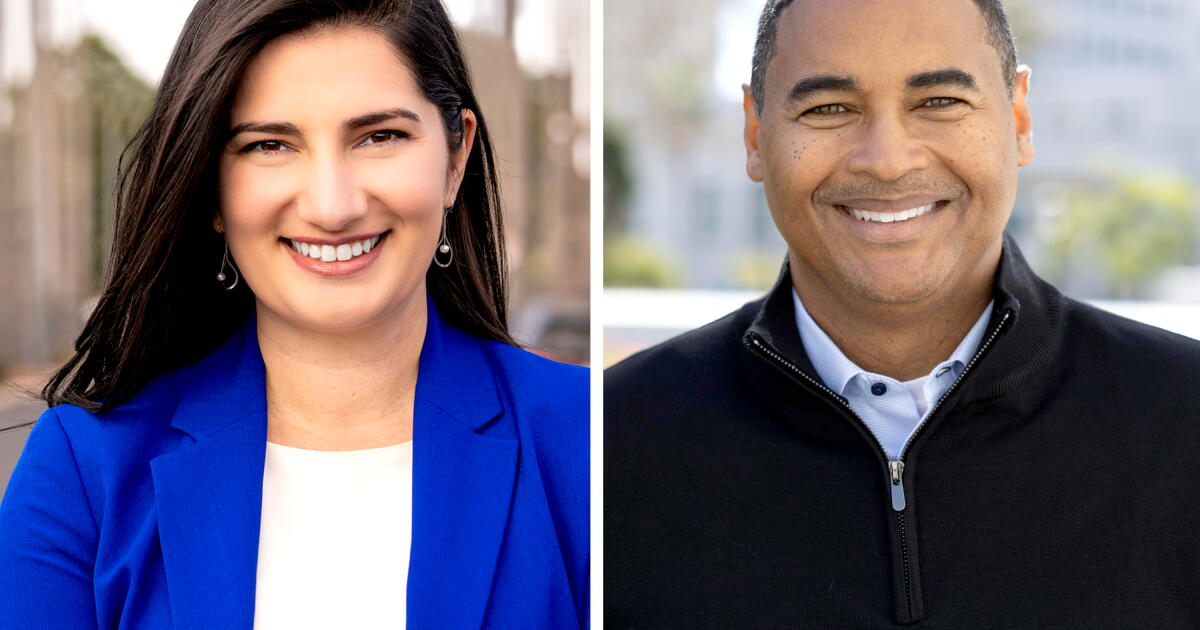
Democratic State Assemblymember Jacqui Irwin is facing off against Republican candidate and nonprofit leader Samuel Gallucci in the race for California’s 26th Congressional District.
They are seeking to claim the open seat created by the retirement of Rep. Julia Brownley, who has represented the region for the last 12 years. The district stretches from the the Pacific Ocean through the foothills of the Santa Monica mountains, encompassing most of Ventura County and the L.A. County communities of Calabasas and Agoura Hills. It includes the communities of Oxnard, Thousand Oaks, Simi Valley, Ventura and Camarillo as well as wide swaths of vineyards and agricultural land.
As with most Californians, the rising cost of living and especially the price of housing are major concerns for constituents. Many communities sit at the wildland-urban interface, making wildfire prevention and response another essential issue. The district is home to a significant immigrant community in agricultural areas such as Oxnard and Camarillo, which have been the site of Immigration and Customs Enforcement raids and protests.
Steven Veres, 46, is vying to maintain his seat on the Los Angeles Community College District Board of Trustees.
(Courtesy of Steven Veres)
Name: Steven F. Veres
Age: 50
Website: www.steveveres.com
Occupation that appears on the ballot: Los Angeles Community College District, member of the board of trustees
Experience: Veres cited his role as trustee and previous work as a teacher as key experience for another four-year term. Veres also has worked as a state politics adviser, including for Sen. María Elena Durazo. As trustee, he said his work has included strengthening job training programs, improving graduation rates and addressing basic student needs.
“Successful colleges depend on students, faculty, and staff having a meaningful voice in decisions” while the board should “listen, set clear priorities, protect public resources, and give our colleges the support necessary to help students succeed,” he said.
District challenges: The district’s greatest challenge is helping students finish their education, given how many are forced to juggle school with “jobs, housing costs, food insecurity, transportation, and family responsibilities … We need to remove those barriers while making the academic experience easier to navigate,” he said.
Priorities: “First, make college truly affordable. Tuition is only part of the cost. Housing, food, transportation, textbooks and childcare can determine whether a student stays enrolled.
“Second, improve completion and transfer rates. Students deserve clear academic pathways, accessible counseling and course schedules that allow them to earn a degree, certificate or transfer without unnecessary delays. Third, connect education to careers. I want to dramatically expand paid internships, apprenticeships and partnerships with employers and organized labor.
“These priorities reinforce each other: Students are more likely to finish when college is affordable, the path to completion is clear, and they can see the economic value of their education.”
Budget: “Our first responsibility is to use taxpayer dollars efficiently while protecting instruction and student services,” he said. In addition, Veres said that because state funding is based on enrollment, boosting it can be a path to financial stability, along with eliminating unnecessary, duplicative spending across the nine colleges and investing in energy efficiency to cut costs.
“Fiscal responsibility is not simply cutting spending,” he said. “It means directing limited resources toward what produces the greatest value for students and taxpayers.”
Student success: Veres would address barriers to student success and enrollment by pushing to make the application process easier and providing more flexible class schedules — including more evening, weekend, online and hybrid options — for working adults, parents and others. “Our job should not end when a student enrolls. It ends when that student reaches their educational goal,” he said.
Robert Payne is running for Los Angeles Community College Board of Trustees Seat 2.
Occupation that appears on the ballot: researcher/writer/environmentalist
Experience: Payne said he has taught at L.A. Mission College. His education at L.A. Valley College and Cal State Northridge helped prepare him for a career as a writer. He said he has worked on movie crews and ran an import business, among other jobs. Growing up in Pacoima helped him understand the needs of immigrants and “those of diverse backgrounds with limited resources.”
“I went through the [community college] system,” he said. “I know the difficulties. All my ideas come from my direct experience.”
District challenges: Payne cited low enrollment growth as the main challenge. Students also need to see a quicker return on their investment. “Life costs money,” he said. “If students could see immediate advantages to college, the colleges would attract more enrollments.”
He reflected on his own experience when discussing the importance of a quick payback. “I graduated from Cal State Northridge. Nothing I learned at L.A. Valley or Cal State paid off immediately,” he said. “I worked as a janitor, security guard, construction site cleaner. I lucked into a union tech job and I earned my way through graduate school. Years later, the master’s degree finally helped me get work as a ‘professor.’ ”
Priorities: Payne wants to make community colleges “cheaper, faster, better” in part by offering students more training for specific jobs and less expensive online textbooks. He also would support ending student debt.
Budget: He does not support cutting “student opportunities” and said if “the colleges can demonstrate success for the students, enrollment will justify the expense of maintaining the expense of the faculty, the staff, the facilities.”
Student success: Payne wants college to do more to offer “immediate perceived value,” including teaching résumé building, interview skills and how to apply to jobs. He said hiring adjuncts with industry experience could enhance student success.
Kristina Irwin is running for Los Angeles Community College Board of Trustees Seat 6.
Occupation that appears on the ballot: parent/business owner.
Experience: As a former community college student, Irwin has firsthand knowledge of the L.A. community college student experience.
She serves on the general advisory board at Santa Monica College and said she also served on the board of trustees at her children’s school, Palisades Charter High School, during the Palisades fire. She said she holds a Public Engagement & Civic Leadership Certificate from the Davenport Institute at Pepperdine School of Public Policy.
District challenges: Irwin said the main challenge is preparing young people to advance in college when their earlier schooling failed to give them the tools to succeed.
Priorities: Irwin wants to establish “preentry” programs in every local high school that would prepare students for community college and do more to give educators the resources they need to craft classes that “fit the needs and life limitations of the students.”
Budget: Irwin said alternative streams could be identified to fund “classroom student resources.” She said that as “responsible stewards” of district resources, trustee actions “are often under scrutiny either formally or informally.”
Student success: Irwin wants to address barriers to student success and enrollment by doing more to demonstrate how a community college education can give them the tools necessary to succeed in their chosen career.
Name: Roy Payan
Payan told the Times he suspended his campaign.
Adriana Cabrera is running for Los Angeles Community College Board of Trustees Seat 2.
Experience: Cabrera said she attended community college and went on to earn bachelor’s degrees in Chicana/o studies and political science and a master’s in education from Cal State Northridge. She said she also served as president of the Central Alameda Neighborhood Council and co-founded Empowering Youth in South Central, a “grassroots collective of students and educators” that “has supported thousands of first-generation students with college, career, financial-aid, and leadership support.”
“I am not coming into this role to learn higher education after I am elected,” she said. “I have studied it, worked in it, navigated it as a student, built programs within it, worked inside public institutions, and organized communities around it.”
District challenges: Cabrera said student services are too difficult to navigate, too many students struggle to afford basic needs such as housing, and clearer pathways are needed to economic mobility, She said budget decisions also can feel “disconnected” from the staff and students those decisions effect.
Priorities: “My first priority is invest in students first,” she said. Cabrera would do that by making student services easier to navigate and strengthening financial aid and other support, including for food, housing, child care and mental health.
Secondly, Cabrera wants to better connect education to economic mobility through good paying jobs. Lastly, Cabrera would give students, faculty, staff, labor organizations and community members “a meaningful voice before major budget priorities are finalized.”
Budget: Cabrera would review the district’s spending “to make sure existing dollars are being used efficiently” and “identify responsible ways to generate additional revenue without shifting costs onto students.” For instance, renting out underutilized facilities.
Student success: Cabrera would take steps to ensure student services are more readily available and the public has better visibility and say in trustee decisions. “The overall standard I would bring to the board is simple,” she said. “Can students enter LACCD, understand their options, find the support they need, complete their goal, and leave with more opportunity than when they arrived?”
Brazilian president and opposition candidate snub the final debate ahead of the presidential election.
Published On 2 Oct 20262 Oct 2026
Brazilian President Luiz Inacio Lula da Silva and his main opponent Flavio Bolsonaro have snubbed a chance at a final debate ahead of the first round of the presidential election on Sunday, while police ruled out a bomb threat outside the country’s Supreme Court.
Lula, instead of taking part in the debate, opted to appear on a popular podcast with millions of YouTube subscribers while his rival Bolsonaro accused the electoral court of “censorship” as a reason for his withdrawal.
Recommended Stories
list of 3 itemsend of list
Bolsonaro, son of the former Brazilian President Jair Bolsonaro, said during a live broadcast on Thursday on his social media channels that his decision not to participate in the debate was due to “censorship imposed by the electoral court”.
The right-wing candidate was referring to a decision that barred the debate broadcaster from keeping President Lula’s empty seat on stage.
The debate organised by TV Globo, the country’s most popular broadcaster, was set for Thursday and offered a final opportunity for the two presidential frontrunners to face off before polls open.
TV Globo said in a statement that the debate was cancelled because two rulings, one from the country’s electoral court and the other from the Supreme Court, had created “legal uncertainty” about the event.
Lula, 80, will face off against Bolsonaro in a first-round vote on Sunday, with polls giving him a slight advantage.
The pair are neck and neck in projections for a potential runoff on October 25, however.
Bomb scare
On the same day of the cancelled debate, Brazilian police ruled out a bomb threat outside the Supreme Court.
A suspect who “tried to jump the court’s fences” and “threw a backpack on top of a bus stop” had been arrested, the court said in a statement.
Authorities examined the backpack, which ultimately contained “only personal belongings,” military police spokesperson Raphael Broocke told AFP.
The suspect will remain in custody while the investigation continues, he added.
Brazilian police and firefighters inspect the area of a possible bomb in a backpack outside the Supreme Court headquarters in Brasilia on October 1, 2026 [AFP]
The Supreme Court has been criticised by the political right, notably for the 2025 conviction of ex-leader Jair Bolsonaro over a coup plot.
It has also become embroiled in a fraud scandal that has dominated the final weeks of the presidential campaign.
California’s general election takes place on November 3. Here is information Times reporters gathered about the races:
L.A. mayor election
L.A. City Council elections
Other L.A. city elections
Community college elections
L.A. County elections
Judge elections
Governor’s race
California statewide propositions
Other statewide races
U.S. House elections
How to vote
Sign up for the L.A. Times California Politics newsletter
Deeply reported insights into legislation, politics and policy from Sacramento, Washington and beyond. In your inbox twice per week.
By continuing, you agree to our Terms of Service, which include arbitration and a class action waiver. You agree that we and our third-party vendors may collect and use your information, including through cookies, pixels and similar technologies, for the purposes set forth in our Privacy Policy such as personalizing your experience and ads.
Get the lowdown on L.A. politics
Sign up for our L.A. City Hall newsletter to get weekly insights, scoops and analysis.
By continuing, you agree to our Terms of Service, which include arbitration and a class action waiver. You agree that we and our third-party vendors may collect and use your information, including through cookies, pixels and similar technologies, for the purposes set forth in our Privacy Policy such as personalizing your experience and ads.
Last year, Kim was one of the sponsors of the Community Investment and Prosperity Act, a proposed law that later was encompassed in another piece of legislation that expanded banks’ ability to invest in communities in a way that promotes economic development and the public good. The law allows national and state member banks to invest up to 20% of their capital and surplus in affordable housing, small business lending and community revitalization.
“Families across California have felt the effects of rising costs for years. From delivering meaningful tax relief to supporting commonsense housing and energy reforms, I remain committed to fighting for opportunity and economic security that put Californians first,” Kim said in a press release issued by Americans for Prosperity in May.
Calvert sees affordability as the biggest challenge facing families and blames Sacramento for the rising costs and “driving businesses out of the state.” He points to his vote in support of the One Big Beautiful Bill Act, which maintained many of the tax cuts in the Tax Cuts and Jobs Act of 2017 and raised the State And Local Tax (SALT) deduction cap.
“My priority is fighting to lower everyday costs, help families keep more of what they earn and supporting policies that fuel economic growth, which in turn provides higher wages and more opportunities for California families and workers,” he said.
The largest chunk of this money — $7.2 billion — would be doled out as loans to builders who agree to rent some of the homes to low-income families; in Los Angeles County, a family of four earning about $133,000 a year qualifies as low-income.
Researchers recently found that the construction of nearly 40,000 low-income homes was in limbo because of a lack of funding.
The second-largest portion of these funds — $1.25 billion — would be set aside for housing for veterans, in the form of homeownership loans. Voters last approved this type of statewide bond for veteran home loans in 2018.
According to the Legislative Analyst’s Office, the remaining dollars would be spread across several other initiatives and could subsidize up to 40,000 rental apartments, 2,500 homes for farmworkers and 1,200 beds for university students:
$1.1 billion to help low- and middle-income families buy homes through direct loans and funds to nonprofits
$500 million for infrastructure related to new housing, such as road and water repairs
$450 million in loans or grants to build or upkeep affordable housing for farmworkers
$350 million to build affordable housing for students, split evenly among the University of California and California State University
$200 million available for tribal members to use to build or repair housing
$200 million available to city and county governments and other entities hoping to pilot programs to build low-cost housing
Arguably the biggest change is to Area Planning Commissions, a group of seven volunteer-led boards that hear cases from homeowners, developers and businesses and make rulings on liquor licenses, hillside developments and more.
The amendment would consolidate those seven commissions into a single unified Neighborhood Appeals Commission.
The goal is efficiency. State laws passed in recent years have changed the appeals process, leading to lower caseloads for the seven boards. It’s also a financial drain on the city to train and take on so many volunteer commissioners while also paying overtime for staffers to host evening meetings for seven bodies — think audio-visual specialists, tech support, etc.
Under the amendment, the total number of commissioners would shrink from 35 to as few as seven, and the staff required to host meetings also would shrink significantly.
A unified board would eliminate the risk of commissions issuing different rulings. Picture a developer trying to build a hillside home; a commission that’s wary of such projects could reject it, while another commission that leans more pro-housing could approve it. Having a single board means that all appeals and applications would be governed by the same logic.
Pave the way for super-skyscrapers
Could an L.A. skyscraper rise higher than those in New York City or Chicago? Could downtown L.A. claim not just the tallest building west of the Mississippi River but also in the entire country?
If so, it would start here.
This amendment allows the City Council to change the existing floor area ratio (FAR) restrictions, which cap the height of certain buildings. FAR ratios vary by neighborhood and height districts, but the highest ratio is currently 13x, meaning a building’s total square footage never can be more than 13 times the size of the parcel of land that it sits on. For reference, L.A.’s tallest building, the Wilshire Grand Center, has a ratio of roughly 10.5, depending on how you calculate the square footage and acreage.
These limits were set in the 1950s, when L.A.’s population was roughly half of what it is now. This amendment would give City Council the flexibility to set higher limits to add density in order to adapt to a growing population.
Individual projects still would require zoning reviews, so no need to worry about skyscrapers coming to Silver Lake.
Set deadlines
You just opened a taco shop and you want to serve margaritas. The City Council said it’s fine, but you’re waiting to hear back from the City Planning Commission. They’re taking too long, and your patrons are drinking water while you wait for a liquor license.
Under current rules, decisions from either the City Council or Planning Department can get kicked back and forth indefinitely. This amendment sets deadlines for both sides to speed up rulings: Planning boards have 30 days to concur or dissent with City Council decisions, and City Council gets 21 days to hold a final vote on Planning decisions — or else the Planning decision becomes final.
Ensure passed amendments actually pass
Here’s how it would work. Say there’s an amendment to the city’s General Plan, which guides land use decisions, or a tweak to one of the neighborhood community plans that oversee development in areas like Hollywood or Boyle Heights. The mayor has signed off on it. The City Planning Commission approves too. But the City Council just hasn’t quite gotten to it yet.
Under current rules, if the City Council doesn’t vote on an amendment within 75 days of the mayor and Planning Commission approvals, it’s automatically denied. This amendment reverses that; if the City Council doesn’t get to an amendment within 75 days, it’s automatically approved.
McKinney has been endorsed by Hochman, the union that represents rank-and-file L.A. police officers and City Councilmembers Traci Park, John Lee, Tim McOsker and Monica Rodriguez. While McKinney has raised half a million dollars, independent expenditures have spent more than $3 million to support the veteran prosecutor.
More than $2 million of those funds have come from a political action committee run by Airbnb. The rental giant was sued by Feldstein Soto for price gouging after the destructive Palisades fire, but McKinney has dismissed criticism that he’s receiving massive financial support from a corporation that if elected, he’d be involved in litigation against.
“Airbnb is going to benefit from a safer L.A., because it’s going to boost tourism to the extent that they have properties and interests here,” he told The Times in May. “When they look at the current city attorney and they look at Marissa Roy, maybe they decided this guy is going to do a better job.”
Roy has the support of the L.A. County Democratic Party, the Democratic Socialists of America’s Los Angeles chapter, California Atty. Gen. Rob Bonta, U.S. Sen. Bernie Sanders (I-Vt.), City Councilmembers Ysabel Jurado and Eunisses Hernandez, L.A. City Controller Kenneth Mejia, L.A. County Supervisors Hilda Solis and Lindsay Horvath, the city attorneys of San Francisco and San Diego, the L.A. County Federation of Labor and a host of other labor unions and Democratic groups.
Mayor Karen Bass endorsed Feldstein Soto in the primary. She has yet to weigh in on the runoff.
Former Long Beach Police chief Robert Luna came out of retirement to run for sheriff in 2022, promising to turn around a department that had veered off course.
As someone who didn’t have the wide name recognition or countywide political experience of some of his challengers, Luna’s second-place finish to Villanueva in the primary was far from guaranteed, but he ultimately cleared the rest of the field by a wide margin.
Fast-forward four years to June, and Luna received 44.2% of the vote in this primary — less than six points short of winning the race outright — versus Villanueva’s 21.7%. And Luna’s been a more effective fundraiser, bringing in $366,000 since Jan. 1, more than three times the nearly $109,000 Villanueva had raised by June 30, according to their most recent campaign filings. Luna had $352,000 in the war chest as of June 30, and Villanueva had about $56,000.
But Villanueva has wide name recognition in L.A. County. And he pulled off a historic political upset of his own in 2018 when he beat Sheriff Jim McDonnell, who is now the Los Angeles police chief. It was the first time an incumbent L.A. County sheriff lost a reelection campaign in more than a century. It was also the first time in 100 years that a Democrat had been elected to the nonpartisan sheriff’s job.
After running on a progressive platform and pitching himself as a criminal justice reformer, Villanueva tacked hard to the right. Within two years he was a favorite of conservative media, including Fox News, where he appeared repeatedly to vilify “woke” culture and criticize Democrats. He ultimately switched his party registration to Republican in a move that solidified a new base of law-and-order supporters while alienating many who supported him in 2018.
Villanueva’s tenure was marked by controversy and scandal. He launched, then walked back a criminal leak investigation of a Los Angeles Times reporter and was ordered to testify after sheriff’s deputies took and shared pictures at the site of Kobe Bryant’s helicopter crash. Villanueva defied subpoenas over so-called deputy gangs.
Now, Luna is the one defending his record as sheriff over the last four years. He’s presided over declines in homicides and violent crime and established a period of relative calm after the stormy Villanueva years. But Luna’s department has come under scrutiny in the wake of a July 2025 incident in which a grenade exploded accidentally in a department parking lot, killing three deputies. The state has fined the department more than $350,000 after identifying a series of safety violations leading up to the blast.
And the Civilian Oversight Commission filed suit against the department in June for declining to provide certain records related to three cases of use of force the commission issued subpoenas for in February 2025. Luna has said the county’s attorneys maintain that the unredacted records can’t be released until it completes a “meet and confer” process with the Sheriff’s Department union, a claim that watchdogs have disputed.
Min said Trump’s attacks on voting by mail and his attempts to get the U.S. Postal Service to refuse to deliver mail-in ballots, combined with his attempts in 2020 to overturn the election, “should worry every American who cares about our country, our Constitution, and the values of our nation.”
In 2024, Min authored a bill which passed that prohibits local governments from forcing voters to present identification before they cast a ballot at a polling place.
“I will continue to do all I can to stand up against these anti-democratic and un-American attacks on the sanctity of our elections,” Min said.
Le Roux told The Times she supports the Safeguard American Voter Eligibility or SAVE America Act, which would require voters to provide documents proving their citizenship at the time of registration and a photo ID at the time they vote.
In California, people are required to provide a driver’s license number or a portion of their social security number when they register to vote.
“Millions of ballots are mailed out in California with very few safeguards and at significant cost, leading to weeks of uncertainty as the rest of the country laughs and mocks us for our incompetence,” she said.
Le Roux also supports Proposition 39, which will appear on the November ballot in California, and would require voters to show government issued identification at the polls. Voters who submit mail-in ballots would need to provide the last four digits of a government ID to vote.
Proponents of the measure say Los Angeles is falling short in providing basic services, including street and sidewalk maintenance, upkeep of streetlights and trees and other services administered by the Department of Public Works.
The measure is intended to streamline public works decision-making to improve city services and add new sources of revenue by leveraging existing resources such as underutilized city land.
Measure LA’s perhaps most controversial element is the proposal to increase the power of the director of public works while reducing the sway of the Board of Public Works or potentially eliminating it.
The director would be able to manage public works projects, including construction, buying or leasing property, exercising eminent domain with City Council approval, granting street permits, regulating parking and recommending budgets for the department.
An opponent of the measure, Rodriguez said the Board of Public Works was established to provide independent review of city contracting, with commissioners’ decisions made in public meetings.
“Removing this important check and balance would reduce public scrutiny and weaken accountability over billions of taxpayer dollars for public projects,” Rodriguez said in her ballot argument against the measure.
Commissioners are appointed by the mayor. They work full-time on the board for five-year terms administering the Public Works Department while assisted by several bureau heads and the director of public works.
Proponents of the measure say the current system of overseeing public works is ineffective because responsibility is spread among multiple officials, commissions, agencies and bureaus.
“Angelenos see the results in crumbling streets, buckled sidewalks and streetlights that stay dark,” proponents said in their ballot argument.
Another key element of the measure is establishing a two-year budget cycle for the city, which currently adopts its budget annually. Under Measure LA, the mayor would be required to submit a proposed two-year budget to the City Council by April 1. A two-year budget would enhance planning for infrastructure improvements under another new requirement that the city adopt a Capital Infrastructure Plan.
Most major U.S. cities rely on multiyear capital improvement plans to schedule spending on roads, bridges, parks and buildings.
A long-term infrastructure plan administered with two-year budgeting “sets clear priorities, identifies the projects that need to get done, and plans how to fund them over time,” proponents said.
Currently, the charter prohibits the city from mortgaging city-owned property and prevents it from operating purely commercial or industrial businesses. The measure would remove these restrictions to raise new revenue.
Easing restrictions on operating a business also would allow the city to use its intellectual property to sell merchandise with city logos, as is done in other cities including New York, Yaroslavsky said.
Ugarte, who once collected signatures for Measure ULA, also known as the “mansion tax,” says it’s not working as intended and is keeping developers away from the city. The measure levies a tax on property sales above $5.3 million and funnels the money to affordable housing programs and homeless prevention.
“If developers are running away from the city of L.A., we gotta know why. We gotta go back to the drawing board. We gotta accept when we make mistakes, including myself,” Ugarte said.
He supports amending the measure to exempt affordable housing developers. He also wants to raise the threshold for properties subject to the tax to $10 million, to account for the increasing costs of construction.
Ugarte supports State Bill 79, a law mandating that cities increase housing density around public transportation hubs. But more transportation, Ugarte said, needs to come before more housing.
Making L.A. more transit-friendly will lower costs for housing, insurance and parking, Ugarte said, giving residents relief from the city’s high cost of living.
Mazariegos said homeless prevention starts with enforcing a “huge list” of the city’s tenant rights laws, including rent control and prohibitions against landlords harassing tenants.
Building affordable housing, along with enforcing those laws, will keep more people housed, he said.
Mazariegos wants to use public land to build social housing, which is publicly subsidized housing separate from the rental market.
He also would push to extend the travel industry’s upcoming $30 minimum wage to all workers and to tie the minimum wage to the consumer price index.
“A combination of those things will reduce and stop the bleeding of folks going into the street, going homeless, and will start giving us a chance as a city to work our way out of this crisis,” Mazariegos said.
Opposition leader dismisses Netanyahu’s warning of possible attacks during next month’s general election.
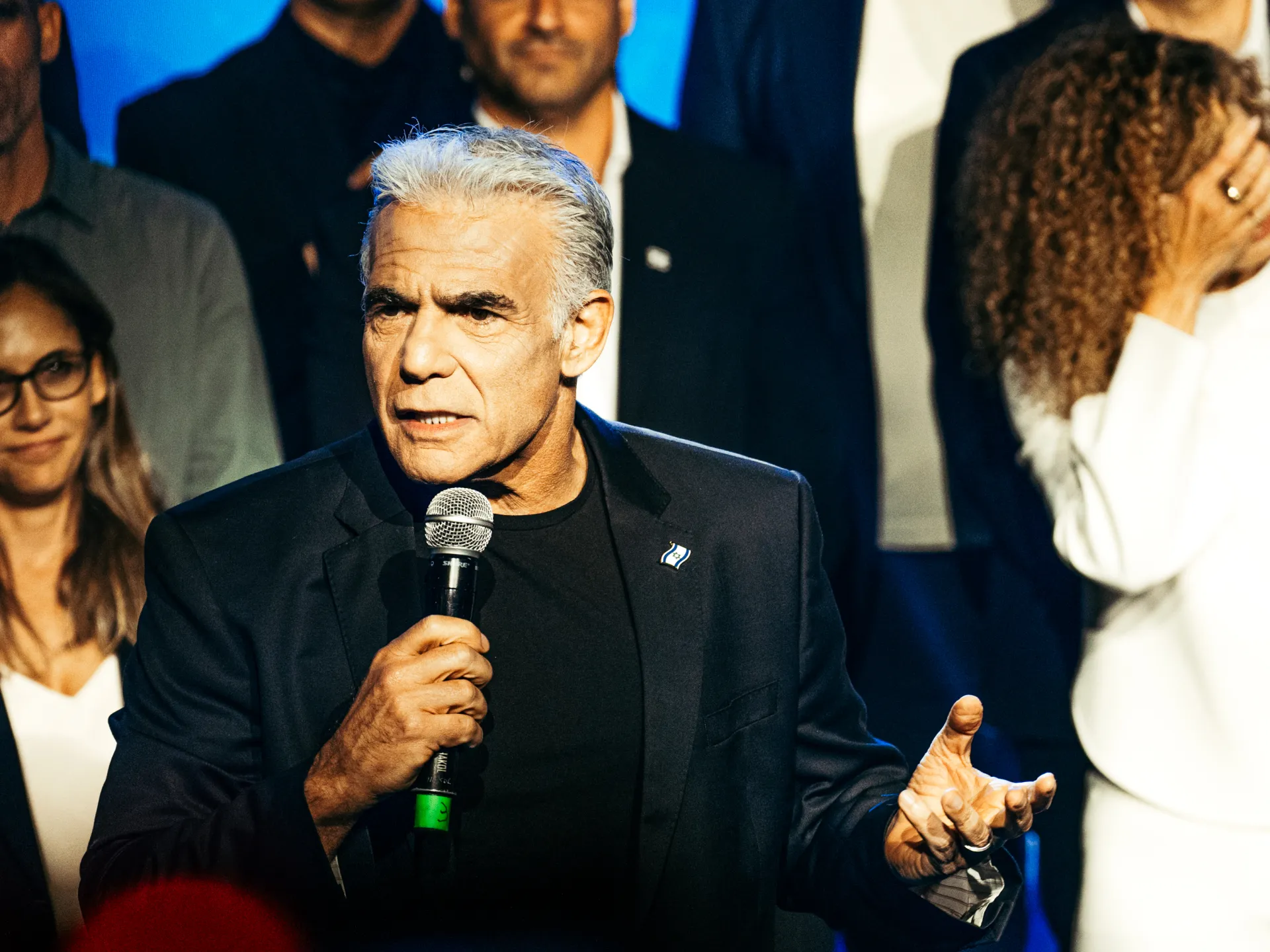
Israel’s opposition leader Yair Lapid has accused Prime Minister Benjamin Netanyahu of “fear-mongering” after the incumbent leader warned that the country’s enemies may attack before next month’s general election.
Lapid, who heads the Yesh Atid party, dismissed the warning after meeting the prime minister on Tuesday.
Recommended Stories
list of 3 itemsend of list
Earlier in the day, Netanyahu posted an online video that showed him posing in front of a fighter jet at a military base and saying there were “indications that, ahead of the elections, our enemies will try to attack us”.
He did not specify which enemy he had in mind. But in recent weeks, he has issued warnings to Iran, Hamas, Hezbollah and the Palestinian Authority, promising retaliation in the event of an attack.
Lapid requested an urgent security briefing after the warning, and in an online post afterwards, he said he was certain the election would take place on time and that “there is no reason to panic the public”.
“The elections will take place on time, and no one has an excuse to disrupt them,” he said.
He accused Netanyahu of using military bases as “props for election campaign videos” and of failing to heed warnings before the Hamas-led attacks of October 7, 2023, which set off Israel’s genocidal war on Gaza. More than 76,000 Palestinians have been killed in the war.
“Netanyahu ignored every warning before October 7, and now, 28 days before the election, he’s suddenly busy fear-mongering,” Lapid said. He added: “I of course will not violate the confidentiality of the security briefing but it must be said — security threats must be handled professionally and responsibly.”
The election, scheduled for October 7, is Israel’s first vote since the Hamas-led attacks, which plunged the Middle East into turmoil as Israel went to war in Gaza, Lebanon and Iran. The election could determine whether Netanyahu remains in power after one of the most consequential periods in Israel’s history, or is defeated by centrist rivals promising to usher in a new era.
Netanyahu, Israel’s longest-serving leader, was first elected prime minister in 1996. In recent weeks, he has had to deny media reports that his partners in the Middle East warned him of a potential Hamas attack, an allegation his political rivals have seized on.
Polls show him in a close race to stay in power.
According to a Reuters polling average, no candidate has a clear path to power. The average shows Yashar, the party of Gadi Eisenkot, a former military chief who has emerged as Netanyahu’s most formidable rival, leading the prime minister’s right-wing Likud party by 2 points.
Based on the average, parties opposed to Netanyahu would hold 64 seats in the 120-member Knesset, 15 more than the parties that back him, but they may be unable to form a coalition.
Lapid is one of several opposition figures in the race. He, Eisenkot and other opposition leaders have agreed to coordinate to remove Netanyahu’s government. Under the agreement announced last week, each leader pledged to work in their constituencies to increase turnout and attract support from various sectors of society to secure a majority and form a new government.
The prime minister said in a separate post on Tuesday that he has held a security briefing with Lapid in which he raised alerts about possible attacks “on the various fronts ahead of the elections”.
He stressed that he holds regular briefings with the opposition leader.
For weeks, the streets of Serbia were teeming with young people rallying against the government. At the height of the protests in March 2025, more than 100,000 took to the streets.
With the elections originally not due until December 2027, the early vote is seen as an attempt by governing populists to cling to power despite widespread discontent.
Students and anti-government demonstrators light the flashlights of their mobile phones during a protest, which became a national movement for change following the deadly November 2024 Novi Sad railway station roof collapse, in Belgrade, Serbia, March 15, 2025 [Igor Pavicevic/Reuters]
Vucic is vying for the prime minister’s post, a role he has held before, appearing to yield to protesters’ demands not out of goodwill but in the hopes of ushering in a result that keeps him in office, analysts say.
But experts warn that elections will hardly solve the underlying political tensions gripping the country, triggered after 16 people were killed in 2024 when a concrete canopy collapsed at a railway station. Student protesters blamed the disaster on government negligence and alleged corruption.
The move “is essentially about reducing political risk”, Viktor Stamenkovic, a researcher at Belgrade’s Institute for Political Studies, told Al Jazeera.
“Given the circumstances, the ruling camp is choosing the electoral sequence it considers least dangerous,” he said, referring to Vucic’s Serbian Progressive Party (SNS).
Saving his skin: Elections a cling to power
Vucic could stall no more – both the presidential and parliamentary vote would have had to be held next year.
“Vucic has, for some time, been aware that further delay is unlikely to work in his favour,” Stamenkovic said.
Vucic’s presidential term expires before the mandate of the current parliament, said Stamenkovic. Serbia’s recent political history explains the order of the elections – the parliamentary before the presidential, the analyst added.
Presidential elections can fundamentally alter the parliamentary dynamics that follow – which is how Vucic’s party came to power, Stamenkovic explained.
Vucic cannot run for a third term under Serbia’s constitution, and no other SNS figure is as popular as him.
“In 2012, the presidential victory of the SNS candidate Tomislav Nikolic changed the political momentum so dramatically that the bloc, which had previously appeared capable of forming a parliamentary majority, was ultimately unable to do so,” said Stamenkovic. “The presidential result altered the calculations of the parliamentary parties and paved the way for a government led by SNS.”
Vucic, therefore, has good reason to fear the same scenario being repeated.
Aleksandar Vucic has resigned as president to run for the premiership [File: Pierre Suu/Getty Images]
Vucic has built a personalised political system centred on himself rather than his party or any successor, said Stamenkovic.
“He therefore has to find a way of transferring his own political strength from the presidency into the parliamentary arena … effectively staking his political future on the parliamentary election.”
For Milica Vojinovic, an investigative reporter at the Serbian outlet KRIK, the goal of the governing party is to stay in power at any cost.
“They [want to] continue their corruption projects, which usually means finding new ways and public procurements through which they can take money… [including from] public budgets,” Vojinovic told Al Jazeera.
She cited irregularities in past elections, such as vote buying by the SNS, documented by election observers and human rights organisations, and feared that the next elections will see an “escalation of these tactics, now that the student movement is actually threatening to win the election and take power from Vucic’s party”.
The vote will not resolve country’s discord
Since 2024, the governing party has lost a sense of political legitimacy, said Stamenkovic.
“Even if – and this is a big if – SNS wins another parliamentary majority, it is difficult to envisage a return to a situation in which it can govern normally and claim the kind of broad social legitimacy it once enjoyed,” he said. “Virtually all polling shows that a majority of the country believes Serbia is heading in the wrong direction and that the time has come for change.”
Mass demonstrations have not taken place in Serbia for some time, as the student movement has shifted from organising large rallies to election campaigning.
The youth movement recently submitted their election list to state election authorities after a jubilant march through the capital of Belgrade, formally entering the race.
Polls show that this vote could bring representatives of the student movement into parliament and state institutions, said the Serbia-based Center for Research, Transparency and Accountability (CRTA).
“This is important for Serbia’s democracy … [They] will definitely improve the legitimacy of the parliament as the representative body,” the group said.
Transparency and anticorruption are priorities for most citizens, with the social and political reality in the country having changed in the two years since the railway station incident, the organisation added.
Vojinovic, however, predicted that if Vucic’s party continues to hold power, “we are to expect the most repressive measures seen so far against everyone who has been criticising, or in any way opposing, the government”.
Criminal cases have already been brought against some activists in the student movement, as well as a political analyst, she said.
According to Human Rights Watch, foreign agent laws, first introduced by Russia and seen being picked up by other nations, have been used to brand independent civil society, media and other dissenting voices as illegitimate and acting on behalf of foreign interests. Such a law was proposed in Serbia in 2024.
“Recent smear campaigns against my newsroom, as well as other independent media outlets and NGOs, lead us to believe that they may be a precursor to the introduction of a ‘foreign agents law’ in the near future, should Vucic’s party remain in power,” Vojinovic added.
EU rift no matter
Meanwhile, Serbia is no closer to joining the European Union, but that is not a real priority for Vucic, the experts said.
“It is widely understood that Serbia cannot make meaningful progress towards EU membership under the current system of government,” said Stamenkovic. “What matters much more to Vucic is avoiding serious political pressure and criticism from Brussels.”
Ratko Mladic’s funeral illustrates this balancing act: Serbia hosted the semi-official honouring of the former Bosnian Serb army general – who died while serving a life sentence for genocide, war crimes and crimes against humanity committed during the 1992–1995 war in Bosnia – but Vucic did not attend, he said.
“In some ways, the relationship between Vucic’s government and the EU resembles a couple trapped in a disastrous marriage who nevertheless do not divorce because both sides continue to benefit from the relationship.
“Vucic cooperates with the EU on issues that matter to Brussels, while the EU has for years been willing to overlook a great deal about the increasingly authoritarian nature of his rule,” he added.
The two are also at odds over Russia, which Serbia has ties with.
A public opinion poll in June by the CRTA and Stanford University’s Democracy Action Lab showed that among SNS voters, 15 percent wanted closer ties with the EU while 60 percent favoured relations with Russia.
“There is every reason to expect election day itself to be highly contentious,” said Stamenkovic.
The once simple message, “Get out the vote,” now has a corollary: “Protect the vote.”
That message was hammered home Saturday for dozens of voting rights groups, community organizations and unions attending a rally to recruit and train poll watchers for the November election.
Organizers for several groups brought together under the banner of Love Powers L.A. offered scenarios of the threats that could materialize on Nov. 3 — from ICE raids to intimidation by the Proud Boys — and detailed strategies to counter them.
Their goal was to raise a cadre of volunteers for a Neighborhood Vote Protection Program to observe 650 polling places throughout the 11 days of voting and to turn fear and confusion sought by election deniers into a celebration of the right to vote.
“We want to make it a season of excitement,” said Jeremy Payne of the social justice group Catalyst California.
1
2
1.David Gutierrez right, of Inner City Struggle, signs up Jocelyn Elizalde, 22, and Manuel Becerra, 19, from left, to help with outreach, during an event held by Love Powers LA, representing dozens of community groups and labor unions, provide education and training to Angelenos on how to protect their vote and respond to threats of election interference at East Los Angeles College on Saturday, September 26, 2026. (Christina House/Los Angeles Times)2.Participants including Evelyn Gonzalez, right, attend a workshop for activist dance and street activation during an event by Love Powers LA, representing dozens of community groups and labor unions, providing education and training to Angelenos on how to protect their vote and respond to threats of election interference, at East Los Angeles College on Saturday, September 26, 2026. (Christina House/Los Angeles Times)
The event kicked off with multicultural music by Native American, Korean and West African drum ensembles.
“L.A. is a target for retribution and spectacle,” said John Lee, also of Catalyst California. “When they try to steal an election, it is a sign they know they are losing.”
Godfrey Plata of L.A. Forward, left, and Jung Hee Choi of We Are California present skits on how to talk to neighbors about voting during the event Saturday.
(Christina House / Los Angeles Times)
The event, involving numerous nonprofit organizations, stayed away from endorsements or political messages aimed at the coming election. But speakers didn’t hold back on their views of President Trump.
“Trump is a chicken and a loser,” said Jung Hee Choi, of the umbrella group We Are California.
Choi described two personality types, skeptics and frozen, that the group is targeting.
She urged volunteers to hold ballot parties in their homes to move skeptics “from the couch to the poll” and routine voters from the “frozen mode to the fight mode.”
“We need people out at the polls,” she said. “You are the greatest tool to fight back and grow our movement.”
The groups held their event just a day after Trump’s latest move in his attempt to reshape voting in America.
The Supreme Court upheld Trump’s expanded use of government data to search for noncitizens who are registered to vote. The impact of the decision is likely to be limited, other than to highlight Trump’s distrust of elections and his unproven claims that a large number of illegal voters are casting ballots.
Love Powers L.A., representing dozens of community groups and labor unions, provides education and training to Angelenos including Azenith Morales, Marise Roxas, and Liezl Japona, from left, of the Filipino Workers Center, on how to protect their vote and respond to threats of election interference.
(Christina House/Los Angeles Times)
Breakout sessions covered how to plan a ballot party, activist dances and street activations.
Attendee Joe Pugh, who works for the community services organization ATAP, said she planned to host a block party to push the importance of voting in South-Central.
“They’re always talking about ‘my vote doesn’t count,’” she said.
During the poll monitoring session, Emma Olson Sharkey, a partner at the Political Law Group, outlined what poll watchers should look for and what they should do about it.
Their role, she said, is not to engage. They will observe and report any attempt to intimidate voters or poll workers.
The organization provides an online report form to report incidents.
“We hope it is boring,” Payne said. “In most cases, nothing will happen.”
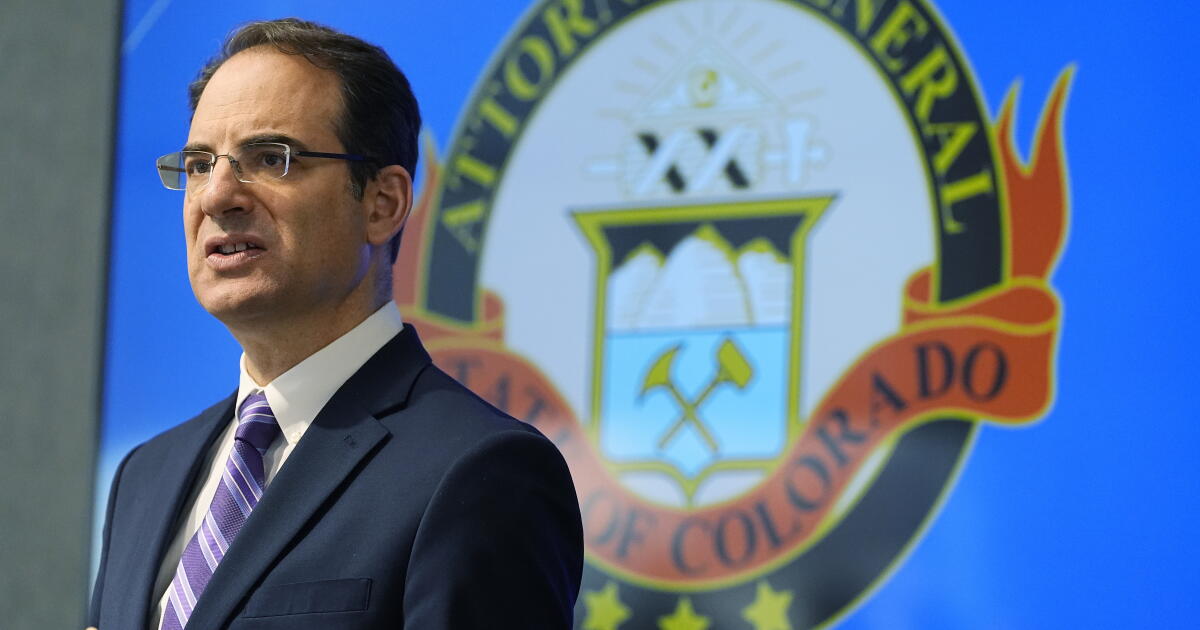
DENVER — The office of Colorado’s attorney general is a perch 10 stories above downtown Denver. From his aerie, Phil Weiser has a sweeping view of the city skyline, the gold-domed Capitol and, occasionally, a red hawk on the wing.
But looking toward November, Weiser sees something darker.
“With this administration what we have seen is it’s important that we not limit our imagination to what … type of harm could happen,” Weiser said during a sunny noon hour in the Mile High City.
For that reason, Colorado’s attorney general and his Democratic peers around the country have spent more than a year strategizing — by phone, via Zoom, sometimes in person — on ways to Trump-proof the midterm election.
They’ve researched history and the law, war-gamed what-ifs, divvied up responsibilities and drafted emergency lawsuits and temporary restraining orders so they can be hurried into court at a moment’s notice.
“We have prepared for a range of contingencies … so that we’re ready to act,” Weiser said.
“We’re not going to be reacting in real time” or pulling all-nighters, he added. “We are going to be following through on plans we’ve made, having looked at what’s possible.”
The efforts of Weiser, California’s Rob Bonta and more than 20 other Democratic attorneys general are part of a mass mobilization aimed at thwarting Trump’s unprecedented efforts to pervert and subvert November’s midterm balloting.
It’s remarkable that kind of man-the-barricades action is needed to preserve and protect the voting franchise in this, the land of the free and home of the brave. But having weighed the threats, Weiser said his greatest fear of election interference comes not from a bad overseas actor or some terrorist group, but rather our own federal government “and what this administration might do.”
So here we are.
To fend off that threat from within, state Democratic parties across the nation are aiming to recruit 10,000 volunteers to guard polling places in the event armed federal agents show up.
Various sponsors have launched education campaigns to explain election rules and offer hotlines for voters who have trouble casting their ballot.
Civil rights groups and democracy-defending organizations have staged their own tabletop exercises brainstorming and rehearsing various scenarios. A group of Democratic U.S. senators has done the same.
“What we’re doing is preparing for the fact that Donald Trump, in 2020, lied about the election in advance, lied about it in the aftermath, went to court … and then he instigated a violent insurrection in this very building,” Marc Elias, a Democratic elections attorney, told MS NOW in a July interview at the Capitol. “So I think we need to take these threats in the 2026 midterm run-up … both seriously and literally.”
In a more courageous, less heedlessly partisan world, Republicans would be working with Democrats to keep the power-drunk Trump in check. (The House and Senate supposedly comprise a separate and equal branch of government, with its own power, prerogatives and such.)
But, as Weiser noted, this Republican-led Congress “has been lacking in backbone, lacking in the role of checks and balances. That has left it to state attorneys general to fill that vacuum, going to court and essentially playing the role of a check on a lawless and often bullying president.”
The nation’s 24 Democratic attorneys general have filed more than 125 lawsuits in Trump’s second term alone, fighting his moves on trade and tariffs, energy and immigration policies and efforts to gut or eliminate programs and whole government agencies. They’ve prevailed in the overwhelming majority of cases that have been adjudicated or settled.
Even before Trump was elected again, some attorneys general began conferring on ways to fight the excesses they anticipated in a second administration. Anyone who didn’t see them coming wasn’t paying attention, said Weiser, who, most likely, will be elected Colorado’s next governor on Nov. 3.
(His victory in Colorado’s Democratic primary stemmed in good part from Weiser’s record battling Trump in court.)
Trump is constitutionally (small “c”) incapable of acknowledging the result of any election he didn’t win. He’s openly urged supporters to “cheat like hell.” Thus, one can only assume malign intent when the president tries to wantonly purge voter rolls, hijack the U.S. Postal service to gum up mail balloting and override the Constitution (capital “c”) by federalizing November’s election.
Some might call such fears melodramatic, or overblown.
Trump’s refusal to accept the outcome of elections “is historic,” the attorney general said. “It is unique. It’s a threat. And it’s why we have to stand our guard.”
Vote, to bring this rogue president to heel. Stay vigilant, to make sure that vote counts.
As Brazilians head into national elections, there’s a familiar name on the ballot: Bolsonaro. Not former President Jair Bolsonaro. It’s his son Flavio, who is presenting himself to the electorate as a more moderate version of his father.
Election coverage has been dominated by a major corruption scandal – the biggest banking fraud case in the country’s history. Brazilians are accustomed to corruption scandals involving political figures. The coverage tends to be framed as: they’re all equally corrupt.
Contributors: Andrew Fishman – President & co-founder, Intercept Brasil David Nemer – Professor, University of Virginia Andre Pagliarini – Professor, Louisiana State University Natalia Portinari – Reporter, O Globo
On our radar: Donald Trump’s decision to bar three news outlets from the White House appears to have backfired after journalists organised a media boycott and a judge overturned the ban. Tariq Nafi has been tracking the latest duel between the US president and the media.
Spain’s neo-Nazis: spectacle vs reality
A fringe neo-Nazi movement in Spain, Nucleo Nacional, has attracted a growing online following by packaging incendiary and slickly produced content. The mainstream media attention the group has received has made a marginal organisation appear far larger and more influential than it is. The Listening Post’s Elettra Scrivo travels to Madrid – where she comes face-to-face with Nucleo Nacional’s members – to look at the reality that lies behind the spectacle.
Featuring: Miquel Ramos – Author, ‘Antifascistas’ Urszula Mrozowska – Digital researcher in hate speech and extremism
NEW YORK — The nation’s cybersecurity agency on Thursday released an election infrastructure security plan 40 days before November’s midterms, laying out potential threats to election systems and listing services it would offer to election officials to protect the vote.
Election officials said the plan is both inadequate and belated after the administration gutted the agency’s election security work last year, prompting the officials to pay for private services to ensure they were prepared for the upcoming elections.
“For them to come in five weeks before the election, yeah, nice effort,” said Nevada’s Democratic Secretary of State Cisco Aguilar, who added that he would have liked to see the federal government provide more funding for cybersecurity, rather than Nevada taxpayers having to pay for it.
Homeland Security Secretary Markwayne Mullin had originally promised to release the plan by mid-August as part of the Trump administration’s move to kickstart election security assistance after a hiatus. He announced the plan at the same time he threatened election officials for not cooperating with the administration’s preferred methods to hunt down noncitizen voting, a phenomenon that research shows is extremely rare.
The U.S. Cybersecurity and Infrastructure Security Agency, which is housed under the Department of Homeland Security, has since its founding in 2018 helped warn state and local election officials about potential threats from foreign governments.
But CISA, as it’s known, was largely absent from that role in last year’s elections after the Trump administration dismantled much of its role in election security. The administration cut some 1,000 employees from CISA and slashed $10 million from two cybersecurity initiatives, including one dedicated to helping state and local election officials.
CISA has also gone the entirety of Trump’s second term without a Senate-confirmed director, instead cycling through a series of acting leaders.
Plan refers to ‘consistent’ support that many election officials say has been lacking
The 13-page document released Thursday warns of various threats to election security, including software vulnerabilities, hacks of voter registration databases, insider threats and physical security incidents, such as bomb threats that targeted several polling locations in the 2024 elections.
But it affirms that many longstanding election practices can address such threats and says the agency’s goal is “to ensure the American people can trust voting systems and know that physical safety measures will be in place when they go to their assigned polling locations to cast their votes.”
It states that DHS has “consistently supported CISA’s delivery of cybersecurity and physical security services to election officials,” something numerous election officials around the country have said isn’t true.
Multiple secretaries of state told the Associated Press that services previously provided by CISA, such as live tabletop exercises and penetration tests to evaluate security of their systems, were not available in the lead-up to this year’s midterms.
Minnesota Secretary of State Scott Simon, a Democrat, said in August that his office expects to spend roughly $250,000 on private vendors to conduct penetration testing, which can expose security vulnerabilities and recommend actionable fixes.
Shenna Bellows, the Democratic secretary of state in Maine, told the AP the same month that communications with CISA had been “sporadic and irregular, to say the least.” She said it would be helpful if the Trump administration could restore intelligence briefings that used to be granted to election officials about threats from foreign adversaries, but noted that trust with federal officials had been broken with the cuts to the agency.
Thursday’s plan doesn’t mention any specific 2026 threats from adversaries like Russia, Iran or China, all of whom have sought to meddle in U.S. elections — either directly through hacking or indirectly through influence campaigns.
Kris Warner, the Republican secretary of state in West Virginia, said Thursday that some of CISA’s assistance to his state had been continual throughout the Trump administration, including no-cost reviews of its public-facing websites for cybersecurity issues.
Warner acknowledged CISA had cut back under the Trump administration but said he views the agency “as a resource and not as a service provider” and said his office had last year hired a departing CISA election security advisor who has helped fill any gaps that may exist.
Report follows August call between CISA and election officials
In early August, two CISA officials — acting director Nick Anderson and assistant director for integrated operations Jim Harrell — joined a National Assn. of Secretaries of State call attended by a bipartisan group of secretaries of state, according to several election administrators.
The call grew tense when Arizona’s Democratic Secretary of State Adrian Fontes voiced his concerns about the withdrawal of federal resources.
Fontes told the AP at the time that he told the CISA officials he didn’t trust them. He said it seemed to him the officials were there “to cover their butts.”
“They even acknowledged on the call that it was too late for them to do anything for 2026,” he said.
Simon said the officials appeared interested in rebuilding relationships and previewing their future plans, which he appreciated. But he said the effort at goodwill came later than election officials needed.
“Secretaries of state have already moved on and sought other partners and other resources for the services that CISA has retreated from over the last year and a half,” Simon said.
In Michigan, a voting rights group has tried to fill the gap
In Michigan, where mail ballots have already been sent out for the Nov. 3 elections, Deputy Secretary of State Aghogho Edevbie said the state’s relationship with CISA has been “nonexistent” this year despite working together closely in previous election cycles.
“If the federal government wants to be helpful, they can’t do so at the 11th hour,” the Democrat said.
Ashiya Brown, the Michigan state director of the voting rights group All Voting Is Local, agreed. She noted the new plan says CISA has 10 regional directors to support election administrators but still doesn’t answer her biggest question.
“Does CISA still have the people and capacity to provide that support when clerks need it?” she asked. “I’m glad CISA has put forward a plan, but what matters now is whether the support described in it reaches local election officials before November.”
CISA has been hiring on its website for new positions, Brown said, but it’s unclear whether they are all staffed yet.
Meanwhile, Brown, a former security official with the Michigan Department of State, said her group has hired former CISA employees to help provide training and other support to election clerks and fill the gap.
Edevbie said even without collaboration with CISA, he is confident the state’s elections are secure.
“We are always prepared to defend our elections and to ensure that every voter who is eligible to cast a ballot can do so here in Michigan,” he said.
Swenson writes for the Associated Press. AP writers Jessica Hill in Las Vegas and Jacqueline GaNun in Lansing, Mich., contributed to this report.
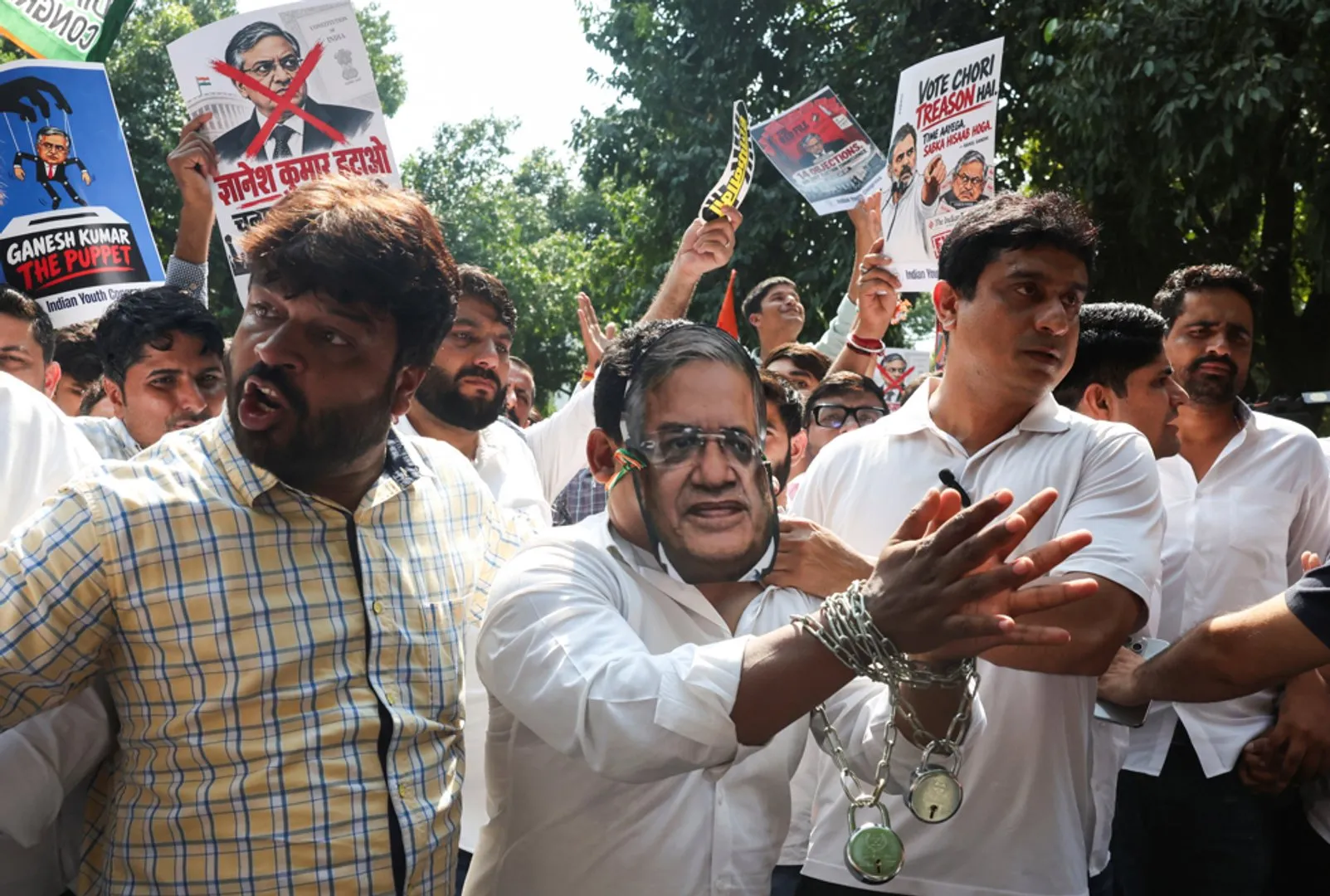
India’s youth-led Cockroach Janta Party has joined opposition calls for election chief Gyanesh Kumar to resign, giving him 48 hours before it launches nationwide protests. The pressure follows reports of internal objections over changes to voter lists.
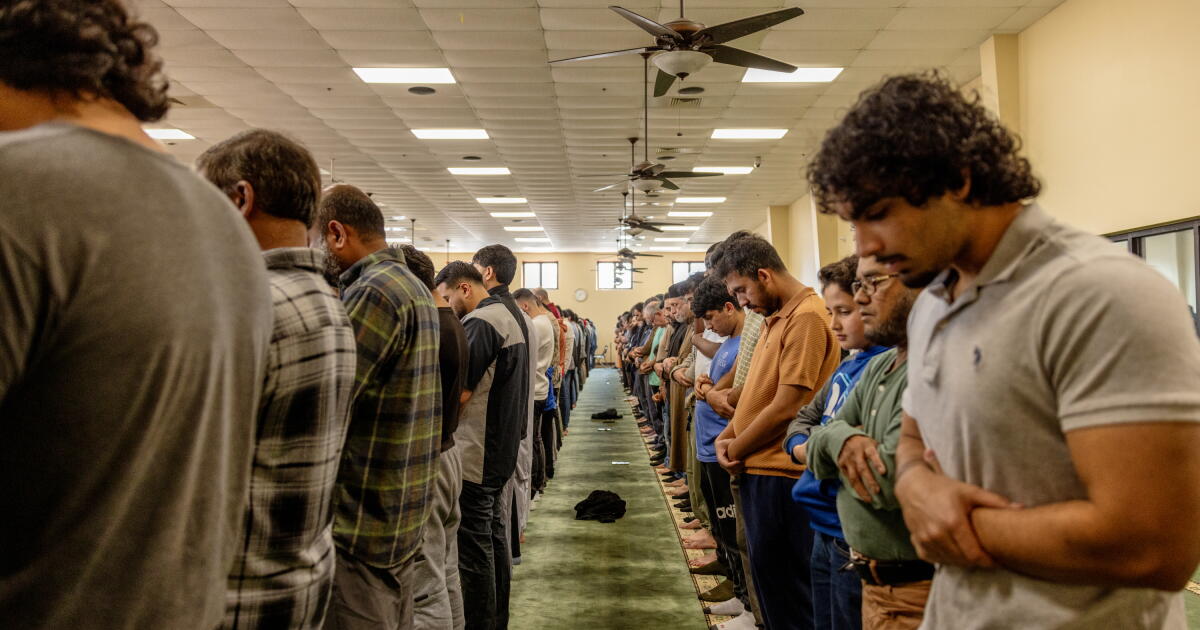
NEW YORK — Some of the loudest cheers for Sen. Ted Cruz at the Republicans’ recent midterm convention in Dallas came after the Texas politician targeted Muslim Americans and their faith’s religious code.
“Sharia law has no place in America,” said Cruz. “We need to stand together and stop it now.”
Texas Gov. Greg Abbott chimed in moments later, vowing to “fully ban Sharia law in Texas.”
Muslim American civic leaders and scholars — in Texas and other states — are responding forcefully to this latest surge in anti-Sharia rhetoric that dates back more than 15 years.
They passionately defend Sharia — the way it’s practiced in the United States — as positive guidance that has elements in common with the codes of other faiths, such as the Ten Commandments and the collective body of Jewish law derived from the Torah. They rebut the claims of GOP critics that Sharia is a coercive code that threatens the U.S. Constitution and judicial system.
Though there are multiple interpretations of Sharia, its essence is to serve as a code for how Muslims should live and worship — covering such matters as prayer, pilgrimages, fasting, charitable donations and personal virtue.
Among the most energetic of Sharia’s defenders is Illinois-based Sabeel Ahmed, director of an outreach project called GainPeace. He travels widely around the U.S., with a recent focus on Texas, speaking at mosque-sponsored workshops and open houses.
“Sharia is often misunderstood,” Ahmed posted on Instagram after a midsummer visit to Plano, Texas. “Many people think Sharia is only about punishments, but in Islam it is Allah’s guidance for living with faith, justice, mercy, and responsibility.”
Ahmed attributes the durability of anti-Sharia vitriol to politicians and social-media influencers who want to rile up their voting base or their followers.
“They gain popularity by saying it,” he told The Associated Press. “It’s the job of the Muslims to educate what is the proper meaning of the word Sharia. We cannot be angry or hateful.”
Sharia’s role varies significantly among Muslim nations
Among those appalled by the anti-Sharia surge in the U.S. is Abdullahi Ahmed An-Na’im, a Sudanese-born Islamic scholar who taught for many years at Emory University School of Law in Atlanta. He is a longtime critic of the relatively small number of governments in Muslim nations that coercively enforce Sharia, saying Muslims are better off in secular states where their religious observance is a matter of free choice.
An-Na’im says he and other Muslim Americans embrace Sharia willingly as a core part of their identity, even as they also embrace American values.
The demonization of their beliefs displays “a shocking ignorance of what Sharia means,” An-Na’im said. “It’s a total dehumanization of the other, the rejection of their right to be human.”
The rhetoric is similarly dramatic among Sharia’s opponents — epitomized by the two U.S. representatives from Texas, Republicans Keith Self and Chip Roy — who co-founded the Sharia-Free America Caucus in Congress.
“Sharia is a direct threat to our Constitution and Western values and seeks to replace our legal system and erode our basic freedoms,” Roy said earlier this year. “Our immigration system must be prepared to confront this challenge and defend our Judeo-Christian values.”
By last count, the caucus had more than 60 members. All of them are Republicans, and its members have introduced several anti-Sharia bills since the caucus was formed last December. None of those measures have been successful.
The Council on American-Islamic Relations, or CAIR, has designated the caucus as an anti-Muslim hate group.
“The bigoted rhetoric used by this caucus resembles the hatred that anti-Catholic politicians once unleashed against Irish Americans,” said CAIR research and advocacy director Corey Saylor.
“Islam is an American faith, present for over 250 years,” he added. “No one who wrote the Constitution or enforced it since has empowered these legislators to pick which religions get to exist in America.”
Texas has been a battleground for Sharia disputes
There has been substantive anti-Sharia action in Texas. In August, Attorney General Ken Paxton demanded documents from the Dallas-based Islamic Tribunal, which provides religious guidance to Muslims.
Paxton said in a news release that the investigation by his office sought to determine if the tribunal was engaged in illegal activity, such as acting as a court, applying foreign laws that conflict with Texas or federal law, or issuing rulings that imply government authority.
“This is America, and we will not be governed by sharia law,” Paxton said.
The Islamic Tribunal subsequently updated its website with a “ Clarification of Mission and Activities,” stressing that its guidance “complements, and never replaces, the legal, social, and professional services available in American society.”
“The Tribunal does not function as a court of law and does not issue legally binding judgments,” it said. “Our role is limited to mediation and religious arbitration requested by members of the Muslim community in matters related to faith, family guidance, and internal religious affairs.”
Any matters requiring legal enforcement are referred directly to the Texas judicial system, said the tribunal, which likened its work to the services provided by Jewish Beth Din courts and Catholic ecclesiastical tribunals.
Sharia defenders seek to broaden understanding of its essence
Asma Uddin, a professor at Michigan State University’s College of Law, has argued in her writings that many American politicians are depicting ordinary Muslim religious practices — such as prayer, choice of apparel, family counseling and mosque attendance — as evidence of a political danger.
In an interview with the AP, Uddin depicted the current wave of anti-Sharia rhetoric as fearmongering by politicians who view the issue as advantageous for them.
“When politicians use this, it’s giving them exactly what they’re looking for,” she said. “They’re looking for a scapegoat … and this gets people riled up.”
Sabeel Ahmed, who has made three outreach trips to Texas so far this year, plans a trip to Houston in a few weeks for another mosque open-house. He’s also working on a book to be mailed to Christian clergy across the U.S., seeking to broaden their understanding of Sharia and other Islamic practices.
“Islam is not to be feared,” Ahmed said. “People should meet a Muslim, go to the mosque, reach out to us. Let’s emphasize the commonalities we have.”
Youth group threatens return to mass protests, sets deadline for Gyanesh Kumar to quit due to reports of meddling with voter lists.
By Al Jazeera Staff and Reuters
Published On 25 Sep 202625 Sep 2026
India’s ‘cockroach’ party youth movement has threatened to launch nationwide protests unless the country’s chief election officer does not resign by Saturday.
Founder of the Cockroach Janta Party (CJP), Abhijeet Dipke, announced on Friday that protests would begin in Mumbai on October 2 – if Gyanesh Kumar does not step down.
Recommended Stories
list of 4 itemsend of list
The CJP, a satirical outfit born on Instagram in May after India’s chief justice compared unemployed young Indians to “cockroaches” and “parasites”, has shaken the staunchly conservative government of Prime Minister Narendra Modi.
On Thursday, the group demanded that Kumar quit within 48 hours, following a newspaper report linking him to altered voter lists. Opposition parties say the lists have been manipulated to benefit Modi’s Bharatiya Janata Party (BJP).
“If Gyanesh Kumar does not resign by tomorrow, CJP will begin its nationwide protest from Mumbai on 2 October, and take it to cities across India,” Dipke posted on X.
“This Gandhi Jayanti let’s pledge to save democracy,” he added, referring to the October 2 holiday marking independence leader Mahatma Gandhi’s birthday.
CJP founder Abhijeet Dipke celebrates with supporters in New Delhi after the resignation of India’s Education Minister Dharmendra Pradhan, July 25, 2026 [Ritesh Shukla/Getty]
Report provokes political storm
On Wednesday, the Indian Express newspaper reported that two election commissioners had raised questions or voiced concern with Kumar at least 14 times in 10 months, mostly over the process of updating voter lists that began last year.
The main opposition Congress party announced protest marches on state election offices across India on Friday, demanding Kumar’s arrest, his removal and an independent review of decisions and voter-list changes made under him.
Opposition parties have long accused the commission of deleting the names of millions of voters without warning and adding new voters without verification to favour the BJP.
BJP leaders and supporters at a ‘Drug-Free Punjab’ march in Amritsar [File: Narinder Nanu/AFP]
Election panel rejects claims
The Election Commission of India said that “differing views and observations are a normal part of deliberation in any institution” and that all its actions were lawful.
The BJP has defended the commission, accusing the opposition of a smear campaign because it keeps losing elections.
“Neither the Election Commission of India nor any constitutional body in India is under dictatorial rule,” BJP spokesperson Sambit Patra said on Wednesday.
CJP-led protests in July forced the resignation of Modi’s education minister over exam-paper leaks, one of the prime minister’s biggest political setbacks since coming to power in 2014.
A stunning new poll showing Los Angeles City Councilmember Nithya Raman gaining a double-digit lead over incumbent Karen Bass in the mayor’s race is increasing pressure on Bass and her allies to go sharply negative against her opponent and to seek support from conservative and undecided voters to narrow the gap.
The poll, conducted by the UC Berkeley Institute of Governmental Studies and co-sponsored by The Times, showed Bass trailing Raman by 11 percentage points — with 28% of likely voters saying they supported the mayor while 39% said they would vote for Raman. The remaining 33% were undecided, an unusually high number this close to the Nov. 3 election.
“The bottom line is this is a huge shot in the arm politically for Raman — and it’s not a good day for the mayor,” said Zev Yaroslavsky, a former L.A. City Council member who now runs the Los Angeles Initiative at the UCLA Luskin School of Public Affairs.
Dan Schnur, a former Republican political consultant, said the poll could have instant negative effects for the mayor’s fundraising ability as potential supporters might now view Raman as the favorite in the race.
“The most immediate tangible result of a poll like this is that Bass’ greatest advantage was her fundraising and it now becomes much more challenging to raise money,” he said.
Bass, appearing Wednesday at a news conference in Hollywood, said she’s seen multiple polls that show a tight race. She said that Raman is “absolutely not” the front-runner in the race.
Mayor Karen Bass speaks at Vermont/Santa Monica Metro Center on Wednesday, touting progress on construction of affordable housing.
(Kayla Bartkowski / Los Angeles Times)
The mayor said she is working to highlight the city’s progress in making rent more affordable, pointing to newly released numbers that show that more than 10,000 units of housing with restricted rents have been built since she took office in December 2022.
“The No. 1 issue to Angelenos continues to be lack of affordability, and our primary way of addressing that from the city is housing,” she said. “So we are absolutely addressing affordability.”
Others in the Bass camp seemed more anxious about the poll results.
“It put a pit in stomachs,” said one supporter close to the Bass campaign who requested anonymity to speak candidly about the poll. “But there is still an outside chance for Bass. It’s not total doomsday.”
The supporter said that the Bass campaign truly doesn’t believe Raman’s lead is that big, but that the poll was still “not good news,” especially for fundraising.
Mike Bonin, a progressive former L.A. City Council member who now runs the Pat Brown Institute at Cal State Los Angeles, said Bass needs to focus on winning over voters who chose former reality television personality Spencer Pratt in the primary election in June. Many of those voters are now on the fence.
Pratt received 26% of the vote in the primary, and most of the voters who cast ballots for him — 63% — say they still haven’t decided whom to vote for in the runoff, the poll found. Among the Pratt voters who have decided, 22% favored Bass compared with 16% for Raman.
Bonin said he expects Bass and her allies to attack Raman’s progressive views in order to reach Pratt voters. Raman is a member of the Democratic Socialists of America and opposed raises for Los Angeles Police Department officers that had been championed by Bass.
“The nature of the attacks will try to reach the Pratt voters particularly since they are the largest bloc of undecideds and they skew conservative,” Bonin said.
The Los Angeles Police Protective League, the union representing LAPD officers, is already airing campaign ads critical of Raman over her opposition to a law barring homeless encampments next to schools. In the coming days, the group will also roll out commercials highlighting Raman’s ties to the DSA, which has endorsed her mayoral bid, said union spokesman Tom Saggau.
“Our own poll told us that the Pratt folks were very much undecided, and that when they heard more about Nithya’s record, and her co-governing with DSA, they moved off of her,” he said, adding that his group still views the race as a dead heat.
Raman, not surprisingly, cheered the poll results.
“This poll reflects the momentum we’re seeing on the ground. Angelenos are ready for change and want to see a City That Works,” Raman said in a post on Instagram.
Raman campaign officials said the poll probably will help their fundraising efforts, which they said had already been gaining momentum over the last few weeks. And Schnur, the former GOP political consultant, said the wide lead allows Raman to spend more time touting her own credentials instead of disparaging Bass.
“For the most part Raman has the front-runner’s luxury of putting out a positive message and reinforcing her own credentials,” Schnur said.
Estevan Montemayor, who is running the pro-Raman Estamos con Nithya independent expenditure group, said his group’s role will be to inform voters about Raman’s positives while the Bass campaign attacks.
“They’re gonna come after Nithya and we’re gonna be here to tell her success story,” he said.
Bass supporter Stuart Waldman, chief executive of the Los Angeles County Business Federation, said the large number of undecided voters this close to the Nov. 3 election is worrying but also leaves an opening for Bass to gain ground.
“Any swing in any direction could make a big change,” Waldman said. “We have no idea who’s going to vote. … Usually by this point in time, everything has tightened up.”
Councilmember Nithya Raman, lower right, campaigns at a Latinos Con Raman rally at La Cita Bar in downtown Los Angeles.
(Genaro Molina / Los Angeles Times)
In courting those undecided voters, however, Bass is burdened by high unfavorability numbers, according to the Berkeley IGS/L.A. Times poll.
The mayor had 63% unfavorable ratings, the poll found, with 28% favorable and 9% having no opinion. By comparison, 40% had a favorable view of Raman, according to the poll, while 39% said they had an unfavorable view of her and 21% had no opinion.
Mike Murphy, a Republican political consultant, said that Bass needs to accept responsibility on core issues upsetting Angelenos about her tenure, such as homelessness and the 2025 Palisades fire, which killed 12 people and destroyed thousands of homes. In a recent interview with The Times, Bass said her biggest mistake as mayor was being in Ghana when the fire began amid high wind warnings.
“You have to say, ‘I hear you,’” he said. “Voters don’t think Karen gets that they are mad about things that happened during her term.”
Then, Murphy said, he believes Bass needs to attack Raman as being more establishment than Bass.
Murphy noted that Bass has frequently attacked Raman for being “at City Hall longer than I have,” which he called a powerful message to voters who are considering Raman because they want change. Raman was elected in 2020 and Bass in 2022.
Other polls taken in the campaign have shown a closer race than the Berkeley IGS/L.A. Times poll.
In an early August poll commissioned by an independent expenditure group supporting Bass, the mayor had the edge, 41% to 35%, with 24% undecided.
Mayor Karen Bass greets community members after speaking at Vermont/Santa Monica Metro Center.
(Kayla Bartkowski / Los Angeles Times)
The Bass campaign cited some of those polls when responding to the Berkeley IGS/L.A. Times poll Wednesday, calling it an “outlier poll” and accusing the pollsters of getting it wrong.
“In the primary … they got it wrong and undercounted Karen Bass’ support,” campaign spokesperson Alex Stack said in a news release.
Stack added that polls conducted online, like the Berkeley IGS/L.A. Times poll, “systematically [undercount] working-class families, seniors, and non-English speaking communities who regularly turn out on Election Day.”
Mark DiCamillo, the director of the Berkeley IGS Poll, defended the methodology, saying he has spent 45 years polling in California and eight years running the Berkeley IGS Poll.
“What would you expect from a campaign down by double digits? They attack the poll,” he said.
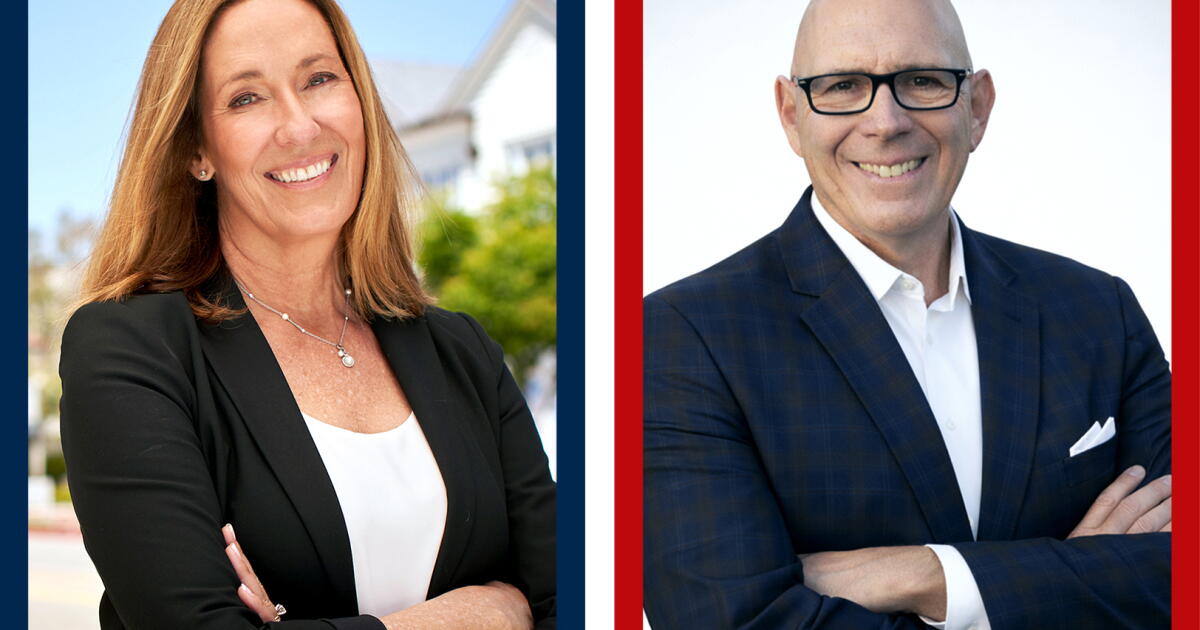
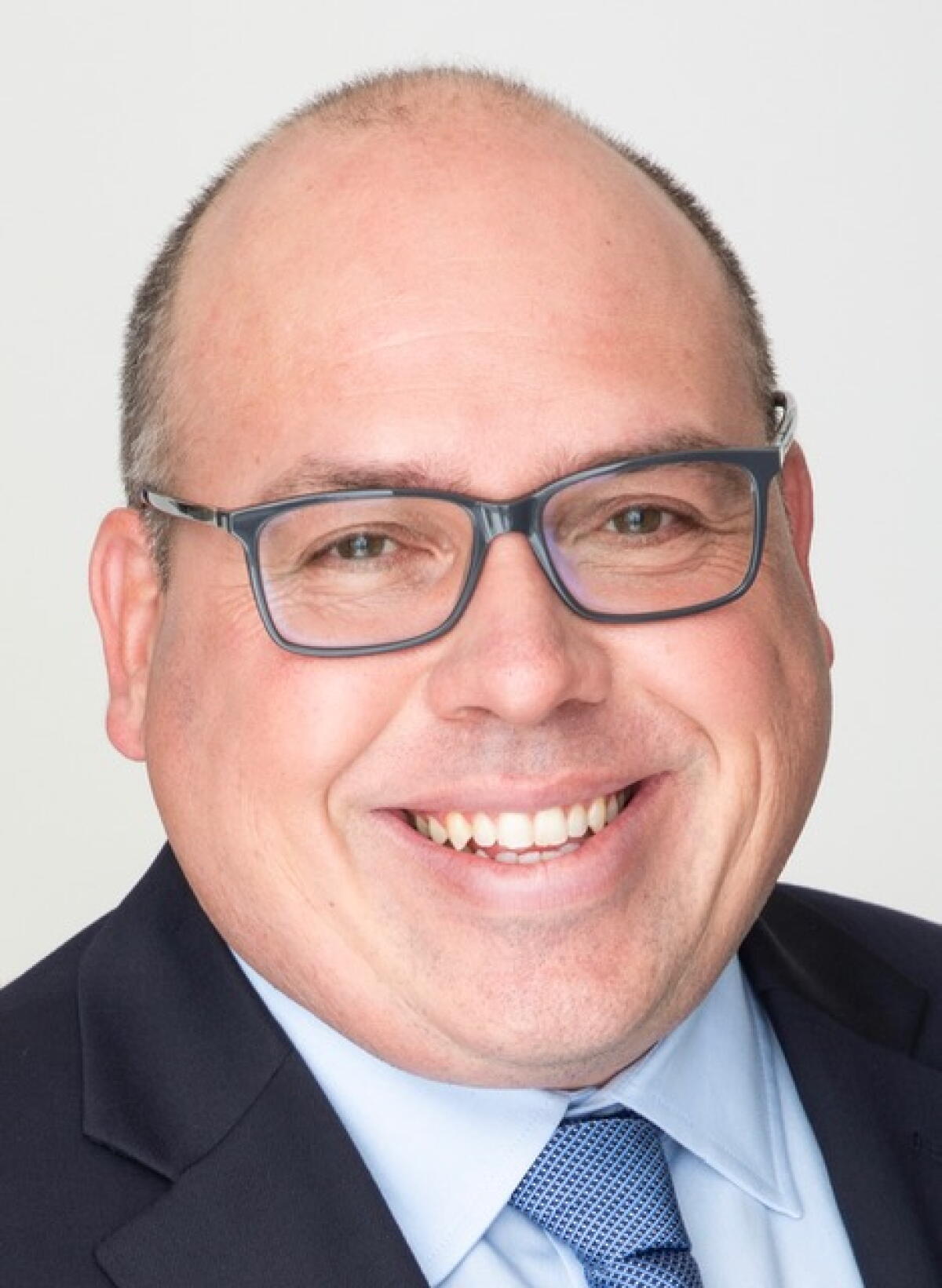



![Brazilian police and firefighters inspect the area of a possible bomb in a backpack outside the Supreme Court headquarters in Brasilia on October 1, 2026 [AFP]](https://i0.wp.com/occasionaldigest.com/wp-content/uploads/2026/10/afp_6abf3303edf8-1790915331.jpg?w=640&ssl=1)