Ecuador

Ecuador to acccept Chinese hydroelectric plant despite concerns

Minister of Electricity and Renewable Energy Carlos Perez (C) visits the Coca Codo Sinclair hydroelectric power plant during a tour for journalists in El Chaco, Ecuador, in June 2018. The government at the time was preparing to hire a specialized company check the plant for safety issues, File Photo by Jose Jacome/EPA

April 14 (UPI) — Ecuador’s government will formally accept the Coca Codo Sinclair hydroelectric plant this week, nearly a decade after technical disputes first delayed final delivery of the Chinese-built facility.

The handover follows resolution of an international arbitration dispute with Sinohydro, a subsidiary of PowerChina, over structural defects at the plant.

Ecuadorian Environment and Energy Minister Ines Manzano said the transfer will proceed under guaranteed conditions, allowing immediate operation and maintenance of the infrastructure.

Since the plant began partial operations in 2016, Ecuador and the Chinese contractor remained locked in a legal dispute over major structural flaws that prevented final acceptance of the project.

A 2018 report by Ecuador’s comptroller identified more than 7,600 cracks in the plant’s eight water distributors — key components that channel water to the turbines, local newspaper La Hora reported.

Subsequent technical reports and audits raised that figure to more than 17,000 cracks, fueling concerns over material quality, welding processes and possible design flaws.

The comptroller’s office warned the defects pose serious risks, including possible flooding of the powerhouse, total shutdown of the plant and danger to workers.

After Sinohydro declined to undertake permanent repairs, Ecuador took the dispute to the International Chamber of Commerce’s arbitration court.

The dispute was resolved through a financial and operational agreement under which Ecuador will receive $400 million in compensation. The government will next sign an operation and maintenance contract with PowerChina requiring the company to repair damage and replace defective water distributors, local newspaper El Comercio reported.

Separate from the structural issues, the facility also faces a broader environmental threat from regressive erosion of the Coca River, a geological process that has altered the surrounding area since the plant entered service.

The erosion has advanced toward the plant’s water intake structures, prompting the government to carry out emergency work that includes construction of permeable dams to slow the river’s force and retain sediment at a cost of $19 million.

The Coca Codo Sinclair plant is Ecuador’s largest and most strategic power generation facility.

With installed capacity of 1,500 megawatts, it supplies about 30% of Ecuador’s electricity demand on average and can account for more than half of the country’s hydropower generation during peak operations.

According to Infobae, the Coca Codo Sinclair case has become a symbol for analysts citing problems in Chinese-financed infrastructure projects across Latin America.

The plant was built with loans from the Export-Import Bank of China during the administration of Rafael Correa and has been at the center of investigations into alleged corruption tied to its contracting.

Source link

Ecuador hikes tariffs to 100% on Colombia, Petro recalls envoy

Colombian President Gustavo Petro ordered the immediate return of his ambassador from Quito after Ecuador decided to raise tariffs on Colombia to 100% on May 1. Photo by Mauricio Duenas Castaneda

April 10 (UPI) — Ecuador raised tariffs to 100% on imports from Colombia, and Colombian President Gustavo Petro ordered the immediate return of his ambassador from Quito.

This represents a new escalation of the diplomatic and trade crisis between the two countries, according to an Ecuadorian statement and remarks from both leaders.

Ecuador said it will implement the tariff increase May 1, according to the Ministry of Production, Foreign Trade and Investment. It argued that Colombia has not taken concrete steps to curb drug trafficking and organized crime along the shared border.

“It is not possible to reach agreements with someone who does not have the same commitment to fighting narco-terrorism,” Ecuadorian President Daniel Noboa said Thursday night.

Petro described the tariff increase as “a monstrosity” and announced immediate measures.

“Our ambassador to Ecuador must return immediately,” he wrote on X, where he also called for a Cabinet meeting at the border between the two countries.

The Colombian president also defended his anti-drug policy.

“The president of Ecuador insults the Colombian government that has seized more cocaine than in the entire history of the world,” he said.

Ecuador’s decision marks a new critical point in a dispute that has intensified in recent months and is affecting bilateral trade, energy cooperation and diplomatic channels, according to local media reports.

Negotiations between the two countries within the Andean Community of Nations are suspended, Ecuador’s foreign minister Gabriela Sommerfeld said.

Relations deteriorated further after Petro’s recent statements about former Ecuadorian Vice President Jorge Glas, whom he described as a “political prisoner” and to whom Colombia granted nationality. Glas is serving corruption sentences in Ecuador.

The case dates to 2024, when Noboa’s government ordered his capture inside the Mexican embassy in Quito — an operation that led to a break in diplomatic relations between the two countries.

Ecuador maintains that tightening its trade policy also responds to the need to strengthen security along the roughly 373-mile shared border, where networks linked to drug trafficking, arms smuggling, human trafficking and illegal mining operate.

The Ecuadorian government estimates these efforts imply additional spending of about $400 million.

Since the start of the trade dispute, Colombia has responded with reciprocal measures, including tariffs on Ecuadorian imports and suspending energy sales to Ecuador, which in 2024 experienced power outages of up to 14 hours per day.

The economic impact is raising concerns in both countries.

In Colombia, business groups have called for de-escalation, while in Ecuador, companies in the pharmaceutical and cosmetics sectors have reported disruptions due to restrictions on Colombian imports, according to local media.

The figures reflect the scale of the exchange. In 2025, Colombia exported $1.846 billion in goods to Ecuador, making it its sixth-largest trading partner and second destination for non-mining, non-energy exports. Ecuador, exported about $857 million to Colombia, in a trade balance historically favorable to Bogotá.

Colombia’s National Business Council warned that with a 30% tariff, losses for exporters could reach $750 million annually and affect 82% of bilateral trade. With the increase to 100%, the impact would be far greater.

The new increase by Noboa “definitively closes any possibility of trade between Colombia and Ecuador,” Javier Díaz, president of the National Association of Foreign Trade, said to Clarín, Argentina’s largest newspaper.

On the Ecuadorian side, Pablo Cerón, a transport representative in the border province of Carchi, described the decision as “unilateral, improvised, misguided.”

The bilateral crisis comes at a politically sensitive time in Colombia, just months before general elections.


Source link

Ecuador hikes tariffs to 100-percent in feud with neighbour Colombia | Government News

The government of Ecuadorian President Daniel Noboa has surged its tariffs on the neighbouring country of Colombia to 100 percent, effective May 1.

On Thursday, Ecuador’s Ministry of Production issued a statement blasting Colombia for failing to adequately address drug-trafficking and border security.

Recommended Stories

list of 3 itemsend of list

It was the latest salvo in an ongoing cross-border dispute between the right-wing Noboa and his left-wing counterpart in Colombia, Gustavo Petro, who have been feuding for months.

“After noting the lack of implementation of concrete and effective measures regarding border security on the part of Colombia, Ecuador is obliged to take sovereign actions,” the Ministry of Production wrote in its statement.

It justified the tariff hike as a necessary incentive to “confront the presence of drug trafficking on the border”.

“For Ecuador, security, as well as the fight against corruption and drug trafficking, are a non-negotiable priority,” the ministry said. “This measure reaffirms the country’s commitment to protecting its citizens and safeguarding the integrity of its territory.”

Already, Noboa had slapped Colombia with 50 percent tariffs on its exports to Ecuador as of March. That, in turn, was a spike from a 30 percent tariff rate announced in January and implemented in February.

Just over an hour after the new tariff rate was announced, Petro responded on social media that Ecuador’s actions were causing the collapse of the Andean Pact, a regional free-trade agreement whose origins stretch back to the 1960s.

“This is simply a monstrosity, but it signifies the end of the Andean Pact for Colombia. We have no business there anymore,” Petro wrote.

He called on Colombia to shift its focus away from its Andean trading partners and towards Mercosur, a trade alliance helmed by Brazil, Uruguay, Paraguay, Argentina and Bolivia.

“The Foreign Minister must initiate the process for us to become full members of Mercosur and steer us — with greater vigor — toward the Caribbean and Central America,” Petro added.

The escalating tensions between Ecuador and Colombia come within the final months of Petro’s presidency. Elected in 2022, Petro is Colombia’s first left-wing president and a former rebel involved in the country’s six-decade-long armed conflict.

But his government has faced stiff opposition from right-wing political movements both domestically and abroad.

Leaders like Noboa and United States President Donald Trump have repeatedly condemned him for not doing enough to tackle the illicit drug trade, despite historic drug seizures during Petro’s term in office.

Just last November, Petro’s government seized a shipment of cocaine worth roughly $388m, the largest drug bust in a decade.

But Petro has also championed a policy he calls “Total Peace”, which involves negotiations with rebel groups and criminal networks to put an end to the country’s internal conflict.

Trump and Petro have been at odds over multiple issues, including US immigration policies and its boat-bombing campaign in the Caribbean Sea and eastern Pacific Ocean.

In September, however, the Trump administration took the extraordinary step of decertifying Colombia as an ally in its “war on drugs”, saying that it had “failed demonstrably” in its efforts.

Then, in October, Trump sanctioned Petro and his family, blaming the Colombian president for having “allowed drug cartels to flourish”.

Noboa has echoed Trump’s stance on several foreign policy issues, including its pressure campaign on another left-wing government, Cuba.

He was among the right-wing leaders in Latin America to join Trump’s “Shield of the Americas” coalition, designed to confront criminal networks and cartels in the region.

In announcing the initial volley of tariffs in January, Noboa claimed his country had shown a “genuine commitment” to combatting drug trafficking, while Colombia had not.

“We have made genuine efforts to cooperate with Colombia, even while facing a trade deficit exceeding $1bn annually,” Noboa wrote.

Colombia remains the world’s largest producer of cocaine, a persistent trend that has existed since before Petro’s presidency.

But other factors have aggravated tensions between the two neighbours.

On Wednesday, for instance, Ecuador recalled its ambassador from Colombia over statements Petro made about its imprisonment of left-wing politician Jorge Glas, calling the former vice president a “political prisoner”.

Noboa had warned earlier in the week that he considered such rhetoric an “assault on [Ecuador’s] sovereignty”. He had previously faced criticism for authorising a raid on Mexico’s embassy to arrest Glas, which prompted Mexico to sever its relations with Ecuador.

Petro, meanwhile, has accused Noboa of bombing close to the Colombian border, as part of joint military operations with the US. Colombian officials have said they recovered 27 charred bodies from the border region.

Since Ecuador first imposed its tariffs, Colombia has suspended cross-border energy sales, which have been vital in helping Ecuador’s government navigate electricity shortages prompted by recent droughts. It has also issued retaliatory tariffs on certain Ecuadorian products.

Source link

Ecuador recalls its ambassador from Colombia over Jorge Glas comments | Government News

Ecuador has recalled its ambassador from Colombia over remarks related to a high-profile criminal case that has stirred tensions across Latin America.

The case in question is that of former Ecuadorian Vice President Jorge Glas, a left-wing figure currently serving a lengthy prison sentence for corruption.

Recommended Stories

list of 3 itemsend of list

This week marks the two-year anniversary of a controversial police raid that saw Ecuadorian authorities storm the Mexican embassy in Quito to arrest Glas, who had sought asylum in the diplomatic facility.

But the right-wing government of Ecuadorian President Daniel Noboa, which authorised the raid, has denounced criticisms of the Glas case as a violation of his country’s sovereignty.

Wednesday’s decision to recall Ambassador Arturo Felix Wong from Bogota is the latest sign of cross-border strife with Ecuador’s neighbour, Colombia, and its left-wing President Gustavo Petro.

In a local radio interview on Wednesday, Ecuador’s Foreign Minister Gabriela Sommerfeld confirmed that her country’s ambassador to Colombia had been recalled.

The criticisms of the Glas case, she added, were uncalled for. “It’s clearly a provocation because these kinds of messages come out of nowhere,” she said.

Her remarks echoed those of Noboa himself, who has led a months-long feud with the Colombian government.

“This country has waited years to see the corrupt answer to justice,” Noboa said in a social media message on Tuesday.

He denounced critics, like Petro, who consider Glas to be a “political prisoner” and warned that he considered such rhetoric to be a form of foreign interference.

“I wish to be emphatic: This constitutes an assault on our sovereignty and a violation of the principle of non-intervention,” Noboa said.

His statement appeared to be prompted by a series of social media posts Petro wrote on the anniversary of the Mexican embassy raid, which took place on April 5, 2024.

That episode resulted in Mexico breaking its diplomatic relations with Ecuador, a rupture that endures to this day.

Critics called the raid a violation of international law. Treaties like the 1961 Vienna Convention on Diplomatic Relations protect embassies and consulates from military and law enforcement actions without prior consent.

Glas had been sheltering in the Mexican embassy since December 2023, claiming he was facing political persecution in Ecuador.

After the raid, he was sentenced to an additional 13 years in prison for the misuse of public funds, in addition to prison terms for two prior corruption cases.

Glas was one of several politicians who were convicted as part of the Odebrecht scandal, which saw government officials across Latin America accused of taking bribes in exchange for issuing favourable contracts to certain business interests.

In 2017, Glas was sentenced to six years in prison for allegedly accepting bribes worth $13.5m, and in 2020, he faced an additional eight-year sentence. He has been barred from ever holding public office again.

Last September, Colombia granted citizenship to Glas. President Petro then called for Glas to be transferred into Colombian custody. He reprised that request in a social media post on Monday.

“I called for there to be no political prisoners in any country in the Americas. It is undeniable that Jorge Glas is a political prisoner,” Petro wrote in the first of two posts on the subject.

In the second, published the next day, Petro raised concerns about Glas’s health and wellbeing. The former vice president is serving his sentence in a maximum-security prison in Ecuador, El Encuentro.

“Jorge Glas is a Colombian citizen, and he is a political prisoner,” Petro said.

“I call upon international human rights organisations to safeguard his rights. His health condition now poses a threat to his life; due to his imprisonment, he has not received adequate sustenance and is currently suffering from severe malnutrition and muscle mass loss.”

Petro added that “allowing a person to starve to death” would constitute a “crime against humanity”.

The heated rhetoric between Petro and Noboa is part of a long-running spat between the two leaders.

Since March alone, Noboa has slapped Colombia with 50-percent tariffs, based on accusations it has been too lax in its fight against drug trafficking.

Petro, meanwhile, has accused Noboa of carrying out a bombing campaign near the Colombian border, resulting in the recovery of 27 charred bodies.

Noboa has been leading an aggressive, military-led anti-narcotics campaign with the support of United States President Donald Trump, who has similarly criticised left-wing governments like Petro’s for failing to tamp down on drug trafficking.

Noboa and Trump have grown close since the US president was sworn in for a second term in January 2025, and Ecuador’s policies towards regional governments and drug-trafficking have echoed those of the US.

Source link

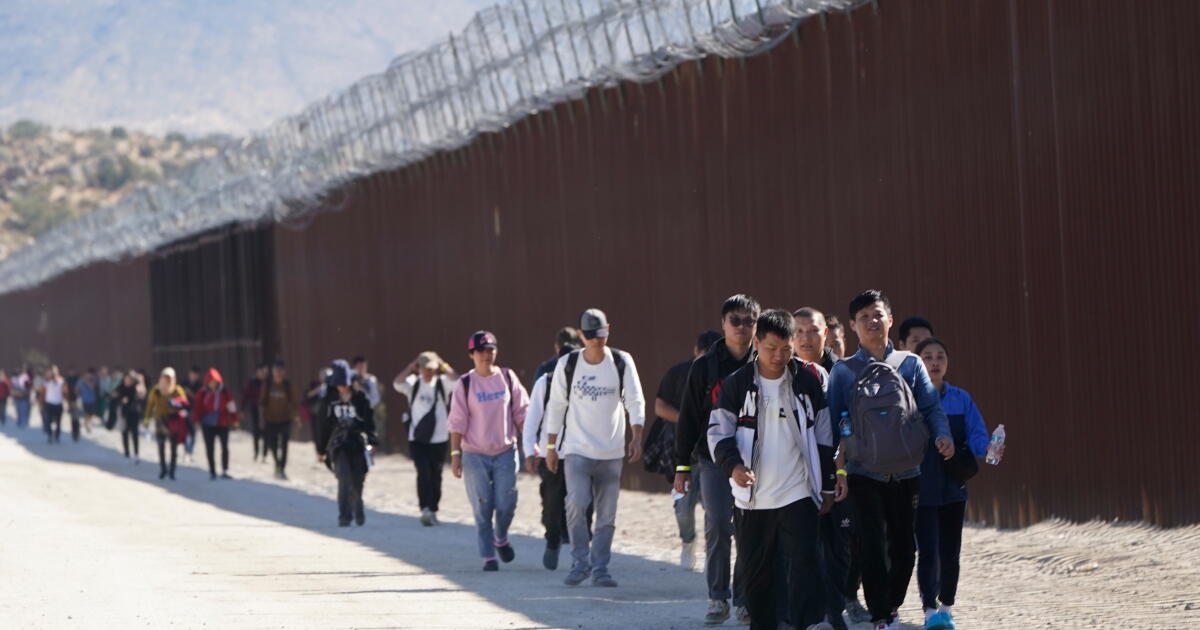
Immigrants seeking asylum ordered to countries they’ve never been to, and end up stuck in limbo

The Afghan man had fled the Taliban for refuge in upstate New York when U.S. immigration authorities ordered him deported to Uganda. The Cuban woman was working at a Texas Chick-fil-A when she was arrested after a minor traffic accident and told she was being sent to Ecuador.

There’s the Mauritanian man living in Michigan told he’d have to go to Uganda, the Venezuelan mother in Ohio told she’d be sent to Ecuador and the Bolivians, Ecuadorians and so many others across the country ordered sent to Honduras.

They are among more than 13,000 immigrants who were living legally in the U.S., waiting for rulings on asylum claims, when they suddenly faced so-called third-country deportation orders, destined for countries where most had no ties, according to the nonprofit group Mobile Pathways, which pushes for transparency in immigration proceedings.

Yet few have been deported, even as the White House pushes for ever more immigrant expulsions. Thanks to unexplained changes in U.S. policy, many are now mired in immigration limbo, unable to argue their asylum claims in court and unsure if they’ll be shackled and put on a deportation flight to a country they’ve never seen.

Some are in detention, though it’s unclear how many. All have lost permission to work legally, a right most had while pursuing their asylum claims, compounding the worry and dread that has rippled through immigrant communities.

And that may be the point.

“This administration’s goal is to instill fear into people. That’s the primary thing,” said Cassandra Charles, a senior staff attorney with the National Immigration Law Center, which has been fighting the Trump administration’s mass deportation agenda. The fear of being deported to an unknown country could, advocates believe, drive migrants to abandon their immigration cases and decide to return to their home countries.

Things may be changing.

In mid-March, top Immigration and Customs Enforcement legal officials told field attorneys with the Department of Homeland Security in an email to stop filing new motions for third-country deportations tied to asylum cases. The email, which has been seen by the Associated Press, did not give a reason. It has not been publicly released, and Homeland Security did not respond to requests to explain if the halt was permanent.

But the earlier deportation cases? Those are continuing.

An asylum seeker says she’s in panic over possibly being sent to a country she doesn’t know

In 2024, a Guatemalan woman who says she had been held captive and repeatedly sexually assaulted by members of a powerful gang arrived with her 4-year-old daughter at the U.S.-Mexico border and asked for asylum. She later discovered she was pregnant with another child, conceived during a rape.

In December, she sat in a San Francisco immigration courtroom and listened as an ICE attorney sought to have her deported.

The ICE attorney didn’t ask the judge that she be sent back to Guatemala. Instead, the attorney said, the woman from the Indigenous Guatemalan highlands would go to one of three countries: Ecuador, Honduras or across the globe to Uganda.

Until that moment, she’d never heard of Ecuador or Uganda.

“When I arrived in this country, I was filled with hope again and I thanked God for being alive,” the woman said after the hearing, her eyes filling with tears. “When I think about having to go to those other countries, I panic because I hear they are violent and dangerous.” She spoke on condition of anonymity, fearing reprisal from U.S. immigration authorities or the Guatemalan gang network.

There have been more than 13,000 removal orders for asylum seekers

ICE attorneys, the de facto prosecutors in immigration courts, were first instructed last summer to file motions known as “pretermissions” that end migrants’ asylum claims and allow them to be deported.

“They’re not saying the person doesn’t have a claim,” said Sarah Mehta, who tracks immigration issues at the American Civil Liberties Union. “They’re just saying, ‘We’re kicking this case completely out of court and we’re going to send that person to another country.’”

The pace of deportation orders picked up in October after a ruling from the Justice Department’s Board of Immigration Appeals, which sets legal precedent inside the byzantine immigration court system.

The ruling from the three judges — two appointed by former Atty. Gen. Pam Bondi and the third a holdover from the first Trump administration — cleared the way for migrants seeking asylum to be removed to any third country where the U.S. State Department determines they won’t face persecution or torture.

After the ruling, the government aggressively expanded the practice of ending asylum claims.

More than 13,000 migrants have been ordered deported to so-called “safe third countries” after their asylum cases were canceled, according to data from San Francisco-based Mobile Pathways. More than half the orders were for Honduras, Ecuador or Uganda, with the rest scattered among nearly three dozen other countries.

Deported migrants are free, at least theoretically, to pursue asylum and stay in those third countries, even if some have barely functioning asylum systems.

Deportations have been far more complicated than the government expected

Immigration authorities have released little information about the third-country agreements, known as Asylum Cooperative Agreements, or the deportees, and it’s unclear exactly how many have been deported to third countries as part of asylum removals.

According to Third Country Deportation Watch, a tracker run by the groups Refugees International and Human Rights First, fewer than 100 of them are thought to have been deported.

In a statement, Homeland Security called the agreements “lawful bilateral arrangements that allow illegal aliens seeking asylum in the United States to pursue protection in a partner country that has agreed to fairly adjudicate their claims.”

“DHS is using every lawful tool available to address the backlog and abuse of the asylum system,” said the statement, which was attributed only to a spokesperson. There are roughly 2 million backlogged asylum cases in the immigration system.

But deportations clearly turned out to be far more complicated than the government expected, restricted by a variety of legal challenges, the scope of the international agreements and a limited number of airplanes.

Mobile Pathways data, for example, shows that thousands of people have been ordered deported to Honduras — despite a diplomatic agreement that allows the country to take a total of just 10 such deportees per month for 24 months. Dozens of people ordered to Honduras in recent months did not speak Spanish as their primary language, but were native speakers of English, Uzbek and French, among other languages.

And while hundreds of asylum-seeking migrants have been ordered sent to Uganda, a top Ugandan official said none have arrived. U.S. authorities may be “doing a cost analysis” and trying to avoid dispatching flights with only a few people on board, Okello Oryem, the Ugandan minister of state for foreign affairs, told the Associated Press.

“You can’t be doing one, two people” at a time,” Oryem said. “Planeloads — that is the most effective way.”

Many immigration lawyers suspect that the March email ordering a halt in new asylum pretermissions could indicate a shift toward other forms of third-country deportations.

“Right now they haven’t been able to remove that many people,” said the ACLU’s Mehta. “I do think that will change.”

“They’re in a hiring spree right now. They will have more planes. If they get more agreements, they’ll be able to send more people to more countries.”

Sullivan writes for the Associated Press. AP reporters Garance Burke in San Francisco, Joshua Goodman in Miami, Rodney Muhumuza in Kampala, Uganda, Marlon González in Tegucigalpa, Honduras, and Molly A. Wallace in Chicago contributed to this report.

Source link