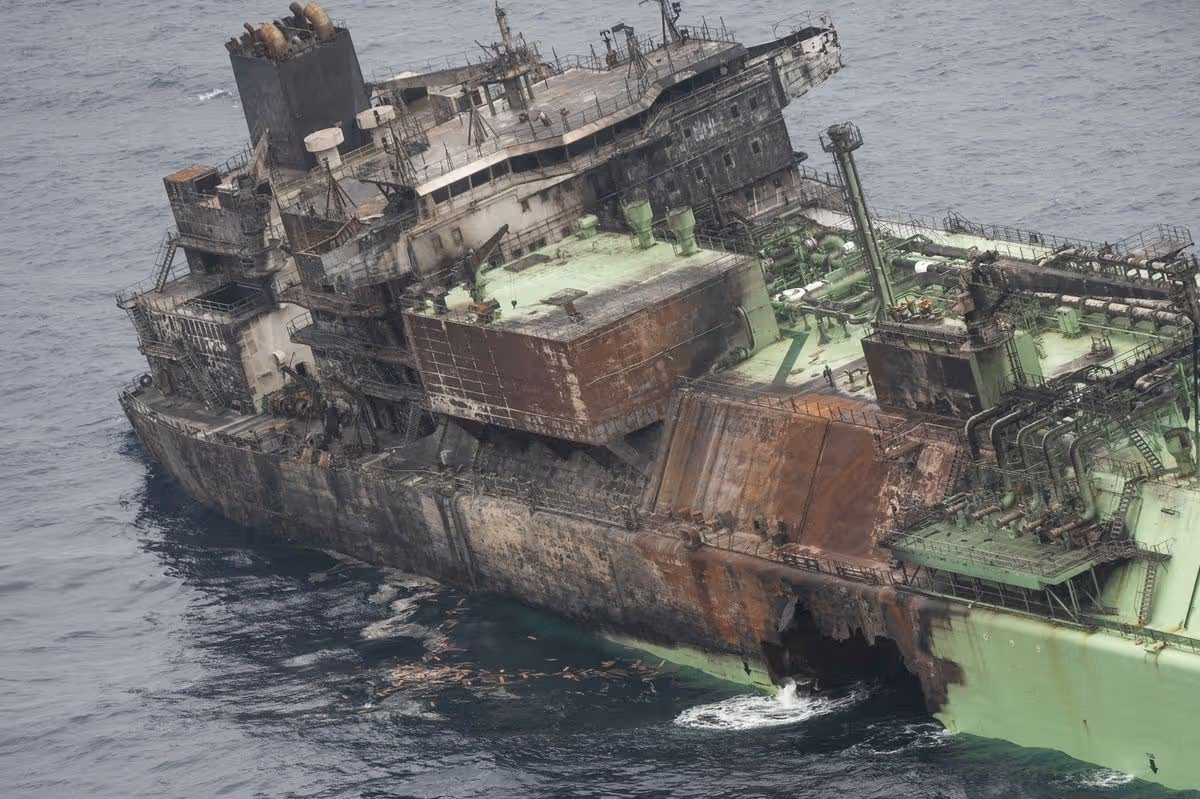
The 900ft Arctic Metagaz, a charred Russian ghost tanker, has drifted dangerously close to Malta, an archipelago in the central Mediterranean known for its history and culture

The carrier is adrift between Malta and Lampedusa(Image: Newsbook Malta/AFP via Getty Ima)
Malta — a popular holiday hotspot — is said to be under threat of a “major ecological disaster”.
A charred Russian ghost tanker is believed to be around 50 nautical miles southwest of the island, and is drifting crewless towards the archipelago. The vessel was blitzed two weeks ago by Ukranian drones and has since, the hole-ridden 900ft Arctic Metagaz has moved towards Malta.
And now multiple European countries have warned an ecological threat is imminent. In a letter to the European Commission, seven nations said the “precarious condition of the vessel, combined with the nature of its specialised cargo” posed a “serious risk”. These countries have described the situation as a “dual challenge” – upholding maritime safety and preventing an ecological disaster against the background of EU sanctions imposed on.
READ MORE: Keir Starmer gives defiant message on Iran after ‘Trumpflation’ cost of living warningREAD MORE: Ryanair flight in mid-air emergency as fire crews scrambled for ‘maximum alert’
Russia claimed that Ukraine used “uncrewed sea drones” to target the Metagaz in the Mediterranean Sea between Libya and Malta. The Security Service of Ukraine has not responded to the accusation.
According to Russia, the attack took place on March 4 and was launched from the Libyan coast. The vessel had previously been sanctioned by the United States and the European Union for being part of Moscow’s so-called “shadow fleet.”
Composed largely of ageing tankers, the fleet moves Russian oil and gas worldwide while bypassing Western restrictions. Authorities in Malta and Italy have been closely monitoring the wreck amid concerns about potential pollution. Rome said the vessel was carrying “significant quantities of gas, heavy oil, and diesel fuel.”
READ MORE: What war would actually look like for Brits from conscription incentives to cyber attacks
WWF Italy warned in a statement: “A potential spill could cause fires, cryogenic clouds lethal to marine life, and widespread and long-lasting pollution of water and the atmosphere.”
It added: “The affected area is of exceptional ecological value, with fragile deep-sea ecosystems and some of the highest biodiversity in the Mediterranean basin.”
Salvage experts are already in Malta in preparation for the ship’s arrival in Maltese waters, while a specialist vessel is on its way, a maritime source told AFP on Sunday.
Initial reports indicated that the ship sank after explosions sparked a fire on board. Libyan authorities said the tanker went down about 130 nautical miles north of the port of Sirte. Around 30 Russians were on board the Arctic Metagaz, according to Russia’s transport ministry. They were all found “safe and sound in a lifeboat” by Malta’s armed forces, Maltese Home Affairs Minister Byron Camilleri said.
However, Malta’s transport authority said last week that the wreck was still afloat. Ministry of Foreign Affairs of the Russian Federation acknowledged that the vessel was drifting in the Mediterranean and said Russia’s further involvement in resolving the situation would depend on “concrete circumstances”. It added that efforts to address the situation — including surveillance, monitoring and other technical support — could risk “undermining the integrity, effectiveness and the deterrent value of the EU sanctions regime”.
Russian foreign ministry spokeswoman Maria Zakharova said the ship had no crew and was carrying 700 metric tons of various types of fuel along with “a substantial amount of natural gas”.
“The international legal norms applicable to the current situation imply the responsibility of coastal countries … for resolving the situation with the drifting vessel and preventing an environmental disaster,” Zakharova wrote.
“Further involvement by the shipowner and Russia as the flag state will depend on the specific circumstances.”