Every major war in the Middle East has left the region permanently altered in ways that nobody fully anticipated at the time. The 1948 Arab-Israeli war created a refugee crisis whose consequences are still being negotiated seventy-eight years later. The 1979 Islamic Revolution in Iran reorganized the entire regional security architecture around a new fault line that nobody had planned for. The 2003 US invasion of Iraq created a vacuum that Iran filled faster and more effectively than anyone in Washington had anticipated, reshaping the balance of power across the Levant in ways that took a decade to fully understand.
The 2026 Iran war belongs in that category. Not because the outcome is clear, it is not, and the ceasefire that is currently holding is fragile enough that anyone claiming certainty about what comes next is not paying close enough attention. But because the war has already crossed several thresholds that cannot be uncrossed, set several precedents that will shape behavior for years, and broken several assumptions that the regional order was quietly depending on without anyone fully acknowledging it.
Here are seven dynamics that will define the Middle East that emerges from this war, whenever the shooting finally stops for good.
1. Iran Survives, But the Rules It Played By Are Gone
The Tehran regime is still standing. That matters, and it is worth saying plainly before anything else, because a significant part of the war’s logic, the publicly unstated part, was the hope that Operation Epic Fury would produce regime collapse or at minimum regime change. It did not. The Islamic Republic absorbed the largest US-Israeli military campaign in the region’s modern history, lost its Supreme Leader, saw its nuclear facilities damaged and its military degraded, and is still there.
What has changed is the calculation the regime makes about its own survival. Iran’s leadership watched the same sequence of events that every other government in the region watched: a country that was in active nuclear negotiations got bombed twice during those negotiations. The deterrence lesson available from that sequence is not subtle. Iran’s longstanding policy of maintaining a threshold nuclear capability, staying close to the bomb without building one, using ambiguity as leverage has been tested and found insufficient. The regime that emerges from this war is going to look at that record and draw conclusions about what kind of deterrence actually works. North Korea tested a weapon and got personal summits with an American president. Iran negotiated in good faith and got bombed. Those two data points are now sitting side by side in every serious strategic conversation happening in Tehran.
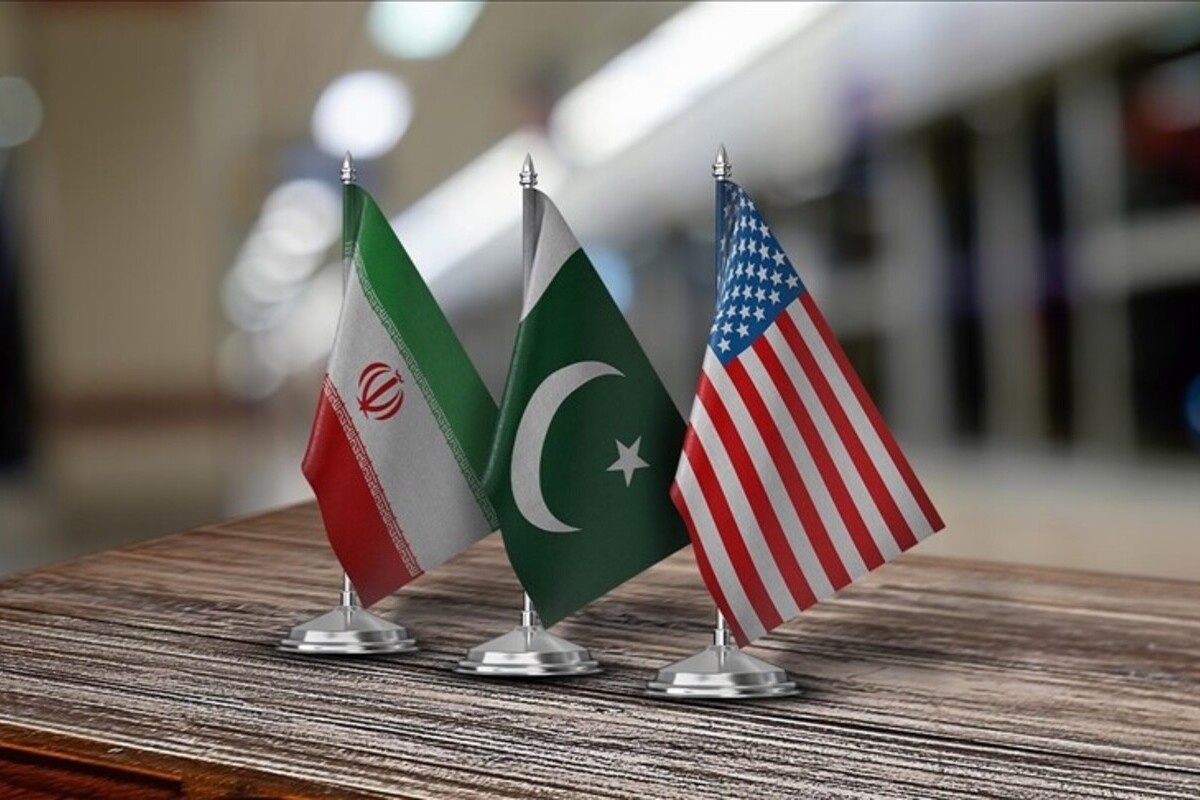
The regime will also be more paranoid domestically. The war followed the January 2026 protests in which security forces killed at least 30,000 people. A weakened regime with depleted military resources and a traumatized population is not a stable combination. The survival instinct will dominate everything else in the near term, including any serious diplomatic engagement, which is part of why the Islamabad nuclear talks failed and why any future negotiations will start from an even lower baseline of trust than the ones that preceded the war.
2. The Gulf Has Been Permanently Unsettled
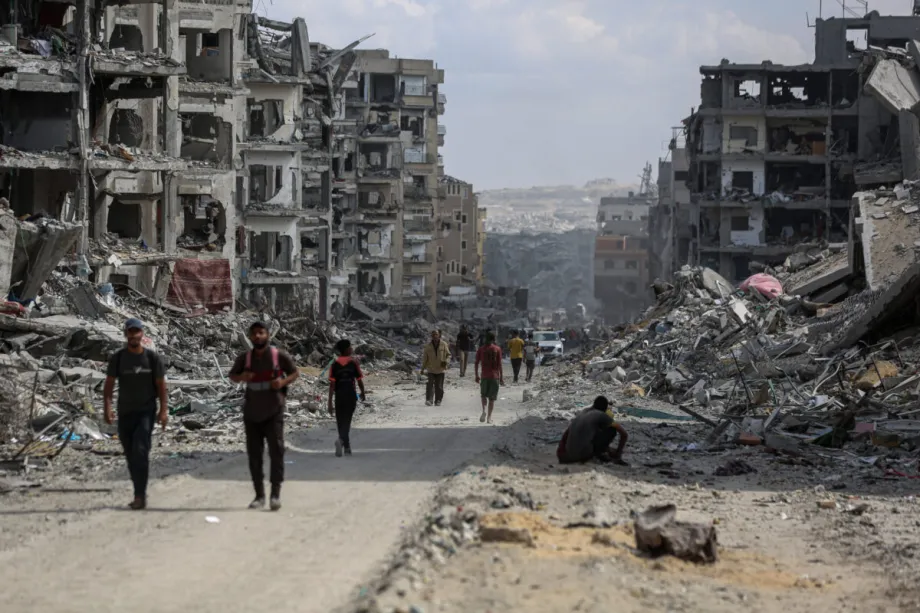
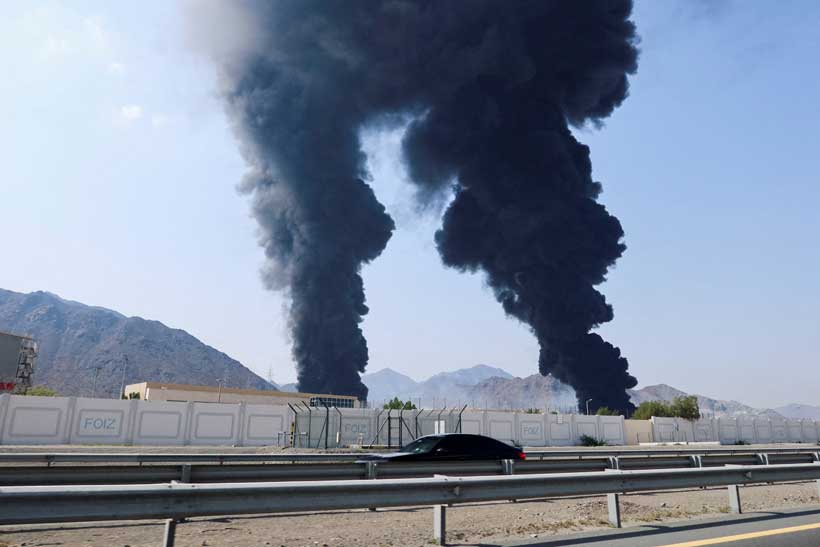
The Gulf Cooperation Council states did not start this war. They absorbed it anyway. Bahrain depleted 87% of its Patriot interceptor stocks. Kuwait and the UAE spent roughly 75% of theirs. Saudi Arabia’s critical east-west pipeline was struck directly. Abu Dhabi’s main gas complex caught fire. Fujairah’s oil refinery burned. More than 60 combined drone and missile attacks hit Kuwait and the UAE in a single day during the Project Freedom escalation. The Gulf’s carefully constructed image as a zone of stability, safety, and economic transformation, the image that had attracted trillions in foreign investment and tens of millions of expatriate workers, was shattered in a way that will take years to rebuild, if it can be rebuilt at all.
The Middle East Council on Global Affairs described the war as having “irreversibly shaken” the region’s image, exposing deep-seated fragility beneath the facade of the Gulf’s rapid economic transformation. The word “irreversibly” is doing real work in that sentence. Previous crises, the 1990 Iraqi invasion of Kuwait, the 2019 Aramco attacks, were absorbed and the narrative of Gulf stability recovered relatively quickly. This war lasted over seventy days, struck civilian infrastructure repeatedly, disrupted food supplies across countries that import the vast majority of their calories, and demonstrated that the bilateral security relationships with Washington that Gulf states had invested so heavily in did not prevent them from becoming targets.
The UAE’s decision to leave OPEC on May 1 is one visible expression of the strategic rethink underway. The Gulf states are going to emerge from this war less willing to subordinate their security architecture to any single patron and more interested in building the kind of integrated regional defense capacity that would give them options Washington cannot or will not provide. The differences among the six GCC states will make a NATO-style collective defense treaty unlikely, but closer integration is no longer aspirational. It is a necessity that the war has made impossible to defer.
3. The Normalization Project Is Frozen
Before February 28, the Abraham Accords logic seemed to be holding. The UAE, Bahrain, Sudan, and Morocco had normalized relations with Israel. Saudi Arabia was the prize, and the conversations about a potential Saudi-Israeli normalization — in exchange for a US defense pact and civilian nuclear cooperation — were genuinely advanced. The underlying premise was that Arab publics had moved far enough past the Palestinian cause that their governments could afford to formalize what was already functionally a security alignment.
The Iran war destroyed that premise in full view of everyone. Arab public opinion, which was already running at 87% opposition to normalization in the Arab Opinion Index before the war, has hardened further after watching Israel conduct sustained bombing campaigns across Lebanon, Gaza, and Iran simultaneously over more than seventy days. For many Arab observers, the war is not an isolated conflict. It is the latest chapter in a broader Israeli military dominance project that encompasses Gaza, the West Bank, Lebanon, and now Iran, enabled throughout by American military and diplomatic support.
Any Arab leader who signs a normalization deal with Israel in the current environment faces a domestic political cost that no US security guarantee or economic package can fully offset. The Saudi normalization conversation is not dead permanently, the strategic logic that made it attractive for Riyadh has not entirely disappeared but it is frozen for long enough that the entire US regional architecture that depended on it as a centerpiece needs to be rethought. Washington’s ability to build a US-Israel-Gulf security framework against Iran was the strategic bet the war was supposed to vindicate. The war has made that framework harder to assemble, not easier.
4. The US-Israel Relationship Has a New Fracture
American support for Israel has been the most durable constant in US Middle East policy across administrations since 1948. It has survived Israeli settlement expansion, military operations in Gaza that generated international condemnation, and political disputes that have occasionally grown heated. The 2026 Iran war has introduced a new variable into that relationship that previous strains did not: the growing belief among a significant portion of the American public that Israel drew the United States into a war it did not want and cannot easily end.
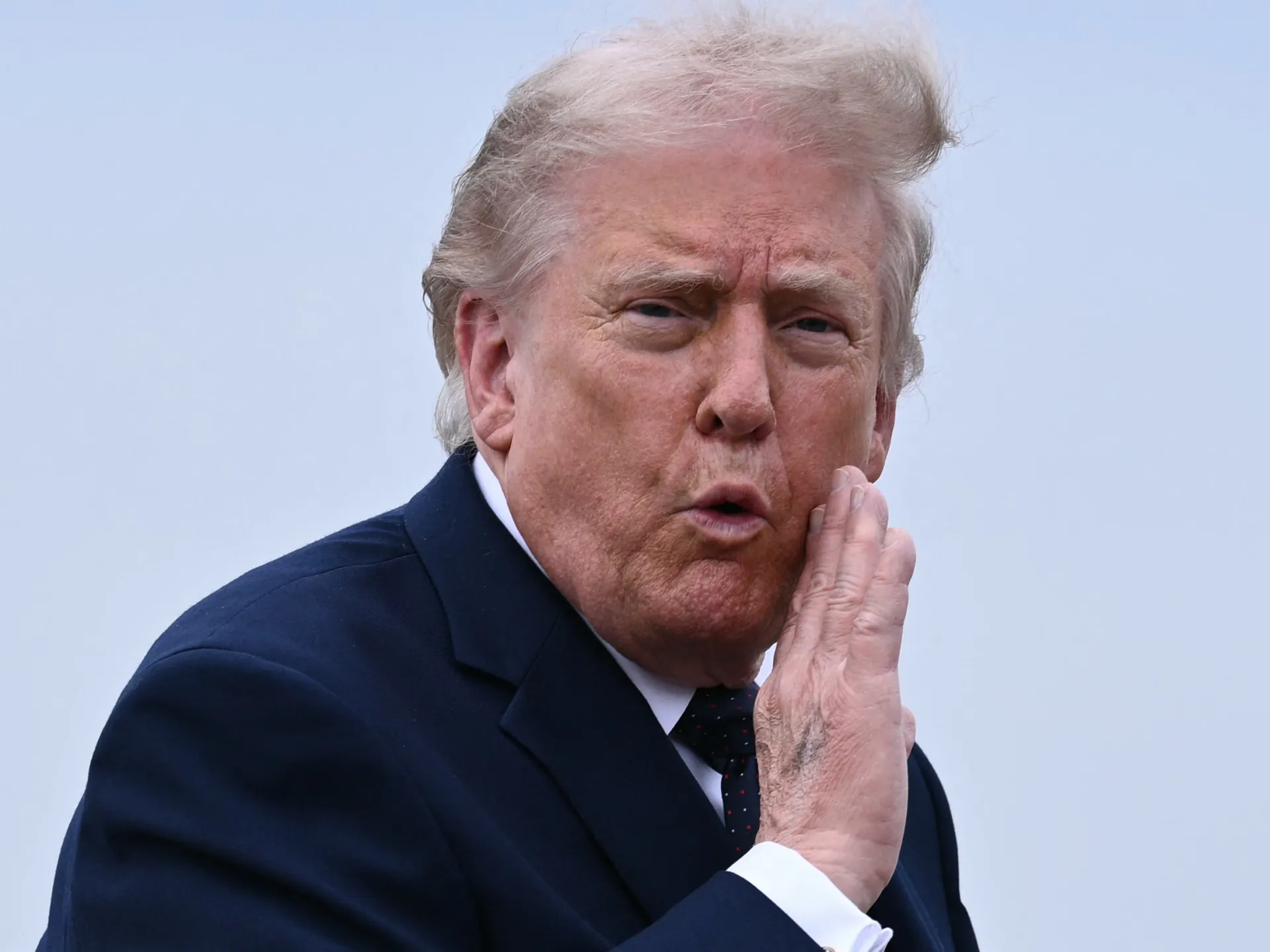
More than 60% of Americans disapprove of the Iran war. Trump’s approval ratings sank to record lows partly on the back of rising energy prices and cost of living impacts that are directly attributable to the Hormuz closure. The war’s unpopularity has given political traction to positions that were previously confined to the progressive wing of the Democratic Party: conditioning military assistance on specific Israeli behavior, demanding accountability for civilian casualties in Lebanon and Iran, and subjecting the strategic value of the bilateral relationship to the kind of cost-benefit scrutiny it has historically been shielded from.
None of this means the alliance is breaking. It is not. But the domestic political foundation that made unconditional US support for Israel possible regardless of what Israel did has developed a crack that the Iran war has widened. Future US administrations will face a political environment in which the Israel relationship is a genuine electoral liability in ways it simply was not before, and Israeli policymakers who have operated on the assumption that US support is structurally guaranteed regardless of circumstances will need to update that assumption.
5. China Emerged as the Indispensable Power
Beijing did not fire a shot. It did not spend significant diplomatic capital publicly. It did not take on any formal mediation role. What it did was position itself, with considerable patience and skill, as the actor that both Washington and Tehran needed more than either wanted to admit, and then collect the diplomatic credit when the ceasefire materialized.
China helped bring Iran to the Islamabad table, according to Trump’s own public statements. Wang Yi hosted Iranian Foreign Minister Araghchi in Beijing days before the Trump-Xi summit, called for Hormuz to reopen, and generated the impression of Chinese diplomatic activism at exactly the moment when Washington needed Beijing’s cooperation and was prepared to pay for it. China invoked its blocking rule against US sanctions on Chinese refiners buying Iranian crude — the first time that tool had ever been used — demonstrating that it had economic instruments available to defend its interests that it had not previously deployed. And it arrived at the Beijing summit as the power that had something Trump badly needed, which is a considerably stronger negotiating position than the one it occupied at Busan in October.
The 2023 Saudi-Iran normalization deal established China as a capable Middle East diplomatic actor. The 2026 Iran war established it as an indispensable one. The distinction matters. Capable means you can play a role when conditions are right. Indispensable means the outcome changes if you are not involved. Beijing has crossed that threshold, and it has done so without making any of the military commitments, incurring any of the costs, or absorbing any of the domestic political blowback that Washington’s Middle East involvement routinely generates.
6. The Nuclear Domino Is Now Spinning
Iran was bombed twice during active nuclear negotiations. That sequence of events is now permanently part of the strategic record, and every government that has been quietly calculating its own nuclear options has updated its spreadsheet accordingly.
Saudi Arabia has been the most explicit. Mohammed bin Salman said before the war that if Iran developed a nuclear weapon, Saudi Arabia would pursue one too. The war has moved that conversation from hypothetical to urgent. Riyadh has been building civilian nuclear infrastructure with American assistance and insisting on retaining enrichment rights in any cooperation agreement. The Islamabad talks’ collapse on the nuclear issue, Iran refusing to permanently renounce enrichment in exchange for promises from a government that had bombed it twice during negotiations, has removed any expectation that a clean nonproliferation settlement is achievable in the near term.
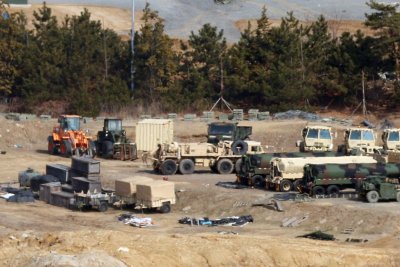
Turkey, South Korea, and Japan are all running versions of the same calculation at different registers. The Iran war gave each of them new data points. US Pacific munitions were depleted to feed the Iran campaign. THAAD components were pulled from South Korea. US allies in Asia were publicly rebuked for declining to join the coalition. The message received in Seoul, Tokyo, and Ankara was not the one Washington intended to send, and the conclusions being drawn in those capitals about the reliability of American security guarantees will shape nuclear policy decisions that play out over the next decade.
The nonproliferation architecture was already under serious strain before February 28. The Iran war has accelerated the deterioration of a regime that depended on the belief that non-nuclear states were better off without weapons than with them. That belief is harder to sustain after a country was bombed during the negotiations designed to preserve it.
7. The Gulf’s Self-Image Is Broken, and Rebuilding It Will Take a Generation
There is a dimension of what the Iran war changed that resists purely strategic analysis, and it is worth naming directly. The Gulf states spent the past two decades building a narrative about themselves: modern, open, economically dynamic, safely removed from the instability that characterized other parts of the Middle East. Dubai and Abu Dhabi positioned themselves as global hubs. Riyadh launched Vision 2030. Doha hosted the World Cup. The region was selling itself as a destination, not a danger zone.
The war shattered that narrative in ways that will outlast the ceasefire. The conflict was described by one analyst as marking the “end of the narrative” that the Gulf is a permanently safe destination for expatriates, immigrants, and tourists. The psychological impact on the tens of millions of people who live and work in the Gulf, who sheltered from missile alerts, watched refineries burn, and scrambled to find formula and medicine during the food import disruption, is not something that press releases about ceasefire agreements can quickly undo.
Foreign investment into Gulf real estate and infrastructure had been tracking the region’s stability narrative for years. That narrative is now complicated by the demonstrated reality that the Gulf can be struck repeatedly during a regional conflict in ways that its air defenses cannot fully absorb. Rebuilding the confidence that underwrites that investment will require not just a ceasefire but a durable regional security architecture that the current situation is nowhere near producing.
The Middle East that emerges from the 2026 Iran war will be defined by the space between what was promised and what was delivered; by US security guarantees that did not prevent the Gulf from being struck, by Israeli military operations whose strategic gains remain unclear, by an Iranian regime that survived when the operational logic suggested it might not, by a ceasefire that is holding without resolving anything, and by a regional order that has been disrupted deeply enough that the shape of what replaces it is genuinely unknown.
That uncertainty is not a failure of analysis, but it is the honest description of where the region actually is.










![Mohammad Bin Salman and Netanyahu - Cartoon [Tasnimnews.com/Wikipedia]](https://i0.wp.com/www.middleeastmonitor.com/wp-content/uploads/2018/01/2017_11-29-Mohammad-Bin-Salman-and-NetanyahuCaricature_of_Mohammad_Bin_Salman_03.jpg?w=1200&ssl=1)
![U.S. President Donald Trump looks over at Crown Prince of Saudi Arabia Mohammad bin Salman al-Saud as they line up for the family photo during the opening day of Argentina G20 Leaders' Summit 2018 at Costa Salguero on 30 November 2018 in Buenos Aires, Argentina. [Daniel Jayo/Getty Images]](https://i0.wp.com/www.middleeastmonitor.com/wp-content/uploads/2018/12/2018-12-3_trump-and-bin-salmanbin-salman-g20-trump.jpg?w=1200&ssl=1)