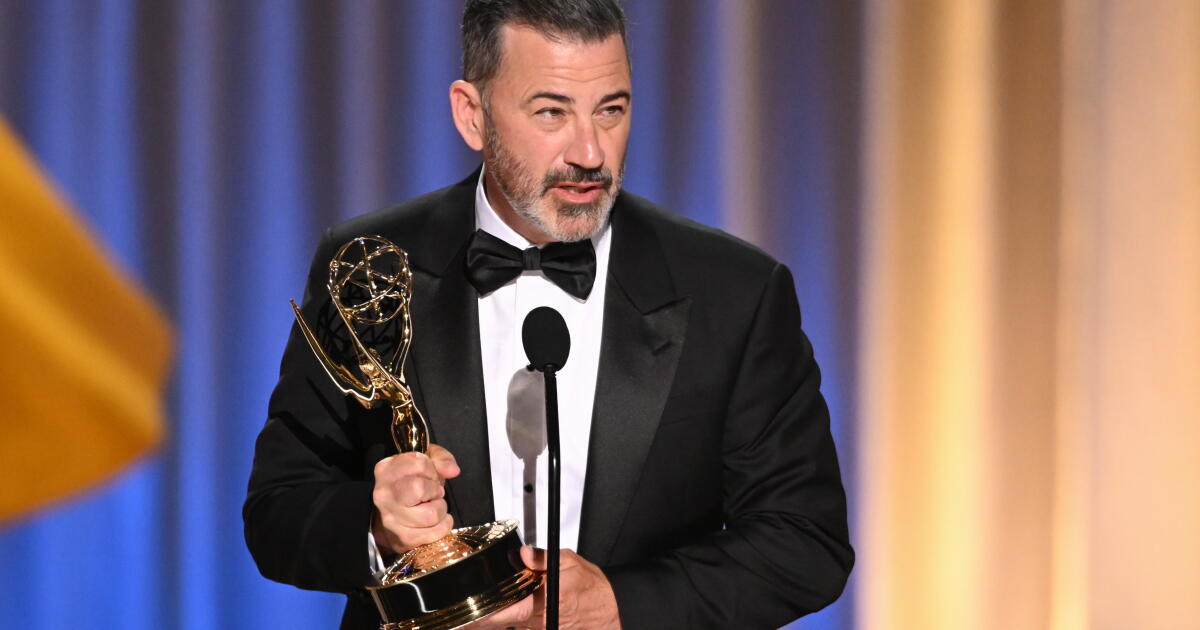
Jimmy Kimmel interview with Senate candidate Talarico won’t air on ABC
ABC comedian Jimmy Kimmel’s interview with Texas Senate candidate James Talarico won’t air on broadcast television amid the network’s high-stakes skirmish with the Federal Communications Commission.
Kimmel, during his Wednesday night monologue, said his talk with the 37-year-old Texas Democrat would instead stream on his show’s YouTube channel — depriving ABC viewers and TV stations of a potentially newsworthy interview with Talarico, who has been surging in the polls.
The Texas race is shaping up as a key contest in what could help decide control of the U.S. Senate in the mid-term elections.
Talarico is running against Texas Republican Atty. Gen. Ken Paxton, who has been endorsed by President Trump.
Kimmel alluded to the Walt Disney Co. network’s ongoing dispute with FCC Chairman Brendan Carr as the reason for the switch. This spring, Carr’s Media Bureau ordered ABC to submit to an early review of its TV station licenses for Disney’s eight owned stations. The FCC launched the review a day after President Trump demanded Kimmel be fired after First Lady Melania Trump became upset over a joke the comedian told on his program, “Jimmy Kimmel Live!”
ABC has since sued the FCC, alleging Trump’s disdain for Kimmel and other ABC programs has fueled the FCC’s heavy-handed approach to the network, in violation of its 1st Amendment rights.
Kimmel pointed to the “unusual circumstances” in his monologue.
“For the whole 20-plus years of our show, in fact, I’ve been interviewing Americans who are running for office with no problem at all, just like [David] Letterman did, [Jay] Leno did, Arsenio [Hall], etc. etc.,” Kimmel said. “I’ve interviewed a lot of political candidates — from Hilary Clinton to Ted Cruz to Donald Trump.”
But, Kimmel said that in the current climate, airing the Talarico interview on the public airwaves carried too much risk.
“Out of consideration for our local stations, especially our ABC affiliates in Texas who would have to deal with this nonsense,” the ABC interview, which was scheduled for Thursday, would instead play on YouTube, he said.
ABC declined to comment. An FCC spokesperson did not immediately respond to a request for comment.
The issue surfaced nearly one year after a major dust-up when ABC temporarily benched Kimmel after comments he made on his show over the shooting of conservative activist Charlie Kirk. During that episode, Carr seemed to threaten Disney by saying that Kimmel should be punished.
“We can do this the easy way or the hard way,” Carr said. “These companies can find ways … to take action … on Kimmel or there is going to be additional work for the FCC.”
Two station groups removed Kimmel’s show, but ABC eventually stood by the comedian returning him to his perch the following week.
The Disney-owned station licenses were not set to expire for several years when the FCC demanded that Disney defend its stewardship of the outlets. The license for Disney’s KABC-TV Channel 7 in Los Angeles extends to 2030 but it is now being challenged.
The Burbank giant has asked a federal judge to issue a temporary restraining order and injunction to halt the FCC’s early station review.
ABC also is defending against an FCC probe into whether its daytime talk show, “The View,” should be entitled to an exemption from the so-called equal-time rule for political candidates who appear as guests.
Carr has challenged the status of “The View,” arguing that the topical chat show is not a bona fide news program and, thus, should not be entitled to the exemption.
The same issue tripped up former CBS late night comedian Stephen Colbert who interviewed Talarico in February — before his program, “The Late Show with Stephen Colbert, was canceled.
At the time, Colbert told viewers CBS lawyers forbid him from airing a Talarico interview on his program due to the FCC’s increased scrutiny of exemptions to the equal-time rule, an allegation that CBS disputed.
But Colbert’s interview played on the program’s YouTube channel — not the CBS network.
The FCC has said it was investigating ABC stations over whether the company’s diversity and inclusion policies are in violation of the Communications Act of 1934 and the agency’s rules, including its “prohibition on unlawful discrimination.”
Last week, the FCC asked a federal judge in Washington to dismiss ABC’s 1st Amendment lawsuit, calling Disney’s challenge to the early review “meritless” because the commission hasn’t made a decision on whether to escalate the matter or rescind Disney’s station licenses.
Kimmel ended his monologue, saying he was grateful for the YouTube channel “because in the America we live in right now, that is the best that we can do until November.”