Why Dusty Baker will become first Black manager in the Hall of Fame
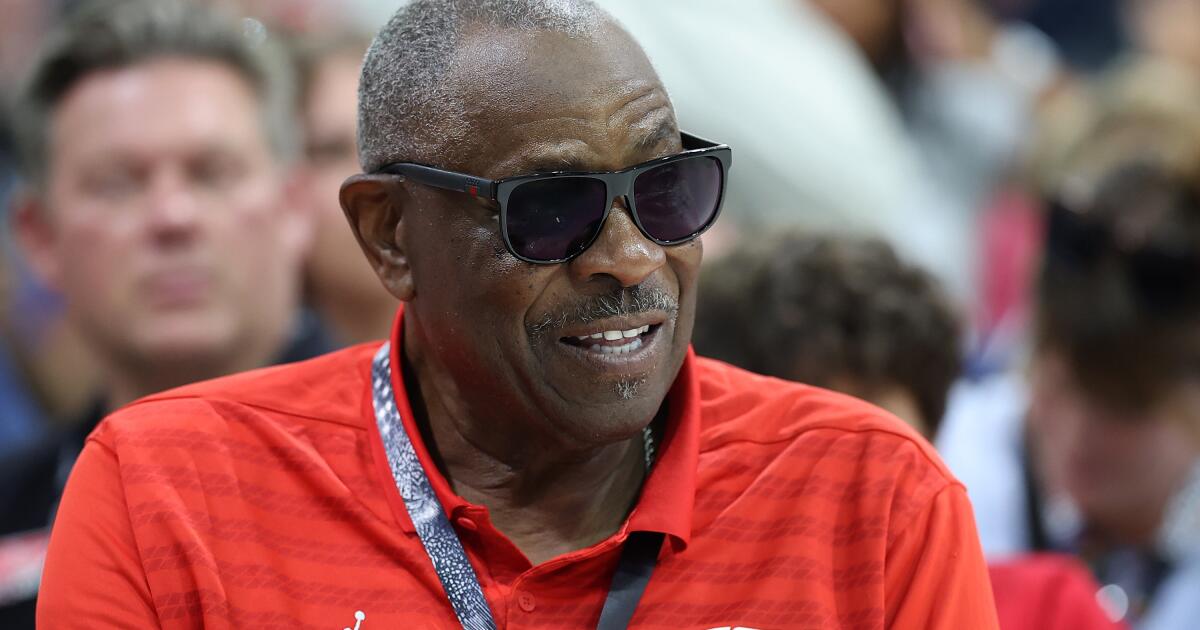
COOPERSTOWN, N.Y. — Dusty Baker could sense a portion of his life as he entered the National Baseball Hall of Fame’s Plaque Gallery on Saturday night. He couldn’t help but notice that some of his contemporaries from when he played with the Braves and Dodgers were walking slower, in some cases with the help of a cane or an assistant.
“I’m glad to see everybody,” said Baker, 77. “But you know, we’re getting old. I see guys in walkers who used to run fast, (and) their kids that are grown. You kind of see your life flash before your eyes.”
A record 60 Baseball Hall of Famers were in Cooperstown as Jeff Kent, Carlos Beltran and Andruw Jones were inducted Sunday. Baker traveled with the San Francisco Giants’ contingent to celebrate Kent, who credits Baker with helping transform him into the National League MVP, All-Star and eventually a Hall of Famer.
As much as Baker tried to keep his focus on Kent, however, many kept telling him that this visit was a prelude to his induction next summer. They reminded him that he’s expected to be on the Hall’s Era Committee ballot in December.
If Baker receives at least 12 votes from the 16-member committee, he’ll become the first Black manager elected into the Hall.
“I know the history,” Baker said. “I was fortunate enough to be around Hank (Aaron) in the beginning.”
Baker grew up idolizing Jackie Robinson, who broke baseball’s color barrier on April 15, 1947, 26 months before Johnnie B. “Dusty” Baker was born in Riverside.
Through 1953 National League Rookie of the Year Jim Gilliam, who spent three seasons with the Baltimore Elite Giants of the Negro Leagues before joining the Brooklyn Dodgers, Baker met several Negro League greats.
Gilliam once took Baker to eat lunch at Negro League legend Cool Papa Bell’s home in St. Louis. He also spent time with Satchel Paige and Ted “Double Duty” Radcliffe. Because of his friendship with Aaron, his Braves mentor, and his time with the Dodgers, he met Hall of Famer Roy Campanella and Don Newcombe, who spent time in the Negro Leagues before joining the Brooklyn Dodgers.
Bell, Paige and Campanella were all inducted into the Hall. Paige was the first Negro Leaguer inducted into the Hall of Fame in 1971, five years after Ted Williams used his induction speech to advocate for Negro Leaguers.
“Baseball gives every American boy a chance to excel, not just to be as good as someone else, but to be better than someone else,” Williams said on July 25, 1966. “This is the nature of man and the name of the game, and I’ve always been a very lucky guy to have worn a baseball uniform, to have struck out or hit a tape-measure home run.
“And I hope that someday the names of Satchell Page and Josh Gibson in some way can be added as a symbol of the great Negro players that are not here, only because they were not given a chance.”
Robinson became the first Black player elected into the Hall by the Baseball Writers’ Association of America in 1962. Negro Leaguers weren’t considered for the Hall until Paige was elected into the 1971 class. A year later, Gibson was inducted.
Baker first visited the Hall of Fame to play an exhibition in 1974. He made his third trip to Cooperstown this weekend, which marked his first visit for an induction weekend.
Exactly 60 years after Williams induction speech on the steps of the Hall of Fame, Baker walked into the Hall and was greeted by the loud roars of another Boston Red Sox legend, David Ortiz. Baker smiled widely, nodded his head, greeted Ortiz in Spanish, chuckled and walked over to Ortiz and Vladimir Guerrero, giving each of them hugs and pats on the back.
A few seconds later, Dave Winfield joined the trio for a picture before Baker and his wife began to mingle with other Hall of Famers and guests.
Later that night at a party the Giants held in Kent’s honor, Kent paid tribute to his family, Baker and a few teammates during a short speech.
Then Kent predicted that Baker will return next year to take his place among baseball’s immortals. Baker won a World Series title and three pennants as a manager while leading a record five teams to the playoffs over 26 seasons as a manager.
He’s eighth on baseball’s all-time managerial wins list with 2,183 as the only Black manager in baseball history with 2,000 victories.
While sipping on his coffee and munching on extra crispy bacon and blueberry pancakes Sunday morning, Baker sat at the Otesaga Resort where the Hall of Famers stay during induction weekend. He looked out at Otsego Lake while several Hall of Famer stopped to say hello.
Chipper Jones stopped by and said, “You dusting off that chair for next year, Dusty?”
Baker laughed and shook his head before calling Chipper by his first name, Larry.
“There ain’t no guarantees, so why am I going to look forward if there ain’t no guarantees?” Baker said. “I’m serious. People think I’m kidding when I’m saying that. When Bill Belichick did not get in the (Pro Football) Hall of Fame anybody has a chance to not get in the Hall of Fame.
“Am I right? That’s how I look at it. I was shocked. They can talk about Deflategate, they can talk about the media. What about the other six (Super Bowls) he won?”
Nonetheless, Baker appreciates what it would mean for a Black manager to finally be elected to the Hall.
“But most of my life had been full of ‘First Black Guy stories, Black man stories’ from the time I was in high school,” he said. “The two blacks at my high school were me and my brother in my last year of high school.
“That’s some of the reasons I went into the wine business. There’s not many Blacks in the wine business. One reason why I started but stopped in the energy business was because there’s not many Blacks in the energy business.”
There have been 354 inductees into the Baseball Hall of Fame, 23 of them as managers.
Baker will likely be the first Black manager next summer.
“I was taught pride from my mom and dad in culture about being Black,” he said. “My mom was really big (on Black history) because she was a Black Studies teacher, so we had books that I read. …
“I’m hoping I can motivate other young brothers and sisters to achieve some things that don’t seem achievable. It’s a little bit disheartening when I see regression of Black coaches, Black players, Blacks in baseball.”