drug deal

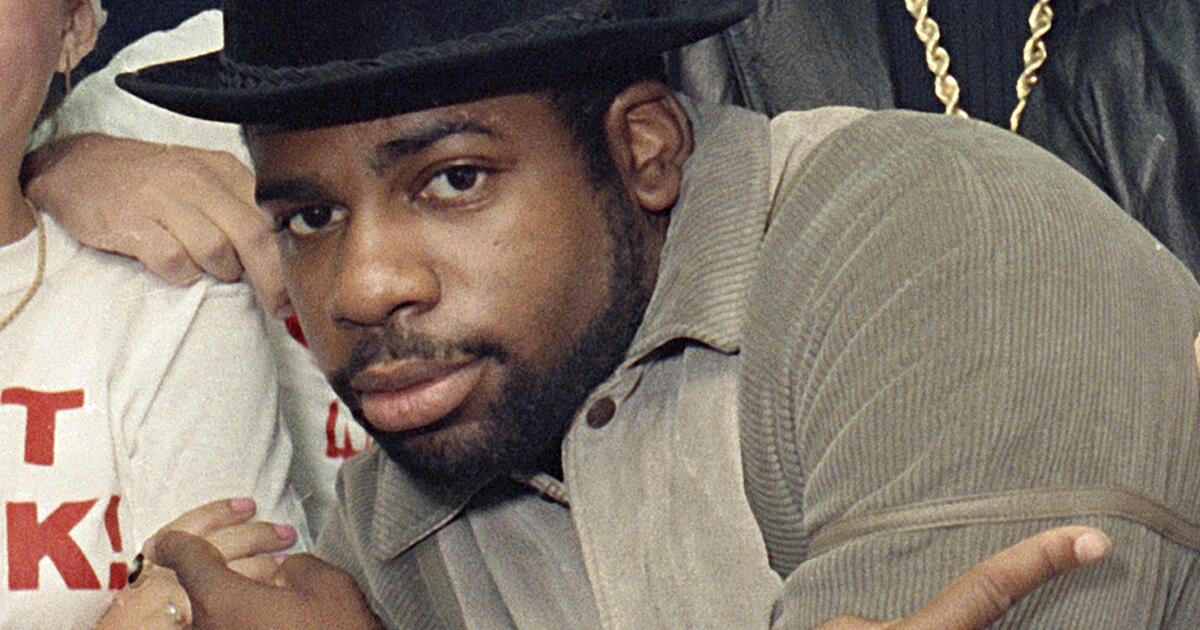
Man pleads guilty in killing of Run-DMC’s Jam Master Jay 24 years ago

More than 20 years after Jam Master Jay of Run-DMC was shot to death in a New York recording studio, a man admitted to his role in the killing.

Jay Bryant, 52, pleaded guilty to a federal murder charge, telling U.S. Magistrate Judge Peggy Cross-Goldenberg that he helped others gain access to the building where the hip-hop icon, born Jason Mizell, was shot in 2002.

“I knew a gun was going to be used to shoot Jason Mizell,” Bryant told the judge, per the Associated Press. “I knew that what I was doing was wrong and a crime.”

Bryant didn’t name the people he helped, but in 2024, Karl Jordan Jr. and Ronald Washington were convicted of Mizell’s murder in a case that prosecutors had been working for decades.

“Y’all just killed two innocent people,” Washington yelled at the jury at the time of the verdict.

Jordan Jr., Mizell’s godson, won an appeal last year to overturn his conviction, with a judge finding that the prosecutors’ case against him didn’t add up. The judge said the evidence didn’t support the contention that he was motivated by anger after he was cut out of a $200,000 drug deal. Earlier this month, U.S. District Judge LaShann DeArcy approved Jordan Jr.’s $1-million bond package.

Washington has challenged his conviction as well.

According to Courthouse News, prosecutors claimed that Washington and Jordan both confessed to the murder, based on witness testimony that both men discussed being involved in Mizell’s shooting while they were in prison.

As for Bryant’s role in the murder, his uncle Raymond Bryant testified in 2024 that his nephew confessed to killing Mizell, saying he “did it.”

Additionally, a hat with Bryant’s DNA that law enforcement officers found in the recording studio placed Bryant at the scene of the crime.

Bryant told the court Monday that he was in cahoots with people who were wrapped up in a drug deal with the DJ and that he played a part in the killing by helping them gain entry to the recording studio. According to the Associated Press, Bryant flashed a thumbs up to a person in the courtroom before leaving.

Bryant faces 15 to 20 years in prison for his role in the murder, as well as separate narcotics trafficking and firearms charges to which he already pleaded guilty.

“More than two decades after the cold-blooded, execution-style killing of Mr. Mizell, an exhaustive investigation revealed Bryant’s role and today he finally admitted his guilt,” stated U.S. Atty. Joseph Nocella in a news release.

“Justice in the murder of Jam Master Jay has been pursued with determination and resolve for more than two decades. The defendant’s role in facilitating access for the killers was integral to this crime,” added Bryan DiGirolamo, special agent in charge for ATF New York field division.

Although Mizell’s public persona as the “master of the disco scratch” promoted the wholesome side of hip-hop and encouraged a drug-free lifestyle, officials said he turned to dealing after the group’s heyday had come and gone. According to prosecutors, Mizell became involved in arranging the sale of kilogram-size quantities of cocaine.

In August 2002, Mizell was fronted 10 kilos of cocaine from a supplier. Prosecutors alleged that Jordan Jr. and Washington planned to deal the drugs in Maryland, but a dispute led to the men being cut out of the $200,000 deal.

On Oct. 30, 2002, Mizell was playing video games with a friend inside his Queens, N.Y., recording studio, 24/7. According to prosecutors, around 7:30 p.m., Bryant entered the building containing the recording studio and opened a locked fire escape exit door to allow others to slip in without being seen by Mizell.

Two shots were fired and Mizell was hit once in the head, killing him. The second shot struck another individual in the leg.

Source link

‘Wasteman’ review: British prison drama digs deep into the survival playbook

Like the milieu in which they’re set, prison movies can be terribly constricting. Often focusing on well-worn themes of masculinity, regret and redemption, they feature (and sometimes indulge) rough-hewn portrayals of tortured characters suffering through physical and emotional tumult. Inherently compelling but also a shade predictable, the genre promises a tantalizing glimpse at a terrifyingly macho world — one that most of us are fortunate not to know firsthand.

Cal McMau’s feature directorial debut hardly reinvents the formula, but it does remind audiences what remains so sturdy about the premise of an ordinary man trying to stay alive behind bars. And thanks to the latest impressive turn from rising star David Jonsson, “Wasteman” even finds a few new notes to play within a familiar stark melody.

Jonsson is Taylor, who has been serving 13 years in a U.K. prison for a drug deal that went tragically wrong, leading to an accidental death. Soft-spoken and overly accommodating, the young man mostly wants to avoid trouble, allowing himself to be bullied by cell-block thugs Paul (Alex Hassell) and Gaz (Corin Silva) while offering to cut their hair in exchange for the pills that fuel his addiction. Taylor has learned to go along to get along, existing in a zombie-like state from the perpetual high he chases.

But Taylor’s stasis is interrupted by the news that he may be granted early parole. (The overstuffed U.K. penal system needs to shed nonviolent prisoners to make room for dangerous offenders.) Longing to reconnect with his estranged teenage son Adam (Cole Martin), Taylor can see the light at the end of the tunnel — until the arrival of Dee, his new cellmate.

Played by a snarling, coiled Tom Blyth, Dee swaggers whereas Taylor shrinks. Seeing his new home as his kingdom, Dee quickly becomes the prison’s chief supplier of whatever you need — sneakers, candy, drugs — while ferociously asserting his dominance. (Early on, Dee slashes a fellow inmate’s face, recognizing him as someone who once ran with a rival crew.) Taylor adapts to the volatile situation as he always has, serving as the unthreatening beta, eventually earning Dee’s trust and friendship. Soon, Dee takes an interest in Taylor, ordering his lackeys on the outside to give Adam gifts that they claim are from his dad.

“Wasteman” introduces this odd-couple scenario and then waits for their fragile coexistence to rupture. Accustomed to being the prison’s top dogs, Paul and Gaz don’t take kindly to Dee invading their turf, resulting in an escalation of tension that puts Taylor’s parole at risk. But if much of “Wasteman” follows an expected trajectory, the film’s conception of Taylor proves thornier than anticipated.

Although probably best known for the HBO series “Industry,” Jonsson has demonstrated a dazzling range over a short period of time, including acing romantic dramas (“Rye Lane”) and dystopian thrillers (“The Long Walk”). But what unites his diverse roles is the sense of a sensitive, intelligent actor who constantly makes us wonder what he’s thinking.

Jonsson’s silences always seem to say so much and in “Wasteman” he capitalizes on his reserved demeanor and smaller frame to create a character who is much less frightening than those around him. Unlike Dee, he’s no hardened criminal, merely a guy who made one stupid mistake to financially support his child, and “Wasteman” initially encourages viewers to sympathize with this delicate soul who’s been thrown to the wolves.

Gradually, though, Jonsson complicates our feelings about Taylor. Equally desperate to be freed and to keep getting high — essentially escaping one prison while remaining in another — he slowly reveals himself to have little in the way of principles or ethics. When Paul and Gaz confront Dee, Taylor’s response is so cowardly that it’s pathetic, suggesting a spinelessness that bedeviled him long before he wound up in jail. The film presents Taylor as a kindly spirit, which turns out to be little more than calculated self-preservation.

Within the confines of a fairly conventional prison drama, McMau dissects an anonymous nobody who discovers that, both in prison and in life, there are consequences for not taking sides. Despite Dee’s savagery, Blyth portrays Taylor’s cellmate as loyal and honest — someone who believes in a personal code of conduct. The movie’s bitterest irony is that, of the two men, it’s ultimately Dee who may be more honorable.

McMau’s attempts to amplify the story’s grim authenticity occasionally fall flat. (Inspired by footage shot by actual inmates with contraband cellphones, the first-time director incorporates stagey inserts meant to re-create these intimate, graphic images.) He’s on firmer footing exploring his two leads as they square off inside this smoldering crucible. Like Jonsson, Blyth hints at a whole universe inside his character simply by the way he quietly listens and observes. As Taylor’s parole looms, the stakes grow. By the time “Wasteman” reaches its ambiguous finale, our loyalties are far from clear-cut.

‘Wasteman’

Not rated

Running time: 1 hour, 30 minutes

Playing: Opens Friday, April 24 at Laemmle Monica Film Center

Source link