draftkings

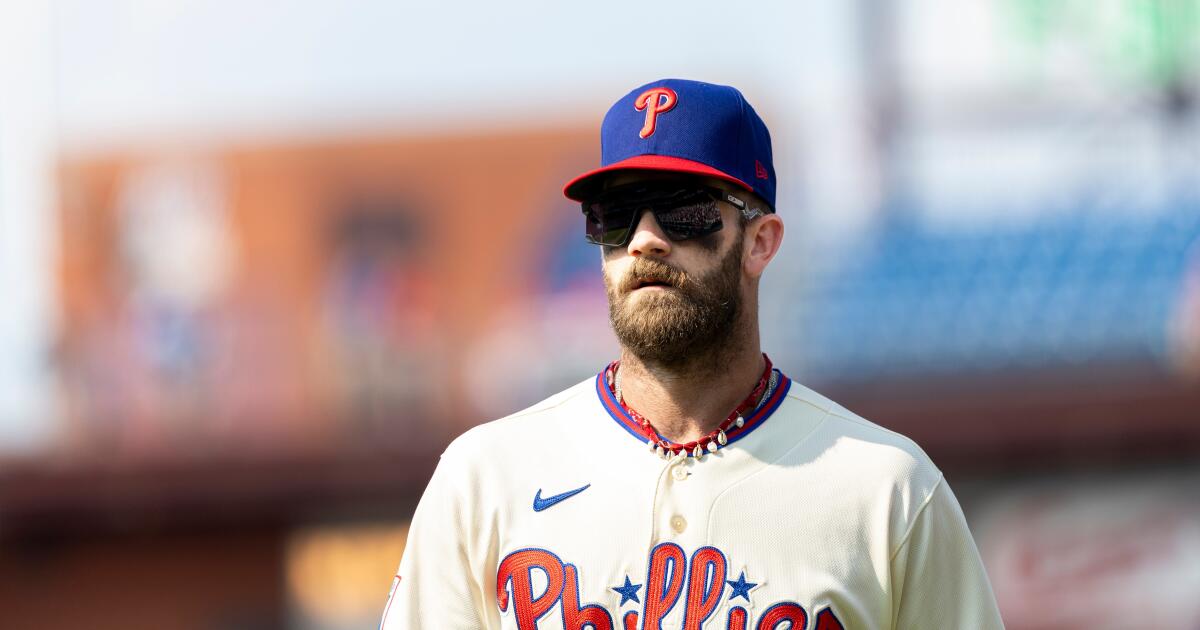
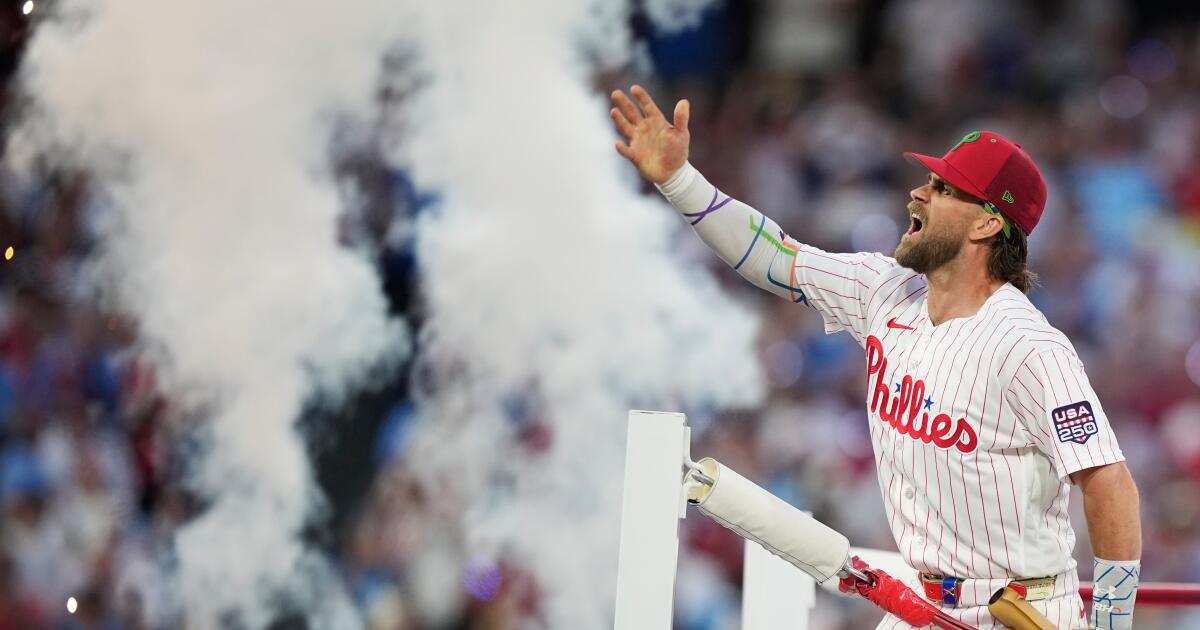
Congress targets MLB sportsbook policies after Bryce Harper video

Three members of Congress sent a letter on Monday to Major League Baseball and the players union requesting that they tighten policies so an incident last month involving Bryce Harper, FanDuel and an admitted gambling addict cannot reoccur.

Harper, an All-Star with the Philadelphia Phillies, said on Instagram that he created a troublesome, personalized 21-second video on behalf of FanDuel. But he would not have done so had he known the online sportsbook allegedly intended to use it to entice VIP customer Terry Thompson to continue gambling.

The incident triggered the three-page letter signed by Senator Richard Blumenthal, Congressman Paul Tonko and Congresswoman Valerie Foushee that demands an end to the policies that enabled “this type of predatory promotion.”

The letter states that although Harper said he was unaware of the true purpose of the video, the incident “raises broader concerns that players are not prohibited from such endorsements and highlights a systemic failure rooted in the deep enmeshment between leagues, teams, and sports books.

“In fact, MLB rules currently allow players to enter endorsement deals with sportsbooks so long as they do not encourage betting on baseball. Partnerships that do not violate this rule can even use personalized content from players to drive vulnerable fans into debt and addiction.”

The letter suggests that MLB and the players union must confront this “failure” during collective bargaining negotiations that began in May and likely will continue through the expiration of the current agreement Dec. 1.

The letter posed the following five questions and requested that MLB and the players union provide answers by Aug. 24.

1. As MLB and MLBPA renegotiate their collective bargaining agreement, what is your current position on allowing MLB players to seek endorsements and partnerships from sportsbooks? Note: The MLBPA has publicly announced their intention to seek greater freedom for players to have relationships with gambling companies.

2. How will MLB and the MLBPA guarantee that fan safety and well-being take precedence over revenue from gambling partnerships?

3. Do you believe MLB and MLBPA policies on sportsbook endorsements and partnerships are adequate to prevent engagement with predatory VIP programs?

4. Will the MLB and MLBPA undertake any player education to ensure that players understand the risks their participation in sportsbook promotions poses to fans?

5. Will the MLB and MLBPA prohibit players from participating in personalized marketing campaigns by sportsbooks as part of VIP or tier programs?

Harper said he received a request on Cameo in November 2024 to read a message provided by FanDuel VIP host Bryttanni Morgan for a personal “holiday video for Terry.”

“Hey, Terry? What’s up, brother? Hey, man, your host Bryttanni from FanDuel wanted to make sure your Thanksgiving was extra special,” Harper says in the video.

Thompson sued FanDuel, Morgan, DraftKings and the NFL in March, alleging that the sportsbooks caused him to lose about $1.6 million while betting an estimated $18.5 million over a four-year period.

“Had I known FanDuel’s true intent, I would not have made the video,” Harper said. “The same is true had I known anything about Terry or his situation, or about any alleged ‘partnership’ between Cameo and FanDuel.”

The lawsuit filed by the nonprofit Public Health Advocacy Institute on behalf of Thompson and fellow gambler Christopher Sage alleges that FanDuel and DraftKings intentionally fostered addiction by providing enticements such as Super Bowl tickets, hotel accommodations and access to athletes and celebrities.

FanDuel issued a statement after the Harper video came to light in an investigative story published July 9 in the Philadelphia Inquirer.

“We are committed to fostering a culture of responsible gaming and protecting our customers,” the statement said. “Unlike illegal offshore sportsbooks, FanDuel employees are trained to recognize and flag signs of problem gambling and offer resources and tools, and we continue to review and strengthen our policies to ensure we have the industry’s strongest consumer protection initiatives.”

FanDuel and DraftKings, the leading sportsbooks since the U.S. Supreme Court ruled in 2018 that states could legalize sports betting, have developed lucrative partnerships with leagues in all major sports. The 2022 MLB collective bargaining agreement opened the door for players to do promotional work for sportsbooks.


Source link

Bryce Harper’s beef with FanDuel could end up in court, experts say

Two lawsuits already serve as backdrops to the unseemly sequence of events that led to Bryce Harper sending Thanksgiving wishes on behalf of FanDuel to an admitted sports gambling addict.

Could there be a third?

Legal experts say Harper might have grounds to sue FanDuel for false endorsement, misappropriation and invasion of privacy.

The Philadelphia Phillies All-Star first baseman said in a statement posted on Instagram that he created a personalized 21-second video on behalf of FanDuel but would not have done so had he known the online sportsbook allegedly intended to use it to entice VIP customer Terry Thompson to continue gambling.

“I did not know FanDuel would do this,” Harper wrote. “I did not consent to it, and FanDuel had no right to do it.”

Harper said he received a request on Cameo in November 2024 to read a message provided by FanDuel VIP host Bryttanni Morgan for a personal “holiday video for Terry.”

“Hey, Terry? What’s up, brother? Hey, man, your host Bryttanni from FanDuel wanted to make sure your Thanksgiving was extra special,” Harper says in the video.

Thompson sued FanDuel, Morgan, DraftKings and the NFL in March, alleging that the sportsbooks caused him to lose about $1.6 million while betting an estimated $18.5 million over a four-year period.

“Had I known FanDuel’s true intent, I would not have made the video,” Harper said. “The same is true had I known anything about Terry or his situation, or about any alleged ‘partnership’ between Cameo and FanDuel.”

The lawsuit filed by the nonprofit Public Health Advocacy Institute on behalf of Thompson and fellow gambler Christopher Sage alleges that FanDuel and DraftKings intentionally fostered addiction by providing enticements such as Super Bowl tickets, hotel accommodations and access to athletes and celebrities.

Thompson said his home fell into foreclosure after he took out second and third mortgages. He borrowed money from family and friends and burned through his savings, losing his last $10,000 on a DraftKings parlay bet in February.

He describes in the lawsuit feeling so desperate that he reached out to his therapist, who called police officers to his home to prevent him from harming himself.

Sportico legal analyst Michael McCann wrote that Harper likely has grounds to sue FanDuel over the video.

Harper, an eight-time All-Star and two-time Most Valuable Player, has earned nearly $252 million in salary over his 15-year MLB career and is owed another $75 million before his contract expires after the 2031 season. He also earns about $9 million a year in endorsements, according to Sportico.

In a legal action, Harper could seek monetary damages by alleging that the video tarnished his reputation. The perception that he urged a gambling addict to continue destructive behavior could negatively impact his ability to land endorsement deals.

“Section 43(a) of the federal Lanham Act prohibits false endorsements, including when a business draws from an athlete’s NIL and other identifying characteristics without permission,” McCann wrote. “There can be a viable claim when that unauthorized use leads consumers to believe the athlete endorses the business’s product or service.

“Harper could also sue over unauthorized use of his name, image, voice and other uniquely identifying features. To that end, he could argue the video constitutes misappropriation or invasion of privacy.”

FanDuel, in turn, could counter by pointing out that Harper agreed to create the video as part of his relationship with Cameo, a company that connects fans with celebrities and creators for personalized digital interactions.

“False endorsement and misappropriation, FanDuel could insist, are inapplicable to a personalized video setting where the video’s talent voluntarily assents in exchange for compensation,” McCann wrote. “Further, FanDuel could assert that Harper was, or should have been, aware of a potential connection between the video and FanDuel and, more generally, sports betting.”

FanDuel issued a statement after the Harper video came to light in an investigative story published July 9 in the Philadelphia Inquirer.

“We are committed to fostering a culture of responsible gaming and protecting our customers,” the statement said. “Unlike illegal offshore sportsbooks, FanDuel employees are trained to recognize and flag signs of problem gambling and offer resources and tools, and we continue to review and strengthen our policies to ensure we have the industry’s strongest consumer protection initiatives.”

FanDuel and DraftKings, the leading sportsbooks since the U.S. Supreme Court ruled in 2018 that states could legalize sports betting, have developed lucrative partnerships with leagues in all major sports. The 2022 MLB collective bargaining agreement opened the door for players to do promotional work for sportsbooks.

Yet the collaborations have not come without problems. The MLB players union’s licensing and marketing arm filed a lawsuit in 2024 that accused DraftKings, FanDuel and Bet365 of using without permission or compensation photos of players on its betting app and in social media posts.

Coincidentally, Harper became embroiled in that lawsuit, in which the plaintiffs pointed to images of Harper’s face on the DraftKings app as evidence. The two sides reached a settlement in April ahead of trial.


Source link