dOr

World Cup 2026: Is this Harry Kane’s time for England and for Ballon d’Or?

Harry Kane’s final task of the finest season of a magnificent career is to attend to unfinished business as England’s World Cup captain.

Kane is England’s ‘Mr Irreplaceable’ – as proved when Thomas Tuchel’s side were ominously toothless when drawing with Uruguay then losing to Japan in March friendlies at Wembley.

The 32-year-old’s fitness will be Tuchel’s biggest concern as they prepare to start their World Cup campaign against Croatia in Dallas on 17 June, not simply because of his status as England’s all-time record scorer with 78 goals in 112 games, but also because they have no-one remotely in Kane’s class.

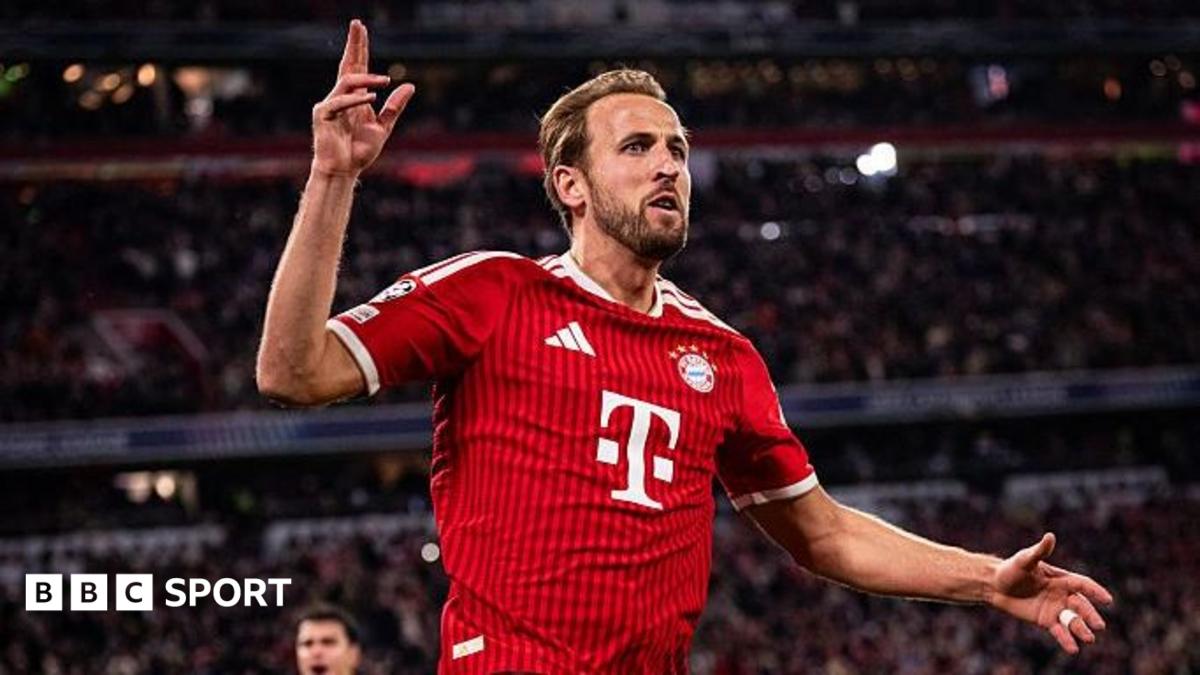
If Kane stays fit, and in the remarkable form that brought him 64 goals in 56 games for Bayern Munich this season, England’s hopes will soar.

If not, the reverse applies.

As former England striker Chris Sutton told BBC Sport: “Harry Kane is so important that if he announced his international retirement this afternoon, everyone would instantly view England’s World Cup chances in a different, more pessimistic light.”

Silverware has come late in Kane’s career after barren years at Tottenham Hotspur, when even his stunning goalscoring numbers could not bring glory.

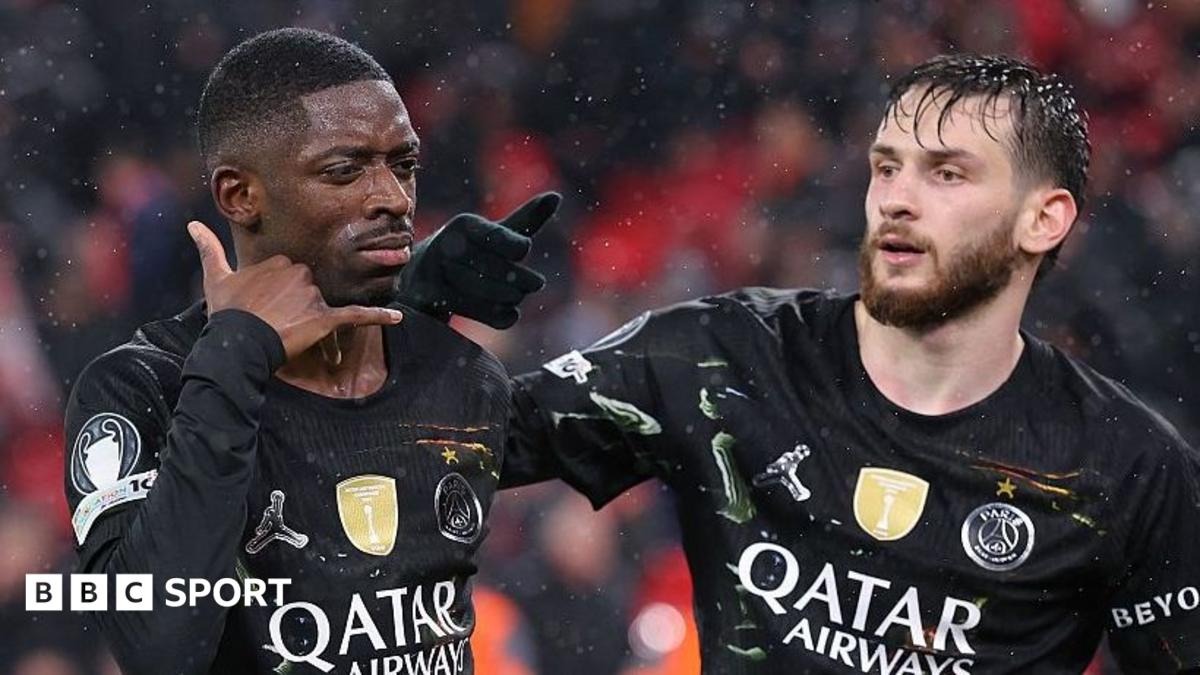
He is now making up for lost time by winning a second successive Bundesliga with Bayern Munich, then scoring a hat-trick as they beat Stuttgart 3-0 in the German Cup final.

And Kane now has his sights set on delivering the biggest prize of all as he leads England on their latest quest to end the search for men’s success stretching back to the 1966 World Cup win.

England’s countdown to their opening World Cup game continues when they play New Zealand in a friendly at Raymond James Stadium in Tampa, Florida, on Saturday (21:00 BST).

Kane has suffered the disappointment of losing successive European Championship finals with England to Italy and Spain, as well as a World Cup semi-final defeat by Croatia in 2018 and a quarter-final loss to France in Qatar.

Now Kane’s stellar form and fitness suggest the time might be right for England and their talisman to overcome the barrier that has brought 60 years of pain.

Source link

Cristian Mungiu’s ‘Fjord’ wins Palme d’Or at Cannes

In a squeaker race for Cannes’ top prize, Romanian director Cristian Mungiu prevailed on Saturday, taking the Palme d’Or for his tense community drama “Fjord.”

The movie, a widely admired conversation-starter at the festival, stars Sebastian Stan and Renate Reinsve as religious parents who come into conflict with the child protection services of their tiny Norwegian town where they have relocated with their family.

Mungiu, a previous winner of the Palme for his controversial 2007 abortion drama “4 Months, 3 Weeks and 2 Days,” now joins an exclusive group of 10 filmmakers who have won the Palme twice — an achievement shared by Francis Ford Coppola (1974’s “The Conversation” and 1979’s “Apocalypse Now”) and Ruben Östlund (2017’s “The Square” and 2022’s “Triangle of Sadness”), among others. No one has ever won a third Palme d’Or.

Another record, maybe even more impressive, was set by distributor Neon, which, with “Fjord,” extends its streak of Palme wins to an unprecedented seven in a row. Those previous six Neon winners, many of which eventually claimed Oscars, are “Parasite,” “Titane,” “Triangle of Sadness,” “Anatomy of a Fall,” “Anora” and last year’s “It Was Just an Accident.”

Neon will release “Fjord” in the fall, with an extensive awards campaign to follow.

This year’s nine-member main competition jury, led by Korean director Park Chan-wook and studded with notables including “The Substance” star Demi Moore, Stellan Skarsgård and “Hamnet” director Chloé Zhao, seemed intent on spreading the wealth among as many winners as possible. There were three ties at Saturday’s awards ceremony.

The award for actress was shared by Virginie Efira and Tao Okamoto, co-stars of Ryusuke Hamaguchi’s “All of a Sudden,” a movie pegged by many to potentially go all the way. Similarly, the prize for actor was bestowed on both Emmanuel Macchia and Valentin Campagne, co-stars of Lukas Dhont’s World War I romantic drama “Coward.”

The prize for directing went to three people — and two movies — with a joint win for Javier Calvo and Javier Ambrossi (better known as Los Javis) for their century-spanning queer historical drama “The Black Ball,” as well as to director Paweł Pawlikowski for his exquisite post-World War II psychodrama “Fatherland.” (Pawlikowski half-joked at the podium, “This was a disastrous piece of mise-en-scène” after the awkward award presentation had him waiting in the wings.)

Claiming this year’s Grand Prize (essentially second place) was “Minotaur,” the rapturously received comeback film of Andrey Zvyagintsev, a Russian director who had been sidelined with a near-fatal bout of long COVID that put him in a coma. His new movie, about a wealthy Moscow family, is both an erotic thriller and an indictment of amoral oligarchy detached from the war with Ukraine.

The festival’s third-place Jury Prize went to the borderland German drama “The Dreamed Adventure,” directed by Valeska Grisebach.

Source link