Djibouti

Ethiopia blames regional rivals as risk of conflict spillover rises | Conflict News

As renewed fighting spreads across northern Ethiopia, the government has accused Eritrea, Sudan and Egypt of backing armed opposition groups, raising fears that the conflict could draw in regional powers.

Over the weekend, Ethiopian army chief Birhanu Jula attributed his country’s unrest to those he called Ethiopia’s “historical and contemporary adversaries”.

Recommended Stories

list of 3 itemsend of list

Birhanu accused Eritrea of being the go-between linking these external powers – including Sudan and Egypt, which he explicitly named – with armed groups inside Ethiopia.

Eritrea, Sudan and Egypt have all rejected the accusations. Speaking to Al Jazeera, Egyptian Foreign Ministry spokesperson Nader Zaki said that Egypt’s foreign policy was founded on “full respect for the sovereignty, unity and territorial integrity of states, and noninterference in the internal affairs of other countries”.

Zaki added that Egypt “is fully committed to the rules of international law and the Charter of the United Nations, and rejects any practices that would undermine regional security and stability”.

Major-General Samir Farag, the former head of the Egyptian Armed Forces’ Morale Affairs Department, also told Al Jazeera that the accusations against Egypt were false. “It has not been Egypt’s policy to interfere in the internal affairs of any state in the region,” he said.

Sudan’s military also dismissed the accusations as “baseless” and levelled its own charge of destabilising behaviour at Ethiopia, accusing it of supporting the paramilitary Rapid Support Forces (RSF), which has been fighting the Sudanese Armed Forces since 2023. Ethiopia has denied those allegations.

Troubled relations

Ethiopia’s relations with the countries it has accused have already been strained by other disputes that predate the latest fighting.

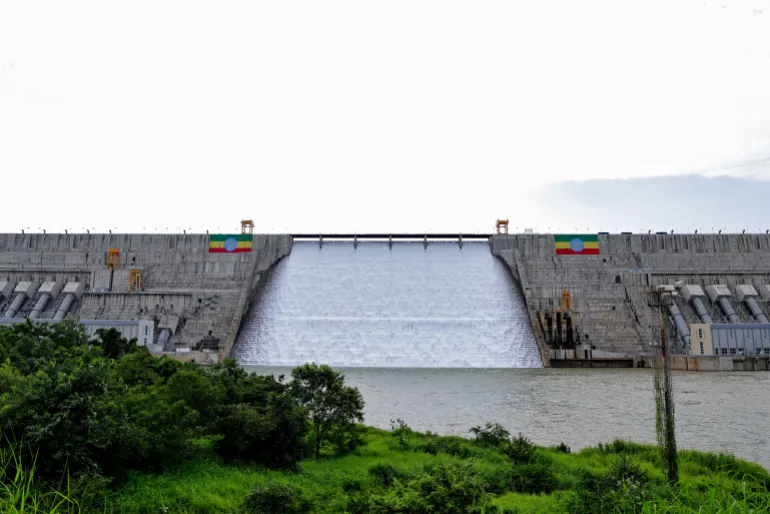
Relations between Cairo and Addis Ababa have remained tense as a longstanding dispute over the Grand Ethiopian Renaissance Dam (GERD) remains unresolved. Competition between the two has increasingly extended to regional security, the Red Sea and the Horn of Africa.

Large Ethiopian flags are displayed on the Grand Ethiopian Renaissance Dam (GERD), built along the Blue Nile, during its inauguration, in Guba, Benishangul-Gumuz region, Ethiopia, September 9, 2025. REUTERS/ Tiksa Negeri
The Grand Ethiopian Renaissance Dam, the construction of which stoked fears in Cairo that Ethiopia could choke off the Nile River, September 9, 2025 [File:Tiksa Negeri/Reuters]

Sudan’s relations with Ethiopia are similarly troubled. Since the outbreak of the Sudanese civil war, Khartoum has accused Addis Ababa of providing training, supplies and the use of Ethiopian territory to the RSF.

Eritrea had fought alongside Ethiopia against rebel groups in the latter’s Tigray region during a war between 2020 and 2022, but relations between the two neighbours have since soured, with Eritrea alarmed by Ethiopia’s attempts to gain access to the Red Sea.

Against that background, some analysts and Ethiopian opposition figures say that Addis Ababa is pointing the finger at foreign conspiracies in a bid to rally support behind its national army.

Mohamed Selim, deputy chair of the Egyptian parliament’s African Affairs Committee, told Al Jazeera that he believes the accusations were an attempt to shift attention from Ethiopia’s domestic problems by creating an external enemy and seeking to unify the internal front.

Amani al-Tawil, director of the Africa Programme at the Al-Ahram Centre for Political and Strategic Studies, similarly described the accusations as “an understandable attempt to escape from internal crises”.

She questioned why Egypt would choose this moment to intervene militarily in Ethiopia, given the two have been in dispute over GERD since 2011.

Al-Tawil said the breadth of the new opposition alliance in Ethiopia – seven groups representing disparate ethnic groups and regions announced the coalition last week – presented a challenge to Addis Ababa.

INTERACTIVE - Ethiopias ethnic groups and regions-1779798522
(Al Jazeera)

Spillover concerns

The renewed fighting in Ethiopia has spread across Tigray and into neighbouring Amhara and Afar.

Mohammed Hussein, the chairman of the Prosperity Party Afar Region Branch Office – the ruling party in Ethiopia’s Afar region – told Al Jazeera that the three regions together have a population of more than 38 million, according to his estimate, and include areas near the borders with Djibouti and Eritrea, raising fears of a regional war.

Ammar Arki, a writer focusing on Horn of Africa affairs, told Al Jazeera that Ethiopia had, at various stages, blamed Sudan, Egypt and Eritrea for contributing to instability inside Ethiopia.

He said the latest accusations could be interpreted as an attempt to redirect some domestic attention towards an external threat and build support around the federal government.

But Arki warned that the longer Addis Ababa continued to explain its internal crisis in terms of an “external conspiracy”, particularly if neighbouring states responded in the same way, the greater the risk that Ethiopia’s conflict could move beyond Ethiopia’s borders and become regional.
Source link

Djibouti refugee crisis worsens as more than 2,700 Yemenis arrive | Al Jazeera News

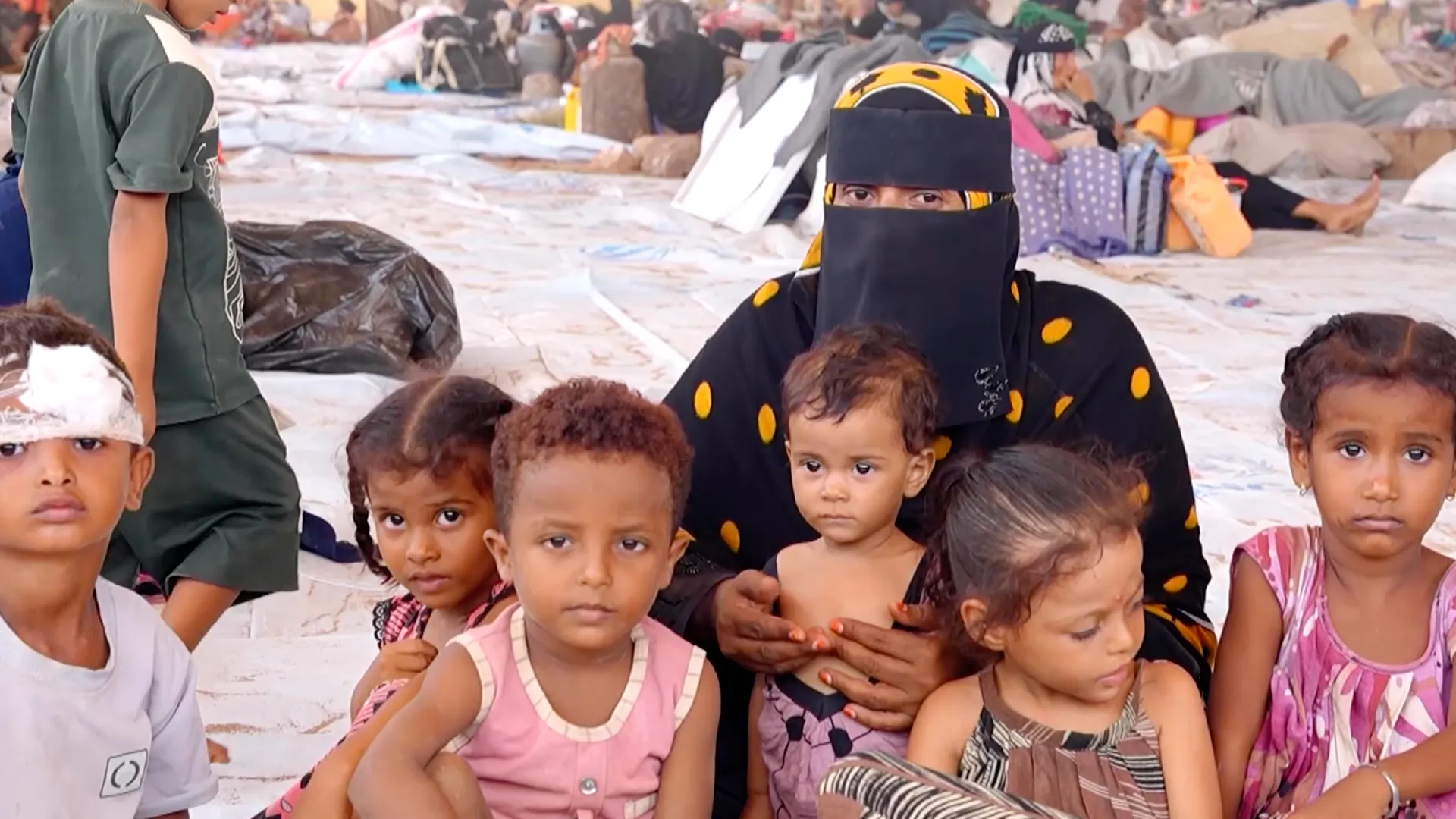
More than 2,700 Yemenis have fled to Djibouti, many making dangerous sea crossings to escape the conflict. Al Jazeera’s Hasan Razzaq spoke with some of those who have arrived in the northern town of Obock, where they are seeking shelter and assistance.

Source link

More than 112,000 displaced by Yemen fighting; thousands flee to Djibouti | Refugees News

United Nations says 22 million people need humanitarian aid as conflict intensifies.

More than 112,000 people have been displaced in Yemen and close to 3,000 have fled the conflict to Djibouti, according to the United Nations, as fighting intensifies between the Iran-allied Houthis and Saudi-backed forces loyal to the internationally recognised government.

“Our resources are very, very, very limited and our stocks will be depleted very soon,” Abdusattor Esoev, mission chief in Yemen for the International Organization for Migration, told reporters on Friday.

Recommended Stories

list of 3 itemsend of list

Most of the more than 112,000 internally displaced people have been displaced over the last two weeks, mainly along the west coast and in the provinces of Taiz and Lahj, he added.

The displacement began when the Houthis made a rapid advance, seizing control of the entire Red Sea coast of Yemen to tighten their grip on the vital shipping route, the Bab al-Mandeb Strait.

Esoev estimates 22 million Yemenis – or nearly half the population – are in urgent need of humanitarian aid.

More than 65,000 registered refugees and asylum seekers in Yemen, mainly from Somalia and Ethiopia, are also threatened.

3,000 Yemenis flee to Djibouti

The crisis is growing “by the hour”, warned Francesco Galtieri, a representative for the UN Population Fund (UNFPA), adding that thousands of women who have lost all their possessions are on the run with their children.

Galtieri estimates that 2,000 pregnant women are among the displaced and around 200 are expected to give birth shortly.

Around 3,000 Yemenis have fled Yemen by boat to Djibouti, the UN refugee agency said. The shortest route across the Bab al-Mandeb Strait is just over 25 kilometres.

The UNHCR reports that more than 2,400 people made the voyage in the past week – mostly women, children and older people.

The influx is adding pressure on Djibouti and population of about one million people. It already hosts around 36,000 refugees, most from Somalia and Ethiopia, said UNHCR representative Sandrine Desamours.

“While the number may sound small,” it must be seen in proportion to the population, she added.

The strategically important Bab al-Mandeb links the Red Sea with the Gulf of Aden and has become an alternative shipping route as the United States’ war against Iran choked the Strait of Hormuz.

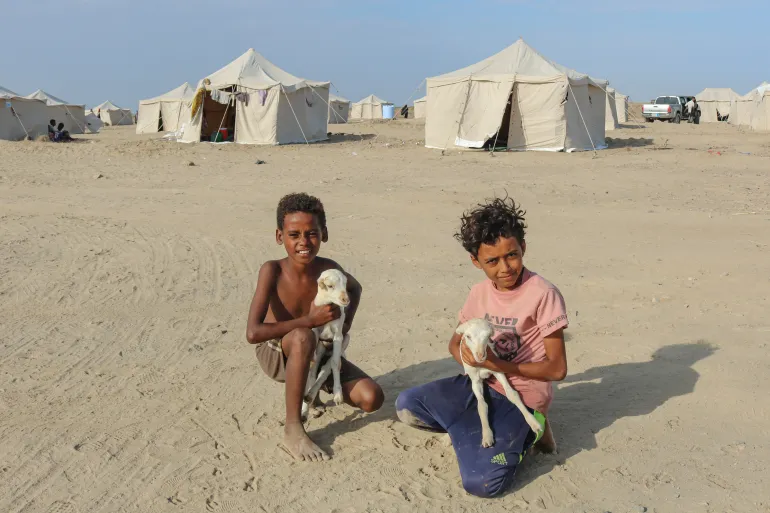
Children are seen at Al-Farsi camp for internally displaced people (IDPs) in Ras Imran on the outskirts of Al-Buraiqah district in southwest Aden in southern Yemen on September 17, 2026.
The Al-Farsi camp for internally displaced people in Ras Imran in southern Yemen, September 17, 2026 [Mohamad Hakim/AFP]

Source link

Italy to deploy warships to protect shipping through Bab al-Mandeb | Global Energy Crisis News

Italy’s defence minister warns of severe economic fallout if Bab al-Mandeb becomes impassable, bypassing EU delays.

Italy will deploy warships to ensure safe passage for its commercial vessels through the Bab al-Mandeb strait, Defence Minister Guido Crosetto said, adding that Rome would not wait for a joint decision from the European Union.

“We have the capabilities to protect the passage,” Crosetto said, warning that if the waterway became impassable, the economic consequences would be severe.

Recommended Stories

list of 3 itemsend of list

The Italian defence minister said that Rome “must not allow bureaucratic delays in decision-making to exacerbate an already complex situation”.

Bab al-Mandeb links the Red Sea to the Gulf of Aden, forming one of the world’s busiest shipping corridors between Europe and Asia and a critical route for oil, gas and container traffic heading to and from the Suez Canal.

Roughly 12 to 15 percent of global trade has historically passed through the narrow waterway, which separates Yemen from Djibouti and Eritrea on the African side and is only about 30km (19 miles) wide at its narrowest point.

The strait’s importance has grown sharply since Iran effectively seized control of the Strait of Hormuz earlier this year amid its war with the United States and Israel, choking off the world’s most important oil chokepoint and pushing much of the Gulf’s crude exports towards alternative routes.

Saudi Arabia, in particular, has increasingly relied on pipelines and Red Sea shipping to bypass Hormuz altogether, making the Bab al-Mandeb strait one of the last major arteries still open to Gulf oil reaching global markets.

Control of the strait has been contested for years, as Yemen’s government, Houthi rebels and, at times, forces in the region have held stretches of its coastline at different points since the war in Yemen began in 2015.

The significance of the strait has been hit dramatically in the past few weeks, when the Iran-backed Houthi movement launched a rapid offensive that brought the entirety of Yemen’s western Red Sea coast under its control, including several strategically located islands.

The advance has given the Houthis effectively unrestricted access to the waterway, a development seen as a major setback for international shipping, given the group’s history of attacking vessels it associates with the US or its allies in the region.

The US and the European Union have already carried out military operations aimed at better protecting merchant ships from Houthi attacks in the area, though those efforts have struggled to fully secure the route as fighting in Yemen has escalated.

Source link

More than 2,000 Yemenis flee to Djibouti amid Houthi advances | Houthis

Escalating fighting along Yemen’s western coast has driven more than 2,000 Yemenis across the Red Sea to Djibouti. Inside Yemen, internal displacement has surpassed 85,000 as Houthi forces expand their control along the strategic Red Sea coastline.

Source link

1,400 Yemenis flee to Djibouti within 24 hours | Refugees News

Yemeni refugees arrive in Obock, Djibouti, within 24 hours as Houthis tighten their grip on the Bab al-Mandeb strait.

About 1,400 people have fled Yemen for Djibouti in a 24-hour period, Djibouti’s economy and finance minister says, as Houthi fighters tighten their grip on the Bab al-Mandeb strait.

Ilyas Moussa Dawaleh wrote on X on Saturday: “1,400 refugees arrived in Djibouti from Yemen in just 24 hours.”

Recommended Stories

list of 3 itemsend of list

In a separate post on Friday, the minister said that 500 refugees had arrived in the coastal city of Obock, including women and children, after they were rescued at sea when their boats ran out of fuel while crossing the Bab-el-Mandeb strait.

Obock, a city only about 20 kilometres (12 miles) across the water from the Yemeni coast, has for several years been a preferred arrival point for those seeking refuge from war-torn Yemen. The Bab-el-Mandeb strait is also used in the opposite direction by migrants from the Horn of Africa, who transit through Yemen on their way to Gulf countries.

Safiya Ibrahim, humanitarian response coordinator for the International Organization for Migration (IOM), told AFP that “vulnerable groups such as women and children have reached the shores of Obock, with more expected in the coming days”.

The IOM warned on Friday that at least 46,000 people had been displaced in Yemen since fighting escalated last week.

“Families are being forced to flee for the second or third time in this conflict, with almost nothing left,” Amy Pope, the IOM director general, said in a statement. “As fighting spreads, reaching people with lifesaving assistance is becoming harder. We urgently need safe, unimpeded access.”

Djibouti hosts tens of thousands of refugees and asylum seekers. United Nations Refugee Agency figures from March 2026 show a registered population of more than 36,000, with the majority from Somalia, Ethiopia and Yemen.

The Houthis seized the Red Sea port city of Mocha on Thursday and have since overrun the coastline and islands surrounding the Bab al-Mandeb strait. The rapid offensive has forced thousands of families to flee, with entire villages reportedly emptied in districts such as Maqbanah, Jabal Habashi and al-Maafer.

Source link

Arab News | 1,400 flee Yemen fighting to Djibouti

ADDIS ABABA: About 1,400 people have fled Yemen for Djibouti due to fighting between government forces and Iran-allied Houthis, Djibouti’s minister of economy and finance said Saturday.

Houthi fighters control a large part of northern Yemen, including the capital Sanaa and Hodeida in the west. They have advanced along the coast in just days and on Thursday seized the port city of Mokha.

The Houthis have since taken control of the coastline and islands in the Red Sea, and on Friday tightened their grip on the Bab Al-Mandab Strait, which is vital to global shipping through the Suez Canal.

“1400 #refugees arrived in #Djibouti from #Yemen in just 24 hours,” Ilyas Moussa Dawaleh wrote on X.

Located opposite Yemen on the Horn of Africa, tiny Djibouti borders the Bab Al-Mandab Strait at the entrance to the Red Sea from the Gulf of Aden.

Safiya Ibrahim, humanitarian response coordinator for the International Organization for Migration, told AFP that “vulnerable groups such as women and children have reached the shores of Obock, with more expected in the coming days.”

According to the United Nations, at least 76,000 people have been displaced in Yemen since July, with the number quadrupling in the last week after the latest fighting.

Last week, Houthi fighters launched a new offensive against Saudi-backed government forces, targeting zones bordering the Bab Al-Mandab Strait.

The waterway has taken on new importance, particularly for Saudi oil exports, since the Strait of Hormuz was blocked by Iran.

Hundreds have been killed in the fighting on both sides.


Source link