Dismisses

China dismisses Vice Minister of Foreign Affairs Sun Weidong | Xi Jinping News

Vice Foreign Minister Sun Weidong’s sudden dismissal comes amid a wave of removals amid anticorruption campaign.

Senior Chinese diplomat Sun Weidong has been dismissed from his post as vice minister of foreign affairs, in the latest case of a high-ranking official being removed from office by Beijing.

The Ministry of Human Resources announced the news in a brief post on its website on Tuesday, citing a decision of the State Council, the highest body of state power in China.

Recommended Stories

list of 4 itemsend of list

The post did not say why or when Sun had been dismissed, but the Ministry of Foreign Affairs website shows his last public engagements were meetings with the ambassadors of Brunei and Malaysia to China on March 13.

Two days earlier, Sun had met Pakistan’s ambassador to China to discuss bilateral cooperation, according to a post on diplomat Khalil Hashmi’s X account.

Dismissals of this kind in the Chinese government usually indicate high-level disciplinary action and are often followed by news of an investigation.

Sun’s dismissal notice included the removal of another official, An Lusheng, from his post as deputy director of the National Railway Administration.

Since coming to power in 2012, President Xi Jinping has carried out a wide-ranging anticorruption campaign targeting “tigers and flies”, meaning high- and low-ranking officials.

Last year, China investigated more than one million corruption cases and disciplined 938,000 people, according to its Central Commission for Discipline Inspection and National Supervisory Commission.

The list of cases involving disciplinary action included 69 provincial or ministerial-level officials, 4,155 bureau-level officials, 35,000 county-level officials, and 125,000 township-level officials, according to the commission’s year-end report.

Senior Chinese military officials have also been caught up in Xi’s anticorruption campaign sweeps.

Source link

US judge dismisses Trump’s $10bn lawsuit against WSJ over Epstein story | Donald Trump News

Dismissed lawsuit follows Wall Street Journal’s report on a letter allegedly signed by Trump for Epstein’s 50th birthday.

A United States federal judge has dismissed US President Donald Trump’s $10bn defamation lawsuit against the Wall Street Journal and its owner Rupert Murdoch over a story on Trump’s ties to Jeffrey Epstein.

Miami-based ‌US District Judge Darrin Gayles said on Monday that Trump did not meet the “actual malice” standard that public figures must clear in defamation cases.

Recommended Stories

list of 3 itemsend of list

That means public figures must prove not only that a public statement about them was false, but also that the media outlet or person who made the statement ‌acted with reckless disregard for the truth or should have known that it was false.

“This complaint comes nowhere close to this standard,” Gayles wrote. “Quite the opposite.”

The judge noted that reporters from the Wall Street Journal (WSJ) reached out to Trump for comment beforehand and printed his denial. That allowed readers to decide for themselves what to conclude, cutting against Trump’s assertion that the newspaper acted with actual malice, the judge said.

Gayles said Trump could file an amended version of ⁠the lawsuit by April 27.

In ⁠his lawsuit, Trump called a birthday greeting that he allegedly sent to Epstein, a convicted sex offender, a “fake”. The US president sought $10bn for what he called damage to ‌his reputation. News Corp’s Dow Jones & Company, the WSJ’s parent company, defended the accuracy of its July ‌17, ‌2025 article.

Trump filed the lawsuit after promising to sue the paper almost immediately after it put a new spotlight on his well-documented relationship with Epstein by publishing an article that described a sexually suggestive letter that the newspaper said bore Trump’s signature and was included in a 2003 album compiled for Epstein’s 50th birthday.

A birthday letter that US President Donald Trump allegedly wrote to sex offender Jeffrey Epstein more than 20 years ago is seen as presented by the Democrats in the U.S. House of Representatives on their X account September 8, 2025. The letter, the existence of which was reported by the Wall Street Journal in July, appears to have been signed by Trump, but he has denied doing so and has said the card does not exist, and the White House has denied its authenticity. Handout via REUTERS
A birthday letter that US President Donald Trump allegedly wrote to sex offender Jeffrey Epstein more than 20 years ago is seen as presented by Democrats in the US House of Representatives on their X account on September 8, 2025 [Handout via Reuters]

The letter was subsequently released publicly by the US Congress, which subpoenaed the records from Epstein’s estate.

The ruling marks yet another blow in the Trump administration’s efforts to manage fallout over its release of the Epstein files and the president’s attempts to use the legal system to curb reporting that he finds critical of him.

The White House didn’t immediately respond to a request by AP for comment.

Source link

President Trump dismisses entire Presidio Trust board in San Francisco

April 12 (UPI) — President Donald Trump has dismissed all six members of the Presidio Trust board, removing the leadership of the federal entity that manages San Francisco’s Presidio.

Trump previously targeted the Presidio Trust in a February 2025 executive order that described the agency as an “unnecessary governmental entity” and called for it to be reduced.

The trustees, who were appointed during the Biden administration, were notified of their removal this week, Lisa Petrie, spokeswoman for the Presidio Trust, said.

Chairman Mark Buell told The San Francisco Standard that the White House sent him a short email saying the termination was “effective immediately.”

“I was surprised that this didn’t happen sooner,” he said.

The other board members include Charles M. Collins, Lenore Eccles, Patsy Ishiyama, Bonnie LePard and Nicola Miner.

Former House Speaker Nancy Pelosi helped create the trust, established in 1996 to rehabilitate the former Army post after it closed. The national park is in her district.

The Trump administration has been reshaping the federal bureaucracy and has fired numerous government workers.

The Presidio, now a national park near the Golden Gate Bridge, includes museums, campgrounds, trails, hotels and a golf course.

Source link

A federal judge dismisses another Justice Department lawsuit seeking voter data, this time in Massachusetts

A federal judge on Thursday dismissed a lawsuit from the U.S. Department of Justice seeking Massachusetts’ state voter rolls, marking the latest setback in a wide-ranging effort by the Trump administration to collect detailed data on the nation’s voters.

The ruling from U.S. District Court Judge Leo Sorokin marks at least the fifth time a judge has rejected similar attempts by the Justice Department. Sorokin, an appointee of former President Barack Obama, said the U.S. attorney general’s office did not take the necessary steps required to access voter rolls, as outlined in federal law.

“Put simply, the statute requires a statement of why the Attorney General demands production of the requested records,” Sorokin wrote. That statement has to be factual, “not just a conceivable or possible basis.”

In an emailed response, the Justice Department said it “does not comment on ongoing litigation.”

It has said it’s seeking the voter data as part of an effort to ensure election security, but Democratic and Republican officials in several states have refused, saying the demand violates state and federal privacy laws. Some have raised concerns that federal officials will use the sensitive data for other purposes, such as searching for potential noncitizens.

During a hearing last month in Rhode Island, a Justice Department attorney told a federal judge that the department was seeking unredacted voter roll information so it could be shared with the Department of Homeland Security to check citizenship status. Homeland Security over the past year has beefed up the Systematic Alien Verification for Entitlements, or SAVE, program, for just this purpose.

“Our intention is to run this against the DHS SAVE database,” Department of Justice attorney Eric Neff told U.S. District Judge Mary McElroy during a March 26 hearing challenging the federal government’s authority to access the voter data.

The Justice Department has sued at least 30 states and the District of Columbia seeking to force release of the data, which includes dates of birth, addresses, driver’s license numbers and partial Social Security numbers.

At least 12 states have either provided or promised to provide their detailed voter registration lists to the department, according to the Brennan Center: Alaska, Arkansas, Indiana, Louisiana, Mississippi, Nebraska, Ohio, Oklahoma, South Dakota, Tennessee, Texas and Wyoming.

In the Massachusetts case, the the judge found that the Justice Department failed to follow the requirements for demanding the voter rolls set by a 1960 civil rights law.

That law, enacted as part of an effort to end racial discrimination in elections, says state voter records must be made available for inspection by the U.S. attorney general if the office includes a statement outlining why the information is being demanded and how it will be used.

The department’s letter demanding Massachusetts’ voter data made no reference to the Civil Rights Act and didn’t cite any concerns about the way Massachusetts complied with federal voting laws, the judge said. Most importantly, it didn’t include any factual basis for the demand, Sorokin wrote.

In court documents, the Justice Department said it was demanding the data to check for “Massachusetts’ possible lack of compliance” with federal voter registration list requirements. It also said the Civil Rights Act was designed to be an investigatory tool to identify federal election law violations and argued that the U.S. attorney general can’t be required to prove a violation before seeking evidence of one.

“These arguments miss the point,” Sorokin wrote.

Massachusetts Atty. Gen. Andrea Joy Campbell called the ruling a decisive win for voters and the rule of law.

“The privacy of our voters is not up for negotiation, and I will continue to defend the integrity and security of our elections from the Trump Administration’s cruel and harmful agenda,” she said in a news release.

Four federal judges in other states have dismissed similar lawsuits from the Department of Justice.

A federal judge in Michigan found the laws cited by the Justice Department do not require the disclosure of the voter records sought by the federal government. A federal judge in California said the administration “may not unilaterally usurp the authority over elections,” which the Constitution gives to the states and Congress. A federal judge in Oregon said the federal government was not entitled to unredacted voter registration lists containing sensitive data.

A federal judge in Georgia dismissed a Justice Department lawsuit because he found it had been filed in the wrong city. The federal government then refiled the lawsuit in the city specified by the judge; that case is ongoing.

The Justice Department has appealed the Oregon, California and Michigan dismissals.

Boone writes for the Associated Press. Boone reported from Boise, Idaho. AP writer Kimberlee Kruesi in Providence, R.I., contributed to this report.

Source link

Court dismisses wrongful termination suit by former Fox News producer

A U.S. District Court judge dismissed a wrongful termination suit filed by a Fox News producer who claimed he was fired in retaliation for calling out the network’s reporting on President Trump’s erroneous charges of 2020 election fraud and the riot at the U.S. Capitol on Jan. 6, 2021.

Jason Donner, who worked at the network’s Washington bureau as a reporter and producer was fired on Sept. 28, 2022, two days after calling in sick. He was told he had been terminated for his absence.

In 2023, Donner filed a lawsuit in a Washington, D.C., court that contended his dismissal was linked to several instances in which he challenged the veracity of the network’s coverage.

But U.S. District Judge Amir Ali determined in his ruling issued Monday that Donner failed to meet the company rules and that his conduct was not protected by the District of Columbia’s sick leave law.

Donner’s attorney did not immediately respond to a request for comment.

The lawsuit noted that Fox News bosses criticized the network’s journalists for not considering the feelings of its pro-Trump audience following the election that sent Joe Biden to the White House.

Those comments are supported by the depositions and evidence collected for the Dominion Voting Systems defamation suit against Fox News, which was settled in April for $787.5 million.

But Ali also said Donner was an at-will employee and that his case failed to identify “a public policy that precluded Fox from firing him over his ardent objections to the network’s programming, no matter their validity.”

The same point was raised when U.S. District Judge Christopher Cooper dismissed that portion of Donner’s claim in 2024.

“As we have maintained, this lawsuit was entirely without merit, and we are pleased with the court’s ruling on the matter,” a Fox News representative said in a statement.

Source link

Judge dismisses DOJ suit over Minnesota tuition for undocumented students

Minnesota public universities can continue to offer in-state tuition and scholarships to some immigrants in the country without legal status, a federal judge ruled Friday, dismissing a lawsuit filed by the U.S. Justice Department last summer that attempted to halt the programs.

The decision follows a series of clashes between the federal government and Minnesota officials over immigration enforcement.

U.S. District Judge Katherine Menendez said in her decision that the federal government failed to prove that programs offering in-state tuition for immigrants without legal status discriminated against U.S. citizens.

The federal lawsuit named Democratic Gov. Tim Walz and Democratic state Atty. Gen. Keith Ellison as defendants, along with the state’s Office of Higher Education. It said Minnesota law discriminates against U.S. citizens because it provides in-state tuition and scholarships to students living in the U.S. illegally if they attended a Minnesota high school for three years, and U.S. citizens who attended schools outside of the state cannot receive the same benefits. States generally set higher tuition rates for out-of-state students.

The federal government said those state statutes “flagrantly” violate a federal law that prevents states from providing preferential benefits to immigrants in the U.S. illegally regardless of whether or not they meet residency requirements.

“No state can be allowed to treat Americans like second-class citizens in their own country by offering financial benefits to illegal aliens,” U.S. Atty. Gen. Pam Bondi said in a statement after the lawsuit was filed last year.

Menendez said the Justice Department misinterpreted the law, enacted during the Clinton administration, because anyone who attended a Minnesota high school for at least three years are granted the same public benefits, regardless of their U.S. residency or immigration status.

She also said the federal government didn’t have standing to sue the state attorney general or governor since neither has the power to change the state laws that determine tuition eligibility.

Ellison celebrated the decision in a statement Friday.

“Today, we defeated another one of Donald Trump’s efforts to misconstrue federal law to force Minnesota to abandon duly passed state laws and become a colder, less caring state,” he wrote.

The funding for immigrants without legal status represents an “investment for our state to do everything we can to encourage a more educated workforce,” Ellison wrote.

The U.S. Justice Department didn’t respond to an email request for comment Friday.

The department has filed similar lawsuits this month against policies in Kentucky and Texas. Last week, a federal judge in Texas blocked that state’s law giving a tuition break to students living in the U.S. illegally after the state’s Republican attorney general, Ken Paxton, said he supported the legal challenge.

In discussing the Texas case last year, Bondi suggested more lawsuits might be coming.

Florida ended in-state tuition eligibility for immigrants living in the U.S. illegally. At least 22 states and the District of Columbia have laws or policies granting the in-state benefit, according to the National Immigration Law Center. Those states include Democratic-led California and New York, but also Republican states including Kansas and Nebraska.

According to the center, at least 13 states in addition to Minnesota allow immigrant students without legal status to receive financial aid and scholarships on top of in-state tuition.

Riddle writes for the Associated Press.

Source link

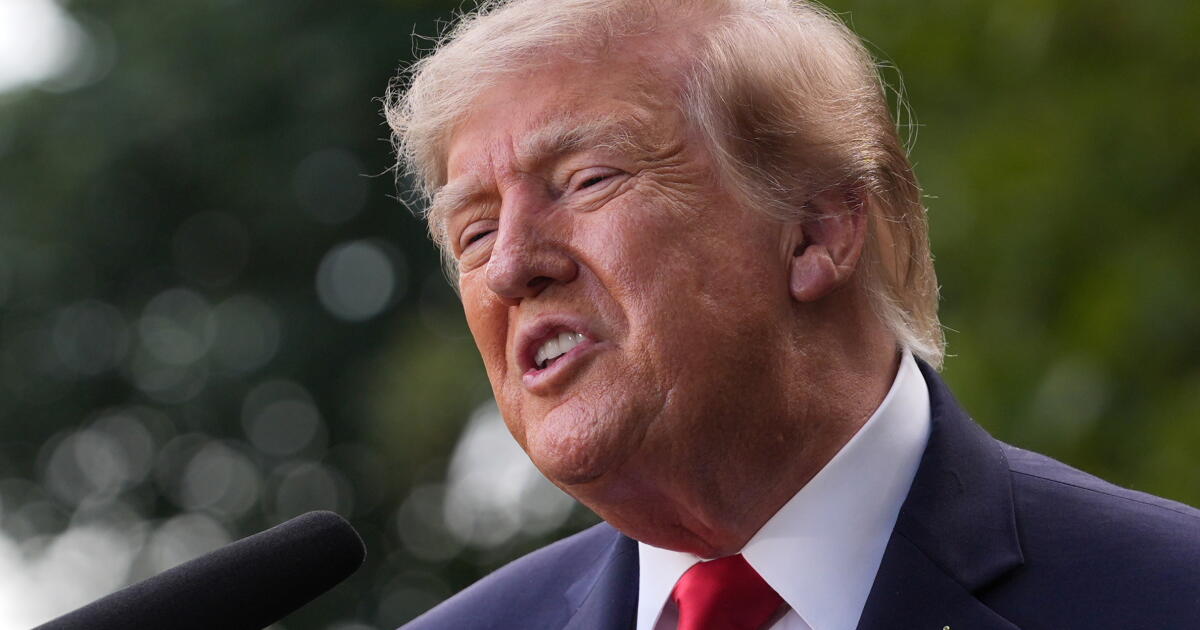
Iran dismisses Trump’s peace plan as ‘deceptive,’ as U.S. deploys more troops to Mideast

The Trump administration has offered Iran a 15-point ceasefire plan aimed at temporarily halting the war in the Middle East, as the Pentagon simultaneously orders thousands of Marines, paratroopers and a warship to the region.

The plan presented to Iranian leadership Tuesday broadly included a 30-day ceasefire and sanctions relief for Iran in exchange for a laundry list of U.S. demands, according to the Associated Press and other outlets.

But Iran dismissed the proposal Wednesday, criticizing the White House’s terms as “excessive” and out of step with reality, according to Iranian state-run media.

Those terms included limitations on Tehran’s missile stockpiles, and the permanent end to its nuclear program, its support for regional militias including Hezbollah, and of its blockade of the Strait of Hormuz, various outlets reported, citing Pakistani officials mediating the negotiations.

Several of those provisions have long been considered nonstarters for Iran, which sees its missile stockade and regional alliances as central to national security.

Iranian officials responded with defiance and skepticism.

“Iran will end the war when it decides to do so and when its own conditions are met,” an Iranian official told state media. “Not when Trump envisions its conclusion.”

The official outlined the Islamic Republic’s terms for ending the conflict, which included a halt to “aggression and assassinations,” an end to fighting on all fronts, enforceable guarantees that hostilities will not resume, compensation for war damages and a formal recognition of Iran’s sovereignty over the Strait of Hormuz.

Iranian Foreign Minister Abbas Araghchi has stated that Iran is not interested in a ceasefire but rather a comprehensive “end of war” on all fronts, including the lifting of sanctions and guarantees to allow Iran to pursue peaceful nuclear enrichment for energy and medical applications.

Iranian officials told state media that they believed the Trump administration’s diplomatic efforts were deceptive.

“You have reached a stage where you are negotiating with yourselves,” Iranian military spokesman Ebrahim Zolfaqari said in a televised address Wednesday. “Do not call your defeat an agreement.

Since the start of the conflict, Iranian leaders have voiced suspicion of any diplomatic talks with the Trump administration, pointing to prewar diplomatic efforts as evidence they were “tricked.” The Islamic Republic says it made clear in those talks that it had no interest in developing nuclear weapons, but Trump launched his military campaign nonetheless.

There have been conflicting media reports over Tehran’s exact position. Statements from Iranian officials and state-linked outlets have left open the possibility that elements of the proposal are still under review, while some reports frame the response as an outright refusal.

The Iranian response also conflicts with President Trump’s insistence that negotiations were progressing.

“We have had very, very strong talks,” he said Sunday in Florida. “We have points, major points of agreement. I would say almost all points of agreement will at some point very, very soon meet.”

Compounding the issue, Israel — which continues to carry out routine bombing campaigns over Iran — has stayed out of the talks.

Trump and Israeli Prime Minister Benjamin Netanyahu spoke about the peace deal in a phone call Tuesday. In a televised address, Netanyahu said that Trump “believes there is an opportunity” to realize U.S.-Israeli war objectives in an agreement “that will safeguard our vital interests.”

“At the same time, we continue to strike both in Iran and in Lebanon,” Netanyahu said. “We will safeguard our vital interests in any scenario.”

The negotiations are being facilitated by Pakistan, with support from Egypt and Turkey — countries that have pushed to contain a conflict that has killed more than 2,400 people, further destabilized the embattled region and disrupted global oil markets.

As Washington pursued a diplomatic end to the conflict, the Pentagon deployed an additional 2,000 troops from the 82nd Airborne Division to the Mideast. An additional 5,000 Marines and thousands of sailors are already en route to the region, where 50,000 more Marines are currently stationed.

House Speaker Mike Johnson (R-La.) told reporters on Wednesday that the deployment “sends a signal to Iran that they need to get their act together,” but denied any coming escalations by the American side. Johnson instead said that he believes “Operation Epic Fury is almost done.”

Now in its fourth week, the operation began with a series of intensive airstrikes that killed Iran’s Supreme Leader, Ali Khamenei, and dozens of other high-ranking officials. Since then, the U.S. and Israel have carried out over 9,000 strikes targeting Iranian military infrastructure and nuclear program.

Defense Secretary Pete Hegseth told reporters in the Oval Office Tuesday that while the president’s diplomatic envoys seek a peace deal, his department of war will continue to “negotiate with bombs.”

“The president has made it clear that you will not have a nuclear weapon. The War Department agrees,” Hegseth told reporters Tuesday in the Oval Office. “Our job is to ensure that, and so we’re keeping our hand on that throttle.”

Iranian retaliatory strikes have hit Gulf infrastructure and halted energy production and shipping in the region, spurring global fears of an enduring supply crunch. Meanwhile, Israel has expanded operations in Iran and sought to expand its borders into Lebanon.

Oil prices, which had surged above $120 per barrel earlier in the conflict, fell sharply this week on hopes that a ceasefire could ease supply woes.

In a statement Wednesday, U.N. Secretary-General António Guterres demanded an end to the fighting, which he said “has broken past limits even leaders thought imaginable.”

He specifically called on the U.S. and Israel to end the war, as “human suffering deepens, civilian casualties mount, and the global economic impact is increasingly devastating.”

Times staff writers Ana Ceballos, in Washington, D.C., and Nabih Bulos, in Beirut, contributed to this report.

Source link