Nigeria’s Disharmonised Digital System Leaving Low-Income Farmers Behind
Bala Abubakar rises before dawn, fetching water and checking his irrigation canals. He grew up in Gurin, a community in Adamawa State, northeastern Nigeria, where rice cultivation has fed generations. To operate a thriving rice farm, Bala says he needs good seedlings, fertilisers, and perhaps a loan to tide him over.
In 2024, members of the Rice Farmers Association of Nigeria (RIFAN) in the state got subsidy inputs through the Nigeria Incentive-based Risk Sharing System for Agricultural Lending (NIRSAL), a programme designed to de-risk agricultural lending for low-income farmers. Bala went to the nearest cybercafé to register, hoping to benefit from the initiative.
The registration required him to enter his National Identity Number (NIN) before he could access the loan. At the café, he entered his name and the NIN, but the system failed to verify him. The café attendant told him that his record was not found and advised him to try his bank’s verification number (BVN). He tried, but the system still failed him. Disappointed after visiting the cybercafé, Bala trudged back home.
Like Bala, other farmers faced a similar problem. One farmer, Sani Bukar, tried to access the Growth Enhancement Support under the Government Enterprise and Empowerment Programme (GEEP), an initiative designed to improve smallholder farmers’ access to agricultural inputs through an electronic, voucher-based system. He only received a “verification failed” message, despite having a phone number linked to his NIN.
“They have our pictures and fingerprints now,” Bala says, referring to the recent biometric enrollment drive. “But those pictures are in Abuja. Here in my village, what do I have?”
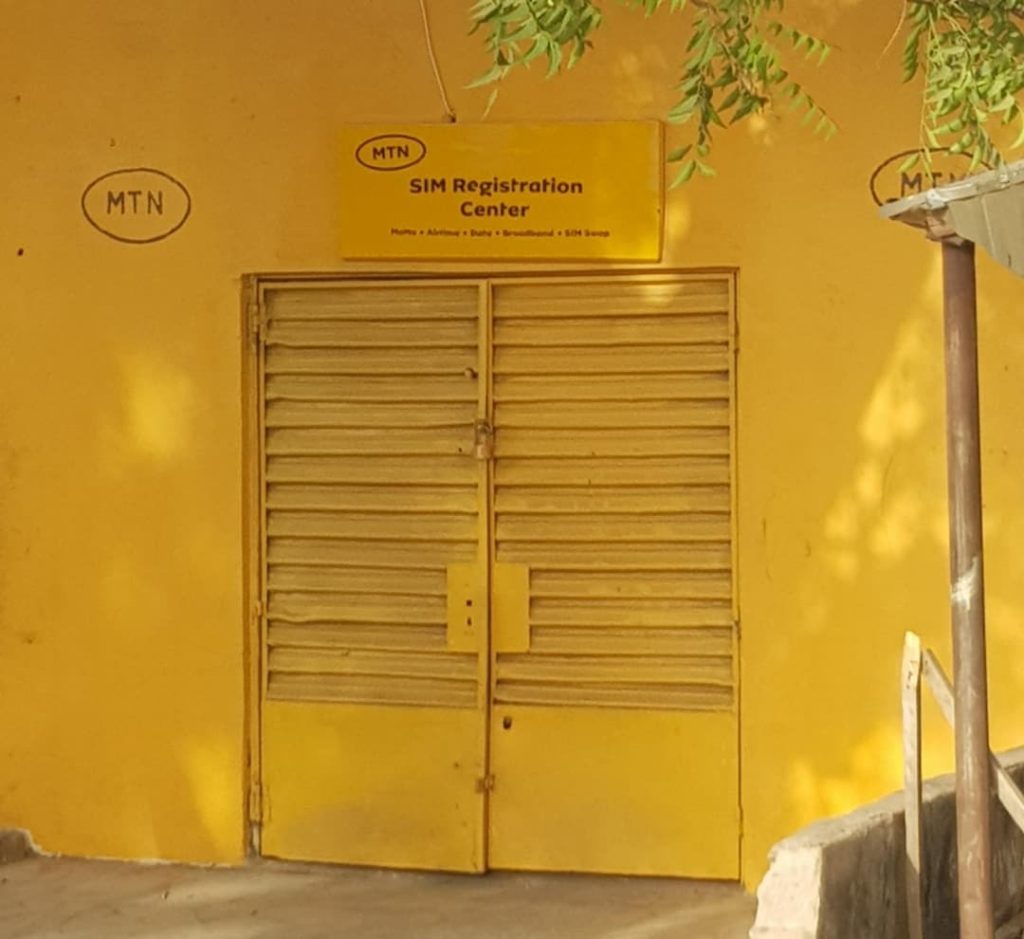
His story reflects a deeper tension in Nigeria’s emerging Digital Public Infrastructure (DPI) ecosystem. Although Nigeria has made progress in several areas of DPI, alignment across them is uneven. The NIN, for instance, is managed by the National Identity Management Commission (NIMC), while the Central Bank of Nigeria (CBN) manages the BVN system to expand financial inclusion. In addition, SIM registration—conducted by mobile network operators—links phone numbers to individuals’ identities.

On paper, these systems should make agricultural targeting seamless, but in practice, they often operate in silos.
Bala’s dilemma is built on concrete technical barriers. To access most federal or sub-national agricultural interventions today, a farmer must have a valid NIN, a phone number linked to that NIN, a bank account linked to a BVN, and a registration in a state or federal farmer database. If any link in that chain fails, the entire process most often collapses.
A 2025 overview of Nigeria’s connectivity landscape notes that only about 38 per cent of Nigerians were online in 2024, with rural communities significantly lagging behind.
“Without stable internet, many agricultural tools are rendered ineffective,” said Tajudeen Yahaya, an agricultural extension expert. “Even simple SMS or app-based registration frequently fails in rural communities.”
Beyond connectivity, issues with identity and data persist. The NIN registry has enrolled over 120 million people, but reports indicate that many more Nigerians have yet to enrol, particularly those in rural areas. Bala’s village falls within that gap.
The problem spans across multiple government programmes. Different states in Nigeria maintain their own farmer databases that conflict with federal government records. For instance, Agricultural Development Programme (ADP) offices may possess one list, while federal systems could have a different one.
“We tell farmers to get on the portal, but many are not in our state ADP database,” says Victor Anthony, who spoke on behalf of the Chairperson of the ADP programme in Adamawa State. “And even if they are, the federal system says we’re not synced.”
In 2025, the Federal Ministry of Agriculture officially launched a National Digital Farmers Registry. The minister, Abubakar Kyari, announced that it would be anchored and accessed through the NIN. According to Abubakar, the registry would eliminate ghost beneficiaries and ensure targeted delivery of inputs, extension services, credit, and insurance. The goal is a single unified platform that links NINs to farmlands, so that when a farmer applies, the system already “knows” him and his fields.
However, a recent statement from the agriculture ministry noted duplications and inconsistencies in farmers’ records, making it difficult to support them.
Interventions
Many government parastatals and private institutions are working to improve digitalisation for farmers and rural communities. NIMC has expanded the number of enrolment centres under the World Bank–supported programme, aiming to register up to 150 million Nigerians. Mobile NIN vans now travel to rural markets and religious gatherings, reducing distance barriers.
In October 2025, the World Bank approved a $500 million Building Resilient Digital Infrastructure for Growth (BRIDGE) project to lay fibre optics across Nigeria. Over the next five years, 90,000 km of fibre will be added, expanding the national backbone from 35,000 km to 125,000 km. When completed, this network will connect every local government, thousands of schools and clinics, and even remote agricultural research stations.
In local communities, farming cooperatives and technology companies are also contributing. The Extension Africa network has provided training to many local extension agents in digital tools, enabling them to act as “digital ambassadors” in rural areas. Some platforms are testing offline kiosks that permit farmers to download guidance and transaction records whenever they visit town.
The federal government’s renewed Agric Infrastructure Fund and various projects with agencies aim to equip these hubs with basic internet as part of a broader “Digital Village” initiative. However, these fixes are works in progress.
An African challenge?
Nigeria’s struggles are shared across the Global South, and other countries’ experiences offer cautionary lessons. In India, billions of dollars in farmer subsidies are paid directly to bank accounts via Aadhaar ID. The country is now rolling out Agri Stack, a digital initiative that gives each farmer a unique digital ID linked to land records.
When the government mandated e-KYC for OTPs in 2023, nearly 5 per cent of beneficiaries were flagged as “ineligible” when verification failed. Many older farmers lacked a working linked phone, had worn fingerprints, or ran into a buggy face-scan app.
With 70 per cent of the population in rural areas, agriculture accounts for 33 per cent of GDP in Kenya, but the country has struggled with piecemeal data. A recent study notes that millions of Kenyan smallholders remain “invisible to formal agricultural programmes”. In 2023, Kenya launched a national digital registry for farmers, but poor connectivity and low smartphone ownership are barriers, as in Nigeria.
On the positive side, Kenya has explored linking its digital ID (Huduma card) to farm cooperatives and training agents in the field. Rwanda goes even further by running the Smart Nkunganire e-voucher system, in which registered farmers receive digital coupons for seeds and fertilisers based on precise plots. These programmes suggest that pairing farmer IDs with geotagged land data can dramatically improve targeting, but only if the data are entered correctly, experts said.
Ethiopia has introduced a National ID requirement for various services. The newly established National Agricultural Finance Implementation Roadmap (NAFIR) incorporates a Fayda ID, which is a 12-digit unique identification number provided by the National ID Programme (NIDP) to residents who meet the necessary criteria set by NIDP. This system is designed for farmers associated with a land registry containing 18 million plots. The World Bank highlights that digital identity could unlock rural finance at scale in Ethiopia, but warns that without addressing its infrastructure gaps, digital solutions risk remaining pilots.
What needs to change
Experts argue that Nigeria must double down on making its digital agriculture ecosystem inclusive and resilient. Frank Akabueze, a Nigerian-based digital identity expert, noted that IDs should be flexible to ensure seamless registration. He said the NIN may be central, but alternative pathways should exist. For instance, cooperative leaders should be allowed to register farmers offline (paper intake by trusted agents) and synchronise later, rather than requiring each individual’s smartphone.”
“Voter card numbers should be made acceptable as interim IDs,” Frank said, noting the importance of equipping extension workers with portable biometric devices so they can register farmers on the spot, as some countries do. In India, the option of offline Aadhaar verification was eventually introduced to help offline farmers.
The digital expert noted that all of Nigeria’s data siloes – NIMC, BVN, SIM records and databases should be harmonised. He stressed that legal frameworks like the new digital ID policy can mandate data sharing between agencies (with privacy safeguards).
“Spelling mismatches and duplicates should be proactively cleaned: one approach is to use biometric deduplication, as India did at scale for Aadhaar,” he added.
He also said the proposed National Digital Farmers Registry should connect to the NIN and verify existing records, such as the national farmers’ census, to minimise errors, such as listing the same farmer in multiple states or with different ages.
This report is produced under the DPI Africa Journalism Fellowship Programme of the Media Foundation for West Africa and Co-Develop.