disease

Twisters star Daisy Edgar-Jones reveals she’s been diagnosed with a debilitating chronic disease after years of pain

ACTRESS Daisy Edgar-Jones has spoken about a crippling health diagnosis – and going through ‘years of unexplained pain’.

The Normal People star, 27, opened up for the first time about suffering from a chronic disease.

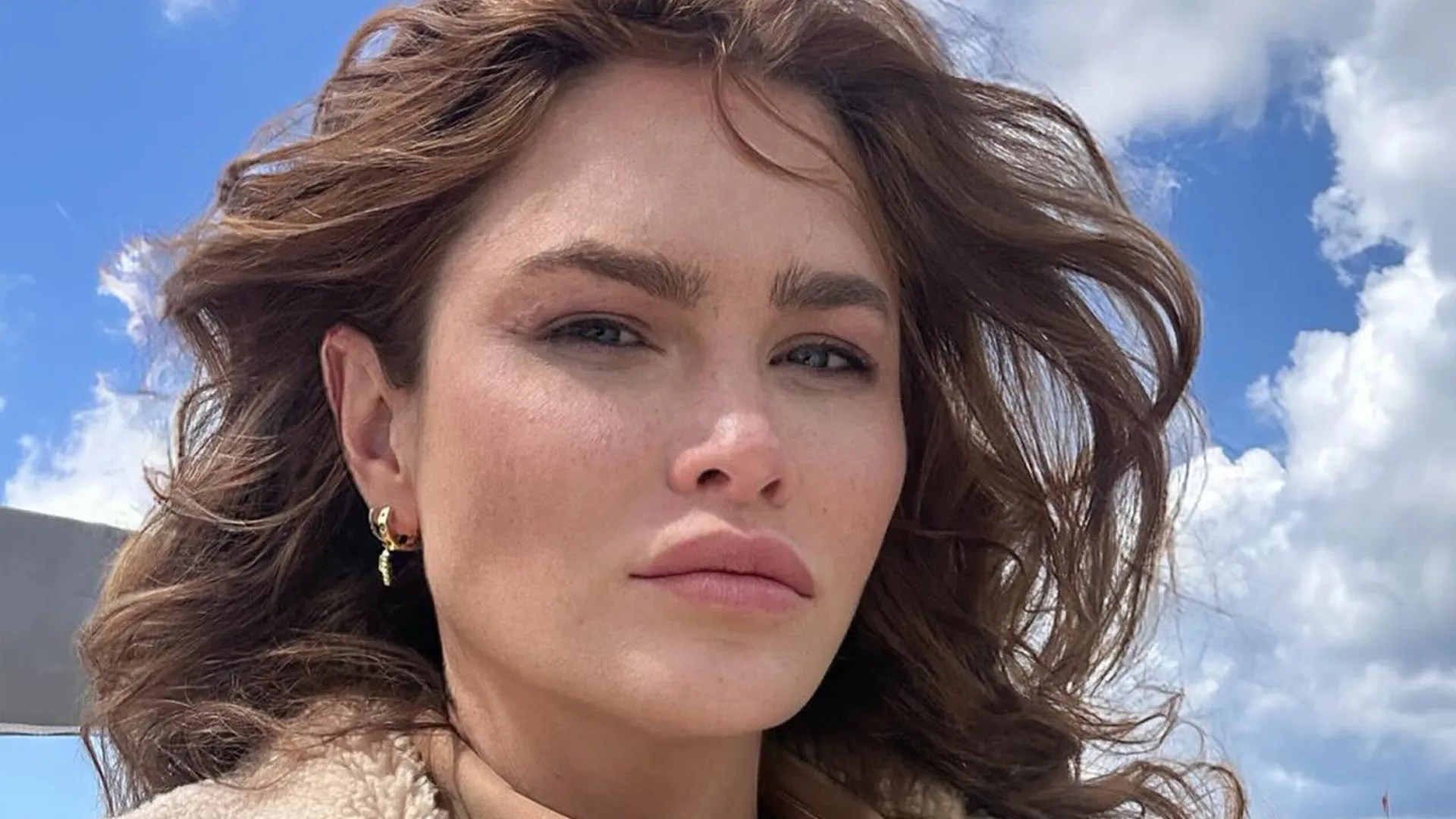
Daisy Edgar-Jones has revealed she has been diagnosed with a debilitating chronic diseaseCredit: YouTube/Vogue
The actress opened up about her painful health battleCredit: Getty

The Golden Globe-nominated star told Vogue in a YouTube video: “I have endometriosis, so my hormones are kind of all over the place.

“I had extremely bad acne for most of my teenage years.

“When I had terrible acne, it was all I could see when I looked in the mirror.”

The Twisters star added: “For so long, I had such painful periods and really volatile skin.

KEEPING UP WITH THE JONESES

Emilia Jones & Daisy Edgar-Jones cast as sisters in new film


SHEER CLASS

Sydney Sweeney and Daisy Edgar-Jones both sizzle in plunging sheer gowns

“I was diagnosed when I was, I think I was 24. I was definitely relieved to find out why I was going through it.”

The chronic disease causes inflammation, scarring and – in many cases – excruciating pain.

According to the NHS, it affects around one in ten women of reproductive age in the UK – an estimated 1.5 million people – and there is no cure.

Daisy, who is in a relationship with photographer Ben Seed, said she has found ways to manage the condition’s hormonal effects through diet and skincare.

She explained: “I’ve found over the years skincare that really works for me.

“But I also find drinking lots of water and when I eat well – especially when I try and not eat as much dairy – that really helps.”

She also offered a heartfelt message to others struggling with breakouts.

“When I had terrible acne, it was all I could see when I looked in the mirror.

“But actually when I look back at photos and videos, it’s funny that so much of the beauty of you is inside and the confidence that you wear can really help.

“So I would say to anyone with acne – I know it’s all you can see, but it’s not what everyone else can see.”

The actress was born in Islington, North London, and grew up in the world of entertainment.

Her dad Phil is head of entertainment at Sky TV while her mum Wendy is a former film editor.

The actress was catapulted to fame thanks to her debut lead role in BBC lockdown smash-hit Normal People, alongside Paul Mescal.

The Bafta and Golden Globe-nominated actress trained with the National Youth Theatre from the age of 14 before landing her first professional job at 17, appearing in a Christmas special of BBC sitcom Outnumbered.

Daisy then joined the cast of Cold Feet as Olivia, the on-screen daughter of actress Hermione Norris – shortly before starring in the raunchy drama Normal People, an adaptation of the best-selling Sally Rooney novel.

Daisy has become a Vogue ‘It Girl’Credit: YouTube/Vogue
The actress found fame with Paul Mescal in BBC’s Normal PeopleCredit: BBC/Element Pictures/Hulu
Daisy starred alongside Glen Powell in TwistersCredit: Alamy
Daisy has become a style icon since finding fame in Normal PeopleCredit: Getty

What are the symptoms of endometriosis?

Endometriosis is the name given to the condition where cells similar to the ones in the lining of the womb are found elsewhere in the body.

Each month these cells react in the same way to those in the womb, building up and then breaking down and bleeding.

Unlike the cells in the womb that leave the body as a period, this blood has no way to escape.

This can cause inflammation, pain and the formation of scar tissue.

In the UK, around 1.5 million women and people assigned female at birth are currently living with the condition.

Not everyone with endometriosis experiences symptoms. 

Symptoms can vary in intensity and the amount of endometriosis does not always correspond to the amount of pain and discomfort people have.

The classic endometriosis symptoms include:

  • Pelvic pain
  • Painful periods that interfere with everyday life
  • Pain during or after sex
  • Pain when having a poo
  • Pain when peeing
  • Difficulty getting pregnant
  • Fatigue

Source: Endometriosis UK

Source link

Bachelor star is diagnosed with rare degenerative brain disease and says she’s ‘grieving’ her ‘unlived life’

THE Bachelor Australia star Megan Marx has given an update on her battle with a degenerative brain condition that has left her “grieving” her “unlived life”.

Megan, 36, was diagnosed with rare Spinocerebellar ataxia in 2023 which targets the part of the brain that controls coordination as well as the spinal cord.

Bachelor star Megan Marx is living with a rare degenerative brain diseaseCredit: Instagram/megan.leto.marx
Brave Megan has written an essay on the importance of ‘grieving’ her ‘unlived life’Credit: Instagram/megan.leto.marx

There’s currently no cure for the disease, which affects one to five people in every 100,000 and can impact vision, speech and mobility.

In an essay for Mamamia, Megan wrote: “There is a kind of grief that rarely earns a name. It is not the grief of death, nor even the grief that follows a diagnosis. It is the grief of the life we imagined we might live, and the slow recognition that it will not arrive.”

The reality star said the ever-widening gap between her new reality of survival and the hopes and dreams she harboured should be mourned in a bid to stop feelings of shame developing.

She wrote: “The grief of what-if is often waved away. Be realistic, we’re told. Accept what is. But denial carries its own risk.

“If regret is untreated, if it hardens into identity, it becomes corrosive. It ceases to be grief and becomes a creed. That is where the damage quietly deepens.

“Pretending nothing was lost binds us to shame; naming it allows movement. It challenges the belief that worth is measured by productivity, consistency, or visibility. Survival, when understood honestly, is not failure; it is a form of adaptation.”

Megan said she’s stripped away all unnecessary elements of her life to focus on what she can still do.

She remains active, spending time outdoors when she can, camping, windsurfing and walking her dog on the beach.

Most read in Entertainment

Creative activities also feed her soul, from playing the guitar to painting and reading and allow her a certain structure.

The star had an important message for other people living with chronic illnesses: “do not let your grief be dismissed.”

She continued: “Do not bypass it for the comfort of others. Mourn what was lost, but remember what is still left of your life. In doing so, you clear space not for fantasy, but for a life that is honest, inhabitable, and still your own.”

Heartbreakingly, Megan said the day will come when she will no longer be able to talk, walk, or swallow.

She also laments how experimental therapies that could help her condition, like stem cell treatments, are far removed from what she can afford.

Despite this, she has ruled out ever crowdfunding.

Selflessly, she wrote: “I am acutely aware that there are people whose need is far more immediate than mine.”

Megan found fame on The Bachelor in 2016, becoming the first contestant to refuse a rose when offered by Richie Strahan.

She said the situation didn’t feel right and she went on to form a relationship with fellow female contestant Tiffany Scanlon.

Speaking afterwards, she said: “I got along with Richie really well, we had great banter… but for me, it was more the environment of the show that wasn’t very conducive to love.”

Following The Bachelor, she appeared on Bachelor in Paradise and The Challenge Australia.

Megan spends a lot of time in the great outdoorsCredit: Instagram/megan.leto.marx

Source link

Tayari Jones on “Kin,” a new Oprah’s pick, and battling Graves’ Disease

Tayari Jones was feeling intense pressure to deliver a follow-up to her 2018 bestseller, “An American Marriage.” She was three years past her publisher’s deadline. Worse, she had begun to suffer symptoms of what was ultimately diagnosed as Graves’ disease, a serious autoimmune condition that attacks the thyroid. At the time she didn’t know what was causing pain in her right leg and the intense itching on her arms, legs and torso — or why her handwriting had “gone funky.” Meanwhile, 200 pages in, the novel she owed Knopf Publisher and Editor in Chief Jordan Pavlin wasn’t coming together.

She confided to a close friend, “This book got me feeling like a clown right now.” Jones began to doubt that she was ‘worthy’ of another literary success.

“You know how musicians say ‘that band was swinging’? I wasn’t swinging,” Jones, who lives in Atlanta, tells me during a recent phone call.

She says she turned to an empty notebook, and began word doodling — scrawling random words, going wherever her pen took her. “Kin,” the magnificent novel that emerged, is out now. Oprah recently announced that it’s her latest book club pick (the second time Jones has been honored with the selection).

"Kin: A Novel" by Tayari Jones

“Kin: A Novel” by Tayari Jones

(Knopf)

On the Shelf

Kin

By Tayari Jones
Knopf: 368 pages, $32

If you buy books linked on our site, The Times may earn a commission from Bookshop.org, whose fees support independent bookstores.

“Kin” was supposed to have been an entirely different book — an of-the-moment novel about gentrification in the New South — but what materialized from Jones’ creative experiment was a tiny Louisiana town called Honeysuckle, amid the 1950s and Jim Crow. Then, as Jones puts it, “Annie and Vernice [her main characters] introduced themselves.” All of Jones’ previous fiction has been contemporary, and at first she didn’t know what to make of the path Annie and Vernice were leading her on. “I don’t write historical,” observes Jones, “I’m a writer of my own era.” Not to mention she’d always been suspicious of writers who claim their characters came to them fully realized.

Even at that point, Jones still believed Vernice and Annie might just be part of a larger backstory, perhaps parents to protagonists she had yet to conjure. “So I stuck with it to find out.” The more she wrote, the more the puzzle pieces began to fit together. Annie’s journey out of Louisiana takes her through a sharecropping brothel in Mississippi, then on to Memphis where she is convinced she will find and reunite with her mother. Meanwhile, Vernice attends Spelman (the HBCU Jones is a ’91 graduate of).

Jones began to suspect that she’d had a previously undetected ulterior motive for moving her book to the past. She wondered if “Kin” was actually an effort to better understand her parents, particularly her mother, a former economist who’d been active in the civil rights movement. “My mother is a very tight-lipped person,” Jones says. “I knew very little about her life, and maybe this was my imagination trying to crack the code.”

Jones’ progress wasn’t without its setbacks. She was deep into the writing of “Kin” when her Graves’ disease flared in earnest. Her blood pressure spiked. She got winded just climbing the stairs to her bedroom. She landed in the emergency room with a life-threatening “thyroid storm,” requiring surgery and daily medication. Then her eyesight deteriorated, which necessitated a month of radiation. But she powered through, and sent off the manuscript.

Jones’ editor, Pavlin, admits the novel she received was a surprise. “But it was as perfect a novel as I’ve ever read,” she says. “No publisher in their right mind would stand on anything as insignificant as a contractual description in the face of such a work.”

“Kin” deftly alternates points of view between Vernice and Annie, narrating events by way of a vernacular that would be at home on a front porch rocking chair. When Annie takes a job at a nightclub in Memphis, she says of its penny-pinching owner: “The man was tight as a skeeter’s teeter.” Jones is equally adept at the delicate prose, as in this description of a well-worn family Bible: “The paper, thin as butterfly wings, was heavy with wisdom.”

While Jones had Toni Morrison’s short story “Recitatif” in mind while writing “Kin,” her take on the subject is singular. “Vernice and Annie remain friends because each of them is the keeper of the other’s true self,” she says. “Friendship is particularly meaningful because it’s a relationship you’re constantly recommitting to — reupping.”

Now that “Kin” is out in the world, and Jones has weathered the bumpy road to publication day, we asked her if she’s nervous about how it will be received eight years after her previous novel was published. “I am not ambitious now in the way I was then,” she says. “I’ve learned what success can and cannot do for a person. You have to learn to be satisfied. People say ‘don’t rest on your laurels,’ but what are laurels for?”

Haber is a writer, editor and publishing strategist, and co-founder of the Ink Book Club on Substack. She was director of Oprah’s Book Club and books editor for O, the Oprah Magazine.

Source link

Eric Dane shares parting words in Netflix’s ‘Famous Last Words’

Eric Dane said he first shut down emotionally at just 7 years old, when navigating his father’s sudden death from a gunshot wound in a bathroom at his family’s home.

It wasn’t until his diagnosis with ALS decades later that the seasoned actor felt his own spirit return, Dane said in an interview released Friday on Netflix. The actor died Thursday at 53 following a public battle with the disease. The nearly hour-long interview, filmed in November, is part of the docuseries “Famous Last Words,” which features posthumous interviews with notable figures — the first centered on conservationist Jane Goodall and released two days after her death.

The actor spoke candidly about his debilitating disease, saying it “made me a little bit softer, a little bit more open.” The intimate conversation was conducted by television producer Brad Falchuk, who executive produces “Famous Last Words.”

“All I’m left with is me,” Dane said. “It’s kind of a f— up way of realizing that you were enough the whole time, when everything gets taken away and all you have left is this person.”

In the episode, Dane’s speech is noticeably slurred, and he sits in a motorized wheelchair while speaking to Falchuk. He’s thoughtful and responsive throughout as he reflects on his life and career, which spanned more than three decades.

“I didn’t think this was gonna be the end of the road for me. This was never part of the story I created for myself,” Dane said.

The actor described himself as a complainer during the interview, adding that he’s “always historically been the guy that would b— and moan on his way to doing anything, but my spirit has been surprisingly pretty buoyant throughout this journey.”

A final message to his daughters

Dane stared straight into the camera in the last few minutes of the Netflix special, his voice wavering when tears welled up in his eyes. He directed his parting words to his two daughters, Billie, 15, and Georgia, 14, sharing four lessons he’s learned from ALS.

“Billie and Georgia, you are my heart. You are my everything. Good night. I love you. Those are my last words,” Dane said.

Dane married Rebecca Gayheart, the mother of his children, in 2004 and the couple separated in 2017, though the divorce was never finalized. They maintained a friendship after their separation, though, and Dane said he had “never fallen in love with another woman as deeply as I fell in love with Rebecca.”

Dane said he spent most of his life “wallowing and worrying in self-pity, shame and doubt.” But with ALS, he was “forced to stay in the present,” he said, which he encouraged his daughters to do.

Two men sit across from each other in a dark room with wood paneling and back lighting.

Eric Dane, left, in conversation with Brad Falchuk on “Famous Last Words.”

(Courtesy of Netflix)

“I don’t want to be anywhere else. The past contains regrets. The future remains unknown, so you have to live now,” Dane said. “The present is all you have. Treasure it. Cherish every moment.”

Dane also encouraged his daughters to fall in love, not just with people, but with something “that makes you want to get up in the morning,” he said. For Dane, that love was acting, which “eventually got me through my darkest hours, my darkest days, my darkest year,” he said.

The actor, who was open about his struggles with addiction, had been sober for nine years before slipping back into drug and alcohol use during a writer’s strike that halted “Grey’s Anatomy” production in 2007.

Dane told his daughters they inherited his resilience and urged them to “fight with every ounce of your being, and with dignity.”

Dane added: “This disease is slowly taking my body, but it will never take my spirit.”

ALS diagnosis brought peace

Aside from throwing a few punches to people who “deserved it,” Dane said he had no crazy confessions to make as the interview came to a close.

“I’ve never murdered anyone, Brad,” the actor joked to Falchuk.

The actor assured he lived a life full of fun, whether healthy or unhealthy. His fruitful career took off with his role as Dr. Mark “McSteamy” Sloan in “Grey’s Anatomy.” The gig started as a one-time guest role but “ignited a fan hysteria so intense,” Falchuk said, that the show was rewritten to make Dane a leading man.

Dane further cemented his legacy when he portrayed Cal Jacobs in “Euphoria,” a complicated character who leads a double life, which Dane said he related to. “I know what it’s like to not have my inside match my outside,” he said, referencing his long-standing battle with drugs and alcohol addiction.

His ALS diagnosis freed him from a constant state of self-judgment, Dane said, and helped him realize that he was always “absolutely more than enough.”

“I hope I’ve demonstrated that you can face anything. You can face the end of your days, you can face hell, with dignity,” he said.

Source link

Eric Dane dies: Celebs express grief, pride in his ‘heroic’ battle

News of Eric Dane’s death Thursday was met with an outpouring of grief by celebrities, who expressed their admiration for the TV star’s mischievous on-screen charisma and his advocacy efforts during his battle against ALS.

Dane is best known for his role as Dr. Mark Sloan, or “McSteamy,” on “Grey’s Anatomy” and recently portrayed the dark and secretive father Cal Jacobs in HBO’s “Euphoria.” He died at age 53, less than a year after publicly announcing his diagnosis with the neurodegenerative disease.

Alyssa Milano, who was Dane’s romantic co-star on “Charmed,” shared a heartfelt message on Instagram praising his cheeky, yet tender spirit and deep love for his daughters.

“I can’t stop seeing that spark in Eric’s eye right before he’d say something that would either make you spit out your drink or rethink your entire perspective,” said Milano. “He had a razor-sharp sense of humor. He loved the absurdity of things.”

HBO Max shared a statement on Instagram, lauding Dane’s talent and saying the network was “fortunate to have worked with him on three seasons of Euphoria.” The show’s creator, Sam Levinson, shared a statement with Variety saying he’s heartbroken by the loss of a dear friend.

“Working with him was an honor,” Levinson said. “Being his friend was a gift. Eric’s family is in our prayers. May his memory be for a blessing.”

Former “Grey’s Anatomy” showrunner Krista Vernoff shared an Instagram post fondly reminiscing about when Dane returned to the set in 2021 to film a dream sequence featuring his character, who died in Season 9. Although it was shot during the pandemic, he “broke the rules” and gave her a huge hug.

“The thing I will remember most about Eric Dane are his hugs,” Vernoff wrote. “The best hugs. Oh my friend. I wish you peace.”

Dane was preparing to publish his memoir, “Book of Days: A Memoir in Moments,” later this year with Maria Shriver’s publishing imprint, the Open Field.

Shriver said Dane was heroic in the way he handled his disease and used his platform to raise awareness about ALS.

“He told me he wanted his family to know how much he loved them, and he wanted to leave them a story they could be proud of,” she said in a statement on X. “My love goes out to his family, and to all those battling this cruel disease, as well as all those caring for someone battling it.”

In 2025, Dane drew on his personal experiences with the condition to portray a firefighter living with ALS on “Brilliant Minds” and advocated for legislation to provide funding for ALS research and give patients early access to treatments.

He worked closely with the nonprofit organization I Am ALS to raise money to research new treatments for the disease, which currently has no cure.

“Eric brought humility, humor, and visibility to ALS and reminded the world that progress is possible when we refuse to remain silent,” the organization said in a statement. “Eric was more than a supporter of our mission — he was part of our family.”

ALS, also known as Lou Gehrig’s disease, is a progressive disease that damages nerve cells controlling voluntary muscles, typically causing death two to five years after diagnosis.

Nina Dobrev, Dane’s co-star in the western romance movie “Redeeming Love,” wrote on her Instagram story that she was heartbroken by his death.

“He was warm, generous, prepared, and so passionate about what he did,” she said. “He led with kindness and made everyone on our set feel seen.”

Times staff writer Alexandra Del Rosario contributed to this report


Source link

California, other states sue over Trump administration’s latest cuts to HIV programs

California and three other states sued the Trump administration Wednesday over its plans to slash $600 million from programs designed to prevent and track the spread of HIV, including in the LGBTQ+ community — arguing the move is based on “political animus and disagreements about unrelated topics such as federal immigration enforcement, political protest, and clean energy.”

“This action is lawless,” attorneys for California, Colorado, Illinois and Minnesota said in a complaint filed in federal court in Illinois against several Trump administration departments and officials, as well as President Trump himself.

The U.S. Centers for Disease Control and Prevention funding had been allocated to disease control programs in all four states, though California Atty. Gen. Rob Bonta’s office said California faces “the largest share” of the cuts.

That includes $130 million due to California under a Public Health Infrastructure Block Grant, which the state and its local public health departments use to fund their public health workforce, monitor disease spread and respond to public health emergencies, Bonta’s office said.

“President Trump … is using federal funding to compel states and jurisdictions to follow his agenda. Those efforts have all previously failed, and we expect that to happen once again,” Bonta said in a statement.

Health and Human Services Secretary Robert F. Kennedy Jr., one of the named defendants, has repeatedly turned his agency away from evidence-backed HIV monitoring and prevention programs in the last year, and the Trump administration has broadly attacked federal spending headed to blue states or allocated to initiatives geared toward the LGBTQ+ community.

The White House justified the latest cuts by claiming the programs “promote DEI and radical gender ideology,” but did not explain further. Health officials have said the cuts were to programs that did not reflect the CDC’s “priorities.”

Neither the White House nor Health and Human Services immediately responded to requests for comment on the lawsuit Wednesday.

The Los Angeles County Department of Public Health said the cuts would derail an estimated $64.5 million for 14 different county grant programs, resulting in “increased costs, more illness, and preventable deaths,” the department said.

Those programs focus on response to disasters, controlling outbreaks of diseases such as measles and flu, preventing the spread of diseases such as West Nile, dengue and hepatitis A, monitoring and treating HIV and other sexually transmitted diseases, fighting chronic illnesses such as diabetes and obesity, and supporting community health, the department said.

Those cuts would also include about $1.1 million for the department’s National HIV Behavioral Surveillance Project, which is focused on detecting emerging HIV trends and preventing outbreaks.

Dr. Paul Simon, an epidemiologist at the UCLA Fielding School and former chief science officer for the county’s public health department, said slashing the program was a “dangerous” and “shortsighted” move that would leave public health officials in the dark as to what’s happening with the disease on the ground.

Considerable cuts are also anticipated to the City of Long Beach, UCLA and nine community health providers who provide HIV prevention services, including $383,000 for the Los Angeles LGBT Center’s community HIV prevention programs, local officials said.

Leading California Democrats have railed against the cuts. Sen. Alex Padilla (D-Calif.) said the move was an unlawful attempt by Trump to punish blue states that “won’t bend to his extremist agenda.”

“His message to the 1.2 million Americans living with HIV is clear: their lives are not a priority, political retribution is,” Padilla said in a statement.

The states argue in the lawsuit that the administration’s decision “singles out jurisdictions for disfavor based not on any rational purpose related to the goals of any program but rather based on partisan animus.”

The lawsuit asked the court to declare the cuts unlawful, and to bar the Trump administration from implementing them or “engaging in future retaliatory conduct regarding federal funding or other participation in federal programs” based on the states exercising their sovereign authority in unrelated matters.

Source link