directed

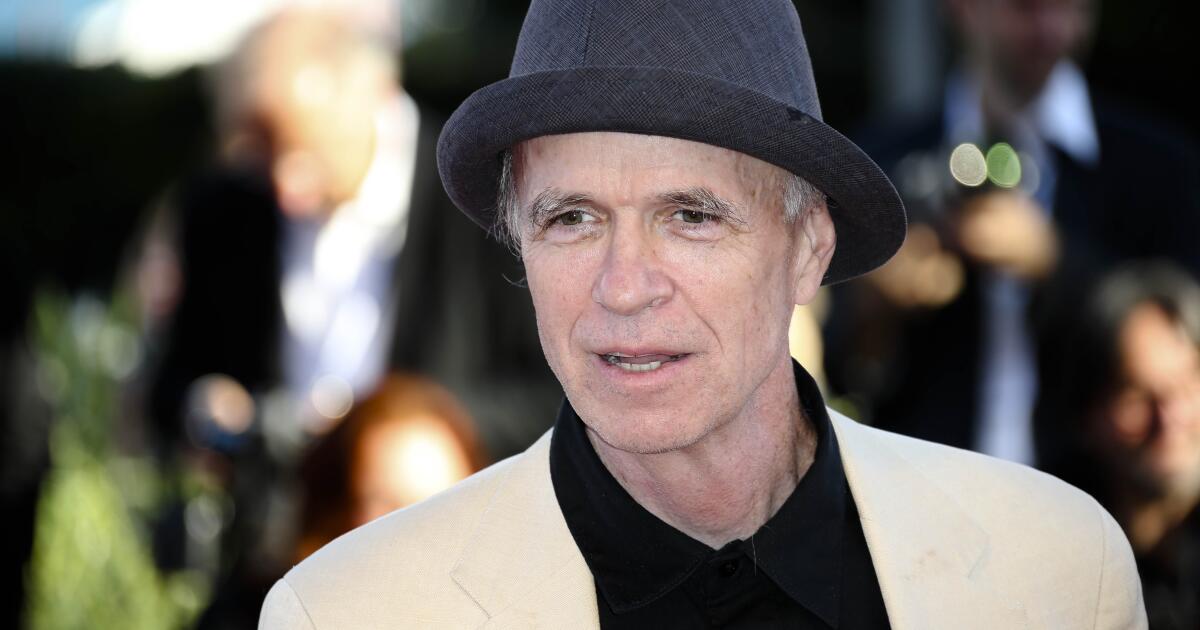
Tom Noonan dead: ‘Manhunter’ character actor also wrote, directed

Tom Noonan, a character actor and filmmaker known for playing villains in “Manhunter” and “The Last Action Hero,” died on Valentine’s Day. He was 74.

The death was confirmed by Fred Dekker, director of “The Monster Squad,” who wrote on Facebook, “Tom’s indelible performance as Frankenstein … is a highlight of my modest filmography.”

Noonan had a nearly 40-year career on TV and in film, making his mark with a role in “Manhunter,” the 1986 movie based on a Thomas Harris novel.

In “Manhunter,” which starred William Peterson of “CSI: Crime Scene Investigation” as an FBI agent and “Succession” star Brian Cox as Dr. Hannibal Lecter, Noonan played Francis Dolarhyde, the serial killer also known as the Tooth Fairy. It was a performance that “knocked out” Dekker, who then pursued Noonan for “Monster Squad.”

Playing a killer wasn’t unusual for Noonan, who stood 6-foot-5 or 6-foot-6, depending on who you trust. On a 2013 episode of TV’s “The Blacklist,” he played “the Stewmaker,” a man with a taste for dissolving human bodies in acid. In the 1993 comedy “The Last Action Hero” he was the Ripper, a fictional nemesis who comes to life in the high-concept film-within-a-film starring Arnold Schwarzenegger as action star Jack Slater.

Born in Greenwich, Conn., on April 12, 1951, Noonan was raised by his math-teacher mother Rita and a large extended family after the death of his father, John Ford Noonan Sr. He went to school at Yale Drama and later founded New York’s Paradise Factory theater with Jack Kruger at the site of the Paradise Ice Cream Factory, where the ice cream cone was invented. The two built a theater and rehearsal rooms where the condemned building stood.

Paradise Factory now bills itself as “bringing the rigor of theatrical discipline to the process of cinematic art, and bringing the intimacy and immediacy of the cinema into theatrical performance art.”

“I wish I had more success as an actor,” the New York-based actor told The Times with a dash of melancholy in 2015. “I think people call me because they’re channel surfing late at night and they see me in a movie on cable.”

In that story, about the actor and his friend and collaborator Charlie Kaufman and Kaufman’s stop-motion animation film “Anomalisa,” a Times staff writer described Noonan: “Like Kaufman, he has a dark worldview, an idiosyncratic sensibility, blackly comic thoughts and, at times, an endearing crankiness.”

In “Anomalisa,” Noonan was credited with playing “Everyone Else” — and that wasn’t an exaggeration. Jennifer Jason Leigh and David Thewlis played the leads; Noonan voiced more than 40 other roles in the film.

“Even I can’t tell if it’s me sometimes,” he told The Times in 2015 about the extensive studio-recording process. “I mean, I recognize the voice, but I’m not sure where it came from.”

“My first TV interview was with Tom Noonan for a local NYC show called MIDDAY(?),” actor Jerry O’Connell wrote early Wednesday on Instagram, including a blurry image of them on the show’s set. “I was so nervous. Tom was so kind. I saw him in every (NYC) play he was in after. He bought my brother and I tickets to Eddie Murphy’s RAW (we were too young to purchase). Btw, on this episode, I was talking about a movie about to come out (Stand By Me) and Mr. Noonan was talking about his movie (Manhunter). Rest In Peace LEGEND.”

Noonan appeared in the famous 1980 flop “Heaven’s Gate” and cast a creepy gothic shadow decades later in “The House of the Devil” (2009). He was a ghoulish host of a late-night television horror program in the 2005 vampire movie “The Roost,” then played a wagon-train missionary in the 2007 western “Seraphim Falls.”

“Robocop 2” (1990) had Noonan as Cain, a messianic maniac with a nose ring who leads a gang of terrorist dope dealers.

In 18 episodes of the series “Hell on Wheels,” which ran for five seasons on AMC, he was the Rev. Nathaniel Cole. Other TV credits included episodes of Fox’s “The X-Files,” HBO’s “The Leftovers,” CBS’ “CSI: Crime Scene Investigation” and the Louis C.K. series “Louie” (FX) and “Horace and Pete.”

Noonan’s half-dozen directing credits include the 1994 film “What Happened Was …,” which was produced as a play, then became a movie and then won the Sundance Grand Jury Prize for dramatic feature. In addition to writing and directing the movie, Noonan played the lead male role opposite actor Karen Sillas. Noonan also won Sundance’s Waldo Salt screenwriting award for the script.

The next year, his feature “The Wife” — a dark comedy once again written, directed by and starring Noonan — was a nominee for the same Sundance Grand Jury Prize. Described by the New York Times as a “bleakly funny evisceration of modern marriage,” the movie co-starred Karen Young, who was Noonan’s wife from 1992 to 1999.

And Noonan’s 2015 movie “The Shape of Something Squashed” was born out of confusion and some despair after his agent called him with what initially looked like a part in one of the “Mockingjay” installments of “The Hunger Games” franchise. When he got the script, though, he saw only one role for someone his age, and that job — playing President Snow — already belonged to Donald Sutherland.

Turns out there never had been a part in the offing. Sutherland was just busy, and Jennifer Lawrence and the rest of the “Hunger Games” cast needed someone to rehearse with them for a week.

After recovering from a brief emotional tailspin, Noonan knocked out the script for “The Shape of Something Squashed” — then directed and acted in the film.

He was preceded in death by his older brother, “A Coupla White Chicks Sitting Around Talking” playwright John Ford Noonan Jr., who died in 2018 at age 77.

Former Times staff writer Steve Zeitchik contributed to this report.



Source link

L.A. Mayor Karen Bass directed Palisades fire damage control, email shows

A day after federal prosecutors announced that the catastrophic Palisades fire was caused by the rekindling of a smaller arson fire days earlier, Los Angeles city officials were in damage control mode.

The ultimate authority on how to handle the deluge of media inquiries was Mayor Karen Bass, according to an internal email reviewed by The Times.

The carefully coordinated approach led by Bass also involved the release of the highly anticipated Palisades fire after-action report, hours after the prosecutors’ announcement and as the Los Angeles Fire Department was facing criticism for not putting out the earlier blaze.

“Any additional interviews with the Fire Chief would likely depend on the Mayor’s guidance,” LAFD spokesperson Capt. Erik Scott wrote in an Oct. 9 email to a Bass aide, then-interim Fire Chief Ronnie Villanueva and others. “Regarding a press conference, I would be cautious as it could invite a high volume of challenging questions, and this would also be contingent on the Mayor’s direction.”

The behind-the-scenes perspective into the city’s media strategy comes as Bass has denied a story published in The Times last week in which unnamed sources said she directed changes to the after-action report over concerns about legal liabilities. Revisions that downplayed failures by the city and the LAFD in handling the disaster were first revealed in a Times investigation published in December.

In one instance, LAFD officials removed language from the “failures” section saying that the decision not to fully staff up and pre-deploy all available crews and engines ahead of a forecast of dangerously high winds “did not align” with the department’s policy and procedures during red flag days.

The final report said that the LAFD “balanced fiscal responsibility with proper preparation for predicted weather.” Elsewhere, it said that the number of engine companies rolled out ahead of the fire “went above and beyond the standard LAFD pre-deployment matrix.”

That passage in the “failures” section, which was renamed “primary challenges,” was being revised by LAFD officials up until at least two days before the report was released on Oct. 8, according to emails reviewed by The Times.

“I added Chief Robert’s verbiage to replace CHALLENGES 1 on page 44. I made some other formatting edits,” an LAFD administrative aide wrote in an Oct. 6 email to several people, including an LAFD official named Eric Roberts. Roberts did not respond to an email from The Times requesting comment.

Yusef Robb, an advisor to the mayor, said Thursday that Bass is customarily involved with the decision-making of city departments. She has criticized the LAFD’s pre-deployment decisions and would have no reason to soften the after-action report’s language on that topic, Robb said.

“From Animal Services to the Zoo, the Mayor’s Office is in contact with every city department on issues large and small, and so obviously and appropriately the Mayor’s Office engaged with LAFD about the rollout of the report,” Robb said in an email. “What did not happen is the illogical and false assertion that the Mayor sought to soften critiques in a report that she herself demanded and on issues of which she has been publicly critical for more than a year.”

Scott said Thursday that he did not “have anything further to add beyond what was already shared.”

Two sources with knowledge of Bass’ office said that after reviewing an early draft, the mayor told Villanueva that the report could expose the city to legal liabilities. The sources said Bass wanted key findings about the LAFD’s actions removed or softened before the report was made public.

The sources told The Times that two people close to Bass informed them of the mayor’s role in watering down the report, which was meant to spell out mistakes and to suggest measures to avoid repeating them. One source spoke to both of the people; the other spoke to one of them. The sources requested anonymity to speak frankly about the mayor’s private conversations with Villanueva and others.

Bass last week called the Times story “completely fabricated.”

“There was no cover up on my part,” she said. “There was absolutely no reason or desire that I would want to water down this report.”

She added: “I do not have the technical expertise to make any sort of substantive changes to anything.”

Last summer, LAFD officials formed an internal crisis management team and brought in a public relations firm — paid for by the nonprofit LAFD Foundation — to help shape its messaging about the fire, which killed 12 people and destroyed thousands of homes. The emails reviewed by The Times show that the firm, the Lede Co., had a role in reviewing and suggesting edits to the after-action report.

Other internal emails reviewed by The Times show that Bass met with Villanueva about the after-action report in mid-July.

“The FC had a meeting with the Mayor this afternoon where she discussed the Palisades internal AAR,” Kairi Brown, Villanueva’s chief of staff, wrote on July 17, referring to the fire chief and the after-action report. “She asked for him to put together … answers to other questions.”

Scott’s Oct. 9 email, whose recipients also included at least one member of the LAFD’s crisis management team and the outside public relations consultants, sought guidance on how to manage the “abundance of requests” from news reporters, referencing a shared Google document where all “current inquiries and notes” were compiled.

He suggested a “three-prong approach” to contextualizing the topic of “holdover” fires. The Palisades fire was a holdover from the Jan. 1 Lachman fire, which continued to smolder and burn underground until kicked up by heavy winds on Jan. 7.

Scott said that the team should outline the LAFD’s efforts to extinguish the Lachman fire, define the “holdover phenomenon” and highlight new policies and procedures to prevent it from happening in the future.

LAFD leaders had already been under intense scrutiny for missteps before the Palisades fire, while commanders had insisted that they did everything they could to put the Lachman fire out.

Weeks after the Oct. 8 announcement about the Lachman fire by federal prosecutors, The Times reported that a battalion chief ordered firefighters to roll up their hoses and leave the burn area on Jan. 2, even though crews warned that the ground was still smoldering. The LAFD also decided not to use thermal imaging technology to detect heat underground.

The author of the after-action report, Battalion Chief Kenneth Cook, declined to endorse the final version because of changes that altered his findings and made the report, in his words, “highly unprofessional and inconsistent with our established standards.”

Even with the deletions and changes, the report delivered a harsh critique of the LAFD’s performance during the Palisades fire, pointing to a disorganized response, failures in communication and chiefs who didn’t understand their roles. The report found that top commanders lacked a fundamental knowledge of wildland firefighting tactics, including “basic suppression techniques.”

A paperwork error resulted in the use of only a third of the state-funded resources that were available for pre-positioning in high-risk areas, the report said. And when the fire broke out the morning of Jan. 7, the initial dispatch called for only seven engine companies, when the weather conditions required 27.

There was confusion among firefighters over which radio channel to use. The report said that three L.A. County engines showed up within the first hour, requesting an assignment and receiving no reply. Four other LAFD engines waited 20 minutes without an assignment.

As Scott looked to the mayor for guidance on whether Villanueva would participate in more media interviews, he wrote in the Oct. 9 email that on social media, the LAFD should consider highlighting favorable coverage of interviews with the fire chief.

A day later, the LAFD notified The Times that Villanueva and other top fire officials “are not planning any additional interviews regarding the incident.”

Robb said Thursday that Bass did not restrict Villanueva from doing interviews.

“The Mayor’s Office, as it frequently does with all city departments, made it clear that LAFD needed to make sure the information it provides was accurate and that the personnel providing information were well prepared to provide accurate information,” Robb said. “Ultimately, how they did that was up to them.”

Former Times staff writer Paul Pringle and Times staff writer David Zahniser contributed to this report.

Source link

USAF Ready To Make All B-52s Nuclear-Capable, Load ICBMs With Multiple Warheads If Directed

U.S. Air Force Global Strike Command says it is prepared to load more warheads onto Minuteman III intercontinental ballistic missiles (ICBM) and restore nuclear weapons capability to the entire B-52 bomber fleet, if called upon to do so. Limitations had been imposed on both of those capabilities by the New START arms control treaty between the United States and Russia, which recently expired without a follow-on agreement in place, as you can read more about here.

There are currently 400 Minuteman IIIs, also designated LGM-30Gs, loaded in silos spread across five states. Each one is topped with a single W78 or W87 warhead. Of the Air Force’s 76 B-52H bombers, 30 are currently only capable of employing conventional munitions. This posture had helped the United States meet its obligations under New START. The treaty had put hard caps on the total number of deployed strategic missiles and bombers, strategic nuclear warheads, and relevant deployed and non-deployed launchers that the United States and Russia could have at any one time.

“The conclusion of New START allows us to streamline our focus and dedicate more resources to our core mission: ensuring a safe, secure, and effective nuclear deterrent,” an AFGSC spokesperson told TWZ. “This managed transition enhances our operational readiness and our ability to respond to the nation’s call.”

Air Force Global Strike Command: Our Nation’s Shield


“Although we will not comment on the posturing of our forces, Air Force Global Strike Command both maintains the capability and training to MIRV the Minuteman III ICBM force and convert its entire B-52 fleet into dual capable long range strike platforms if directed by the President,” the spokesperson added.

MIRV here stands for multiple independently targetable reentry vehicle. ICBMs and other ballistic missiles with MIRV configurations are designed to carry and release multiple warheads on different targets in the course of their flight. When the Air Force first began fielding the LGM-30G in 1970, the missiles had a MIRV configuration with three W78 warheads. Each one of those warheads has a reported yield of around 335 kilotons.

An infrared picture of a Minuteman III seen during a test launch. USAF An infrared image of an LGM-30G Minuteman III ICBM taken during a routine test launch. USAF

The Minuteman IIIs had already been downloaded to just one warhead in line with other strategic arms control treaties with Russia prior to New START. Those agreements had also led to the early retirement of the Air Force’s LGM-118A Peacemaker ICBM force in 2005. The LGM-118A was also a MIRVed missile capable of carrying up to 11 W87 warheads at once. Newer W87s from decommissioned Peacemakers were subsequently refitted on Minuteman IIIs. The W87’s reported yield is at least 300 kilotons, but its second stage is understood to be modifiable to increase that to 475 kilotons.

US Air Force personnel seen training to service reentry vehicles for the LGM-118A. USAF

The time that would be required, as well as what it would cost, to ‘upload’ more warheads onto any portion of the Minuteman III force is unclear. At least some of those missiles would also need to be refitted with MIRV-capable payload buses. Whether there are any additional limitations on how many W87s can be loaded onto a single LGM-30G at once is also not clear. The ready availability of appropriate warheads is another open question.

Right, of course. I didn’t know about the PBVs. Good to know, thanks.

— William Alberque (@walberque) February 4, 2026

“I do believe that we need to take serious consideration in seeing what uploading and re-MIRVing the ICBM looks like, and what does it take to potentially do that,” now-retired U.S. Air Force Gen. Anthony Cotton, then head of U.S. Strategic Command (STRATCOM), had said during a hearing before the Senate Armed Services Committee back in 2024.

All of this could also impact the future configuration of the LGM-35A Sentinel ICBM now in development to replace the Minuteman III. In line with the New START limits, the Air Force’s stated plan to date has been to top each LGM-35A with a single warhead. The entire Sentinel program is currently in the process of being restructured as a result of severe delays and ballooning costs. The blame for those issues has been placed largely on requirements for new ground-based infrastructure rather than the missiles themselves, as you can read more about here.

A picture showing a test of a nose shroud for the LGM-35A Sentinel ICBM. Northrop Grumman

Re-nuclearizing the 30 B-52s is at least a somewhat less complex proposition. The process of converting those bombers into a conventional-only configuration involved “removing the nuclear code enabling switch and interconnection box, mounting a code enabling switch inhibitor plate, removing applicable cable connectors, [and] capping applicable wire bundles,” according to a letter Russian authorities sent a letter to their U.S. counterparts in 2018, which The Wall Street Journal obtained and then published.

A pair of US Air Force B-52H bombers. USAF

Officials in Moscow had sent the missive to lodge official complaints about what they described as potentially readily reversible steps the U.S. military had taken to meet its New START obligations. What additional steps the U.S. military may have taken with regard to the B-52 fleet to address those concerns are not entirely clear. Today, nuclear-capable B-52Hs are easy to distinguish by the presence of a pair of prominent antennas, one on either side of the rear fuselage.

There has been some disagreement in the past about what it might cost to restore nuclear capability to the entire B-52 fleet.

“The restoration could probably be done without much difficulty. The necessary wiring is probably still in place… and physical components that had been removed could be re-installed,” Defense News reported in 2024, citing Mark Gunzinger, Director of Future Concepts and Capability Assessments at the Air & Space Association’s Mitchell Institute for Aerospace Studies think tank. Gunzinger is also an Air Force veteran who flew B-52s.

“This would cost a great deal of money,” Representative Adam Smith, a Democrat from Washington State and the ranking member of his party on the House Armed Services Committee, also said at that time, per the same Defense News story. “Also, they’re currently trying to extend the life of a number of B-52s out to 2050, which they think they can do. This would be another added expense to that.”

In the annual defense policy bill, or National Defense Authorization Act (NDAA), for the 2025 Fiscal Year, Congress did give the Air Force authority to convert conventional-only B-52Hs back to a dual-capable configuration following the expiration of New START. However, the provisions did not compel the service to do so, and did not provide any hints as to the time or funds that would be needed.

As it stands now, there is also only one nuclear weapon authorized for use on the B-52, which is the AGM-86B Air-Launched Cruise Missile (ALCM). A replacement for the AGM-86B, the AGM-181A Long Range Stand-Off (LRSO) missile, is now in development. The AGM-181A is also set to be part of the nuclear arsenal for the forthcoming B-21 Raider stealth bomber.

An AGM-86-series ALCM in flight. USAF
A rendering the US Air Force has previously released of the AGM-181A LRSO. USAF

The B-52 fleet is otherwise in the process of recieving a host of major upgrades, including new engines and radars. At the end of the upgrade process, which has been beset by delays, the bombers will be redesignated as B-52Js. They are expected to keep flying into the 2050s. The end of New START could have further impacts on the Air Force’s future bomber fleets, as there are currently no constraints on how many nuclear-capable B-21s the service can now order.

B-52 Future Stratofortress: The Upgrades That Will Transform The B-52H Into The B-52J


In the wake of New START’s expiration, U.S. officials have said that they are committed to pursuing new strategic arms control agreements, but also that they want any future deal to include China, as well as Russia. These Chinese are currently in the midst of a major nuclear modernization effort, as well as a huge expansion in their total stockpile, though their arsenal continues to be dwarfed by that of the United States and Russia. Officials in Beijing have repeatedly rebuffed calls to join in new strategic arms control negotiations. U.S. authorities have also now openly alleged that the Chinese government has engaged in secret critical-level nuclear testing, which could further complicate future diplomatic efforts.

So far, the U.S. government has not laid out any specific plans to increase the size of America’s nuclear arsenal or otherwise alter its nuclear force posture. However, AFGSC has now said that it is at least prepared to move out on returning the Minuteman IIIs to a MIRVed configuration and/or restoring nuclear capability to the entire B-52 fleet if that decision is made.

Contact the author: joe@twz.com

Joseph has been a member of The War Zone team since early 2017. Prior to that, he was an Associate Editor at War Is Boring, and his byline has appeared in other publications, including Small Arms Review, Small Arms Defense Journal, Reuters, We Are the Mighty, and Task & Purpose.


Howard is a Senior Staff Writer for The War Zone, and a former Senior Managing Editor for Military Times. Prior to this, he covered military affairs for the Tampa Bay Times as a Senior Writer. Howard’s work has appeared in various publications including Yahoo News, RealClearDefense, and Air Force Times.


Source link

Bass directed watering down of Palisades fire after-action report, sources say

For nearly two months, Mayor Karen Bass has repeatedly denied that she was involved in altering an after-action report on the Palisades fire to downplay failures by the city and the Los Angeles Fire Department in combating the catastrophic blaze.

But two sources with knowledge of Bass’ office said that after receiving an early draft, the mayor told then-interim Fire Chief Ronnie Villanueva that the report could expose the city to legal liabilities for those failures. Bass wanted key findings about the LAFD’s actions removed or softened before the report was made public, the sources said — and that is what happened.

The changes to the report, which was released on Oct. 8, came to light through a Times investigation published in December.

The sources told The Times that two people close to Bass informed them of the mayor’s behind-the-scenes role in watering down the report. One source spoke to both of the people; the other spoke to one of them. The sources requested anonymity to speak frankly about the mayor’s private conversations with Villanueva and others. The Times is not naming the people who are close to Bass because that could have the effect of identifying the sources.

One Bass confidant told one of the sources that “the mayor didn’t tell the truth when she said she had nothing to do with changing the report.” The source said the confidant advised Bass that altering the report “was a bad idea” because it would hurt her politically.

According to the source, the two confidants said that Bass held onto the original draft until after the changes were made. The source added that both confidants said they are prepared to testify under oath to verify their accounts if the matter ends up in a legal proceeding.

Both sources said they did not know if Villanueva or anyone else in the LAFD or in the mayor’s office made line-by-line edits at Bass’ specific instructions, or if they imposed the changes after receiving a general direction from her.

“All the changes [The Times] reported on were the ones Karen wanted,” the second source said, referring primarily to the newspaper’s determination that the report was altered to deflect attention from the LAFD’s failure to pre-deploy crews to the Palisades before the fire, which killed 12 people and destroyed more than 6,000 homes and other structures, amid forecasts of catastrophically high winds.

Bass did not respond this week to a request for comment for this article.

The mayor has previously rejected several requests by The Times to be interviewed about the report. In response to written questions, a spokesperson for Bass’ office said in an email in December: “The report was written and edited by the Fire Department. We did not red-line, review every page or review every draft of the report.”

The spokesperson, Clara Karger, said the mayor’s office asked only that the LAFD fact-check any findings regarding the effect of city finances and high-wind forecasts on the department’s performance in the fire.

In a brief interview last month, Bass told The Times that she did not work with the Fire Department on changes to the report, nor did the agency consult her about any changes.

“The only thing that I told them to do was I told them to talk to Matt Szabo about the budget and the funding, and that was it,” she said, referring to the city’s administrative officer. “That’s a technical report. I’m not a firefighter.”

Villanueva declined to comment. He has made no public statements about the after-action report or any conversations he might have had with Bass about it.

After admitting that the report was altered in places so as not to reflect poorly on top commanders, Fire Chief Jaime Moore said last month that he did not plan to determine who was responsible, adding that he did not see the benefit of doing that.

In an interview last month, Fire Commission President Genethia Hudley Hayes said Villanueva told her in mid-August or later that a draft of the report was sent to the mayor’s office for “refinements.” Hudley Hayes said she did not know what the refinements were, but she was concerned enough to consult a deputy city attorney about possible changes to the report.

Hudley Hayes, who was appointed by Bass, said that after reviewing an early draft of the report as well as the final document, she was satisfied that “material findings” were not altered.

But the changes to the after-action report, which was meant to spell out mistakes and suggest measures to avoid repeating them after the worst fire in city history, were significant, with some Palisades residents and former LAFD chiefs saying they amounted to a “cover-up.”

A week after the Jan. 7, 2025, fire, The Times exposed LAFD officials’ decisions not to fully staff up and pre-deploy all available engines and firefighters to the Palisades or other high-risk areas ahead of the dangerous winds. Bass later ousted Fire Chief Kristin Crowley, citing the failure to keep firefighters on duty for a second shift.

An initial draft of the after-action report said the pre-deployment decisions “did not align” with policy, while the final version said the number of companies pre-deployed “went above and beyond the standard LAFD pre-deployment matrix.”

The author of the report, Battalion Chief Kenneth Cook, declined to endorse the final version because of changes that altered his findings and made the report, in his words, “highly unprofessional and inconsistent with our established standards.”

Before the report was released, the LAFD formed an internal crisis management team and brought in a public relations firm to help shape its messaging about the fire, though it’s unclear what role each played, if any, in editing the report.

Moore, an LAFD veteran whom Bass named as chief in November, said he is focused on the future and not interested in assigning blame for changes to the report. But he said he will not allow similar edits to future after-action reports.

Asked last month how he would handle a mayor’s request for similar changes, he said: “That’s very easy, I’d just say absolutely not. We don’t do that.”

The after-action report included just a brief reference to the Lachman fire, a small Jan. 1, 2025, blaze that rekindled six days later into the Palisades fire.

The Times found that a battalion chief ordered firefighters to roll up their hoses and leave the Lachman burn area the day after the fire was supposedly extinguished, despite complaints by crew members that the ground still was smoldering. The Times reviewed text messages among firefighters and a third party, sent in the weeks and months after the fire, describing the crew’s concerns, and reported that at least one battalion chief assigned to the LAFD’s risk management section knew about them for months.

After the Times report, Bass directed Moore to commission an independent investigation into the LAFD’s handling of the Lachman fire.

LAFD officials said Tuesday that most of the 42 recommendations in the after-action report have been implemented, including mandatory staffing protocols on red flag days and training on wind-driven fires, tactical operations and evacuations.

Pringle is a former Times staff writer.

Source link