DGa…

Hollywood unions split: DGA, IATSE seek settlement while WGA fights to block Paramount-Warner merger

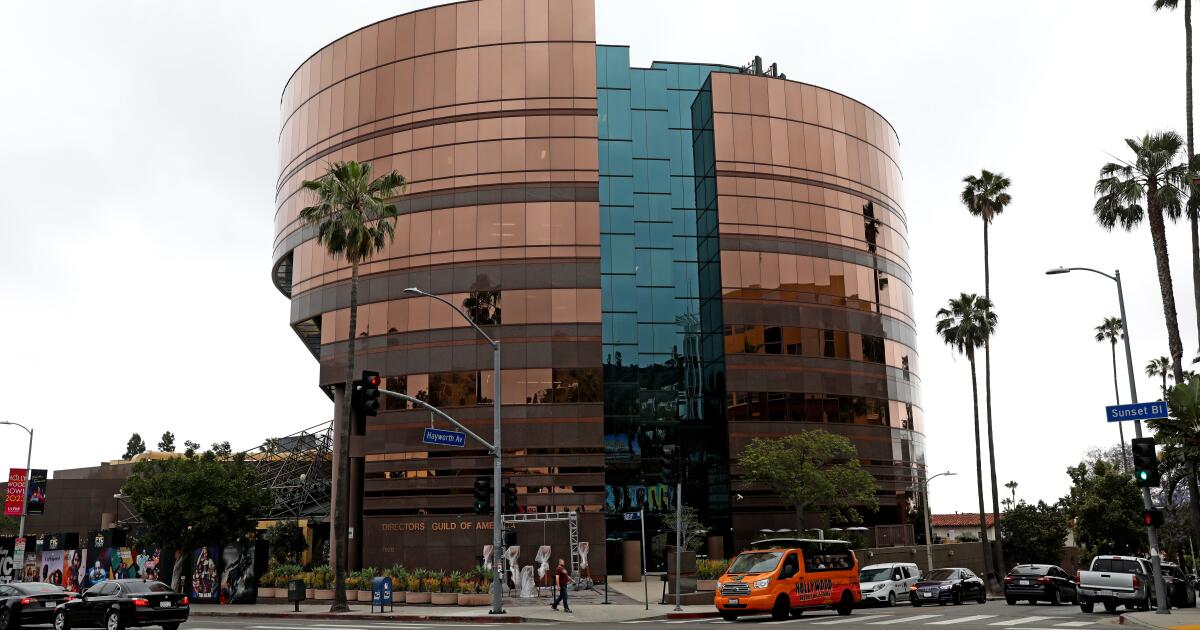
Citing Hollywood’s already struggling production economy, two influential industry unions have jointly called on Paramount Skydance Chairman David Ellison and California Atty. Gen. Rob Bonta to settle their antitrust fight.

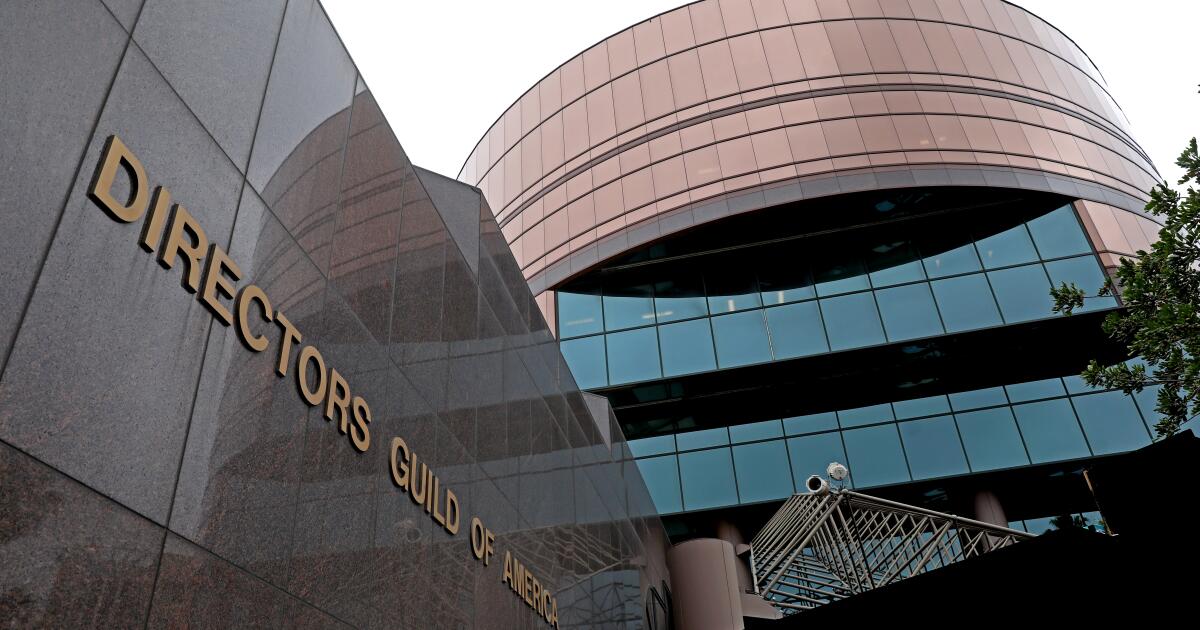
The Directors Guild of America and the International Alliance of Theatrical Stage Employees — which represent a combined 200,000 union members — are turning up the political pressure to try to resolve the clash over the Paramount-Warner Bros. merger, which has already carved deep divisions throughout the industry.

The DGA and IATSE’s unusual missive comes as Paramount has been trying to drum up support for the deal and while
development projects reportedly are being put on hold. Paramount executives and others have decried the delay in deciding whether the deal moves forward. Bonta and Paramount are now poised to slug it out in an Oakland courtroom next spring.

“Our collective members are concerned about their futures, and the future of the industry,” DGA Executive Director Russell Hollander and IATSE President Matthew D. Loeb wrote Thursday in their three-page letter to Ellison and Bonta.

“We are aware of productions that have been put on hold or canceled altogether, leading to further reductions in available work for our members and other industry workers,” the letter reads in part.

The effort adds heat to a growing campaign urging Bonta to bend in his fight to block the industry- reshaping deal that would combine the Warner Bros. and Paramount film and television studios, HBO, CBS, CNN, HGTV and Comedy Central.

Earlier this week, California’s Democratic gubernatorial nominee, Xavier Becerra, said he favored a settlement. Republican Steve Hilton has decried the antitrust lawsuit as being politically motivated.

Gov. Gavin Newsom, who leaves office next year, has stayed above the fray.

Paramount and Bonta’s office didn’t immediately comment.

The Writers Guild of America last month joined Bonta’s coalition of state attorneys general in filing lawsuits to upend the $111-billion transaction, saying the Paramount-Warner combination violates U.S. antitrust laws and would decimate the entertainment industry by erasing jobs and reducing pay.

At issue is the $81 billion in debt that Ellison would have to take on to pay Warner Bros. Discovery shareholders for the keys to the studios and HBO.

WGA leaders and others have warned that level of debt would choke the two historic studios, creating a more devastating sequel to 2019‘s combination of the Disney and Fox studios, and the 2022 takeover of Warner Bros. by Discovery.

The union leaders conceded they weren’t merger fans, and they stopped well short of asking Bonta to throw in the towel.

Instead, they listed nine conditions — including requiring Paramount to maintain its operations in Hollywood and a commitment to make film and television shows in the U.S. — as part of any settlement.

The unions want Ellison to make an enforceable commitment that Paramount and Warner Bros. studios each release 15 films into theaters a year. They also want a 45-day theatrical window so that cinema chains can continue their rebound.

Some of the DGA and IATSE terms may be difficult for Ellison to swallow. Already, Paramount is looking to shave expenses to come up with the $81 billion promised to Warner Bros. shareholders. Sources have said Ellison’s suggestion to move Paramount from its picturesque Hollywood campus is designed, in part, to attract financial incentives from another state, such as Tennessee, eager to help with a relocation.

Among the conditions, the DGA and IATSE asked that Paramount’s and Warner Bros.’ motion picture units be kept as “as separate studios, with each studio maintaining its own production, distribution, marketing and exhibition groups as distinct divisions.”

One of the goals of the merger is to shave costs by consolidating overlapping business divisions and back-office functions.

The union leaders also want Warner Bros. television studio to operate independent from the Paramount and CBS production arms. They called on HBO to remain a linear television channel and available on third-party platforms, including Amazon.

Loeb and Hollander’s requests are designed to keep production jobs in the U.S.

They asked Ellison to commit to producing films and TV shows in the U.S. “at no less than the average percentage produced in the United States during the last five years” excluding 2020, the pandemic year, and 2023, when two strikes idled production.

“Our goal, with respect to the proposed merger, has always been to achieve an outcome that ensures a vibrant, competitive marketplace for the production, distribution, and licensing of film and television programming that serves the interests of consumers and filmmakers alike,” Hollander and Loeb wrote.

“We believe that these conditions, if secured through a binding agreement, will largely serve this purpose,” the said.

Bonta previously has said his preference would be structural remedies — divesting key business units — rather than “behavioral” compromises that could evaporate soon after the merger closed.

Should the two sides fail to hash out a settlement with conditions, Loeb and Hollander asked Ellison and Bonta to seek an earlier trial date for the legal showdown.

A federal judge set a March 2 date — despite Paramount’s request to hold the proceedings in November.
Source link

Sept. 7, 1994–Former Rep. Ben Jones (D-Ga.),…

Sept. 7, 1994–Former Rep. Ben Jones (D-Ga.), who was running against Rep. Newt Gingrich (R-Ga.), files a complaint alleging that Gingrich used tax-exempt groups for political purposes.

Dec. 6, 1995–House Ethics Committee decides the allegations merit further inquiry.”

Dec. 22–James M. Cole is hired as special counsel to the Ethics Committee to investigate the conduct of Gingrich.

Sept. 26, 1996–The Ethics Committee expands its investigation to include whether Gingrich supplied the panel with accurate, reliable and complete information” when questioned about links between his partisan activities and tax-exempt organizations.

Oct. 1–The Ethics Committee requests additional information regarding apparent discrepancies between the facts of the case and information supplied by Gingrich.

Dec. 21–Gingrich admits the violations in a signed statement. He says he did not intentionally mislead the committee and should have sought legal advice about avoiding the mix of tax-deductible contributions and partisan activities.

Jan. 7, 1997–With few votes to spare, the House votes 216-205 to retain Gingrich as speaker.

Jan. 17–After 5 1/2 hours of televised hearings, the Ethics Committee votes 7-1 to recommend that the House reprimand Gingrich and orders him to reimburse $300,000 of the cost of its investigation.

Jan. 21–The House of Representatives votes 395-28 to follow the Ethics Committee’s recommendations, reprimanding Gingrich for bringing discredit on the House by using tax-exempt money to promote Republican goals and then giving the committee untrue information for its inquiry. It is the most severe rebuke leveled on a presiding officer of the House in its 208-year history. It is unclear if Gingrich is supposed to reimburse the House with campaign or personal funds.

April 17–Gingrich announces he will pay a $300,000 ethics penalty with a loan from former Sen. Bob Dole, ending the saga 31 months after the investigation began.

Ongoing–The Internal Revenue Service is still investigating whether tax-exempt organizations provided money to finance Gingrich’s political activities and the college course he taught.

Source link

DGA ratifies four-year contract with major studios

The Directors Guild of America on Thursday night said it approved a four-year contract with the major studios.

The new contract will boost studio contributions to DGA’s healthcare plan, increase minimum salaries and offer AI protections. The DGA declined to say how many voted in favor of the contract, but in a memo to members, union President Christopher Nolan and National Executive Director Russell Hollander said members “voted overwhelmingly” to ratify it.

“Throughout this process, our focus was clear: protect our members, strengthen the Guild, and address the challenges facing our industry during a period of profound change,” Nolan and Hollander wrote in a memo to members sent on Thursday. “… We have achieved critical wins that put the Guild in a position to further protect our members economic and creative rights now and into the future.”

The newly ratified contract provides some stability in Hollywood, about three years after a summer of strikes led by the Writers Guild of America and performers guild SAG-AFTRA. WGA approved a contract with major studios under the Alliance of Motion Picture and Television Producers in April and SAG-AFTRA members ratified their contract in June. All the contracts extend the terms to four years instead of three years, which studios had sought out.

The AMPTP in a statement thanked DGA, WGA and SAG-AFTRA “for their thoughtful and collaborative approach to negotiations.”

“Together, we reached agreements that deliver substantial gains for guild members while supporting greater stability across the entertainment business,” the AMPTP said. “We are encouraged by the trust built throughout this cycle and look forward to building on that momentum to advance opportunity and shared success across our industry.”

The new DGA contract starts on July 1 and runs through June 30, 2030. Key aspects of the agreement include requiring the studios to increase their contribution to DGA’s health plan by 24.4% over four years. In return, the DGA would support “modest” increases to the eligibility threshold and annual premiums.

The contract also increases minimum salaries on many jobs by 2.5% in the first year and up 3% for each of the following years in the agreement.

It also adds more rules around the use of AI technology, including requiring that directors oversee any footage created by artificial intelligence.

Source link

DGA’s board throws support behind tentative contract with major studios

The Directors Guild of America’s national board on Friday unanimously recommended its membership vote in favor of a four-year contract with the major studios that would increase wages, boost contributions to its health plan and establish guardrails surrounding AI technology.

“We entered this negotiation with three main priorities: secure our Health Plan, protect jobs, and ensure that our members remain secure as AI continues to impact our industry,” DGA President Christopher Nolan said in a statement. “We succeeded in these areas and gained in many others.”

Under the proposed contract, major studios would increase their contributions to the DGA’s health plan by 24.4% over four years, the largest since the plan was founded. In return, the DGA would recommend changes to its plan’s trustees including “modest” increases to the eligibility threshold and annual premiums, the DGA said on Friday.

The contract also increases minimum salaries for most jobs by 2.5% in the first year and up 3% for each of the following years in the agreement. Directors of network non-prime time strip dramatic programs will see their minimum salaries increase 2.5% for each year under the agreement.

The union, which represents more than 19,500 directors and members of directorial teams in areas such as film, commercials and news, said the agreement helps the union’s push for a federal production incentive. Hollywood creatives believe such a benefit could prevent U.S. entertainment jobs from moving overseas where production costs can be significantly lower. The proposed agreement secures a commitment that most senior management at the major studios represented by the Alliance of Motion Picture and Television Producers “would engage in meaningful advocacy for a federal production incentive above and beyond the ongoing lobbying efforts of the Motion Picture Association,” according to the DGA.

The contract also adds more guardrails to AI technology, including treating footage created by artificial intelligence as the same as footage shot by a camera, meaning it will still be under the director’s control, according to the DGA. Major studios will also be required to notify the DGA if an employer decides to license a director’s work to train a generative AI system to create new work, the union said. The agreement also establishes an employer-funded program to enhance directors’ AI skills.

“With these gains, a four-year Agreement was both appropriate and necessary to provide stability and potential for growth at a moment when the industry has been experiencing contraction,” Nolan said in a note to members on Friday.

DGA and AMPTP reached the tentative contract earlier this week. At that time, AMPTP said “we appreciate the hard work and commitment of our guild partners in achieving a fair deal that helps advance a stable and successful entertainment industry.”

DGA members will have until June 25 at 5 p.m. to vote on the plan. If approved, the contract would go into effect July 1 and run through June 30, 2030.

Source link

Director’s Guild reaches tentative deal with studios

The Director’s Guild of America has struck a tentative deal with the Alliance of Motion Picture and Television Producers, completing the negotiation cycle for Hollywood’s major unions.

SAG-AFTRA ratified its contract last week, the Writers Guild approved its deal back in April, and the DGA has similarly landed on a new contract, after nearly a month of negotiations. The latest deal with major film and TV studios was announced on Tuesday, but its terms have not yet been disclosed.

The Directors Guild, led by its president Christopher Nolan, reportedly entered negotiations in hopes of improving conditions to create new jobs, bulk up its health fund, and increase protections against generative AI.

“The tentative agreement will be presented to the DGA National Board for approval,” the DGA said in a statement. “Consistent with the Guild’s longstanding practice, terms of the agreement will not be released publicly until the National Board has completed its review.”

Negotiations started on May 11, and the current contract is set to expire on June 30. Once the DGA National Board approves the new contract, it will be sent to its members for a ratification vote. The union represents nearly 20,000 helmers, assistant directors, associate directors, unit production managers and stage managers.

The studios said they were pleased to have reached this latest tentative agreement with DGA.

“We appreciate the hard work and commitment of our guild partners in achieving a fair deal that helps advance a stable and successful entertainment industry,” AMPTP said in a statement.

The DGA’s tentative contract marks the last few steps of the current Hollywood union negotiation cycle. The previous one in 2023 was marked by the industry-stopping strikes from SAG-AFTRA and WGA, and the industry is still feeling the impact from them. But this year’s bargaining season was much quieter and uncontroversial. SAG-AFTRA and WGA will reconvene with the studios for bargaining in 2030, as they all signed four-year contracts.

Source link

Golf and Politics: Sen. Sam Nunn (D-Ga.)…

Golf and Politics: Sen. Sam Nunn (D-Ga.) has resigned from the affluent Burning Tree private golf club that lost a legal fight over its refusal to admit women members. The Bethesda, Md., club’s members include many powerful political leaders. Washington wags speculated Nunn was preparing a run for the presidency. Nunn said in Washington, D.C., Tuesday he dropped out for “personal reasons . . . . I have no plans . . . to run for President.”

* Kennedy Clan: Another Kennedy wedding is due in the fall. Kara Kennedy, 30, daughter of Sen. Edward M. Kennedy, will marry Michael Allen, a Washington, D.C., architect. The date and site of the wedding were not announced.

* Hear This: Sixty guests gathered at the French ambassador’s home Wednesday to honor Revolutionary hero Marquis de Lafayette over dishes from the menu at Lafayette’s wedding feast in 1774. A town crier announced guests for the meal of oysters in caviar sauce, filet of sole, squab and venison.

* Maples Syrup: Ivana Trump’s lawyers want to question Marla Maples and they want Donald Trump to limit the documents he is demanding from his wife. He says he is seeking items showing “any threats made or undue influence” on his wife, all her personal diaries since 1976 and other writings. Jay Goldberg, one of his attorneys, said the documents would “demonstrate without question the infirmity of her claim” about threats and influence. Goldberg dismissed her plans to call Maples as posturing.

Source link