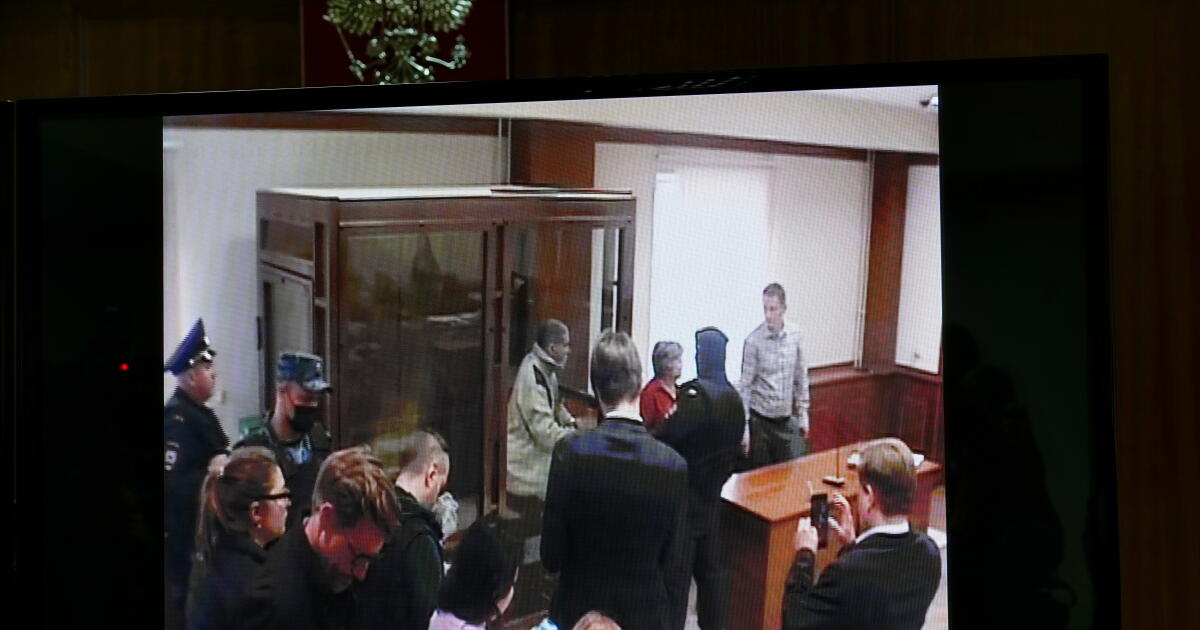
ST. PETERSBURG, Russia — Russia on Wednesday released a retired American teacher who had been imprisoned on charges of fighting as a mercenary in Ukraine, U.S. envoy Steve Witkoff said Wednesday at a meeting with Russian President Vladimir Putin in St. Petersburg.
The release of Stephen Hubbard had been foreshadowed a day earlier in Washington, when President Trump told reporters at the White House that he had talked with Putin “at length” about the issue and had asked him to free the Michigan man.
Hubbard is the second American detainee in just over two months to be freed by Russia, and his exit from custody occurred not only during a visit by Witkoff but also at a time when Trump has taken a series of actions meant to benefit Russia as Washington’s alliance with Ukraine shows signs of fraying.
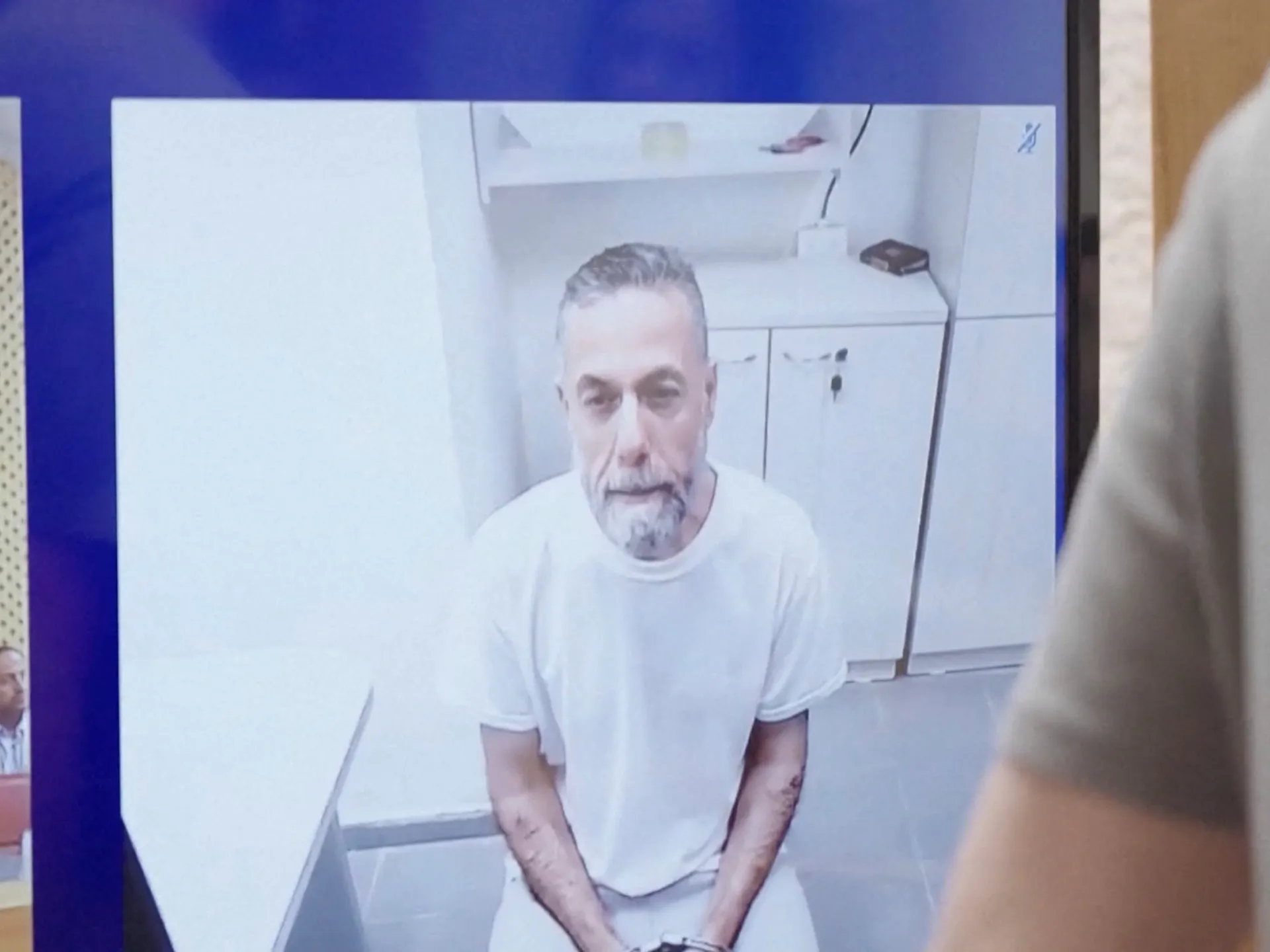
Hubbard was sentenced after a closed trial in 2024 to nearly seven years in prison. Prosecutors said he had signed a contract with the Ukrainian military after Russia sent troops into Ukraine in February 2022, and that he fought alongside them until being captured two months later. The U.S. government under the Biden administration designated Hubbard as wrongfully detained.
Witkoff, a key Trump administration envoy who has tried without success to steer Russia and Ukraine toward a settlement to end a war that will hit the five-year mark in February, thanked Putin for releasing Hubbard, telling him, “Because of you, he’s going home to his family.” The Russian leader responded that Hubbard was at the St. Petersburg airport, Pulkovo, after the release.
The release occurred at a dynamic moment in relations between the United States, Ukraine and Russia, with the Washington-Kyiv alliance being stretched by tensions over drone support as the Trump administration advances policies that aid Putin.
Trump decided Friday, for instance, to waive sanctions on Russia in a bill that Congress overwhelmingly passed to support Ukraine. Named after late South Carolina Republican Sen. Lindsey Graham, the legislation targeted the flow of financial resources fueling Russia’s war.
That reversal followed Trump’s announcement of a deal to import Russian diesel fuel in a long-shot effort to curb high gas prices ahead of the U.S. midterm elections next month.
Witkoff met with Ukrainian President Volodymyr Zelensky in Norway on Tuesday. He was expected to exchange ideas from that meeting, as well as proposals from European and American colleagues, in his talks with Russian leaders in St. Petersburg on Wednesday.
Hubbard is the second American freed by Russia in about the last two months, following the release in August of Marine veteran Robert Gilman, who had been gravely ill and was imprisoned on disputed charges of assaulting a police officer.
Some two dozen Americans remain imprisoned in Russia for various reasons, according to the Foley Foundation, a hostage advocacy organization.
Hubbard had been imprisoned since 2022 on charges that Hostage Aid Worldwide, a hostage advocacy group, has called bogus.
The organization in August posted an open letter to Trump that it said was written by Patricia Hubbard Fox, Hubbard’s sister, in which she offered praise for Trump but also said brother had been subjected to “constant beatings, torture and starvation” while in custody.
“Even so, everything that you’re doing isn’t going to matter to my kidnapped, American Veteran brother, Stephen James Hubbard (soon to be 74) if Putin won’t cave and let him come home and he dies up there in a Nazi prison (crying),” the letter said.
Litvinova and Tucker write for the Associated Press. Tucker reported from Washington.
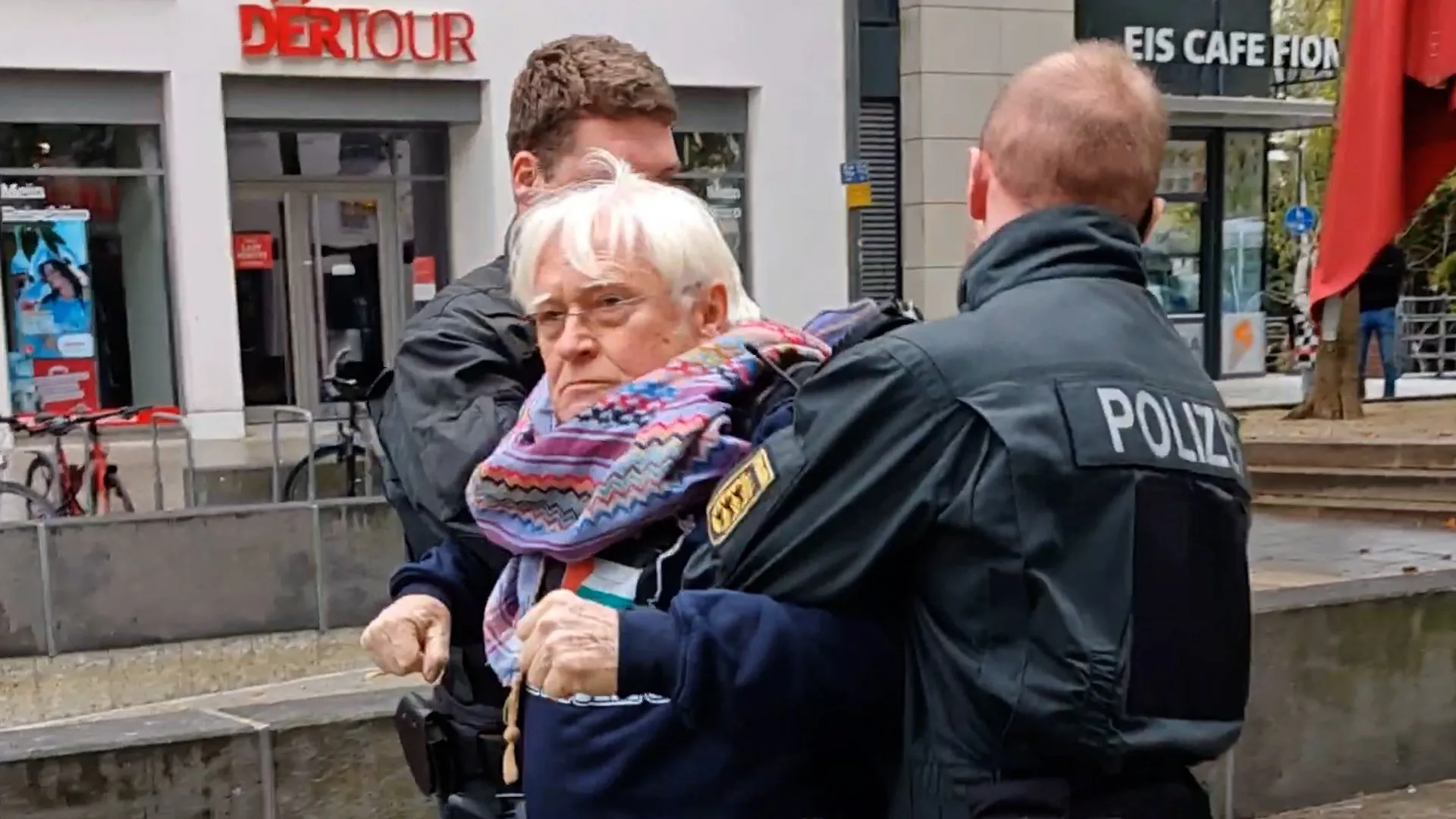
An elderly man was forcibly restrained by police during a protest against Israeli weapons manufacturer Elbit Systems in Ulm, Germany. The man was seen bleeding after officers forced him to the ground.
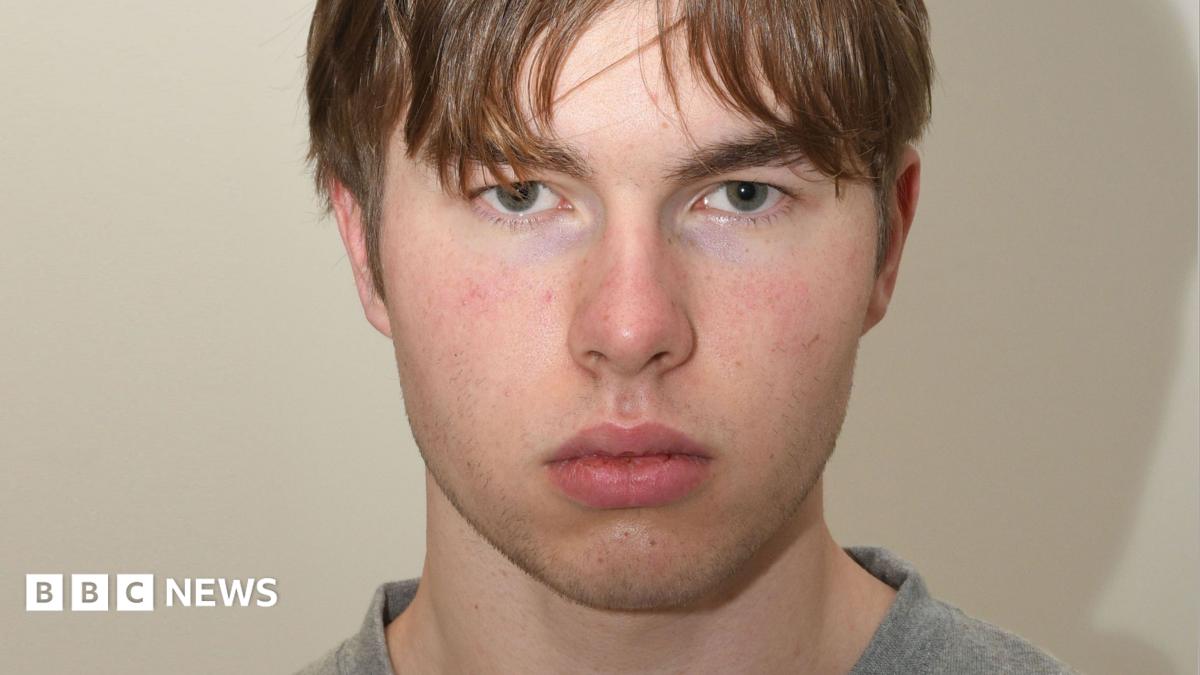
A teenager who travelled from Norway to the UK to carry out a “hit” for an organised crime group has been sentenced to 20 years’ detention.
Johannes Natland, 19, was arrested in a hotel room in Huddersfield, West Yorkshire, with two working guns and 19 rounds of live ammunition in March 2025, the Old Bailey previously heard.
During his retrial, a jury heard the teen was “recruited” by the Foxtrot Network, which was described as a Swedish organised crime group backed by the Iranian regime.
Natland, who had admitted to possession of the firearms and ammunition, was unanimously found guilty of conspiracy to murder and sentenced at Woolwich Crown Court on Friday.
The Foxtrot Network has been sanctioned by both the UK and the US for its close links to the Iranian government, with Natland’s target remaining unclear.
Commander Helen Flanagan, head of Counter Terrorism Policing London, said: “We haven’t been able to establish exactly who the intended victim was.”
The Foxtrot Network is known for pioneering a relatively new phenomenon of hiring teenage killers that Europol has called “violence-as-a-service” (VaaS).
At the sentencing hearing, Mrs Justice Cheema-Grubb told Natland: “The Foxtrot Network is an organised crime group which has developed an arm’s-length method of recruiting young people to carry out violent crimes.
“You were recruited to travel to England to kill an unidentified target.”
Natland flew into Manchester Airport on an emergency passport on 17 March 2025, shortly after his 18th birthday.
He was guided by videos on the messaging app Signal to Huddersfield, where the guns, a stolen car and a stash of cash were hidden.
He was prevented from carrying out the hit after Norwegian police arrested the teenager who had recruited him for the Foxtrot Network and found messages about the UK plot on his phone.
There was then a race against time to find Natland before he located his unknown target in England.
Addressing Natland, the judge said: “At the heart of this case is a stark fact. You agreed to assassinate another human being, a stranger to you, in a foreign country.
“You knew nothing of that person’s life or circumstances. You were just 18 years old when you placed yourself in readiness to murder for money.”
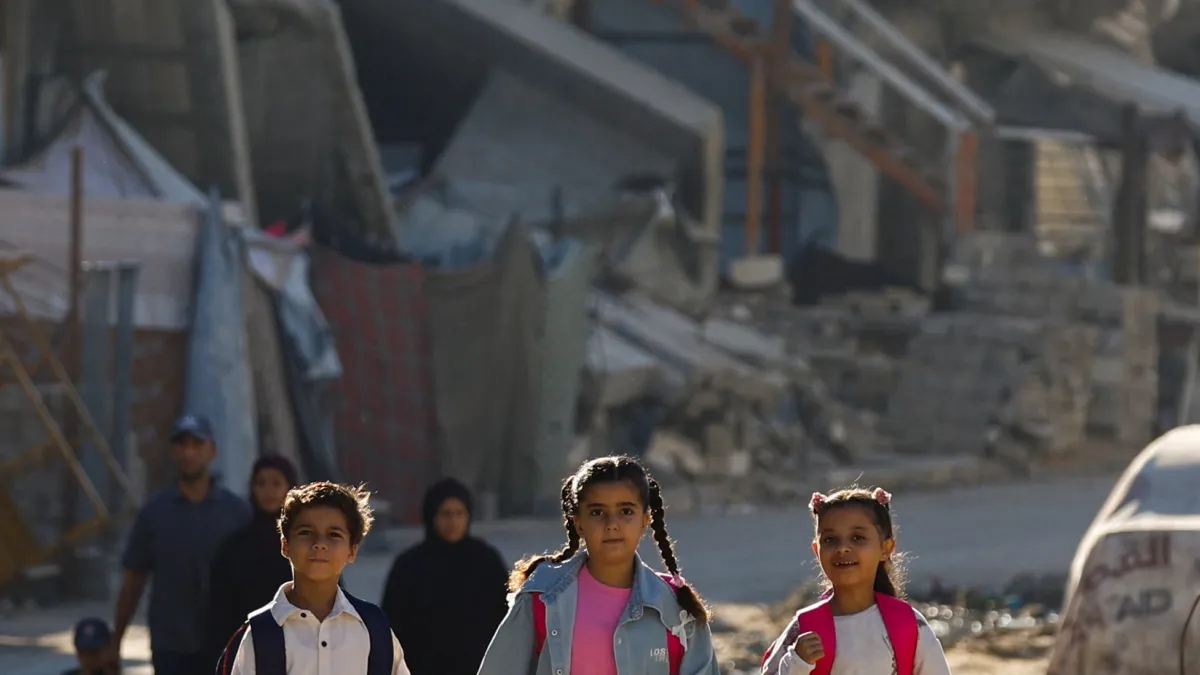
At least 350 Palestinian children currently face “harsh conditions” in Israeli prisons.
Published On 15 Oct 202615 Oct 2026
Israeli forces have detained more than 2,000 Palestinian children since October 2023, the Palestinian Prisoner’s Society said.
In a report released on Wednesday, the Palestinian rights group said Israeli authorities continue to escalate their targeting of Palestinian children. At least 350 Palestinian children are currently facing “harsh conditions” in Israeli prisons.
Recommended Stories
list of 3 itemsend of list
On Tuesday, Israeli forces arrested at least six children from Hebron in the occupied West Bank, the report said.
The organisation said information regarding the number of children arrested in Gaza is unclear, given the thousands of missing persons in the besieged Gaza Strip, including children, and the ongoing policy of enforced disappearance.
The group said Israel’s policy of detention without charges or a release date constitutes “an additional violation and crime that leaves children facing the unknown and deprives them of family and educational stability”.
Cases of Palestinian children in prison
The report described Israeli practices that begin with “intimidation and arrest” and extend to “torture, starvation and denial of healthcare”.
The group highlighted the case of 15-year-old Mohammed Hamid, who contracted scabies, a contagious skin infestation, while he was detained in Ofer Prison, where rights groups have long documented abuses. He suffered severe infections, underwent heart surgery and was admitted to intensive care in critical condition. He subsequently had one of his legs amputated.
The organisation also highlighted the case of 17-year-old Walid Ahmed, who died in March 2025 after six months in Megiddo Prison. In December, an Israeli judge halted the investigation into his death, stating that although there was evidence of starvation, no definitive cause of death had been established.
American children in Israeli prisons
Ahmed was imprisoned in Megiddo with his friend Mohammed Ibrahim, a teenager from Florida. Ibrahim was released after months of advocacy from US-based organisations and appeals from high-ranking lawmakers.
Mohammed Ibrahim was not the only young American held in Israeli prison without charge – Israeli forces reportedly took Abdalkareem Issa Ahmed Safi from his West Bank home in a late-night raid in June. He turned 18 in detention, and authorities subsequently moved him from a youth holding area into an adult section at Ofer Prison.
Similarly, Israeli forces arrested 16-year-old Adam Wajeh Abdelfattah Karakrah, also an American, in July. Although he was set for release in August after his family secured bail, Israeli authorities abruptly reversed the decision to free him.
The Palestinian Prisoner’s Society called for “real international action” to ensure the release of arbitrarily detained children, enforce investigations and end torture, starvation and the denial of treatment in Israeli prisons.
Israeli forces have detained more than 25,000 Palestinians in the West Bank, and thousands more in Gaza, since Israel’s genocidal war began in October 2023.
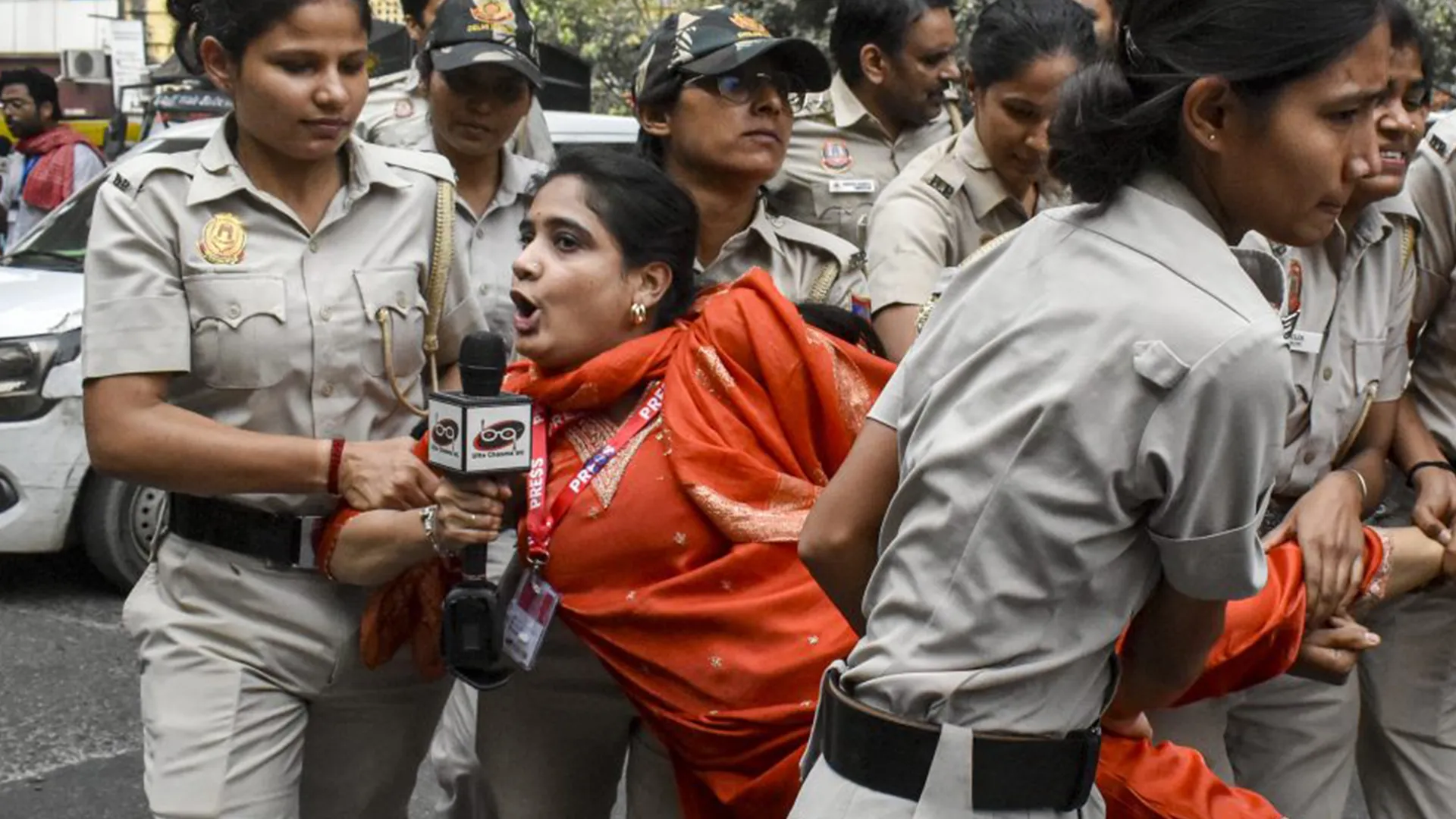
Police in India detained at least 35 media workers covering protests in New Delhi over a 48-hour period, according to the US-based Committee to Protect Journalists. Authorities allege they were obstructing police duties.
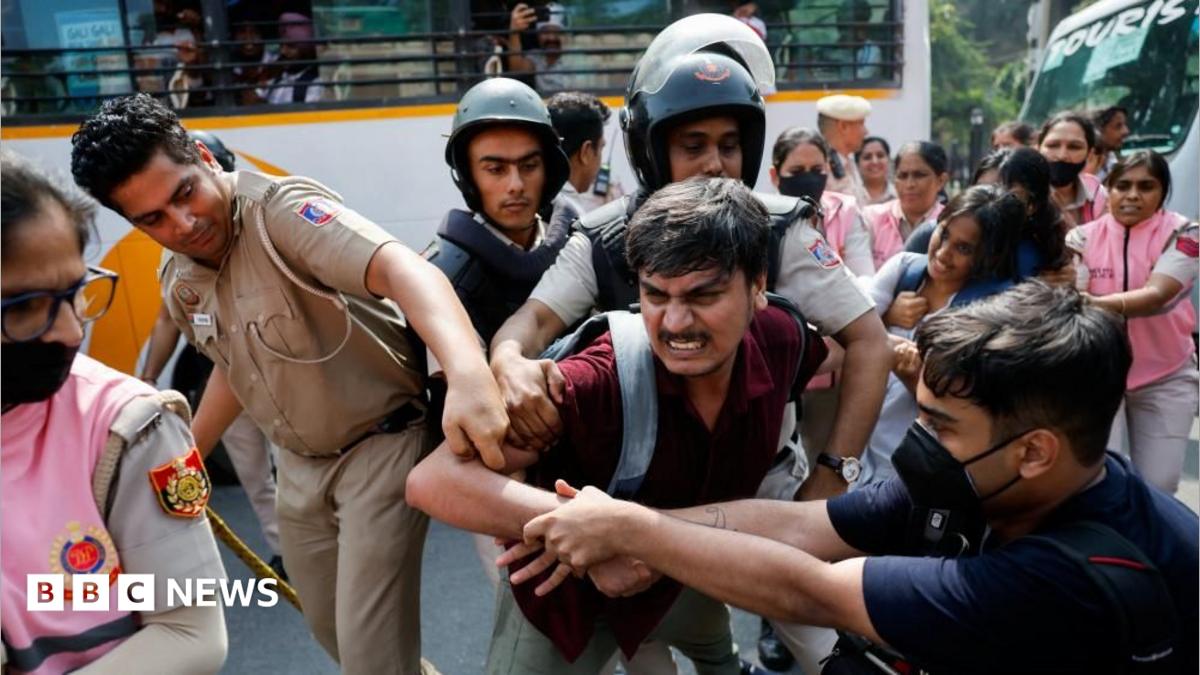
Hundreds of protesters have reportedly been detained in Delhi during the latest demonstration by the Gen-Z led Cockroach Janta Party (CJP) over electoral reforms.
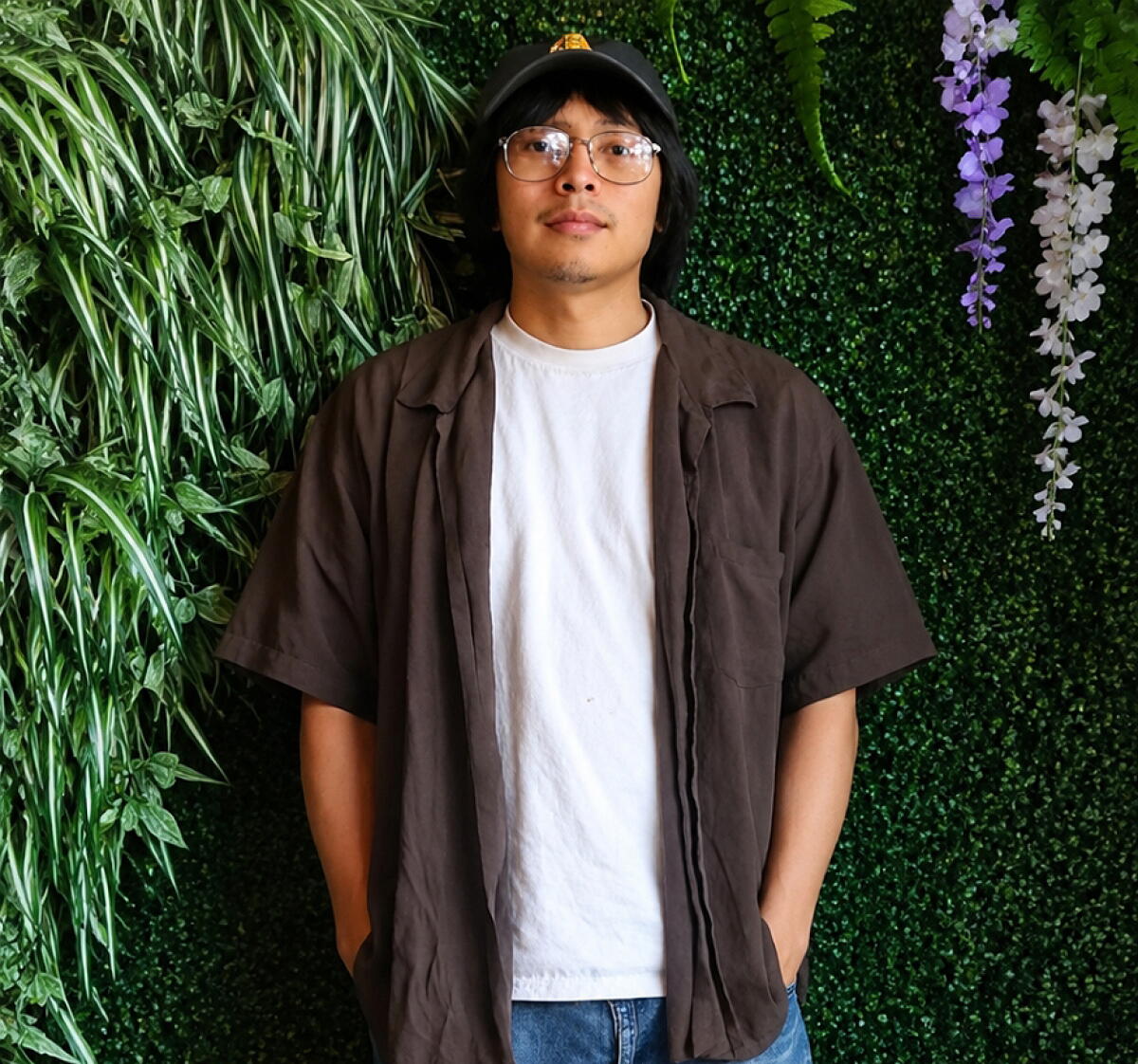
The group said its founder Abhijeet Dipke, who began the movement in May after India’s Chief Justice likened some jobless young people to “cockroaches”, was detained with other leaders shortly after landing in Delhi.
Tens of thousands of security personnel were deployed and roads barricaded ahead of the demonstration, though the CJP insisted it would go ahead.
Delhi Police has not commented on the detentions, but had refused permission for the protest to take place at Jantar Mantar, a landmark in the Indian capital.
The group – who are not registered as a political party in India – are seeking electoral reforms just months before crucial state elections.
It has also demanded the resignation of Chief Election Commissioner (CEC) Gyanesh Kumar over allegations of manipulating voters’ lists – which the Election Commission has denied.
Under Kumar’s leadership, India’s election commission has undertaken a mammoth exercise to update electoral rolls nationwide – it said this was a routine exercise to weed out dead, duplicate or ineligible voters.
But in many states, the exercise has been shrouded in controversy, with tens of thousands of people alleging they have been wrongly removed.
The CJP – and opposition parties – accuse Kumar of favouring Prime Minister Narendra Modi’s Bharatiya Janata Party (BJP) in the way the electoral rolls are being updated.
The Election Commission and the BJP have denied this.
Before arriving in Delhi, the CJP’s founder Dipke said: “If you think you can stop us by threatening us with jail or trying to intimidate us with the fear of imprisonment, you are mistaken.”
He and and two other leaders, Saurav Das and Ashutosh Ranka, were detained on their flight from Mumbai on Saturday.
The group claimed the three men have been taken to an undisclosed location. Delhi Police have not commented.
India’s Cockroach Janta Party says its members have been subjected to mass arrests across India ahead of Saturday’s protest in New Delhi. Protesters are demanding the election panel chief’s resignation over alleged irregularities in voter-list revisions that critics say benefited Modi’s BJP.
Rahul Gandhi has been arrested several times at protests demanding the resignation of poll body chief.
Published On 7 Oct 20267 Oct 2026
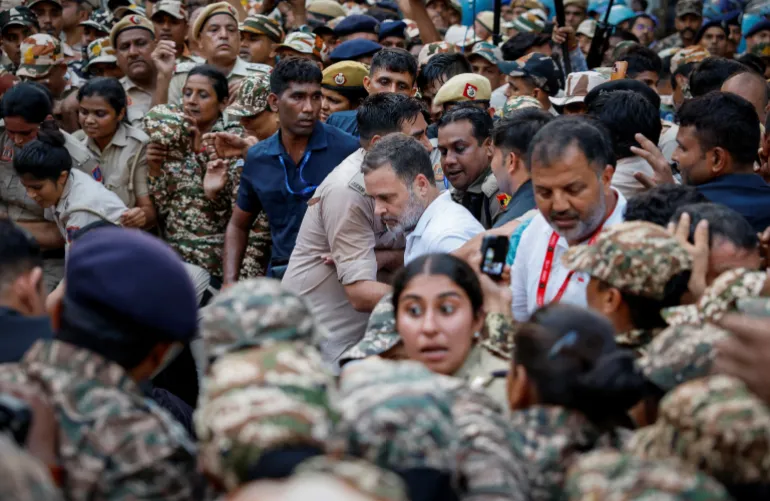
Indian opposition leader Rahul Gandhi has been detained for the third time in two days during a protest demanding the resignation of the election chief over a controversial revision of voter lists.
Gandhi and other opposition lawmakers were apprehended by police on Wednesday as they marched towards Jantar Mantar, a designated protest site in India’s capital, New Delhi.
Recommended Stories
list of 3 itemsend of list
A live feed on the YouTube channel of Gandhi’s Congress Party showed police taking him into a vehicle and driving away. Authorities also detained several other opposition lawmakers and protesters.
Opposition parties, their student units and the “Cockroach” youth movement have been demanding the resignation of Chief Election Commissioner Gyanesh Kumar, accusing the poll body he heads of benefiting Prime Minister Narendra Modi’s ruling Bharatiya Janata Party.
India’s Election Commission has so far removed more than 130 million names from the voter lists, with millions appealing the removals. About 969 million people were eligible to vote in the 2024 election.
Protesters allege the changes disproportionately removed voters who support opposition parties while preserving or adding voters more likely to back Modi’s party.
Police detain Indian opposition leader Rahul Gandhi during a protest organised by opposition parties in New Delhi [Adnan Abidi/Reuters]
The commission and government deny the allegations. They say the revision has no political motive but is aimed at removing duplicate and ineligible entries while ensuring eligible voters remain registered.
Opposition lawmakers led by Gandhi protested on Tuesday as well, before police broke up their gathering and briefly detained them.
Speaking before his detention on Wednesday, Gandhi said protesters showed up unannounced after Delhi police “stopped” their gathering the day before.
“We will go to the designated protest site, sit there, and tell the country that, for us, Gyanesh Kumar is not the legitimate commissioner,” he told reporters, referring to Jantar Mantar.
“The people who have done this [vote theft] are traitors … Gyanesh Kumar will have to resign,” he added.
There was no immediate comment from the police on the detentions.
The demonstrations present a new political challenge to Modi midway into his third term, just months after similar protests led by the Cockroach Janta Party youth movement forced the resignation of his education minister over exam paper leaks.
The “Cockroach” protests, one of the most visible signs of public dissent against Modi’s government in recent years, reflected growing anger over job scarcity, corruption and a lack of government accountability.
A man who killed dog walker Wayne Broadhurst and attacked two other people in a “frenzy of violence” in west London has been given an indefinite hospital order for manslaughter.
Dawood Safi, 28, fatally stabbed Wayne Broadhurst, 49, in the street during a series of knife attacks which began at Safi’s home in Uxbridge on 27 October last year.
Safi, who was having paranoid delusions and hearing voices, attacked his landlord Shahzad Farrukh minutes before killing Broadhurst, and also stabbed a 14-year-old boy.
This breaking news story is being updated and more details will be published shortly. Please refresh the page for the fullest version.
More than 1,700 healthcare workers have been killed during the genocide in Gaza. Israel has detained hundreds more without charges. Doctors, nurses and paramedics who stayed to treat the wounded have themselves become casualties of this war.
When medical staff are killed, imprisoned or disappeared, it is not only they who pay the price. Patients lose the people they rely on to keep them alive.
This is something delegates who gather in Rotterdam this week for the General Assembly of the World Medical Association (WMA) must remember. The fate of their Palestinian colleagues should be put on the table, not as a debating point, but as a test of whether the world’s governing body of medical ethics still means what it says.
The WMA already recognised the seriousness of these issues last year by adopting a resolution on the protection of healthcare in conflict. That was an important step and a welcome reaffirmation of the principles of medical neutrality. The challenge now is to ensure this is followed by the commitment of every medical association to explicitly support it and to use its influence to pressure governments to act.
If the WMA Assembly needs a single face for this file, it could be the one of Dr Hussam Abu Safia, the paediatrician who was the head of Kamal Adwan Hospital, the last functioning hospital in northern Gaza until Israeli forces stormed it in December 2024.
He’s been held now for more than 22 months without charge under Israel’s Incarceration of Unlawful Combatants Law, which permits indefinite detentions. He reportedly continues to endure prolonged solitary confinement, beatings, severe weight loss and untreated pre-existing conditions. An international petition for his release has drawn the signatures of more than 970 medical professionals from 41 countries.
Alongside him stands Dr Mazen al-Rantisi, the 71-year-old family physician from Ramallah in the occupied West Bank, known as the “doctor of the poor”. He was arrested in June in a predawn raid on his home.
In addition, our longtime Doctors Without Borders (MSF) colleague, Dr Mohammed Hassan Ali Obeid, a respected 43-year-old Palestinian orthopaedic surgeon and father of three children, has been detained under the Unlawful Combatants Law in Israel for more than 600 days without charge.
Although detained health workers have been released, more than 80 remain in Israeli custody alongside at least a dozen arrested from the West Bank.
The World Health Organization (WHO) has recorded 1,000 attacks on healthcare, which have resulted in more than 1,000 deaths and 1,700 injuries in Gaza since October 7, 2023. Roughly 90 percent of Gaza’s health infrastructure has been destroyed or damaged. In August 2025, United Nations experts stated that the systematic destruction of the health system amounts to “medicide”.
In the West Bank, where no wartime emergency provides cover, the WHO also documented more than 1,000 attacks on healthcare since October 7, 2023, with 42 deaths and at least 218 injuries.
Ambulances are stopped at checkpoints and their crews taken. Medics trying to reach people injured in settler attacks have themselves been obstructed. Dialysis and oncologic patients stay home because the checkpoints make the journey to treatment impossible. Healthcare workers have been shot, detained and killed during Israeli military raids.
All of this represents Israel’s deliberate and systematic endeavour to dismantle Palestinians’ capacity to provide care. This is consistent with its clear and blatant disregard for Palestinian life.
The WMA Assembly should speak plainly about what is happening. It should call publicly for the release of detained Palestinian doctors, including Abu Safia, al-Rantisi and Obeid. It should press for independent access to those still being held. And it should back independent investigations into attacks on healthcare in Gaza and the West Bank with the findings made public regardless of where they lead.
This is an opportunity to collectively pressure fellow medical associations, political authorities and any relevant bodies to take action.
What lies before the Rotterdam assembly is a duty. One that reaffirms loudly, structurally, universally the founding proposition of the WMA: that membership carries an ethical responsibility, which does not flex with geography or alliances.
Healthcare workers are not targets. Either a white coat is worth protecting everywhere, or it is protected nowhere. The test is not simply whether we affirm these principles, but whether we uphold them when it matters most.
The views expressed in this article are the author’s own and do not necessarily reflect Al Jazeera’s editorial stance.
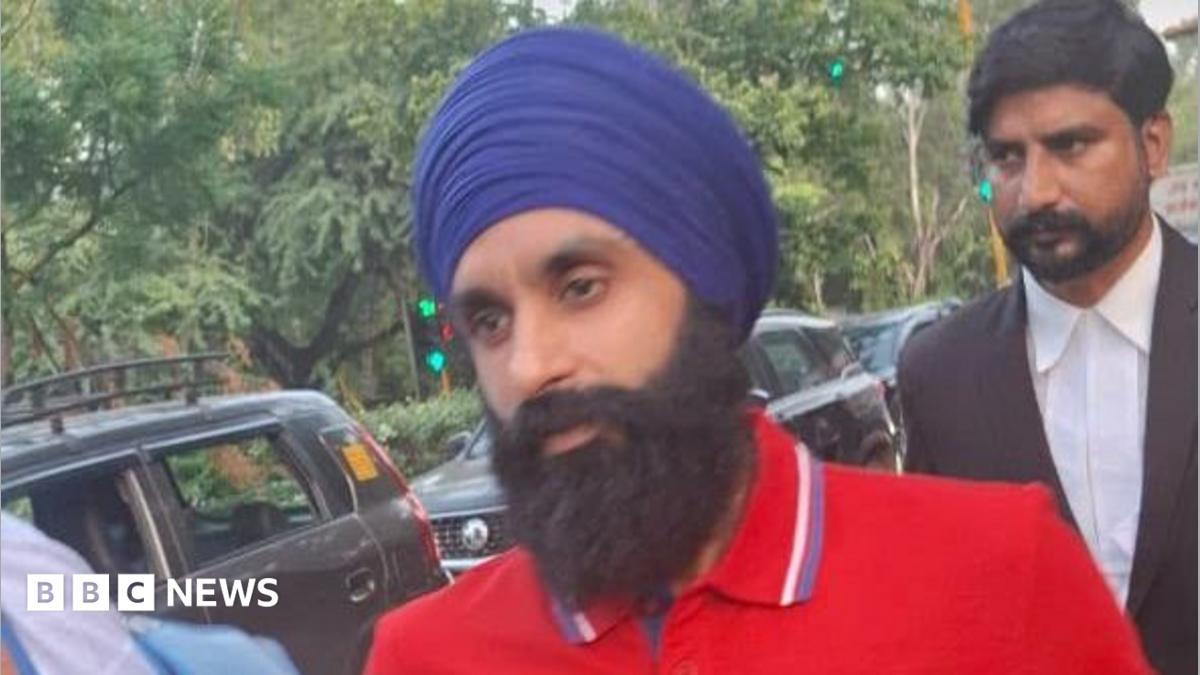
Last year Johal was acquitted in a case where he was accused of financially supporting the KLF terror group.
He remained in prison because he faces federal charges in eight other cases, for which he potentially faces the death penalty.
However, his legal team argues that these cases are almost identical and that the other charges should be dismissed.
There have been hundreds of hearings over the past nine years and the bail order concludes that the trial is “certainly not likely to conclude anytime soon”.
His brother Gurpreet Singh Johal – who has lobbied successive governments calling for his release – said the decision to grant bail had been a “really important milestone”.
“It is just a first step, but it is a step in the right direction,” he said.
The move was also welcomed by politicians and the legal charities Redress and Reprieve, who represent Johal in the UK.
Reprieve’s deputy executive director Dan Dolan said the release was “a really important moment” – but that Johal still faced the death penalty on “trumped up charges”.
“It is really important that we recognise he’s not out of the woods yet,” he said.
“We now really need to push to get him home.”
Redress said Johal’s release from prison could not undo “the intolerable suffering caused by nine years of arbitrary detention”.
In May, when Samuel Gonzalez Terrones was diagnosed with depression and schizophrenia, he started seeing a therapist and taking medication that he hoped would finally alleviate the dark thoughts that had begun creeping up so frequently he would sometimes seek help by calling the police on himself.
A month later, his mom, Minerva Terrones Dominguez, 54, had just hopped off a bus on her way to a grocery store in San Bernardino when immigration agents arrested her for being in the country illegally. While she languished in detention, the family said, Samuel grew increasingly despondent.
To help pay for an immigration lawyer, his siblings and dad had taken up extra shifts at their jobs. But because Samuel’s condition meant he couldn’t hold a steady job, he spent more and more time alone at home in Rialto.
“My mom was the one who would take care of him when he would have those bad thoughts,” said his older sister Sari Gonzalez, 32. “Everybody would be at work or at school, so my mom was the only one that would be here to calm him down, to say, ‘Your siblings will be here in a bit, just wait.’”
The lawyer, Arturo Burga, had figured out a way to free Minerva from detention and allow her to stay permanently in the U.S. The legal pathway, called cancellation of removal, hinged on proving that her deportation would cause extreme hardship to a U.S. citizen: Samuel.
They never got to file the paperwork.
Samuel Gonzalez Terrones, 21.
(Gonzalez family)
At 3:55 a.m. on Aug. 12, San Bernardino police responded to a railroad crossing. Samuel was pronounced dead at the scene, according to a San Bernardino County coroner’s news release. He was 21.
In a letter Samuel wrote before his death, an excerpt of which was shared with The Times, he talked about his mother’s detention. He said her being taken away by Immigration and Customs Enforcement made him feel like he’d hit “one last wall.”
“To the ICE agent who took away my mother: I hope it was worth it,” Samuel wrote. “I can’t handle anymore injustices in this world.”
Suicide prevention and crisis counseling resources
If you or someone you know is struggling with suicidal thoughts, seek help from a professional or call 988. The nationwide three-digit mental health crisis hotline will connect callers with trained mental health counselors. Or text “HOME” to 741741 in the U.S. and Canada to reach the Crisis Text Line.
Motivations for suicide are often complex and unknowable, and it’s unclear how the Trump administration’s aggressive immigration policies may have moved an immigrant or family member to harm themselves. But immigrant advocates say they have heard of such deaths.
This month, a 20-year-old Haitian man in Springfield, Ohio, walked into oncoming traffic after the Trump administration ended his Temporary Protected Status and ICE fitted him with an ankle monitor.
In May, the Associated Press found that at least 10 detainees had died by suicide since President Trump took office — a pace that far exceeds the growth in the detainee population.
ICE did not respond to requests for comment.
Samuel’s family describes him, the second youngest of seven siblings, as a caring and generous person who, at his best, was quick to laugh, loved chocolate conchas and video games, and dreamed of becoming a graphic designer.
He kept a dark aesthetic, with a lip piercing and nails frequently painted black or red. But he also had a lighter side, Sari said, as evidenced by the Hannah Montana stickers decorating his bedroom wall.
When the siblings were younger, they worked out together and would challenge each other to see how many pull-ups they could do. They liked hanging out at a skate park, laughing as he guided Sari’s small dog, Polar, down a rail on a board.
His mental health struggles started in 2021, when he was a freshman at Cajon High School. Little by little, he lost his passion for the gym, Sari said, and everything else.
An undated photo of Samuel Gonzalez Terrones.
(Gonzalez family)
Sari said she and her siblings each played a different role in helping Samuel through his struggles. He and his younger sister played video games. Sari would talk to him about adulthood. Their older brother would take him to church. On good days, their father would bring him along to landscaping jobs.
“He really did try to get better,” she said. “He held on for a really long time, and I’m proud of him for being so strong.”
The day Minerva was detained, Samuel and Sari were at home.
According to a federal court petition seeking Minerva’s release from ICE custody, federal agents stopped her, said she “looked like someone” they were seeking and mocked her when they found her EBT card while searching her belongings.
Minerva has lived in the U.S. for 33 years, had never been arrested or convicted of a crime and had never been in removal proceedings, according to her lawyer.
Sari said an ICE agent called her and said she had an hour to pick up her mother’s things from the agency’s local office and to say goodbye before ICE moved her to a detention center.
Samuel was inconsolable. “I’ve never seen him cry like that,” Sari said.
Sari took up extra hours at the plastics factory where she works as a machine operator. On Sundays, her only day off each week, she would take Samuel and their youngest sister to visit their mom at the Adelanto ICE Processing Center. The drive was 45 minutes without traffic, but they’d always arrive three hours early to join other families on the wait list to see loved ones.
On the way to the facility, Samuel was visibly happy. But on the way home, Sari said, all would be crying.
Friends and relatives attend the graveside service for Samuel Gonzalez Terrones.
(Gina Ferazzi/Los Angeles Times)
The extra expense of legal representation left the family struggling to pay for bills and food. In the evenings, Samuel stopping spending time with his siblings and retreated to his bedroom.
Burga, the lawyer, alerted ICE of Samuel’s death via email and requested Minerva’s emergency release under humanitarian grounds. He said the ICE deportation officer who replied struck a softer tone than usual, offering sincere condolences to the family.
“Our office was devastated,” said Amber Burga, executive director of the law firm. “I thought to myself, it takes somebody committing suicide for them to have compassion.”
Sari waited two weeks to tell Minerva. She waited, in part, because her mom had an upcoming court hearing and she didn’t want grief to cloud her thinking.
Sari was given 10 minutes in a visitation room to break the news about Samuel’s death to her mother.
“It was just me, my aunt and the officer who was watching,” she said. “When I told her, they wouldn’t even let me hug her while my mom was crying. They told me, ‘You can’t hug her. You can’t touch her.’”
Three days later, on Aug. 31, a federal judge — who didn’t know about Samuel’s death — issued an order granting her petition for release from detention, finding that she had been held illegally “based solely on DHS’s mistake.”
In her ruling, U.S. District Judge Brianna Fuller Mircheff wrote that when Minerva was detained, another federal judge had already declared it unlawful for Homeland Security to require mandatory detention for people who, like her, had entered the U.S. illegally.
Minerva had been arrested without a warrant, and an immigration judge had not determined whether she was a flight risk or a danger to the public.
Referring to Minerva and similar cases, Mircheff wrote, “Hundreds, if not thousands of individuals were held without process that was owed to them.”
Lawyers for the federal government had argued that Minerva could simply wait until she had been detained for six months, at which point she’d be entitled to a bond hearing, court records show. That suggestion didn’t fly with Mircheff, either.
“It is beyond cruel to suggest that this Court would let her sit in custody another four months,” she wrote.
Minerva is still in deportation proceedings. Without Samuel, she no longer qualifies for the legal pathway her lawyers had built a case around. Sari said she’s now considering joining the U.S. military to access the immigration benefits available for undocumented parents of enlisted members.
The family started a fundraiser to cover the cost of Samuel’s funeral.
Samuel’s parents, siblings, and a few dozen other family members and friends arrived on Sept. 22 at noon to bury him at the Rialto Park Cemetery. Each person held a white, long-stemmed rose.
Sari sobbed. Minerva looked on at the black casket holding her youngest boy, the goofball who loved his family, the one who had longed for her support while she was detained.
Times staff photographer Gina Ferazzi contributed to this report.
Tunis, Tunisia – For nine-year-old Yassar Naouar, visiting his father in prison has become an exercise in staying strong. He tries not to cry in front of Wael, fearing that seeing his son in tears would make an already painful situation harder for him. After leaving the prison, Yassar finds a corner where he can finally let the tears fall.
Hichem Naouar, Yassar’s grandfather, says the boy has changed since his father was detained. He now sleeps beside his mother after waking up screaming at night and his results at school have worsened. When Yassar told his mother that other children kept asking whether his father was a thief, she asked him what he thought.
“Never,” the nine-year-old replied.
Wael’s youngest child, four-year-old Sumud, is too young to understand why her father is in prison. Hichem says he took her to visit him. When she saw her father behind the glass, she leaned forward to embrace him, only to hit her head against the barrier.
Hichem spoke to Al Jazeera on Wednesday outside the Tunis Court of Appeal, where he had gone to follow the latest challenge to Wael’s detention. He repeatedly choked up as he described what he had seen during his most recent visit.
Wael was sitting with his hand against his cheek, his father said, his elbow trembling and his gaze fixed in the distance. He was struggling to see clearly and to keep water down without vomiting. He was dizzy and had difficulty controlling his left leg. Wael later told Hichem that other prisoners had said he sometimes wakes during the night calling out his youngest daughter’s name.
For his father, however, Wael’s story is also about the kind of person he has been. He recalled an incident during the Sumud land convoy in Libya in May, when armed men tried to kidnap another participant. Wael intervened, pulled the man away and helped him escape before returning to the men and telling them they could take him instead.
During the first Sumud flotilla, a female fell into the sea and was close to drowning. Wael immediately jumped in and rescued her.
“Wael’s strength is in the strength of his ideas and in his commitment to his people. Whenever he heard about any injustice against workers or employees, you would always find him at the forefront,” Hichem said.
The case and its wider fallout
Wael, 41, began a hunger strike on August 16 to protest his continued detention and was transferred to hospital as his condition deteriorated. He suspended his strike after 38 days following appeals from his lawyers and supporters, saying the decision did not mean abandoning his demands.
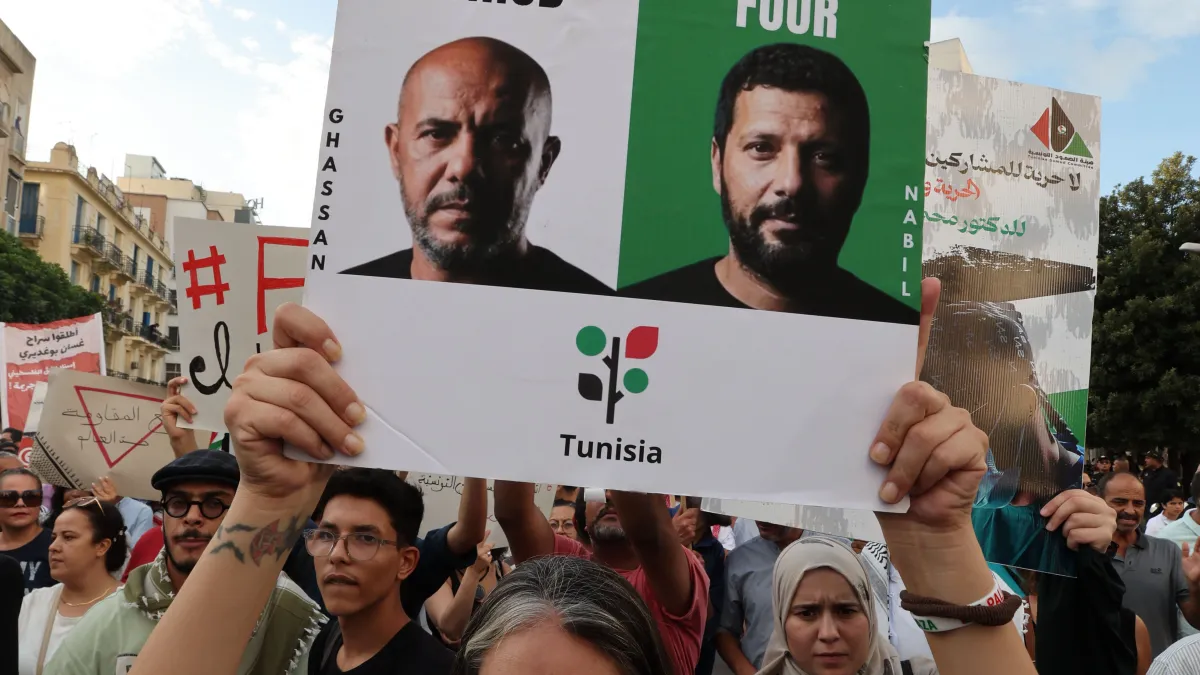
Four activists, Wael Naouar, Ghassan Henchiri, Ghassan Boughdiri and Nabil Channoufi, have been held since March following an investigation by Tunisia’s Economic and Financial Judicial Pole, a specialised body that handles financial and economic crimes. The investigation concerns alleged financial irregularities linked to fundraising for the Global Sumud Flotilla, an international campaign seeking to deliver aid to Gaza and challenge Israel’s blockade of the Palestinian territory.
The state-owned TAP news agency, citing judicial sources, reported that investigators are examining the origin and use of funds collected for the flotilla and whether any were diverted for other purposes. The activists and their defence team have repeatedly denied wrongdoing and maintain their innocence. None of the four has been convicted.
For their lawyers, the issue is also why the men should remain in prison while the investigation continues.
Ghassan Ghribi, a member of the defence committee, described the latest extension of their pretrial detention as an “exception to the exception”, arguing that freedom should be the rule and detention the exception. The four-month extension was ordered on September 11 and the defence challenged the decision before the Court of Appeal in Tunis.
“The investigating judge spent six months on the case without carrying out any investigative work, other than questioning the activists,” Ghribi told Al Jazeera. He said the extension should be based on clear reasons and that the four men were being made to pay the price for what he described as a lack of investigative work.
The Court of Appeal rejected the challenge on Wednesday, leaving the quartet in pretrial detention for another four months while the investigation continues. Henchiri, Boughdiri and Channoufi remain on hunger strike.
Authorities have presented the case as a financial investigation into the handling of funds raised for the flotilla, rather than a prosecution linked to the men’s political or pro-Palestinian activities. The government has rejected accusations that the judiciary is being used to silence opponents, saying the judiciary is independent and that legal proceedings are conducted according to the law.
The fallout has also widened beyond the four men. Fourteen people detained after the September 19 protest calling for their release have since been placed in pretrial detention, lawyer Rafed Rabbeh confirmed to Al Jazeera on Friday. Among them is a 17-year-old who was brought before a juvenile judge. Tunisia’s Child Protection Code says priority should be given to preventive and educational measures and that pretrial detention should be avoided as much as possible for children.
Rabbeh said the detainees face several charges, including participating in a gathering allegedly intended to disturb public order and commit an offence, publicly attributing unlawful acts to a public official without proof, and making public statements deemed to damage the reputation of a person or official body. The charges are based on several provisions of Tunisia’s Penal Code.
The toll on those left behind
Speaking by phone from Gafsa, Ghassan Henchiri’s father, Sebti, said his son remains conscious but is visibly exhausted after being on hunger strike since September 9.
“According to what his sister told me after visiting him, he is still holding up. The fatigue is visible. He is exhausted, but he is still conscious,” Sebti said.
Ghassan has not been taken outside the prison for further medical examination of a head injury sustained during his detention in Israel, Sebti told Al Jazeera. Ghassan and his family have raised the issue with both the prison administration and investigating judge. They were promised that he would receive the necessary medical examinations, but that has not happened, Sebti said.
“It could be a superficial injury, but with the conditions in prison and the high temperatures, it has exhausted him,” he said.
Ghassan also has other health problems, including living with one kidney and suffering from back problems, Sebti said. He has developed a skin rash that keeps him from sleeping, but his request to see a dermatologist was rejected because the prison doctor did not consider it serious, Sebti said.
“I will remain steadfast, I will not give up my right and these malicious accusations are false,” Ghassan told his father.
“He is my son, my brother, my companion, my whole life,” Sebti said. “Ghassan is a man of integrity. I am not saying that because I am his father. Everyone knows that about him.”
Ghassan’s detention has also reshaped family life. He had been working at a high school and was recently engaged, Sebti said.
He described Ghassan’s political commitment as something rooted in the family. He has been involved in student activism and later trade unions since 1978, campaigning for freedom, the right to organise and a better, more dignified life for Tunisians. Ghassan grew up with those principles and was influenced by his father’s activism.
“This is what Ghassan was raised on and what influenced him,” Sebti said.
Human Rights Watch has also raised concerns over the use of financial and money-laundering investigations against civil society actors in Tunisia.
For the Naouar and Henchiri families, the impact of the detentions is being felt at home, in prison visits, anxious phone calls and children asking when their fathers will return.
Yassar still asks about his father and has told his grandfather he is ready to go on hunger strike too.
Asked where her father is, four-year-old Sumud answers: “Palestine. Prison”.