This European city has been crowned the world’s best destination for food lovers
Isobel Pankhurst Audience Writer
08:26, 03 Apr 2026
This city has been named the best destination for foodies(Image: Getty)
One European city has been crowned the ultimate travel destination for food lovers. A new study by Titan Travel examined cooking class availability, ratings, pricing, and worldwide search demand, concluding that the Italian city of Florence reigns supreme for gastronomically-inspired getaways.
Florence wasn’t the only Italian gem to feature on the list either, with Italy dominating all three top spots: Palermo claiming second place and Bologna taking third. Rome then tied for fourth alongside Portuguese capital Lisbon, with Venice, Brussels and Barcelona all sharing fifth place.
Researchers discovered that Florence boasts a staggering 213,300 culinary experiences, encompassing 231 cooking classes, 74.5% of which hold a four-star rating or above.
And depending on when you book, Skyscanner has flights to Florence starting from just £31.
Weighing in on the growing trend of foodtourism, and how it has become an increasingly significant factor for holidaymakers when planning their trips, Cassie Stickland, Product Manager at Titan Travel, said: “Today, travellers want to do more than just see the sights.
“They want to really experience a destination. Food is such a fantastic way to do that, because it connects you directly to local life and tradition. Taking a cooking class abroad allows you to do something, learn something, and return with a valuable skill.
“When planning your 2026 travels, look for tours that include a hands-on cooking experience. The best ones start with a market visit to get ingredients and end with you sitting down to enjoy what you’ve created.
“The most rewarding experiences tend to come from local chefs and family-run kitchens, where you’ll not only learn recipes but hear the stories behind them.”
World’s best cities for food
1. Florence, Italy
2. Palermo, Italy
3. Bologna, Italy
4. Lisbon, Portugal and Rome, Italy
5. Brussels, Belgium, Barcelona, Spain, and Venice, Italy
One Friday night last year, Akylah Cox and her boyfriend took a red-eye flight from Pennsylvania to Dublin for a whirlwind adventure. The trip lasted less than 30 hours. They hit up an impressive number of spots: the Guinness Storehouse, the Book of Kells experience at Trinity College, Ha’penny Bridge, Capel Street for thrifting (“I gave myself only 30 minutes to do this, but it had to get done,” Cox says) and the Celtic Nights dinner and show.
They were back home on Sunday and went to work the next day.
She shared her experience on TikTok with the caption, “Was this crazy?!” The responses varied.
“I would be tired the rest of the week,” one person commented with two woozy-face emojis.
“This inspired me!” another said.
“I’m tryna be this level crazy,” commented another.
Akylah Cox and boyfriend Akram Imam in Dublin in February 2025.
(Akylah Cox)
For Cox, who was working full time in engineering and pursuing an MBA while her boyfriend was completing his medical residency, creating an ultra-compacted itinerary was the only possible way to travel. And she loves the practice. On TikTok, she shares her itineraries for “microtrips” — short, usually international trips lasting 24 to 72 hours.
“You can just leave,” says Cox, who lives in Chicago. “You can have that quick break, that quick reset.”
She’s part of a new wave of travelers, particularly Gen Z, opting for these types of trips over extended vacations, according to an AirBnb trend report. Partly fueled by a viral TikTok trend in which people break down how they spent one to two days in another country, young travelers are no longer waiting for spring break or to accumulate paid time off to cross destinations off their bucket lists. A recent Expedia survey found that 25% of Gen Z and millennial travelers said they plan to take a microtrip in 2026, with Toronto; Nassau, Bahamas; and San Juan, Puerto Rico, being the most popular destinations.
“Short trips can fit busy schedules much better than a longer vacation can, which allows more people to explore the world without committing to long absences from work or family,” says Airbnb communications lead Ali Killam. “I think people are really embracing this idea that even brief changes of scenery can really recharge you, your mind and spirit.”
Another driver of the trend could be the fact that younger generations consider travel a top priority in their lives. In 2023, Gen Z and millennial travelers took an average of five trips per year, compared with Gen Xers and baby boomers who took less than four. Gen Zers and millennials allocate an average of 29% of their income for travel, reports the management consulting firm McKinsey & Co. (though a study last year by Savings.com found that a growing number of parents are helping their adult children out financially more than ever). Among younger generations, there’s also a mantra of doing things “for the plot” and taking chances because the future feels uncertain.
“Younger millennials and Gen Z are really creating their own version of the American dream, which I think is really based off of experiences and the memories that you’re able to create,” said N’Dea Irvin-Choy, 30, an L.A.-based content creator who posts about luxury travel, skiing and tennis experiences.
Kareen Hill, 27, of New York, is another microtrip crusader on social media. Since October, he’s been taking trips to explore the food scenes of various cities. In January, he went to London for two days and posted a recap video on TikTok that received more than 1.5 million likes. He now tries to take a trip, either international or domestic, about every two weeks.
“I just realized you do have free will,” says Hill, who works at an airport. “Like why not?”
N’Dea Irvin-Choy at the Eiffel Tower in Paris, left, and Kareen Hill at the Colosseum in Rome.
(N’Dea Irvin-Choy; Kareen Hill)
Beyond convenience, microtrips can also be more affordable than longer trips — an important factor as oil prices rise and airfares are already beginning to surge. With the help of credit card points and a travel credit, Cox’s trip to Dublin was just under $450. She says these quick trips are a “low barrier to entry” to international travel because you only have to plan an itinerary for one or two days. And the more flexible you can be on the timing or destination, the better chance you’ll have at finding deals.
Another benefit is how short trips force you to be intentional about how you spend your limited time. “You can get a lot more done than maybe you think you can,” she said. During a three-day trip to Japan with her mother and grandparents in May (not including the travel time), they were able to squeeze in a food tour and multiple tourist attractions in Tokyo and Mt. Fuji.
Of course, a common concern about microtrips is how exhausting they can be, especially if you’re traveling across time zones. And, yes, the fatigue can be real and travelers should certainly consider their bodies’ limits. But the purpose of these trips is to explore a destination rather than relax, Cox says. Once you’re in that mindset, you can better embrace the experience. “You really don’t have the impact of jet lag because you’re purely running on adrenaline,” she says.
Want to take a microtrip yourself? Here are some tips:
Book the earliest flight possible to your destination and the latest flight back so you can optimize your time, advises Irvin-Choy. Definitely try to opt for nonstop flights.
Make it easy to move around your destination. Hill says it’s best to avoid checking a bag and to pack light. Cox recommends booking a hotel that allows you to store your bag even if your room isn’t ready.
Prioritize your “musts.” For each of her microtrips, Cox uses the same formula: Pick three must-do activities or sights and plan the rest of your trip around those. One of her favorite things to do in any new city she’s visiting is go on a food tour.
Prepare to jump back into the grind at home. Irvin-Choy recommends parking your car at or near the airport, which can sometimes be cheaper than opting for a ride share when it’s such a short trip. You also might want to wear your work clothes on the plane, so you can head straight into work if necessary.
And finally, don’t forget to get some rest during your trip — even if it’s on the plane. “That’s the hardest part when it’s so short,” Irvin-Choy says. “But make sure you get some sleep at some point during the weekend.”
AS Brits frantically try and choose their summer holiday destination this year amid the Middle East crisis, let me sell you a slightly different place to go.
Lima, the capital of Peru, almost feels European, and has much cheaper food, hotels… and booze.
Sign up for the Travel newsletter
Thank you!
The city of Lima feels European but barely any Brits goCredit: GettyI visited last year and it became my new favourite destinationParque del Amor (Love Park) was inspired by BarcelonaCredit: Getty
The seaside city is the second largest desert city in the world (after Cairo) meaning barely any rain, and highs of 27C.
It is often overlooked as a travel destination, especially those heading straight over to Machu Picchu instead.
But despite just spending a few days in Lima myself, it became one of my favourite cities.
First up, safety – most of Peru is still safe to travel to, which includes Lima.
And as a young woman, I never felt unsafe while walking around early for a coffee or late at night for a drink.
Our guide told us this huge change in recent years – when it wasn’t so safe – is due to the number of community officers around, who are on hand to help tourists who visit.
When it comes to exploring the city, I was transported to the surf towns of Portugal by the huge surfing community in Lima.
It has some of the best waves in the world, and the sheer number of cyclists with boards on their bike and surf shacks offering lessons was huge.
Then there is the colourful Barranco neighbourhood, named one of the best in the world and known for its colourful street art that is everchanging.
Here is where you’ll feel its Latin American routes, with live music on the streets and bars selling the famous Pisco Sour cocktails.
Time Out said: “It’s long had a bohemian vibe, famously fantastical murals, world-class art galleries, boutique hotels and hopping bars.
“And while it’s lost none of its wild roots, the area is now incubating some of the best restaurants in the world”.
Maido was named the no.1 restaurant in the world last year, while I headed to Mayta which often makes the top 40.
I opted out of the tasting menu, but still managed to enjoy a delicious deconstrusted paella, a side and a glass of wine for under £50.
The ‘godfather of modern Peruvian cuisine’ Gastón Acurio told local media: “Lima is a gastronomic destination coveted by kitchen lovers.
“Not only because of its restaurants, which compete equally with Europe, but because behind this recognition there is something deeper — a city that has made its cuisine parallel to everyday life.
“From award-winning restaurants to carts, from ceviche shops to chifas, eating in Lima is one way to travel the entire country in a single day.”
Want to eat on a budget? You can easily get snacks and drinks for under £5 from food stalls.
I managed to find an Emoliente (a sugary hangover drink) as well as a famous pork sandwich and sweet doughnuts called ‘Picarones’ for under a fiver altogether.
Or some restaurants offer the “menú del día” or menu of thte day for not much either.
Usually including a drink, soup and main dish, this can be found for under £4.
Beers can also be found for around £1.50 in local bars as well.
Picarones, a typical Peruvian dessert cost a few poundsCredit: GettyBarranco was even named one of the world’s coolest neighbourhoodsCredit: Getty
Our favourite loveholidays deals
*If you click on a link in this box, we will earn affiliate revenue.
Belpoint Beach Hotel, Antalya, Turkey
This hotel is surrounded by the forests of the Toros Mountains, giving your outdoor swim a pretty impressive backdrop. With a pool decorated with colourful parasols and a waterslide, this pretty resort also has plenty to do indoors, including a sauna and a Turkish bath to unwind in.
The huge resort has 363 rooms, each with a balcony or terrace overlooking the sea or gardens. All-inclusive food includes three daily meals in the main buffet restaurant, as well as drinks and snacks such as pizza, hot dogs and burgers at the pizzeria snack bar. If you fancy getting out and exploring, the town centre is a 10 minute drive away.
Terramar Calella puts you right in the thick of the action, with the sea on one side and the buzzing promenade on the other. Here, days start with sea swims and end with sunset drinks. Platja Gran Calella is the area’s largest beach, and here it’s right on your doorstep.
This Corfu resort was built for families, buzzing with entertainment and activities. With four adult pools, three kids pools, a mini waterpark and a beach on your doorstep, there’s plenty of spots for you to stretch out on a sun lounger and for the kids to splash around. And as the day winds down to a close, the party starts with mini discos, Greek dancing, lively quiz nights and karaoke.
Otherwise make sure to try fantastic chocolate and coffee shops, with Lima being one of the top exporters to the rest of the world for both.
Free activities include the Spanish-style Love Park, inspired by Park Güell in Barcelona or the Museum of Art (MALI) on Tuesdays.
And the Historic Centre of Lima has elements of European architecture too, dating between the 16th and 19th centuries.
If you don’t mind sharing a room, you can find hostel beds for as little a £13 a night.
But if not, even hotels can be found for around £33 a night, such as Ibis – so £16.50 each a night when sharing.
The only thing getting in the way of Lima becoming a popular destination with Brits is the getting there.
LATAM previously had direct flights from London Heathrow to Lima but these were suspended back in 2023, with no current plans on when they will return.
Instead, Brits have to fly via Europe so with changes in Madrid, Amsterdam or Paris.
This takes the trip from around 12 hours to 16 hours, and costing around £500 return.
But there is some good news – the new Jorge Chávez International Airport in Lima opened last summer, which is likely to encourage airlines to launch flights.
And airline LEVEL is launching direct flights from Barcelona to Lima from June.
So if you want to visit a unique city with surfing vibes, colourful neighbourhoods and insanely cheap food and drink? Add Lima to your 2026 list.
Being a seaside city, expect lots of surfers tooCredit: Imágenes del PerúThe best way to get to the city is via Madrid, Paris or AmsterdamCredit: Getty
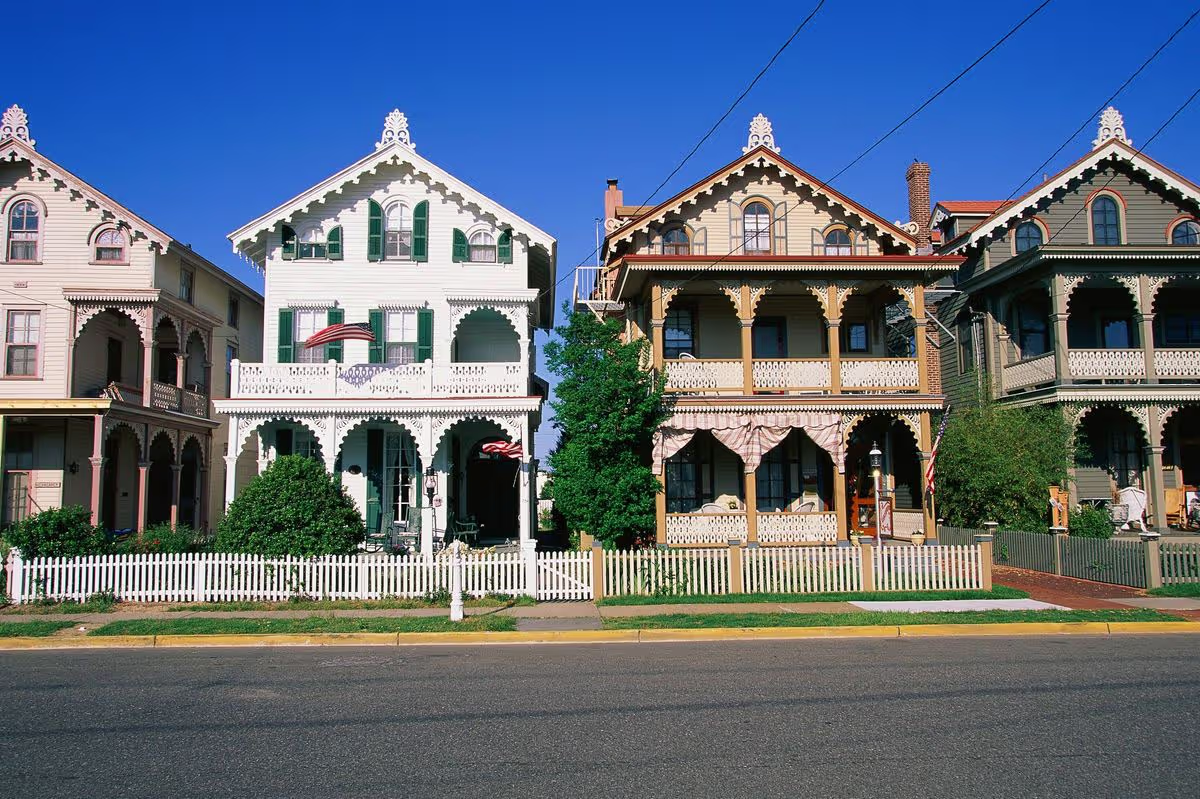
This beautiful seaside town has been named among the best places to relocate to in America
Best city in the US to relocate to that Americans say is frozen in time(Image: Getty)
A recent study conducted by The Law Offices of James Scott Farrin examined working and living standards throughout the United States to identify the most desirable location to move to in America. The investigation took into account elements including annual earnings, insurance provision, living expenses, safety rankings, housing affordability, and general standard of living.
New Jersey was identified as one of the finest states to relocate to in 2026, for both living and employment purposes. Expatriates in New Jersey can anticipate generous wages, a secure setting, and pleasant weather conditions.
Among the premier retirement destinations in New Jersey is Cape May, a stunning coastal resort that “feels frozen in time”.
Cape May is a pedestrian-friendly historic town, and ranks amongst the most established seaside resorts, boasting 19th-century Victorian properties, delightful shops and excellent restaurants.
The area experiences a humid subtropical climate characterised by sweltering, muggy summers. According to Great Family Vacations, Cape May ranks as one of the top places to retire in the United States.
The picturesque town provides pensioners with a tranquil seaside way of life, picturesque shores, and a lively and hospitable community. The travel specialists stated: “Cape May, on the southernmost tip of New Jersey, is much more than another seaside retreat.”
American pensioner Michael Potts remarked: “Cape May is a nice Victorian town. It has terrific restaurants, great beaches and is laid-back. It has exactly what we were looking for.” Another pensioner remarked: “There’s endless walking in town and a path along the beach. The beaches are clean; the architecture is beautiful.”
British expats flocked to Tripadvisor to voice their opinions, with one noting that the American town feels like travelling back in time as it boasts “the largest concentration of Victorian houses in the US”.
Another resident said it brought back memories of Brighton. “The shops are especially similar. The beach in Brighton was all stones, which made it quite hard to walk. The pier in Brighton reminded me of some of the boardwalks in Wildwood or Ocean City, NJ.”
These locations are perfect for anyone looking for an affordable getaway
Isobel Pankhurst Audience Writer
13:57, 26 Mar 2026
Enjoy a deliciously chilled glass of white wine in a beautiful country(Image: Catherine Falls Commercial via Getty Images)
After arriving at your holiday destination, many travellers fancy unwinding with a simple glass of vino. While the price of wine might not be top of your list when arranging a getaway, you could find yourself gobsmacked by the costs once you land.
To help avoid this, Holiday Pirates have shared on Instagram the most budget-friendly wine destinations across Europe, where you can grab a glass for well below £5. Leading their rankings were Hungary and Portugal, where a typical glass will set you back between £1.70 and £3.40.
Plus, Portugal is only a two-to-three-hour flight away from the UK. And timing it right, Skyscanner shows return flights to Portugal starting at £26, and to Hungary from £35. This means you’ll savour some quality wine without having to empty your wallet just getting there.
It’s not only individual glasses that work out cheaper overseas, with Drink Merchants having previously disclosed that in Portugal, a bottle averages merely £3.91.
Content cannot be displayed without consent
Both Portugal and Hungary boast their own wine-producing regions, and with numerous vineyards scattered throughout, you can sample the nation’s wines at bargain prices during your stay.
Alternative choices for those seeking somewhere to purchase a glass of wine for less than £4 included Bulgaria and Spain, where you’ll be spending between £2 and £3.80.
These destinations can prove economical in other respects too, with Skyscanner showing return flights to Bulgaria from £32 and to Spain from only £24.
THE must-visit destinations across the UK have been revealed and North Yorkshire has made the list.
With sweeping beaches, beautiful towns and movie backdrops – it’s no wonder Condé Nast Traveller as one of the ‘Best Places to Go in the UK in 2026’ – and here are some of our favourite spots to go in the county.
Sign up for the Travel newsletter
Thank you!
Robin Hood’s Bay is a must-visit for anyone heading to North YorkshireCredit: AlamyScarborough is considered a cheap seaside breakCredit: Alamy
Knaresborough
Along the River Nidd is this beautiful town which is often described as being ‘postcard perfect’, or looking like a ‘fairytale’.
It’s a few miles away from Harrogate and is known for having a huge viaduct as well as pretty riverside restaurants and cafes.
“There are a lot of pubs in Knaresborough – so many, I always lose count. I found 15 online, but I’m sure there’s more. There are traditional pubs with rich history, such as Blind Jack’s in the market square.
“One of my favourite pubs is Carriages, with its cosy atmosphere and tasty food. The outdoor area is great in summer, with views of pretty Knaresborough train station.”
Some of her other favourite things to do is heading up to Knaresborough Castle which is where you’ll get the best view of the viaduct.
Get onto the river itself in a row boat and get a bite to eat from Marigolds and an ice cream.
One popular attraction is Mother Shipton’s Cave which is named after the Yorkshire prophetess.
Whitby
The charming seaside town of Whitby has red-roofed houses, winding streets as well as huge cliffs.
Of course the nearby Gothic Whitby Abbey was Bram Stoker’s inspiration for his book, Dracula.
If you want to feel like you’re in the novel, walk up the 199 steps from the Old Town to St Mary’s Church and the Abbey ruins.
Travel Reporter Jenna Stevens who visited Whitby said: “In my trip to the North Yorkshire town, I ticked off all the staple activities. A Mr Whippy enjoyed by the harbour, spare change spent in Funland’s Amusements, and fish and chips for tea.
“Plus my stroll along the sands, backed by spectacular moss-green cliffs, was an ideal way to soak up those breath-taking views of the rugged Yorkshire coast.
One of the things that makes Whitby stand out amongst other seaside spots is its connection to a famous explorer, Captain Cook and the ‘House on the Harbour’ museum is a must-visit.”
Another must-visit in Whitby is Trenchers – which is the best fish and chip shop in the UK.
A takeaway cod and chips will set you back £13.50.
Here’s where to stay in Whitby…
*If you click on a link in this box, we will earn affiliate revenue
Whitby, North Yorkshire
With a history of sailors and vampires, a dramatic coastal path, and the very best in pints and scampi, it takes a lot to beat Whitby. Pop in the amusements, eat award-winning fish and chips, and board the all-singing Captain Cook boat tour on the harbour. The Royal Hotel overlooks the harbour with stays from just £68 per room.
She continued: “In summer, you’ll find dogs sprinting along the sands, while owners tuck into fresh crab sandwiches from the beachside hut and little ones fish for treasures in the rock pools.
“I prefer the village in winter, though, when visitors can stroll the rows of higgledy-piggledy boutiques and cafes dishing up wedges of homemade cakes piled high with buttercream.
“What’s more, there’s a restriction on visitor vehicles and cars are even banned from the harbour area, making it a great place for a car-free
Scarborough
Scarborough, which is known as England‘s first seaside resort, is split into two bays – the South and North Bay.
Each is worth exploring with the South Bay having most of the shops, restaurants and amusement arcades.
Meanwhile, the North Bay is much quieter and is a great place to simply enjoy the beach or go for a surf.
She described it as the “perfect family day out” where you spend “hardly any money.”
You can rent out a beach chalet from £50 a day and have a go on the cliff-railway for £2.50.
If you’re lucky enough, and bring a pair of binoculars you might spot bottlenose dolphins, porpoises and minke whales.
There is plenty of entertainment too and Alex explored the South Cliff Gardens, a hillside adventure playground and the arcades at Olympia Leisure.
Yorkshire Dales National Park
The Dales are known for glorious views and dramatic scenery and it is seeing a boom in popularity thanks to its appearance in Wuthering Heights.
The new film starring Margot Robbie and Jacob Elordi certainly had Brits talking when it came to cinemas last month.
Travel Writer Tracey Davies explored the gothic region and said: “Heathcliff is not the only mysterious, brooding beast in Yorkshire. The scenery provides just as much drama as the Wuthering Heights character.”
She added: “Largely shot on location in the Yorkshire Dales National Park — amid the landcapes of Swaledale and Arkengarthdale valleys and the peaceful village of Low Row — the movie shines a well-deserved spotlight on this glorious corner of England.
“With its scarred limestone hills, scattered with rocks, and rolling green pastures, criss-crossed with drystone walls and peppered with honeyed-stone villages, this region is the picture of a period drama.”
The sweeping Yorkshire Moors appeared in Wuthering HeightsCredit: AP
The Best Places to Go in the UK in 2026
Here are ‘The Best Places to Go in the UK in 2026’ according to CondéNast Traveller…
The travel expert previously shared his recommendations for a gorgeous yet affordable European summer holiday, and one place is well worth a visit.
Andrea Blazquez Editor of Spare Time and Nicola Roy Multimedia content creator
03:01, 21 Mar 2026
This article contains affiliate links, we will receive a commission on any sales we generate from it. Learn more
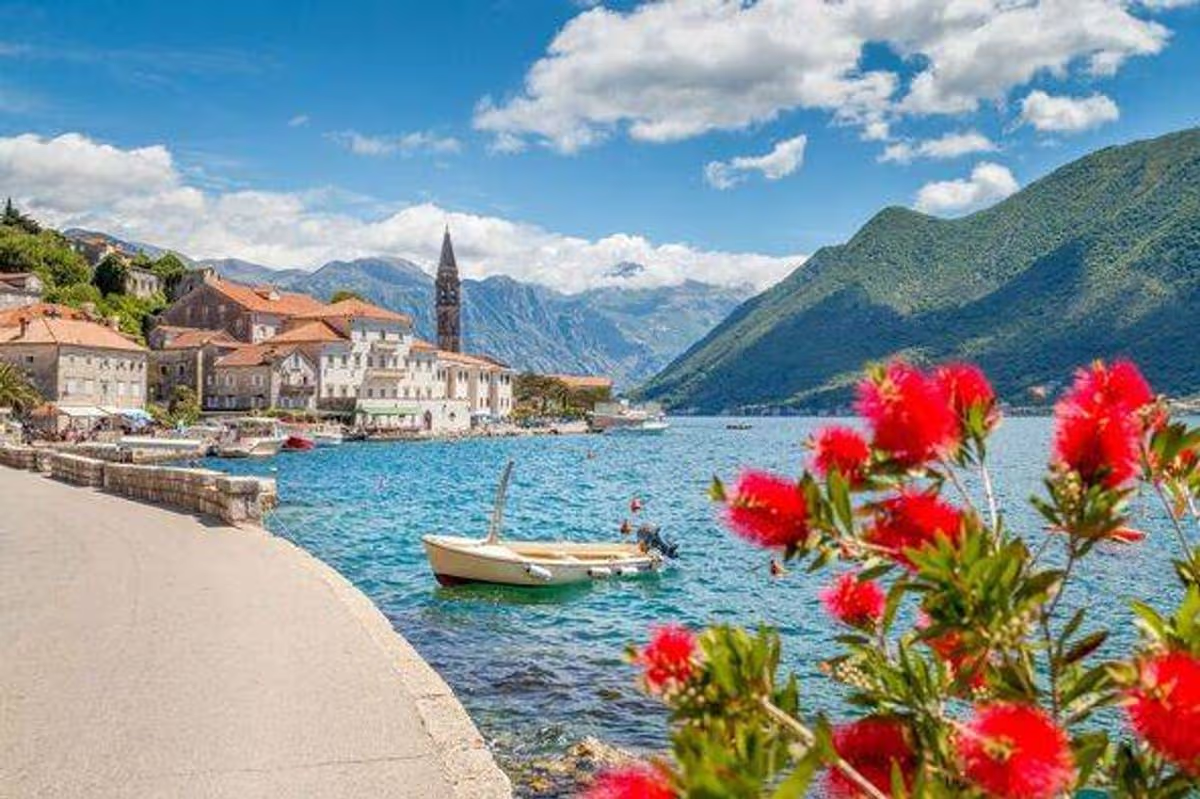
The gorgeous European gem is cheap too(Image: Getty)
If you’re still to book your holiday for 2026, Simon Calder is on hand to help with suggestions on where to go. The travel expert has previously spoken out about his favourite affordable spots to take a trip, and they’re all gorgeous too.
Simon highlighted Portugal, Bulgaria, Montenegro and Albania as some of the most stunning yet affordable holiday destinations. He said: “In Western Europe, it has to be Portugal and in Eastern Europe, Bulgaria – obviously a very popular package holiday destination.”
In fact, according to research in 2023 by holiday specialists Jersey Island Holidays, Montenegro topped the charts as Europe’s most affordable destination, reports the Express. Although this was a few years ago, the destination still remains very affordable.
For example, Brits can secure a seven-night break in an all-inclusive four-star resort in Herceg Novi next month for £419pp, including flights, according to Love Holidays.
The Iberostar Waves Slavija hotel, which is right by the beach, will only set you back £409 for seven nights — excellent value for money.
It’s cheap when you’re actually there too. According to Cost of Living, the average price of a beer in Montenegro is €2.50, which is around £2.15.
The average pizza costs €12, whereas pasta and meat dishes come in at around €15, according to Porto Montenegro. Flights in April start at just £16 one-way from Gatwick Airport.
But Simon Calder isn’t the only one singing the praises of this holiday destination, as travel bloggers at Wander-lush crowned Montenegro Europe’s most “underrated nation”.
Kotor Bay stands out as one of Montenegro’s most spectacular locations, and conveniently for tourists, the nearest city and airport is Podgorica.
The experts highlighted that whilst Kotor ranks among the most striking towns on Kotor Bay, if they “had to choose the most beautiful place in Montenegro overall, it would be the harbour town of Perast”.
Travel experts at Starsinsider agreed, declaring that Montenegro “is the most underrated jewel of the Mediterranean”.
In Podgorica, one of the top attractions is Saborni Hram Hristovog Vaskrsenja, a “beautiful and very impressive” church that’s “absolutely worth visiting”, according to some travellers on Tripadvisor.
Kotor Bay has earned praise on the platform as “the best coastal road in the world” and a “beautiful and peaceful” destination for a getaway.
“We fell in love with Montenegro. The water is so clear, the mountains come down to the water, and it’s stunning scenery.
“That said, what I love about it is that it’s so unspoiled. I sure hope it can stay that way. So peaceful and lovely,” one person shared in a review.
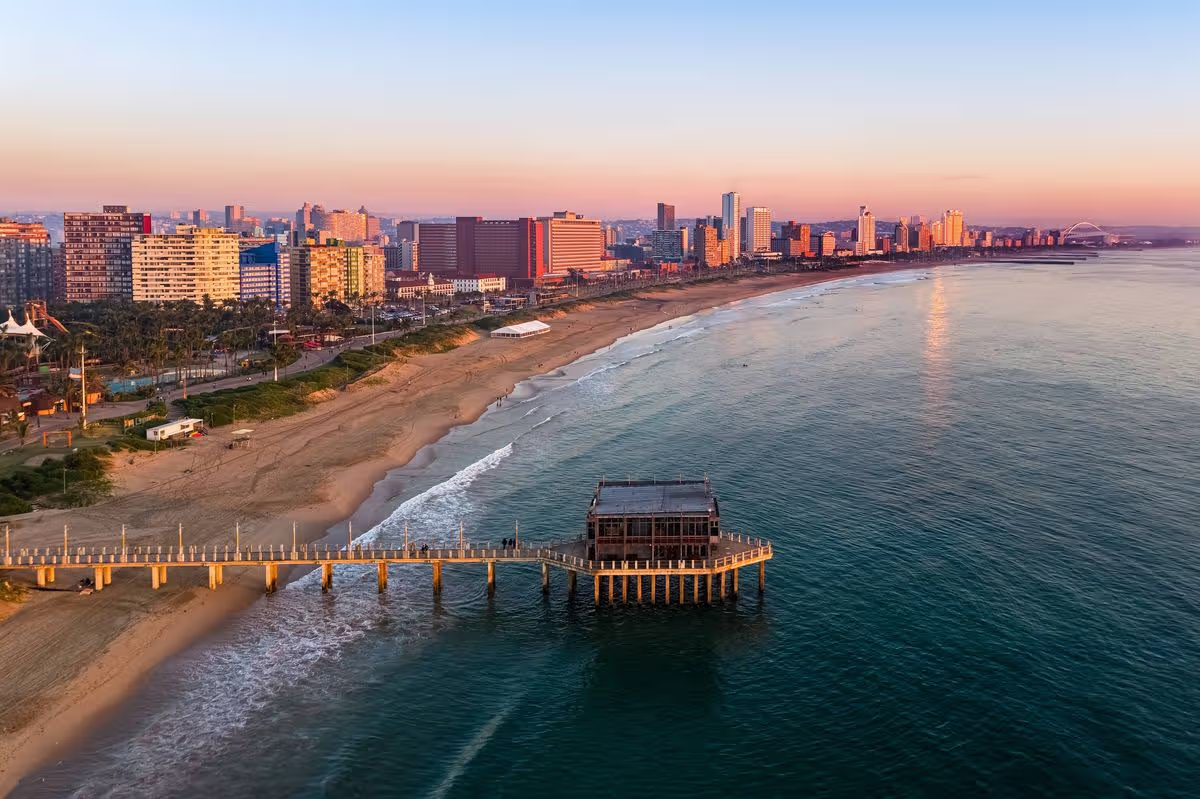
The Foreign Office has issued a new warning on travel to a country where 400,000 Brits a year travel
Steffan Rhys Deputy Content Hub Director
02:26, 21 Mar 2026
The Foreign Office has issued a new warning on travel to a country popular with hundreds of thousands of British tourists(Image: THEGIFT777 via Getty Images)
The UK Foreign Office regularly updates its guidance on destinations that are unsafe for British citizens to visit. Currently, there are 69 countries to which some form of warning applies.
Generally, the Foreign Office splits its warnings into three categories:
The Foreign Office advises against all travel to a country: this is its highest warning level
The Foreign Office advises against all travel to parts of a country.
The Foreign Office advises against all but essential travel to a country or parts of a country.
And it has this week revised its travel guidance for a country to which approximately 400,000 Brits travel annually, with a particular warning on a world-famous tourist hotspot. The Foreign Office has updated information on fraud and scams, nightlife and dating, driving rules and pedestrian safety and Table Mountain National Park in South Africa. It says:
Terrorists are likely to try to carry out attacks in South Africa, which could be indiscriminate and target public spaces and places visited by foreigners.
There are regular protests and demonstrations in South Africa which can turn violent at short notice.
There is a high crime rate in South Africa, with incidents including violent muggings, snatching jewellery and valuables, carjacking, ‘smash and grab’ attacks on vehicles, house robbery, rape and sexual assault and murder. It says “most violent crimes occur in townships located on the outskirts of major cities” and that “There have been recent attacks and violent crime on secondary roads to and from Cape Town airport”.
Scammers target people using taxi apps in major cities and you should make sure you use an internationally recognised service.
The risk of kidnap is increasing throughout South Africa and that “criminals generally kidnap people for financial gain”.
Card skimming and confidence scams are widespread, crime around ATMs and money exchanges is common.
Criminals use dating apps to rob, rape or sexually assault victims.
There have been recent violent attacks and muggings against hikers and foreign tourists in Table Mountain National Park.
However, it is important to note that the Foreign Office does not warn against travel to South Africa or any parts of South Africa and it is not one of the 69 countries listed below, reports the Liverpool Echo.
Countries where the Foreign Office recommends against all travel
Afghanistan, where British nationals face an elevated risk of detention.
Belarus, where “you face a significant risk of arrest if you have at any time engaged in any activity now considered illegal by the Belarusian regime”.
Burkina Faso, owing to “the threat of terrorist attacks and terrorist kidnap, and the unstable political situation in the country”.
Haiti, owing to a volatile security situation.
Iran, because of the ongoing Iran War. The FCDO warns: “If you are a British national already in Iran, either resident or visitor, carefully consider your presence there and the risks you take by staying. British and British-Iranian dual nationals are at significant risk of arrest, questioning or detention. Having a British passport or connections to the UK can be reason enough for the Iranian authorities to detain you.”
Iraq, due to recent escalation in regional conflict. The FCDO warns: “There is significant risk of further escalation, and events are fast-moving and unpredictable.”
Israel, due to the escalation in conflict in the region which poses significant security risks and has led to travel disruption.
Mali, owing to unpredictable security conditions.
Niger, owing to the increase in reported terrorist and criminal kidnappings of foreign nationals.
Palestine, owing to the ongoing conflict between Israel and Hamas.
Russia, owing to a heightened risk of British nationals being detained in Russia and the dangers and threats stemming from its continued invasion of Ukraine.
South Sudan, owing to the danger of armed conflict and criminal activity.
Syria, owing to uncertain security circumstances and the risk of terrorist incidents.
Yemen, owing to the devastation caused by an ongoing civil war and humanitarian catastrophes.
Countries to which the Foreign Office advises against all travel to certain areas
The 36 countries to which the Foreign Office advises against all travel to certain areas are:
Algeria: FCDO advises against travel to within 30km of Algeria’s borders with Libya, Mauritania, Mali, Niger and Tunisia.
Armenia: FCDO advises against all travel to within 5km of the entire eastern border between Armenia and Azerbaijan, owing to tensions between the two countries Azerbaijan: The FCDO advises against all travel within 5km of the border with Armenia.
Benin: The FCDO advises against all travel to border regions near Niger and Burkina Faso.
Burundi: The FCDO advises against all travel to a region where there is a rebel group and the risk of possible armed incursions from the Democratic Republic of the Congo (DRC).
Cameroon: The FCDO advises against travel to borders with Nigeria, Chad and the CAR.
Central African Republic: The FCDO advises against all travel to the entirety of the Central African Republic, excluding the capital, Bangui.
Chad: The FCDO advises against all travel to the northern provinces of Chad, among other regions.
Congo: The FCDO advises against all travel within 50km of the Republic of Congo-Central African Republic border.
Côte d’Ivoire: The FCDO advises against all travel within 40km of the borders with Burkina Faso and Mali.
Democratic Republic of the Congo: The FCDO advises against all travel within 50km of most of its northern and eastern border.
Djibouti: The FCDO advises against all travel to the Djibouti-Eritrea border.
Egypt: The FCDO advises against all travel within 20km of the Egypt-Libya border and the border with Israel and Gaza.
Eritrea: The FCDO advises against all travel within 25km of all of Eritrea’s land borders.
Ethiopia: The FCDO advises against all travel to anywhere near borders with Eritrea, Somalia, South Sudan, Kenya and Somalia.
Georgia: FCDO recommends against all travel to the Russian occupied territories of South Ossetia and Abkhazia.
India: FCDO recommends against all travel within 10km of the India-Pakistan border and the Union Territory of Jammu and Kashmir.
Indonesia: FCDO recommends against all travel to a number of volcanoes in Indonesia.
Jordan: FCDO recommends against all travel to within 3km of the border with Syria.
Kenya: FCDO recommends against all travel to the Kenya-Somalia border and northern parts of the east coast.
Lebanon: FCDO recommends against all travel to the vast majority of Lebanon.
Libya: FCDO recommends against all travel to Libya except for the cities of Benghazi and Misrata.
Mauritania: FCDO recommends against all travel to the eastern half of the country.
Moldova: FCDO recommends against all travel to Transnistria, a region bordering Ukraine.
Myanmar (Burma): FCDO recommends against all travel to most of Myanmar.
Nigeria: FCDO recommends against all travel to large parts of north-west and north-east Nigeria.
Pakistan: FCDO recommends against all travel to within 10 miles of the border between Pakistan and Afghanistan and some other areas.
Philippines: FCDO recommends against all travel to western and central Mindanao and the Sulu archipelago.
Saudi Arabia: FCDO recommends against all travel to within 10km of the border with Yemen.
Somalia: FCDO recommends against all travel to the vast majority of Somalia.
Sudan: FCDO recommends against all travel to the vast majority of Sudan Togo: The FCDO advises against all travel within 30km of the border with Burkina Faso.
Tunisia: The FCDO advises against all travel to parts of its border with Libya and Algeria.
Turkey: The FCDO advises against all travel within 10km of the border with Syria. There are no warnings relating to the rest of the country.
Ukraine: The FCDO advises against all travel to the vast majority of Ukraine.
Venezuela: The FCDO advises against all travel within 80km (50 miles) of the border with Colombia, within 40km (25 miles) of the border with Brazil and within 40km (25 miles) of the border with Guyana as well as some central areas.
Countries to which the Foreign Office advises against all but essential travel
The 19 countries to which the FCDO advises against all but essential travel are as follows. The warnings could include either the whole country or part of a country.
Cambodia: FCDO advises against all but essential travel to within 20km from the land border with Thailand.
Colombia: FCDO advises against all but essential travel to several parts of Colombia including the borders with Venezuela, Panama and Ecuador, and central Colombia.
Cuba: FCDO advises against all but essential travel to Cuba.
Ecuador: FCDO advises against all but essential travel to several parts of Ecuador, where a 30-day state of emergency was renewed on February 28 due to internal disturbance and armed violence.
Ghana: FCDO advises against all but essential travel to the Upper East region of Ghana.
Guatemala: FCDO advises against all but essential travel to within 5km of the Mexican border from the Pacific Coast up to and including the Gracias a Dios crossing, as well as to to the towns of Santa Ana Huista, San Antonio Huista and La Democracia.
Kosovo: FCDO advises against all but essential travel to a section of northern Kosovo.
Kuwait: FCDO advises against all but essential travel to Kuwait because of the escalating conflict in the Middle East.
Laos: FCDO advises against all but essential travel to Xaisomboun Province, where there are intermittent attacks on infrastructure and armed clashes with anti-government groups.
Malaysia: FCDO advises against all but essential travel to all islands and dive sites off the coast of eastern Sabah from Sandakan to Tawau, including Lankayan Island, due to the threat of kidnapping.
Mexico: FCDO advises against all but essential travel to multiple cities and regions in Mexico because of escalating violence due to conflict between drug cartels and government forces.
North Korea: FCDO advises against all but essential travel to North Korea, because “the level of tension on the Korean Peninsula remains high” even if “daily life in the capital city, Pyongyang, may appear calm”.
Papua New Guinea: FCDO advises against all but essential travel to certain provinces due to the high risk of tribal fighting.
Peru: FCDO advises against all but essential travel to areas near the border Colombia and elsewhere. There is a state of emergency in Peru.
Qatar: FCDO advises against all but essential travel to Qatar because of the conflict in the Middle East.
Rwanda: FCDO advises against all but essential travel to a section of the border with the Democratic Republic of Congo (DRC).
Tanzania: FCDO advises against all but essential travel to a section of the Tanzanian border with Mozambique, due to attacks by groups linked with Islamic extremism.
Thailand: FCDO advises against all but essential travel to parts of the south near the Thailand-Malaysia border and all but essential travel to within 20km of the land border with Cambodia.
United Arab Emirates: FCDO advises against all but essential travel to the UAE, which includes Dubai and Abu Dhabi, because of the conflict in the Middle East.
THE seaside city of Agadir has been revealed to be the most affordable break for summer 2026.
A week basking in the Moroccan sunshine can cost as little as £24 per person per night between June and August – not to mention it has great weather and direct flights.
Sign up for the Travel newsletter
Thank you!
The coastal city of Agadir is the cheapest summer holiday break for 2026Credit: Gettyloveholidays has found that seven-nights in Agadir cost £230 per person on averageCredit: Alamy Stock Photo
loveholidays has found the cheapest getaways for summer holidays between June 1 and August 31, 2026.
Agadir has come in first place with seven-night breaks costing on average £230 per person, or £33 per person per night.
The Moroccan city along the southwestern coast is surrounded by the Anti-Atlas mountains, but also has a six-mile long urban beach with golden sands.
It’s an ideal destination for Brits as the flight time is less than four hours.
The city is known for having hot weather too, and according to BBC weather, Agadir will reach highs of 27C next week.
Looking on the loveholidays website, Sun Travel found some even cheaper deals for seven-night breaks in June, for as little as £24 per person per night.
The three-star Appart Hotel Igoudar, which offers child-free stays, has seven-night breaks from £169 per person.
The hotel has Kasbah-style apartments which is just steps away from the beach.
There’s an outdoor swimmingpool area too, and one dedicated to children.
Departing on June 3, 2026 breaks start from £169 per person – or £24 per person per night.
Or going away on August 24, 2026, across seven-nights start from £219 per person.
Stays at the three-star Appart Hotel Igoudar in June start from £24 per person per nightCredit: loveholidaysClub Al Moggar Garden Beach even has its own private beach and a huge swimming pool
Another great pick is the Club Al Moggar Garden Beach which has its own private beach and a large swimming pool.
Going away from June 3, 2026 for seven nights including breakfast and flights starts from £239 per person – or £34 per person per night.
She said: “The Moroccan city is home to the country’s largest market, Souk El Had, as well as a bustling harbour and modern marina.
“Rebuilt following a devastating earthquake in 1960, the sprawling city nestles against the Atlantic Ocean and its palm-lined wide roads feel more Miami than Morocco.
“At Taghazout Beach, hordes of eager surfers took to the sea before I’d even finished my morning coffee.
“As a novice surfer, I opted to watch those riding the waves, while my companion made friends with the stray dogs and hawkers selling Moroccan breads.”
Another spot Kara visited was the Wall of Remembrance, which commemorates the lives that were lost in the earthquake in 1960.
Souk El Had is where you’ll find 3,000 shops selling lots of items from clothing to candles, souvenirs and gifts.
Closely behind Agadir in terms of affordability is Costa Dorada in Spain where average seven-night stays cost £381 per person on average.
loveholidays’ most affordable destinations this summer…
loveholidays has revealed the top 10 most affordable destinations for a seven-night summer getaway – and the average price…
If you’re looking for destinations for a May half-term break that are perfect for families and not too far away, then this island often compared to the Caribbean could be one for your shortlist
This article contains affiliate links, we will receive a commission on any sales we generate from it. Learn more
The island has been nicknamed the ‘Caribbean of Europe’(Image: Getty Images)
Finding the perfect family holiday destination can be tricky. You want somewhere with amazing beaches and natural beauty, but at the same time, you need to be practical and ensure you pick somewhere easy to travel to and in your budget.
Recently, easyJet released a new Family Holiday Index, its way of ranking the top holiday destinations for people travelling with children based on a number of factors. These include the logistics of travelling to the destination, beach and water access, cost, and the number of family activities on offer.
Using this information, it was able to compile a top ten ranking of family holiday destinations, and unsurprisingly, Spanish destinations took six out of the ten spots. However, ranking at number six was an Italian island that has been dubbed the ‘Caribbean of Europe’ thanks to its spectacular beaches and unspoilt scenery.
Sardinia scored highly as a family destination thanks to its huge selection of beaches, family activities, and easy accessibility from the UK. The island has two main air hubs: Cagliari Elmas Airport in the south which is the largest and Olbia Costa Smeralda Airport in the north which is popular in the summer. EasyJet offers seasonal services to Olbia from Bristol, Edinburgh, London-Gatwick, and London-Luton. If you’re planning to fly to Cagliari from the UK, there are routes available on Ryanair and British Airways.
Sardinia flights on easyJet start from just £35.60 one way in May, and flights to the island take from two-and-a-half to three hours, making them bearable for most kids. You can also book Sardinia holidays with easyJet Holidays, with a package for four staying in a quadruple room in Borgo di Campagna, departing May 8, coming in at £340 per person. You can also save another £100 off the total package cost by using code SPRINGSALE at checkout.
Spiaggia La Pelosa is considered one of the island’s best beaches and it’s perfect for families. Its shores are covered in soft white sand, although some of the scenery is a little rocky, and the sea is a vibrant shade of turquoise and usually has only gentle waves. You can walk far from shore and still only be up to your knees in the clear blue waters, so it’s perfect for kids who like to paddle and splash around.
Unlike many overcrowded beaches, access to La Pelosa is tightly controlled during the summer from June 1 and October 1. Visitors need to book a spot in advance, and there’s an entry fee of €3.50 per person for over 12s (just over £3). However, this ensures you aren’t fighting the crowds to find a spot.
The Costa Smeralda offers a choice of beaches along a 35-mile stretch of coast in the north-east of the island. It’s a glamorous spot where you’ll often see superyachts coming into dock, and here you’ll find lots of upscale resorts with fine dining and designer shops.
Kids who love to swim will enjoy a boat trip to La Maddalena Archipelago, a National Park made up of seven tiny islands that can only be reached via boat. Many tour operators offer full-day boat tours where you can visit multiple islands, as well as stopping in the middle of the turquoise Med so you can dive straight into the ocean for a swim or snorkel.
If you have a kid who’s a budding history buff then Sardinia is full of interesting ancient sites to explore. Su Nuraxi di Barumini is the remains of a Bronze Age defensive complex, and has structures dating back thousands of years. Cagliari’s Castello sits on top of a hill and is full of ancient buildings, museums, and historic sites.
Kids who are studying the Roman Empire in school will particularly love a tour of the Roman Amphitheatre of Cagliari, where they can hear gory tales of fights to the death between gladiators or men vs wild beasts. It was also where many public executions were carried out and became the most important buildings in ancient Cagliari.
Sardinian food is also generally kid-friendly and even picky eaters are likely to find something they like. During the day, look out for street food vendors selling Spianadina, traditional flatbreads often filled with cheese and ham for a simple lunch. In the evening, there are plenty of cosy, authentic restaurants to choose from where kids can enjoy wood-fired pizza and fresh pasta.
EasyJet and easyJet Holidays Family Holiday Index – Full rankings
Palma de Mallorca, Spain
Algarve (Faro), Portugal
Costa del Sol (Málaga), Spain
Costa Blanca (Alicante), Spain
Lanzarote, Spain
Sardinia, Italy
Crete, Greece
Ibiza, Spain
Barcelona Coast, Spain
Dubrovnik Coast, Croatia
Have a story you want to share? Email us at webtravel@reachplc.com
While the UK has plenty of unique places for a staycation, there’s one city that people go back to again and again. With so much to do for travellers of all ages it’s easy to see why it remains at number one.
This article contains affiliate links, we will receive a commission on any sales we generate from it. Learn more
The city continues to be a major draw for staycationers(Image: Iain Buist/Newcastle Chronicle)
It can be great fun to explore an exotic location several hours away and experience a new culture and scenery, but many of us don’t have the time or budget to take long-haul holidays.
That’s why it’s worth considering locations closer to home. Even if they are on your doorstep, visiting them as a tourist can give you a whole new perspective on a place.
That’s why Expedia has put together a list of the top UK holiday destinations for 2026. Although the city grabbing the number one spot may not come as a great surprise, there are some interesting locations in the top ten.
London topped the list for domestic destinations, and even if you already visit the capital a lot, it’s worth considering as a city break. While many visitors stay in the centre of London, it’s a huge, sprawling city full of colourful neighbourhoods, so simply staying a little further out can completely change your perspective.
Avoid the hotels in tourist central and consider staying in an area such as Hackney Wick or Ladbroke Grove, both of which made it onto The Telegraph’s list of London’s 10 coolest neighbourhoods. Not only will you save money on hotels, but you can also live like a Londoner while still enjoying easy transport links to tourist attractions.
A trip to London also doesn’t need to mean the usual visits to Big Ben and Buckingham Palace. If you enjoy those things, that’s great, but new attractions are being opened all the time. In late 2026, the London Museum in Smithfield will open in a former Victorian market, making the most of the grand building. It’ll include underground exhibition spaces and performance venues.
V&A East opens April 18 in Queen Elizabeth Olympic Park, just a short walk from the popular V&A East Storehouse. It will include two free galleries showcasing “contemporary global culture” as well as temporary exhibition spaces. Its first temporary exhibition will be The Music Is Black: A British Story and the café will serve dishes inspired by East London’s diverse communities.
Even well-established landmarks such as the British Museum are always offering new exhibitions and things to do. In September, the much-anticipated Bayeux Tapestry Exhibition will arrive at the museum, allowing visitors to see the incredible 68-metre-long medieval masterpiece up close.
If you prefer attractions that are a little livelier, then the new Gameshow LIVE! might be one for you. Opening in spring, it bills itself as the “world’s first interactive gameshow”. Up to 200 players can join in, and the attraction will include all the elements you expect from a classic game show, from buzzers to dramatic lighting. It’ll certainly outshine your local pub quiz.
On Expedia’s list at second place was the classic tourist destination Edinburgh, while third and fourth place went to Manchester and Liverpool. Birmingham was perhaps a surprise addition at number five, and the West Midlands city managed to beat York and the Lake District in the rankings.
Expedia’s top ten UK destinations for 2026 – full list
London
Edinburgh
Manchester
Liverpool
Birmingham
York
Glasgow
Lake District
Devon
Cardiff
Have a story you want to share? Email us at webtravel@reachplc.com
THE Netherlands’ best-kept secret is out . . . Utrecht is now stealing the spotlight from Amsterdam.
With historic streets, lively bars and quirky shops, it is quickly becoming Europe’s must-visit city.
Sign up for the Travel newsletter
Thank you!
Find out why Utrecht is stealing Amsterdam’s thunderCredit: Getty
Lonely Planet has tipped it as one of 2026’s hottest destinations and people are already flocking to see what all the fuss is about.
With architectural wonders, canal-side restaurants and intriguing after-dark hotspots, it is easy to see why visitors are falling head over heels for the Dutch delight . . .
WHY SHOULD I GO?
WITH a labyrinth of canals and charming gabled houses, Utrecht’s streets brim with character.
It delivers all the allure of capital Amsterdam, but without the crowds.
Beyond the medieval charm, Utrecht offers far more than fairytale backdrops.
It has a vibrant arts and music scene where Johnny Marr, Ride and Wolf Alice have performed.
For a bird’s-eye view of the city, head to the Dom Tower.
Soaring 112 metres, it is the tallest church spire in the Netherlands and has been a landmark since 1382.
Climb right to the top for your panoramic views.
STREETS MADE FOR WALKING?
UTRECHT is one of the world’s most walkable cities, with 75 per cent of locals on foot or bike.
Explore the old town, or hop on a 90-minute canal cruise to discover historic wharves and charming houses — all brought to life by tales from a skipper.
Go full Dutch and cycle the streetsCredit: Getty
ANYTHING FOR BUCKET LIST?
GO underground at DOMunder and wander through 2,000 years of history beneath the streets, including Roman ruins and medieval cellars.
Art lovers will swoon at the Rietveld Schroder house, a Unesco-listed modernist gem.
Meanwhile, the Museum Speelklok lets visitors relive history with its whimsical self- playing musical instruments.
WHERE SHOULD I EAT?
KICKSTART your day at Bunk, a chic spot in a converted church.
The Dutch Breakfast (£16) serves up Eggs Benedict, a cheesy pancake, and a Dutch speciality — a spicy slice of cake for a quirky but delicious way to start your day.
Head to on-trend Café Olivier for refreshmentsCredit: Alamy
For a laid-back lunch, head to Il Pozzo, tucked away on the waterfront. Its wood-fired pizzas are perfect for a lazy meal as you watch the boats drift by.
On the go? Toque Toque sells toasted sandwiches starting at £7.
For an elegant dinner, try Jack Rabbit, with its oversized shimmering rabbit on the walls.
There are small plates of tuna sashimi and sea bass ceviche, crafted cocktails and a buzzing, hip vibe.
If you are after something heartier, Broadway Steakhouse sizzles with a relaxed, stylish setting.
I FANCY A DRINK
CANAL-SIDE sips and cocktail bars set the scene for an evening out.
Kick things off at the on-trend Café Olivier, a converted abbey with vaulted walls serving Belgian beers from £3.90.
Then wander along the Oudegracht to De Rechtbank, a buzzing hotspot with inventive cocktails and a lively terrace.
For a more laid-back vibe, check out Vino Vero, where the expertly chosen wines come at surprisingly great prices.
If you are after something more exotic, duck into the city’s cellars to The Rum Club, where rum cocktails and reggae beats transport you to the Caribbean.
Café DeRat, with a rotating selection of local brews, keeps regulars coming back for more.
And for a touch of glamour, head to Café Lebowski, a speakeasy-style bar where cocktails are expertly crafted in an intimate setting.
WHERE TO STAY
THE Moxy Utrecht is a fun, budget-friendly option in the city centre.
With stylish rooms, a buzzing bar, playful decor, oversized chess sets and complimentary bike hire, it’s the perfect base.
Rooms start from £92 a night.
For those ready to splash out, Grand Hotel Karel V, housed in a former 14th-century monastery, is pure indulgence.
It combines historic charm with modern luxury and also has a Michelin-starred restaurant and a great wellness centre.
GO: UTRECHT
GETTING THERE: Several airlines fly to Amsterdam Schiphol, including easyJet, BA and KLM from London, plus Manchester and Liverpool.
Fares start from £71 return.
From Schiphol, it is less than 30 minutes by train to Utrecht.
STAYING THERE: Rooms at The Moxy Utrecht from £92 per night, Grand Hotel Karel V rooms from £229.
A MEDITERRANEAN destination nicknamed ‘the land of jasmine’ will soon have an even bigger airport with space for millions more passengers.
Plans have been revealed to expand and modernise Tunis-Carthage International Airport in Tunisia, Africa as it aims to quadruple its passenger numbers in just five years.
Sign up for the Travel newsletter
Thank you!
Tunis-Carthage International Airport will undergo a £743million upgradeCredit: Alamy
The airport – which is the 10th busiest in Africa – will undergo a major £743million makeover over the next five years.
The country’s Transport Ministry shared that the plans will include building a new passenger terminal as well as the existing terminal being renovated.
Between the two terminals, the Transport Ministry aims to increase passenger numbers from five million people per year to 18.5million passengers by 2031.
There will also be a new technical building and the air traffic control tower will be upgraded.
Some reports suggest that the broader project will involve adding VIP lounges as well.
In addition, the Transport Ministry hopes that it will improve connectivity placing Tunisia as a gateway to the Mediterranean with links to Africa, Europe and emerging destinations.
The upgrade could also pave the way for new airline partnerships and flight routes.
News of the makeover follows original plans for building a new airport being put on hold.
Known as ‘the land of jasmine’ for its use of jasmine flowers in festivals, cultural traditions and perfumes, Tunisia takes about three hours to fly to from the UK.
The Sun’s Deputy Digital TV Editor Jill Robinson recently visited the city and said: “Winding my way through narrow streets, the smell of jasmine and mint tea fills the air as I pass craftsmen, locals doing their shopping and an abundance of cats.
“It would have been easy to think I was in the souks of Marrakech, but I’m in Tunis, the capital of Tunisia.
“While its Medina is not as chaotic as its Moroccan counterpart, the historic streets bustle with locals selling their wares as tourists like me squeeze through.
Tunisia is around three hours from the UK with flights in April costing as little as £30 one-wayCredit: Getty
“From traditional clothing to jewellery, perfume to sweet treats, there’s any amount of treasures to be found just as long as you’re prepared to haggle.
“The Medina was built around the big mosque — nicknamed the Olive Tree Mosque due to the trees there in the 8th century — but it is also home to 100 smaller mosques.
“While Tunisia is an Islamic country, its history and influences are vast — including Arab, Andalucian, Turkish and Berber — and are visible to see as you take in the colourful arched doorways, former palaces and humble homes.
“On a day trip from my hotel, I learned about the rich culture of Tunis and the ancient ruins of Carthage, whose most famous son Hannibal (of elephants fame) became one of history’s most celebrated generals and took on the might of the Roman Empire in the Second Punic War.”
If you fancy a beach day, head to La Marsa where you will find a number of calm beaches, with cosy cafes and crystal clear waters.
Nearby, you can also head to the blue-and-white village of Sidi Bou Said, which sits on a clifftop and is often compared to Santorini in Greece.
Near the capital Tunis, you can head to the blue-and-white village of Sidi Bou SaidCredit: Alamy
There’s Djerba Island as well, which is loved for its sandy beaches and vibrant nightlife.
The temperature can reach up to 20C in March and 22C in April, making it the ideal destination to grab a bit of warmth while the UK remains around 10C.
Nouvelair Tunisie offers direct flights from London Gatwick to Tunis-Carthage Airport and Tunisair offers direct flights from both London Heathrow and Gatwick Airports.
Travis Kelce is on his way back to the NFL for a 14th season, and it was reported Monday that his destination will be a return to the Kansas City Chiefs, the only team for which he has played.
The Chiefs don’t have as much money to spend in free agency as many other teams, but Kelce, 36, is expected to turn down more lucrative offers to stay with the Chiefs, NFL Network Insider Ian Rapoport said.
The Chiefs have $23 million–$25 million in available salary cap space. The team created room after restructuring quarterback Patrick Mahomes’ contract, releasing veteran tackle Jawaan Taylor, and trading elite cornerback Trent McDuffie to the Rams.
Kelce, one of the most popular players in the NFL and a certain Hall of Famer, contemplated retirement after the 2025-26 season. The Chiefs cratered to a 6-11 record, losing their last six games and finishing a distant third in the AFC West behind the Denver Broncos and Chargers. They missed the playoffs for the first time since 2014.
Kelce admits to having lost a step, but he still finished with 76 receptions on 108 targets and 851 receiving yards. He was voted to the Pro Bowl for the 11th year in a row and moved up to eighth on the all-time receiving list. He has more career receptions (1,080) than any tight end besides Tony Gonzalez (1,325) and Jason Witten (1,228).
His decision to return for one more season followed weeks of discussion with Chiefs Coach Andy Reid, teammates, family and close confidantes — including his fiancé and music megastar Taylor Swift. Kelce co-hosts the popular “New Heights” podcast every Wednesday during the NFL season with his brother, former Philadelphia Eagles six-time All-Pro center Jason Kelce.
Kelce, who has made about $112 million in salary, is expected to take a pay cut and play the 2026-27 season for about $10 million. His two-year, $34.25 million contract extension expired after last season, making him a free agent.
“I just love this team,” Kelce said in January after the Chiefs’ last game. “I’m proud of the way we finished this, even though it ended the way it did. The guys still showed up and gave it their all. That’s all you can ask for, man. I’ve got so much love for this team, this organization and the people here.”
A week earlier, he admitted retirement had crossed his mind after the Chiefs’ last home game.
“A whole lot of emotions,” he told reporters. “You’ve got everybody in the world watching you. You get to go out there with the young guys on prime-time television. Young guys getting an opportunity to taste what this NFL life is like.”
Yet he also savored the moment, and hinted that he might enjoy the adulation of Chiefs fans a bit longer.
“You only get a few of those where you get to stand there and appreciate 70,000 Chiefs fans cheering for you,” he said. “I always embrace that moment.
“You feel the generations of happiness and the love [the fans] have. It’s a beautiful thing, man.”