deserve

California voters deserve to see Becerra and Hilton debate

Barring some extraordinary event — a health emergency, a career-ending scandal, a killer asteroid destroying all life on earth — Xavier Becerra will be the next governor of California.

That’s not partiality or wish casting on the part of your friendly political columnist. The fact is Democrats and Democratic-leaning independents overwhelmingly outnumber Republicans in California, in both registration and inclination.

The GOP brand has been political poison in this Tahoe-blue bastion for decades now. But under Donald Trump, it’s grown even more toxic. His endorsement, which the president bestowed upon Republican Steve Hilton mid-primary, is the political equivalent of sarin; like the deadly nerve agent, it can kill on contact.

Still, give credit where due.

The gregarious and media-savvy Hilton has been waging an energetic and effervescent run for governor, with multiple appearances a day and frequent updates to his cheeky social media accounts.

“He’s going to San Francisco” — into the bowels of the liberal beast — “he’s going into schools, talking to labor groups,” said Hector Barajas, a campaign spokesman. “He’ll go everywhere.”

Becerra not so much.

You’re reading the L.A. Times Politics newsletter

George Skelton and other analysts cover the insights, legislation, players and politics you need to know. In your inbox Monday and Thursday mornings.

The Democrat has appeared here and there since finishing first in the June 2 primary, securing one of two slots in November’s runoff. He’s offered a few modest proposals, including a plan to deliver two free hours of electricity a day to low-income households and a call for stiffer regulation of artificial intelligence.

A sprint vs. a stroll

That said, if Hilton is flat-out running for a job he stands virtually no chance of winning, Becerra is embarked on more of a leisurely stroll toward his all-but-certain perch in Sacramento.

That’s not a terrible thing at this midsummer stage of the race. Once, in the blessed era before the 24/7 news cycle and the omnipresence of social media, there was a lull in the months after the primary, with campaign activities picking back up around Labor Day.

On Tuesday, during a walking tour of Los Angeles’ Little Tokyo neighborhood, Becerra pushed back on the notion he was taking his election — and California voters — for granted. “If I were trying to coast,” he told reporters, “I’d be out on the coast right now instead of here with you all.”

Becerra’s pace aside, the days between now and the Nov. 3 election offer him plenty of time to spell out what, exactly, he has to offer his home state and how, in a broad sense, he plans to tackle one of the highest profile, most vexing jobs in all of American politics.

At least one of those days should include a face-to-face debate between Hilton and Becerra. The two shared a stage multiple times during the primary season. They have not appeared together since.

More than a half-dozen news organizations have offered to host the gubernatorial rivals in a one-on-one session. Several other groups have proposed forums that would allow them to discuss their differences together in person.

Barajas, the spokesman for Hilton’s campaign, said the Republican hopeful has agreed to each and every invitation.

“He’s got absolutely no problem” appearing anytime or anywhere, Barajas said. “He will go to East L.A.. He will go to South-Central. He will go into the heart of the Central Valley. It doesn’t matter to him.”

That’s no surprise.

When a candidate is an underdog, like Hilton, they’ll typically show up at the opening of an envelope if it means appearing before a crowd. Conversely, a candidate on a seeming glide path to election, like Becerra, will often balk at giving their opponent the exposure afforded by a debate, much less risk harming themselves with a bad performance.

The Democratic front-runner said Tuesday that “there will be debates,” though he didn’t say where or when.

An obligation to voters

There’s a lot of virtue signaling that surrounds the notion of candidate debates.

Far from a high-minded discussion of policy differences, they often devolve into a stale recitation of talking points and pre-scripted zingers. After a while, debates can grow redundant and, frankly, boring as contestants repeat well-worn phrases and replow deeply furrowed ground. Such was the case by the time California’s gubernatorial hopefuls met for their sixth televised debate in the spring.

Most voters — many of whom profess to care oh-so-deeply about issues and matters of great import — don’t even bother tuning in. If they found debates that captivating, shows such as the “PBS NewsHour” would routinely outdraw the latest season of “Love Island USA.”

No matter.

There is an audience, however limited, for debates. Even if they don’t bother watching, many voters read about the encounters afterward, catch snippets online, or glean useful insights from the extensive coverage that follows.

Above all, a willingness to debate is a sign of respect — for voters as well as the political process the candidates are a part of. Minimizing direct confrontation with Hilton may play to Becerra’s inherently cautious nature. It also makes sense from a purely strategic standpoint.

But it doesn’t serve the people of California, or give voters their due. This is a campaign for governor. Not a coronation.

Becerra owes California, and Hilton, the chance to take the candidates’ measure side by side before their contest is over. The sooner Becerra commits to a time and place, the better.

What else you should be reading

The must-read: Trump turns to containing the fallout from setbacks in Iran
The deep dive: War was supposed to crush Iran’s ‘Axis of Resistance.’ Instead, it’s bloodied but unbroken
The L.A. Times Special: Xavier Becerra won’t deliver the home runs — or strikeouts — racked up by Newsom, Schwarzenegger

Until next time,
mzb

Was this newsletter forwarded to you? Sign up here to get it in your inbox.

Source link

‘Young Washington’ review: We deserve a more exciting founding father

It’s the 250th birthday of the United States of America and how better to celebrate than with a big-screen hagiography of America’s first president, George Washington? “Young Washington” arrives in theaters just in time for the Fourth of July with a chiseled, hot young actor in the lead role and the sheen of a prestige HBO drama, though the result isn’t really big-screen spectacle or appointment television. It feels more like something to be watched on the AV rig in a middle school social studies class. At least there won’t be a quiz at the end.

But there could be, because the plot of “Young Washington” plays out with all the thrill of a textbook chapter. It takes place mostly around 1753-55, at the advent of the French and Indian War. We open in medias res when the 23-year-old Col. Washington (William Franklyn-Miller) lurches from a dysentery-riddled nap directly into battle in the Pennsylvania woods, his battalion on the back foot, surrounded by gore and gunpowder. Another officer describes how dire the situation is while George ponders saving his men and asks, “What could be worth the risk?” Washington steels his gaze and we cut to black. You can almost hear the eagles scream, guitars riff and engines rev.

“Young Washington” is produced and distributed by Angel Studios, the faith-based movie studio that churns out films based on true stories that either feature freak accidents, strange illnesses or, more recently, unique stories from the past in which faith in God is a factor. Apparently, our nation’s founding also falls under this umbrella.

The film is directed by Jon Erwin, one of the in-house Angel Studios mainstays, who also helmed “Jesus Revolution,” “I Still Believe” and “I Can Only Imagine.” Erwin gives the whole project a kind of gritty, visceral approach — very “Game of Thrones” in red coats. It’s violent, muddy, the contrast is high and too many drone shots soar over the forest treetops.

Though it opens with a bang, this 1755 battle framing device gives way to the George origin story, starting with his father’s death 12 years earlier, when the 11-year-old George is bereft that he’ll have to sacrifice his education in order to become a tenant farmer and provide for his family including his mother, Mary (Mary-Louise Parker, doing a bizarre accent).

His older half-brother Lawrence (John Foss) takes him under his wing and teaches him, and the young George grows into a smart, bright, ambitious young man, whose dreams of becoming a British officer are dashed because he doesn’t have formal education, a fortuitous marriage or his own land. But he’s bootstrapped himself into intelligence and with savvy networking and know-how, he becomes indispensable to the British, volunteering as a major to survey land and negotiate treaties with the Native tribes and French army. It’s all a bunch of politicking and petty disputes until it escalates into all-out war thanks to an ill-advised ambush.

Sir Ben Kingsley, Kelsey Grammar (who starred in “Jesus Revolution”) and Andy Serkis play the British officers who begrudgingly, at times, believe in George and his capabilities, though a lot of the film is about a young man getting rebuffed by snobbish British officers.

He’s the kind of character who always makes the noble choice, does and says what’s right, and sees everyone as equals (including enslaved African men and Native American allies). He inspires his brother and others that the world can change and takes inspiration from his mother, who encourages him to continue his path and do it as God’s servant.

Unfortunately, this doesn’t make for a character that’s in any way complex or interesting at all. Franklyn-Miller is certainly pretty, serving as a fine face for this story, but the screenplay (by Erwin, Diederik Hoogstraten and Tom Provost) flattens his character into a basic cookie-cutter hero. Audiences, including the middle school social studies students, deserve better and more nuanced stories about this country and the values it was built upon.

“Young Washington” is propaganda in the form of a history lesson wrapped in a summer blockbuster. If only it were even slightly entertaining — maybe they’ll tackle that in the inevitable sequel.

‘Young Washington’

Rated: PG-13, for sequences of strong war violence and some bloody images

Running time: 2 hours, 5 minutes

Playing: Opens Friday, July 3 in wide release

Source link

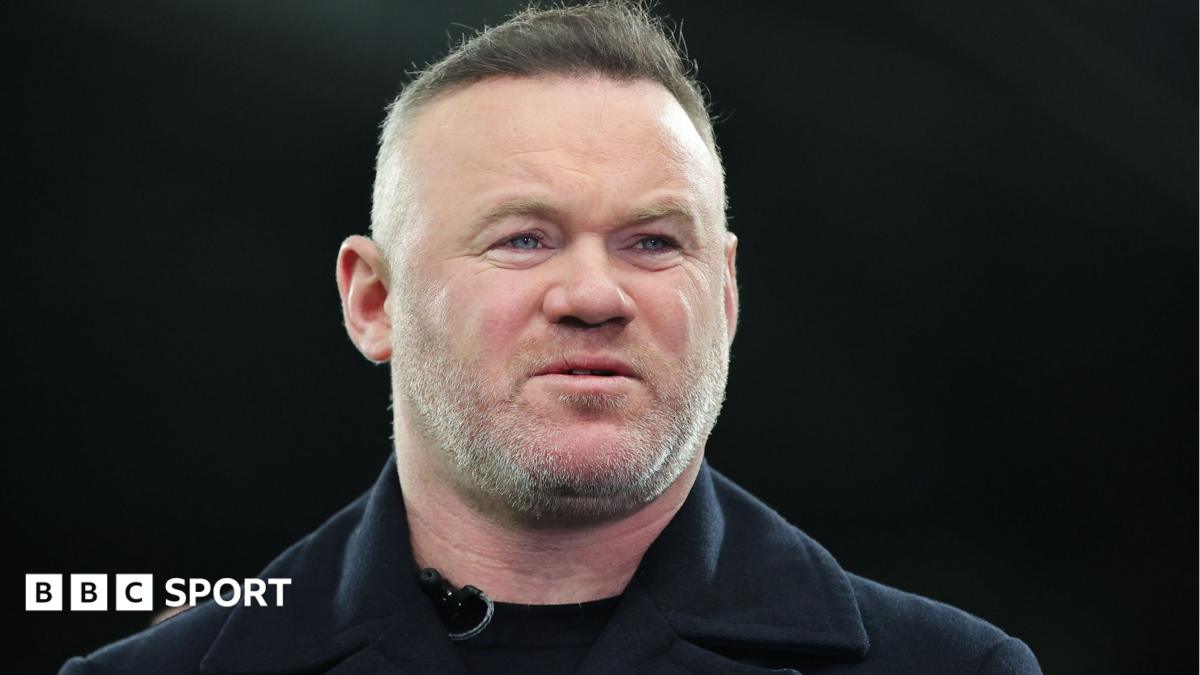
Tonda Eckert: Does Spygate scandal Southampton manager deserve a second chance?

For those associated with the club, the desire to watch a successful team next season is blended with a need to shake off the damage Eckert’s actions have caused.

One of the more egregious conclusions drawn by the EFL investigation into Southampton’s practices was that the young analyst intern who was caught spying outside Middlesbrough’s training ground had raised concerns about the task he was given, but was put “under extreme pressure” to carry it out by more senior personnel, including Eckert.

In many workplaces, a senior staff member pressuring a junior colleague into performing a task which violates industry rules would be met with a swift and significant punishment.

But Solak told BBC Sport that the intern was at fault for not kicking up more of a fuss, saying: “I believe that our junior intern felt personally it’s wrong, and he didn’t feel right for doing this, and I think he should have expressed that stronger.”

Solak insisted he has subsequently offered the intern analyst a full-time job with the club.

But the treatment of a young, inexperienced member of staff has raised concerns about the club’s culture.

“The club has lacked in terms of leading on the problem, and sorting out their own mess,” Tessem adds.

“I hope they have all learned a very harsh lesson. When you’ve been caught red handed, you need to take responsibility for the situation.”

If Southampton do manage to keep Eckert in his job, then the question of whether the club really has learned that lesson will continue to be asked.

Source link