denies

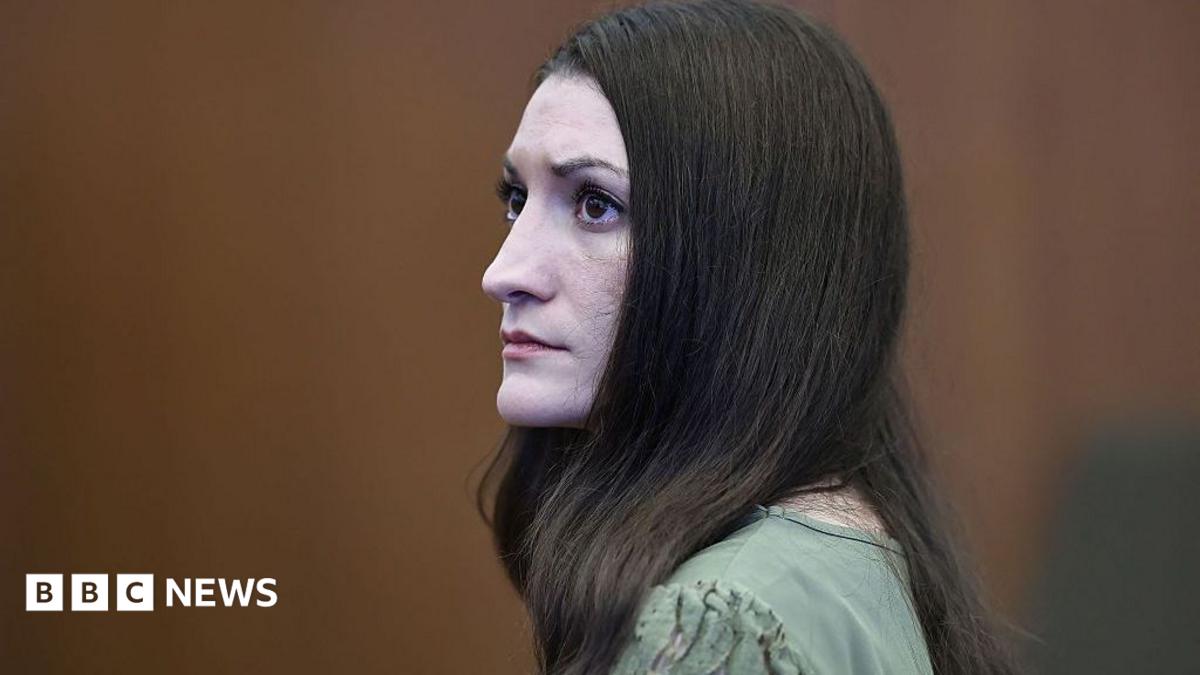
Judge denies motion to dismiss Lindsay Clancy’s murder case

In his ruling on Monday, Sullivan said that a retrial would not unconstitutionally subject Clancy to double jeopardy, according to court documents obtained by the BBC.

“Although a mistrial may be expensive in both human and monetary costs, it is not to be avoided by intrusion into the jury’s domain,” he wrote.

He also said that the possibility that “an unreasonably stubborn or eccentric juror” could be seated is “an unavoidable risk of the jury system”.

“Because the court concludes that there was manifest necessity for a mistrial based on the jury’s deadlock, a retrial on the murder indictments does not violate Clancy’s right not to be placed in double jeopardy.”

Sullivan also denied a defence motion to see records of the lone holdout juror in the case and to question the juror under oath.

He said the defence failed to demonstrate that the records are needed for Clancy’s defence at any retrial, and that questioning the juror “would have been impermissibly coercive”.

The judge scheduled a hearing for 16 November to discuss scheduling a potential second trial. He previously suggested it could begin in March.

Ana Faguy contributed reporting.

Source link

N Korea fires multiple missiles, denies US claims on Binance hack | Kim Jong Un News

Kim Yo Jong refuses dialogue with US after denying responsibility for theft of more than $6bn in crypto assets from Binance.

North Korea has fired several missiles into the Sea of Japan, according to South Korea’s military, hours after Pyongyang denied allegations that it was behind the theft ⁠of more than $6bn in crypto assets from Binance.

South Korea’s Joint Chiefs of Staff said on Wednesday that it had detected the launch of several missiles from the Sondok area on North Korea’s eastern coast towards the Sea of Japan.

Recommended Stories

list of 3 itemsend of list

It said authorities in South Korea and the United States were analysing the details of the launches.

The tests marked Pyongyang’s fourth such weapons launch in a month. They came a day after North Korea denied involvement in the Binance hack, dismissing an FBI announcement that North Korean hackers were responsible as “a trite provocation”.

Binance, the world’s biggest cryptocurrency exchange, said on Friday that hackers stole more than $6bn in what appears to be the largest cryptocurrency heist on record.

The FBI later said North Korean hackers had orchestrated the theft, attributing it to a hacking group known as TraderTraitor, which was also behind a $1.5bn hack of the Bybit exchange last year.

Early on Wednesday, Kim Yo Jong, the sister of North Korean leader Kim Jong Un, said Pyongyang viewed the FBI announcement as “an extension of Washington’s invariable hostile policy toward” North Korea.

She ruled out dialogue with Washington until the US abandoned that policy.

“It is our clear stand that we have no need to sit face to face with such unreliable and hostile persons,” she said. “The choice for peace includes dialogue, of course, but this is not surely equated with national interests for us.”

US President Donald Trump said in August that he plans to meet Kim Jong Un later this year, seeking to revive the bond he claims to have forged with the North Korean leader during his first term.

Trump said it was important to “get along” with Kim, adding that Pyongyang had 57 “very powerful” nuclear weapons.

Previous rounds of talks between Kim and Trump in 2019 abruptly ended amid disagreements over Pyongyang’s nuclear programme. In October, the US, South Korea and Japan again reiterated their call for the “complete denuclearisation” of the Korean Peninsula.

The call came as North Korea has accelerated its weapons testing this year, in what analysts say is likely a bid to increase its leverage in any future diplomacy with the US.

Its recent tests have included a submarine-launched ballistic missile, hypersonic missiles, attack drones, and cluster bombs designed to be carried by ballistic missiles.

On Tuesday, Pyongyang said it had tested a new cluster warhead for strategic cruise missiles the previous day, claiming it could destroy an area of 5 to 6 hectares (12 to 15 acres) with “high-density power”.

The latest launches followed a North Korean state media report that Kim had visited a naval shipyard building a destroyer and stressed the importance of a powerful navy.

Source link

Mexico City Grand Prix: Esteban Ocon denies reports of physical altercation behind Haas dropping

Esteban Ocon has denied reports that his being dropped by Haas at the Mexico City Grand Prix was a consequence of a row with team principal Ayao Komatsu descending into a physical confrontation.

The Frenchman, 30, admitted in a statement on social media that “a difference in viewpoints led to a discussion with the parties involved”.

But he said he “categorically rejected any reports or allegations suggesting that any form of physical violence was used to resolve any differences of any nature”.

His statement followed a report in France’s L’Equipe, external which said that a meeting between Komatsu and Ocon “ended abruptly, perhaps even physically”.

The decision to stand Ocon down from the rest of the Mexico weekend came after he had had a dispute with race engineer Laura Mueller about tyre choice during second practice on Friday.

Mueller had informed him that plans to run the soft-compound tyre had been changed and he would now use the medium.

He replied: “No, no. I want to do soft… don’t do that to me, come on.”

The team have not issued any further information what happened after the session.

So far, Haas have only said that Ocon has been dropped for this weekend’s race.

The team announced last month that he would be leaving Haas at the end of the season. He is being replaced by the Brazilian Rafael Camara, leader of the Formula 2 championship and a member of the Ferrari driver development programme.

Neither Haas not sources within Ocon’s management have commented on whether Ocon will drive for Haas again at any of this year’s remaining races.

Ocon’s statement on Saturday continued: “I strongly condemn violence in all its forms and firmly believe that disagreements should always be handled with professionalism, respect, and mutual understanding.

“I kindly ask that speculation be avoided while the matter is being addressed. Further updates will be communicated in due course.”

Source link

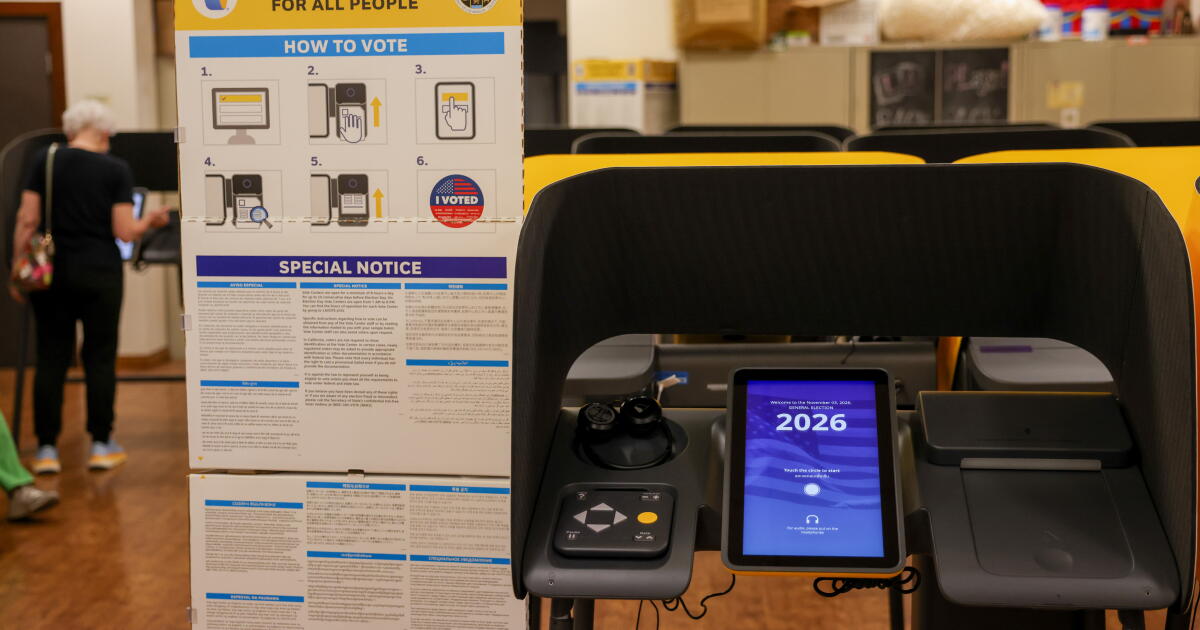
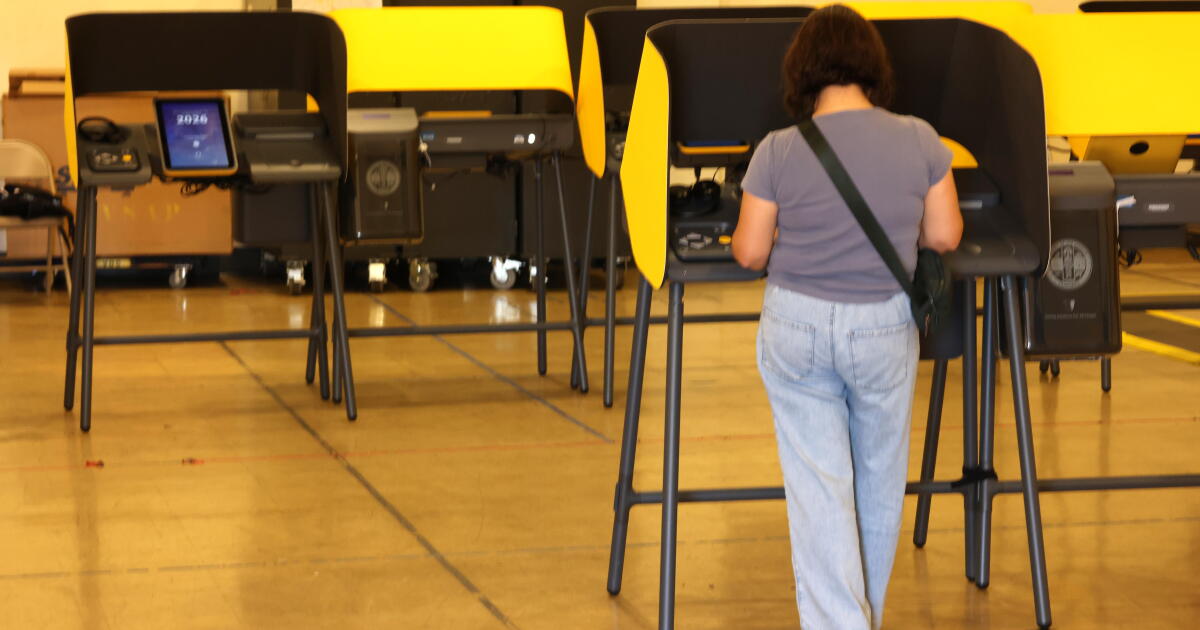
9th Circuit again denies Trump administration request to block 20,000 California ballots

A federal appeals court for the second time Friday denied a Trump administration request to block 20,000 ballots from California voters the administration alleges may be noncitizens — ruling that the administration had failed to show that “such extraordinary relief, during an ongoing election, is clearly required by law.”

The three-judge panel of the U.S. 9th Circuit Court of Appeals — composed of two appointees of President Trump and one of President Biden — ruled 2-1 that the U.S. Constitution gives the state and Congress the power to decide how elections are run, and that allowing the Trump administration to “misuse” federal statutes to “prescribe” how California must process ballots would “override the plain and manifest dictates of the Constitution itself.”

“Because Congress has not exercised the specific power granted to it under the Elections Clause to override California’s established laws for challenging ballots or removing ineligible voters, the State Legislature’s statutory scheme remains the only method to do so,” the judges found.

The panel’s majority — comprised of Trump appointee Mark J. Bennett and Biden appointee Gabriel P. Sanchez — wrote that “if the United States believes different procedures are necessary for vote-by-mail ballots, we believe it should take that suggestion to Congress, not the courts.”

They also wrote that separate federal law prescribes sweeping changes to voter lists 90 days prior to an election, especially given questions about the reliability of the Trump administration’s list of purported noncitizens.

“The suspect reliability of these lists found by the district court reflects the concern Congress sought to mitigate with the 90-day quiet period,” they wrote.

Judge Patrick J. Bumatay, the other Trump appointee on the panel, dissented — arguing that his colleagues erred in denying a basic request by the Trump administration to ensure only citizens are voting.

“The federal government proposes a modest remedy — stopping California from mixing the ballots of citizens and suspected noncitizens,” Bumatay wrote. “This solution would not cancel any vote but would allow time to verify the eligibility of suspected noncitizens. The district court, and now our court, denies this reasonable request.”

This article will be updated.

Source link

Judge denies feds’ request to block 20,000 California ballots in blistering opinion

A federal judge in Los Angeles denied a Trump administration request Wednesday to immediately block California elections officials from counting the ballots of 20,000 voters whose citizenship the administration questions in a blistering opinion.

U.S. District Judge David O. Carter ruled that the administration’s allegations were “not credible” and that the intervention it sought would violate a host of federal laws, sow chaos in the ongoing midterm election, likely lead to the disenfranchisement of legitimate voters and foster future political meddling in elections.

“This request violates longstanding constitutional principles mandating that states have control over their elections,” Carter wrote. “If [the Trump administration’s] last-minute request for relief were granted, either party could create chaos for their own political purposes to disrupt the election process.”

Carter, an appointee of President Clinton, wrote that never in American history “has the federal government, on the eve of an election, sought to coerce a state and local government to abandon their own Constitutional elections procedures and bend to the will of the Executive Branch,” and that, in bringing its suit, the Trump administration was asking the court to “believe that it reigns as a sole sovereign.”

“But California and its people are sovereign, too,” Carter wrote.

Carter’s ruling was the second to deny the Trump administration a temporary restraining order against the state and Los Angeles County this week, after a three-judge panel of the U.S. 9th Circuit Court of Appeals denied the government’s emergency request in a separate order Monday.

Carter ruled following a 3½-hour hearing Tuesday, where a slew of attorneys for the state, county and independent voting rights groups argued against the administration’s demands.

First Assistant U.S. Atty. Bill Essayli — who is the top federal prosecutor in L.A. and argued for the Trump administration at Tuesday’s hearing — did not immediately respond to a request for comment on the ruling Wednesday. After Tuesday’s hearing, he suggested the administration was likely to appeal Carter’s ruling if it didn’t immediately halt the counting of the flagged ballots.

This is a developing story and will be updated.

Source link

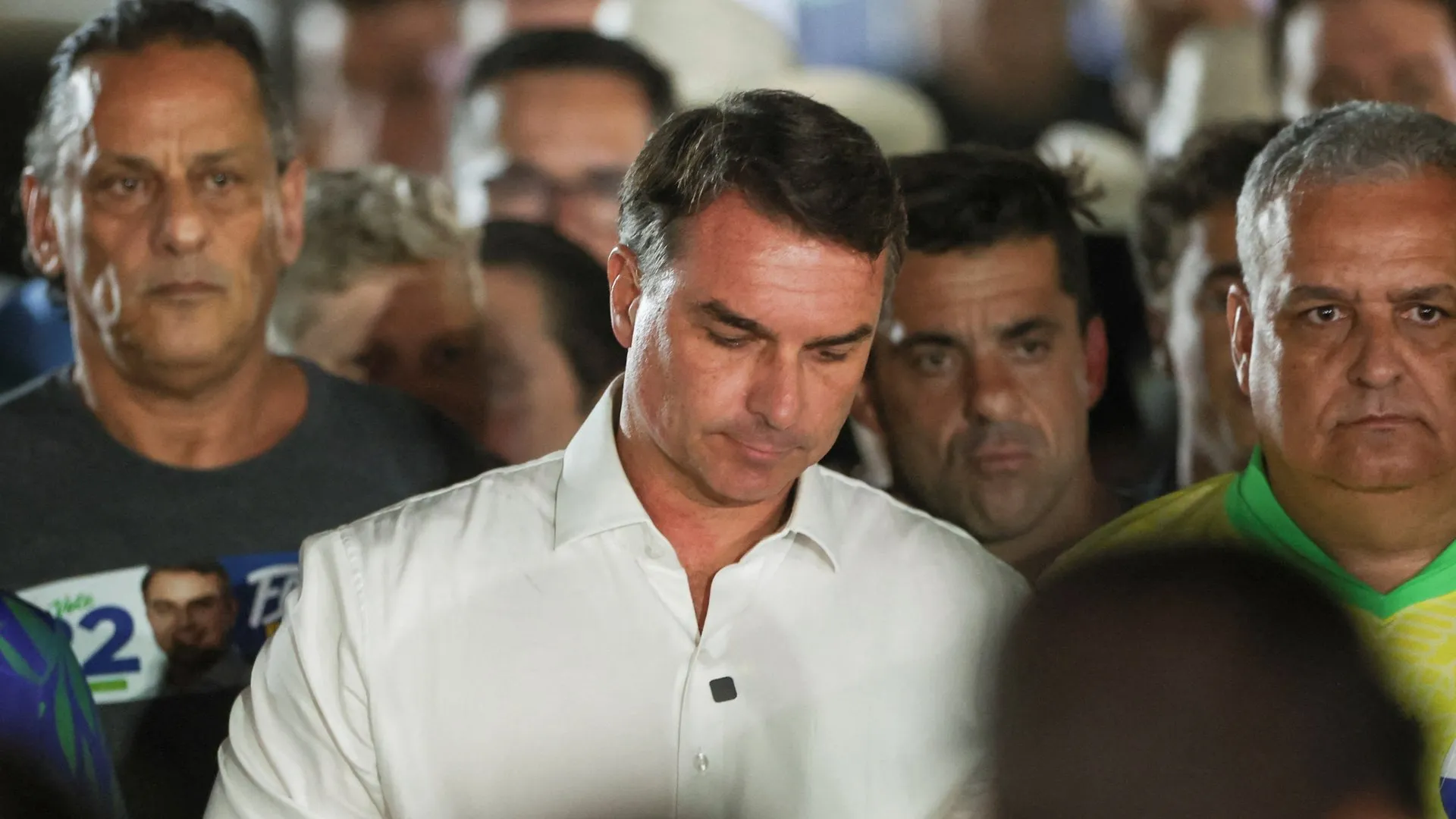
Bolsonaro ally denies knowledge of senator’s plan to flee Brazil | Politics

Flavio Bolsonaro’s former campaign manager, Rogerio Marinho, says the senator did not inform him that he planned to flee the country. Reports suggest Bolsonaro secretly left Brazil for Florida after losing Sunday’s presidential election and amid a police investigation into money-laundering.

Source link

9th Circuit denies feds’ appeal over 20,000 ballots; district court hearing to proceed

A federal appeals court Monday denied an emergency request from the U.S. Justice Department to step in and block California election officials from counting about 20,000 ballots from voters whose citizenship the Trump administration has questioned.

The three-judge panel of the U.S. 9th Circuit Court of Appeals — composed of two judges appointed by President Trump and one by President Biden — ruled that it did not have jurisdiction over the request, given that a lower district court has not yet made a ruling on it.

But two of the three judges also wrote separately to make clear they also would have denied the Trump administration’s request on other grounds, if they did have jurisdiction.

In an unsigned order — joined by Judge Mark J. Bennett, one of the Trump appointees, and Judge Gabriel P. Sanchez, the Biden appointee — the court granted a request from Los Angeles County to dismiss the appeal, writing that the Trump administration “failed to allow the district court adequate opportunity to consider” its request for a temporary restraining order barring the ballots from being counted before filing its unusual appeal to the appellate panel.

The court found that the “emergency” the Trump administration asserted was in part a “self-constructed one” and that delays in the district court were partly attributable to its “own delay in filing suit, in realizing that existing California state law governs the issuance and processing of ballots, in recognizing that California has millions of registered voters and processes ballots on a schedule aligned with that scale, and in communicating to the court its desired relief.”

Both Bennett and Sanchez also each wrote a concurring opinion — in which they made clear that they would have denied the Trump administration’s request even if they did have jurisdiction, too.

Sanchez wrote that federal law would bar the court from issuing such a demand on state elections officials so close to an election.

“The United States seeks to have a federal court dictate to California the manner in which it must administer its own electoral process by segregating mail-in ballots and undertaking a citizenship verification process the State has never done before,” Sanchez wrote. “The proposed injunction would transform California’s election rules for an election that is already underway and would cause widespread confusion among voters and election officials, divert election administration resources, and ‘usher in electoral chaos.’”

Bennett wrote that he would have denied the Trump administration’s emergency request for several reasons beyond jurisdiction, including that it would be likely unconstitutional under the Elections Clause of the U.S. Constitution, which he wrote “confers broad authority only on Congress and the States, not the Executive,” and Congress has not acted to say that California’s existing laws for ensuring only U.S. citizens vote are problematic.

“Thus, under the Elections Clause, the legislature’s statutory scheme remains as the only method to do so,” Bennett wrote.

Bennett wrote that there are existing California laws to deal with the harm the Trump administration claims it is suffering, but that granting its request to intervene could “result in immense hardship” to the state “and harm the public by risking the disenfranchisement of eligible voters and putting the entire tabulation process in jeopardy.”

Bennett wrote that the Trump administration “offered no workable plan of any kind as to how the remedy it seeks could be accomplished in practice without potential catastrophic consequences to California’s ongoing election.”

Judge Patrick J. Bumatay, the other Trump appointee, dissented — arguing the Trump administration was well within its legal rights to intervene, and the appellate court did have jurisdiction to grant its request and bar the state “from accepting and processing ballots likely cast by aliens until their citizenship could be verified.”

“The question — does the federal government have the power to stop this potential attack on the integrity of our elections? Under both federal law and the Constitution, the answer must be ‘yes,’” Bumatay wrote. “Simply, the federal government has a sovereign interest in safeguarding federal elections and ensuring that the votes of noncitizens do not undermine our electoral results.”

The ruling clears the way for the lower court to proceed with a hearing scheduled Tuesday afternoon before U.S. District Judge David O. Carter in Los Angeles.

Carter, an appointee of President Clinton, previously rejected an attempt by the Trump administration to obtain California’s full voter rolls, calling that demand unlawful and a threat to democracy in January. Other federal judges made similar rulings in dozens of states across the country.

The question at issue Tuesday — and hashed over by the appellate court during oral arguments Sunday — is whether the courts should bar the state, Secretary of State Shirley Weber and Los Angeles County Registrar-Recorder/County Clerk Dean Logan from processing and tabulating the flagged ballots until they can provide to the Trump administration proof that those individuals are citizens.

The Trump administration has argued in court filings that the federal government is suffering irreparable harm each day such counting is allowed to continue, as once California ballots are removed from their mail envelopes or cast in person, there is “no way to associate the voter with the ballot” or resegregate those ballots from others.

More than 3 million ballots have already been cast in the upcoming Nov. 3 midterm elections statewide, and more than 500,000 have already been cast in L.A. County.

Attorneys for California, Weber and Logan have argued in court filings that the administration’s demands to segregate 20,000 ballots and vet those voters for citizenship with just days to go before the election are impossible to comply with and would cause catastrophic disruptions if elections officials across the state were forced to try.

They have also said the demands are clearly unconstitutional, illegal under state and federal law, and based on federal immigration and third-party data sets that have been shown to be deeply flawed, inaccurate and inclusive of legitimate voters.

While the appellate court’s formal ruling Monday adhered closely to the technical issue of jurisdiction, its conversation Sunday did not — with both Bennett and Sanchez expressing substantial doubts about the lawfulness of the Trump administration’s request, just as they did in their separate concurrences.

Bennett grilled Matthew Donnelly, the attorney for the Justice Department, on how the executive branch’s demands squared with the U.S. Constitution, which explicitly gives states the power to set laws regarding the time, place and manner of elections and Congress — not the executive branch — oversight over those laws.

Bennett said that while the Trump administration is “unhappy” with how California law ensures voters are citizens — namely by requiring that they attest to their citizenship upon registration — the state has the right to determine its election laws under the Elections Clause of the Constitution, and Congress has not challenged its process.

“It seems to me that you want us to issue an injunction that is entirely inconsistent with the law the California Legislature has adopted pursuant to the Elections Clause,” Bennett said. “How can we do that?”

Bennett and Sanchez both questioned how the appellate court could step in and adjudicate whether to grant the Trump administration’s request to intervene in the state’s election when it is not a fact-finding body, and the district court was never given a chance to develop a record of facts — including around the dueling and contradicting claims about the origins and reliability of the federal government’s list of “likely” noncitizen voters and the state’s claims that an order forcing them to segregate out the votes at this late stage in the election would cause catastrophic harm to the election process.

Carter is sure to pick those issues back up on Tuesday.
Source link

Israel halts commercial goods from entering Gaza; Hamas denies tax claims | Gaza News

The halt to commercial shipments, including fruit and winter clothing, cuts off a key source of critical supplies.

Israeli authorities say no commercial goods have entered Gaza for two days, citing what they claim is a tax dispute between local merchants and Hamas.

COGAT, or the Coordinator of Government Activities in the Territories, the Israeli military body that “oversees humanitarian affairs” in Gaza, announced the halt on Wednesday.

Recommended Stories

list of 3 itemsend of list

COGAT claimed that local merchants “made the decision in response to a 10,000 shekel ($3,220) fee imposed by Hamas on each truck entering Gaza” as well as a demand for 30 percent of all sales in Gaza to be carried out in cash.

This decision is expected to impact a crucial source of food and goods for the 2.1 million people in the Strip, who are completely reliant on Israel’s border crossings in a territory that is still suffering from famine.

Gaza’s government media office refuted the claims on Thursday and condemned the “blatant disinformation campaign and false statement”.

The media office instead said it was an attempt “to hold the government apparatus in Gaza responsible for the disruption of truck entry” and that the fee was a voluntary payment to a fund providing aid for those in need, such as widows and orphans.

It also said that cash payments were encouraged due to what it described as an acute cash shortage in the war-torn territory, but were never a mandatory requirement.

A Palestinian looks on at the site of a house targeted by Israeli airstrikes after the Israeli military warned residents to evacuate late on Saturday, in Al-Zawayda, central Gaza Strip, October 11, 2026. REUTERS/Mahmoud Issa
A Palestinian looks on at a house targeted by Israeli airstrikes in az-Zawayda, central Gaza Strip, October 11, 2026 [Mahmoud Issa/Reuters]

An already dire humanitarian crisis

The halt to commercial shipments, including fruit and winter clothing, cuts off a key source of food and other critical supplies as fears mount ahead of the encroaching winter.

Aid groups generally bring in staples such as flour, while merchants import more perishable foods like fruits and meat, according to data released earlier this year by COGAT.

The suspension is raising fears about affordability, with humanitarian workers saying a combination of aid and a robust commercial market is needed to keep prices under control.

“The humanitarian sector on its own cannot meet the needs of all the people,” said Shaina Low, a spokesperson for the Norwegian Refugee Council. “The markets need to be functioning.”

Two Palestinian women walk along a street lined with buildings destroyed during the Israel-Hamas war in Gaza City Wednesday, Oct. 14, 2026. (AP Photo/Jehad Alshrafi)
Two Palestinian women walk along a street lined with buildings destroyed during the Israel-Hamas war in Gaza City, October 14, 2026 [Jehad Alshrafi/AP Photo]

Local merchants step in

The head of Gaza’s private truckers union, Nahed Sheheiber, denied the Israeli narrative, saying: “The Israeli coordinator is claiming that Gaza’s merchants are responsible, but the truth is that the Israelis are the ones who imposed the restrictions.”

Following COGAT’s announcement, Sheheiber’s union met with Gaza’s Ministry of Economy to express concern and say Israel was citing fees levied by the ministry as a pretext to cut off commercial goods.

A global hunger monitor in July warned that more than two-thirds of people in Gaza could face acute hunger by the year-end.

Israel is obliged under a US-mediated agreement to allow a minimum of 600 trucks carrying humanitarian aid to enter Gaza each day.

Diplomats say that far fewer than 600 trucks normally enter Gaza each day. Sheheiber said the figure was closer to 300, with two-thirds carrying commercial goods.

Source link

‘I’m attracted to older women’ Katie Price’s ex-husband Kieran Hayler tells court as he denies child rape allegations

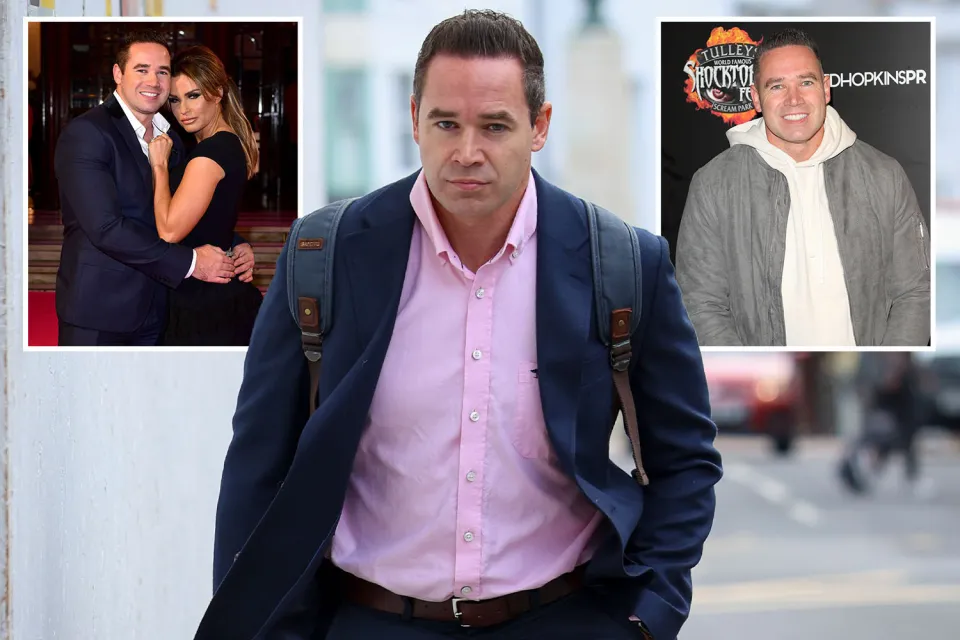
Collage of Kieran Hayler in various settings, including a central photo of him walking in a pink shirt and blazer, a throwback photo with Katie Price, and a portrait in front of a Halloween event backdrop.

KATIE Price’s ex-husband Kieran Hayler yesterday told jurors he was attracted to older women as he denied child rape allegations.

The former stripper, 39, spoke about his affairs while married to the TV personality as he gave evidence at his trial.

Katie Price’s ex-husband Kieran Hayler told jurors he is ‘attracted to older women’ as he denied child rape allegations Credit: Simon Jones
The former stripper, 39, was speaking about his affairs while married to Katie Price as he took to the witness box in his trial Credit: PA:Press Association

He is accused of three rapes and one sexual assault against a 13-year-old girl.

But the judge yesterday added four alternative counts of sexual activity with a child to Hayler’s indictment, which means the jury could convict him of those lesser offences if they clear him of the original charges.

Hayler’s barrister, Arlette Piercy, asked him about cheating on Ms Price with three other women — including the family’s nanny, Nikki Brown — during their marriage.

He said Ms Brown was older than his then-wife. When Ms Piercy asked Hayler about his taste in women, he said: “I am attracted to older women. Michelle (Pentecost, his ex-fiancée) is also older.”

READ MORE ON KEIRAN HAYLER

KATIE FURY

Katie Price rants ‘I won’t be called a liar’ in fiery exchange at Hayler trial


KATIE’S PAIN

Katie Price tells Kieran ‘rape’ trial terminally ill mum has just ‘days’ left

Hayler is accused of three counts of rape and one count of sexual assault against a 13-year-old girl Credit: Getty
The judge added four counts of sexual activity with a child to Hayler’s indictment Credit: Getty

Hayler mentioned the two other women only by their first names, saying: “Jane was 16 years older than me and Chrissy was two years older than Kate.”

Hayler has previously admitted affairs with two of Ms Price’s pals, Jane Pountney and Chrissy Thomas.

During his evidence, he went on to accuse former glamour model Ms Price of coaching the girl he was alleged to have raped at a West Sussex address in 2016.

Hayler said he used the mum of five’s fingerprint to unlock her phone, on which he found a May 2017 text exchange between her and the 13-year-old.

Hayler’s barrister Arlette Piercy asked him about cheating on Ms Price with three other women — including the family’s nanny, Nikki Brown — during their marriage, pair pictured in 2013 Credit: Dan Charity – The Sun
Hayler has previously admitted affairs with two of Ms Price’s pals, Jane Pountney and Chrissy Thomas Credit: PA:Press Association

Asked why he accessed her phone, he said: “She was making allegations that I fancied maybe 15 or 20 different people. I wanted to see who she was talking to.”

Hayler admitted he was looking for dirt about an affair he believed Ms Price was having.

He denies all of the charges against him.

The alleged victim is not a member of his or Katie’s extended family.

The trial continues.

During his evidence, Hayler went on to accuse former glamour model Ms Price of ‘coaching’ the girl he is alleged to have raped at a West Sussex address in 2016 Credit: Splash
Hayler denies all of the charges against him Credit: Simon Jones

Source link