denied

Venezuela: Flores Denied Bail as Justice Department Levies New Maduro Charges

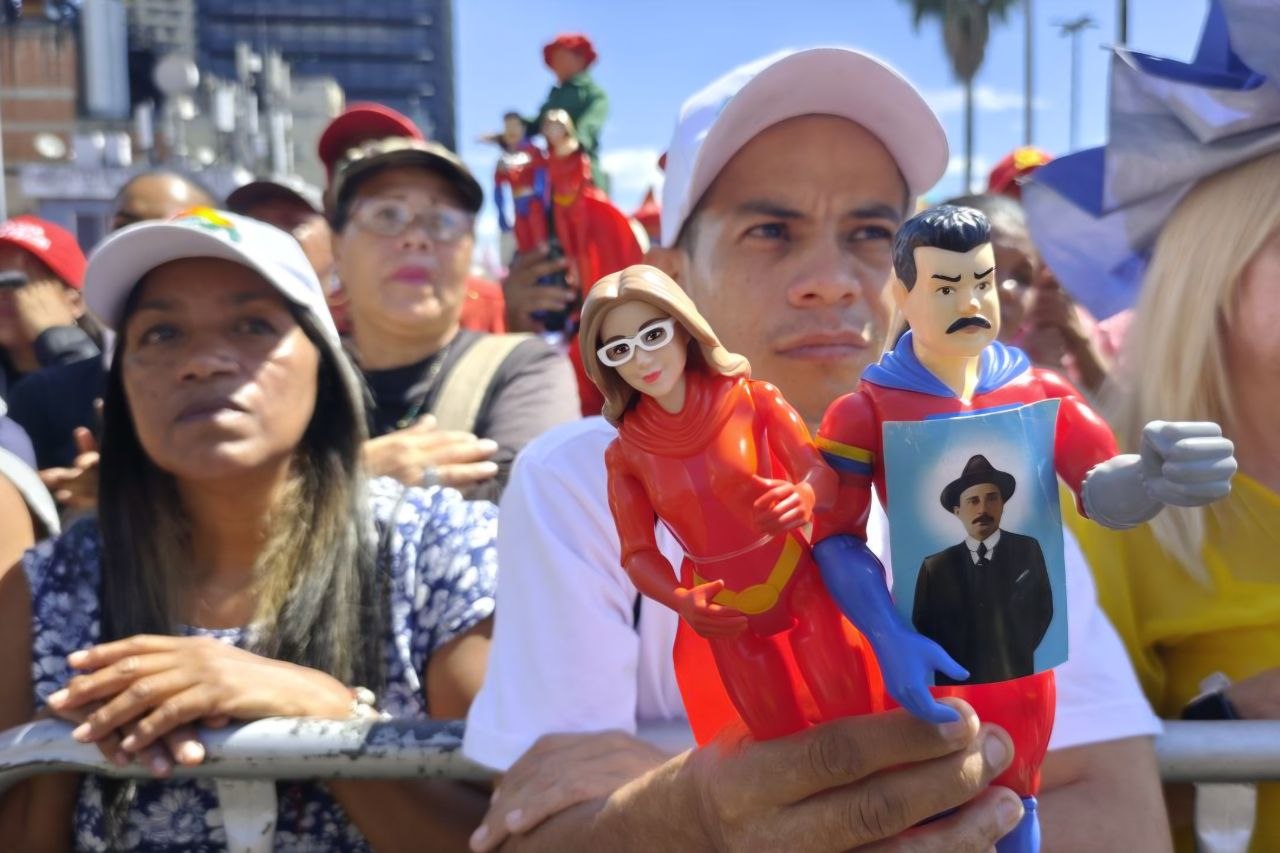
A supporter holds Maduro and Flores action figures in a demonstration in Caracas. (MinMujer)

Caracas, October 8, 2026 (venezuelanalysis.com) – US District Judge Alvin Hellerstein denied a request by Venezuelan First Lady Cilia Flores to be released from jail and allowed to face trial under house arrest in New York following reported health problems.

The Southern District of New York judge argued in a bail hearing on Thursday that Flores posed a “substantial flight risk” and dismissed assurances from defense attorney Mark Donnelly that she would not flee. 

“With all the money at stake and all the contacts Ms. Flores has with the Venezuelan government and the people who make it up, the risk is serious. There is no combination of conditions that would make that risk any less serious,” Hellerstein said.

In a court filing submitted in early September, Flores’ defense team requested that the 69-year-old be transferred to a private residence in New York with armed guards around the clock, an electronic monitoring bracelet, restricted visitors, and monitored phone calls.

Flores and Venezuelan President Nicolás Maduro were kidnapped by US special forces on January 3. They have been detained at the Metropolitan Detention Center in Brooklyn while facing “narco-terrorism,” drug trafficking conspiracy, and weapons possession charges.

Flores’ lawyers have pleaded that she requires extensive cardiac treatment and that the prison does not provide the necessary conditions for her care. Attorneys added that the Venezuelan first lady, who is also a legislator, would cover the transfer costs and offered to surrender her passport as an additional assurance of remaining in custody.

The filing describes episodes of chest pain, arrhythmia, difficulty breathing, and a weight loss of more than 24 pounds since her detention. It also claims that Flores may have suffered a mild heart attack on July 29.

A group of demonstrators gathered outside the courthouse, demanding that the Venezuelan first lady’s health concerns be addressed and protesting the “illegal” abduction and prosecution of the presidential pair.

Hellerstein’s denial of bail coincided with US Justice Department prosecutors filing a new indictment against Maduro and Flores, expanding the charges they face in the United States.

The superseding indictment, backed by US Attorney General Todd Blanche, US Attorney for the Southern District of New York Jamie McDonald, DEA Administrator Terrance C. Cole, the secretary of the Department of Homeland Security, and FBI Director Kash Patel, accuses them of conspiring to torture political opponents, military personnel, and other detainees, including three US citizens.

The prosecution’s filing alleges coercion, electric shocks, and threats against family members, among other practices. Prosecutors claim that after taking office in 2013, Maduro “oversaw a system designed to employ torture, arbitrary detention, and violence as means of repression against the political opposition.”

“As alleged in the indictment, the Maduro regime subjected American citizens to torture while held in custody of the Venezuelan government […]. Today’s charges reflect the commitment from this FBI and this Department of Justice to accountability, the rule of law, and the protection of U.S. national security,” FBI Director Kash Patel stated.

Maduro’s attorney, Barry J. Pollack, said his client denies the allegations in the new indictment and looks forward to his day in court. The updated indictment added “narco-terrorism” to the accusations against Flores.

The document also names Nicolás Maduro Guerra, the former president’s son; current Interior Minister Diosdado Cabello; former minister Ramón Rodríguez Chacín; and Héctor Guerrero Flores, alias “Niño Guerrero,” the leader of the Tren de Aragua gang, who was reported killed in a US military operation inside Venezuelan territory in June.

Last week, US prosecutors challenged Maduro’s claim to sovereign immunity, arguing the White House had not recognized him as president and that the Venezuelan government had never requested that he be granted such status. They said, however, that Caracas had pursued a similar request for Acting President Delcy Rodríguez in a separate civil lawsuit.

Hellerstein is scheduled to hear oral arguments from both sides on the immunity question on November 17. The US government has asked the court to reject motions filed by Maduro and Flores seeking dismissal of charges. If the case proceeds, the trial is scheduled to begin in June 2027.

The Venezuelan government has not commented on the latest charges against the Venezuelan president and first lady or on their legal claims to immunity.

Edited by Ricardo Vaz in Caracas.


Source link

MS NOW, CNN and Politico journalists denied White House access

Jocelyn NoveckAP National Writer 

Journalists from three major news organizations — CNN, MS NOW and Politico — were denied access to the White House on Saturday morning, with reporters from the two cable networks both going live to report they’d been barred following a ban imposed by President Trump.

The actions escalated Trump’s long-running efforts to restrict news coverage by journalists he finds objectionable, and is the latest test of 1st Amendment protections in the United States. Trump said Friday he would ban all three organizations because of their coverage — which he called “fake news.”

Politico said its White House reporter Cheyenne Haslett was denied entry to the White House and had her badge confiscated Saturday. The announcement came shortly after the turning away of MS NOW and CNN journalists.

Editor in chief Jonathan Greenberger said in a statement to the Politico newsroom: “We stand by her and all reporters here covering the White House. … We will vigorously defend our First Amendment rights.”

CNN and MS NOW have issued similar statements.

“We will not be deflected from our duty to hold the government and other public bodies to account,” CNN said. The statement was shown on the air before senior White House reporter Betsy Klein began to report on her ban.

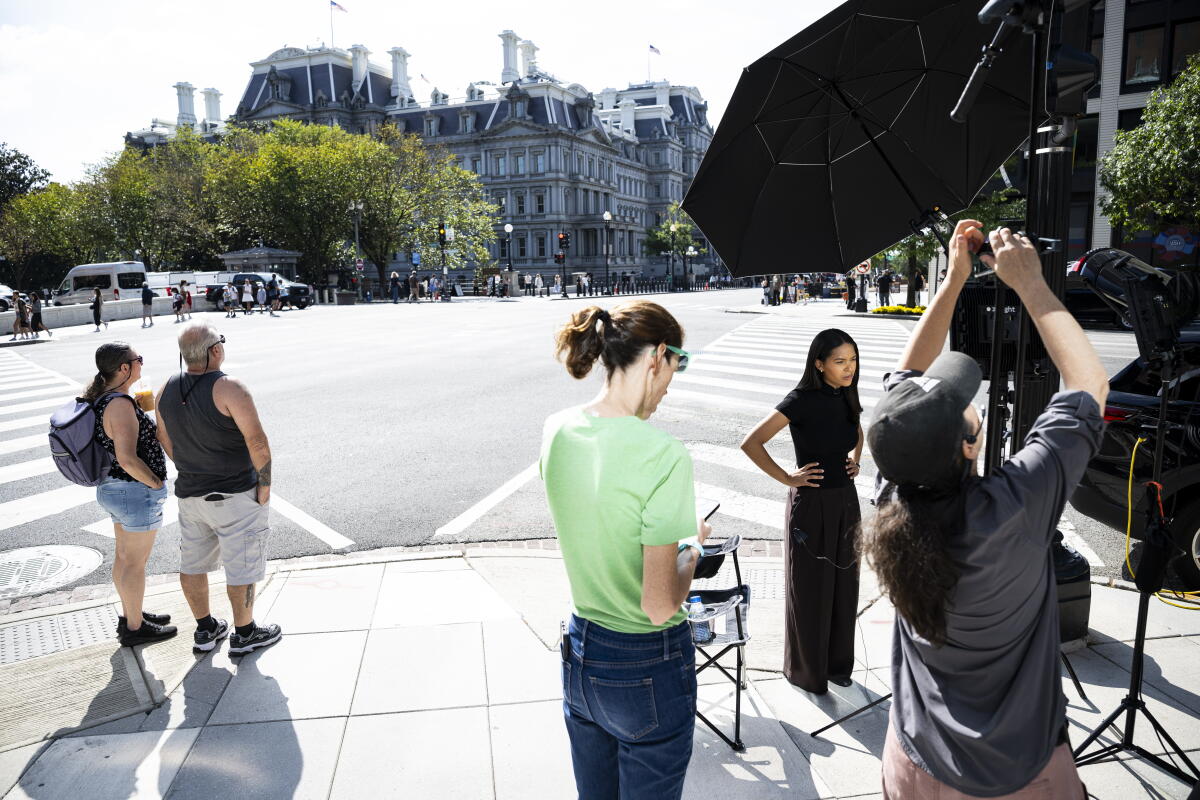
Journalists during a television report on a street corner outside the White House grounds

Journalists from three major news organizations — MS NOW, CNN and Politico — were denied access to the White House on Saturday morning.

(Graeme Sloan / Getty Images)

MS NOW said in a statement that it stands behind its journalists. “The White House belongs to the American people and the decisions made inside are funded by our tax dollars,” the network said in a statement Saturday. “MS NOW intends to take any and all steps necessary to defend our First Amendment rights and the essential role of independent journalism in our democracy.”

In his second term, Trump and his administration have upped the ante and punished certain media outlets, both in the courtroom and through regulatory action. Trump has also lashed out at individual reporters in person or over social media, sometimes in strikingly personal terms.

Turned away, badges confiscated

Both CNN White House reporter Betsy Klein and MS NOW reporter Akayla Gardner went on the air to report they’d been banned from entering the White House.

Network correspondents are usually present on the weekends when the president is in Washington or at nearby Camp David. Trump is at the presidential retreat in Maryland this weekend.

Gardner was turned away and her entry badge confiscated, she said. She noted she had walked through two gates successfully, but once she got to where her badge needed to be scanned, an officer told her it was disabled and asked her to hand it over. He said the decision “was above him,” she reported. An MS NOW producer was able to get in, but a photographer’s badge was also disabled, Gardner said.

CNN Senior White House Reporter Betsy Klein, left, walks to the White House, Saturday.

CNN Senior White House Reporter Betsy Klein, left, walks to the White House, Saturday.

(Jose Luis Magana / Associated Press)

Klein, senior White House reporter at CNN, also said her badge had been deactivated.

CNN media analyst Brian Stelter called the move “a direct threat to press freedom in the United States.”

“It’s so much bigger than CNN,” Stelter said. “This is a free speech test in America.”

Continued attacks on press freedom

The president wrote on his social media site Friday that effective immediately, “I am banning” CNN, MS NOW and Politico “from the White House as a result of their constant ‘reporting’ FAKE NEWS!” Minutes later, speaking at an event in the Oval Office, Trump was asked to explain his statement.

“Because they’re fake news,” he said. “You get so tired of reading and seeing fake news. When you look at CNN, it’s just fake. That’s why their ratings are no good. When you look at MS NOW … , it’s fake news.”

President Donald Trump arrives at the Ellipse before departing the White House

President Donald Trump arrives at the Ellipse before departing the White House on Friday. Trump hosting a MAGA fundraiser at his private club in Sterling, Virginia, before spending the weekend at Camp David.

(Chip Somodevilla / Getty Images)

“And when you look at Politico … the stories they wrote are fake. So there’s a lot of news and there may be others to join them, and maybe they can get better,” he said. “But our country has to have honest news.”

The move follows the president’s decision last year to bar Associated Press reporters from the Oval Office, Air Force One and other events in retaliation for the news outlet’s decision not to follow his lead in changing the name of the Gulf of Mexico, which lies partially in Mexican and other waters. The AP said that it would note when appropriate that Trump had ordered it renamed the “Gulf of America.”

The AP filed suit and the case is ongoing. Since returning to office, Trump has pursued other legal action against a variety of outlets, including the New York Times, the Wall Street Journal and the BBC. His administration is also involved in a long-simmering confrontation involving ABC over renewal of its broadcast licenses.

Noveck writes for the Associated Press.

Source link

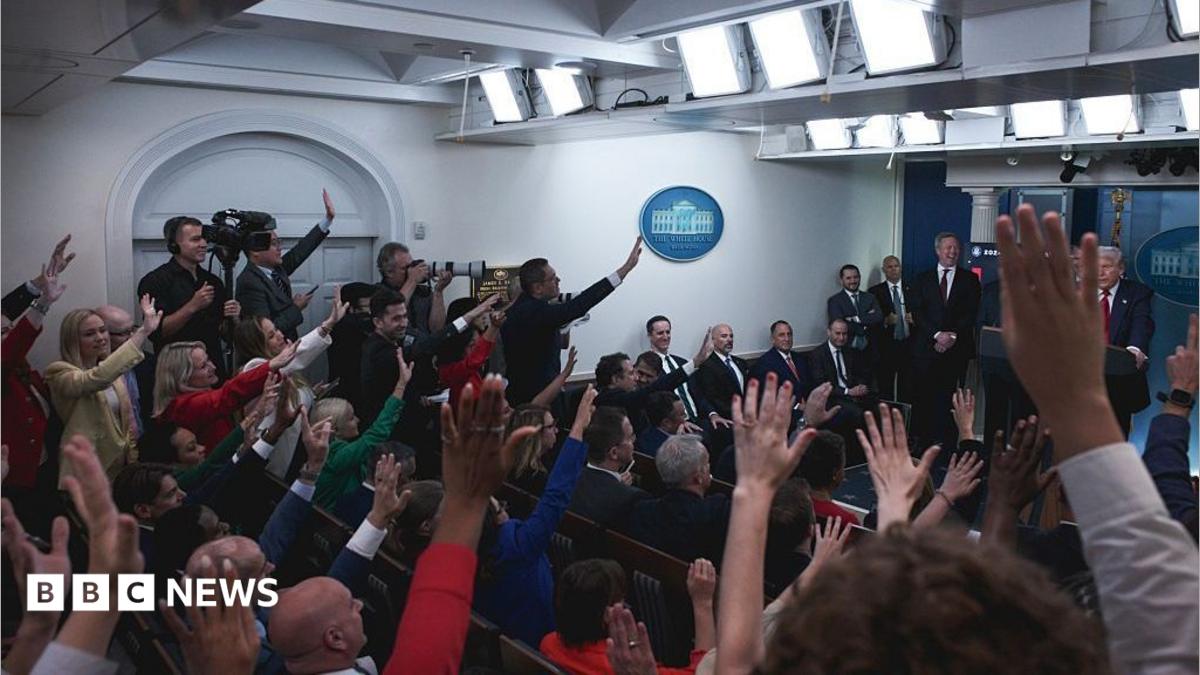
CNN and MS NOW denied White House access after Trump ban

CNN and MS NOW journalists have been denied access to the White House after US President Donald Trump announced he was banning the outlets.

An MS NOW reporter and a photographer tried entering the White House grounds on Saturday morning, but their badges would not scan and an officer confiscated them, the outlet reported.

CNN also said Saturday morning that one of its reporters was denied access and had her badge seized.

Trump said on Friday he was barring MS NOW, CNN, and Politico – three major US media outlets – from the White House, accusing them of writing “fiction or lies” about his administration. Press freedom advocates called the move “unconstitutional”.

“The officer asked me to hand over my badge. He said that it was disabled,” MS NOW reporter Akayla Gardner said. “I asked why I was not able to get inside. He said it was above him.”

Gardner added that while her and her colleague’s badges were disabled, an MS NOW producer was still able to scan her badge to get in, though she was not given an explanation as to why the producer’s badge still worked.

CNN reporter Betsy Klein said a Secret Service agent told her her badge had been deactivated.

An MS NOW spokesperson said in a statement that the White House “belongs to the American people and the decisions made inside are funded by our tax dollars”.

“MS NOW intends to take any and all steps necessary to defend our First Amendment rights and the essential role of independent journalism in our democracy.”

It was not clear whether Politico reporter were at the White House on Saturday. Following Trump’s ban, all three outlets have spoken out against the decision, accusing Trump of violating their constitutional rights to free speech and freedom of the press.

“We have a right under the US Constitution to do our reporting without hindrance or interference from the government and this ban is an illegal assault on this fundamental right,” CNN said.

In his announcement, Trump did not mention specific stories or reporting from the three outlets that prompted the move, but later said “it’s really just cumulative stories over the last few years”.

Trump added that there “may be others to join them”, but has not given a directive banning additional news outlets. When later asked by a reporter what he meant by others to come, Trump responded: “Others to come in terms of fake news? Well, you know, the New York Times is fake news, the Washington Post is fake news.”

Several groups dedicated to the freedom of the press have called out Trump’s White House ban as illegal and unconstitutional.

A major group that provides legal services to the media – the Reporters Committee for Freedom of the Press – said it expected Trump’s ban to be struck down quickly by the courts because it was “flatly unconstitutional”.

“The First Amendment is clear that once the White House invites in some journalists, it can’t ban others because it doesn’t like their reporting,” said Bruce Brown, president of the Reporters Committee for Freedom of the Press, which provides legal services to the media.

It’s the latest in a series of moves by the administration to target media outlets Trump says are critical of him, including legal action against US and international outlets like The New York Times, The Wall Street Journal, and the BBC.

Some of the lawsuits have resulted in media organisations agreeing to pay multimillion dollar settlements. Trump’s lawsuit against the BBC is ongoing.

Additional reporting from Bernd Debusmann Jr and Max Matza.

Source link