A 24-year-old man, who was already being held in quarantine, is the latest to test positive, according to the Health Ministry.
Published On 20 Oct 202620 Oct 2026
Kenya has confirmed a new Ebola case, bringing the total number of infections in the country to nine, amid an outbreak in the Democratic Republic of Congo (DRC), raising concerns about a regional spread.
A 24-year-old man, who was already being held in quarantine, is the latest to test positive, Kenya’s Ministry of Health said in a statement on Tuesday.
Recommended Stories
list of 3 itemsend of list
“He was isolated at the first sign of illness, tested and started on treatment immediately upon confirmation of his positive test result,” it said, adding he “was already in quarantine when he fell ill”.
The man was a close family member of Kenya’s first Ebola patient, who had travelled from the DRC, through Uganda and before arriving in Kenya and dying at a Nairobi hospital on October 5.
“All nine cases belong to one cluster, and as of today there is no evidence of transmission outside this group,” Director-General for Health Patrick Amoth said in a statement on Tuesday.
“Eight patients are stable and responding well to treatment, while 134 of 135 contacts have been traced and quarantined,” Amoth said.
Amoth said a milestone was in sight for the majority of the contacts in quarantine as they had remained well for the 21-day monitoring period and could return home from October 25.
It appealed to communities to welcome them back, saying they “pose no risk of infection”.
The ministry said no infections had occurred within quarantine facilities and that it was continuously monitoring infection-prevention measures to protect health workers.
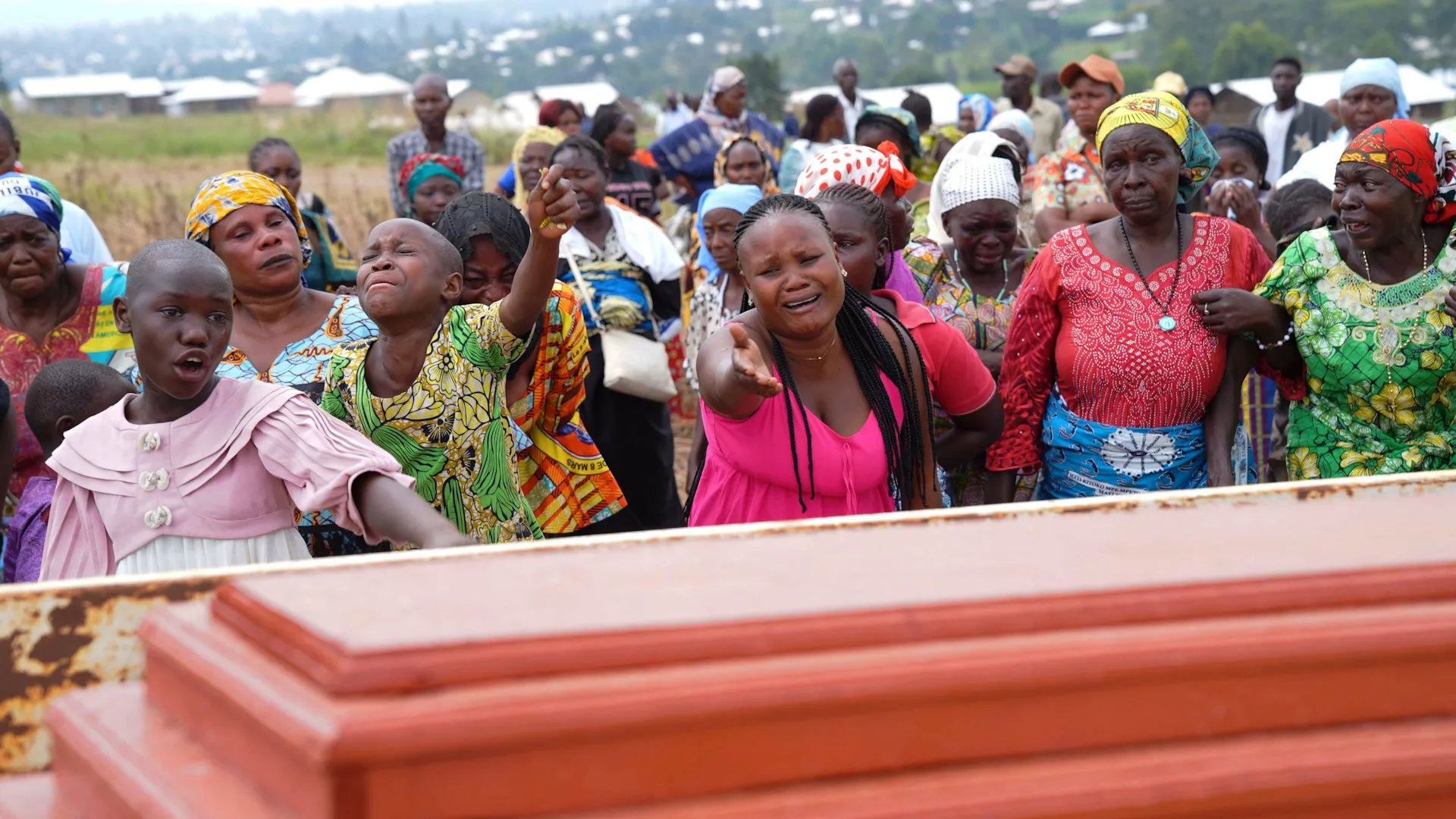
Kenyan Ebola cases are linked to an outbreak in the Democratic Republic of Congo where 9,000 cases have been reported and more than 4,000 deaths since May [File: Sebastien Kitsa Musayi/AP Photo]
Despite the nine infections, Kenya has not imposed restrictions on travel, trade or public gatherings, with authorities saying the country remains open for business.
In the DRC, there have been more than 9,000 Ebola cases and 4,000 deaths since May.
The European Centre for Disease Prevention and Control says it’s the second-largest epidemic on record.
It has been difficult to contain because there is no licensed vaccine or specific treatment for the Bundibugyo strain of the virus.
Kenyan health authorities say latest patient was likely exposed to the country’s first Ebola case.
Published On 19 Oct 202619 Oct 2026
Kenyan health authorities say an eighth Ebola case has been detected, bringing the total number of known infections in the East African nation to eight.
Director-General for Health Patrick Amoth told Kenya’s Citizen TV that of the 38 people tested on Sunday, one had returned a positive result.
Recommended Stories
list of 3 itemsend of list
“He is a 49-year-old man who is not a healthcare worker. He developed fever, headache and muscle pain,” he said.
Amoth said the man, who worked as a patient attendant cleaning utensils and linens, was likely exposed to Kenya’s first Ebola case, discovered earlier this month.
He developed symptoms on Saturday, was quarantined and tested for the virus, a Ministry of Health source said.
The ministry reported four new cases on Saturday, three of whom were health workers who treated the country’s first Ebola patient, a man who travelled from the Democratic Republic of the Congo (DRC) to Nairobi and died at a Nairobi hospital on October 5.
In a post on X, the ministry said the fourth person was related to the deceased patient.
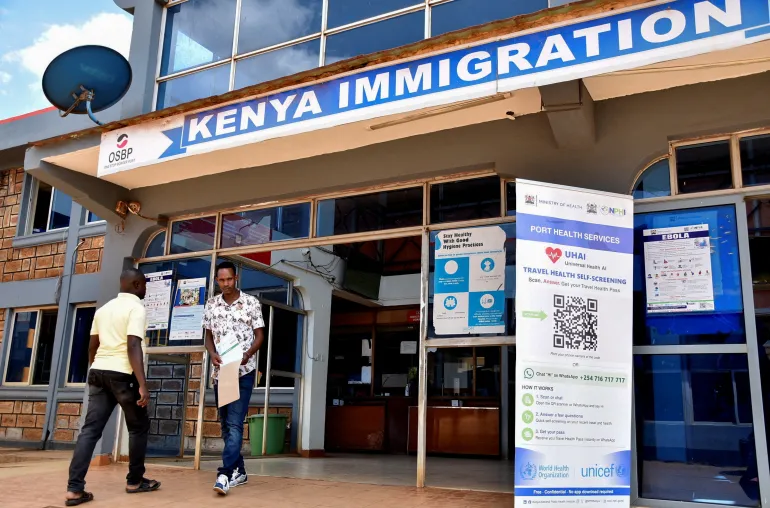
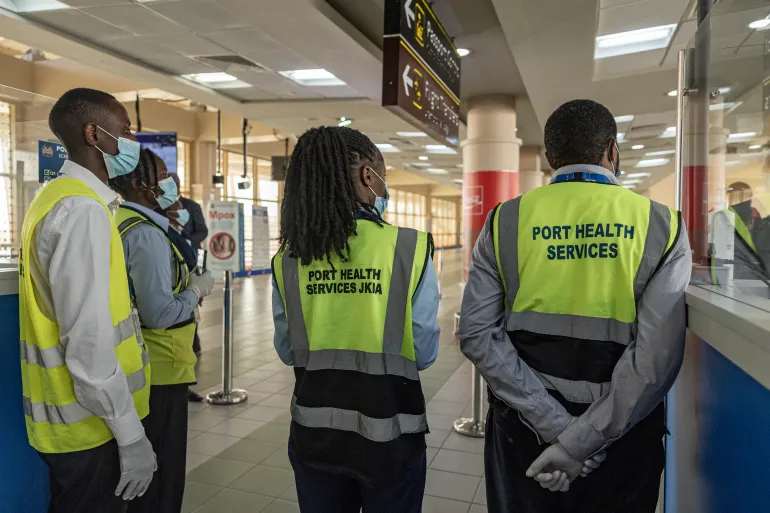
Travellers enter Kenya’s immigration services to access port health services at the Busia One Stop Border Post, a crossing point between Kenya and Uganda, in Busia, Kenya, on October 8, 2026 [James Keyi/Reuters]
Kenya has been on heightened alert, as the Ebola outbreak has spilled across the border from the DRC. The current outbreak is of the Bundibugyo strain of the virus, for which there is no vaccine or specific treatment.
The DRC has recorded at least 9,400 cases, including more than 4,500 deaths, in the deadliest outbreak in the country’s history, which started in May.
Ituri province in eastern DRC remains the disease’s epicentre, accounting for almost three quarters of confirmed cases, according to the government’s most recent data. It announced on Sunday that the virus has reached an eighth province, North Ubangi.
State-run news agency ACP reported on Sunday that authorities in North Kivu province, where the World Health Organization said substantial transmission continues, are introducing a one-week ban from Monday on people entering the province from Ituri in an effort to slow the spread.
Other measures set to be introduced include restrictions on passenger numbers in cars and on motorbikes and suspension of large public gatherings.
Neighbouring Uganda recorded 20 confirmed cases, including 15 imported from the DRC, and two deaths, before it was declared Ebola-free in August.
Formula One returns to Africa for the first time in more than three decades, but DR Congo slams decision to race in Rwanda.
Published On 15 Oct 202615 Oct 2026
Formula 1 will “polish the image of an authoritarian leader” if it goes ahead with plans to hold an African Grand Prix in Rwanda, the foreign minister of neighbouring Democratic Republic of Congo, Therese Kayikwamba Wagner, said Thursday.
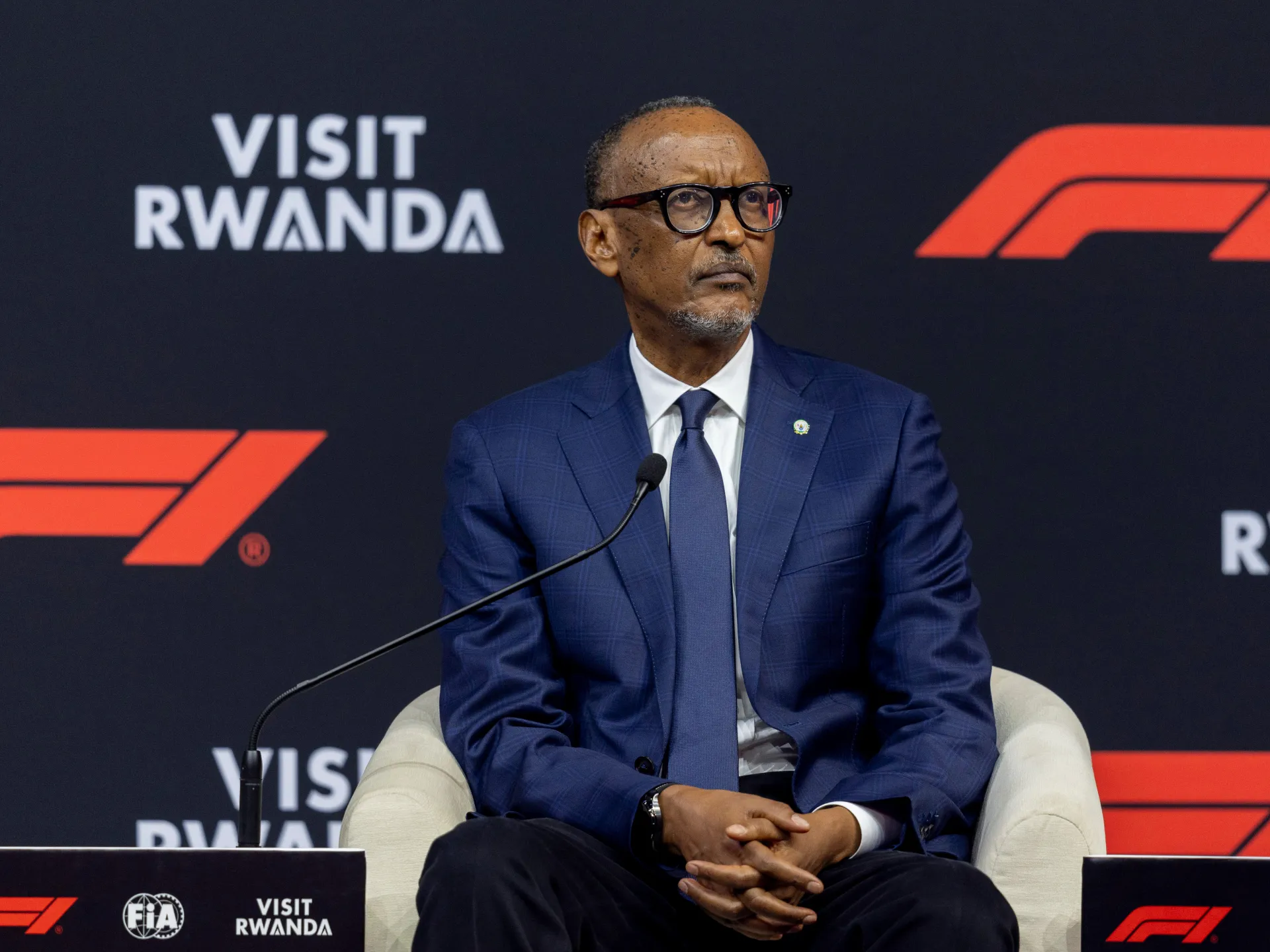
Rwandan President Paul Kagame joined F1 Chief Executive Stefano Domenicali and FIA President Mohammed Ben Sulayem on Tuesday to announce the race. It will be held at a circuit yet to be built at Bugesera, near Rwanda’s capital Kigali, in “the early 2030s,” F1 says. The series last raced in Africa in 1993.
Recommended Stories
list of 4 itemsend of list
The DRC, the United States and UN experts accuse Rwanda of backing M23 rebels in eastern DRC. Rwanda says its security measures are intended to protect it against threats from armed groups operating across the border.
“In February 2025, I warned Stefano Domenicali and the F1 authorities that allowing Rwanda to host a Grand Prix would be morally indefensible,” Kayikwamba Wagner said in a statement. “[The DRC] welcomes Formula 1’s return to Africa, but giving Paul Kagame this platform would help polish the image of an authoritarian leader whose government has helped fuel a devastating war in our country.”
Kayikwamba Wagner said the DRC backs rival efforts from South Africa to host a race instead.
“This is also an opportunity for F1 to show its audiences and supporters what the sport truly stands for,” she added. “It should require credible, independent guarantees that no money used to host the race comes from conflict-linked minerals or the exploitation of Congolese resources.”
The DRC has previously objected to other Rwandan efforts to promote its brand through sports, especially a string of high-profile sponsorship agreements with leading European football clubs.
The US imposed sanctions on Rwanda’s military and four senior officers in March over their support for M23 rebels in eastern DRC. Rwanda rejected the sanctions as one-sided and said they misrepresented the conflict.
Beni, Democratic Republic of Congo – The Ebola outbreak in the Democratic Republic of the Congo (DRC) has spread to another health zone in the east, while a fatal imported case in Kenya has underscored the risk of cross-border transmission.
The World Health Organization (WHO) said in an October 8 update that Alimbongo health zone in North Kivu province had reported cases for the first time. As of October 6, four confirmed cases, including two deaths, had been recorded there.
The outbreak is caused by the Bundibugyo virus, a species of Ebola virus. According to the WHO, cases had been reported in 64 health zones across seven provinces in the DRC. Ituri remained the worst-affected province in cumulative cases, while North Kivu was accounting for a growing share of newly confirmed infections.
As of October 6, the WHO had recorded 8,728 confirmed cases and 4,205 confirmed deaths in the DRC. A further 2,269 people had recovered, and the crude case fatality ratio stood at 48.2 percent.
Kenya confirms imported case
Kenya confirmed its first imported case of Bundibugyo virus disease on October 6, according to the WHO. The patient, a Kenyan citizen who had been living in the DRC, fell ill there and received treatment at several health facilities before travelling to Kenya through Uganda.
The patient travelled by road to Kampala, Uganda, before flying to Nairobi, arriving on October 3. The patient was isolated in hospital and tested positive for the virus. Despite supportive treatment, the patient died on October 5, the WHO said.
Kenyan authorities identified 28 contacts, including family members and healthcare workers. The WHO also reported efforts to trace passengers and crew members from the flight to Nairobi.
Kenyan Ministry of Health officials screen arriving passengers at Jomo Kenyatta International Airport in Nairobi amid Ebola-related health precautions [AFP]
Public health measures have been initiated in Kenya and Uganda, including contact tracing and enhanced surveillance.
On October 8, preliminary laboratory results for a suspected Ebola case in Kenya’s Wajir County came back negative, according to the county governor. The result eased concerns about a possible second case, although monitoring continued.
The imported infection has underscored the importance of surveillance and coordination between neighbouring countries. Identifying exposed people and monitoring them for symptoms are central to detecting infections early and interrupting further transmission.
Treatment capacity under pressure
In the DRC, the response is facing mounting pressure from limited treatment capacity, insecurity and difficulties securing cooperation from some communities.
Daniel Makasi Levergénois, founder of Watoto Radio, said insecurity and misinformation were undermining efforts to contain the outbreak. In Beni and Butembo, both in North Kivu, rumours and misconceptions about Ebola had contributed to reluctance among some residents to cooperate with response teams, he said.
In an October 5 update, medical charity Doctors Without Borders, known by its French initials MSF, said North Kivu accounted for nearly 40 percent of newly confirmed cases nationwide, up from 24 percent at the end of August.
MSF also reported that, as of September 28, 34 percent of confirmed Ebola patients were being treated in non-specialised health facilities. Dedicated treatment centres lacked sufficient beds, while delays in diagnosis meant some patients were being treated outside facilities equipped to manage Ebola.
The organisation warned that many of these facilities lacked the resources and expertise needed to manage the disease, increasing the risk of transmission among patients and healthcare workers.
“For weeks, treatment capacity has stretched to its limit,” said Stephanie Hoffmann, coordinator of MSF’s Ebola treatment centre in Butembo.
“Because there are not enough beds available, we are sometimes forced to refer confirmed Ebola patients elsewhere, despite the significant risk this poses to the wider community. In addition, standards of care in some peripheral facilities do not always meet the requirements for Ebola treatment. This is extremely concerning.”
Mistrust threatens containment efforts
Alberto Lusenge, a community leader in Beni, said the failure to stop transmission early in Ituri province, followed by new cases and attacks on response workers in Beni and Butembo, had deepened public concern.
Lusenge warned that mistrust could discourage residents from reporting symptoms or cooperating with health workers. He said North Kivu could become a greater focus of the outbreak if authorities failed to secure stronger cooperation from local communities.
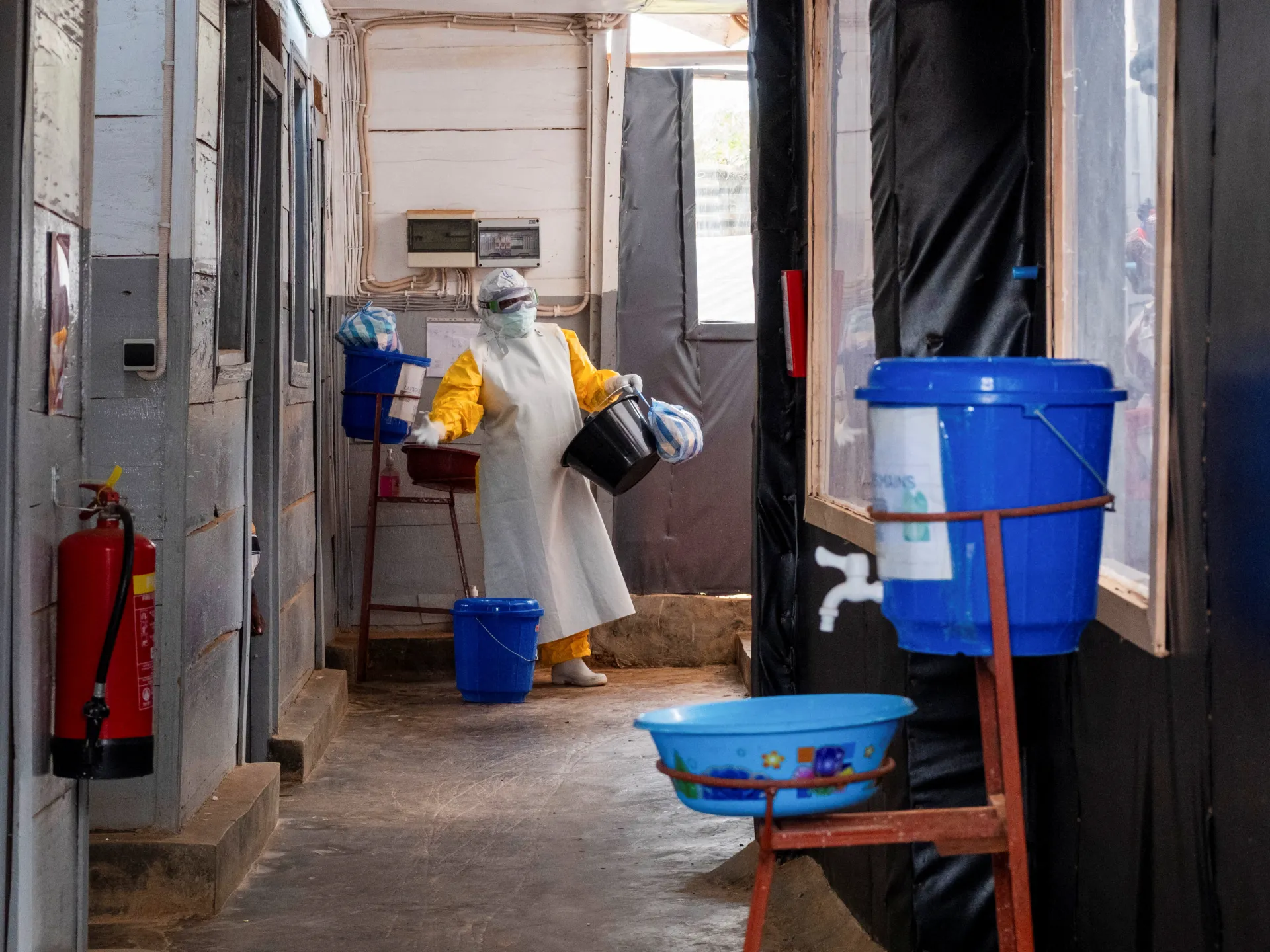
A worker in protective gear handles sanitary basins at an Ebola treatment centre run by MSF in Butembo, eastern DRC [Gradel Muyisa Mumbere/Reuters]
The WHO said response teams were following up 23,741 of the 29,535 identified contacts as of October 4, equivalent to 80.4 percent – below the response target of at least 85 percent.
Contact tracing allows health authorities to identify people who may have been exposed, monitor them for symptoms and detect infections early. Gaps in follow-up can make it harder to identify and interrupt chains of transmission.
The Africa Centres for Disease Control and Prevention (Africa CDC) has called for a community-centred response, including active case finding, systematic contact tracing, daily follow-up of exposed people and sustained engagement with local communities.
A history of deadly outbreaks
The DRC’s 2018–2020 Ebola outbreak, caused by a different virus species, killed nearly 2,300 people. The current outbreak presents distinct challenges: According to the WHO, there are no approved vaccines or specific treatments for Bundibugyo virus disease.
Early detection, supportive care and infection prevention therefore remain central to the response. But as infections spread into additional health zones and treatment facilities struggle to accommodate patients, health authorities face the dual challenge of containing transmission and maintaining public trust.
Jean Kaseya, director-general of Africa CDC, has stressed the importance of rapidly identifying and monitoring people exposed to the virus.
“To bring this outbreak under control, we need to know where every contact is, track them and quickly identify anyone showing symptoms before they pass the virus on to their family, their community or across borders. We will only bring this outbreak under control once the last chain of transmission has been broken,” Kaseya said in a news release seen by Al Jazeera.
Colombian President Abelardo De la Espriella had promised closer ties with Israel on the campaign trail.
Published On 8 Oct 20268 Oct 2026
Israel has announced that Colombia will open an embassy in Jerusalem, becoming the latest country to establish a diplomatic mission in the disputed city claimed as a capital by Israelis and Palestinians. Most countries have their embassies in Israel in Tel Aviv.
Israeli Foreign Minister Gideon Saar said Thursday the Latin American country’s embassy would open next week as he touted expanding relations with the region.
Recommended Stories
list of 3 itemsend of list
“Next Wednesday, we are going to inaugurate … the Colombian embassy,” Saar told attendees at a conference in Jerusalem.
An official at the Colombian Foreign Ministry in Bogota told AFP news agency the country’s Foreign Minister Omar Bula Escobar would travel to Jerusalem on Sunday ahead of the opening.
Colombian President Abelardo De la Espriella, who was sworn in as president in August, promised close relations with Israel during his election campaign. When he came into office, he restored diplomatic ties between Colombia and Israel. Colombia had previously severed ties with the country over Israel’s genocidal war in Gaza.
The announcement comes as a small but growing list of countries has opted to route their diplomatic ties with Israel through Jerusalem.
Since 2018, the US, Guatemala, Paraguay, Kosovo, Honduras, Papua New Guinea, Fiji, Nauru and Somaliland, which has been recognised as an independent entity only by Israel, have opened embassies in the city.
Other countries that have diplomatic relations with Israel have located their embassies in Tel Aviv, as Jerusalem is not recognised by the international community as Israel’s capital.
“We will work hard because this is the diplomatic battle over the truth. And the truth is, Jerusalem was always the capital of one nation,” Saar said, dismissing Palestinian claims to the capital.
The Israeli minister said the Democratic Republic of the Congo would open its embassy in Jerusalem “very soon” and hinted at another opening.
“I think that with the possible results in Brazil, they might have the same move,” he said after right-wing Senator Flavio Bolsonaro won the first round in the country’s presidential election.
Protesters in Colombia took to the streets of Bogota on Wednesday to rally against the new far-right government’s policy towards Israel, including the decision to open the Jerusalem embassy.
“When diplomatic relations with Israel were broken off, the message was that we would not be a nation complicit in their atrocities,” Nicolas Isaza, who took part in the protest, told Al Jazeera.
“Today our government is no longer drawing a line against the atrocities being committed in Palestine,” he added.
Burning of a Ebola-hit transit camp sends 19,000 fleeing, illustrating the difficulties of controlling epidemic.
Published On 2 Oct 20262 Oct 2026
The Democratic Republic of Congo’s Ebola outbreak has now killed more than 4,000 people, according to government data, making it the worst epidemic in the country’s history.
Figures released on Friday showed that the death toll has risen to 4,018, and confirmed cases had reached 8,300 across seven provinces, as the government continues to struggle to contain the outbreak.
Recommended Stories
list of 4 itemsend of list
Weak infrastructure, the remoteness of the region in eastern DRC, and ongoing conflict with armed groups near the borders with South Sudan, Uganda, and Rwanda have hindered efforts to respond to cases quickly and effectively.
The United Nations reported on Friday that an Ebola-hit camp housing a transit centre for infected patients was burned by soldiers earlier this week as they were looking for weapons on the outskirts of Bunia, capital city of Ituri Province, which is at the epicentre of the outbreak.
The incident forced 19,000 people to flee the camp.
“The enormous challenge of halting the spread of Ebola in the Democratic Republic of the Congo (DRC) just became even harder after a key transit centre for patients requiring treatment burned down in Ituri province,” the UN said.
People’s mistrust and anger towards health workers and authorities have also contributed to the obstacles the government faces in its efforts to contain the outbreak.
A senior member of DRC’s governing Union for Democracy and Social Progress (UDPS) party was beaten to death days ago after taking part in a radio programme to raise awareness about the epidemic.
The attack on Marie-Celestin Karondwa, a local official with UDPS, took place last Sunday at his home in Butembo, an Ebola hotspot in the eastern North Kivu province. His house was set on fire afterwards, and he died at hospital from his injuries.
The World Health Organization has warned that the epidemic is “far from over” and on track to surpass the regional 2014-2016 West Africa Ebola outbreak, which killed more than 11,000 people, primarily in Guinea, Liberia, and Sierra Leone.
Caused by the Bundibugyo strain of Ebola, the current epidemic became the largest and deadliest in the DRC after surpassing the 2018-2020 epidemic.
Several treatments and vaccines are being trialled against Bundibugyo, but currently, there is no approved vaccine or treatment.
The current outbreak, which is the DRC’s 17th, has spread rapidly since it was officially declared on May 15.
More than 2,000 patients have recovered from the Ebola epidemic so far. The Africa Centres for Disease Control and Prevention said in its latest news conference that the number of confirmed cases is falling, although that could be attributed to insecurity and challenges in getting communities to cooperate in some of the hotspots.
Fatalities reached 3,901 across the DRC as health workers battle community anger and a vaccine-resistant strain.
Published On 28 Sep 202628 Sep 2026
The Democratic Republic of the Congo (DRC) has recorded over 8,000 cases of Ebola, including almost 4,000 deaths, amid the worst outbreak in the country’s history, according to government data.
The latest report, published on Monday by the DRC’s public health institute, put the number of cases at 8,067 and deaths at 3,901, representing a fatality rate of 48.4 percent.
Recommended Stories
list of 4 itemsend of list
People’s mistrust and anger towards government policies have become a major obstacle in limiting the outbreak since it was officially declared on May 15. A senior member of the ruling UDPS party was beaten to death after raising awareness about the epidemic on radio, a party representative said on Monday. The killing happened on Sunday in Butembo in North Kivu province, which has become a hotspot in the ongoing Ebola outbreak.
The number of cases has levelled off after a rapid increase, according to the African Union’s health agency, Africa CDC, though it still considers the outbreak “not under control”.
Several treatments and vaccines are being trialled against the Bundibugyo strain of the Ebola virus, for which there is no approved vaccine or treatment.
The current outbreak, which is the DRC’s 17th, has spread rapidly. Experts say that weak health infrastructure, the region’s remoteness and ongoing conflict near the DRC’s borders with South Sudan, Uganda and Rwanda have damaged efforts to respond to cases quickly and effectively.
Those issues have also hindered the government’s efforts to fight the outbreak, increasing public mistrust and anger towards its suggested prevention measures.
Marie-Celestin Karondwa, acting president of the UDPS party’s federal executive committee in Butembo, was attacked by local residents after appearing on a radio show where he discussed Ebola prevention measures, according to the Congolese health authorities.
In their latest case report, authorities highlighted a “low capacity” to treat cases at health centres in Ituri province and described a “complete shortage” of stocks of an experimental vaccine against the Bundibugyo strain in the northeastern province of Tshopo, where cases have been recorded.
The World Health Organization has said the outbreak is “far from over” and on track to surpass the regional 2014-2016 West Africa Ebola outbreak. It killed more than 11,000 people, primarily in Guinea, Liberia and Sierra Leone.
The United States announced last week that it was releasing a further $267 million to help fight Ebola. It is hoping for pledges from other countries to meet a target of $2 billion to fight the disease, mainly found in the DRC.
As war and sexual violence rage in eastern Democratic Republic of the Congo (DRC), women are joining pro-government Wazalendo fighters to defend their communities. However, the armed group itself faces serious accusations of human rights abuses, including gang rape.
The Ebola outbreak has spread to new areas in the Democratic Republic of the Congo, with 10 neighbouring countries at high risk as officials step up border health measures.
Civilians and senior military officials among 14 dead after an army plane crashes into a residential area in the DRC.
Published On 26 Sep 202626 Sep 2026
At least 14 people, including senior military officials, were killed on Friday when a Congolese army plane crashed in the southwest of the Democratic Republic of the Congo (DRC).
The plane was travelling to the capital, Kinshasa, from the southwestern city of Kikwit on Friday when it developed a technical fault and attempted to land in Kenge, in Kwango province.
Recommended Stories
list of 3 itemsend of list
Remy Saki Bokinda, deputy governor of Kwango, said: “With no landing strip available in Kenge, the plane crashed into a residential plot.”
Congolese military spokesperson Major-General Efomi Ekenge said 14 people had died in the crash.
“All those on board died; 12 were burned beyond recognition, while the pilot’s lifeless body was found outside the aircraft,” he said.
According to the military, among those killed were civilians and members of an official delegation travelling with the two generals, along with other military personnel.
Bokinda also said most of the bodies were burned beyond recognition and the pilot was found dead outside the wreckage.
An investigation has been opened to determine the cause of the accident, Ekenge said.
The DRC, a vast, mineral-rich country in central Africa, has endured decades of conflict, particularly along its eastern border with Rwanda, where several armed groups compete for control of lucrative mining areas.
The Congolese military has been battling a number of rebel groups that have claimed key cities in the country since last year.
Health workers struggle as new Ebola cases are found in border regions of South Ubangi and Haut-Uele.
The Ebola virus caused by the Bundibugyo strain has spread to two new health zones in the Democratic Republic of the Congo, according to the World Health Organization (WHO).
New cases were found in Bulu in South Ubangi governorate on the border with the Central African Republic and Dungu in Haut-Uele province on the border with South Sudan, the WHO said on Friday.
Recommended Stories
list of 3 itemsend of list
The additional cases bring the number of health zones affected to 63 across seven provinces as authorities struggle to control the outbreak.
As of September 23, the Democratic Republic of the Congo, or DRC, has reported 7,890 confirmed cases and 3,799 deaths, according to the WHO. That means that almost half the people who contracted the infection have died.
WHO Director-General Tedros Adhanom Ghebreyesus said conflict and population displacement were making it more difficult for health workers to reach affected communities and trace people who may have been exposed to the virus.
“It’s very difficult to see Ebola in isolation because even our response to Ebola is affected by the conflict, because there is displacement and there is an access problem to some areas,” Tedros said.
The Bundibugyo strain is difficult to treat because there are no approved vaccines, Tedros said, adding that the WHO is accelerating clinical trials of vaccines and treatments.
Contact tracing falling short
Meanwhile, health workers looking for people who may have been exposed to the Bundibugyo strain are falling short of their targets.
According to Dr Jean Kaseya, the director-general of the Africa Centres for Disease Control and Prevention (Africa CDC), the more than 7,000 confirmed cases should translate to about 420,000 contacts.
“But currently, we have just 30,000 people in the contact list,” Kaseya said.
“When the outbreak is at community level, we cannot talk about control,” he added.
Ituri province in northeastern DRC continues to be the epicentre of the outbreak, accounting for 6,032 confirmed cases since the start of the epidemic in May, including 868 new confirmed cases reported in the last 21 days.
North Kivu is the second most affected province, with 1,480 new cases, including 567 reported in the last 21 days. The province now accounts for around a third of newly confirmed cases and deaths, the WHO said in a report on Sunday.
Nearly 60 percent of people diagnosed in North Kivu died, significantly higher than the national average of 48 percent, the data show.
Medical staff say patients are avoiding health facilities until it is too late.
“Patients think that if they arrive at the hospital, they will be immediately sent to the treatment centre to die,” said Dr Michel Paluku Mukuloli, who works at a hospital in North Kivu’s Butembo.
That complicates efforts to identify cases and start treatment before the disease reaches its most dangerous stages.
North Kivu was the epicentre of three previous Ebola outbreaks, including one in 2018-2020, which until this year was the DRC’s largest and deadliest. Those outbreaks, however, were caused by a different type of Ebola virus, known as the Zaire strain.
Much less is known about the Bundibugyo strain. But responders say in the early stages of infection, patients often experience milder symptoms easily mistaken for more common diseases such as malaria and typhoid fever.
About 100 people, as well as cargo, were reportedly on board the vessel when it sank on Lake Tanganyika.
Published On 25 Sep 202625 Sep 2026
At least 41 people have died, and 49 others have been rescued, after a boat capsized on Lake Tanganyika in the Democratic Republic of the Congo (DRC).
Norris Mulongoyi, the provincial transport minister for DRC’s Tanganyika province, told The Associated Press news agency that search operations were under way to locate the remaining passengers.
Recommended Stories
list of 3 itemsend of list
The boat was reportedly carrying about 100 people and cargo when it capsized near the Congolese village of Mapera.
The vessel was travelling from the port of Kigoma in Tanzania to the city of Kalemie in DRC when it sank on Thursday.
A survivor identified as Annie Moyoni told Radio Okapi, a UN-backed Congolese broadcaster, that passengers were awakened at about 1am and found the boat tilting to one side.
It is unclear what caused the vessel to capsize, but hundreds of people have been killed in boat disasters in the DRC in recent years, according to the AP. Vessels are often overloaded and lack life jackets.
For many in the DRC, travelling by boat is the cheapest and most affordable way to get around. The country is one of the poorest in the world and lacks sufficient infrastructure for its more than 100 million people.
The sinking was the second loss of a Congolese vessel on the Kigoma-Kalemie route in less than a month.
On August 28, the Congolese vessel MV Pacifique caught fire and exploded at the port of Kigoma while loading fuel, according to Radio Okapi.
Six crew members were killed, and a seventh was reported missing, Radio Okapi said, citing port authorities. The vessel operated between Kigoma and Kalemie and was used to transport fuel.
At least 20 people also died when a wooden boat carrying students returning from state exams sank in central DRC in July.
DR Congo beat Equatorial Guinea, while Ivory Coast cruise by Ghana and Cameroon beat Comoros as AFCON qualifiers begin.
Published On 24 Sep 202624 Sep 2026
The Democratic Republic of the Congo followed up their World Cup exploits with a 2-0 home win over Equatorial Guinea on the opening day of the group qualifiers for next year’s Africa Cup of Nations.
Captain Chancel Mbemba headed home the opening goal in the fourth minute, and Yoane Wissa added a second 18 minutes from time in Kinshasa on Thursday, although the scoreline might have been more emphatic after they twice struck the woodwork and also had two efforts ruled offside.
It was the first game for the Congolese after advancing through the first phase of the World Cup for the first time and running England close in their last-32 tie in Atlanta in July.
However, there was no opportunity for home supporters to celebrate their achievement as the size of the crowd at the Stade des Martyrs was restricted to 20,000 after sanctions for fan violence that followed defeat by Senegal in World Cup qualification one year ago.
Mauritania and Namibia were also winners in Thursday’s early games, while Libya netted a last-gasp penalty to salvage a 2-2 draw at home to Botswana behind closed doors in Tripoli, where the stadium was also banned because of previous supporter violence.
Botswana striker Tumisang Orebonye scored a double in the first half to put his side on course for a rare away win before Maruwan Alhibeeshi thrashed home from the edge of the area to pull one back in the 87th minute.
Botswana substitute Mothusi Cooper gave away a stoppage-time penalty with a clumsy challenge, allowing Ezoo El Mariamy to rescue a draw.
Mauritania won 3-1 over the Central African Republic in Casablanca, Morocco, which included a superb chipped effort over the goalkeeper from Dawda Camara, while Bethuel Muzeu scored the only goal as Namibia edged Congo.
Ivory Coast beat Ghana 2-0 in a derby in Bouake in a Group C encounter.
A stunning strike from Malick Yalcouye opened the scoring from outside the box in the first half, although the Ghana keeper, Lawrence Ati-Zigi, will feel he should have done better at his near post.
Franck Kessie gave the Black Stars stopper no chance as he sent his opponent the wrong way with a side-footed second-half penalty.
Ghana, who failed to qualify for the 2025 edition of AFCON, are left to reflect on a match where they failed to register a shot on target until the 75th minute. They also conceded 61 percent of possession to their hosts.
Cameroon beat Comoros 3-1, while Tunisia were held to a 1-1 draw by Uganda in the pick of the other ties.


![Travellers walk at the Kenya immigration services to access port health services at the Busia One Stop Border Post, crossing-point between Kenya and Uganda, after a man who had been living in the Democratic Republic of Congo travelled and died of a new Ebola outbreak involving the Bundibugyo species at the Nairobi Hospital, in Busia, Kenya October 8, 2026 [James Keyi/Reuters]](https://i0.wp.com/occasionaldigest.com/wp-content/uploads/2026/10/2026-10-14T155735Z_34711835_RC22ZNATTZD9_RTRMADP_3_HEALTH-EBOLA-KENYA-1792367033.jpg?w=640&ssl=1)
![Kenyan Ministry of Health officials screen arriving passengers at Jomo Kenyatta International Airport in Nairobi amid Ebola-related health precautions [AFP]](https://i0.wp.com/occasionaldigest.com/wp-content/uploads/2026/10/afp_6ac66094d7af-1791385748.jpg?w=640&ssl=1)
![A worker in protective gear handles sanitary basins at an Ebola treatment centre run by Médecins Sans Frontières in Butembo, eastern DRC [Gradel Muyisa Mumbere/Reuters]](https://i0.wp.com/occasionaldigest.com/wp-content/uploads/2026/10/reuters_6ab6e4f3-1790371059.jpg?w=640&ssl=1)