demanding

How the Venezuelan Opposition Can Move Beyond Just Demanding Elections

This article is also published in Spanish on the Hacha y Machete Substack

Last weekend, the opposition achieved the familiar show of unity in Panama City, something that is not always easy to pull off. Party representatives agreed to fight for free elections and to back María Corina Machado as the candidate in any eventual vote. Machado, for her part, promised to return before the end of 2026. 

This is a milestone that should inspire at least some optimism. Five months ago, this group of people was scattered, waiting, in exile or in hiding. But given the sheer scale of Venezuela’s democratic challenge, the unity photo-op, the return of exiled leaders, and the reemergence of figures from hiding remain insufficient. 

Some politicians have returned to the country or emerged from hiding, but without a clear, politically binding agenda for achieving free elections recognized by all actors. The current dynamics still force us to react to the regime’s horrors. The case of Víctor Quero and Carmen Teresa Navas is among the clearest examples. 

Before Venezuela can achieve a true transition, the country’s pro-democracy movement must first undergo its own internal transition. Returns and displays of unity can alter incentives only if they become part of a public, coordinated, and understandable strategy. These are the main elements such a strategy should include.

A clear division of roles and responsibilities

Opening up the political playing field requires a clear division of roles and responsibilities. María Corina Machado and Juan Pablo Guanipa can embody a kind of “good cop/bad cop” dynamic within the democratic movement. The “good cop” would be Machado, whose messaging is already closely aligned with Trump’s policy toward Venezuela. The “bad cop” is Guanipa, whose rhetoric has become increasingly impatient regarding the goal of democratic transition.

If the democratic transition is truly a la venezolana, the debate about it must be taken out of the conference rooms in Washington and Caracas. 

But that differentiation cannot remain confined to national leadership figures alone. Student organizations, victims’ groups and human rights defenders, labor unions, and social organizations are equally crucial. These actors have earned legitimacy on the ground before January 3, when many were swept aside by a brutal wave of repression from which parties are still recovering. Since then, civil society has reaffirmed new leadership figures who, despite lacking party experience, could play important roles in the looming political cycle.

What matters is that this differentiation of roles be coordinated rather than improvised or competitive. Opening up the political field does not mean diluting political leadership. It means expanding the democratic movement’s range of action.

Combine negotiation with protest

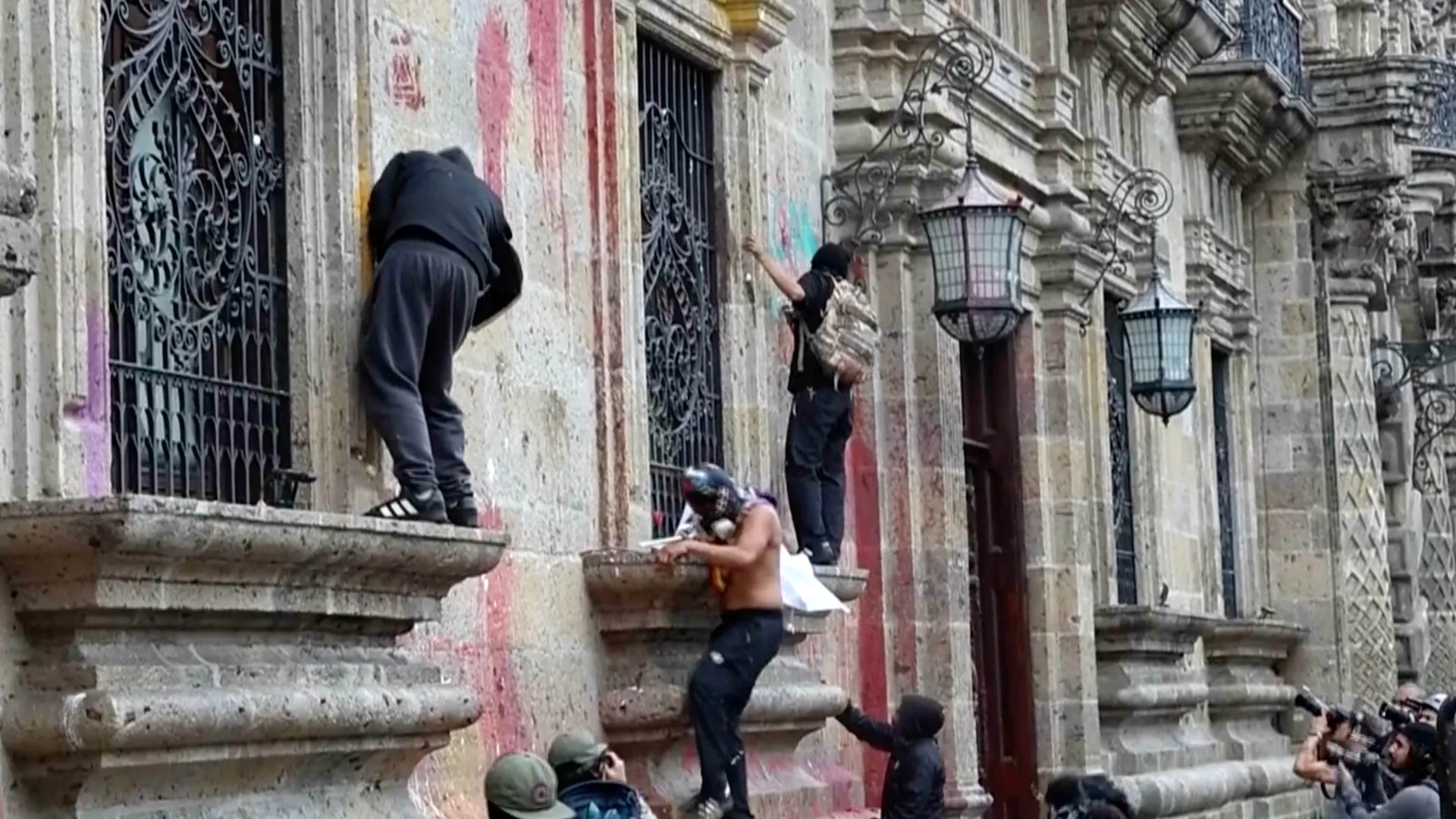
There is no contradiction between the two. Negotiation without social pressure does little more than managing stagnation. Protest without a political roadmap burns out. What is needed is to give the streets political content: mobilizing not only against the regime’s abuses, but also in favor of a concrete transition agenda.

The role of movements is to protest, propose, and articulate the kind of transition they want. Just as students in 2007 embraced the campaign against the constitutional referendum and defeated Hugo Chávez, these grassroots movements should also assume a proactive role in shaping the type of transition they identify with.

That requires organizing a kind of “social roundtable” capable of coordinating different causes. These are autonomous rivers that can converge into the same lake: free elections and a broad national agreement on the direction of post-electoral public policy. Each movement has its own identity and internal dynamics, but there must be some degree of coordination and communication among them and with the broader national political agenda.

Protests also present a constant dilemma for the ruling Rodríguez siblings, a litmus test for their supposed liberalization. Demonstrations must remain peaceful and disciplined in order to deepen their dilemma.

Open up the conversation about democratic transition

The Machado-led opposition coalition and its allies have a responsibility to promote an open discussion about transition: what it means, how it is built, and what dilemmas it entails.

Dilemmas are never truly solved. They are weighed in terms of risks, benefits, opportunities, and threats. If the democratic transition is truly a la venezolana, the debate about it must be taken out of the conference rooms in Washington and Caracas. Not everything was decided in Panama City.

This time, the goal would be to bring together different groups and individuals to debate the diverse and legitimate visions of our own transition.

That conversation should include at least three dimensions:

The political-institutional dimension: What minimum guarantees would make a transition possible? What conditions would make an election politically binding? Should Venezuela pursue a constituent assembly? Should the process begin with a presidential election or a parliamentary one? What are the advantages and disadvantages of each option?

The social-humanitarian dimension: How do institutional reforms connect with people’s daily needs, such as wages, public services, security, justice and family reunification?

The electoral dimension: What should the sequencing of elections look like? (As far as we know, there was no agreement on this point in Panama). Should Venezuela return to a manual voting system? How can a trustworthy electoral authority (CNE) be guaranteed, and who should be part of it? What expectations and steps are required to secure the political inclusion of the diaspora and of millions of citizens inside Venezuela who cannot vote in the current circumstances?

Before the 2023 opposition primaries, there was one essential experience that helped build momentum: the Hablan los Candidatos debate, organized by students and activists in July 2023 at the Aula Magna of Universidad Católica Andrés Bello. Now imagine an event, or a series of events on a much larger scale. But this time, rather than candidates, the goal would be to bring together different groups and individuals to debate the diverse and legitimate visions of our own transition.

Use technology boldly

Technology can become a central tool to expand this deliberative process. Digital consultations, hybrid assemblies, spaces for dialogue with the diaspora, coordination mechanisms among professional associations, students, parties, unions, victims, and social organizations: all of this can help rebuild a democratic infrastructure for participation.

Producing a political milestone is not enough. A sequence must be built.

During both the primaries and July 28, the democratic movement used technology in exemplary and innovative ways. Through different applications, people found their polling centers, filed complaints, participated in defending the vote, and helped publish the real results. We need to use technology with that same boldness again, this time within a broader strategy of deliberating, coordinating, and disseminating the agenda of democratic transition.

Plan the sequence

The experience of January 2019 reminds us of something important: political milestones are never improvised. That strategy (whether or not one agrees with its tactics and consequences) was planned months in advance among political parties, civil society, and the leadership of the 2015 National Assembly. What is needed today is a similar level of preparation, but with one additional lesson that may prove decisive: producing a political milestone is not enough. A sequence must be built.

A unity photo may mark the beginning of a new phase. The return of political leaders may help shift public expectations or reshape the outlook of potential voters. A protest met with repression can show  the limits of the regime’s liberalization, something we have already seen this year with students, public-sector workers, and pensioners. A public debate can help organize competing visions of transition, giving oxygen and substance to a public sphere that must continue looking for spaces for deliberation. But none of these things, in isolation, constitutes a strategy.

The democratic movement has already found innovative, intelligent, and popular solutions to political dilemmas. It has pulled rabbits out of hats, brilliant plays in a perverse game, such as the feat of July 28, 2024. However, even rabbits do not appear by magic. The next move must emerge from the lessons and achievements that are already part of the movement’s democratic inheritance. 

We should do what we have already done and know we can do: open up the political field, bring people down from the stands, turn indignation into an agenda, and transform the return of many into movement-building.


Source link