‘Natchez’ review: Documentary on Mississippi town reveals longtime fissures
In the 1930s, the white matriarchs of tiny Natchez, Miss. — one of the 19th century’s wealthiest American towns thanks to the slavery-driven cotton trade — opened their stately antebellum mansions to save themselves from economic ruin. Tourism dollars flowed in, even if the prettified Southern history being sold ignored the immoral plague that built its riches in the first place.
By turns cheeky and disturbing, blunt and nuanced, Suzannah Herbert’s excellent documentary “Natchez” offers its own guided tour of a memory-challenged community (population: 14,000) struggling to reconcile its exquisite, carefully scrubbed façade with the inconvenient truths some would like to see better represented in the narrative.
That longstanding erasure has made Natchez a less commercially friendly prospect to younger generations of visitors. And meaningful progress turns out to be much harder than simply refashioning an exhibit or a docent’s spiel.
Can a place like Natchez — home to both a cherished tourist pageantry called the Pilgrimage and the slave market site called Forks of the Road — find a harmonious existence between its green-and-serene sightseeing pleasures and its terrible past? Its optimistic mayor seems to think so, if the first scene is any indication, in which he exalts a “new Natchez” at a spirited ladies’ luncheon held by the tour-umbrella association, the Garden Club, and featuring that group’s first Black member, Deborah Cosey.
Cosey, we learn, runs Concord Quarters, a burned-down plantation’s last remaining building, which once housed its enslaved. (She also lives there.) Centering the work and lives of these forgotten souls is a mission she sees as telling “the rest of the story.” In one tense scene with her white colleagues, Cosey winces at their version of historical enlightenment — the reclamation project is moving at a horse-drawn carriage’s pace.
The big house is still the main show, antiquated customs and preserved finery still the plot, even as some of these hosting descendants, faced with declining revenues, grasp that there’s an increasing awkwardness to the “Gone With the Wind” myth they’re peddling. Meanwhile, charming and knowledgeable Black pastor Tracy “Rev” Collins offers a lively van tour (“See the real Mississippi”), an educational reality check about slavery’s legacy laced with witty asides.
The divide gets more complicated when the documentary trails openly gay veteran Garden Club member David Garner, whose charity work benefiting the LGBTQ+ community would seem to point to an old world’s shifting tolerance. But when this outlier’s intensely Southern-fried tour patter reveals a chillingly deep-seated racism, it slaps you right back into sobriety about Natchez’s roots — a neo-Confederate mindset that doesn’t care if a camera is there to record it.
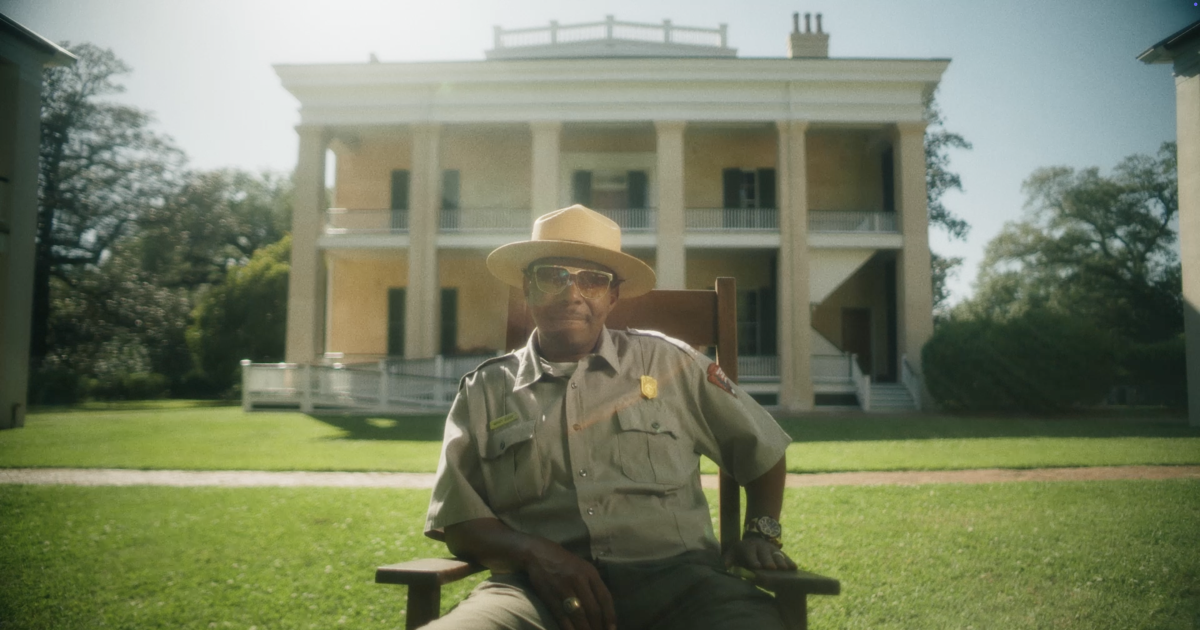
“Natchez” is full of quietly charged moments in dreamily scenic surroundings, one result of Noah Collier’s lush cinematography, deployed like a deliberately performative nostalgia that lets us know there’s always more to see if we look (and listen) closely enough. This stylistic approach allows Herbert to expertly avoid inadvertently selling Natchez itself, instead focusing on how this town’s peculiar relationship to an overwhelming past still lives inside those doing the selling.
‘Natchez’
Not rated
Running time: 1 hour, 26 minutes
Playing: Opens Friday, Feb 6 at Laemmle Glendale