The US president has long been unhappy with inside information about his administration being leaked to the media.
United States President Donald Trump has suggested that those who leak information to the news media should be shot as punishment.
Trump made the remarks at a campaign rally in Bullhead City, Arizona, as he urged supporters to vote in the November 3 midterm elections.
Recommended Stories
list of 3 itemsend of list
“In my opinion, leakers should be shot,” Trump told the crowd. “In the old days, we used to shoot leakers, you know, when they leak what time you’re going to attack a country.”
Trump made the statement in an apparent reference to Operation Midnight Hammer, which saw the US launch a surprise attack on Iran in June 2025 during the 12-day war between Israel and Iran.
In the aftermath of the attack, several media outlets published findings from a preliminary report by the US Defense Intelligence Agency.
That report – which had not yet been released to the public – indicated that Iran was able to move some of its enriched uranium away from the sites the US had bombed.
It also suggested that the extent of the damage to Iran’s nuclear facilities was more modest than what Trump had asserted.
Trump, however, appeared to signal that the timing of the US attacks was among the leaked information. He accused the news media of putting military members in danger, calling out The New York Times and CNN in particular.
“They leaked the time we were leaving, the time we were arriving,” Trump said, claiming he had to reschedule the bombing campaign two days later as a result.
“Somebody leaked. Some sleaze-bag, they ought to go to jail or be shot. For the rest of their life, they should be in jail.”
Trump has long had an adversarial relationship with the news media, and he has previously called for harsh punishment against any official who passes on confidential information to news outlets.
After parts of the Defense Intelligence Agency report became public, he blamed lawmakers in the Democratic Party for its release.
“The Democrats are the ones who leaked the information on the PERFECT FLIGHT to the Nuclear Sites in Iran,” Trump wrote on social media at the time. “They should be prosecuted!”
Under Trump, the White House has taken aggressive action to track down the source of leaks.
Staff in his administration, as well as officers in the military, have also been asked to take polygraph tests.
Journalists at several news outlets, including The New York Times, The Washington Post and The Wall Street Journal, have also received subpoenas aimed at determining the sources of internal information made public.
The newspapers had reported on stories such as a botched Navy SEALs raid in North Korea and how Trump ignored internal Pentagon warnings against launching the Iran war.
Last year, the Department of Defense demanded that journalists who wished to access the Pentagon sign an agreement not to publish unauthorised material.
Much of the Pentagon press corps refused to agree, and a federal court struck down many of the new demands made on journalists at the department.
Trump has long raged against leakers, going back to his first term as president from 2017 to 2021.
Former White House official Alyssa Farah Griffin told a podcast in 2024 that Trump had called for leakers to be executed, after media outlets reported that he had taken shelter in a White House bunker during racial justice protests in 2020.
Trump appeared to reprise that sentiment in his speech to Arizona voters on Wednesday, less than three weeks before the November 3 midterms.
“Leakers should be dealt with very, very strongly,” Trump said. “To me, they are the scum of the earth.”
Pope Leo XIV describes capital punishment as an ‘attack on the inviolability and dignity of the person’ in post on X.
Published On 10 Oct 202610 Oct 2026
Pope Leo XIV has declared that the death penalty is “inadmissible” while his home country, the United States, announces plans to livestream an execution by firing squad.
Marking World Day Against the Death Penalty on Saturday, the pope reiterated the Catholic Church’s teaching on capital punishment, writing on X that it was “inadmissible because it is an attack on the inviolability and dignity of the person”.
Recommended Stories
list of 2 itemsend of list
“The common good can be safeguarded and the requirements of justice can be met without recourse to capital punishment,” his post said.
“Effective systems of detention have been developed that protect citizens while at the same time do not completely deprive those who are guilty of the possibility of redemption,” added the leader of the Catholic Church.
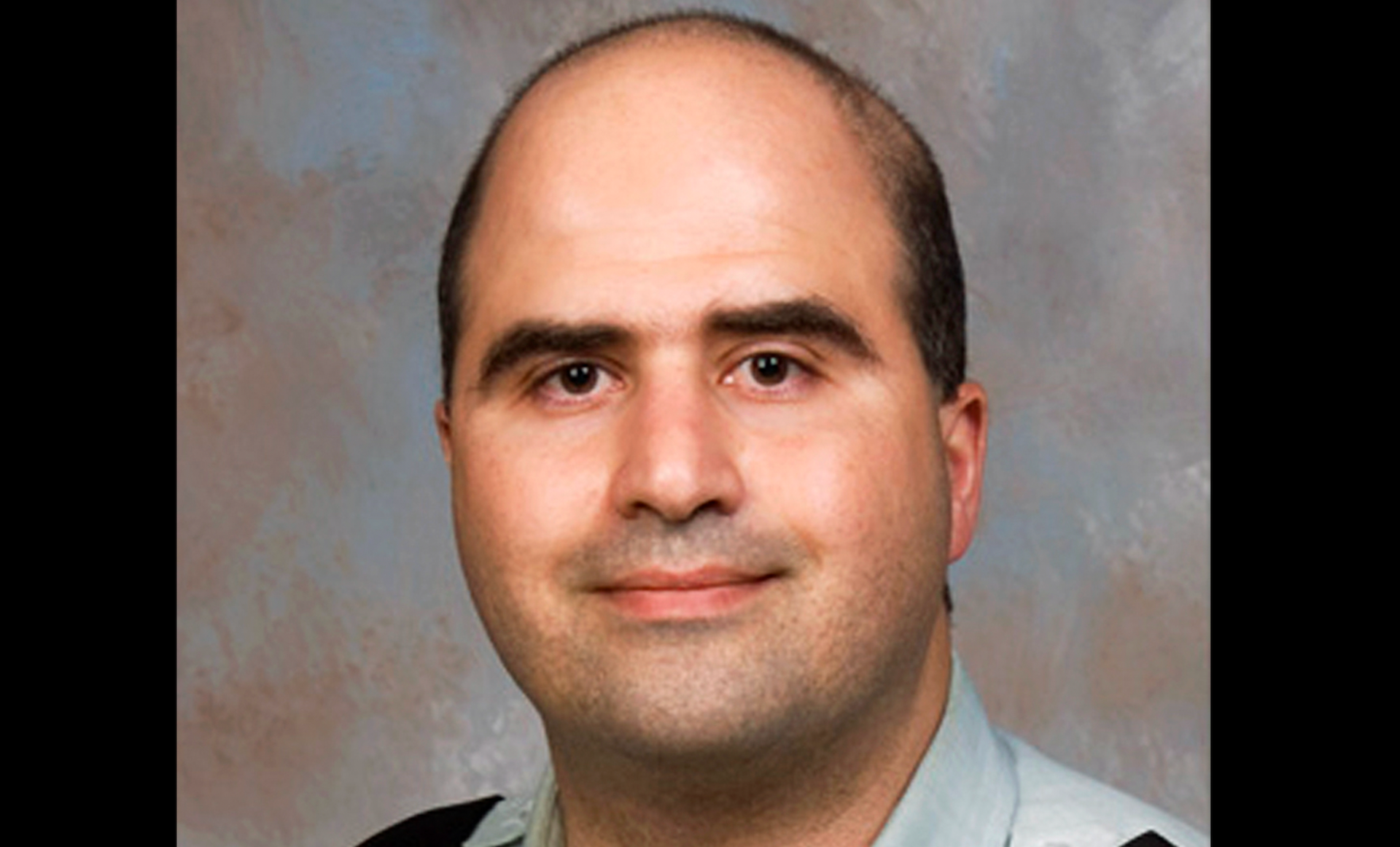
The American Pope’s comments come days after US Secretary of Defense Pete Hegseth said on Thursday that the firing squad execution of Nidal Malik Hasan on December 3 will be livestreamed.
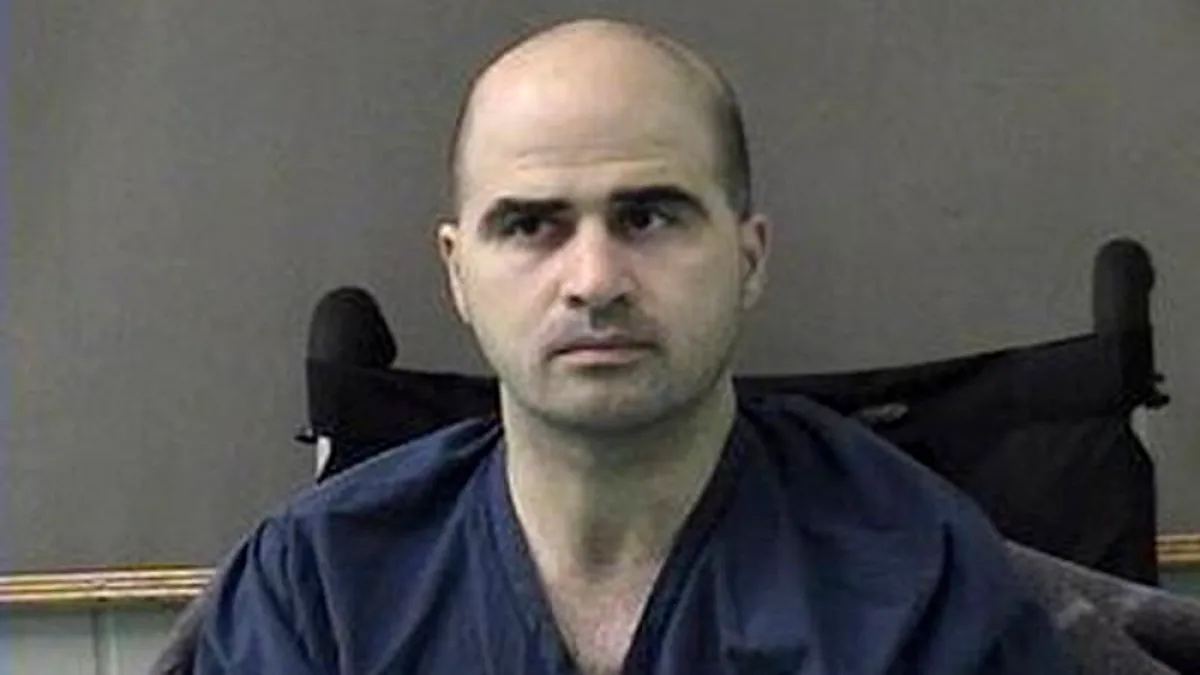
Hasan was convicted of killing 13 people and wounding 32 others in a shooting at the Fort Hood military base in 2009.
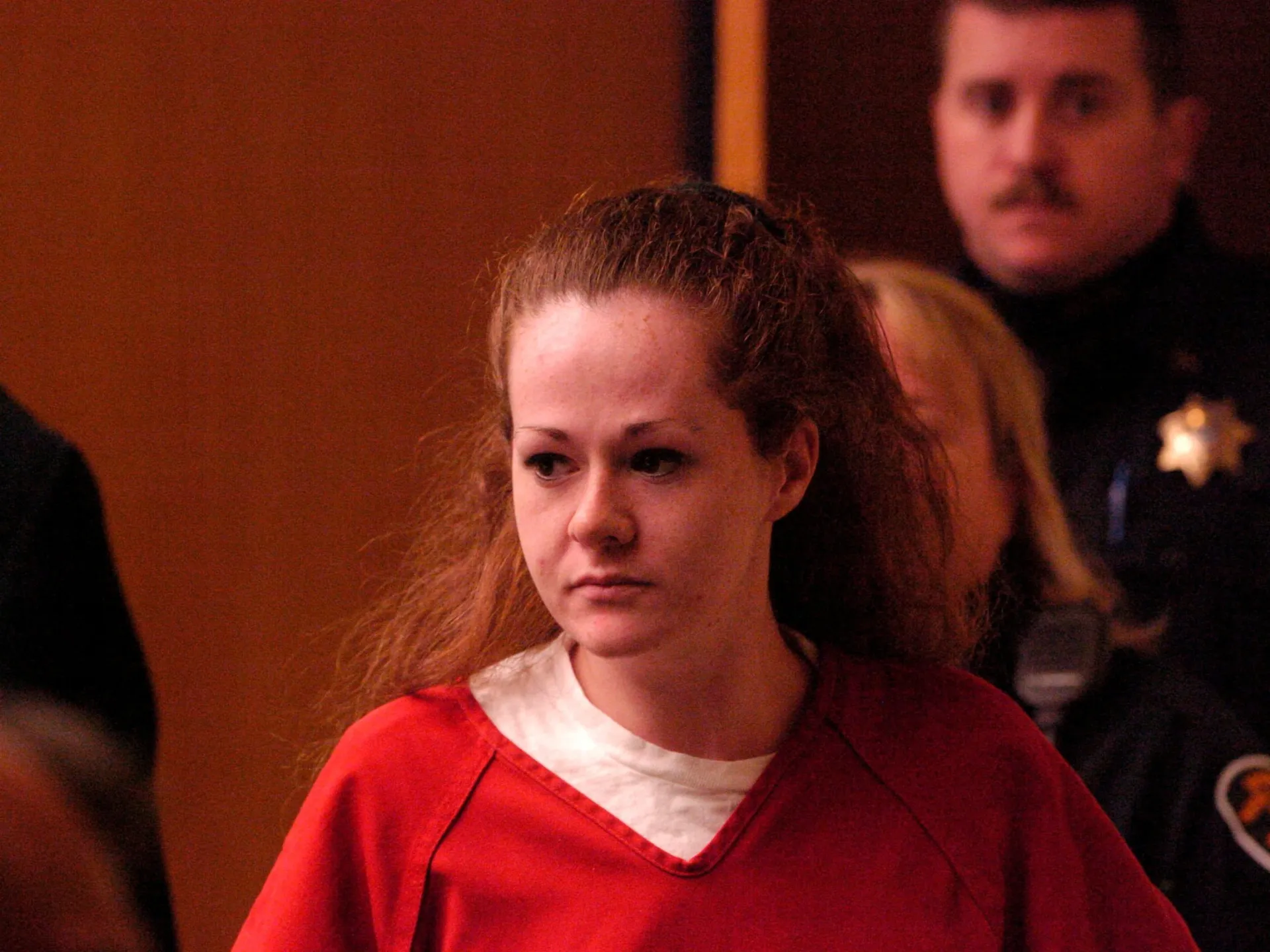
Pope Leo did not specifically refer to the planned execution, or last month’s botched execution attempt on Christa Pike, who survived two doses of the lethal injection in Tennessee.
But his post came hours after his top deputy, Cardinal Pietro Parolin, the Vatican secretary of state, told Vatican News that the plan to livestream Hasan’s execution was “unacceptable”.
It was Leo’s predecessor, Pope Francis, in 2018 who first amended official Catholic teaching to declare capital punishment “inadmissible” in all circumstances.
Previously, the Catechism of the Catholic Church, the official compendium of church teaching, said the church did not exclude recourse to capital punishment “if this is the only possible way of effectively defending human lives against the unjust aggressor.”
The planned livestream of Hasan’s execution has sparked outrage across the US political divide. Republican representative Austin Scott said he supported executing Hassan but that “livestreaming executions is what Jihadists do. America is better than that.”
Senator Mark Kelly, a Democrat on the Senate Armed Services Committee, said Hasan should “face justice”, but that public executions are “the kind of thing that Iran and the Taliban do. Is this who we want to be associated with?”
On Thursday, a Pentagon official confirmed the plans, but on Friday, Vice President JD Vance, who is a practising Catholic, expressed doubt on whether the livestream would be going ahead, telling reporters that if it is, “I’m not going to be watching it.”
The Pentagon said the firing squad execution of Fort Hood shooter Nidal Malik Hasan will be public and livestreamed. Hasan, an Army psychiatrist, killed 13 people and wounded more than 30 others at the Texas base in 2009. The White House hasn’t confirmed the Pentagon’s comments.
In confirming his plans to live-stream Fort Hood mass shooter Nidal Malik Hasan’s military execution by firing squad on Dec. 3, Defense Secretary Pete Hegseth called it a “no brainer” punishment for a “radical Islamist terror attack” on U.S. service members.
“We’ll make sure that people are able to watch it, that it’s public, because people need to understand [that] there are serious consequences for these types of things,” Hegseth said in an interview with the Real America’s Voice network.
Others across the country and around the world — Democrats and Republicans, human rights experts, legal scholars and military and religious leaders — condemned it as a barbaric throwback to an era when executions were cast as entertainment, and as the world’s leading democracy adopting a form of punishment carried out in modern times only by authoritarian regimes and terrorist organizations.
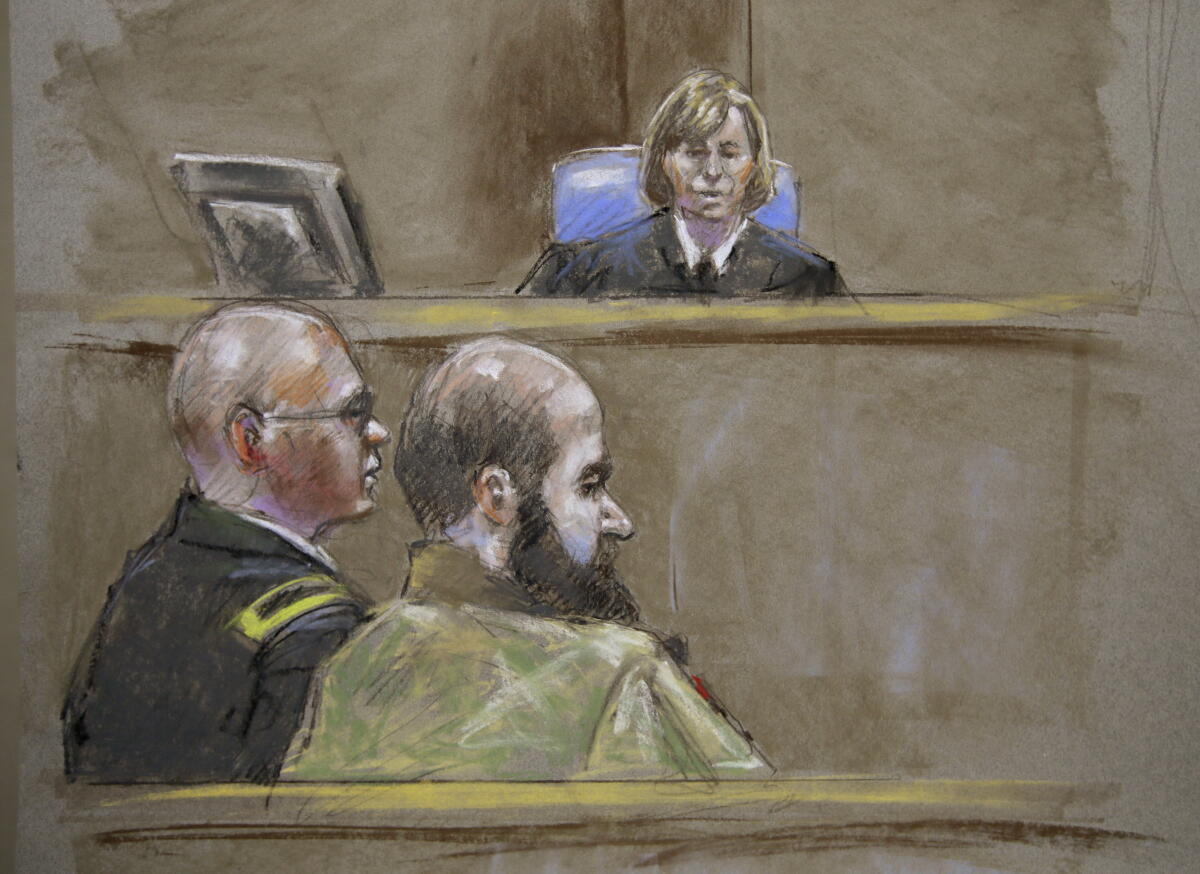
Nidal Malik Hasan is shown in a courtroom sketch in 2013.
(Brigitte Woosley / Associated Press)
“Hasan should face the death penalty, but making his execution public and streaming it? Beyond disgusting,” Sen. Thom Tillis (R-N.C.) wrote on X. “Public executions are what oppressive dictatorships like Iran and Afghanistan do. It should not be happening in America.”
“I absolutely support the sentence of death, but live-streaming executions is what jihadists do. America is better than that,” Rep. Austin Scott (R-Ga.) wrote.
The United Nations’ High Commissioner for Human Rights said that “the livestreaming of an execution is tantamount to a public execution and would breach the absolute prohibition of torture.” The head of the U.S. Conference of Catholic Bishops said it would “further undermine the moral fabric of our nation and be a blight on the conscience of its people.”
Matthew Robinson, a criminal justice professor at Appalachian State University and author of a book on U.S. capital punishment titled “Death Nation,” said he was “appalled” by the plans. “It strikes me as meant to be entertaining.” He said the last military execution was in 1961, and the last by firing squad was in 1945.
Soldiers hold a candlelight vigil at Fort Hood, Texas, in 2009, one day after Nidal Malik Hasan shot and killed 13 people.
(LM Otero / Associated Press)
Hasan was an Army psychiatrist and major who in 2009 entered a medical building on the Texas military base with a laser-sighted handgun, shouted “Allahu akbar” — Arabic for “God is great!” — and opened fire, killing 13 people and injuring 32 others. He has since spoken of being a “martyr” if executed.
President Trump, an outspoken proponent of the death penalty for years but also a past critic of public executions in places like Iran, has signed off on Hasan’s execution but not addressed Hegseth’s plans. The White House did not respond to a request for comment.
Vice President JD Vance, who is Catholic, said Friday that people should remember that Hasan “brutally murdered a lot of innocent people.” But he also said he would not watch a live-stream of the execution, and expressed doubt that is “actually going to happen.”
On his first day in office this term, Trump issued an executive order requiring federal agencies to restore the death penalty to prominence. In April, the U.S. Department of Justice announced it had taken steps to do so, including by “expanding the protocol” to include firing squads.
Five states currently allow firing squads to carry out executions: Idaho, Mississippi, Oklahoma, South Carolina and Utah. The U.S. Supreme Court has repeatedly turned down appeals contending such executions amount to “cruel and unusual punishment,” which is barred under U.S. law. South Carolina executed three men by firing squad last year.
When the Supreme Court last year rejected an Alabama inmate’s request to be killed by firing squad rather than with nitrogen hypoxia, liberal Justice Sonia Sotomayor — joined by fellow liberal Justices Elena Kagan and Ketanji Brown Jackson — dissented, writing, “Boyd asks for the barest form of mercy: to die by firing squad, which would kill him in seconds, rather than by a torturous suffocation lasting up to four minutes. The Constitution would grant him that grace.”
Kathleen Walter prays outside the Nashville, Tenn., prison where Christa Pike was set to be executed.
(George Walker IV / Associated Press)
Last week, a Tennessee inmate named Christa Pike survived what was meant to be a lethal injection of the barbiturate pentobarbital. Other states have also struggled with executions by lethal injection in recent years.
Much of the criticism of Hegseth’s plan for Hasan has centered not on the method of killing, but on the live-streaming of it.
Robin M. Maher, executive director of the Death Penalty Information Center, said the center has “no record of any execution being live streamed,” and is “not aware of any regulation or precedent for a military execution to be live streamed on the internet or otherwise made widely available to the public.”
Fox News commentator Howard Kurtz wrote: “I’m sensing revulsion on the left and right, not so much for killing a death row prisoner — although firing squad seems extreme in the modern age — but for the Pentagon to live-stream it, turning this into a horrifying TV show to entertain the masses. Is this America?”
Daniel LaChance, an associate history professor at Emory University and author of the book “Executing Freedom: The Cultural Life of Capital Punishment in the United States,” said the last public execution in the U.S. occurred in 1936, when a Black man convicted of rape was hanged in Kentucky — which still allowed public executions after most states had abandoned the practice.
That execution was “by all accounts a grotesque carnival” and “sort of like a gladiatorial contest brought to life in the 20th Century, where the crowd was surly, shouting,” LaChance said. “It was a debacle.”
That the Trump administration is seeking to turn capital punishment into a public spectacle once more, LaChance said, is out of line with decades of thinking on the issue, but in line with Trump’s own ethos about crime and punishment.
“His whole brand is this kind of populist, anti-elitism. And when executions moved into the bowels of prisons in the early 20th century, they were really becoming bureaucratic affairs, run by experts, carried out in front of a small group of professionals and clergy,” LaChance said. “It was a denial of the public’s right to see a punishment that was carried out in their name, in part because there were elites who thought that the public couldn’t handle this kind of spectacle, that they were misbehaving, that it would generate more disorder when an execution is designed to do the exact opposite: to generate order.”
President Trump points to fans to as he walks to the stage at a political rally Wednesday in San Antonio.
(San Antonio Express-News via Getty Images)
Trump clearly thinks he is pushing back against elitism and expertise and giving people what they want, LaChance said, though the question many scholars have is whether doing so will “increase people’s bloodthirst” or force them to recoil — and ultimate decrease support for such punishments.
Eugene Fidell, who teaches military justice at Yale Law School, said Trump has publicly mused about killing people by firing squad for years, so Hegseth’s plans to use a firing squad should not be surprising. However, the decision to live-stream the killing is clearly a source of “dismay” for many. “Even people who are resigned to the death penalty, who don’t have religious or other scruples about the death penalty, have real heartburn over this,” he said.
Fidell said “brutality” has become an “operating principle” for the Trump administration broadly, from its decision to host an Ultimate Fighting tournament at the White House to its immigration tactics across the country to, now, it’s plans to live-stream an execution — which Fidell said has “nothing to do” with deterring future crime.
“There’s a pathology going on here that is so out of keeping with the dignity that ought to characterize the taking of a life as a result of a legal process,” he said.
Robinson, of Appalachian State, said a student of his Friday morning asked what would happen when children tune in to watch the execution, which Robinson said he believes they will do, as if it’s a video game. He said the idea was appalling — and not just to him.
“I imagine the rest of the world, the civilized world, will see this and have the same response that I did,” he said. “They’ll respond with shock.”
Times staff writer David G. Savage contributed to this report.
United States President Donald Trump has approved the death by firing squad of Nidal Malik Hasan, a former army officer convicted of carrying out a 2009 mass shooting at Fort Hood, an army base in Texas.
The move, if it proceeds, will revive executions in the army, which has not carried one out since 1961.
Recommended Stories
list of 4 itemsend of list
Death sentences, as well as executions in the US military, are rare and require presidential approval.
Under the army’s code of military justice, premeditated murder does carry the death penalty, but the process is often strict and prolonged.
However, the Trump administration has shown more willingness to seek death penalties for serious crimes, including against civilians.
Here’s what we know about the case:
What is the presidential order?
Defense Secretary Pete Hegseth had initially recommended an execution order for Hasan, and Trump has now approved it, according to an X statement posted by Pentagon spokesperson Sean Parnell.
Parnell said the time and date of the execution will be set by Army Secretary Adam Telle, who is serving in an acting capacity.
“Judgement day for Hasan has finally come,” he wrote.
What happened at Fort Hood?
On November 5, 2009, the US-born army major, Hasan, a psychiatrist in the force, walked into an army processing centre in Fort Hood, shouted “Allahu Akbar” (God is great) and opened fire on fellow staff members waiting to get medical attention.
Thirteen people were killed, including a pregnant soldier, and 32 others were wounded during 10 minutes of shooting. Analysts have called it the worst shooting at a US military base targeting members of armed forces.
Hasan was shot several times after two officers engaged him and remains paralysed from the waist down.
What happened during the trial?
Hasan was immediately court-martialled, and military prosecutors, from the start, sought the death penalty against him.
However, the process would play out over the course of several years even after his conviction – largely because the US military is averse to capital punishment.
During the trial, Hasan represented himself and admitted to the attacks, saying he was trying to stop deployments to Afghanistan and the killing of his fellow Muslims. He was due to be deployed weeks later.
Investigations revealed Hasan had exchanged emails with Yemeni-American scholar Anwar al-Awlaki, accused of ties to al-Qaeda, before the shooting. He had also repeatedly voiced opposition to the US wars in Iraq and Afghanistan to colleagues and the treatment of Muslims in the army.
Hasan made little effort to defend himself, and his assigned lawyers claimed his testimony aided the opposing side.
He was charged and convicted on 13 counts of premeditated murder in 2013, and jurors recommended the maximum sentence of death. Controversially, Hasan was charged with “workplace violence” because the military justice code does not address the crime of “terrorism”.
The judgement was further delayed by appeals mandated by the military, not because Hasan sought them.
In 2020, the US Army Court of Criminal Appeals upheld the death penalty for Hasan, and in 2023, the US Court of Appeals for the Armed Forces did the same. In March 2025, the US Supreme Court denied a mandatory petition for a judicial review.
In September 2025, Hegseth announced he was seeking presidential approval for Hasan’s execution.
At the time, there was no report of Hegseth specifically seeking death by firing squad.
The president holds the ultimate authority to specify the designated method of execution.
Other forms of execution could have been lethal injection or hanging, which the US military has used in the past.
What next?
While Trump’s approval will begin a series of steps towards preparing for the execution, Hasan can still put the process on hold for years with an appeal in the civilian federal court system.
However, that might be unlikely as Hasan made no effort to defend himself during the trial.
He has been remanded to the US Disciplinary Barracks at Fort Leavenworth in Kansas, where three other men have also been on the military death row for years.
Among them is Hasan Akbar, convicted of two counts of murder after attacking fellow army members on a Kuwait base in 2003, during the invasion of Iraq.
Another is the convicted serial killer and rapist Ronald Gray, who was found guilty of four counts of murder and eight counts of rape in 2008. He was approved for execution in the same year under President George W Bush, but the process was put on hold by a judge.
Timothy Hennis, a former sergeant, was convicted in 2010 of a triple murder and is also on death row.
The last military execution took place in 1961, when former soldier John Bennett was hanged for the rape of an 11-year-old girl.
Witnesses say Tennessee officials were unable to execute Christa Pike after a lethal injection attempt.
Published On 1 Oct 20261 Oct 2026
Officials in the United States have failed to put a Tennessee woman to death for a murder she committed in 1995, after the lethal injection was halted for hours as courts considered a last-minute appeal to stay her execution.
Christa Gail Pike, 50 had been scheduled to die on Wednesday for a killing she committed at age 18, after the US Supreme Court overturned an appeals court ruling that stopped the lethal injection just an hour before it was to start.
Recommended Stories
list of 4 itemsend of list
Her death would have been Tennessee’s first execution of a woman in at least 200 years.
Following the top court’s ruling, officials attempted to go ahead with the execution as planned and appeared to give Pike two doses of the sedative pentobarbital, according to media witnesses.
At 7:46pm local time, prison officials closed the curtain separating Pike from the media viewing room. It was raised three minutes later, when witnesses said Pike could be heard loudly snoring.
The curtain was closed again at 8:06pm. Witnesses continued to hear Pike snoring until the microphone was switched off at about 8:53pm, when they were told to leave the area. The Associated Press news agency reported that emergency vehicles were seen coming and going from the prison.
The Tennessee Department of Correction did not immediately explain why the execution had not been completed.
Supreme Court ruling
Pike had initially been scheduled to die on Wednesday morning, and witnesses had already gathered at the Riverbend Maximum Security Institution in Nashville when the 6th Circuit US Court of Appeals voted 2-1 to issue a stay.
The appeals court said a delay was needed to consider whether Pike’s allegations of childhood sexual abuse were fully considered during her sentencing.
Later on Wednesday, the Supreme Court cleared the way for the execution to proceed. Its conservative majority did not explain the decision, while the three liberal justices dissented.
Justice Sonia Sotomayor wrote that vacating the stay “unnecessarily prevents” the appeals court from giving due consideration to Pike’s claim.
Tennessee’s attorney general had argued that delaying the execution traumatised the family of Pike’s victim, Colleen Slemmer, and rewarded what it called “abusive delay tactics”.
1995 killing
Pike and her boyfriend, Tadaryl Shipp, were convicted of the fatal stabbing and beating in 1995 of 19-year-old Slemmer, their classmate at a job training facility in Knoxville.
Shipp was 17 when the crime happened and received a sentence of life in prison with the possibility of parole. Pike was the only one sentenced to death.
Pike does not deny committing the killing, but her supporters argue the state should consider her age at the time, her mental illness and her allegations of severe sexual abuse, including that she was raped from early childhood.
“It is inconceivable that in the 21st century, the criminal justice system is poised to execute a survivor of rape and child sexual abuse whose jury never had the opportunity to consider those facts in weighing the defendant’s moral culpability,” her lawyers wrote in a filing.
After the killing, Pike was diagnosed with bipolar disorder and post-traumatic stress disorder. In her clemency petition, she said she had initially intended to fight Slemmer but killed her in a frenzied attack when she could not “put the brakes on”.
“I was a mentally ill 18-year-old kid. It took me numerous years to even realise the gravity of what I’d done. Even more to accept how many lives I affected. I took the life of someone’s child, sister, friend. It sickens me now to think I had the ability to commit such a crime,” Pike said in a statement.
Slemmer’s mother has said she wants Pike’s death sentence carried out after waiting decades for the execution.
Tennessee has not executed a woman for at least 200 years, according to the Death Penalty Information Center.
Since the Supreme Court reinstated the death penalty in 1976, 18 women have been executed in the US, representing about 1 percent of all executions, according to the centre.