In a new memoir, Joe Manganiello is getting candid about the condition that nearly killed him and the measures he took in search of healing.
The upcoming book, “Bloodlines,” which hits bookstores and online retailers Oct. 13, follows Manganiello’s career in Hollywood from “True Blood” werewolf to “Magic Mike” hunk, his seven-year marriage and subsequent divorce from “Modern Family” star Sofía Vergara and his battle with a mystery autoimmune condition that he says nearly killed him.
The 2010s were off to a stellar start for Manganiello. He was landing notable parts in buzzy projects and fell in love with television’s Colombian Jessica Rabbit, but shortly after the couple said “I do,” the actor’s rise abruptly switched course because of health issues that left doctors stumped.
Adam Rodriguez, onstage from left, Kevin Nash, Channing Tatum, Matt Bomer and Joe Manganiello in “Magic Mike.”
(Warner Bros. Pictures)
“I was getting sicker and sicker,” he told People. Manganiello detailed debilitating abdominal pain, fevers, rashes, headaches, fatigue and ulcers in his digestive tract that caused bleeding and led to countless colonoscopies. In 2016, he was rolled into an emergency “major organ amputation” in which doctors removed a portion of his intestines and sent him home 60 pounds lighter than his normal weight, with a colostomy bag in tow.
“It happened to me, and it’s the truth, and I have all the scars to prove it,” Manganiello told the outlet. Doctors attempted to treat the actor with prescriptions used for patients with Crohn’s and ulcerative colitis, but nothing worked. An autoimmune disease seemed to be the culprit, he said, but such “conditions are a dumping ground for things [doctors] don’t understand. They start running you through this gauntlet of drugs.”
Manganiello said that, as a result of the illness, his marriage fell apart, he gave away his gun to protect himself from suicidal impulses, and he took in an itty-bitty Chihuahua named Bubbles.
He also started to pursue alternative treatment, which included a trip to Cuba, where he licked the pituitary gland in a goat’s skull, an esoteric ritual used to attempt a factory reset on a person’s immune system. When that didn’t cure him, he turned to a Santa Monica shaman who believed generational trauma caused the actor’s ailments.
“Whatever chains there were to the past suffering of my ancestors, they were completely broken,” he said. “There’s not an ounce of fear in me about moving forward with my life.”
Manganiello revealed he’s since had reconstructive surgery on his digestive tract and is seemingly cured.
“I can’t believe I’m alive,” he said. “I feel like I was reborn.”
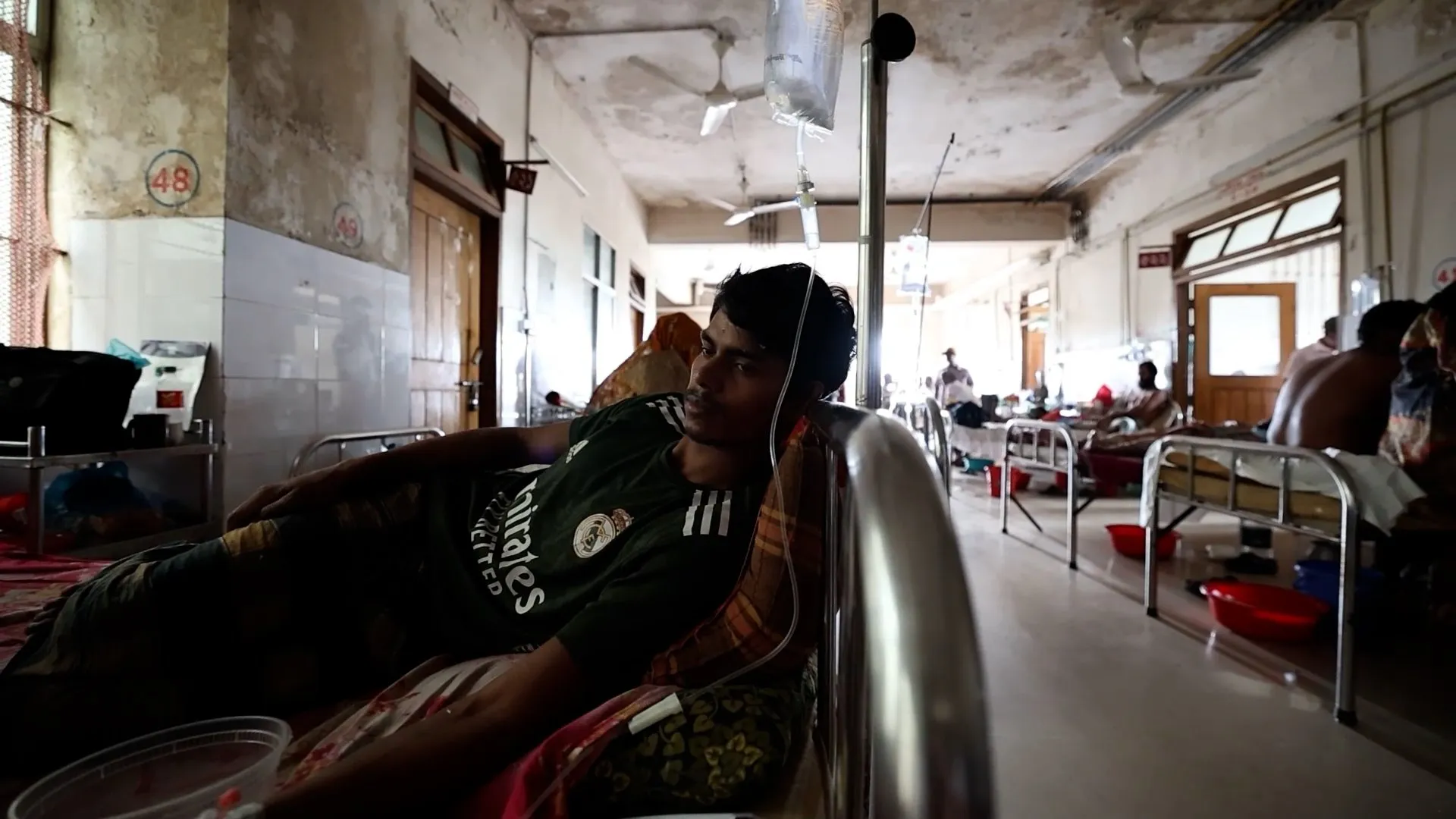
Bangladesh’s health authorities report that at least 233 people have died from the mosquito-borne illness disease dengue fever. Thousands of cases have been recorded across the country since the start of 2026.
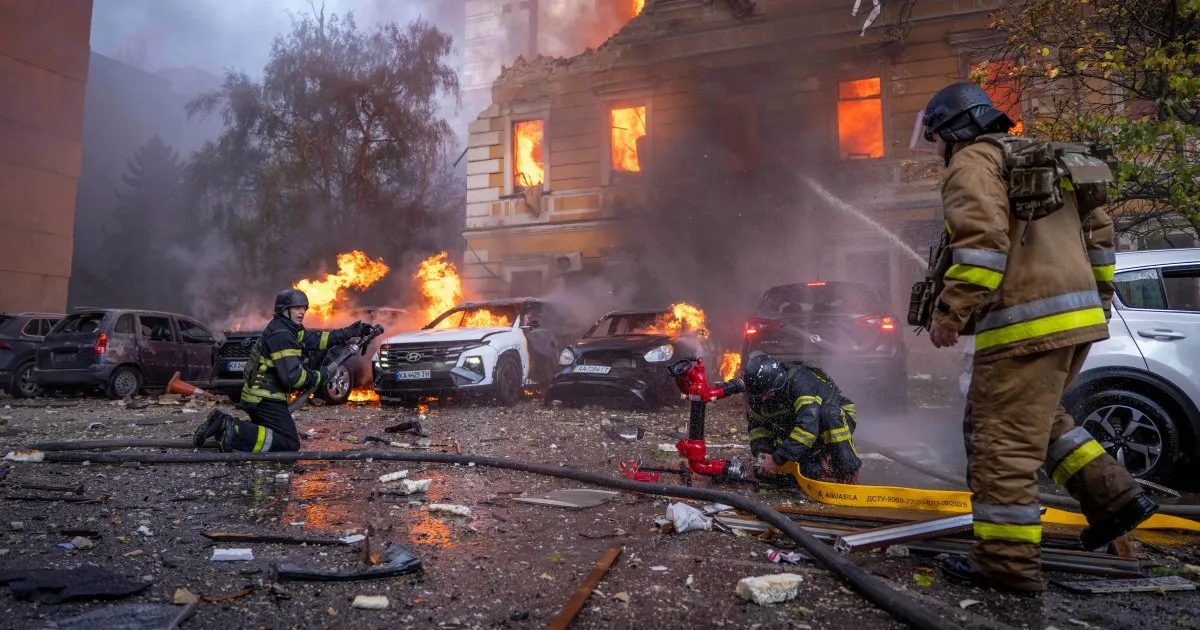
Russian forces have again struck the Ukrainian capital, Kyiv, hours after a drone hit the National Academy of Sciences in the historic centre of the city, killing at least two people.
Explosions were heard across Kyiv early on Tuesday, with Mayor Vitali Klitschko saying missile debris had fallen in the courtyard of one building while a second had caught fire in another part of the city.
Recommended Stories
list of 3 itemsend of list
The attacks come as Russia has begun hitting Kyiv and other Ukrainian cities with faster, high-flying jet drones.
Emergency officials said the strike on the National Academy of Sciences on Monday killed two people, with one person’s body recovered from the rubble later in the evening.
Video shared online appeared to show a fast-moving drone slamming into the building at a steep angle and exploding, sending smoke into a clear sky. People were seen leaning out of windows as bright orange flames engulfed part of the building.
Volodymyr Horbulin, a former secretary of Ukraine’s National Security and Defence Council, told the public broadcaster Suspilne that he was at work at the academy when it came under attack. He said his assistant, who was near the building, was killed and that he was also slightly wounded.
The academy is near the German Embassy, a cathedral, the national opera and government buildings.
In a statement, the academy called the attack “Russian terror” and “barbarity” aimed at “peaceful people who were simply at their workplaces”.
Foreign Minister Andrii Sybiha accused Russia of cynicism for hitting a scientific institution during the workday.
“Russia is deliberately expanding the boundaries of what it believes the world will tolerate,” he said in a statement, urging Ukraine’s allies to provide more air defences.
Jet-powered drones
Ukrainian President Volodymyr Zelenskyy said Russian forces also hit a medical facility in Kyiv on Monday. He said at least nine people had been killed in Russian drone strikes throughout the country, while more than 80 people were wounded.
In his nightly video address, Zelenskyy said Ukraine was still having difficulty countering the faster, high-flying Russian jet-powered drones.
“New interceptors are being actively tested,” he said. “Some combat groups are using them, but, of course, some details still need to be refined to achieve enough effectiveness and scale. We are speeding up the developers.”
According to the Ukrainian president, 90 of 120 drones fired on Ukraine on Monday were jet-propelled, rather than propeller-driven, with an interception rate for this type of drone at 57 percent.
Widening targets
Officials said the Russian strikes on Kyiv also targeted a pharmaceutical company and petrol stations. In other cities and regions, civilian facilities, businesses and communications infrastructure were hit.
In the southeastern city of Dnipro, a Russian drone attack on a business centre killed three people and wounded 19, according to officials. Another person was killed in a logistics office in Synelnykove, southeast of Dnipro, the regional governor said.
Emergency services said an attack on infrastructure in the southeastern city of Zaporizhzhia wounded 32 people.
Al Jazeera’s Jonah Hull, reporting from Kyiv, said Russia has been hitting economic targets across Ukraine “in a rolling series of strikes that have been ongoing for six days now”, during the day and night.
“Data centres increasingly being hit, as well as digital and communications infrastructure,” he said. “Kyiv Star, the country’s biggest cell provider, was hit on Sunday, as was the second biggest, Vodafone Ukraine. The government is said to be preparing for the worst: a total blackout in communications should that come.”
The Russian attacks have brought Kyiv “firmly into the eye of this war”, Hull added.
Ukraine has also increased attacks on Russia, targeting oil refineries as well as online retailers to try to undermine revenues and support for Moscow’s war effort.
Zelenskyy said on Monday that Ukraine struck Russian oil facilities in the Krasnodar region and two defence plants.
Both sides have denied deliberately targeting civilians.
The Dosa King built an empire. After a woman rejects him, her husband is found dead – and the pursuit of justice begins.
The Dosa King built a restaurant empire worth millions. But when a young woman rejects him, he threatens her marriage. Soon after, her husband is found dead. For nearly two decades, he fights to escape justice. Can his wealth and power protect him? Find out in Season 2 of True Crime Reports, an Al Jazeera Originals Production.
The illustrations in this video were created by artists aided by AI-powered software.
In this episode:
Episode credits:
True Crime Reports is an Al Jazeera Originals Production. Our host is Halla Mohieddeen. This episode was written by Ryan Gaffney. The Head of Podcasts is Jo de Frias. The EP of Podcasts is Alexandra Locke. Our Executive Producer is Ney Alvarez. Our Senior Producer is Fahrinisa Campana, Leo Danczak is our producer and Catherine Nouhan is our Assistant Producer. The Production Coordinator is Ashley McCarry. Fact-checking by Catherine Nouhan, Zaina Badr and Chiara Brambilla. The Senior Script Editor is Dan Hawaleshka. Our Post-Production Supervisor is Nacho Corbella. Our Video Editor is Nacho Corbella. Osama Alsaadi is our AI Animator. Alan Leer is the Supervising Sound Editor. The Sound Designer is Lizzy Andrews. Music composition by Tom Biddle. Adam Abou-Gad is our Engagement Producer.
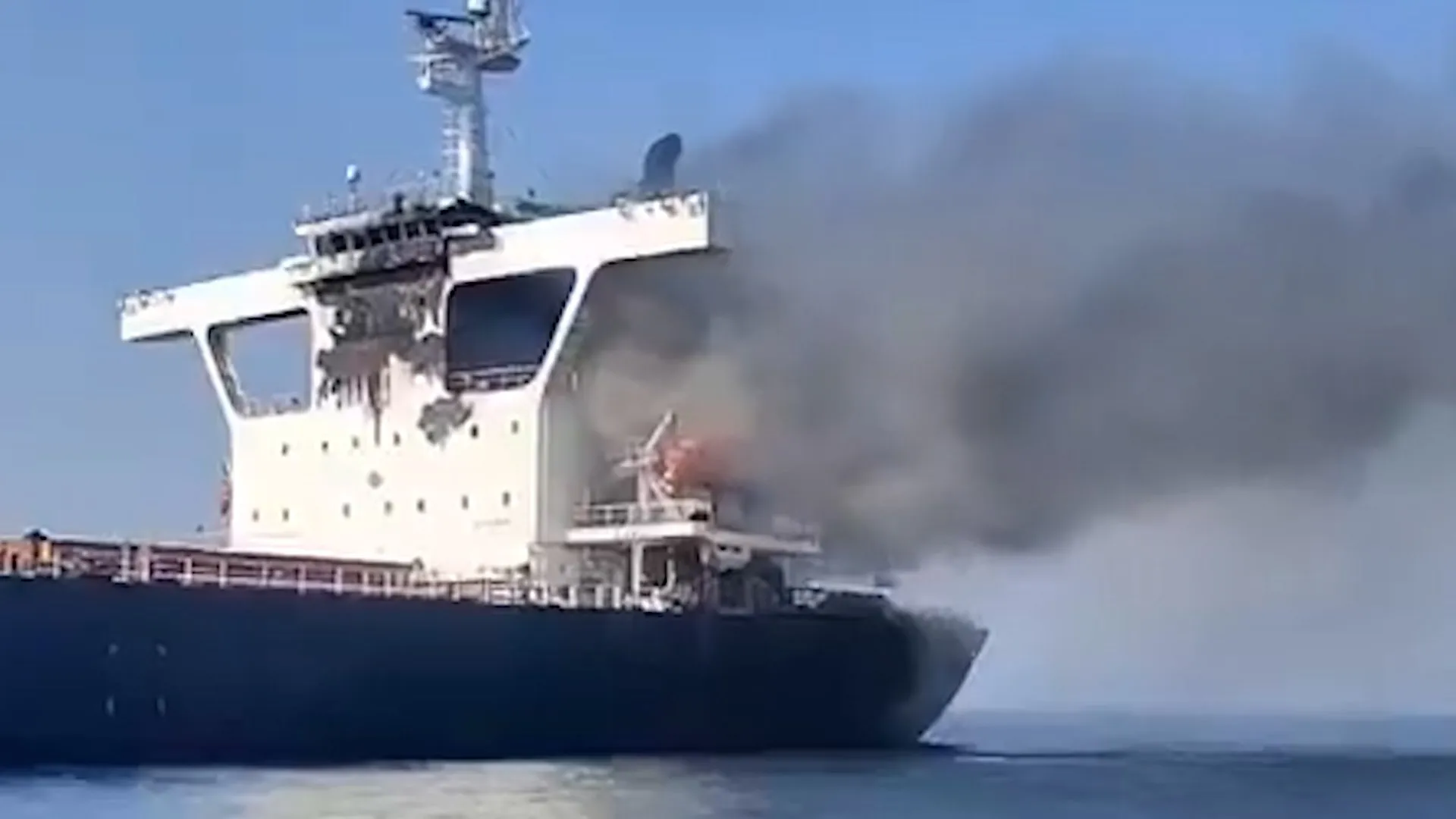
A crew member was killed in an attack on an Indian cargo vessel off the coast of Oman. MV Cape Dao was heading to India when it was struck twice by a projectile, setting the vessel on fire.
Chester County public health officials did not wait long to launch a response to the growing measles outbreak in their community, which shares a border with Lancaster County, the epicentre of the outbreak.
Jeanne Franklin, the director of the health department, said officials have been using some of the strategies they employed during the Covid pandemic – knocking on doors in the community to let them know about the outbreak and offering private settings, like people’s homes, for immunisations.
Since the outbreak started, the county has given 538 MMR vaccines, 340 of which they administered in private settings.
“People have called up and said, ‘I can’t get to your clinic, or, I don’t want people to know I’ve changed my mind,” Franklin said. “‘If you can come to us, that’s a lot easier.'”
The boots-on-the-ground approach has helped the health department dispel misinformation and build trust with the community, local health officials said.
In recent years, childhood vaccination rates have fallen across the country as false theories about the safety of the measles vaccine have proliferated on social media.
Those theories have found roots even in an insulated community with limited access to computers, Weiser said. She has heard people ask if there are heavy metals in the vaccine that could make them magnetic, or if the shot has a computer chip in it.
“You’re clearly getting information from that hard-core group that is promoting that misinformation and disinformation,” she said.
People in this “hard-core group”, who are staunchly against vaccines, are unlikely tobe swayed, experts and officials themselves said.
But now, local health officials said, many affected by the Pennsylvania outbreak are seeing their neighbours fall seriously ill and asking thoughtful questions. Weiser said many are parents who are unfamiliar with the shots and are scared to make the wrong choice for their children.
“There is the classically-defined anti-vaxer, versus people who are unaware or their culture feels differently,” Franklin said. “The thinking and the willingness to discuss and possibly change your mind is different between those two bookends.”
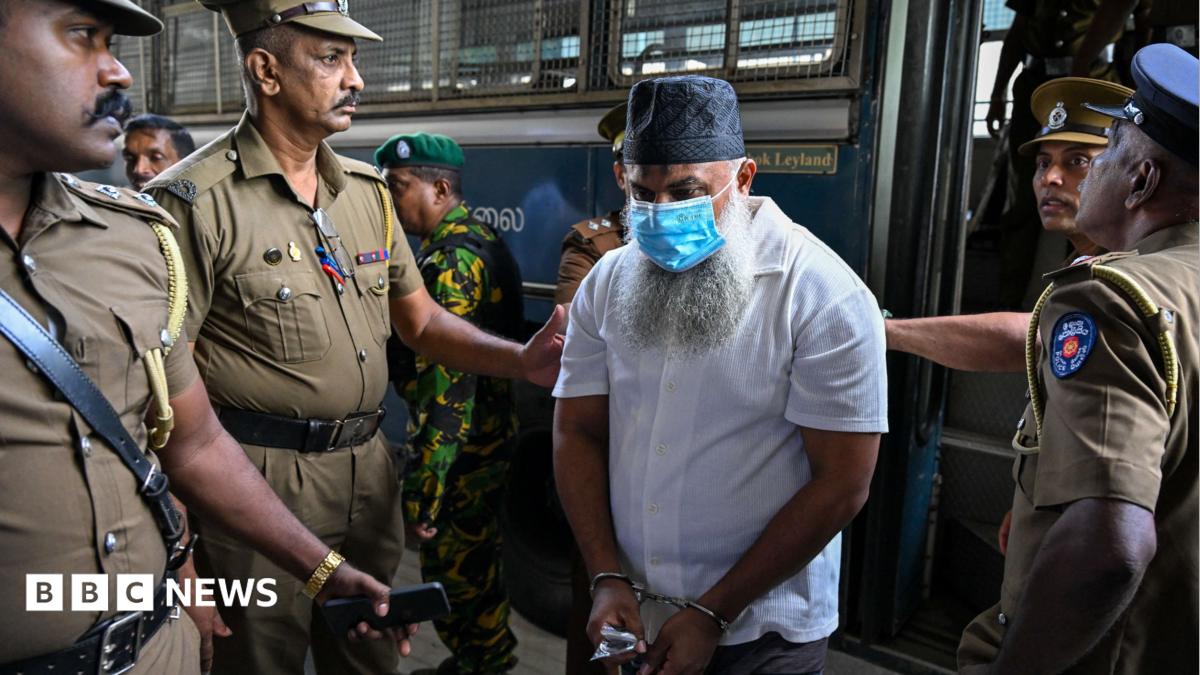
Sri Lanka’s High Court has convicted 15 men who had been charged with plotting the 2019 Easter Sunday bomb attacks that killed 270 people and injured more than 500.
Those found guilty include Naufer Moulavi, who prosecutors said masterminded the suicide bombings. Nine other men were acquitted.
The co-ordinated blasts at three churches and three luxury hotels were the deadliest in Sri Lanka since the end of its civil war in 2009. Forty-five foreigners were among the dead.
All the bombers who carried out the attacks died in the blasts. Investigators have previously blamed the bombings on Islamist extremists, and the 25 men indicted were from Sri Lanka’s Muslim minority. One died in custody.
The accused had been charged with more than 23,000 offences, including murder, conspiracy to commit terrorism and possessing firearms.
More than 2,300 people gave evidence for the prosecution.
There were also 2,076 pieces of evidence, including explosives, swords and firearms.
In the wake of the attacks, Sri Lankan authorities pointed to a “major intelligence lapse”. Its parliament heard that a tip-off from India about the attacks was not properly shared with the authorities.
In 2023, the Supreme Court ordered former president Maithripala Sirisena to pay millions in compensation to the victims of the bombings, after finding him responsible for national security failures that led to the attacks.
Last month, two former senior officials were sentenced to death for criminal negligence that led to the bombings. Death sentences are usually commuted to life in prison in Sri Lanka due to a decades-old moratorium on executions.
For years, Sri Lankans have held regular demonstrations demanding justice for the victims of the Easter attacks.
The verdict comes as a separate investigation on former intelligence chief Suresh Sallay is under way. Sallay is accused of orchestrating the bombings with Islamist extremists.
The allegations echo those aired in a 2023 documentary by British broadcaster Channel 4, which heard whistleblower testimony claiming the attacks were allowed to happen to boost the popularity of the Rajapaksa family, which long dominated Sri Lankan politics.
Sallay, who was arrested in February, denies the allegations. Former president Gotabaya Rajapaksa, who was elected months after the 2019 attacks, with a campaign of tackling Islamist extremism has also denied the allegations.
Rajapaksa, who has been banned from leaving the country, has asked the court to prevent his potential arrest in connection with the ongoing investigations.
A gold mine collapse in northern Sudan has killed at least 10 people and injured 21, according to survivors, bringing renewed attention to the dangers facing workers in one of the country’s most important and least regulated industries.
The collapse took place on Sunday at the Awny mining area near Sudan’s border with Egypt. Miners told the AFP news agency they had recovered 10 bodies and pulled 21 injured workers from the site, while the search continued for people believed to be trapped beneath the rubble. It is unclear how many people are trapped in the collapsed mine.
The disaster comes just days after another deadly accident at a gold mine in West Kordofan State. A collapse at the al-Zaraa mine near en-Nahud, a town in central Sudan, left at least 82 people dead.
Sudan is one of Africa’s top gold producers, recording 70 tonnes of production last year, according to the Sudanese government.
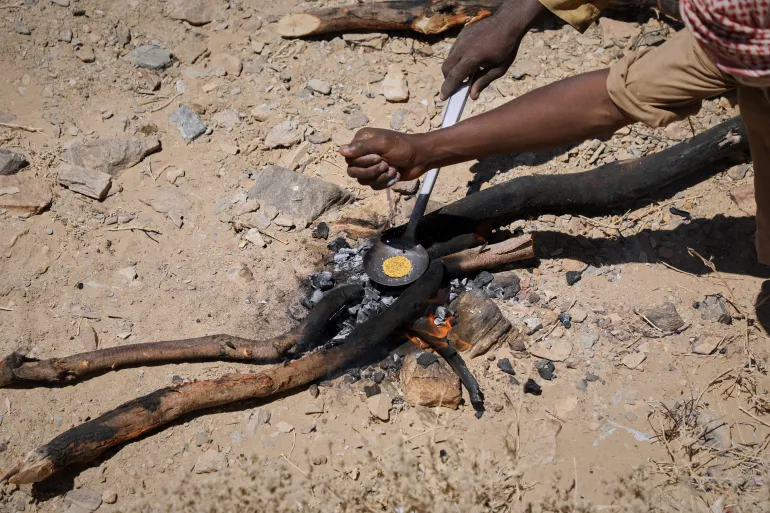
Miners heat processed gold concentrate over an open fire at an artisanal mining site in Dalago Mahas, Sudan’s Northern State, Friday, May 8, 2026 [Mohaned Bilal/AP Photo]
Since fighting broke out in April 2023 between Sudan’s army and the paramilitary Rapid Support Forces (RSF), businesses have been devastated, agriculture has been disrupted, millions of people have been displaced, and Sudan’s formal economy has weakened. In that environment, gold has remained one of the country’s most valuable sources of income.
In July 2025, it was reported by local agencies that Sudan’s gold production rose sharply despite the ongoing conflict, reaching 64 tonnes in 2024, 53 percent higher than the 41.8 tonnes recorded in 2022, and generating $1.57bn in legal export revenues.
However, the gold trade has also become a point of international scrutiny. Most of the gold exports end up in the UAE. In March 2025, Sudan went to the International Court of Justice (ICJ), accusing the UAE of supporting and funding the RSF using gold. The UAE has denied accusations that it supplies weapons to the RSF.
Sudan’s gold deposits are spread across the country, with the majority in the northeast. Port Sudan, the country’s main port, is home to most of the deposits and has been largely controlled by the Sudanese Army since the war began. However, areas controlled by the RSF are also populated by gold deposits.
At the moment, “much of Sudan’s gold is taken out of the country through smuggling or illicit networks instead of passing through government channels that could directly contribute to public revenue,” said Joseph Tucker, senior analyst on the Horn of Africa at the International Crisis Group.
But amid that diplomatic battle and the accusations surrounding gold, the mining deaths in northern Sudan have also raised larger questions over how the country manages the sector, analysts say.
“This disaster is yet another example of the deadly hazards facing those working in Sudan’s gold mines,” Tucker told Al Jazeera. “Most of these (gold mines) are informal, artisanal mines in remote areas that are unregulated and lack modern mining technology, adequate infrastructure, and specialised safety equipment.”
This year, Sudanese Prime Minister Kamil Idris met with the minister of minerals and spoke on the policies for regulating traditional mining and the management and control of various mineral markets. According to French-based Sudanese media, Sudanese authorities called for swift action to address the environmental damage and public health hazards caused by mining activities across the country.
Yet, despite the dangers, Tucker said the state of the Sudanese economy made gold mining appear lucrative to many Sudanese.
During the war, the Sudanese currency’s value has crashed. Before the outbreak of fighting in 2023, about 570 Sudanese pounds could buy a US dollar. By April 2026, the currency had slid to a sixth of that value: It cost 3,500 pounds or more to afford a dollar. That has led to sharp food inflation and a surge in the costs of transport and fuel.
According to estimates by the United Nations Development Programme, Sudan lost $6.4bn of its gross domestic product (GDP) in 2023 alone: That’s a quarter of the country’s $26bn GDP that year. In August, the UN agency reported that 90 percent of the agrarian nation’s farmers had seen yields drop over the previous year.
That economic crisis, Tucker said, “fuels the demand for gold and willingness of miners to work in poor conditions” – even if it proves deadly.
KYIV: US President Donald Trump’s administration should impose new sanctions on Russia “now” over recent deadly strikes on Ukraine, Ukrainian President Volodymyr Zelensky said Friday.
Sanctions need to be imposed now. Sanctions must be strong. This is a tool the United States has to deprive Russia of its ability to finance the war against Ukraine every day. And honestly, sometimes I don’t understand why decisions can’t be made quickly. Because during a war, it… pic.twitter.com/xx5b9RFz0X
— Volodymyr Zelenskyy / Володимир Зеленський (@ZelenskyyUa) September 11, 2026
“Sanctions need to be imposed now,” Zelensky told the Yalta European Strategy forum. “Honestly, I sometimes do not understand why decisions cannot be made quickly,” he added.
Nepal is demanding “climate justice” and $20m in compensation after the recent devastating floods in the country and China’s Tibet region, which led to the deaths and disappearances of thousands of people.
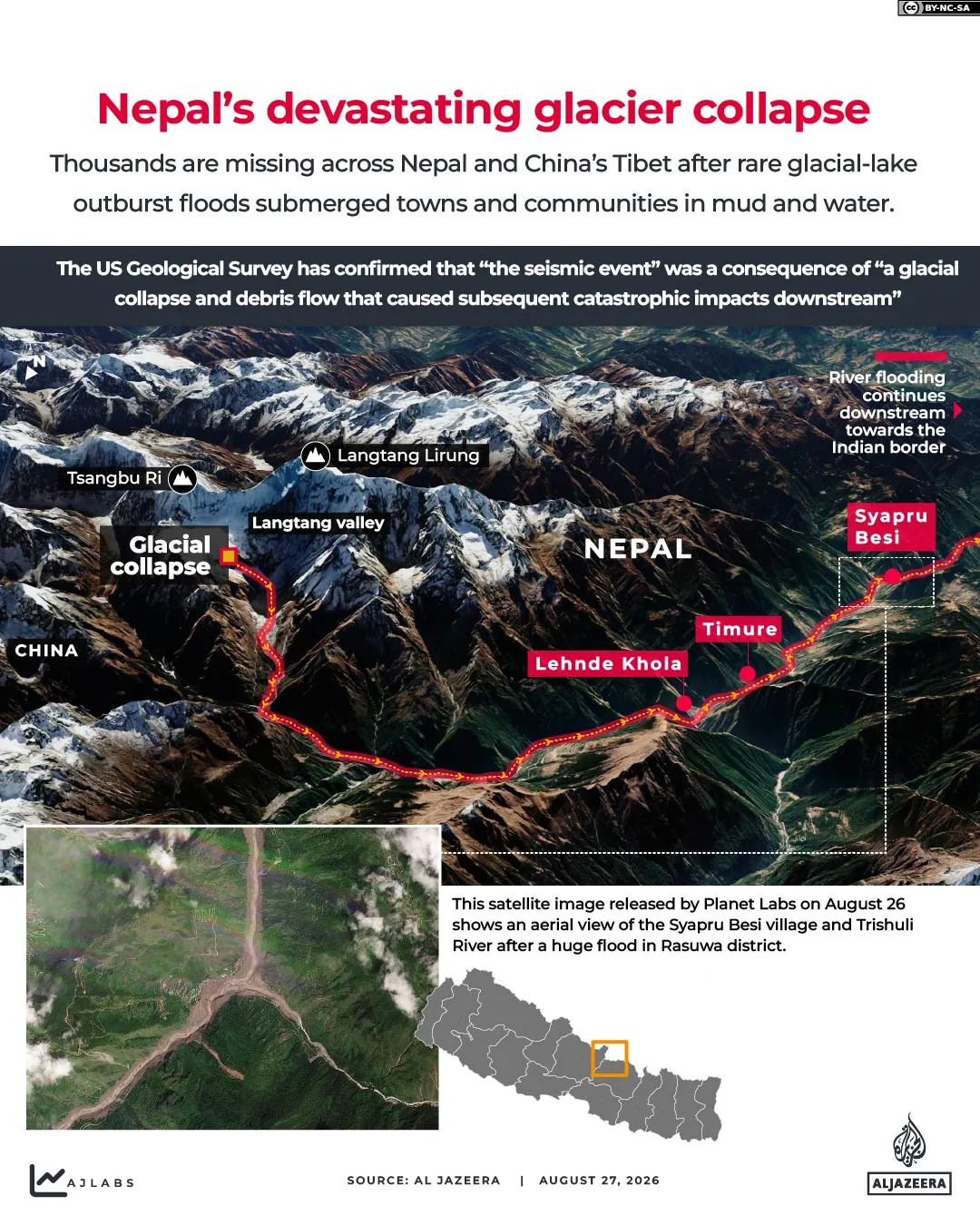
The catastrophe, which scientists say was caused by the effects of climate change, was triggered when part of a mountain glacier collapsed and a torrent of water and mud flooded down into Nepal’s Rasuwa and Nuwakot regions, as well as into China’s Tibet region on August 26. More than 1,300 people have been confirmed dead and more than 5,000 remain missing.
Recommended Stories
list of 3 itemsend of list
“We are paying the ultimate price for a global crisis we did not create,” Nepal’s Foreign Minister Shisir Khanal said last week.
“Support for Nepal should not be seen from an angle of aid or charity, but should be seen from the perspective of climate justice,” he told the AFP news agency.
On Monday, the country’s President Ramchandra Paudel made a similar demand during an address to the nation.
“I make a heartfelt appeal to the international community not only to listen to the voices of ecologically vulnerable countries, including Nepal, but also to take concrete and effective steps to ensure climate justice for them,” he said.
Nepal’s Ministry of Finance and Ministry of Environment have written a joint letter to the United Nations, which set up a fund to respond to loss and damage caused by climate change in 2022 in line with the 2015 Paris Agreement on climate, with a request for $20m in damages.
The UN’s Loss and Damage Fund is, however, facing a $2.8bn funding gap as it prepares to approve its first climate recovery projects.
‘Collective frustration’
Nepal’s leaders may have a point.
Nepal contributes less than 0.1 percent of global greenhouse gas emissions and generates most of its electricity from renewable sources of energy. Yet its geographical location in the Himalayas makes it particularly vulnerable to severe climate and weather events.
Last month’s catastrophic flooding in the country comes against a backdrop of rapid global warming and glacial loss across the Himalayas.
Glaciers across the Hindu Kush Himalaya mountain range – which spans Afghanistan, Bangladesh, Bhutan, China, India, Myanmar, Nepal and Pakistan – lost ice 65 percent faster between 2011 and 2020 than during the previous decade.
Nepal’s glaciers, which are sandwiched between two major carbon emitters – India and China – have lost close to one-third of their ice volume in roughly three decades due to global warming, the United Nations said in 2023.
Tanuja Pandey, a Nepal-based climate activist and lawyer, said there is collective frustration behind Nepal’s demand for climate justice.
“People here feel the world often pays attention to Nepal only when a climate disaster becomes impossible to ignore. It is deeply painful to people here that global attention intensifies when headlines report thousands of people dead or missing and in the end, their suffering does not generate any urgency to fight climate change,” she told Al Jazeera.
Shreya KC, a 28-year-old Nepali climate activist, said there is profound anger and sadness among people in Nepal who say that they must no longer continue to suffer the impact of climate change, which, as they see it, other countries are responsible for.
“My hometown is in Solukhumbu in eastern Nepal,” the activist told Al Jazeera. “It is a district of mountains and is also home to the world’s highest mountain, Mount Everest, and my home is also downstream. After the glacial collapse happened two weeks ago, people in my region have realised that this can now happen anywhere in Nepal since the Himalayas are warming and glaciers are melting faster.”
While Nepal has been actively fighting climate change, Shreya KC said she herself has been involved in projects in the country that focus on clean hydropower generation, forestry and other such climate advocacy programmes.
“Because of other countries,” she said, “today Nepalis are the ones most impacted by climate change. So people want justice.”
[Planet Labs PBC]
Is there such a thing as ‘climate justice’?
According to preliminary estimates from Nepal’s National Disaster Risk Reduction and Management Authority, the country’s property, housing and infrastructure losses in the floods amount to some $2.56bn.
But claiming compensation under a notion of “climate justice” won’t be straightforward, according to Joyeeta Gupta, a professor of Environment and Development in the Global South at the University of Amsterdam.
According to the United Nations, “‘climate justice’ is the moral and ethical principle that seeks to address the disproportionate impact of climate change on vulnerable communities and future generations”.
“I define it as a system of justice where others’ perspectives are taken into account, and no harm is caused to others,” Gupta told Al Jazeera.
Nepal is a country that has very low emissions, she said, but is facing the brunt of climate issues which it never created. “That is reason enough for Nepal to claim climate justice,” she noted.
But, practically speaking, can it? In the pre-1990 period, there was a lot of discussion among nations about the need for large emitters to compensate those that would be harmed, Gupta noted. But soon after that, the term “compensation” disappeared from the agenda of international climate treaties, which turned more to discussions about providing assistance to developing countries that need to tackle climate change instead.
In a July 2025 advisory opinion on climate change, the International Court of Justice (ICJ) declared that “all nations have binding legal duties under international law to prevent significant climate harm”.
The ICJ’s advisory opinion on climate change also says that states breaching their international climate obligations can be required to make full reparations, including financial compensation to “injured states” or countries impacted by climate change caused by the actions of other countries.
While the ICJ’s opinion is not legally binding, Gupta said, it is a statement in international law that could support Nepal’s government’s international appeal for climate justice and compensation.
‘No climate justice without internal justice’
Nepal’s rapper-turned-prime minister, Balendra Shah, is scheduled to travel to New York on September 22 to address the 81st session of the United Nations General Assembly (UNGA) on September 24. His country’s appeal for climate justice is expected to be a key part of his address.
For climate activist Shreya KC, while UN meetings and international conferences on climate change may hold some weight when it comes to discussing climate disasters, right now, what Nepal needs is money.
“So much of our money allotted for healthcare, education and to transition into a more developed nation is now being spent on fighting climate change. So countries who are causing emissions, especially from the global north, need to commit more money to the UN’s Loss and Damage Fund,” she said, adding that money from that fund should be disbursed to vulnerable communities in need, not as a loan but as compensation for bearing the brunt of climate change.
Pandey noted that this is not the first time a climate disaster has occurred in Nepal and said that the new government, which came into power in March this year on the back of Nepal’s Gen Z protests last year, has also failed to make climate a priority in its budget.
While it is a good sign that Nepali politicians are appealing for international climate justice, she said, they also need to address the country’s internal development model to fight climate change in the first place.
“There is no climate justice without internal justice within the country itself,” she said.
“I hope that even in our development, partners and investors stop treating climate resilience as an optional addition to development in Nepal just because we are economically vulnerable.
“Investing in Nepal without investing in sustainability is simply a bad investment.”
On Monday, Nepal declared a national day of mourning to remember the more than 1,300 people who are known to have died in last month’s catastrophic floods. Thousands more are still missing.
The country’s President Paudel used the opportunity to call on people to unite.
“This is not a time for division. Nor is it a time to blame one another or become entangled in political disputes and confrontation,” he said.
“This is a time to demonstrate national unity and solidarity. It is also a time for reconstruction, rehabilitation and economic recovery.”
But Gupta says Nepal’s biggest challenge right now is establishing a precedent for compensation for climate change-related disasters.
“It was recently a glacial collapse in the country, but soon, it will become a bigger issue as time goes on because the monsoon patterns will change, the sea level will rise,” she said.
As many other developing countries – notably island states that face being submerged altogether – are also likely facing similar climate change challenges, the damage could become huge.
“That is going to be a very big reason why many rich countries will probably be unwilling to pay compensation, because that would set a precedent for future issues,” Gupta said.
“But the issues countries like Nepal are facing are a very strong argument to try and convince the whole world to accelerate action to phase out fossil fuels and fight climate change.”